The ultimate guide to local food and drink in Baños de Agua Santa
Discover traditional Ecuadorian food and the best places to eat in Baños
Tasting the confluence of Andean heights and Amazonian bounty
BEN FINCH
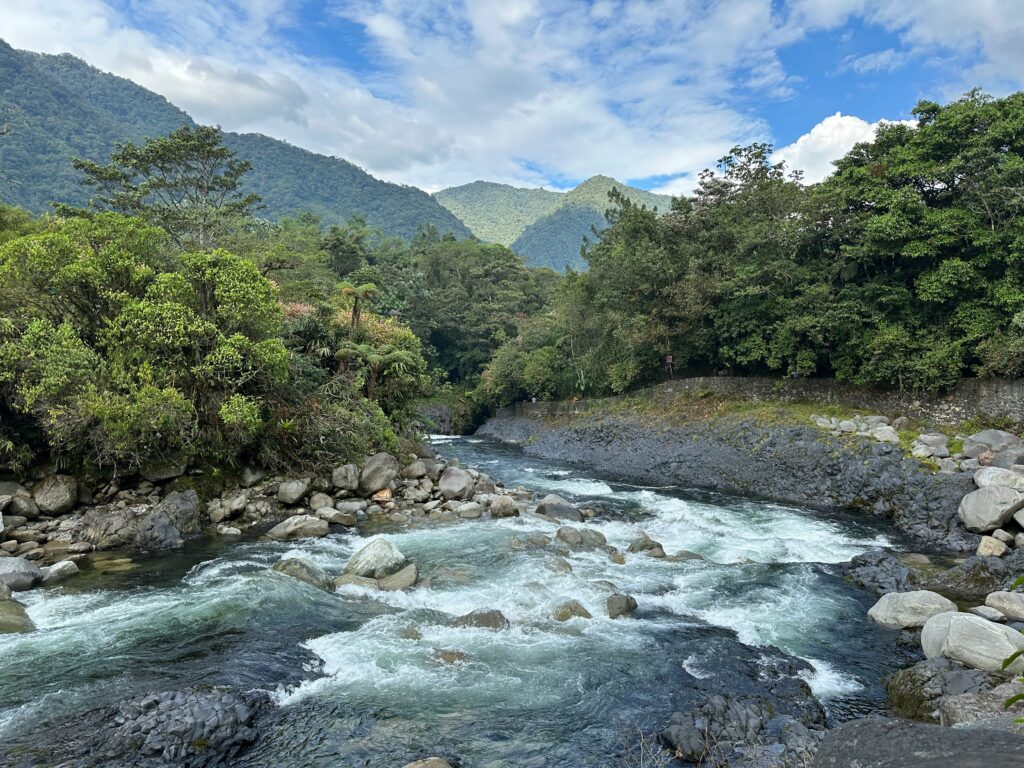
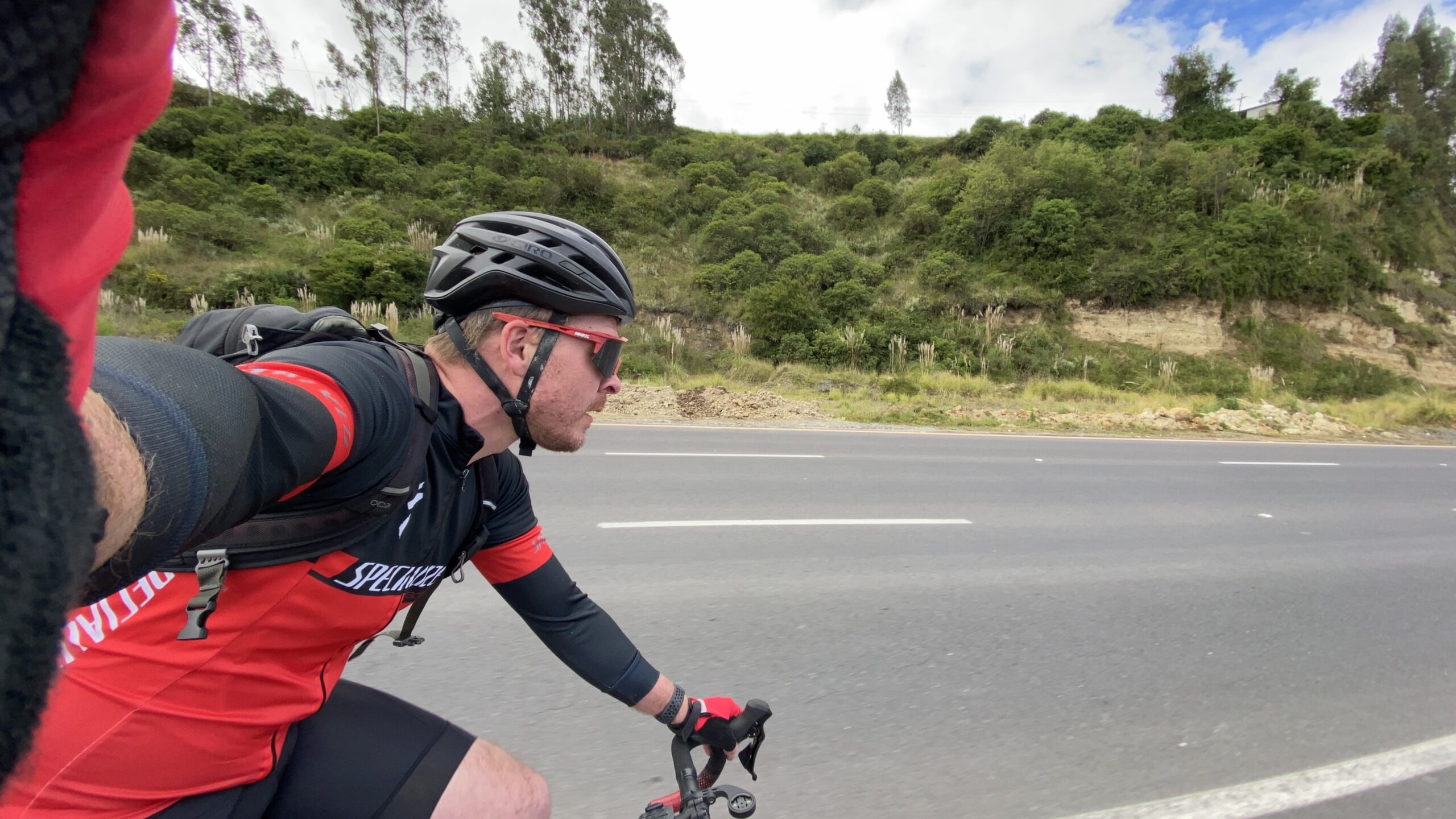
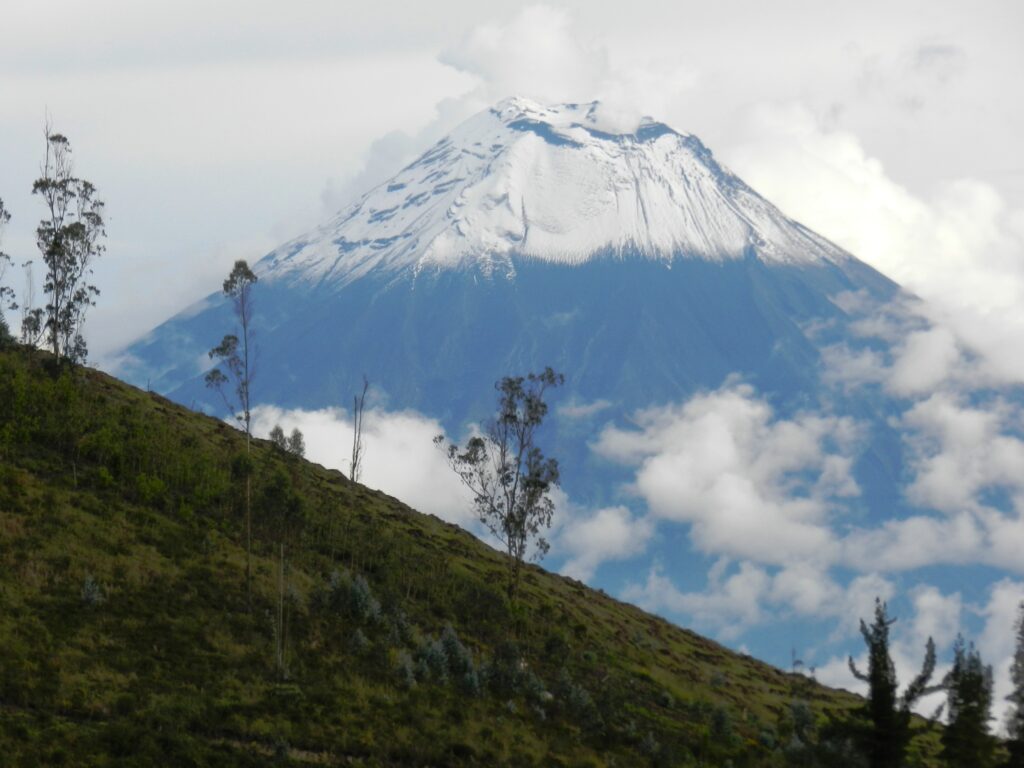
The journey into Baños de Agua Santa is a transition between two distinct worlds. Positioned in a narrow valley at the foot of the active Volcán Tungurahua, this town serves as the geographical and cultural threshold where the cool, high Andean páramo drops sharply into the humid, dense forests of the Amazon basin. For the independent traveller arriving on two wheels, by public bus, or on foot, Baños represents a place of physical recovery. Its famous thermal waters, heated by the earth itself, are matched by a culinary landscape designed to restore strength and sustain long journeys.
At Wheely Tyred, we believe that the soul of a place cannot be understood from the window of a tour bus or during a hurried fifteen-minute stop supervised by a guide holding an umbrella. True understanding requires time, observation, and an appetite for local rituals. In Baños, food is not merely sustenance; it is a direct reflection of a complex topography. The local diet is a heavy, comforting response to the steep volcanic slopes and the shifting weather, where mountain potatoes and slow-roasted meats meet the sweet, tropical abundance brought up from the lowlands.
Savour the jungle’s abundance
Savouring Baños requires slowing down to appreciate how high-altitude Andean farming meets the lush abundance of the cloud forest. This summary captures the essential flavours and cultural hubs that define the local culinary landscape.
- The Sugarcane Craft: Hand-pulled melcocha taffy provides a raw, natural energy source crafted by local artisans right in their doorways
- Highland Comfort: Slow-roasted hornado paired with cheese-filled llapingachos offers a perfect balance of rich pork and griddled potato
- Ancestral Cuisine: Traditional spit-roasted cuy provides a deep connection to pre-Columbian gastronomy, served with a rich peanut sauce
- Cloud Forest Bounty: Unique local fruits like babaco and taxo bridge the gap between temperate heights and tropical lowlands
- The Ultimate Recovery Drink: Freshly pressed jugo de caña offers cyclists and hikers a mineral-rich, instant hydration source
- Evening Warmth: A steaming mug of canelazo blends spiced citrus with local sugarcane spirit to cut through the damp mountain chill
- Communal Dining: The bustling stalls of the Mercado Central serve as the authentic epicentre for genuine, unpretentious regional meals
The Ecuadorian Sierra.
Get lost in the hills
The masterpiece of the valley / Melcocha
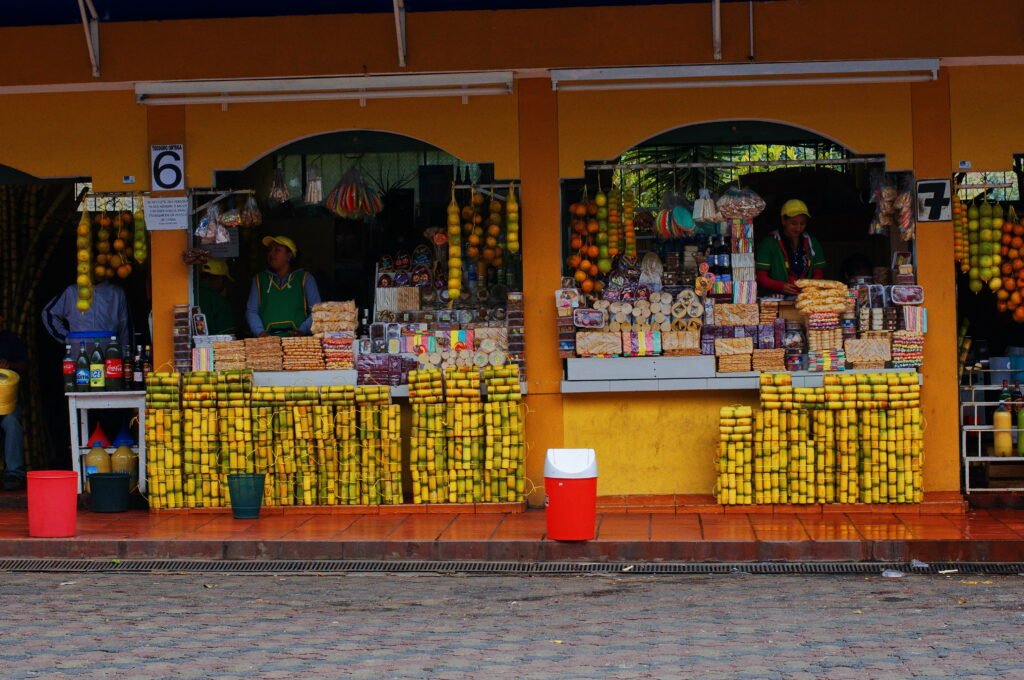
To walk through the streets of Baños is to encounter the scent of boiling sugar and woodsmoke. The most iconic culinary tradition here is the production of melcocha, a dense, glossy sugarcane taffy that has kept the town sweet for over a century. The raw ingredient, known as panela, is harvested from sugarcane fields that blanket the warmer valleys just down the Pastaza River.
The creation of melcocha is a physical performance. Artisans boil the pure sugarcane syrup in large copper kettles until it reaches a thick, amber state, then cool it slightly on stone slabs. The defining moment of this craft occurs in the open doorways of local shops. Passers-by will see candy makers throw heavy bands of warm, golden sugar over wooden pegs set into the doorframes. With rhythmic, physically demanding pulls, they stretch, twist, and fold the sugar. As air incorporates into the mixture, the dark amber softens into a pale, warm gold.
This is not merely a confection for tourists; it is a vital energy source. For those spending days hiking the volcanic trails or cycling the spectacular route down towards Puyo, a block of fresh melcocha provides an immediate, natural source of carbohydrate. The flavour is complex—deeply caramelised, with grassy undertones from the raw sugarcane.
The highland staples / Hornado and llapingachos
On the savoury side of the regional palate, the volcanic soil of the Tungurahua province produces some of the finest tubers in the country. This agricultural abundance is celebrated in the traditional preparations of hornado.
Hornado is a whole pig, seasoned with a marinade of garlic, cumin, onions, and chicha de jora—a fermented corn beer that dates back to the Inca Empire. The pig is slow-roasted in traditional brick ovens, often heated with native wood, for up to twelve hours. This slow-cooking process yields incredibly tender, juicy meat beneath a layer of perfectly crisp, golden crackling, known as cuero.
An authentic portion of hornado is never served alone. It is accompanied by llapingachos, which are pan-seared potato cakes stuffed with fresh, mild highland cheese. The potatoes are boiled, mashed, and seasoned with achiote oil, which gives them a vibrant orange hue, before being griddled on a flat top until they develop a rich, brown crust.
To balance the heavy, savoury profile of the meat and potatoes, vendors add a generous serving of agrio—a thin, acidic dressing made from vinegar, tomato, onion, cilantro, and a touch of panela. The contrast of hot, fatty pork, warm melting cheese, and cold, sharp salsa is the definitive taste of the Ecuadorian sierra.
The Ecuadorian Amazon.
The most biodiverse place in the world
Ancestral traditions / Cuy and high-altitude grains
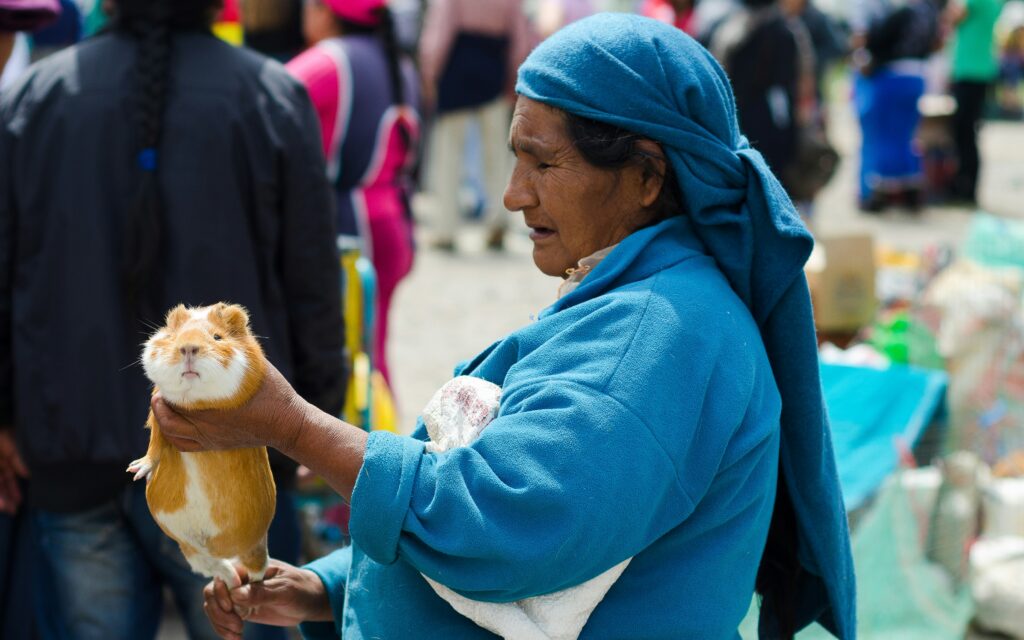
For travellers seeking a deeper connection to the indigenous culinary history of the region, cuy, or guinea pig, is a dish of immense cultural importance. Long before the arrival of Spanish livestock, cuy was the primary source of animal protein in the Andes, reserved for special occasions and communal celebrations.
In the valleys around Baños, cuy is prepared with great care. The meat is rubbed with a paste of garlic, cumin, and salt, then skewered on a long wooden spit and slow-turned over glowing charcoal embers. The cook bastes the skin continuously with achiote oil to ensure it becomes brittle and crisp, while the meat inside remains tender and rich, similar in flavour to dark-meat poultry or rabbit. It is traditionally served with a rich peanut sauce, known as salsa de maní, boiled potatoes, and fresh avocado.
Alongside these traditional meats, high-altitude grains form the backbone of daily nutrition. Quinoa and amaranth, cultivated on the dry mountain slopes above the valley, are used to thicken hearty vegetable soups or are served as warm, comforting porridges in the early mornings before the high-altitude chill burns off.
The tropical interface / Cloud forest fruits and juices
Because Baños sits at the edge of the Amazon basin, its markets are filled with an extraordinary variety of fruits that are rarely seen outside of the South American cloud forests. The transitional climate allows both highland temperate fruits and lowland tropical varieties to thrive.
Amongst these, the babaco is particularly notable. A relative of the papaya, this five-sided fruit has a smooth, fragrant skin and a juicy, effervescent flesh with a flavour profile that hints of strawberry, pineapple, and papaya. It is commonly boiled with sugar and spices to create a sweet compote or blended into refreshing morning juices.
Travellers should also seek out taxo, also known as banana passionfruit, which offers a sharp, aromatic acidity, and chirimoya, or custard apple, which has a creamy, sweet flesh reminiscent of banana and pineapple.
To wash down these flavours, a glass of fresh jugo de caña is essential. Throughout the town, raw sugarcane stalks are passed through rustic, hand-cranked metal rollers, instantly releasing a pale green, cloudy juice. It is incredibly refreshing, naturally sweet, and packed with minerals—the ultimate recovery drink after a long day of physical exertion.
The Galápagos.
Ecuador’s Enchanted Isles
The warmth of the mountain / Canelazo
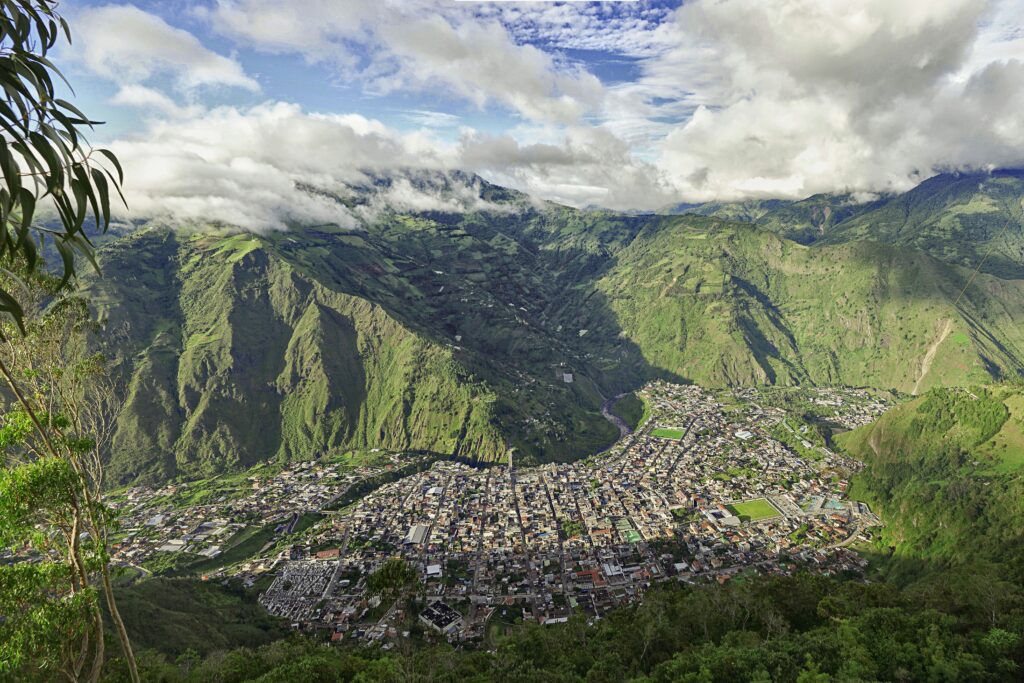
As dusk falls over the valley and the mist rolls in from the cloud forest, the temperature in Baños drops quickly. To combat the damp evening chill, locals turn to canelazo, a hot, spiced alcoholic beverage deeply rooted in highland culture.
The drink is prepared by boiling water with cinnamon, cloves, allspice, and panela. Once the spiced syrup is hot and fragrant, it is mixed with fresh naranjilla juice—a tart, citrus-like fruit native to the Andes—and a generous splash of punta, a strong sugarcane spirit distilled in the valleys nearby. The result is a warming, sweet, and comforting drink that is perfect for sipping slowly while sitting in a quiet square, watching the dark outline of the volcano against the night sky.
Where to experience these traditions

In keeping with our commitment to authentic exploration, we have curated a condensed selection of exceptional establishments. These venues have been chosen for their historical value, culinary integrity, and outstanding reputation amongst independent travellers and locals.
Mercado Central de Baños
This central market is the undisputed heart of the town’s food culture. Far from a sanitised tourist space, it is where the community gathers daily. Here, you can sit at communal wooden benches and order a plate of hornado directly from the families who have run these stalls for generations. It is also the best place to source fresh cloud forest fruits and watch sugarcane being pressed into fresh juice.
Ofrenda del Inca
For an intellectual and deeply sensory journey into the indigenous history of the Andes, Ofrenda del Inca is unmatched. Holding a flawless reputation, the kitchen focuses entirely on ancestral ingredients, utilising volcanic stones and open flames to prepare dishes based on quinoa, amaranth, wild tubers, and traditional meats. It is a quiet, respectful celebration of pre-Columbian gastronomy.
Crater Rooftop Bar
Our single recommended bar offers a sophisticated, calm environment to experience the local spirits of the region. Located away from the noisy nightlife streets, Crater Rooftop serves creative drinks incorporating native fruits and sugarcane distillates. The elevated position offers panoramic views of the surrounding canyon walls, making it an ideal place to reflect on your journey.
The Ecuadorian Coast.
Where you’ll find the very best food
Connecting with the local community
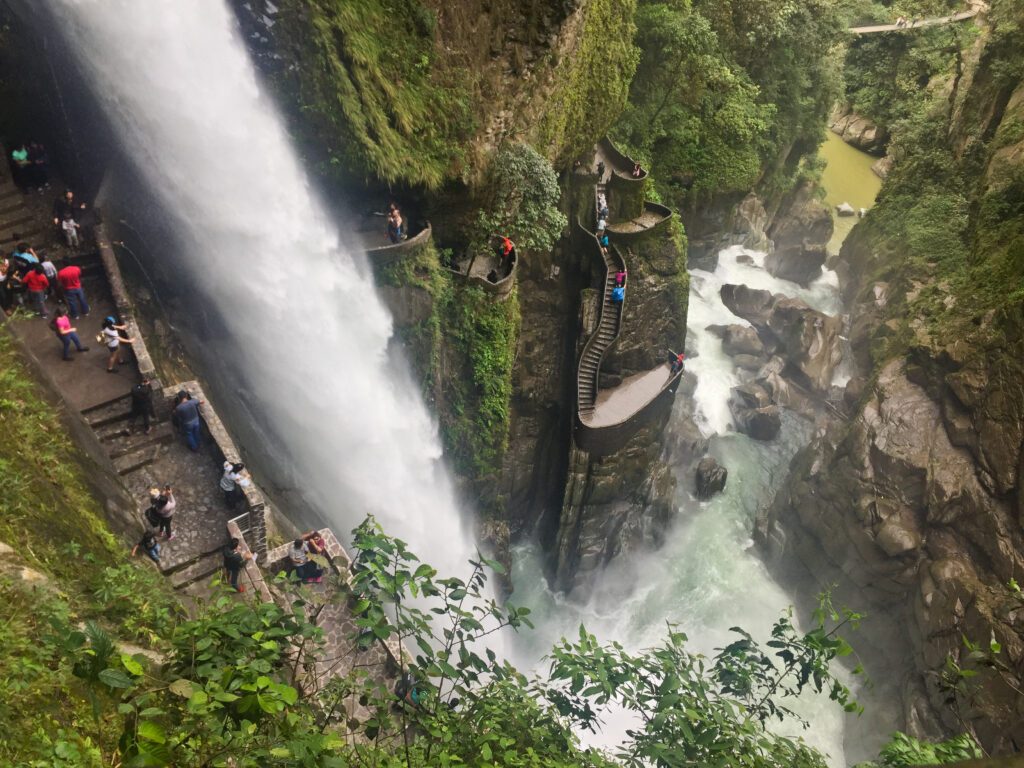
When we choose to eat at market stalls, support local candy makers, and dine at independent establishments, we actively participate in preserving the cultural heritage of Baños de Agua Santa. The food here is a testament to the resilience of a community living in the shadow of an active volcano. By travelling slowly and eating mindfully, we ensure these unique culinary traditions continue to thrive.
Frequently asked questions about food in Baños
The town’s unique geographic position at the threshold of the Amazon basin places it close to warmer valleys where sugarcane thrives. This proximity allows raw panela to be brought up to the highlands, fuelling a century-old tradition of artisanal melcocha and fresh jugo de caña.
Absolutely. The regional diet relies heavily on calorie-dense carbohydrates like mountain potatoes, native grains, and raw sugarcane. These traditional staples provide long-lasting, sustained energy and immediate recovery fuel for anyone tackling the steep volcanic climbs.
Step inside with an open mind and follow the locals. Choose stalls that are busy and vibrant, particularly on the ground floor where hot plates of hornado and llapingachos are prepared. It is an unpretentious environment where you sit at communal benches and pay directly in cash.
Seek out establishments that intentionally preserve pre-Columbian culinary methods, such as Ofrenda del Inca. Here, native ingredients like quinoa, amaranth, and volcanic stone-cooked proteins are celebrated without the rush or shortcuts of standard tourist spots.
Yes. Thanks to the transition between the Andes and the Amazon, local markets feature an array of cloud forest fruits. Look out for babaco, taxo, and chirimoya, which can be eaten fresh or enjoyed as freshly blended juices.
The definitive local remedy is canelazo. This hot drink combines cinnamon, cloves, and panela with tart naranjilla juice and a splash of strong sugarcane spirit, warming you instantly from the inside out.
Ecuador.
Pure wonder on the equator.