A journey through the ancient flavours of the Ecuadorian Amazon
Traditional Amazonian foods to try and the best independent restaurants
The true gateway to the rainforest is found over a wood-fired hearth
BEN FINCH
Arriving in Tena, the capital of the Napo province, involves leaving behind the high-altitude chill of the Andes and dropping into a landscape dominated by complex river systems and dense, vibrant forest. For those who choose to travel independently—navigating the region by local buses, on two wheels, or simply on foot—Tena serves as an exceptional base. It is a place where life moves at the pace of the rivers, and the local culture remains deeply intertwined with the surrounding environment.
To truly understand this corner of Ecuador, one must look closely at how its people eat. The cuisine of the Ecuadorian Oriente is not merely a collection of recipes; it is a direct extension of the rainforest itself. Indigenous Kichwa culinary traditions rely on the subtle management of forest gardens, known as chakras, which have sustained families for generations. For the traveller seeking depth rather than a superficial checklist, slowing down to experience these ancient foodways provides a profound connection to the history and nature of the Napo region.
The untamed heart of the Napo
Tena serves as the ultimate gateway to the Ecuadorian Amazon, offering a masterclass in regional gastronomy for the independent traveller. This guide traverses the essential flavours of the rainforest and selects the most authentic dining spots, stripped of the influence of national chains.
- Maito: The quintessential Amazonian method of slow-cooking fresh river fish wrapped in fragrant bijao leaves directly over open wood coals
- Chontacuro: A traditional source of protein and healthy fats, these palm weevil larvae are skewered and grilled until the exterior turns crisp and savoury
- Volquetero: A clever, multi-textured street food staple comprising plantain chips, lupini beans, and tuna, designed to provide sustained energy
- Guayusa: A native holly leaf infusion that offers a clean, antioxidant-rich caffeine boost, central to the morning social life of local Kichwa families
- La Chakra: A riverside spot prioritising the use of ingredients sourced directly from traditional forest gardens
- La Fogata: A long-standing local favourite renowned for its mastery of open-flame cooking and authentic, robust Amazonian platters
- El Balcón De Las Orquídeas: An elevated dining venue that provides a panoramic perspective of the canopy alongside hearty regional fare
The Ecuadorian Amazon.
The most biodiverse place in the world
Traditional foods and drinks of the Oriente
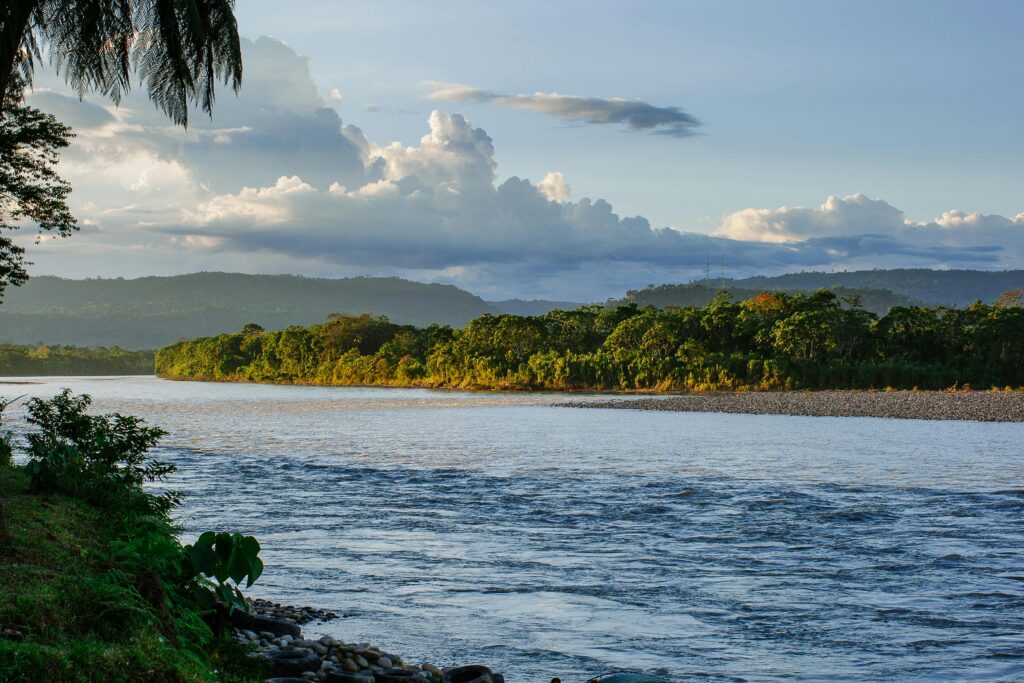
The culinary landscape here is defined by simplicity, resourcefulness, and a reliance on hyper-local ingredients that do not travel far from their source. Here are the essential flavours that define the region.
Maito
Maito represents the absolute pinnacle of Amazonian open-fire cooking. The technique is brilliant in its minimalist approach: fresh river fish, usually catfish or tilapia caught in the local waterways, are cleaned and seasoned with nothing more than a pinch of salt. The fish is then wrapped in several layers of wild bijao leaves, which are tied securely with natural fibres.
This parcel is placed directly over glowing wood coals. As the exterior leaves char, the moisture inside is trapped, essentially steaming the fish in its own natural juices. When you unwrap the charred parcel, the fish is incredibly tender, falling away from the bone and carrying a delicate, smoky fragrance infused with the herbaceous oils of the bijao leaf. It is a dish that tastes entirely of the forest and the fire.
Chontacuro
For the adventurous traveller looking to understand indigenous nutrition, chontacuro is indispensable. These are the large, plump larvae of the palm weevil, which develop naturally inside the fallen trunks of the chonta palm tree. Rich in protein and healthy fats, they have been a vital source of sustenance in the jungle for centuries.
Traditionally, chontacuros are skewered on thin wooden sticks and grilled over an open flame. The intense heat transforms them completely. The outer skin becomes beautifully crisp and golden, while the interior melts into a rich, buttery texture. The flavour is surprisingly savoury, bearing a strong resemblance to high-quality pork crackling with a subtle hint of wood smoke. Eating chontacuro at a simple market stall is a lesson in the efficient, respectful use of the forest’s natural cycles.
The Ecuadorian Sierra.
Get lost in the hills
Volquetero
While maito reflects ancient forest traditions, volquetero tells a more recent story of human movement and adaptability. This unique dish originated in the neighbouring Pastaza province but has become a beloved fixture across the northern Amazon. It was originally created as a substantial, inexpensive meal for regional workers and truck drivers needing sustained energy.
The dish is built in deliberate layers, starting with a generous base of crispy, thinly sliced plantain chips, crunchy toasted corn kernels, and tender lupini beans. This crunchy foundation is topped with flaky tinned tuna, a choice born out of the historical necessity for shelf-stable proteins in remote areas. The entire bowl is then finished with a vibrant tangle of red onions, fresh tomatoes, and a sharp squeeze of local lime juice. It is an ingenious combination of textures and temperatures, perfectly suited to the humid climate of the lowlands.
Guayusa Tea
Long before coffee culture took hold globally, the indigenous communities of the Napo province were gathering at dawn around communal fires to drink guayusa. Brewed from the leaves of a native holly tree, this ancient infusion is deeply woven into the social fabric of Kichwa families.
Unlike traditional teas or coffee, guayusa provides a smooth, sustained release of energy without any of the sharp spikes or jitteriness often associated with caffeine. It is incredibly rich in antioxidants and lacks the bitter tannins found in black tea, resulting in a smooth, naturally clean, and slightly earthy flavour profile. Drinking a warm cup of guayusa in the early morning dampness of the rainforest is an experience that grounds you entirely in the local rhythm of life.
The Galápagos.
Ecuador’s Enchanted Isles
Where to eat / Curated independent establishments
To experience these regional specialities at their best, Wheely Tyred has mapped out four exceptional, independent dining options in Tena. Each of these spots operates with a commitment to local ingredients, historical relevance, and authentic hospitality, making them perfect stops for travellers charting their own course.
La Chakra Restaurante – Cafeteria
Situated along the scenic riverfront avenue in Tena, La Chakra is an unpretentious, open-air establishment that operates with a clear, admirable mission: to preserve and celebrate traditional indigenous ingredients. The kitchen works closely with local farmers who manage traditional forest chakras, ensuring that the produce on your plate directly supports sustainable agriculture in the community.
This is arguably one of the finest settings in town to order an authentic fish maito. The dish is prepared with meticulous respect for tradition, served alongside perfectly boiled cassava and a cup of freshly brewed guayusa tea. The casual atmosphere allows you to look out towards the water while enjoying food that is deeply rooted in the surrounding soil.
Restaurant La Fogata
For those seeking a dining experience with deep roots in the community, Restaurant La Fogata is a legendary local fixture. For decades, this establishment has stood as a cornerstone of Tena’s culinary scene, earning a massive reputation among local residents and independent travellers alike for its consistency and mastery of open-flame cooking.
The air around La Fogata is consistently filled with the comforting aroma of burning hardwood. The kitchen specialises in expansive traditional Amazonian platters, allowing diners to sample multiple regional elements, from grilled chontacuro to perfectly seasoned meats and local roots, all cooked over an open fire. Its long-standing presence in the city is a testament to the kitchen’s dedication to honest, robust flavours that never compromise on tradition.
The Ecuadorian Coast.
Where you’ll find the very best food
El Balcón De Las Orquídeas
Perched elegantly above the bustling streets, El Balcón De Las Orquídeas offers a more contemplative dining experience. The restaurant features a beautiful elevated vantage point, providing panoramic views that stretch across the green canopy of the jungle and the rushing waters of the river below.
The menu here beautifully bridges the gap between classic regional cooking and comfortable, satisfying meals for weary travellers. Whether you are stopping in for a hearty midday lunch after a morning of exploring or settling in for a slow dinner as the evening mist rolls over the forest, the combination of attentive cooking and an immersive atmosphere makes it an essential stop for anyone wanting to absorb the visual and culinary identity of the Napo province.
Bolibar Pub Restaurante
To conclude an evening of independent exploration, Bolibar Pub Restaurante offers a welcoming, characterful space to unwind. This independent establishment successfully captures the relaxed, friendly essence of Tena’s evening social life, avoiding the sterile atmosphere of generic hotel lounges.
What sets Bolibar apart is its inventive approach to the regional larder. The bar menu features drinks that thoughtfully incorporate local jungle fruits, wild botanicals, and traditional infusions, transforming familiar beverages into uniquely Amazonian experiences. It is a fantastic place to sit back, strike up a conversation with fellow independent travellers, and reflect on the day’s journey through the Oriente.
In keeping with our philosophy at Wheely Tyred, all establishments selected for this guide are entirely independent, locally owned businesses. By choosing to dine at these spots, you ensure your travel spend directly benefits the community and helps preserve the precious culinary heritage of the Ecuadorian Amazon.
Frequently asked questions about the flavours of the Ecuadorian Amazon
Tena is best explored at a measured pace. The town centre and the riverside areas where these establishments are located are easily accessible on foot. For locations slightly further afield, local taxis are plentiful and provide an efficient way to travel without the constraints of a group tour.
Generally, no. These establishments reflect the relaxed, independent nature of the region. Simply showing up, particularly during the standard lunch hours of 12:00 to 14:00, is part of the experience.
Many local cafes and market stalls offer guayusa. It is often served hot in the early morning; simply visiting a local market or a spot like La Chakra early in the day will allow you to participate in this daily ritual.
While Amazonian cuisine is heavily focused on river fish and local meats, many of these establishments offer fresh, seasonal vegetables and grains from the local chakras. It is always worth asking for the menu del día, which often features vegetarian plantain or yuca-based dishes.
The bijao leaf is not just for wrapping; it acts as a natural pressure cooker. It imparts a subtle, herbal aroma to the fish while retaining the essential moisture, ensuring the meat remains tender rather than drying out over the intense wood-fired heat.
The Oriente, or Amazonian region, is distinct from the Andean highlands. You will find far less reliance on wheat or dairy and a much stronger focus on plantains, cassava (yuca), river fish, and jungle-harvested nuts and fruits. It is a cuisine of the forest, defined by the specific biodiversity of the Napo River basin.
Ecuador.
Pure wonder on the equator.