Is Baños, Ecuador, safe? The ultimate 2026 traveller safety guide
Crucial safety, security, and cycling advice for your next adventure in Baños

Navigating Ecuador’s adventure capital like a local
BEN FINCH
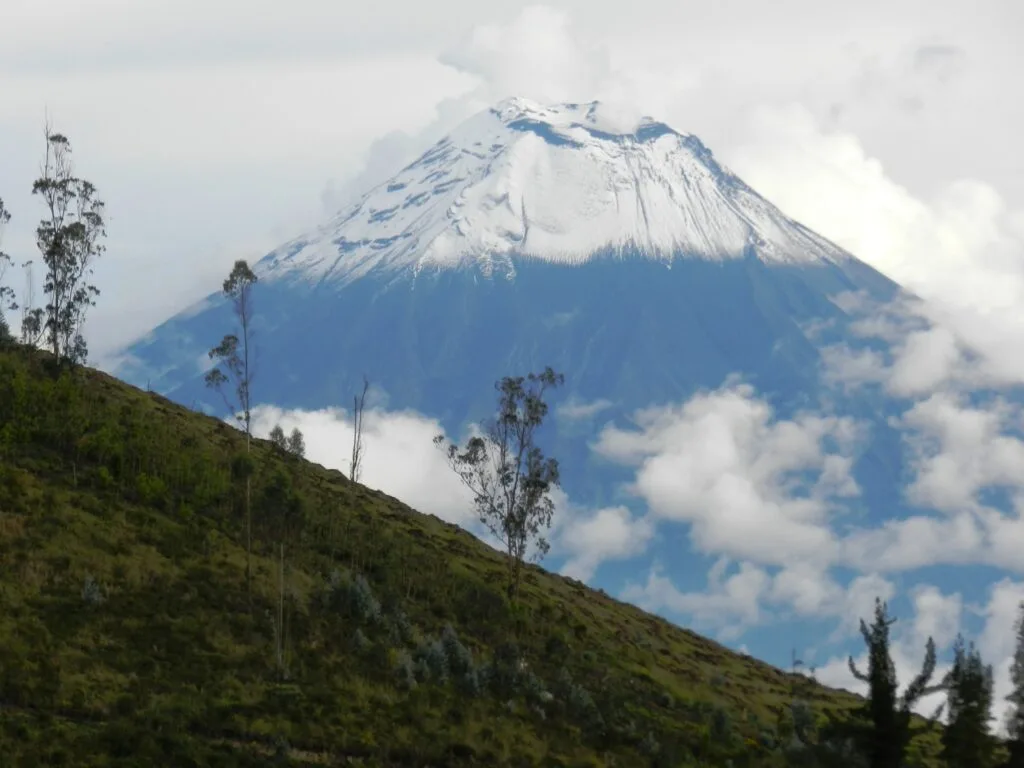
Nestled in a dramatic valley at the foot of the active Volcán Tungurahua, Baños de Agua Santa—commonly known simply as Baños—is celebrated as the gateway to the Ecuadorian Amazon. It is a playground for outdoor enthusiasts, offering everything from thermal hot springs to epic mountain biking down the canyon. Yet, with Ecuador’s security landscape dominating global headlines in recent years, many independent travellers and cyclists are left asking a vital question: is Baños safe to visit?
At Wheely Tyred, we believe that independent travel and cycling culture thrive when built on a foundation of accurate local knowledge. While parts of Ecuador have experienced significant security challenges, the story on the ground in the Andean highlands is very different.
This comprehensive guide breaks down everything you need to know about safety in Baños in 2026, from navigating local crime to mastering the classic Ruta de las Cascadas cycle route without a scratch.
High-altitude thrills and low-risk spills / Baños at a glance

Before you saddle up and head into the gateway of the Ecuadorian Amazon, get to grips with the essentials of this Andean adventure hub. From navigating the busy highway tunnels to keeping your belongings secure, here is what you need to know to ride with confidence.
- Regional Security Divide: Understand that while parts of coastal Ecuador face safety challenges, the central Andean highlands and Baños remain peaceful, tourism-focused pockets with a highly visible police presence
- The First Tunnel Hazard: Take extreme care at the very first tunnel on the Ruta de las Cascadas, which lacks a bicycle bypass; ride confidently in the centre of the lane with active front and rear lights
- Tunnel Bypasses are Mandatory: Always use the dedicated bypass tracks for all subsequent tunnels along the waterfall route to avoid heavy highway traffic and enjoy stunning, car-free cliffside views
- Secure the Springs: Protect your valuables when visiting the thermal baths by leaving expensive gear at your accommodation and bringing a sturdy padlock for the changing room lockers
- Smart Return Transit: Avoid a gruelling and unsafe climb back up to Baños after your ride; flag down a local open-topped truck (camioneta) or bus to carry you and your bike up the canyon
- Volcanic Awareness: Stay informed about Volcán Tungurahua by following official municipal notices and identifying the orange evacuation signs posted throughout the town
- Extreme Sports Due Diligence: Prioritise safety over cheap deals by booking canyoning, rafting, or zip-lining only with licensed, highly rated operators who regularly inspect their safety gear
The Ecuadorian Sierra.
Get lost in the hills
The big picture / Ecuador’s security climate and Baños

To understand safety in Baños, one must first understand the regional divide currently shaping Ecuador. Official travel advisories, such as those from the UK Foreign, Commonwealth & Development Office (FCDO) or the US State Department, often apply broad warnings to the entire country due to ongoing struggles with organised crime. However, the vast majority of violent crime is concentrated in specific coastal provinces, particularly around port cities like Guayaquil.
In contrast, the central Andean highlands—including Tungurahua province, where Baños is located—remain remarkably peaceful oasis pockets. Baños relies heavily on international tourism, and the local community, alongside municipal authorities, works tirelessly to protect visitors.
The town boasts a highly visible police presence, and the central streets are actively patrolled day and night. Violent crime against tourists in Baños is exceedingly rare. For the independent explorer, the primary concerns are not cartel violence, but rather opportunistic petty crime, road transit hazards, and the unpredictability of Mother Nature.
Petty crime and scams / What to watch for
While violent encounters are rare, opportunistic petty theft is a reality in any major tourist hub. In Baños, pickpocketing and bag-snatching are the most common crimes affecting travellers.
- The Café Distraction: It is easy to let your guard down when enjoying a post-ride coffee in a cosy café. Never leave your phone or wallet resting on the table, and avoid hanging your daypack over the back of your chair. Keep your belongings in your lap or loop a strap around your leg
- The Public Baths: Baños is famous for its thermal springs, but these crowded pools are hotspots for light-fingered opportunists. Do not bring expensive cameras, excess cash, or passports to the baths. Use the provided lockers, but bring your own high-quality padlock to secure your locker door
- Transit Hub Safety: The bus terminal in Baños, as well as the connecting terminals in Ambato and Quito, require heightened vigilance. When travelling by long-distance bus, never store your valuables in the overhead bins or beneath your seat. Keep your daypack on your lap with your arms looped through the straps. If your main luggage goes into the hold beneath the bus, ensure you receive a physical luggage ticket stub from the handler
The Ecuadorian Amazon.
The most biodiverse place in the world
The reality of adventure sports regulation in Baños
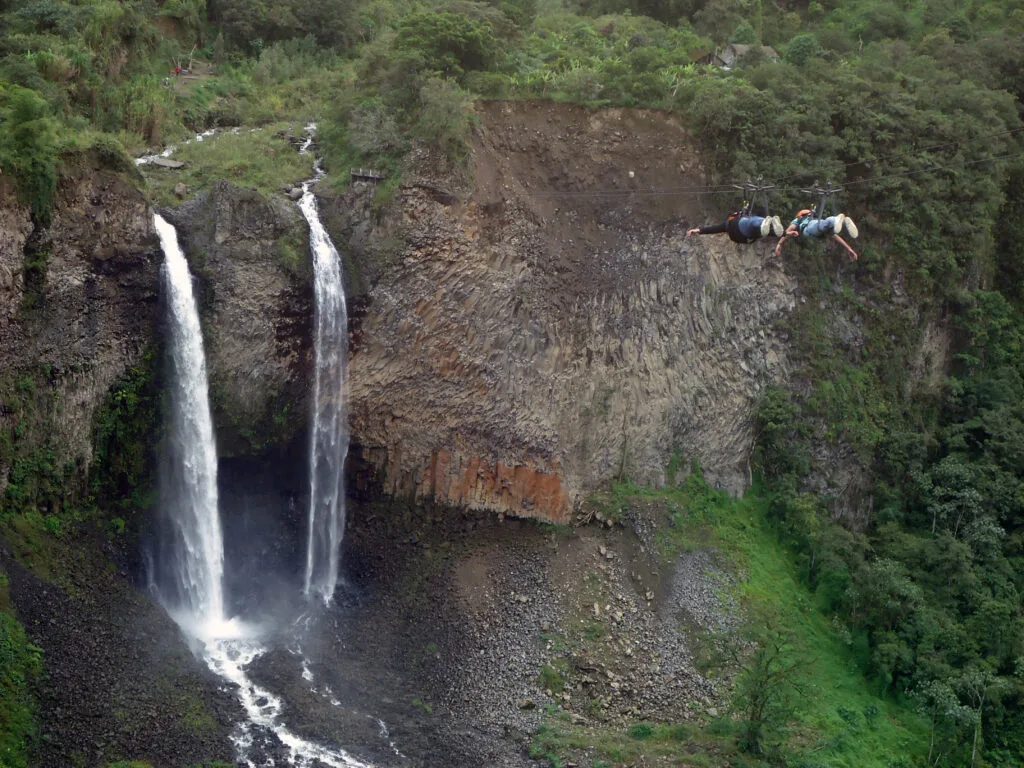
Baños has rightfully earned its reputation as the extreme sports capital of the Andes, drawing travellers from all over the globe who are eager to test their nerve against the elements. The town is a sensory overload of canyoning, white-water rafting, zip-lining, and the locally famous puenting (bridge jumping). However, the low barrier to entry and incredibly cheap prices—often a fraction of what you would pay in Europe or North America—harbour a crucial caveat: adventure sports regulations in Ecuador do not share the same rigid, institutionalised oversight that you might take for granted back home.
While the local municipality has made strides in licensing operators, enforcement remains inconsistent. If you are planning to throw yourself off a bridge or paddle down a roaring mountain river, you must become your own safety advocate.
The anatomy of risk / Spotting the hazards by sport
To make informed choices, it helps to understand the specific safety landscapes of the most popular activities on offer in the valley.
- Puenting (Bridge Jumping): Often costing as little as twenty US dollars, this activity is essentially bungee jumping’s highly unpredictable cousin. Unlike traditional bungee setups that use highly elastic cords calibrated to the jumper’s precise weight, puenting typically utilises dynamic climbing ropes that swing you in a massive pendulum arc beneath a concrete vehicle bridge. Because these systems require manual calculation and physical rigging by the guides on the day, human error is a very real factor. The industry has suffered tragic, fatal accidents in the past due to poorly measured ropes and lack of strict oversight. If you choose to partake, be incredibly sceptical of cut-price operators and inspect the physical setup of the platform beforehand
- White-Water Rafting on the Pastaza River: The rapids of the Pastaza River are generally categorised as Class III to Class IV, offering a fantastic, fast-paced ride through gorgeous jungle scenery. However, because the river is fed directly by Andean rainfall, water levels can fluctuate dramatically within a matter of hours. A safe Class III run can quickly transform into a highly dangerous Class V torrent after a heavy cloudburst. British nationals have unfortunately died whilst rafting and kayaking in Ecuador. A reputable company will monitor the river flow meticulously and will not hesitate to cancel a trip or move to a safer section of the river if currents are too strong. They will also always provide a safety kayaker to accompany the rafts
- Canyoning and Zip-Lining: Canyoning involves rappelling down slick, vertical waterfall faces and sliding down natural rock chutes. The primary risks here are slips, cold exposure, and head injuries from falling debris or improper rope control. Zip-line systems (canopy) cross vast canyons at terrifying heights. The safety of these activities relies entirely on the structural integrity of the steel cables, the quality of the braking mechanisms, and the condition of your full-body harness
Our vet-your-vendor protocol
Before you hand over your cash to any agency lining the streets of Baños, run through these essential vetting steps to separate the professionals from the cowboys:
- Dodge the Street Touts (Enganchadores): Walk past the aggressive salespeople standing on the pavements offering rock-bottom prices. These intermediaries are paid on commission and will direct you to whichever operator is offering them the highest cut, regardless of their safety record. Always walk directly into an established agency’s office to conduct your business
- Verify the License: Ensure the agency holds an active registration with the Ecuadorian Ministry of Tourism (Ministerio de Turismo) and the local municipality. These licenses should be proudly displayed on the office walls
- Perform a Gear Audit: Do not be shy about asking to inspect the equipment you will be using. Check that helmets are free from deep cracks, life jackets have functional buckles and thick flotation foam, and wetsuits are in good repair. If the climbing ropes look frayed, dirty, or sun-bleached, thank the staff and walk away
- Confirm the Guide-to-Client Ratio: For higher-risk activities like canyoning and rafting, there should never be more than four to five clients per guide. Ask specifically how many guides will accompany your group and whether a dedicated safety kayaker will be present on your rafting trip
- Check Your Insurance Fine Print: Most standard travel insurance policies explicitly exclude extreme sports like puenting, canyoning, and Class IV white-water rafting. Before you sign up, check your policy details. You may need to purchase a specialised adventure sports add-on to ensure you are covered for medical evacuation and treatment in the event of an accident
The Galápagos.
Ecuador’s Enchanted Isles
Safety for solo travellers, women, and minorities
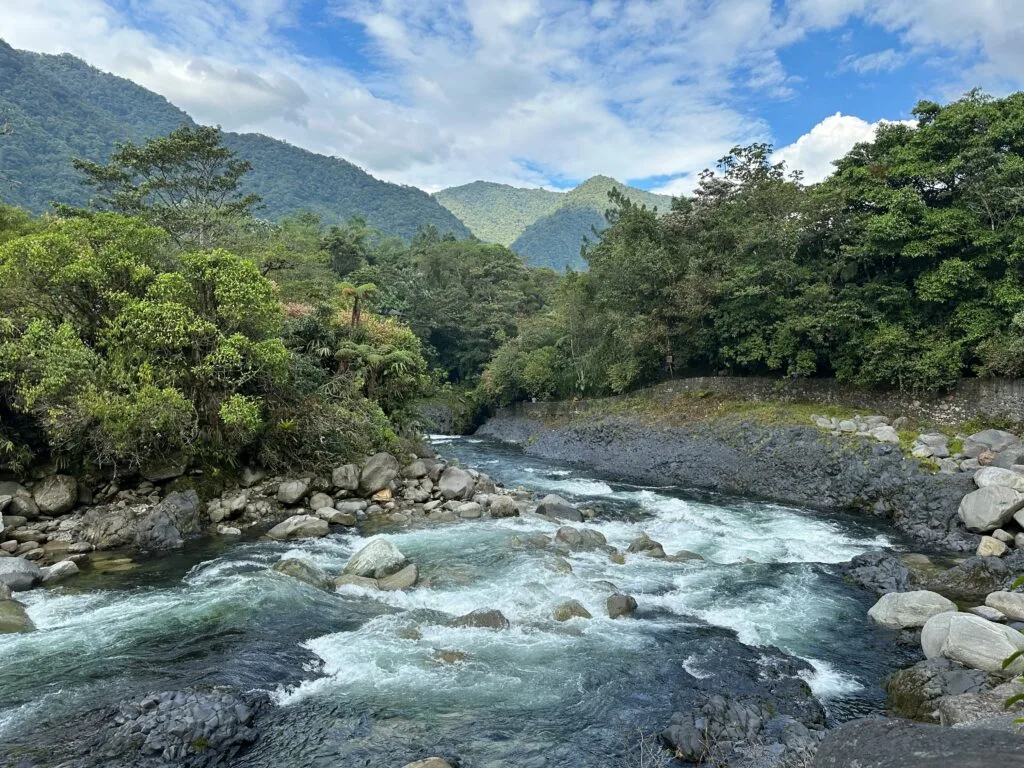
Baños is widely regarded as one of the most welcoming and straightforward destinations in mainland Ecuador for solo travellers and women. The compact size of the town centre makes it highly walkable, and the vibrant hostel and café culture makes it easy to connect with fellow explorers.
Solo female travellers
Women travelling solo or in pairs will find that Baños feels secure, even after dark, in the main tourist zone along Calle Ambato. However, normal travel precautions apply. Avoid walking alone along unlit, peripheral streets or near the riverbanks late at night. If you plan to enjoy the local nightlife, never leave your drink unattended, and always arrange a licensed taxi through your accommodation rather than hailing one on a dark street.
Minority and LGBTQ+ travellers
Ecuador is a conservative, predominantly Catholic country, but Baños’ constant exposure to international tourists has fostered a highly tolerant and friendly atmosphere. While overt discrimination is highly unlikely, public displays of affection are generally modest across all demographics in rural Andean towns.
Cycling safety / Conquering the Ruta de las Cascadas
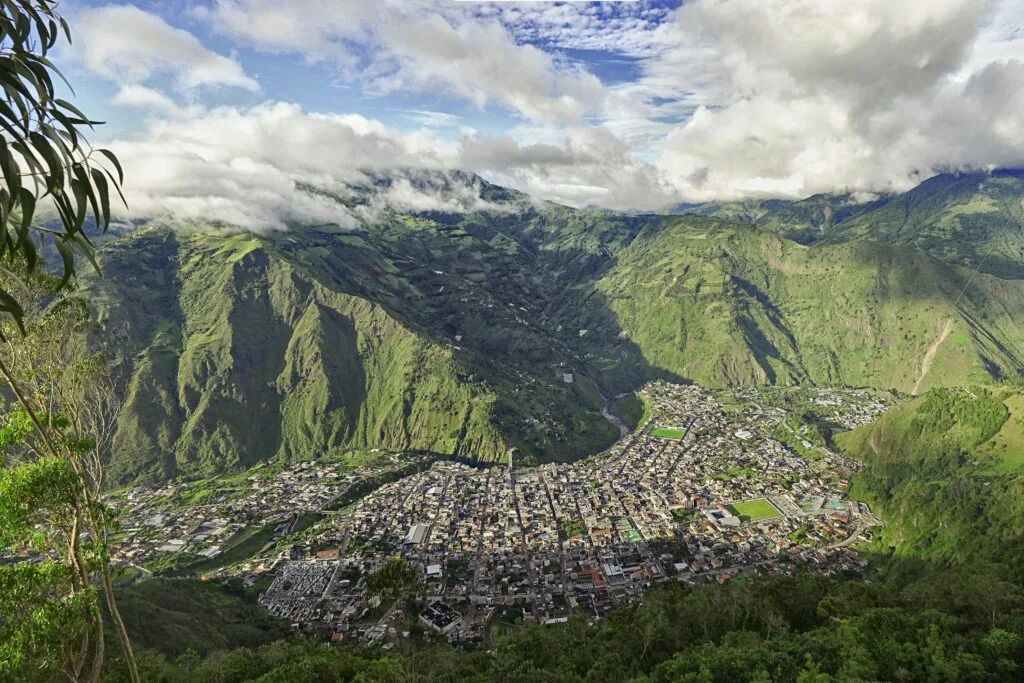
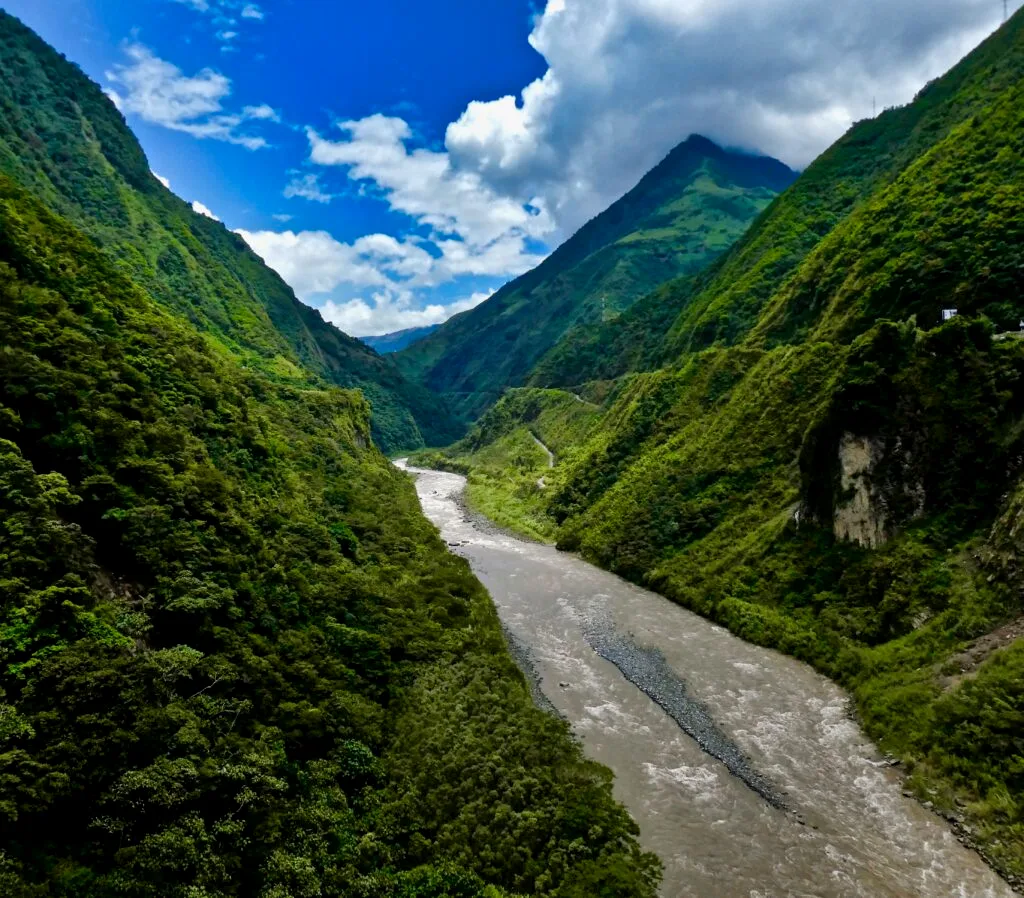
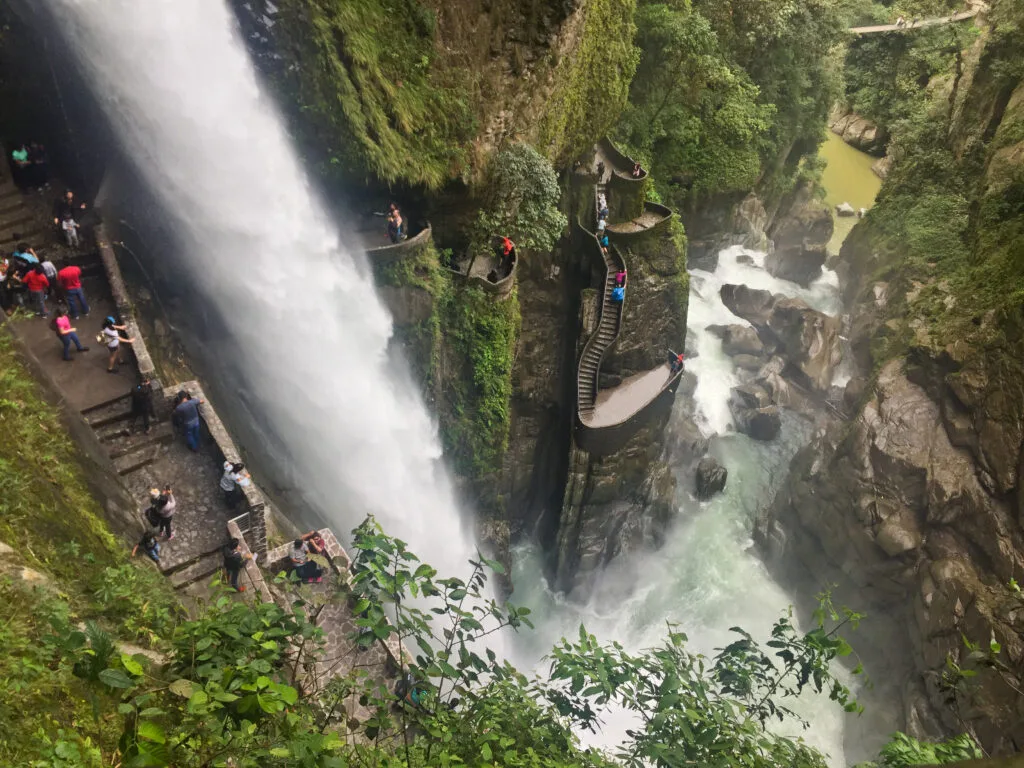
For many, the ultimate highlight of visiting Baños is cycling the famous Ruta de las Cascadas (the Waterfall Route). This spectacular 18-kilometre route snakes downhill through the Pastaza River gorge, offering views of dramatic cliffs and tumbling cascades, culminating at the thunderous Pailón del Diablo (the Devil’s Cauldron) waterfall.
While primarily a downhill cruise, the route is not a dedicated, closed cycle path; it is a shared public highway. To ride it safely, you must keep several critical rules in mind:
1. The dreaded first tunnel
Shortly after leaving the relative quiet of Baños, you will encounter the first tunnel cutting through the mountainside. Unlike the later tunnels on the route, this first tunnel has no bicycle bypass path. You must ride directly through it, sharing a narrow, dark, concrete tube with fast-moving buses and heavy transport trucks.
- The Safety Strategy: Ensure your rental bike is fitted with a bright, flashing red rear light and a front white light. Wait for a break in the traffic, then pedal confidently and quickly through the centre of the lane to prevent vehicles from attempting to squeeze past you in the dark
2. Respect the tunnel bypasses
For all subsequent tunnels along the highway, bicycles are strictly prohibited from entering. Clear signs will direct you to the right.
- The Safety Strategy: Always take these bypasses. They follow the old, winding cobbled roads that hug the edge of the cliffs. While the views here are spectacular and completely free of motor traffic, watch your speed. The cobbles can be slippery when wet, and there are sharp drops with minimal barriers. Keep your eyes on the track, not just the scenery
3. Gear checks and technical prep
Before handover at the bike rental shop in Baños, do a thorough check of your equipment. Do not accept a bike with worn brake pads or tyres lacking tread. Ensure your helmet fits snugly. Carry a basic tool kit and a lock, as you will need to lock your bike securely at various waterfall trailheads along the way.
4. The smart return journey
The ride to Río Verde is mostly downhill, dropping roughly 1,000 metres in altitude. Attempting to cycle back up to Baños means battling a gruelling, fumes-choked uphill climb on a busy highway.
- The Safety Strategy: Use the local truck-back or bus system if you don’t want to ride. Open-topped trucks (camionetas) and local buses wait near the second entrance of the Pailón del Diablo. For a couple of dollars, they will secure your bicycle and drive you safely back up to town
The Ecuadorian Coast.
Where you’ll find the very best food
Natural hazards and extreme sports
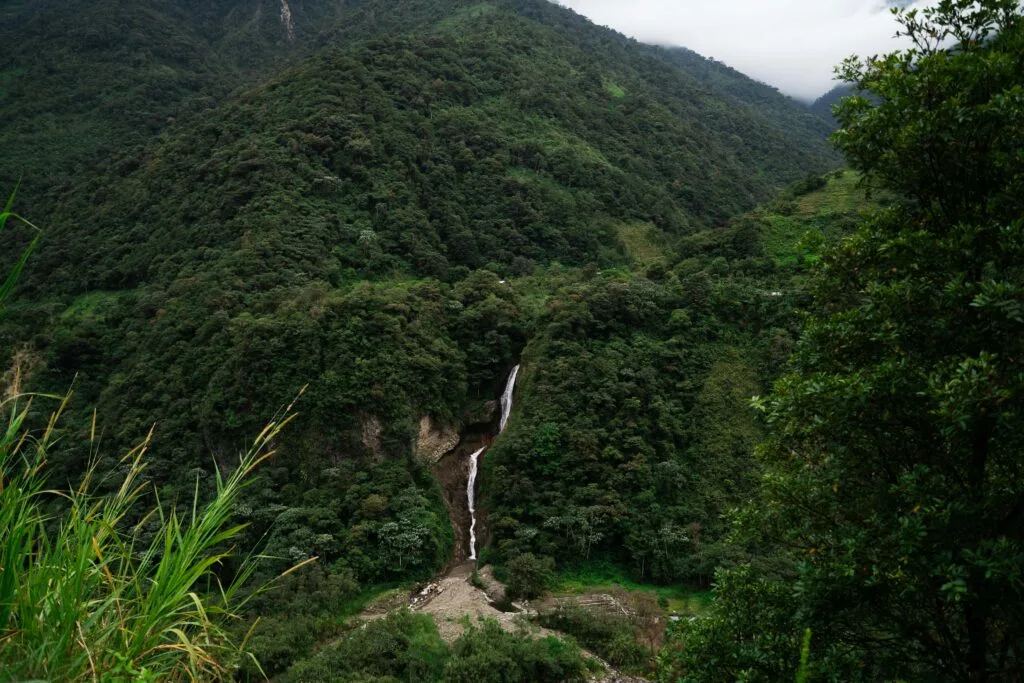
The very geography that makes Baños an adventure paradise also introduces natural risks. Staying safe means understanding and respecting the environment.
- Volcán Tungurahua: This active stratovolcano is heavily monitored by Ecuador’s Geophysical Institute. While it has been relatively quiet recently, volcanic activity can change. When arriving in town, familiarise yourself with the orange evacuation route signs posted on street corners. Always follow local municipal guidelines and ignore unverified rumours on social media
- Landslides and Weather: The transition zone between the Andes and the Amazon experiences heavy, sudden rainfall, particularly between June and August. These downpours can trigger sudden mudslides and rockfalls along the steep canyon roads. If it has been raining heavily, check local road reports via the ECU 911 emergency service before setting off on a cycle or transit journey
- Adventure Sports Regulation: Baños offers cheap access to canyoning, rafting, bridge jumping, and canopy zip-lines. However, national safety regulations and equipment inspections are not always as strict as those in Europe or North America. Never book with unregistered street touts offering suspiciously low prices. Choose established, highly reviewed operators, inspect your own harness and helmet for wear, and ensure your travel insurance specifically covers adventure sports
The essential Baños safety checklist
To ensure your journey through Baños is memorable for all the right reasons, keep this quick checklist close at hand:
- Keep Cash Low: Baños operates entirely on the US dollar. Carry small bills ($1, $5, $10, and $20) as vendors rarely have change for $50 or $100 notes. Only use ATMs located inside secure banks
- Stay Visible: If cycling the Ruta de las Cascadas, wear bright clothing, use active lights, and always wear a helmet
- Use the Bypasses: Never ride your bicycle through any highway tunnel where a bypass is available
- Drink Pure Water: Stick to bottled or purified water to avoid ruining your trip with stomach bugs
- Get Covered: Ensure you have comprehensive travel insurance that includes medical evacuation and cycling cover
By staying alert, respecting the rules of the road, and choosing your adventure operators wisely, Baños de Agua Santa will easily become one of the safest, most exhilarating destinations of your travel career. Keep your tyres pumped, your eyes on the road, and travel safe.
Cuenca.
The Athens of Ecuador
Balancing thrills and safety
Ultimately, staying safe in Baños is less about avoiding risk entirely and more about managing it with preparation, patience, and respect for the local environment. Adventure travel is inherently unpredictable, but that unpredictability is precisely what makes the Andean highlands so captivating. By shifting your mindset from rushing through the highlights to embracing a slower, more deliberate pace of exploration, you naturally mitigate many of the common hazards travellers face here.
At Wheely Tyred, we believe that the best journeys are those where you feel fully in control of your ride. Whether you are navigating the misty spray of the Pailón del Diablo or coasting down the canyon towards the Amazon basin, staying safe simply means keeping your wits about you, trusting your equipment, and listening to the wisdom of the people who call this valley home. Talk to the local shop owners, check in with other riders, and never hesitate to modify your plans if the weather or the roads demand it.
Equip yourself with the right gear, pack a healthy dose of common sense, and step out into the mountain air. Baños is waiting to be explored, and with these safety strategies in your back pocket, you are fully prepared to experience the very best of Ecuador on two wheels.
Frequently asked questions about safety in Baños de Agua Santa
Yes, Baños is widely considered one of the safest and most welcoming destinations in Ecuador for solo female travellers. The compact town centre is highly walkable and well-patrolled, though it is always wise to avoid unlit peripheral areas or walking alone along the riverbanks late at night.
The Ruta de las Cascadas is a spectacular 18-kilometre downhill route following the Pastaza River gorge past several waterfalls. Because it is mostly downhill, it is highly accessible to beginners, though riders must be comfortable sharing the road with motor vehicles and navigating a dark highway tunnel.
Cycling back up to Baños is a steep, exhaust-heavy climb. Instead, you can easily load your bicycle onto one of the local open-topped trucks (camionetas) or buses waiting near the Pailón del Diablo waterfall. For a few dollars, they will drive you and your bike safely back up to town.
No, it is highly recommended to stick to bottled or purified water during your stay to avoid stomach bugs. Use purified water even for brushing your teeth, and ensure any ice in your drinks is made from filtered water.
Volcán Tungurahua is closely monitored by Ecuador’s Geophysical Institute. In the highly unlikely event of an alert, remain calm, pay attention to local municipal announcements, and follow the orange evacuation route signs posted on street corners throughout the town.
Ecuador uses the US dollar. Cash is king in Baños, and small bills ($1, $5, $10, and $20) are essential as local vendors rarely have change for larger notes. While some larger hotels and adventure operators accept credit cards, most restaurants, markets, and bike rentals only accept cash.
Ecuador.
Pure wonder on the equator.