Pitch your tent in the Valley of Waterfalls / The best campsites in Baños, Ecuador
A complete guide to the best places to camp in Baños, Ecuador, for independent travellers who value a good night’s sleep
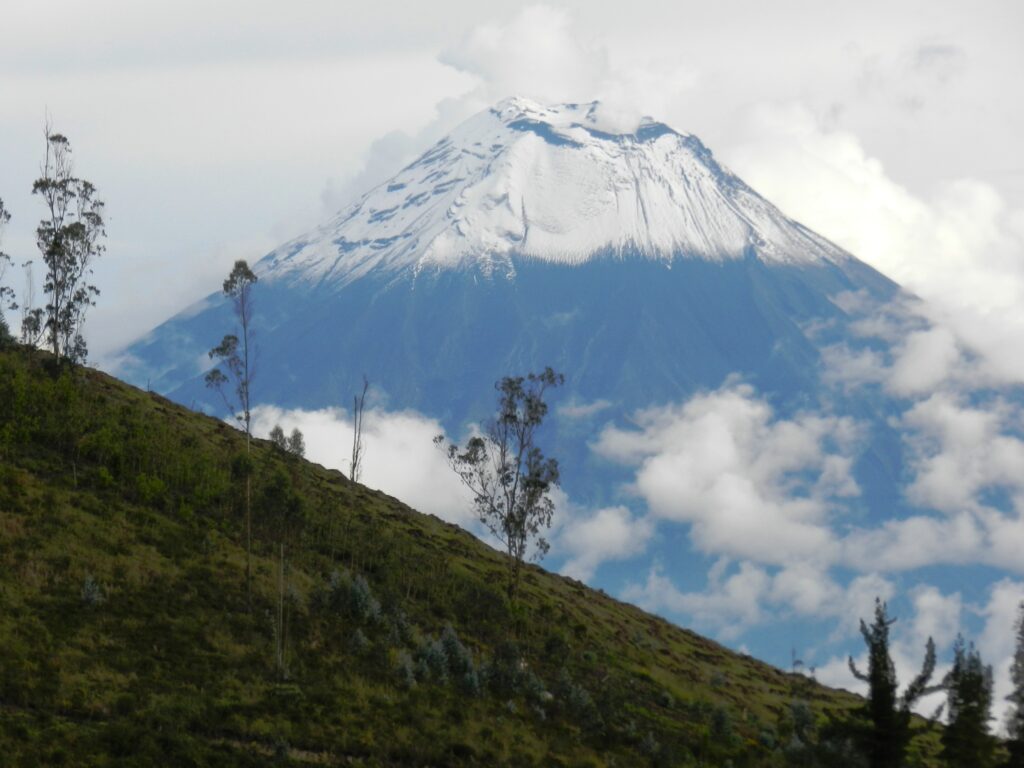
Wake up to the quiet rumble of Tungurahua
BEN FINCH
The high-altitude gateway where the Ecuadorian Andes tumble dramatically into the Amazon basin is a place of restless energy. Baños de Agua Santa—known simply as Baños—is famous for its thermal waters, deep gorges, and the active, snow-capped peak of Tungurahua volcano looming overhead. It is a town that practical travel guides often paint as an adrenaline playground, filled with neon-lit tour buses, canyoning packages, and crowded hostels.
But there is another side to this valley. If you bypass the bustling tour offices and step away from the concrete core of the town, you will find a landscape of quiet cloud forests, rushing mountain streams, and deep valleys where the air smells of wild orchids and damp earth.
For the independent traveller arriving on two wheels, by public bus, or on foot, camping here is the ultimate way to experience this transition. Sleeping under canvas allows you to bypass the sterile tourist bubble, connect directly with the local climate, and wake up before the day-trippers arrive. When you travel autonomously, your accommodation is more than just a place to drop your bags; it is the foundation of your journey. To explore deeply, you must sleep well.
To help you find that perfect, restorative rest, Wheely Tyred has scouted the finest independent campsites within ten kilometres of Baños. Each of these spots offers excellent facilities, remarkable locations, and a genuine sense of peace.
Resting in the Valley of Waterfalls
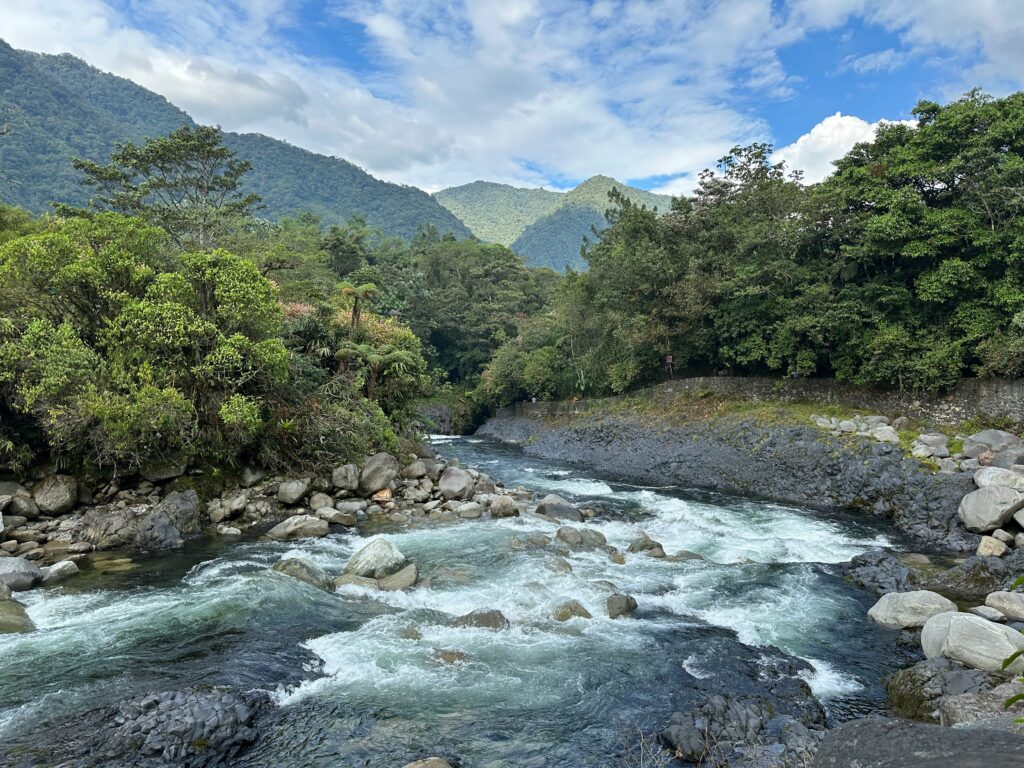
For those who prefer the quiet rustle of the cloud forest to the neon glare of adventure tourism, Baños de Agua Santa holds some of Ecuador’s finest natural sanctuaries. This summary outlines how to bypass the crowds, connect with local hosts, and secure restorative sleep in the volcanic valley.
- Aldea Real Eco-Camping: Terraced cliffside pitches overlooking the dramatic Pastaza River gorge, offering clean facilities and natural white noise from the waters below
- Pequeño Paraíso: A lush, family-run garden sanctuary in the hamlet of Río Verde, perfect for self-sufficient travellers seeking community and quiet
- Isla de Baños: A hidden garden oasis tucked behind town walls, offering a peaceful retreat within walking distance of central food markets
- Santuario de Illuchi: An organic mountain farm offering high-altitude peace and direct morning views of the smoking Tungurahua volcano
- Camping El Chonta: A rustic, back-to-basics cloud forest escape bordering Sangay National Park, designed for complete immersion in nature
- Andean-Amazonian Weather: A highly volatile microclimate that requires a full-coverage rainfly, a ground footprint, and a sleeping bag rated to 5°C
- Ethical Travel: Choosing independent, family-run campsites directly supports local conservation efforts and helps preserve the surrounding ecosystems
The Ecuadorian Sierra.
Get lost in the hills
1. Aldea Real Eco-Camping
Dramatic canyon views on the edge of the city
Perched on the high basalt cliffs overlooking the Pastaza River gorge, Aldea Real offers an extraordinary vantage point just two kilometres from the central plaza. It manages to feel entirely removed from the urban bustle while remaining easily accessible. This is not a flat, featureless patch of grass; the site is thoroughly terraced into the hillside, surrounded by native trees and flowering shrubs that attract hummingbirds throughout the day.
The facilities are exceptionally clean and well-maintained, meeting the needs of self-sufficient travellers. There are covered cooking areas with stone fireplaces, hot showers powered by gas heaters, and reliable electricity points near the main camping areas. The terraces are levelled and covered with thick, well-drained grass, meaning you will not find yourself sleeping on a slope or in a puddle if an Andean downpour rolls through.
- Why it is special: The location offers a front-row seat to the dramatic geography of the Pastaza Canyon. Watching the morning fog rise from the river basin while sipping a cup of locally grown coffee is a meditative experience
- The sleep quality: Excellent. The constant, rhythmic murmur of the river far below acts as a natural white noise machine, drowning out any distant town noise
2. Pequeño Paraíso
The ultimate tranquil haven in Río Verde
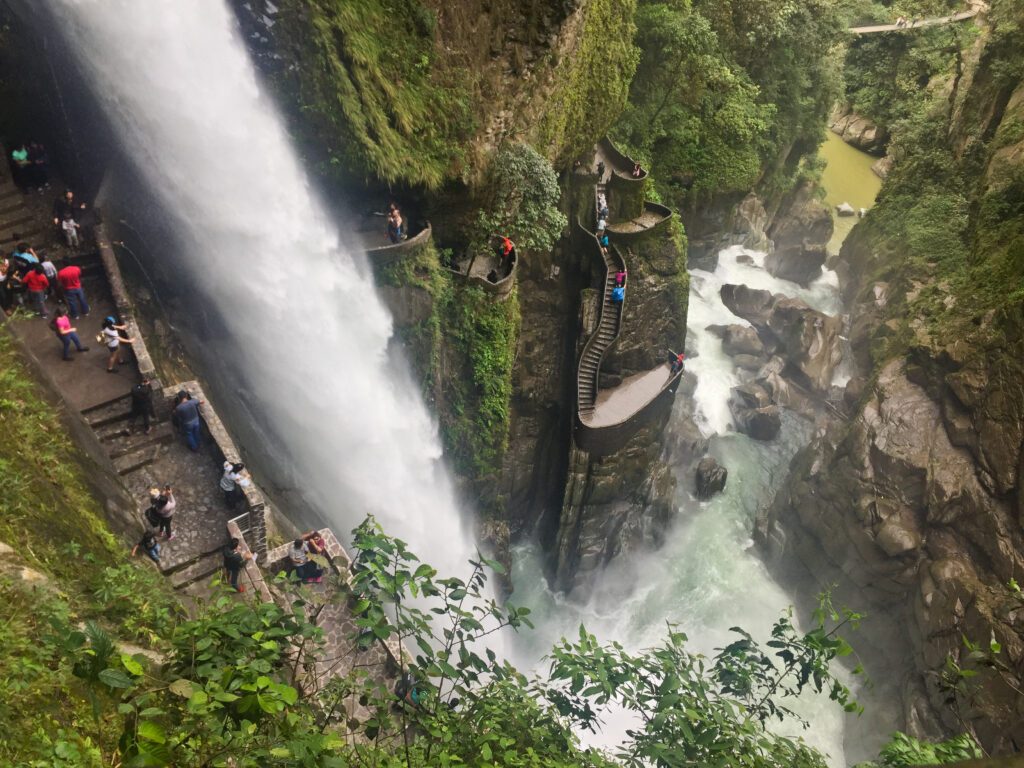
Located approximately 14 kilometres east of Baños down the valley road, Pequeño Paraíso is slightly outside the immediate city limits, but it is undoubtedly the gold standard for independent campers in the province. Run by a welcoming family who understand the specific needs of long-term travellers and overlanders, this lush, green property sits in the tiny hamlet of Río Verde, famous for the Pailón del Diablo waterfall.
The campsite is set within beautifully landscaped gardens filled with fruit trees and orchids. The infrastructure here is outstanding: a communal kitchen that is kept spotless, hot-water showers, clean dry toilets, and a small swimming pool filled with fresh mountain water. There is also a comfortable, covered common area where you can shelter from the afternoon rain, read, or share stories with fellow slow-travellers.
- Why it is special: It is a genuine community hub for independent wanderers. The owners are highly knowledgeable about local hiking routes that do not appear on standard tourist maps
- The sleep quality: Unmatched. Because it is situated far from the main road and the noisy nightspots of central Baños, the only sounds you will hear at night are the wind in the trees and the distant rush of the Chambo River
The Ecuadorian Amazon.
The most biodiverse place in the world
3. Hostal & Camping Isla de Baños
A hidden garden oasis in the heart of town
If you prefer to be close to the thermal baths and local markets but still want the autonomy of camping, Isla de Baños is the perfect compromise. Tucked behind high walls near the San Martín canyon entrance, this property features a surprisingly large, secluded garden specifically dedicated to tents and small campervans.
While the main building operates as a low-key guest house, the garden is treated as a separate, peaceful sanctuary. Campers have full access to dedicated, clean bathrooms, hot showers, and a shared outdoor kitchen. The lawn is beautifully manicured and shaded by mature trees, offering plenty of privacy from other guests.
- Why it is special: It offers the convenience of central lodging—allowing you to walk to the local market for fresh passion fruit and sourdough bread—without sacrificing the open-air freedom of camping
- The sleep quality: Very good. Despite its central location, the surrounding walls and dense vegetation buffer the campsite from street noise, ensuring a restful, undisturbed night
4. Santuario de Illuchi
High-altitude peace with volcanic vistas
For those willing to climb up the northern slopes of the valley, Santuario de Illuchi offers a camping experience that feels close to heaven. Located about five kilometres from the town centre along a winding mountain road, this eco-lodge and organic farm opens its expansive lawns to independent campers.
The campsite sits on a natural mountain shelf directly facing the Tungurahua volcano. The facilities are simple but robust, reflecting the rural, self-sufficient nature of the farm. You will have access to clean toilets, hot showers, and fresh spring water. The farm also produces its own milk, cheese, and organic vegetables, which are often available for purchase.
- Why it is special: The views are unparalleled. On a clear morning, you can lie in your tent with the rainfly rolled back and look directly across the valley at the smoking cone of one of South America’s most active volcanoes
- The sleep quality: Outstanding. The air at this altitude is crisp, cool, and incredibly clean, making for deep, restorative sleep beneath a canopy of stars untouched by city light pollution
The Galápagos.
Ecuador’s Enchanted Isles
5. Camping El Chonta
Rustic simplicity amidst the cloud forest
Located near the boundary of the Sangay National Park, El Chonta is a rustic, back-to-basics campsite designed for travellers who want to completely disconnect. It is situated roughly eight kilometres from Baños, close to several trailheads that lead deep into the cloud forest.
The facilities are intentionally minimalist but highly functional. There are clean composting toilets, a cold-water shower (refreshing after a long day of hiking), a covered fire pit for cooking, and plenty of space to pitch a tent under a rustic wooden shelter to protect against the rain. The site is bordered by primary forest, and the biodiversity here is spectacular.
- Why it is special: This is raw, untouched nature. It is common to see brilliant green toucanets, giant butterflies, and rare orchids right from your tent door
- The sleep quality: Deeply peaceful. The air is thick with the scent of wet moss and eucalyptus, and the night is incredibly quiet, save for the gentle symphony of frogs and crickets
How to prepare for camping in Baños
The microclimate of Baños is highly unpredictable due to its position between the Andes and the Amazon. To ensure you sleep well, keep these practical tips in mind:
- Prepare for moisture: Even during the dry season, afternoon showers and heavy morning mists are common. A tent with a full-coverage rainfly and a footprint is essential to keep ground moisture at bay
- Temperature drops: While days can be warm and humid, nights at this altitude (1,800 metres and above) drop quickly. A sleeping bag rated down to 5°C will keep you perfectly comfortable
- Protect your food: The lush vegetation means local wildlife, including inquisitive opossums and rodents, are active at night. Always store your food in airtight containers or hang it safely inside your tent vestibule
The Ecuadorian Coast.
Where you’ll find the very best food
Finding your perfect patch of ground in the volcanic valley
Choosing to camp in Baños is a conscious decision to reject the rushed, packaging-intensive style of travel that dominates the region. When you pitch a tent on these hillsides, you are choosing to harmonise with the rhythm of the landscape. You see the morning fog lift from the canopy, smell the sulfur on the breeze from Tungurahua, and hear the mountain torrents carving their way through basalt cliffs. This connection to the environment simply cannot be replicated behind the glass windows of a standard hostel or hotel.
Furthermore, independent camping supports local landowners and small-scale eco-projects directly. The families running these sites are often the fiercest defenders of the local cloud forests and river systems. By staying with them, you contribute to a sustainable travel economy that prioritises conservation over mass commercialisation.
Ultimately, a successful journey is measured by the clarity of your experiences and the depth of your rest. By choosing one of these verified, peaceful campsites, you ensure that your days of exploring the high-altitude trails of Ecuador are met with nights of deep, undisturbed sleep. Pack your gear, plan your route, and prepare to experience Baños exactly as it was meant to be seen: slowly, quietly, and entirely on your own terms.
Frequently asked questions about the best campsites in Baños
Most of the sites are highly accessible for independent travellers. Isla de Baños and Aldea Real are within walking or short local taxi distance of the main bus terminal. Pequeño Paraíso in Río Verde is easily reached via the local public buses running down the valley towards Puyo, which depart frequently. Santuario de Illuchi and El Chonta are located further up the valley slopes and are best reached via a local taxi or a steady, scenic uphill hike.
While Baños can be visited year-round, the driest months are typically from June to September. However, because the valley sits on the transition line between the Andes and the Amazon basin, rain is a possibility at any time. You should always be prepared for afternoon downpours and humid morning mists regardless of when you choose to travel.
Yes, it is safe. Tungurahua is closely monitored by the Geophysical Institute of Ecuador, and any changes in activity are communicated immediately. The campsites listed, particularly Santuario de Illuchi on the northern slopes, are well-established and operate in accordance with local safety protocols. If there is ever an increase in activity, local authorities issue clear alerts and manage evacuations efficiently.
The surrounding cloud forests are incredibly biodiverse, which means inquisitive opossums, birds, and small rodents are active at night. Always store your food in airtight containers or heavy-duty bags inside your tent vestibule. Alternatively, you can ask your campsite hosts if there is a secure, elevated communal kitchen space where you can safely store your supplies overnight.
Central Baños has an excellent municipal market filled with affordable, fresh local produce, local fruit, and bread. If you are staying at Santuario de Illuchi, you can purchase organic milk, cheese, and seasonal vegetables directly from the farm. For more rustic sites like El Chonta, it is highly recommended to stock up on fresh food and dry goods in the town centre before heading out.
Ecuador.
Pure wonder on the equator.