
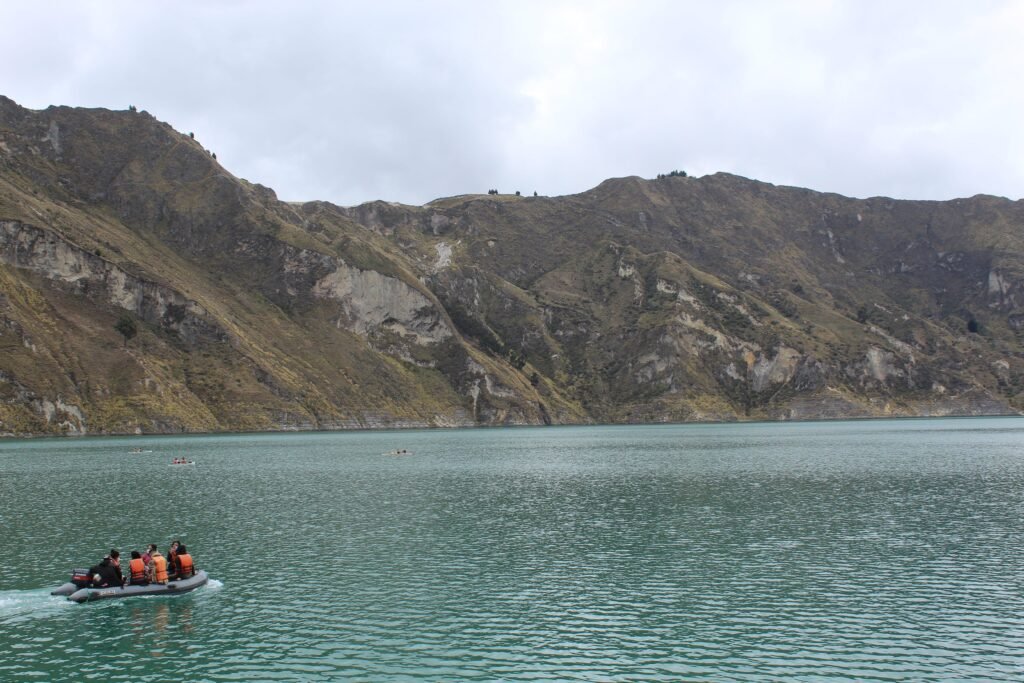
Quilotoa Lake travel safety guide 2027
The complete 2027 travel safety guide for hiking, cycling, and exploring Laguna de Quilotoa and the Quilotoa Loop safely
Stand on the rim of a brilliant turquoise volcanic crater

BEN FINCH
Travelling through Ecuador in 2027 requires a nuanced understanding of geography. As noted in our 2026 travel safety overview, headlines regarding security in Ecuador focus heavily on urban and coastal corridors, such as Guayaquil or border zones.
In contrast, the high Andean Sierra—where Laguna de Quilotoa sits within Cotopaxi province—remains one of the most tranquil and welcoming regions for international travellers.
The vast water-filled caldera of Laguna de Quilotoa and the surrounding villages of Sigchos, San José de Isinlivi, Chugchilán, and Zumbahua operate under a strong framework of community organisation. Rural Indigenous communities in the Andean highlands maintain an active presence, resulting in remarkably low rates of violent crime against visitors.
Local community justice systems and collective vigilance deter organised criminal activity, making rural highland trails far safer than urban transit hubs.
While major coastal cities may experience security measures and occasional curfews under state regulations, rural Cotopaxi functions normally for tourism. The primary safety considerations around Laguna de Quilotoa are not violent crime, but the physical environment, high-altitude exposure, trail conditions, and opportunistic petty theft during transport.
Understanding these distinctions allows you to navigate the region with confidence and ease.
Essential Quilotoa safety takeaways
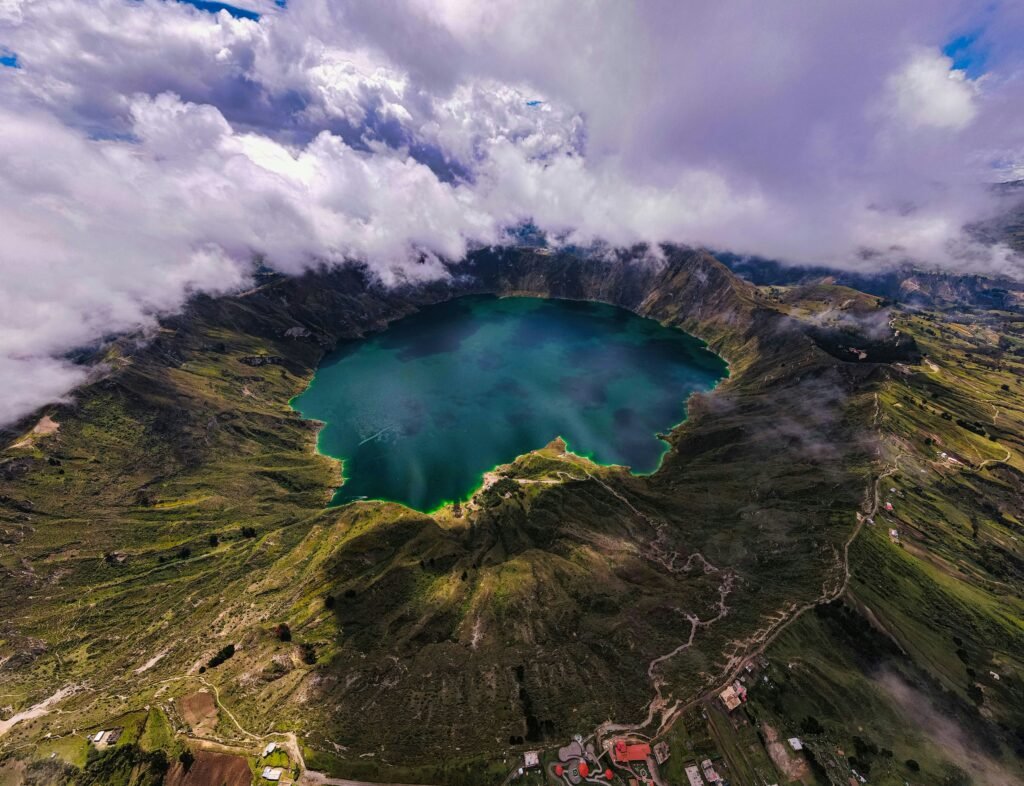
Navigating the high Andean rim requires balancing environmental respect with sensible travel tactics. Here is what every independent hiker and cyclist must keep in mind before setting foot on the Quilotoa Loop.
- Highland Stability: Violent crime remains rare in rural Cotopaxi thanks to close-knit Kichwa community organisation and local vigilance, making the highlands significantly safer for visitors than urban transit hubs
- Elevation Respect: Resting at 3,900 metres, Laguna de Quilotoa demands two to three days of proper acclimatisation in Quito or Cuenca to prevent severe soroche, alongside constant hydration
- Trail Dynamics: Descending into the crater takes 40 minutes, but climbing back up takes up to two hours through loose volcanic scree; trekking poles and sturdy boots with deep tread are essential
- Transit Vigilance: The highest risk of opportunistic theft occurs in busy bus terminals such as Quitumbe in Quito or Latacunga; keep daypacks attached to your body and store high-value gear out of overhead racks
- Weather Preparedness: Rapid weather shifts in the high páramo bring dense freezing fog by mid-afternoon, making early morning departures and three-layer windproof clothing mandatory
- Rural Etiquette: Kichwa-speaking Indigenous communities welcome respectful travellers; always ask before photographing residents and carry small US dollar bills for local family-run establishments
- Cyclist Caution: High-altitude descents wear brake pads rapidly on steep cobbles and dirt roads; watch for territorial farm dogs by dismounting and keeping your bicycle between you and the animal
Quilotoa.
The emerald crater lake
Altitude, weather, and trail safety at Laguna de Quilotoa
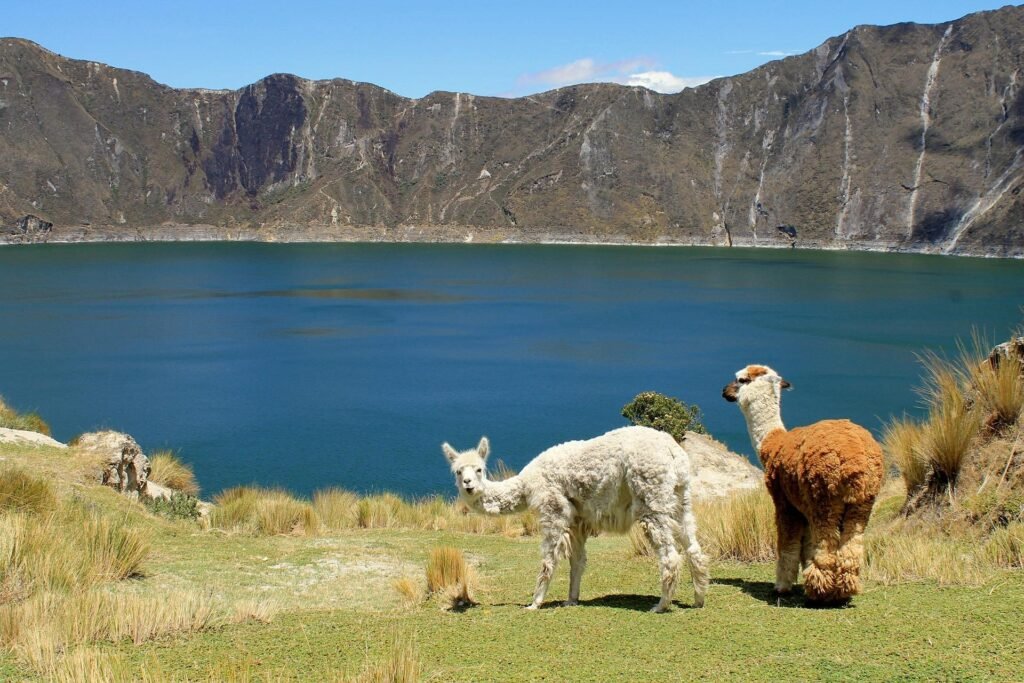
The most significant hazard facing visitors to Laguna de Quilotoa is the natural environment itself. The crater rim rests at approximately 3,900 metres above sea level, while the surface of the lake lies 400 metres below.
Altitude sickness and acclimatisation
Altitude sickness, locally known as soroche, can affect anyone regardless of physical fitness. Symptoms include headaches, nausea, dizziness, and shortness of breath.
- Spend at least two to three days acclimating in higher-altitude cities such as Quito (2,850 metres) or Cuenca before attempting rigorous hikes or rides around Quilotoa
- Stay hydrated by drinking plenty of water and herbal infusions such as coca tea or mate de coca
- Avoid heavy meals and alcohol during your first 48 hours at high elevation
- If severe symptoms occur, descend immediately. Descending even 300 to 500 metres can dramatically improve your condition
Navigate the crater rim and lake descent
Hiking around the crater rim or descending to the water’s edge offers spectacular views, but the terrain requires strict caution.
- Steep trails and volcanic scree: The trail leading down to the lake surface is steep and composed of loose volcanic sand and gravel. Trekking poles provide vital stability, and sturdy footwear with deep tread is essential
- The return climb: Walking down to the lake takes roughly 30 to 45 minutes, but ascending back to the rim takes up to two hours in thin air. Pace yourself, take frequent breaks, and carry adequate water and energy snacks
- Unstable rim paths: The 12-kilometre rim trek features narrow ridgelines with sheer drop-offs. High gusts of wind can sweep across the caldera edge without warning. Stay well clear of crumbling cliff edges and stick strictly to marked paths
Weather conditions in the páramo
Weather in the high-altitude páramo ecosystem changes in minutes. A sunny morning can quickly give way to dense freezing fog, heavy rainfall, or strong winds.
- Dress in synthetic or wool layers using a three-layer system: a moisture-wicking base layer, an insulating fleece mid-layer, and a windproof, waterproof outer shell
- Always carry a thermal hat, warm gloves, and UV-blocking sunglasses. Sun exposure at 3,900 metres is extreme, even on cloudy days
- Begin morning hikes early. Fog typically rolls over the crater rim by mid-afternoon, reducing visibility to less than ten metres and making navigation difficult without offline satellite maps
The Ecuadorian Sierra.
Get lost in the hills
Transit safety / Reach Quilotoa from Quito and Latacunga
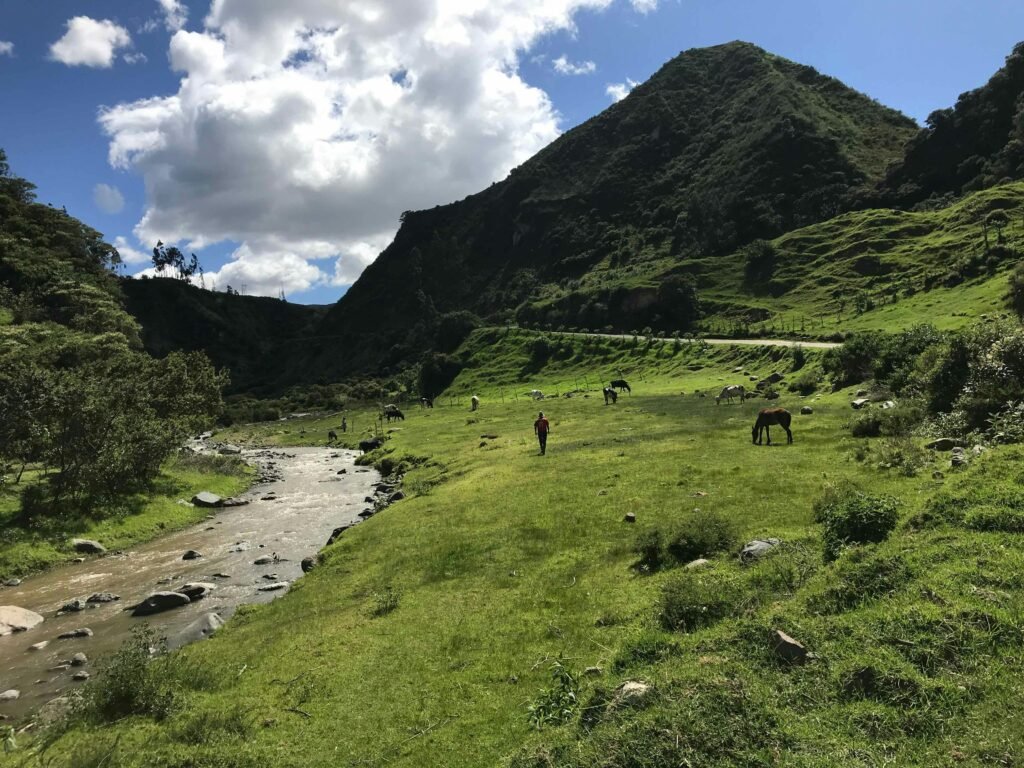
The journey to Laguna de Quilotoa usually involves public buses or private transfers departing from Quito or Latacunga. Most security incidents reported by travellers occur during transit rather than on the trails themselves.
Bus station vigilance
Major transportation hubs, including Terminal Quitumbe in Quito and the central bus station in Latacunga, are known areas for opportunistic pickpocketing and bag snatching.
- Keep your personal belongings physically attached to your body at all times. Never leave backpacks unattended on the floor or draped over chair backs in waiting areas
- Wear daypacks on your front while navigating crowded bus terminals
- Keep high-value items, such as passports, credit cards, electronics, and cash, in an under-clothing money belt or concealed chest pouch
Onboard bus security
When riding local buses between Latacunga, Zumbahua, Sigchos, and Quilotoa, standard precautions prevent gear loss.
- Do not place high-value backpacks in the overhead luggage racks or in the storage holds under the bus if it can be avoided. Bags stored beneath the vehicle can be retrieved by others during intermediate stops along the route
- Keep your main pack between your feet on the floor of the bus or on your lap
- Be cautious if a fellow passenger attempts to distract you or asks you to help adjust a window or seat; distraction techniques are common methods used by opportunistic thieves
Taxi safety in transit cities
If you require a taxi in Quito or Latacunga to reach a bus terminal, avoid hailing unmarked cars on the street. Use licensed rideshare applications or ask your hotel reception to call a registered taxi company.
Safety insights for solo travellers, women, and minorities
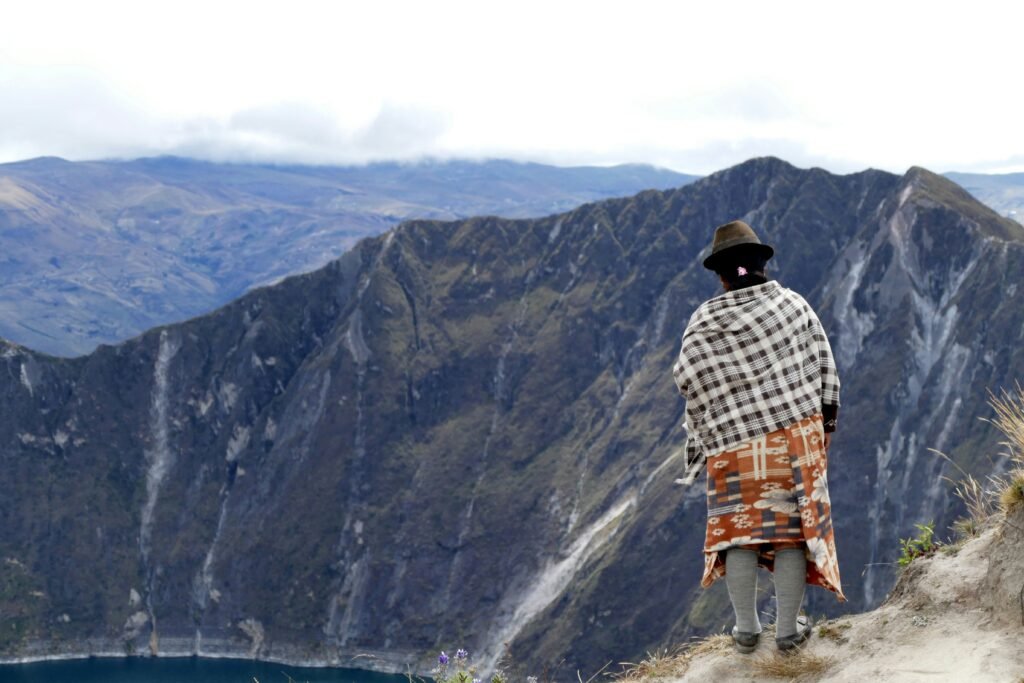
Laguna de Quilotoa and the high-altitude settlements along the Quilotoa Loop remain welcoming, hospitable destinations for independent trekkers, solo cyclists, and minority travellers.
The rural communities of Cotopaxi province operate under strong local social structures, creating a calm environment where violent crime against visitors is remarkably rare. However, navigating remote highland terrain alone requires specific practical awareness and cultural understanding.
Solo travellers and independent trekkers
Travelling solo along the loop offers immense freedom, but high elevation and sparse population between villages mean self-reliance is vital.
- Trail Communication Protocols: Always inform your hostel or guesthouse host of your intended route and estimated arrival time before setting off on day hikes between Sigchos, Isinlivi, Chugchilán, or Quilotoa. Guesthouse owners along the loop maintain active contact networks with one another and can quickly raise an alarm if a solo hiker fails to arrive before dark
- Community Dynamics at Eco-Lodges: Guesthouses in Isinlivi and Chugchilán are famous for hosting family-style communal dinners. These evening gatherings serve as ideal hubs for solo travellers to exchange real-time trail condition updates, form impromptu trekking groups, or pair up for challenging canyon crossings
- Solo Transit Safety: When travelling alone on rural public buses from Latacunga or Zumbahua, keep your main backpack on the floor directly between your legs or on your lap. Keep high-value personal electronics, physical passports, and cash in a concealed chest pouch under your shirt, particularly when stowing gear or stepping off at busy rural interchanges
- Managing Solo Emergencies: Carry a fully charged power bank, a dedicated whistle, and an updated offline mapping application with topographic contour lines, such as Maps.me or Gaia GPS. Mobile signal drops frequently in the deep river canyons between Isinlivi and Chugchilán
Solo female travellers
Female trekkers and cyclists consistently report feeling respected and secure in the mountain settlements of the high Andes.
- Street Atmosphere and Local Interactions: Catcalling and harassment are exceptionally low in rural Kichwa communities compared to large coastal cities. Local residents are generally reserved, polite, and protective of guests travelling through their ancestral lands
- Nighttime Logistics: Rural villages along the loop lack street lighting, and darkness falls quickly around 18:00 year-round near the equator. Plan your trekking pace to arrive at your accommodation by 16:30, avoiding solo walks along isolated village lanes or agricultural tracks after dark
- Private Accommodation Options: If you prefer added privacy or quiet rest after long trekking days, all major hostels along the loop offer private rooms with en-suite bathrooms alongside standard shared dormitories. Booking private rooms two to three days ahead during peak dry season (June to September) is recommended
Ethnic minorities and travellers of colour
The highland population around Laguna de Quilotoa is overwhelmingly Indigenous Kichwa. International visitors of all racial and ethnic backgrounds are predominantly perceived through the practical lens of being foreign travellers (turistas).
- Hospitality and Local Perception: Racial hostility or targeted prejudice towards minority visitors is extremely uncommon in Cotopaxi. Local host families and business owners focus on hospitality and practical tourism logistics rather than ethnic background
- Culturally Sensitive Engagement: Indigenous communities in rural Ecuador maintain traditional social structures. Show deep respect by dressing modestly in villages, avoiding intrusive photography, and engaging politely with elders and local vendors at weekly agricultural markets in Zumbahua and Pujilí
- Supporting Indigenous Enterprise: Seek out locally owned Kichwa businesses, village guides, family-run eateries (comedores), and artisan weaving cooperatives around the Quilotoa crater rim to ensure your travel spend directly benefits the local economy
LGBTQ+ travellers
Social attitudes in rural highland Ecuador remain culturally conservative, shaped by traditional community norms and religious heritage.
- Public Expectations and Discretion: While violent hostility or public confrontation towards LGBTQ+ tourists is virtually non-existent, public displays of affection among same-sex couples may draw curious looks in small traditional villages. Discretion in public spaces outside hostals is standard practice
- Welcoming Hostels and Eco-Lodges: The eco-lodges and trekking hostels along the Quilotoa Loop cater to a diverse global community of backpackers and cyclists. Guesthouses in Sigchos, Isinlivi, Chugchilán, and Quilotoa are universally open, accepting, and accustomed to hosting LGBTQ+ guests without judgment
The Galápagos.
Ecuador’s Enchanted Isles
Cycling and bikepacking safety on the Quilotoa Loop
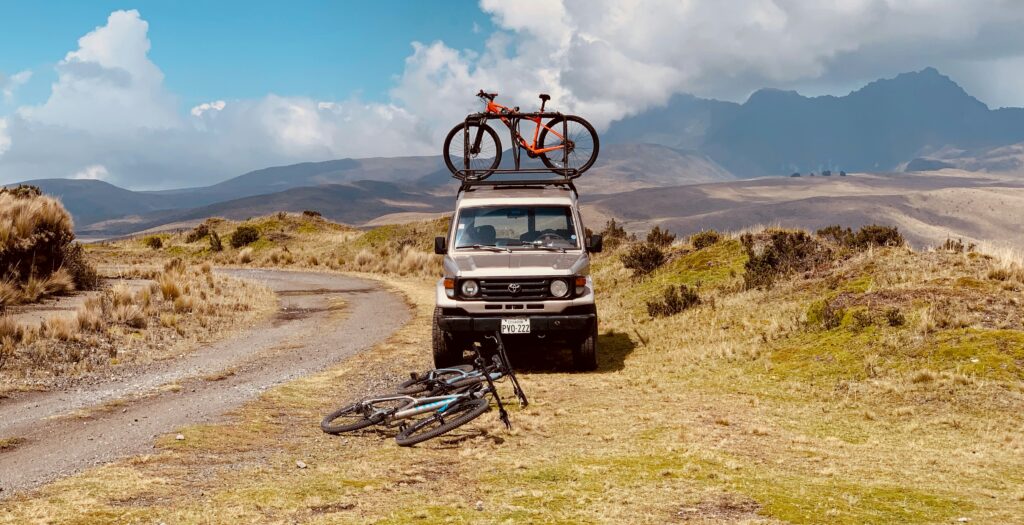
At Wheely Tyred, we know that exploring the Quilotoa Loop on two wheels offers unmatched freedom, but high elevation, steep gradients, and rugged road surfaces require specific preparation.
Road conditions and traffic
The classic Quilotoa Loop features a mix of smooth asphalt, cobbles, and unpaved gravel tracks.
- Avoiding high-speed traffic: Where possible, choose secondary agricultural tracks and unpaved backroads rather than main transit roads. Heavy trucks and rural buses can drive fast around narrow mountain bends
- Brake performance: Descending paved or cobble tracks with heavy bikepacking gear places high demand on your brakes. Ensure disc brake pads are fresh and carry spare pads. Moisture and volcanic dust can degrade braking power rapidly
- Visibility: Mountain fog can drop visibility dramatically. Use bright front white lights and flashing rear red lights at all times
Farm dogs and working animals
Cyclists in rural Ecuador will frequently encounter farm dogs guarding properties along remote tracks. I have been bitten twice.
- Most farm dogs bark to defend their immediate territory rather than to attack
- If approached aggressively by a dog, stop pedalling, dismount, and place your bicycle between yourself and the animal. Speak firmly and walk slowly past the property until the dog backs off. Avoid throwing stones unless directly threatened
- Give wide berth to horses, mules, and cattle being moved along narrow dirt roads by local farmers
Bicycle security
High-end carbon frames, gravel bikes, and modern bikepacking bags draw natural curiosity in rural villages.
- Bring a sturdy lock and secure your bicycle inside the courtyard or locked storage area of your hostel overnight. Most accommodations along the loop are happy to provide secure indoor space for bicycles
- Never leave valuable equipment, GPS computers, or camera gear attached to an unattended bike outside shops or cafes. Practice digital and gear stealth by keeping valuables packed away out of sight
The Ecuadorian Amazon.
The most biodiverse place in the world
Essential safety protocols for your 2027 Quilotoa journey
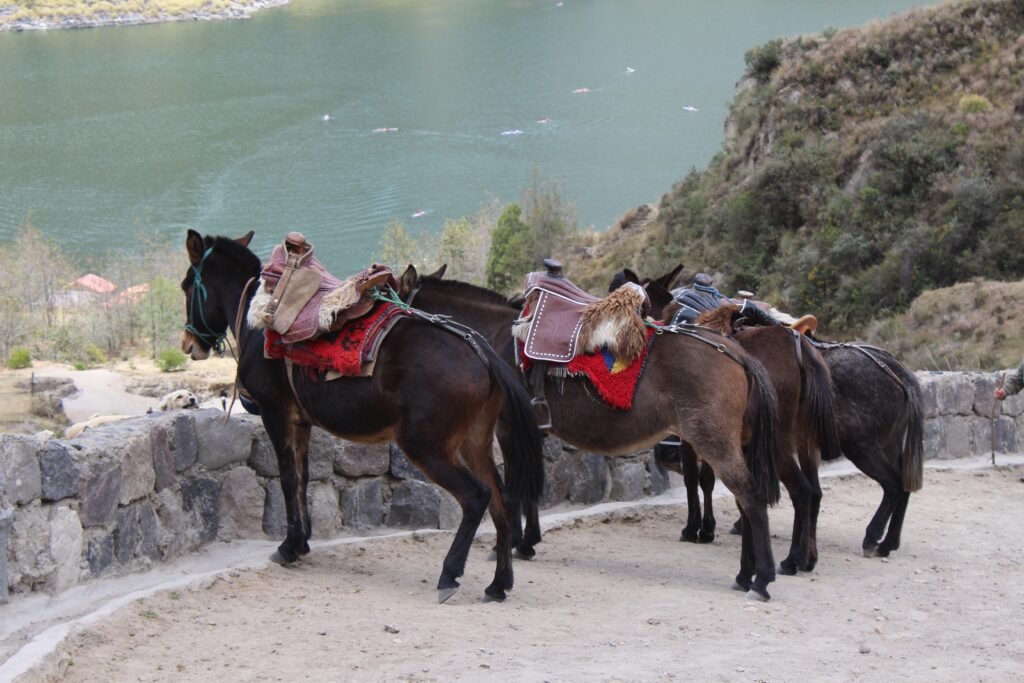
To streamline your preparation, keep these core practical tips at the top of your packing list:
- Cash is Essential: ATMs do not exist in small villages such as Isinlivi, Chugchilán, or Quilotoa itself. Withdraw sufficient US dollars in small bills ($1, $5, and $10 notes) while in Quito or Latacunga, as local vendors rarely have change for $20 or $50 bills
- Offline Navigation Apps: Download offline mapping software (such as Maps.me or Gaia GPS) with detailed topographic layers before leaving your hotel wifi. Cell signal can be spotty in deep canyons between villages
- Comprehensive Travel Insurance: Verify that your travel insurance policy specifically covers high-altitude trekking up to 4,000 metres as well as cycle touring. Standard travel policies often cap emergency medical evacuation at 2,500 metres
- Physical Identification: Always carry your physical passport and a printed copy of your travel itinerary. Security checkpoints along main highways in Pichincha and Cotopaxi provinces may conduct routine identification checks
The Ecuadorian Coast.
Where you’ll find the very best food
Ride and hike the Quilotoa Loop with confidence
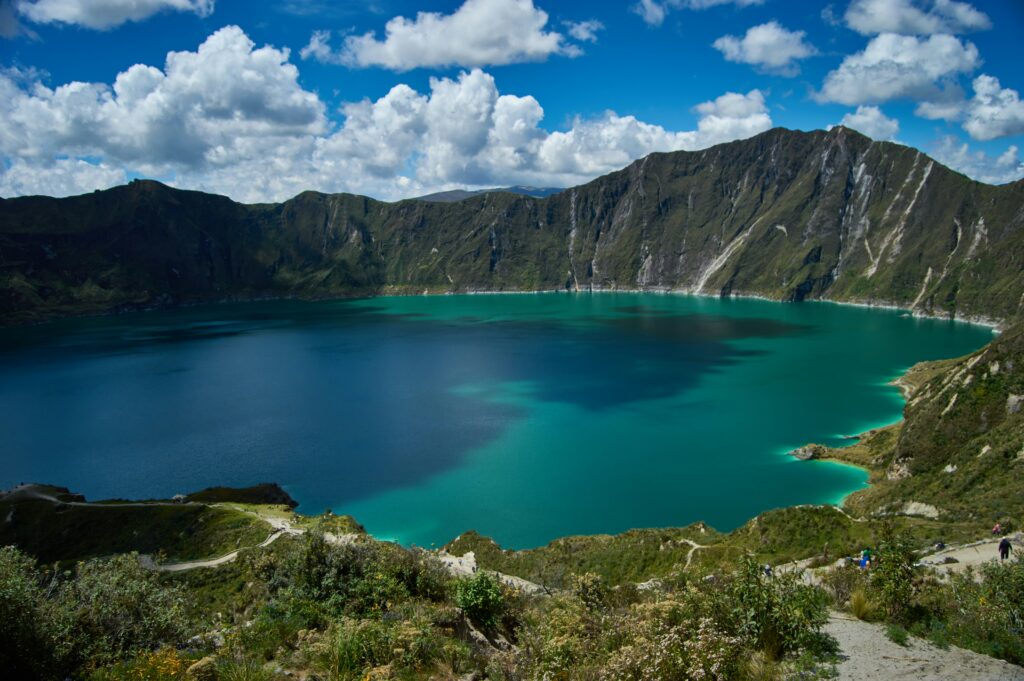
Read this far?
Exploring Laguna de Quilotoa and the surrounding mountain villages offers one of the most rewarding journeys in the Ecuadorian Andes. By respecting the physical realities of high elevation, unpredictable páramo weather, and steep crater trails, independent travellers can experience this volcanic landscape without unnecessary risk.
The warmth of the local Kichwa communities along the loop provides a reassuring backdrop to a region defined by dramatic natural splendour rather than safety concerns.
Success on the trail or saddle comes down to simple, deliberate preparation. Taking time to acclimatise thoroughly in Quito or Cuenca, keeping cash in small denominations close at hand, and securing your belongings during transit will protect you from the vast majority of practical headaches.
On the trail, early morning departures ensure you stay ahead of the afternoon fog, allowing you to appreciate the shifting turquoise hues of the crater lake in clear light.
Whether you are carrying a backpack between Isinlivi and Chugchilán or riding a bikepacking rig over rugged cobblestone passes, Quilotoa rewards those who travel thoughtfully.
Armed with current situational knowledge and a deep appreciation for local highland traditions, your 2027 trek around the crater rim will be defined by sweeping vistas, quiet mountain tracks, and authentic connections.
Affiliate Disclaimer: Some of the links on Wheely Tyred are affiliate links. If you click through and make a booking or purchase, we may earn a small commission at no extra cost to you. We only recommend gear, tours, stays, and services we genuinely use, trust, and stand behind — our editorial independence always comes first. These commissions help keep our independent cycling guides and travel stories free to read. You can also buy me a coffee here — thanks for supporting the ride!
Frequently asked questions about Quilotoa Lake travel safety
Altitude sickness, known locally as soroche, affects many travellers at 3,900 metres. The most effective prevention is spending two to three days acclimating in higher cities such as Quito or Cuenca before arriving. Hydrate constantly with water and traditional coca tea, eat light meals, and avoid alcohol during your first 48 hours. If severe symptoms like throbbing headaches or persistent nausea occur, descend to lower elevation immediately.
Yes. While urban and coastal regions face heightened security measures, rural Cotopaxi and the mountain communities surrounding Quilotoa remain exceptionally calm. Strong Kichwa community organisation and local vigilance keep violent crime rates very low. The main safety considerations here are natural hazards, steep terrain, and opportunistic theft at major transit stations.
Most opportunistic theft occurs at busy bus stations such as Terminal Quitumbe in Quito or the central terminal in Latacunga. Keep daypacks dangled on your front or firmly attached to your body. On board local buses, place your main bag on the floor between your feet rather than in overhead luggage racks or under-bus storage holds, where items can be removed at intermediate stops.
High-altitude páramo weather changes rapidly. Pack a versatile three-layer clothing system consisting of a moisture-wicking base layer, an insulating fleece, and a windproof, waterproof outer shell. Sturdy footwear with strong tread is vital for loose volcanic gravel, while trekking poles provide essential support during the steep lake descent and return climb.
No. ATMs are absent in small villages such as Isinlivi, Chugchilán, and Quilotoa. You must withdraw sufficient US dollars in Quito or Latacunga before heading into the mountains. Carry cash in small bills ($1, $5, and $10 notes), as local family-run eateries and guesthouses rarely have change for larger banknotes.
Working dogs near highland farms bark to protect their territory rather than to attack. If a dog approaches aggressively while you are cycling, stop pedalling, dismount, and position your bicycle between yourself and the dog. Speak firmly and walk slowly past the property line until the dog steps back. (I have been bitten twice by a dog while riding in Ecuador.)
Ecuador.
Pure wonder on the equator.


