
Best Travel Insurance for the Sierra, Ecuador / 2027 Guide
Essential high-altitude travel insurance for bikepacking and trekking in Ecuador’s Sierra
Navigate elevation, remote dirt tracks, and high Andean realities

BEN FINCH
Travelling through the high-altitude Sierra region of Ecuador — whether riding dirt tracks along the TEMBR (Trans-Ecuador Mountain Bike Route), trekking the Quilotoa Loop, or exploring the volcano avenues surrounding Cotopaxi — demands specialist medical travel insurance. Standard travel insurance policies routinely exclude emergency medical treatment and search-and-rescue operations above 2,500 metres (8,200 feet).
For 2027, independent adventure travellers rely on specialised multi-insurer comparison platforms, such as VisitorsCoverage and Insubuy. These platforms allow you to filter policies by altitude caps, add adventure sports riders, select zero-deductible options, and secure underwriters backed by global emergency evacuation networks.
Key takeaways for Sierra coverage
Riding and trekking through Ecuador’s high páramo requires a clear understanding of where standard policies fail. Here is everything you need to know before rolling out onto Andean dirt tracks.
- The 2,500m Exclusion Trap: Standard travel policies cut off medical and evacuation coverage at 2,500 metres — an elevation exceeded by Quito, Cuenca, and every major pass in the Sierra
- Marketplace Flexibility: Multi-underwriter platforms such as VisitorsCoverage and Insubuy allow you to filter explicitly for high-altitude trekking and off-road cycling across multiple top-rated insurers
- Zero-Deductible Priority: Selecting a $0 deductible ($0 excess) eliminates out-of-pocket clinic fees when seeking treatment in smaller highland hubs such as Latacunga, Baños, or Ambato
- Evacuation Caps Matter: Ensure your policy carries at least $100,000 to $250,000 in Emergency Medical Evacuation to cover complex rural extraction from deep river canyons or high passes
- Bikepacking Gear Sub-Limits: Standard medical policies cap baggage at low limits; high-value touring bikes, GPS units, and camera setups require dedicated riders or worldwide personal effects coverage
- Ecuadorian Paperwork Rules: Always request itemised electronic tax receipts (facturas electrónicas) and an official medical report (informe médico) featuring your full name and passport number to guarantee smooth claims processing
The Ecuadorian Sierra.
Get lost in the hills
The 2027 landscape / Why insurance aggregators dominate adventure travel
The international travel insurance market shifted significantly entering 2027, as major underwriters revise their policy fine print, tightening altitude restrictions and reclassifying off-road cycling, gravel riding, and high-altitude trekking as “hazardous activities.”
Rather than buying a rigid off-the-shelf policy that might collapse during a claims process in Quito or Cuenca, modern adventure travellers use multi-underwriter marketplaces.
Platforms such as VisitorsCoverage and Insubuy aggregate policies from leading underwriters including Seven Corners, WorldTrips, IMG, and Trawick International. This structure provides three critical advantages for navigating Ecuador’s Andean highlands:
- Granular Elevation Filters: You can filter policies specifically for high-altitude trekking or cycling above 3,000 metres without paying for unnecessary glaciated mountaineering riders if you remain on dirt roads
- Underwriter Redundancy: If one insurer changes its policy terms regarding mountain rescue or bike touring, you can instantly compare alternative underwriters on the same platform
- Transparent Deductible Customisation: You can select $0 deductible ($0 excess) plans to avoid paying out-of-pocket fees at private clinic desks in Ambato or Latacunga
Why the Ecuadorian Sierra demands specialist coverage

Ecuador’s topography drops dramatically from ice-capped volcanoes down to the Amazon basin and Pacific coast. However, the vast majority of adventure routes sit inside the high páramo ecosystems of the Sierra, where elevations create unique medical and logistical challenges.
- Quito: The historic capital rests at 2,850 metres above sea level
- Cuenca: The southern cultural hub sits at 2,560 metres
- The Quilotoa Loop: Rim trail hikes and bikepacking routes vary between 3,800 and 3,900 metres
- Cotopaxi National Park: The trail to the José F. Rivas refuge sits at 4,860 metres, with the volcanic summit reaching 5,897 metres
- Chimborazo: Ecuador’s highest peak features high refuges above 4,800 metres and an inactive volcanic peak topping out at 6,263 metres
High elevation as standard geography
Quito sits at 2,850 metres above sea level, and Cuenca sits at 2,560 metres. The moment you land at Mariscal Sucre International Airport or step off a bus in Carchi near Tulcán, you are already above the standard 2,500-metre altitude cap written into most basic travel insurance contracts.
When you venture out onto popular routes:
- The Quilotoa Loop: The crater rim sits at 3,900 metres
- Cotopaxi National Park: Driving or riding to the car park puts you at 4,600 metres; the Jose Rivas Refuge sits at 4,860 metres
- Chimborazo Reserve: The Whymper Refuge reaches 5,000 metres
If you develop Acute Mountain Sickness (AMS), High Altitude Pulmonary Oedema (HAPO / HAPE), or suffer a mechanical crash on a remote gravel road, a standard policy will deny your claim entirely if your location exceeds their stated height limit.
Remote medical evacuation logistics
Outside Quito and Cuenca, medical facilities in smaller mountain towns such as Baños de Agua Santa, Latacunga, or Guaranda are limited to basic stabilisation. Serious injuries, complex fractures, or severe altitude sickness require ground or air transport to private trauma facilities in the capital.
Emergency evacuation costs in rural Ecuador can easily exceed $20,000 to $50,000 if specialised transport is required from deep inside a river canyon or high-altitude pass.
Mainland vs Galápagos entry requirements
While Ecuador updated its entry regulations for the mainland, proof of valid international health insurance covering emergency medical expenses remains mandatory or strongly advised at immigration checkpoints, particularly if you plan to extend your journey to the Galápagos Islands or cross overland borders from Colombia or Perú.
The Galápagos.
Ecuador’s Enchanted Isles
Critical policy clauses to check before buying
When comparing plans on VisitorsCoverage or Insubuy, do not rely solely on the headline price. Inspect four specific clauses before confirming your purchase:
1. Altitude ceilings and riders
Check the exact height ceiling specified in the policy details:
- Up to 3,000m: Fine for Quito city breaks and low-elevation valleys, but useless for the Sierra routes
- Up to 4,500m: Covers almost all dirt road bikepacking, dirt-road cycle touring, and standard trekking (Quilotoa, Chimborazo lower trails)
- Up to 6,000m+: Essential if you intend to trek above high refuges or undertake non-technical volcano scrambles
- Glaciated Technical Peak Climbing: Requires dedicated mountaineering policies (such as World Nomads or specialised alpine coverage) using ropes, crampons, and ice axes for peaks such as Cotopaxi or Chimborazo summits
2. Emergency medical evacuation & mountain search
Ensure the policy includes explicit language for Emergency Medical Evacuation and Search and Rescue. Search-and-rescue covers the cost of locating and retrieving you from a remote trail, whereas emergency evacuation pays for transport from a rural clinic to a major hospital in Quito.
3. Deductibles / Policy excess
A policy with a $250 or $500 deductible might save you $15 on the upfront premium, but it forces you to pay out-of-pocket for small clinic visits, antibiotics, or X-rays in Cuenca. Opting for a $0 deductible on comparison platforms ensures that valid medical claims are covered from the first dollar.
4. Bicycles and personal belongings
Standard travel insurance covers medical emergencies, but baggage limits for high-value gear (such as custom bikepacking rigs, camera setups, or GPS devices) are often capped at $500 to $1,000 total, with per-item limits as low as $250.
If you are flying with a high-end touring or gravel bike, pair your medical travel policy with dedicated bicycle insurance or check if your home contents policy offers worldwide personal effects coverage.
Recommended comparison platforms / VisitorsCoverage & Insubuy
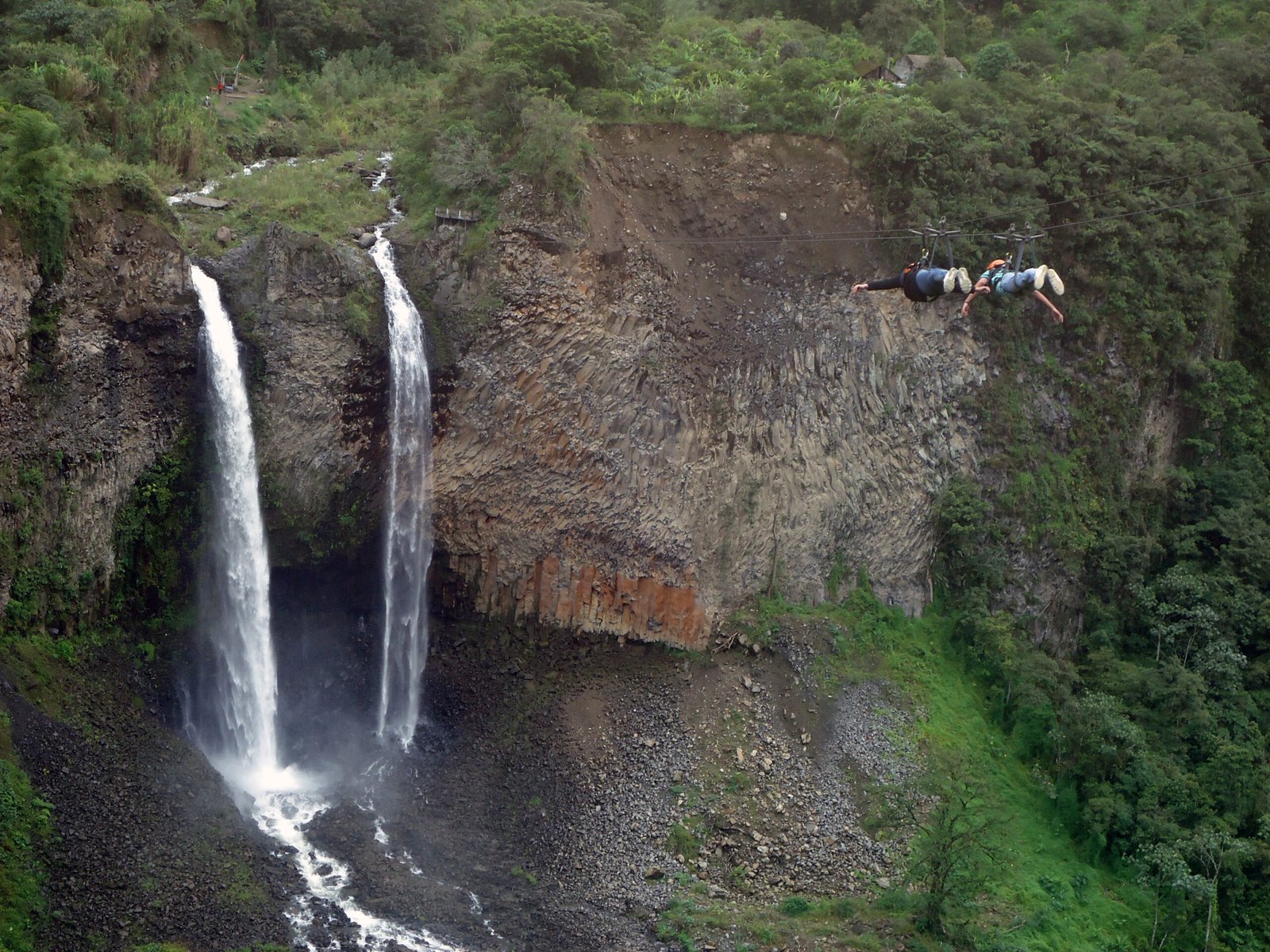
To navigate the complex network of underwriters for your trip to Ecuador, two platforms stand out for clarity, plan variety, and customer support.
VisitorsCoverage
VisitorsCoverage is one of the world’s largest travel insurance marketplaces, offering an intuitive interface that allows you to filter plans by specific trip activities and hazardous sports options.
Key benefits
- Hazardous Sports Filter: Easily add adventure riders covering off-road cycling, high-altitude trekking, and kayaking with a single toggle
- Underwriter Choices: Displays policies from top-rated providers such as Seven Corners, WorldTrips, and Arch Insurance
- Instant Proof of Coverage: Generates visa-compliant policy certificates immediately upon purchase, which you can save offline on your phone for immigration or park rangers
- Zero Deductible Selection: Simple slider allows you to narrow down options that eliminate out-of-pocket fees
Insubuy
Insubuy is renowned for its technical transparency, providing side-by-side comparison matrices that lay out fine-print exclusions, altitude caps, and emergency evacuation limits in plain language.
Key benefits
- Detailed Policy Matrices: Allows direct side-by-side analysis of up to four plans at once, highlighting altitude exclusions and sub-limits
- Direct Claims Assistance: Insubuy’s in-house customer support team acts as an advocate between you and the insurance underwriter during complex claim disputes
- Flexible Duration: Ideal for open-ended South American overland trips, allowing easy online policy renewals while already travelling abroad
The Ecuadorian Amazon.
The most biodiverse place in the world
Alternative providers compared
While VisitorsCoverage and Insubuy offer the best platform-wide choices for customising altitude riders and deductibles, individual specialised providers cater to distinct travel profiles in Ecuador.
| Provider / Platform | Max Altitude Limit | Best For | Adventure Cycling / Trekking | Key Advantage |
| VisitorsCoverage | Up to 6,000m (plan dependent) | Customisable adventure coverage | Covered via selectable sports riders | Multiple top underwriters, $0 deductible options |
| Insubuy | Up to 6,000m (plan dependent) | Fine-print comparison & side-by-side evaluation | Covered via selectable sports riders | In-house claims advocacy, clear plan brochures |
| World Nomads | Up to 6,000m+ (Explorer Plan) | Technical mountaineering & multi-sport | Covered on higher-tier plans | High gear coverage limits, built for active travel |
| SafetyWing | 4,500m | Digital nomads & long-term wanderers | Basic non-competitive riding covered | Low monthly subscription model |
| Heymondo | 3,000–4,000m (plan dependent) | Short-term vacationers & city explorers | Covered via premium add-ons | High-quality mobile app with 24/7 doctor chat |
World Nomads
World Nomads remains a popular choice for active adventure travel. Their Explorer Plan covers sports such as high-altitude trekking and off-road cycle touring up to high elevation limits. However, premiums can be higher than policies filtered through marketplaces, and gear coverage sub-limits still apply.
SafetyWing
SafetyWing operates on a rolling 28-day subscription model, making it popular with long-term digital nomads residing in Quito or Cuenca. While Nomad Insurance covers emergency medical care up to 4,500 metres, it excludes professional racing and technical mountaineering. It serves as an affordable baseline for general gravel touring and trail hiking.
Heymondo
Heymondo offers an intuitive mobile app featuring 24/7 medical consultation chat and internet calls to emergency medical assistance teams. It is a solid choice for general trips through Ecuador, provided you select their top-tier options to ensure adequate mountain trekking and sports riders are active.
What to do during a medical emergency in Ecuador
If you suffer an injury, altitude illness, or crash while travelling in the Sierra, taking the correct steps ensures your insurance claim is processed without delay:
- Contact Emergency Assistance Immediately: Before agreeing to private transport or treatment (unless life-threatening), call the 24/7 emergency hotline printed on your insurance card. The underwriter must authorise hospital admissions and evacuation logistics
- Obtain an Informe Médico (Medical Report): Ensure the attending physician writes a full report outlining the medical diagnosis, treatment administered, and cause of injury or illness
- Request Itemised Facturas Electrónicas: In Ecuador, official tax receipts (facturas) are mandatory for reimbursement. Ensure all pharmacy, clinic, and transport receipts list your full name and passport number
- File a Police Report (Denuncia) for Theft: If your equipment or bags are stolen while touring, file a formal denuncia at the nearest Policía Nacional station within 24 hours. A police report is mandatory for personal effects claims
The Ecuadorian Coast.
Where you’ll find the very best food
Ready for the dirt / Safe passage across the high Sierra
Read this far?
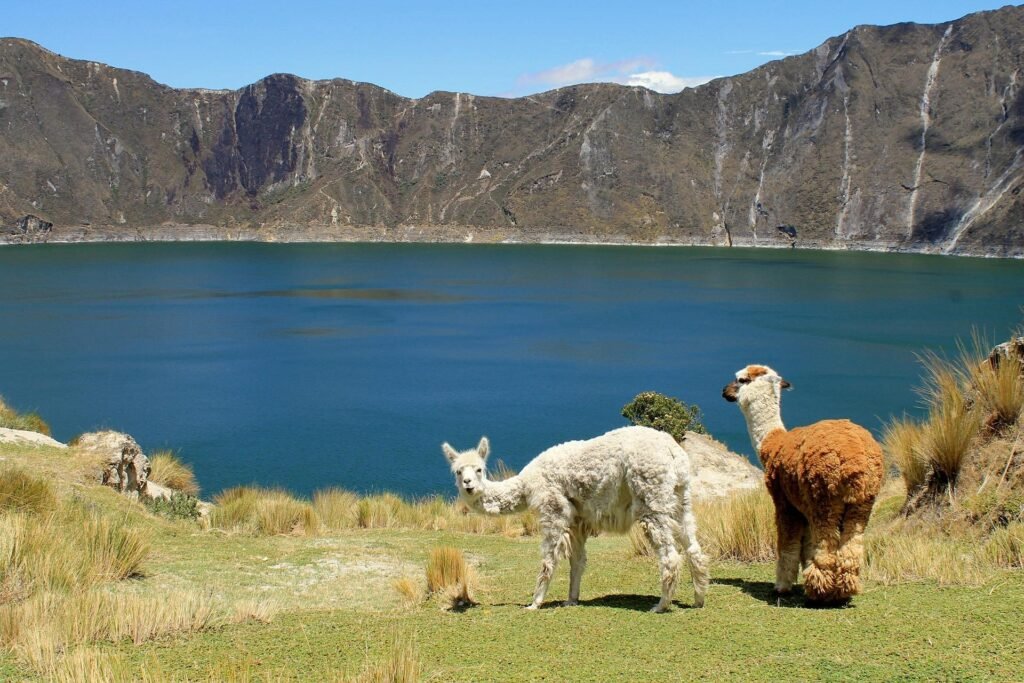
Riding or trekking through the high Andes of Ecuador remains one of South America’s premier adventure experiences. From the windswept, high-altitude tracks of Cotopaxi and the emerald crater rim of Quilotoa to the historical cobblestones of Cuenca, the Sierra delivers unmatched terrain for independent travellers.
However, the physical reality of high-elevation dirt roads leaves zero room for administrative oversights when it comes to medical safety.
Taking the time to secure a high-altitude policy through trusted platforms such as VisitorsCoverage or Insubuy means you can focus on the climb, the descent, and the breathtaking high-country views with total confidence.
The shifting travel insurance landscape highlights the necessity of using flexible comparison marketplaces. Tailoring your policy limits to match your specific maximum elevation and adding dedicated adventure sports riders ensures that an unexpected bout of altitude sickness or a mechanical crash on an isolated pass does not turn into a financial catastrophe.
Before leaving cellular coverage behind in the páramo, save offline digital copies and print physical backups of your policy certificates, emergency assistance numbers, and claim instructions. Knowing your back-end logistics and emergency medical evacuation routes are fully secured leaves you free to focus entirely on the rhythm of the trail.
Pack warm layers, respect the thin air above 3,000 metres, line up your coverage before rolling out, and enjoy every single kilometre of the journey.
Affiliate Disclaimer: Some of the links on Wheely Tyred are affiliate links. If you click through and make a booking or purchase, we may earn a small commission at no extra cost to you. We only recommend gear, tours, stays, and services we genuinely use, trust, and stand behind — our editorial independence always comes first. These commissions help keep our independent cycling guides and travel stories free to read. You can also buy me a coffee here — thanks for supporting the ride!
Frequently asked questions about high-altitude travel insurance for the Sierra, Ecuador
Yes. Quito sits at 2,850 metres above sea level, and Cuenca sits at 2,560 metres. Both cities technically exceed the standard 2,500-metre altitude cap found in basic travel insurance contracts. While routine urban visits might not trigger issues, any excursion outside city limits onto trails or mountain passes mandates explicit altitude coverage.
Standard high-altitude trekking and cycling riders cover hiking, gravel riding, or bikepacking on dirt roads and established trails up to 4,500 or 5,000 metres. Technical mountaineering coverage is required if your itinerary involves technical climbing gear — such as crampons, ice axes, and ropes — to summit glaciated peaks such as Cotopaxi or Chimborazo.
Medical travel insurance primarily focuses on health emergencies and medical evacuations. While policies include general baggage protection, per-item sub-limits are rarely high enough to cover custom bikepacking rigs or high-end touring bicycles. You should verify whether your policy offers a specific sports equipment add-on or rely on specialised bicycle coverage or worldwide personal effects extensions on your home insurance.
In rural Sierra regions, local clinics can only provide initial medical stabilisation. If advanced trauma care or emergency treatment is required, your insurer’s 24/7 emergency assistance team coordinates ground or air transport to a private medical facility in Quito. You must contact the emergency hotline immediately so the underwriter can pre-authorise transport logistics.
Aggregators allow you to compare multiple underwriters side by side, filter specifically for high-altitude elevation limits, toggle adventure sports riders, and select $0 deductible options. Following the closure of single-brand niche providers, multi-underwriter marketplaces offer far greater flexibility and policy transparency.
You must obtain an official medical report (informe médico) from the attending doctor and itemised electronic tax invoices (facturas electrónicas) containing your full name and passport number. If filing a claim for stolen equipment or baggage, an official police report (denuncia) filed at a Policía Nacional station within 24 hours of the incident is strictly required.
Ecuador.
Pure wonder on the equator.

