The deep pre-Columbian history of Puerto López / Ancient merchant lords of Manabí
Discover the archaeological heritage, Manteño culture, and pre-Columbian history of Puerto López and Machalilla National Park
Tracking the ancient footsteps of South America’s greatest ocean navigators
BEN FINCH
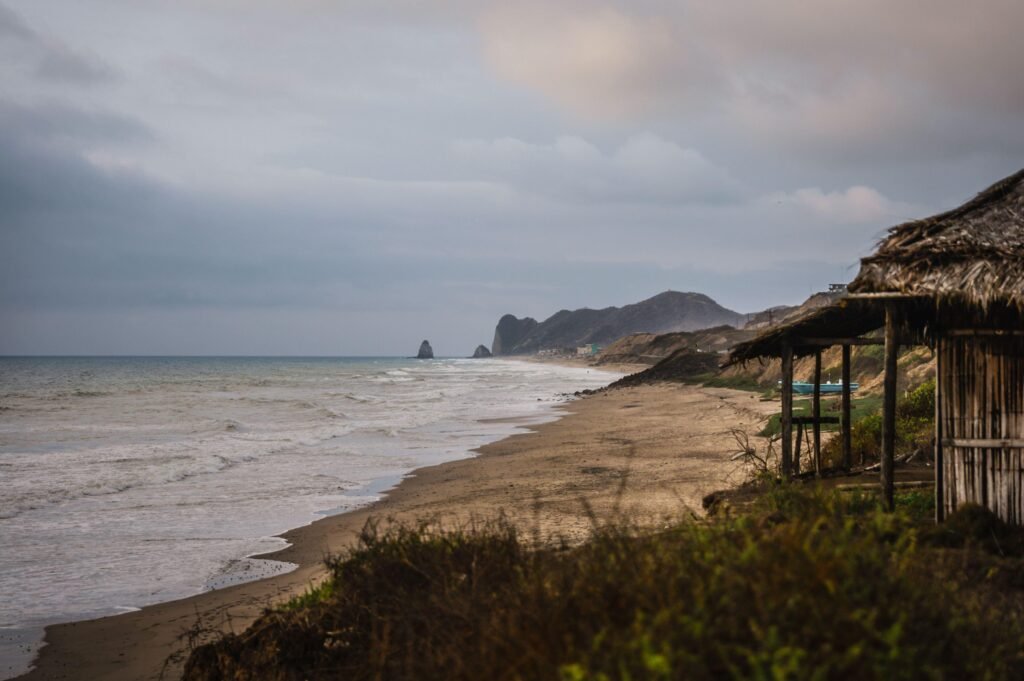
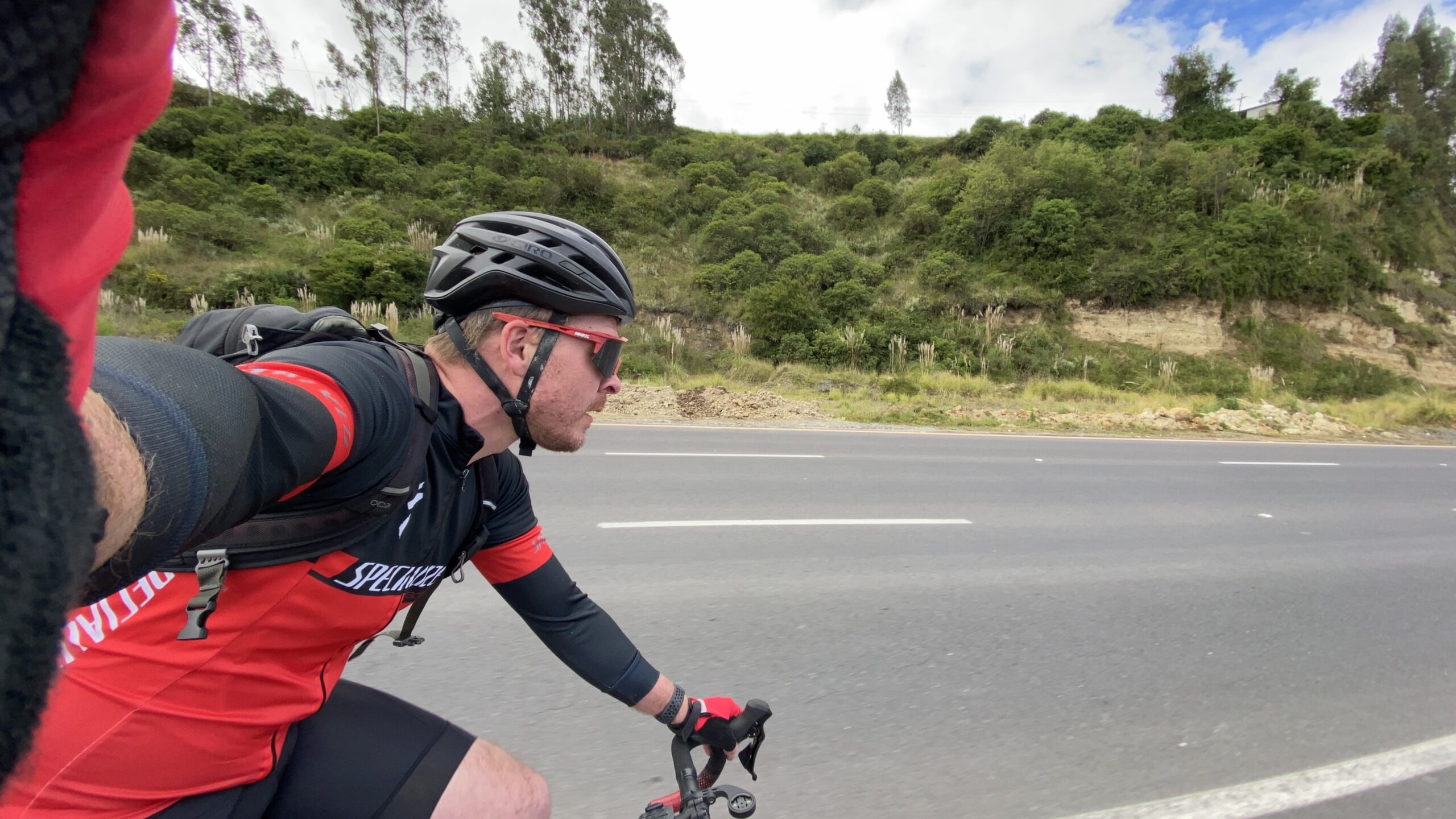
For most modern travellers, the coastal town of Puerto López is synonymous with natural spectacles. Each summer, the waters of the Pacific Ocean here come alive with the breaching bodies of humpback whales migrating from Antarctica. Visitors flock to the shores, cameras in hand, ready to board vessels heading out toward Isla de la Plata. Yet, for those who choose to slow down, park their bicycles by the waterfront, and look closer at the dramatic cliffs and dry forests of the Manabí Province, a far older story emerges.
Long before the first European vessels arrived on these shores, and centuries before the Inca Empire expanded its roads across the Andean heights, Puerto López was a bustling hub of international commerce, spiritual pilgrimage, and unparalleled maritime technology. The sweeping bay that defines the modern town was once part of a highly sophisticated network of coastal chiefdoms that ruled the waves using massive ocean-going rafts. To travel through Puerto López today is to tread upon layers of ancient civilisations that shaped the cultural and economic landscape of western South America for five millennia.
The maritime history of the Manabí coast
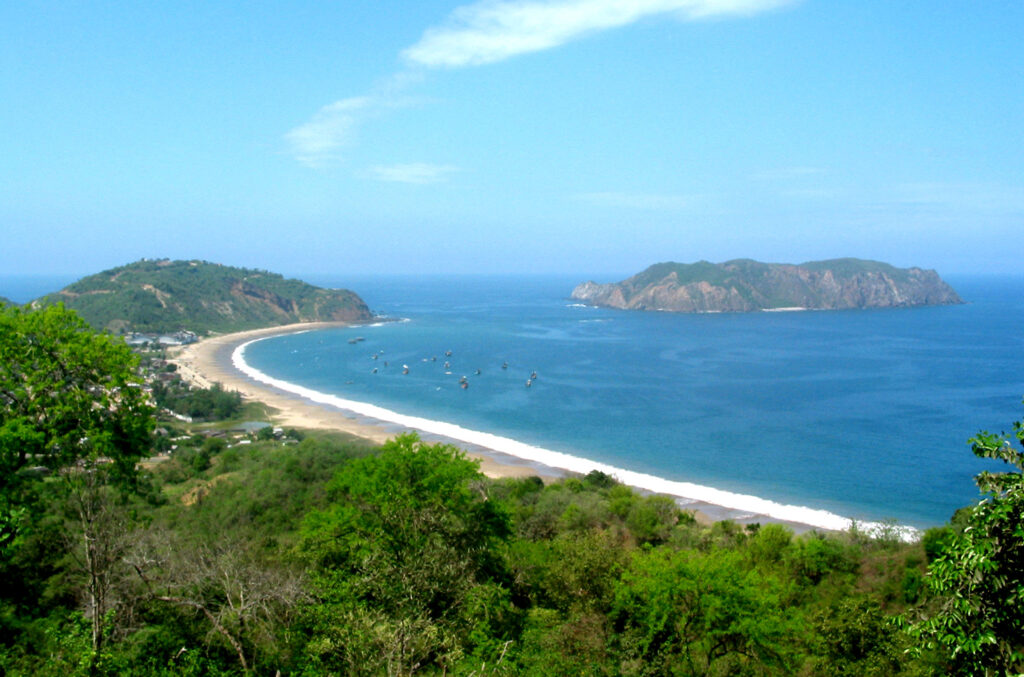
Beyond its famous whale-watching season, Puerto López serves as the gateway to 5,000 years of continuous seafaring history. For the independent traveller, this stretch of coastal Ecuador reveals a profound legacy of ancient merchant empires, deep-sea navigation, and beautifully preserved sacred landscapes.
- The ancient capital of Agua Blanca: Tucked away in the dry forests of Machalilla National Park, this ancestral site features the foundations of nearly 600 pre-Columbian stone structures, a community-run museum, and a natural sulphated volcanic lagoon used for centuries for ritual wellness
- The sacred sanctuary of Isla de la Plata: Located roughly 30 kilometres off the coast, this island acted as a critical oceanic shrine where pre-Columbian traders made offerings of fine ceramics and worked shells to ensure safe passage across the open Pacific
- The legacy of the Spondylus trade: The crimson-hued Spondylus princeps shell was the ultimate spiritual currency of the Andean world, harvested at hazardous depths of up to 30 metres by highly skilled, elite pre-Columbian free-divers
- The seafaring mastery of the Manteños: Long before European contact, the local Salangome chiefdom commanded vast Pacific trade routes using massive balsa wood rafts equipped with cotton sails and sophisticated timber centerboards known as guaras
- Ancestral pathways for slow exploration: The coastal tracks and trails winding through the Chongón-Colonche mountain range follow the exact overland corridors established by indigenous traders to move precious ocean commodities to inland valleys
- A living connection to cultural heritage: Rather than an abandoned museum piece, the archaeological treasures of the region are actively protected by a self-governing commune, offering travellers an authentic look at local cultural continuity
Puerto López.
Home to the humpback whale
The cradle of Ecuadorian pottery
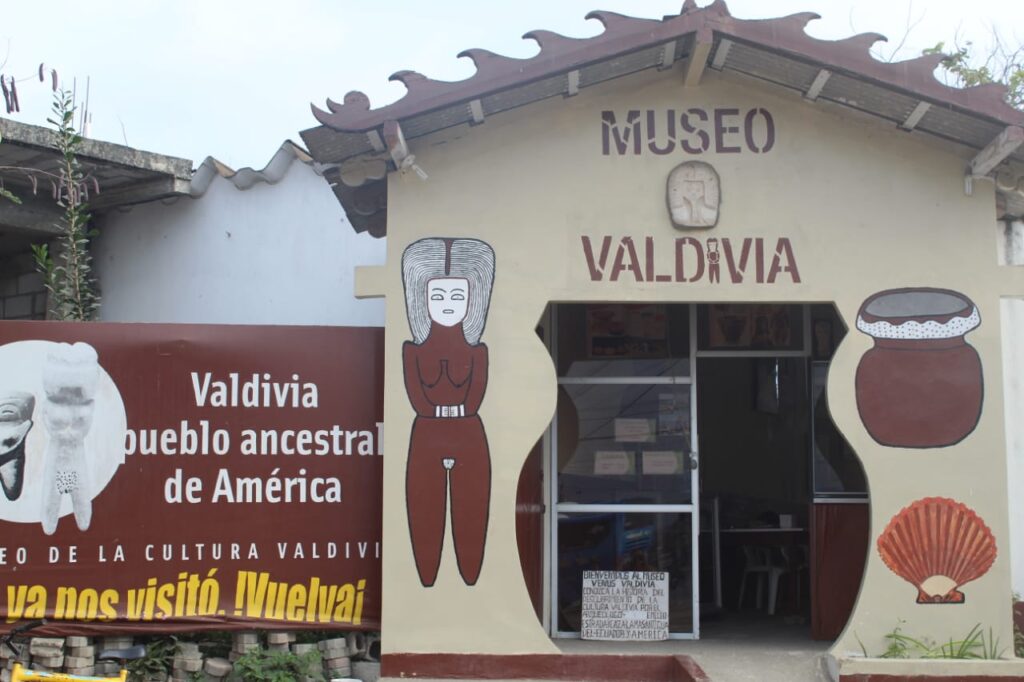
The historical depth of the Puerto López canton is staggering, representing one of the longest records of continuous coastal occupation in the Americas. Archaeological excavations throughout the region, particularly at the neighbouring site of Salango, have revealed a complex sequence of six distinct pre-Columbian cultures, stretching back to 3000 BCE.
The story begins in the Formative period with the Valdivia culture. Renowned among historians and archaeologists worldwide, the Valdivia people produced some of the earliest fired ceramics in the Western Hemisphere. They are famous for creating small, intricately carved stone and ceramic female figurines, which researchers believe played a central role in fertility rituals and community structures.
Following the transition of the Valdivia, the Machalilla culture emerged in this very region between 1500 and 900 BCE. The Machalilla people were pioneers in ceramic design, introducing the iconic stirrup-spout vessel—a functional and artistic pottery style that would later be adopted by major civilisations across Peru and the wider Andean region.
Academic work on human burials excavated at Salango shows that these Middle Formative communities possessed a profound spiritual connection to the sea. The elaborate burial arrangements of prominent community members, often accompanied by marine offerings, demonstrate that fishing, deep-sea diving, and maritime identity were already deeply embedded in the local psyche thousands of years ago.
As the centuries progressed, subsequent societies, including the Chorrera-Engoroy, Bahía, and Guangala cultures, left their marks on the landscape. Each group refined agricultural techniques in the river valleys and mastered the art of navigating the challenging currents of the equatorial Pacific, setting the stage for the final, grandest era of coastal indigenous autonomy.
The merchant lords of Salangome
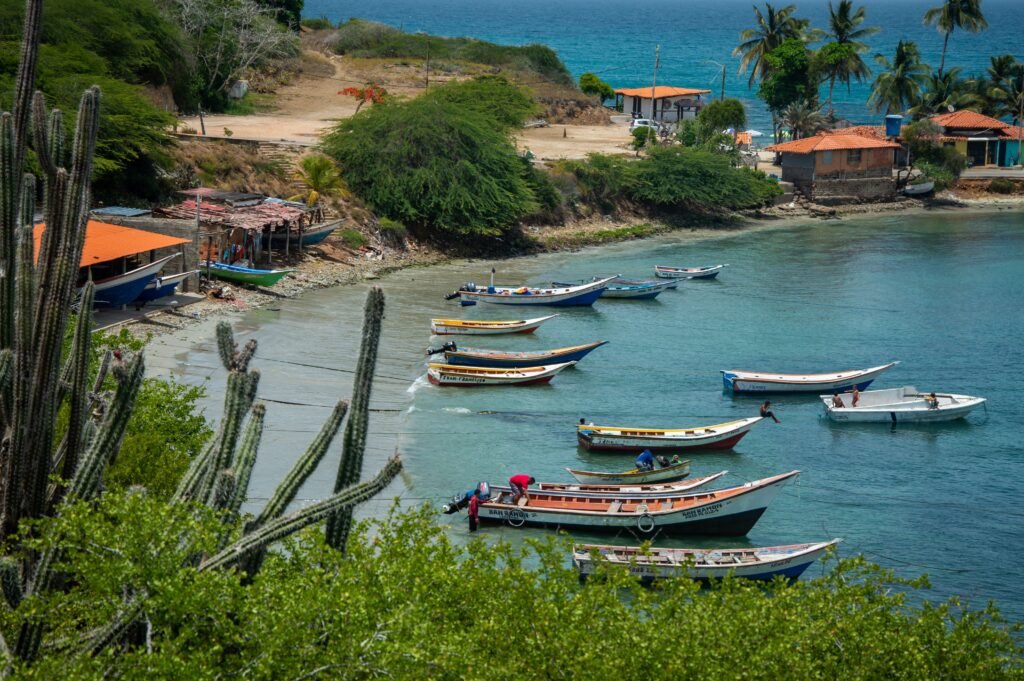
By 800 CE, the regional cultures of coastal Manabí had integrated into the Manteño-Huancavilca civilisation. This was not a centralised empire like the Inca, but rather a powerful confederation of highly organised seafaring chiefdoms. The area surrounding modern Puerto López was the political and economic core of one of the most prominent of these polities: the Señorío de Salangome, or the Lordship of Salangome.
The Salangome chiefdom exercised authority over a vast territory, controlling major coastal settlements at modern-day Machalilla, Puerto López, Salango, and the inland valley of Agua Blanca. The Manteños were, above all else, masters of the ocean. While contemporary civilisations in the high Andes focused their engineering efforts on mountain terraces and stone fortresses, the Manteños engineered the waves.
They constructed enormous balsa wood rafts capable of carrying up to twenty or thirty crew members, along with tonnes of commercial cargo. These were not primitive floats; they were sophisticated merchant vessels equipped with complex systems of centerboards, known as guaras, and large cotton sails that allowed the sailors to tack against the wind.
Using these vessels, the merchants of the Salangome league established maritime trade networks that stretched north along the Pacific coast to Central America and western Mexico, and south to the desert coasts of Peru and Chile. Wheely Tyred views these ancient routes as the ultimate ancestral inspiration for long-distance independent travel along the South American coast.
The Ecuadorian Coast.
Where you’ll find the very best food
The sacred currency of the ocean
At the heart of this vast commercial empire was a single, highly prized commodity: the shell of the Spondylus princeps, a spiny, warm-water bivalve known colloquially as the thorny oyster. Found in the deep, warm waters off the coast of Manabí, the Spondylus shell was far more than a decorative item. Throughout the ancient Andean world, it was considered a sacred substance, the red gold of the ocean, and the ultimate symbol of fertility, rain, and divine power.
Because the shell only thrives in warm equatorial currents, it was non-existent in the cold waters of Peru and Chile. For the kingdoms of the high Andes, obtaining Spondylus was essential for conducting state religious rituals and securing the favour of the gods for seasonal rains. The Manteños of Puerto López and Salango held a virtual monopoly on the collection and distribution of this sacred shell.
Diving for Spondylus was an elite, highly dangerous occupation. Ancient divers would descend to depths of over twenty or thirty metres, using heavy stones to pull themselves down to the rocky reefs where the shells clung. Isla de la Plata, located roughly thirty kilometres off the coast of Puerto López, served as an essential oceanic sanctuary and ritual deposit site for this trade.
The island was a place of pilgrimage where merchants offered fine ceramics and worked shells to ensure safe voyages across the open sea. The Manteños processed the shells into beads, pectoral ornaments, and whole ritual trumpets, trading them across thousands of miles in exchange for copper, silver, gold, and fine emeralds from the interior.
The day the old world met the new
The extraordinary scale of the Manteño maritime operation is preserved in the earliest Spanish historical chronicles. On 26 September 1526, Bartolomé Ruiz, the chief pilot for the Spanish conquistador Francisco Pizarro, was sailing south along the uncharted Pacific coast when his crew spotted an immense sail on the horizon.
As they closed the distance, the Europeans were astonished to find a massive indigenous balsa raft riding low in the water under the weight of its cargo. Ruiz ordered his men to intercept the vessel near Cabo Pasado, just north of the Puerto López region. The subsequent Spanish accounts offer a detailed inventory of the cargo on board, providing definitive proof of the wealth and sophistication of the Manteño trading network.
The raft was carrying a wealth of merchandise intended for trade along the southern coast. Among the items were beautifully woven textiles of wool and cotton dyed in vibrant reds, blues, and yellows, worked silver and gold ornaments, delicate balances for weighing precious metals, and vast quantities of Spondylus shells.
The Spanish chroniclers noted that the indigenous crew were highly disciplined, skilled navigators who possessed an intimate knowledge of the stars and oceanic currents. This historic encounter was the first official contact between Europeans and the advanced civilisations of the northern Andes, revealing a coastal society that was wealthy, independent, and completely integrated into international maritime commerce.
The Galápagos.
Ecuador’s Enchanted Isles
Agua Blanca / A living connection to the Manteño past
To truly appreciate the architectural and social organisation of the Salangome chiefdom, one must journey just a few kilometres inland from the beach of Puerto López into the heart of Machalilla National Park. Here lies Agua Blanca, an ancestral community and one of the largest and best-preserved pre-Columbian archaeological sites in western Ecuador.
At its peak during the Manteño period, Agua Blanca was a major urban centre and likely served as the administrative capital of the Salangome chiefdom. The site contained nearly six hundred stone structures, including large public temples, spacious plazas, and elite residential complexes built on stone foundations. The Manteños used a unique architectural style that combined dry-stone masonry with timber and thatch superstructures.
The most iconic artefacts recovered from Agua Blanca are the famous Manteño stone seats. Carved from solid blocks of grainstone, these U-shaped chairs feature representations of human figures, jaguars, and birds crouching beneath the seat. Archaeologists believe these chairs were symbols of supreme political and religious authority, used exclusively by the lords of the chiefdom during assemblies and ceremonial councils.
What makes Agua Blanca truly extraordinary is that it is not merely a collection of abandoned ruins. The modern mestizo and indigenous inhabitants of the valley have formed a self-governing commune dedicated to researching, protecting, and managing their ancestral heritage.
Visitors can explore the community-run museum, walk among the ancient stone foundations, and bathe in a natural sulphated volcanic lagoon that has been used for wellness and ritual cleansing for thousands of years. It represents a perfect example of community-led ecotourism that prioritises local knowledge and preserves cultural continuity.
From Jipijapa to the modern canton
The arrival of the Spanish Empire brought devastating changes to the coastal region. European diseases and forced labour drastically reduced the indigenous population along the Manabí shore, and the grand trading rafts eventually vanished from the horizon. However, the deep-rooted relationship between the local population and the sea could not be erased.
Throughout the colonial era and into the early years of the Ecuadorian republic, the small settlements around the bay maintained their focus on artisanal fishing and subsistence agriculture. The territory was originally administered as a rural parish under the Jipijapa canton. In the late nineteenth and early twentieth centuries, the local port, then known to some as Puerto de Machete, began to see a resurgence in maritime trade.
The area experienced a significant economic boost through the regular arrival of international steamships seeking regional goods such as tagua nuts, also known as vegetable ivory, which were exported worldwide for button manufacturing. The growing importance of the port caught the attention of regional leaders, and the bay was eventually renamed Puerto López in honour of Daniel López, a prominent philanthropist and developer from Jipijapa who championed the infrastructure and civic growth of the coastal communities.
The modern administrative identity of the area was solidified on 3 August 1994, when the National Congress of Ecuador officially established the Puerto López canton. This milestone granted the local community greater autonomy to manage its rich natural and cultural resources, paving the way for the sustainable tourism model that defines the town today.
The Ecuadorian Sierra.
Get lost in the hills
The timeless pull of the Pacific coast
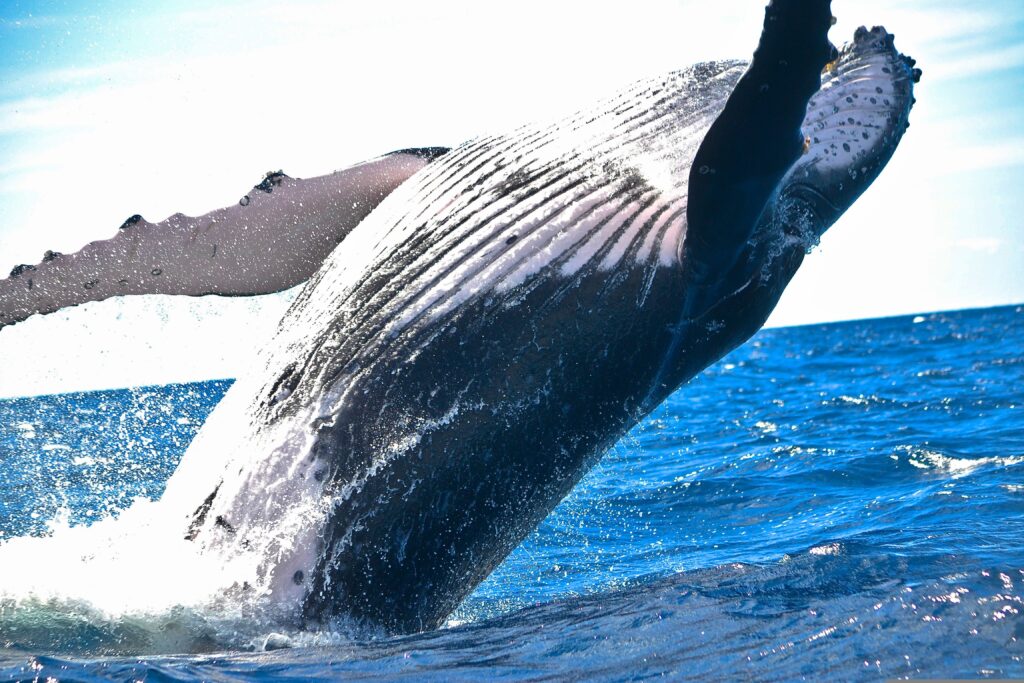
For the modern traveller exploring Ecuador on two wheels or on foot, Puerto López offers a rare opportunity to experience a landscape where history and nature are completely inseparable. The very roads and trails that wind through the Chongón-Colonche mountain range and run parallel to the cliffs follow the ancient pathways used by the Manteño people to transport goods between the inland valleys and the sea.
When Wheely Tyred explores this stretch of the Pacific coast, the focus extends far beyond the beautiful beaches and the seasonal arrival of the marine megafauna. The true magic of Puerto López lies in its ability to connect us with a profound human legacy of exploration, resilience, and connection to the natural world.
From the exquisite 5,000-year-old pottery shards uncovered in the dust of Salango to the living indigenous traditions proudly maintained in the dry forests of Agua Blanca, this coastal enclave remains a testament to the enduring spirit of the original masters of the Pacific.
The Ecuadorian Amazon.
The most biodiverse place in the world
Frequently asked questions about the history of Puerto López
During the nineteenth and early twentieth centuries, the port was known to some as Puerto de Machete, operating as a quiet fishing village that grew by exporting regional goods like tagua nuts (vegetable ivory). The town was eventually renamed Puerto López to honour Daniel López, a prominent philanthropist from the nearby town of Jipijapa who funded and championed the civic growth and infrastructure of these coastal communities.
Agua Blanca is an exceptional stop for those travelling via local transport, foot, or bicycle. You can explore a locally managed museum packed with pre-Columbian artefacts, hike through the archaeological remains of the Manteño civilisations, and finish your journey with a restorative swim in a natural, therapeutic sulphated volcanic lagoon located deep within the valley forest.
The indigenous Manteño merchants engineered ocean-going balsa wood vessels that astonished early Spanish navigators. Capable of carrying up to thirty crew members and tonnes of cargo, these rafts utilised a sophisticated system of movable timber centerboards (guaras) and large cotton sails, allowing them to navigate complex ocean currents and travel as far north as Mexico.
The thorny oyster shell only thrives in the warm equatorial waters off the Ecuadorian coast. Because it was non-existent in the cold currents further south, the kingdoms of the high Andes viewed it as a sacred substance—the red gold of the ocean. It was considered the ultimate symbol of fertility, rain, and divine power, making it an essential currency for state religious rituals.
The U-shaped stone seats, carved from solid blocks of grainstone, are the most iconic artefacts of the Manteño-Huancavilca culture. Featuring detailed carvings of human figures, birds, or jaguars crouching beneath the seat, these chairs were supreme symbols of political and religious power, used exclusively by the rulers of the chiefdom during formal councils.
For much of its post-colonial history, the coastal settlement was managed as a rural parish under the wider Jipijapa canton. Puerto López officially secured its own administrative autonomy on 3 August 1994, when the National Congress of Ecuador established it as an independent canton, allowing the local community to directly oversee its sustainable tourism and historical preservation.
Ecuador.
Pure wonder on the equator.