What to pack for independent travel to the Galápagos, Ecuador
Biosecurity, luggage limits, and entry mechanics for Galápagos island hopping
Gear, footwear, and climate layers
BEN FINCH
Independent travel across the Galápagos archipelago offers an unmatched degree of freedom, allowing you to move at your own pace between the inhabited islands of Santa Cruz, San Cristóbal, and Isabela.
However, trading the floating convenience of a luxury cruise vessel for land-based island hopping shifts the entire burden of logistics onto your shoulders. Every item you carry will be hauled across ferry gangways, hoisted into small water taxis (pangas), tossed into the open holds of public speedboats, and hauled over uneven lava trails.
Pack too much, and you will find yourself struggling with bulky luggage on wet landings; pack incorrectly, and you risk violating strict biosecurity laws or finding yourself ill-equipped for equatorial UV exposure, sudden tropical downpours, and sharp basalt terrain.
This packing guide cuts through generic travel advice to deliver a precise, field-tested kit list tailored specifically to the physical realities of independent travel in the Galápagos.
The highlights / What to pack for the Galápagos
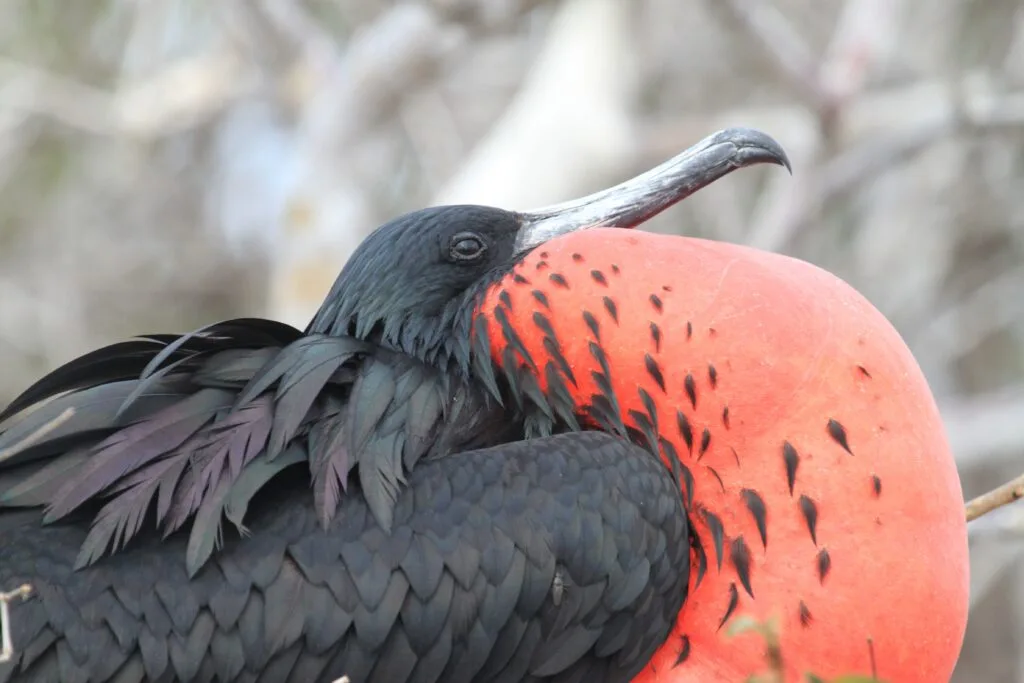
Essential gear, logistical reality, and equatorial strategy for self-directed island hopping. Navigating the Galápagos independently demands a sharp pivot from traditional cruise preparations. This breakdown summarises the physical, environmental, and administrative realities every land-based traveller must master to move smoothly between islands.
- Biosecurity protocols: Scrubbing boot soles and passing strict ABG inspection checks at Quito or Guayaquil airports is mandatory to prevent invasive species from threatening fragile ecosystems
- Seasonal adaptations: The cool Garúa season (June–November) requires a 3mm wetsuit and windproof layers, while the warm season (December–May) demands breathable UPF 50+ rash guards and lightweight rain shells
- Luggage mechanics: Soft-sided TPU duffels easily outperform hard-shell suitcases when being tossed into open public speedboat holds or loaded onto nimble water taxis (pangas)
- Wet landing essentials: A heavy-duty 10L–20L dry bag with welded seams is non-negotiable for keeping cameras and dry clothes safe when stepping off small boats into knee-deep surf
- Footwear strategy: Dual footwear is vital—pack strap-secured water sandals for slippery, algae-covered landings and rugged trail runners to handle razor-sharp basalt lava paths
- Equatorial sun protection: High UV indices demand non-nano zinc oxide mineral suncream to safeguard skin and protect marine habitats from chemical bleaching
- Cash reserves: Crisp, un-torn US dollar banknotes ($5, $10, and $20 notes) are essential for park entrance fees, local water taxis, and island meals where card machines routinely fail
The Galápagos.
Ecuador’s Enchanted Isles
Essential biosecurity and entry requirements
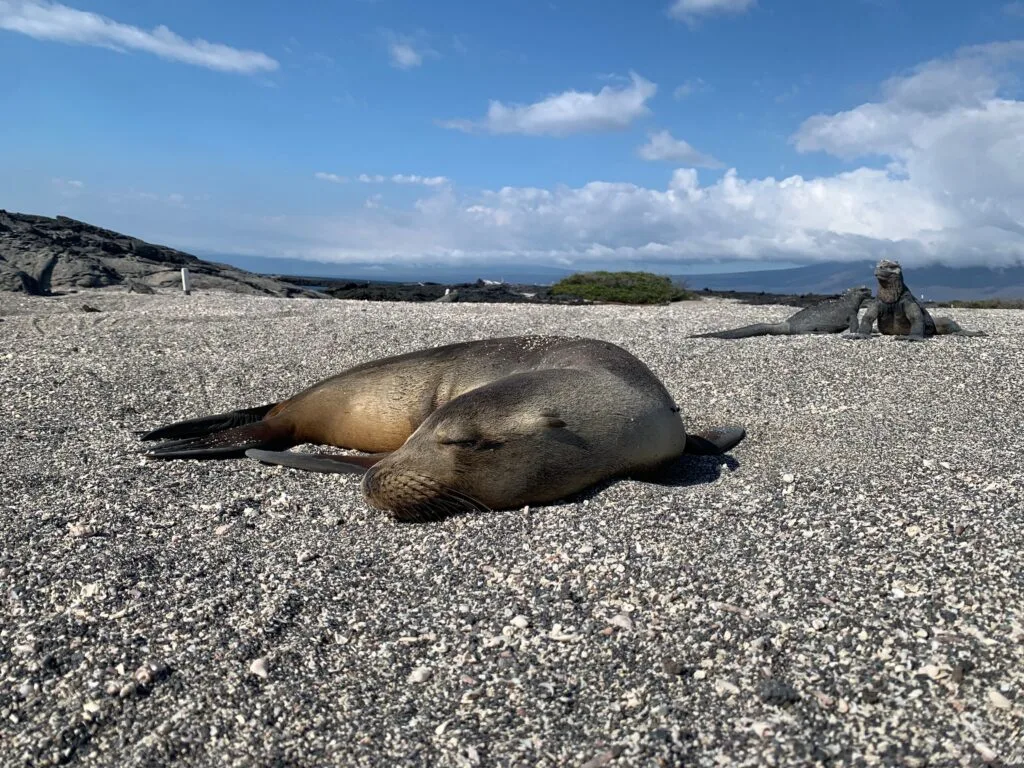
The Agency for the Regulation and Control of Biosecurity and Quarantine for Galápagos (ABG) enforces strict invasive species controls to safeguard the archipelago’s fragile ecosystems.
Independent travellers must submit all luggage to X-ray scanning and physical inspection at mainland departure airports (Quito or Guayaquil) before check-in. All footwear, camping gear, and daypacks must be scrubbed completely free of mainland soil, seeds, and organic matter prior to departure.
Mainland airport flow
- Pay $20 TCC Fee: Cash only
- ABG Luggage Scan: Bags sealed
- Airline Check-In: Luggage tagged
The biosecurity protocol begins on the Ecuadorian mainland long before you touch down at Baltra Airport (GPS) or San Cristóbal Airport (SCY). At either Mariscal Sucre International Airport in Quito (UIO) or José Joaquín de Olmedo International Airport in Guayaquil (GYE), you must locate the Consejo de Gobierno del Régimen Especial de Galápagos counter to purchase your Transit Control Card (TCC) for $20 USD in cash.
Immediately following this, your checked and carry-on bags must pass through the ABG bio-inspection point.
Inspectors search specifically for organic materials that could introduce invasive plant species, agricultural pests, or pathogens to the islands. The following items are strictly prohibited and will be confiscated:
- Fresh fruits, vegetables, and unpasteurised dairy products
- Raw seeds, nuts, coffee beans (unless commercially roasted and vacuum-sealed), and legumes
- Live plants, cuttings, or soil samples
- Unprocessed animal products, raw meat, or fresh seafood
- Untreated wooden crafts or items containing bark
Beyond food items, ABG officials pay close attention to trekking boots, trail running shoes, and Velcro straps on water sandals. The deep lugs of hiking footwear frequently carry seeds, soil microbes, and fungal spores from mainland trails such as the Ecuadorian Andes or the Amazon basin.
Before packing your shoes, scrub the outsoles thoroughly with a stiff-bristled brush, hot water, and mild detergent until no visible dirt or mud remains in the treads. Pay special attention to Velcro closure straps on sandals and dry bag seams where seeds easily embed themselves.
Once your bags pass the ABG inspection, a plastic security seal or heavy zip-tie will be attached to the zips. You must not break this seal until you have cleared final customs arrival procedures in the Galápagos.
Furthermore, single-use plastic items—including disposable plastic shopping bags and single-use water bottles—are prohibited under provincial environmental laws. Ensure all liquids are carried in reusable containers.
Note that flying recreational drones within the Galápagos National Park is strictly illegal without an official commercial research permit granted directly by the Ministry of Environment.
Seasonal gear adaptations / Garúa vs warm season
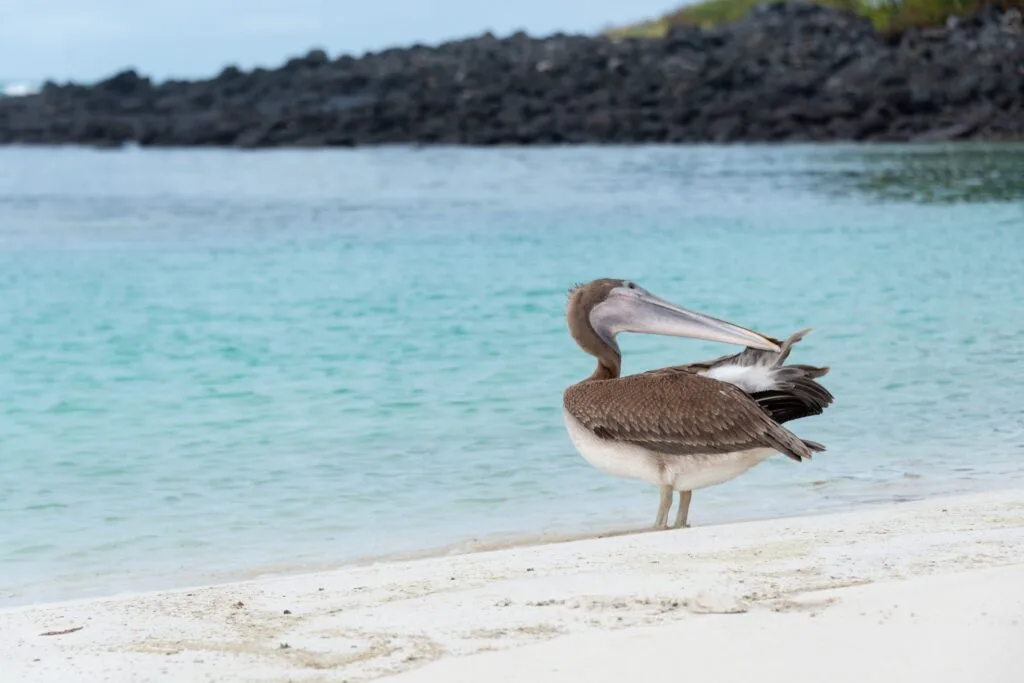
The Galápagos features two primary weather seasons shaped by oceanic currents: the cool, dry Garúa season (June to November) and the warm, wet season (December to May).
Packing requires adjusting your wardrobe for thermal protection in the water during Garúa or maximum breathability and heavy rain protection during the warm months.
The climate of the Galápagos does not follow typical tropical rules. Because the archipelago lies at the intersection of major ocean currents—including the cold, nutrient-rich Humboldt Current—water temperatures drop significantly during certain months, completely altering the required gear list.
Warm and wet season / December to May
Driven by northern trade winds, this season brings sunny days interspersed with sudden, heavy tropical downpours. Air temperatures range from 25°C to 31°C, and ocean temperatures hover between a comfortable 22°C and 27°C. Humidity levels are high, making quick-drying synthetic clothing essential.
- Key clothing: Lightweight UPF 50+ long-sleeve rash guards, breathable nylon shorts, quick-dry linen or synthetic shirts, and a lightweight, packable rain jacket (2.5-layer waterproof rating)
- Water gear: A 1.5mm–2mm shorty wetsuit or simple rash guard is usually sufficient for snorkelling, as water temperatures are pleasant
Cool and dry (Garúa) season / June to November
The Humboldt Current surges northward during these months, bringing cooler water temperatures (18°C to 22°C) and a constant sea mist known locally as garúa. Air temperatures drop to 19°C–26°C, accompanied by persistent overcast skies and stiff sea breezes.
- Key clothing: Mid-weight fleece, windproof softshell jacket for evening inter-island boat trips, lightweight merino wool base layers, and long trousers for highland excursions
- Water gear: A 3mm full neoprene wetsuit is mandatory if you intend to spend more than 20 minutes snorkelling. Without adequate thermal protection, cold ocean upwellings can cause shivering and fatigue, shortening marine wildlife encounters with sea lions, marine iguanas, and penguins
| Climate attribute | Warm season (Dec–May) | Garúa season (Jun–Nov) |
| Average air temperature | 25°C – 31°C | 19°C – 26°C |
| Average water temperature | 22°C – 27°C | 18°C – 22°C |
| Wetsuit requirement | Rash guard or 1.5mm–2mm shorty | 3mm full neoprene wetsuit |
| Precipitation type | Heavy afternoon downpours | Constant light mist (garúa) |
| Primary outerwear needed | Breathable 2.5L waterproof shell | Windproof softshell / fleece jacket |
| Gear drying time | Rapid in sun; slow in high humidity | Slow due to cloud cover & damp air |
The Ecuadorian Sierra.
Get lost in the hills
Island-hopping luggage strategy / Ferries and domestic flights
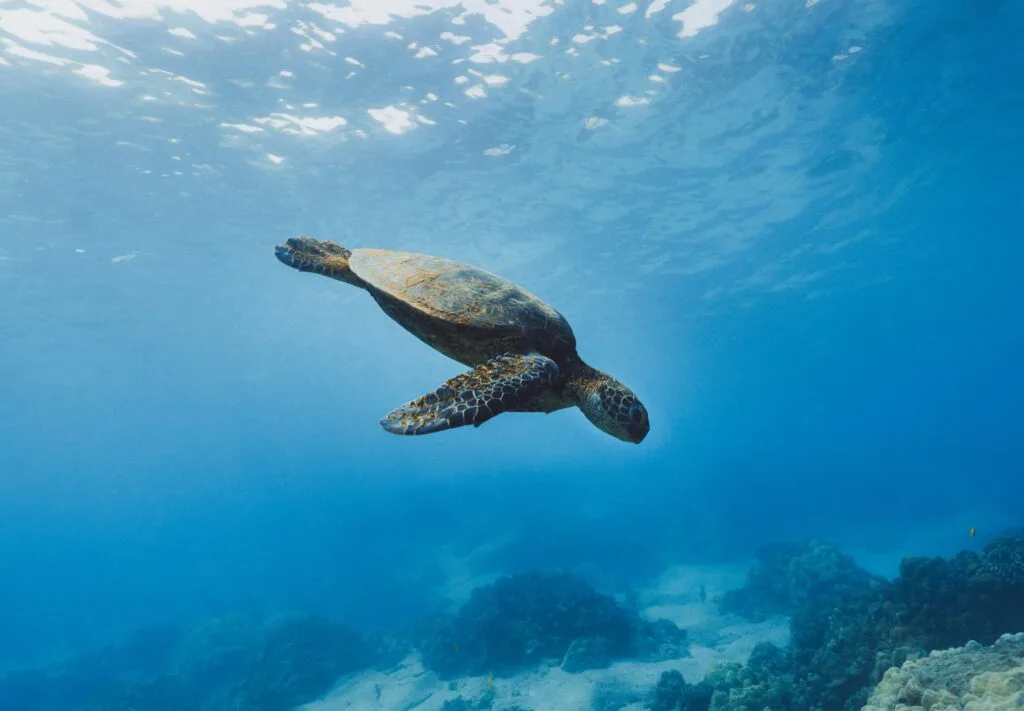
Hard-shell rolling suitcases are unsuitable for independent travel in the Galápagos. Navigating wooden gangways, sandy beaches, small water taxis (pangas), and crowded public speedboat holds requires a durable, water-resistant 40L–60L soft-sided rucksack or duffel bag paired with a 15L–20L dry daypack.
Public ferry transfer
- Puerto Ayora Pier: Boarding fee $1
- Small Water Taxi: Panga $1
- Public Speedboat (2.5 hrs): Hold bag exposure
The transit mechanics of land-based island hopping place unique stresses on your luggage. Travelling between Santa Cruz (Puerto Ayora), San Cristóbal (Puerto Baquerizo Moreno), and Isabela (Puerto Villamil) relies on public speedboats (cabotaje). The transfer sequence illustrates why rigid suitcases fail:
- You carry your bag to the municipal passenger pier
- You descend an unstable wooden ladder into a small wooden water taxi (panga)
- The panga navigates shallow surf to the moored public speedboat
- Deckhands hand-toss your luggage across the open ocean gap onto the speedboat deck
- Bags are stacked three-deep in the open stern hold or bow hatch, where ocean spray and salt foam inevitably penetrate standard zips
A heavy-duty 40L to 60L duffel bag (constructed from TPU-coated nylon or PVC tarpaulin) with backpack straps is the ideal primary bag. Soft luggage absorbs impacts during boat transfers, fits easily under ferry seating, and can be easily carried across cobbled or sandy streets where small suitcase wheels frequently snap.
Weight limits are another crucial consideration. Flights from Quito or Guayaquil to the islands via LATAM or Avianca permit a standard 23kg checked bag and an 8kg–10kg carry-on.
However, if you plan to skip the 2.5-hour ocean ferry ride and fly between islands using local light aircraft operators (such as Emetebe or Fly Galápagos), luggage limits drop sharply to 25 lbs (11.3 kg) total weight per passenger, including carry-on gear.
Overweight luggage on inter-island flights is either charged steep excess fees per pound or bumped to subsequent flights if aircraft weight limits are exceeded.
| Transport mode | Main luggage allowance | Carry-on allowance | Recommended bag type | Water exposure risk |
| Mainland flights (LATAM/Avianca) | 23 kg checked | 8–10 kg | Soft rucksack / Duffel | Low (standard airline hold) |
| Inter-island flights (Emetebe) | 11.3 kg total limit | Included in main total | Ultralight soft duffel | Low (small cargo locker) |
| Public speedboats (cabotaje) | No strict weight cap | Small lap daypack | Water-resistant TPU duffel | High (sea spray & bilge) |
Water gear and wet landing necessities
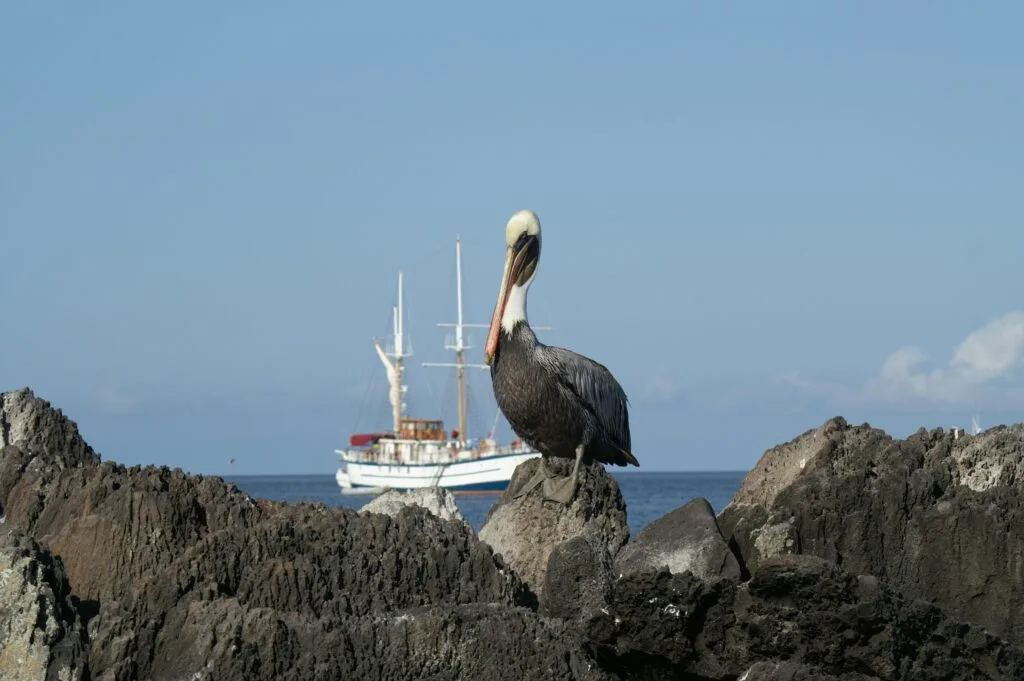
Independent day trips to uninhabited islets or remote coastal sites regularly involve wet landings. Protecting cameras, electronics, and spare clothes requires a 10L–20L roll-top dry bag with welded seams. Bringing personal, well-fitting mask and snorkel sets eliminates leakage issues common with rental equipment.
A wet landing is the process of stepping off a panga directly into knee-deep ocean surf over volcanic rock, gravel, or soft sand. Waves can wash up unpredictably as you step over the bow, making waterproofing a core requirement rather than an optional safeguard.
The dry bag system
Carry a dedicated 10L to 20L heavy-duty dry bag made from 500D PVC tarpaulin with a roll-top closure. Lightweight, thin silicone dry bags designed for hiking tend to puncture when scraped against sharp, jagged basalt rocks.
Use this bag on all boat excursions to hold your camera, phone, dry clothes, passport pouch, and towel. For extra security, place critical electronics inside padded internal dry sleeves before rolling the main top three full turns.
Personal snorkel kit
While rental dive shops exist in Puerto Ayora, Puerto Baquerizo Moreno, and Puerto Villamil, quality and seal reliability vary widely. Bringing your own equipment ensures a comfortable, hygienic, and leak-free fit during marine encounters.
- Mask: Low-volume, tempered glass mask with a high-grade silicone skirt. Test the seal at home by placing the mask on your face without the strap, inhaling gently through your nose, and checking that suction holds the mask in place
- Snorkel: Dry-top snorkel featuring a float valve mechanism at the opening to automatically seal the tube when submerged by surface swells
- Fins: Compact travel fins with adjustable heel straps. Full-foot closed fins require exact sizing and can cause painful heel blisters when worn without neoprene socks
- Wetsuit considerations: If visiting during the Garúa season (June–November), consider packing a personal 3mm neoprene shorty or full suit. Renting suits on land costs $10–$15 USD per day; if taking multiple day trips, owning your suit pays off quickly while ensuring clean neoprene that fits properly
The Ecuadorian Amazon.
The most biodiverse place in the world
Trail and terrain footwear
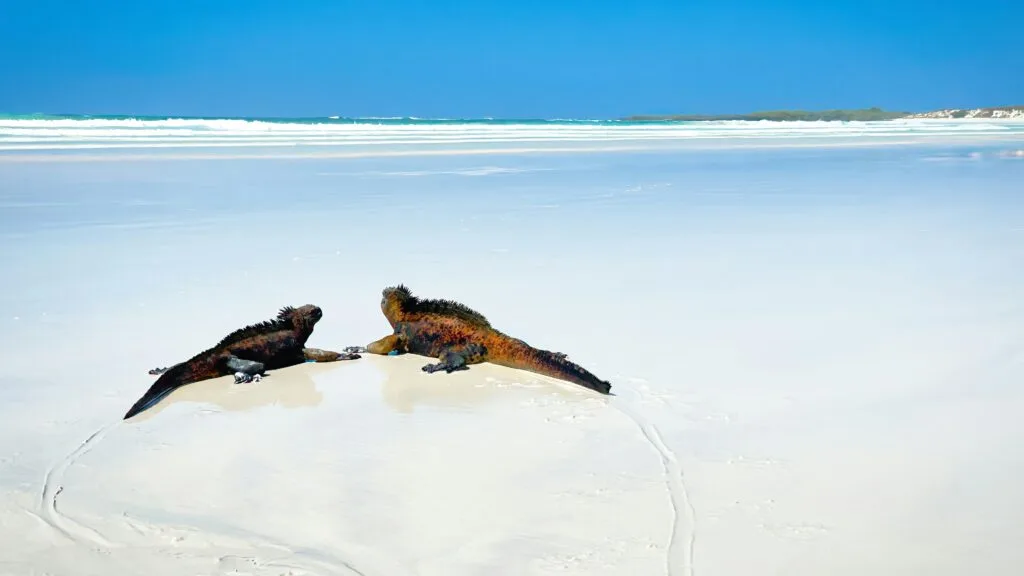
You need two distinct pairs of shoes for land-based island hopping: open-toed, heel-strapped water sandals with high-grip rubber outsoles for wet landings, and sturdy trail running shoes or low-cut hiking boots for sharp, uneven lava trails. Standard flip-flops are unsafe on algae-covered volcanic shorelines.
- Wet Landings & Pangas: Strapped Water Sandals (Teva, Chaco, Keen)
- Volcanic & Lava Trails: Trail Shoes / Low Boots (Vibram sole, TPU cap)
Terrain across the Galápagos is brutally abrasive. Volcanic basalt trails—such as those around Sierra Negra volcano on Isabela or the coastal lava beds of Las Grietas—feature sharp, porous rock edges that quickly shred soft EVA foam shoe soles and thin fabric uppers.
Pair 1: Technical water sandals
For wet landings, sea kayak trips, and rocky shore explorations, bring strap-secured water sandals (e.g. Teva, Chaco, or Keen). They must feature:
- Secure nylon webbing straps around the forefoot, ankle, and heel to prevent the shoe from washing away in surf
- Non-marking, sticky rubber outsoles that grip wet, algae-coated lava rocks
- Closed-toe protection (e.g. Keen Newport models) if you are prone to stubbing toes on submerged lava ledges
Avoid simple thong flip-flops. They offer no lateral support on uneven rock, slip easily when wet, and break under wave pressure.
Pair 2: Trail runners or low-cut hiking boots
For long hikes inland, a breathable trail running shoe or low-cut hiking boot is ideal. High-top leather boots are unnecessary, heavy, and extremely slow to dry in damp coastal climates. Look for footwear with:
- Puncture-resistant Vibram or equivalent high-traction rubber outsoles
- Reinforced TPU toe caps to protect against stubbing on jagged basalt
- Breathable, quick-dry mesh uppers (avoid fully waterproof Gore-Tex membranes, which trap moisture and sweat in tropical heat)
Electronics, power and photography in marine environments
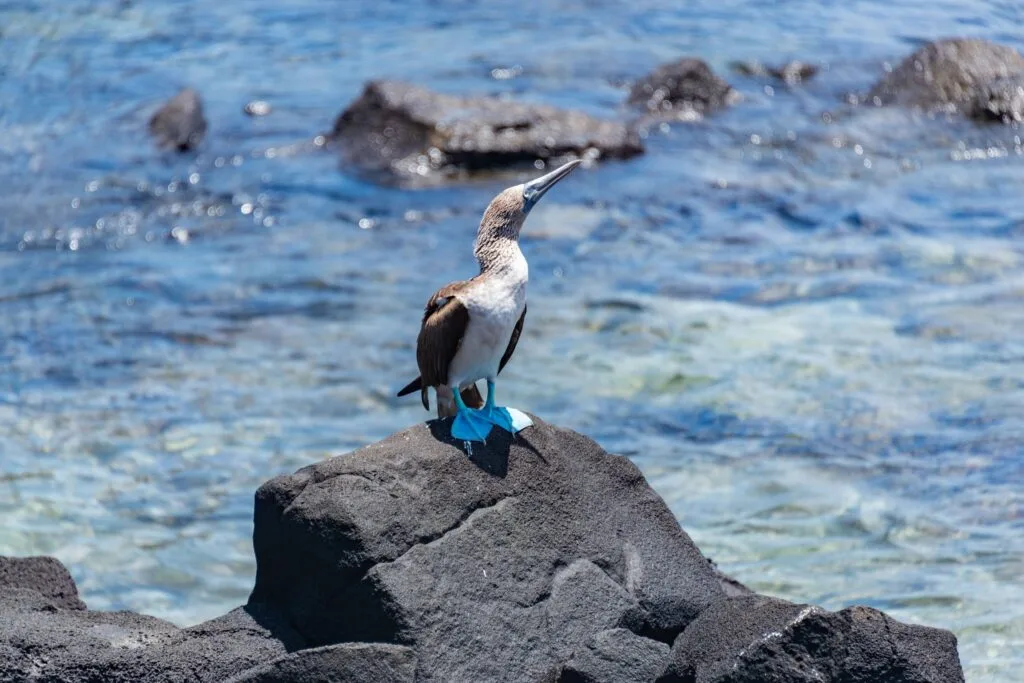
Electronics face harsh conditions in the Galápagos. Fine salt spray suspended in coastal air corrodes metal charging ports, while high ambient humidity can trigger internal moisture sensors.
Ecuador uses standard North American Type A (two-prong) and Type B (three-prong) electrical sockets operating at 110V / 60Hz. Travellers from the UK, Europe, or Australasia require plug adapters.
Smaller settlements like Puerto Villamil on Isabela occasionally experience localised power grid drops or generator load shedding. Carry a rugged, water-resistant 20,000mAh external power bank to recharge phones, camera batteries, and GPS watches during day-long ferry and trail excursions.
Marine humidity, salt spray, and occasional island power cuts demand protective measures for tech gear.
- Voltage: 110V AC, 60Hz
- Plugs: Type A (2-pin) & Type B (3-pin)
Camera protection and marine optics
- Action cameras: Action cameras (e.g. GoPro, DJI Action) are ideal for underwater footage of sea lions, green sea turtles, and marine iguanas. Always attach a high-visibility floating wrist lanyard or foam grip; if an action camera is dropped into deep water over a marine drop-off, it will sink out of reach immediately
- Desiccant packs: Place several reusable silica gel packs inside your dry bag alongside camera lenses and phones. Transferring cameras from air-conditioned hotel rooms into warm, humid outdoor air causes immediate condensation on internal lens glass
- Binoculars: Wildlife viewing rules set by the Galápagos National Park mandate that visitors remain at least 2 metres away from all native animals. A set of compact, nitrogen-purged, waterproof 8×42 or 10×42 roof-prism binoculars is essential for spotting blue-footed boobies, Nazca boobies, and Galápagos hawks perched on cliff faces or distant branches
The Ecuadorian Coast.
Where you’ll find the very best food
Health, sun safety and eco-friendly personal care
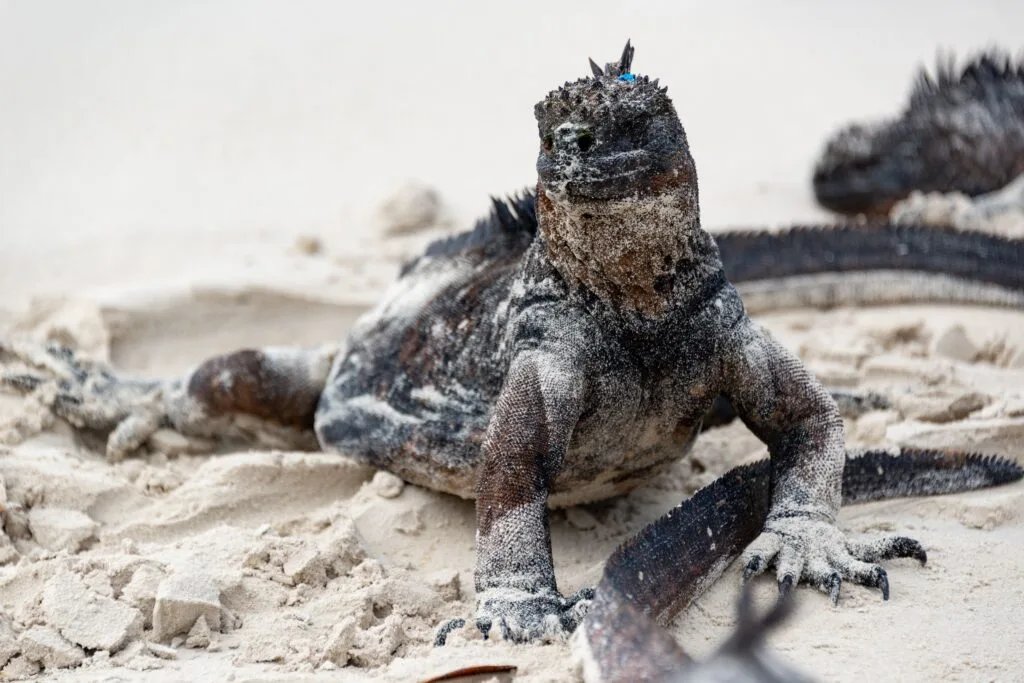
Situated on the Equator, the Galápagos registers extreme solar radiation levels (UV index 11–12+). Protecting your skin and marine life requires non-nano zinc oxide mineral suncream, wide-brimmed sun hats, UPF 50+ rash guards, reusable water bottles, and motion sickness medication for rough inter-island sea transit.
The solar energy at equatorial latitudes burns unshielded skin rapidly—often within 15 minutes of exposure, even on overcast days.
Reef-safe mineral suncream
Chemical sunscreens containing oxybenzone, octinoxate, or octocrylene are prohibited by local environmental policies because they bleach coral reefs, cause endocrine disruption in marine larvae, and bioaccumulate in marine iguana feeding habitats.
Pack 100% mineral-based suncream utilising non-nano zinc oxide or titanium dioxide with an SPF rating of 50 or higher. Apply liberally to exposed skin—especially the backs of legs, neck, and lower back, which remain exposed while snorkelling along the sea surface.
Wearable UV protection
Relying solely on suncream is inefficient and costly. Use physical barriers:
- UPF 50+ long-sleeve rash guards: Wear these both in the water and on land hikes
- Wide-brimmed sun hat: Choose a hat with a chin strap; strong wind gusts on open ferry decks and coastal cliff paths regularly blow unsecured hats out to sea
- Polarised sunglasses: Polarised lenses block harsh surface water glare, allowing you to spot stingrays, reef sharks, and sea turtles swimming in shallow bays
Motion sickness remedies
The 2.5-hour public ferry rides between Santa Cruz, San Cristóbal, and Isabela cross open-ocean passages. Heavy swell, diesel fumes, and pounding hull motion make motion sickness common, particularly during the choppy Garúa season (June–November).
Carry dimenhydrinate tablets or hyoscine (scopolamine) patches, and take or apply them at least 45 minutes prior to stepping aboard.
Eco-friendly hydration and personal care
- Insulated water bottle: Tap water on the islands is not potable. Carry a 750ml–1L double-wall insulated stainless steel water bottle. Hotels, restaurants, and visitor centres offer filtered water refilling stations. Insulated bottles keep water cold during long, hot trail hikes across shade-free lava fields
- Insect repellent: While mosquitoes are minimal on coastlines, highland areas (e.g. giant tortoise reserves on Santa Cruz) and mangrove bays have biting midges (manta blancas) and sandflies. Pack a DEET-free picaridin-based lotion or spray, which is effective without melting synthetic clothes, camera coatings, or watch faces
Document checklist and cash management
Independent travel in the Galápagos relies heavily on cash transactions. ATMs on Santa Cruz and San Cristóbal frequently run out of cash or experience network outages, while Isabela has no reliable bank branches.
Travellers must carry crisp, undamaged US dollar banknotes ($5, $10, and $20 notes) for all daily expenses, park fees, and local transit.
- TCC Card (Mainland Airport): $20 USD / person (Cash only)
- Park Fee (Baltra / SCY): $200 USD / adult (Cash only)
- Isabela Dock Fee (Arrival): $10 USD / person (Cash only)
- Water Taxis (pangas): $1 to $2 USD / ride (Cash only)
The official currency of Ecuador is the United States dollar (USD). On the islands, cash is king. Restaurants, tour agencies, and hotels that do accept credit cards often apply a 6% to 10% surcharge to cover satellite terminal processing fees.
Cash reserve requirements
Calculate your baseline cash needs before leaving Quito or Guayaquil. You will need cash for the following mandatory payments:
- Galápagos Transit Control Card (TCC): $20 USD per person, payable at Quito or Guayaquil airport
- Galápagos National Park Entry Fee: $200 USD per adult ($100 USD for children under 12), payable strictly in cash at airport customs upon arrival in Baltra or San Cristóbal. Bills must be clean, untorn, and free of heavy markings
- Isabela Island Municipal Dock Fee: $10 USD per person, paid in cash upon arriving at the Puerto Villamil pier
- Local water taxis (pangas): $1.00 to $2.00 USD per person per trip, paid directly to the operator in small change
- Inter-island luggage porterage: $1.00 to $2.00 USD per bag on public docks
Carry $5, $10, and $20 notes. Local shop owners and water taxi drivers rarely have change for $50 or $100 notes.
Essential documents and waterproof storage
Store all paper documents inside a sealed, waterproof document pouch packed in your carry-on bag:
- Valid passport with at least 6 months remaining validity
- Printed Transit Control Card (TCC) receipt
- Proof of return flight ticket to mainland Ecuador (mandatory for clearing mainland customs)
- Proof of travel insurance coverage showing medical evacuation protection
- Physical yellow fever vaccination certificate (if arriving from or transiting through endemic areas prior to entering Ecuador)
Quito.
Explore the Middle of the World
The complete independent Galápagos packing checklist
Use this comprehensive packing checklist to ensure you do not miss a critical piece of gear before setting off on your land-based island adventure.
Biosecurity, documents & cash
- Valid passport (6+ months validity)
- Printed return flight confirmation
- Transit Control Card (TCC) & National Park Fee cash ($220 USD per person minimum)
- Secondary cash reserve ($300–$500 in small $5, $10, $20 bills)
- Waterproof document pouch
Luggage & gear protection
- 40L–60L water-resistant soft duffel bag or rucksack
- 10L–20L 500D PVC roll-top dry bag
- 15L lightweight, packable daypack for land walking
- Reusable silica gel packets for moisture control inside gear bags
Footwear
- Strap-secured technical water sandals with grippy rubber soles (Teva/Chaco/Keen)
- Breathable trail running shoes or low-cut hiking boots with high-traction soles
- 3x pairs of quick-dry synthetic hiking socks
Apparel & warmth
- 2x UPF 50+ long-sleeve rash guard shirts
- 2x quick-dry swim shorts or bikini suits
- 2x light, breathable trail shorts
- 1x lightweight long hiking trousers
- 3x moisture-wicking synthetic or merino t-shirts
- 1x mid-weight fleece sweater or softshell jacket (Garúa season essential)
- 1x lightweight 2.5-layer packable waterproof rain shell
- Wide-brimmed sun hat with adjustable chin strap
Water gear
- Personal low-volume tempered glass snorkel mask
- Dry-top snorkel
- Short travel fins with adjustable heel straps
- 3mm neoprene full wetsuit (Garúa season) or shorty (warm season)
- Quick-dry microfibre travel towel
Electronics & optics
- Action camera with waterproof housing & floating wrist strap
- Waterproof 8×42 or 10×42 roof-prism binoculars
- 20,000mAh rugged external power bank
- Type A/B US plug adapter (if coming from outside North America)
- Waterproof phone pouch with lanyard
Personal care & first aid
- Non-nano zinc oxide mineral suncream (SPF 50+, reef-safe)
- Zinc oxide suncream lip balm (SPF 30+)
- DEET-free picaridin insect repellent spray
- 1L insulated stainless steel water bottle
- Dimenhydrinate motion sickness tablets or hyoscine patches
- Basic marine medical kit (waterproof plasters, antiseptic wipes, hydrocortisone cream)
Master the archipelago on your own terms
Stripping away the insulated bubbles of organised cruise ships reveals the raw, unvarnished rhythm of the Galápagos. When you travel independently across Santa Cruz, San Cristóbal, and Isabela, the logistics become an intrinsic part of the adventure.
There is a deep, quiet satisfaction in stepping off a battered public panga onto a sun-baked wooden pier, hauling your own water-resistant duffel over your shoulder, and navigating the day’s island transit on your own clock.
Equipped with the right gear, the physical challenges of land-based island hopping shift from potential headaches to manageable mechanics. Sharp volcanic basalt, sudden equatorial downpours, and choppy inter-island ferry crossings cease to be obstacles when your kit list is tailored to the exact realities of the environment.
You spend less time worrying about soaked electronics or blistered feet and more time immersed in the singular geology and wildlife of this ocean outpost.
The true reward of independent travel here lies in the freedom to linger. You can choose to spend an extra hour sitting quietly on a volcanic bay watching marine iguanas dive through the surf, or linger over a fresh local meal in town long after the tour groups have retreated to their vessels.
Pack deliberately, respect the biosecurity of the islands, and let the landscape dictate the pace.
Affiliate Disclaimer: Some of the links on Wheely Tyred are affiliate links. If you click through and make a booking or purchase, we may earn a small commission at no extra cost to you. We only recommend gear, tours, stays, and services we genuinely use, trust, and stand behind — our editorial independence always comes first. These commissions help keep our independent cycling guides and travel stories free to read. Thanks for supporting the ride!
Frequently asked questions about what to pack for independent Galápagos travel
You should carry a minimum of $300 to $500 USD per person in cash, strictly in small, clean banknotes ($5, $10, and $20 bills). This is in addition to the $200 USD National Park entry fee and the $20 USD Transit Control Card (TCC) fee per adult. Cash is necessary because ATMs on Santa Cruz and San Cristóbal regularly run out of notes or lose connectivity, and Isabela Island has no reliable bank branches. Small local businesses, water taxis, and municipal dock fees operate exclusively on cash.
Yes, hire shops are plentiful in the main towns of Puerto Ayora (Santa Cruz), Puerto Baquerizo Moreno (San Cristóbal), and Puerto Villamil (Isabela). However, rental gear varies significantly in quality, hygiene, and seal fit. Bringing your own low-volume silicone mask and dry-top snorkel ensures a comfortable, leak-free experience. If you plan to travel during the cool Garúa season (June to November), bringing or hiring a 3mm wetsuit is essential for staying warm in lower water temperatures.
Hard-shell rolling suitcases are strongly discouraged. Inter-island transit involves transferring onto small wooden water taxis (pangas), stepping into surf during wet landings, walking across cobbled or sandy streets, and having luggage tossed into open speedboat holds. Rolling suitcase wheels frequently snap on rough surfaces, and hard shells are difficult to stack in boat holds. A durable, water-resistant soft-sided duffel or rucksack with backpack straps is far more practical.
The Agency for the Regulation and Control of Biosecurity (ABG) enforces strict rules to prevent invasive species from entering the archipelago. You must not pack any fresh fruits, vegetables, unpasteurised dairy, raw seeds, or unroasted coffee beans. Additionally, all hiking boots, water sandals, and outdoor gear must be scrubbed completely clean of mainland mud, soil, and organic debris prior to departure, as seeds and microbes easily travel in footwear treads. Single-use plastic bags and disposable water bottles are also prohibited.
A wet landing occurs when a small boat or panga grounds near the shore, requiring passengers to step over the side directly into knee-deep water over sand, gravel, or slippery lava rock. To prepare, wear strap-secured water sandals with grippy rubber soles (such as Tevas or Chacos) rather than flip-flops, wear quick-drying shorts, and pack all sensitive electronics, cameras, and spare clothing inside a sealed 10L–20L dry bag before leaving the main vessel.
Ecuador.
Pure wonder on the equator.