
Chimborazo bike tours / Ride the closest peak to the sun
Guided volcano downhill rides and mountain bike expeditions in Ecuador
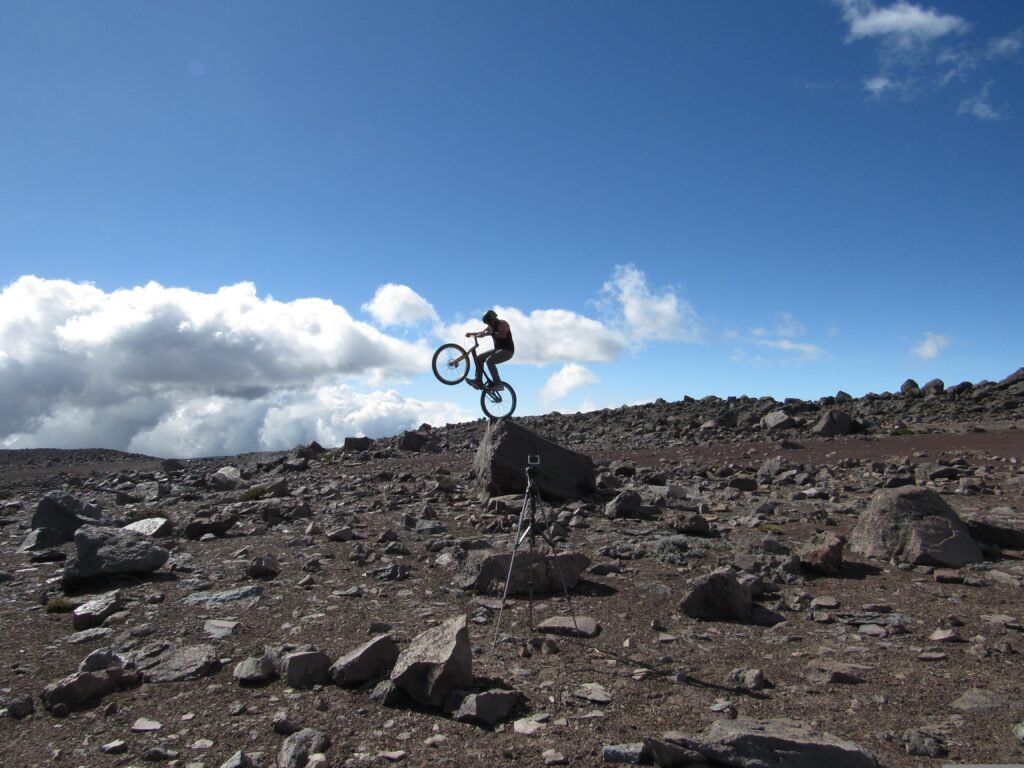
High-altitude gravel, wild vicuñas, and 2,000-metre descents through the páramo

BEN FINCH
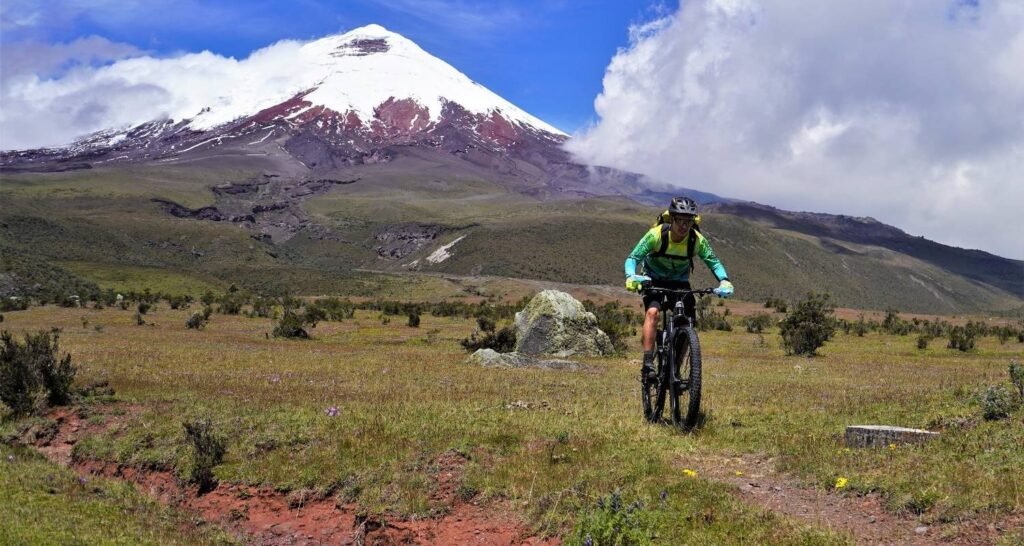
There is a singular, electrifying sensation that comes with unclipping your bike from the rack at 4,800 metres above sea level. Here, in the crisp, oxygen-thin air of the Ecuadorian Andes, Mount Chimborazo doesn’t merely tower over the landscape—it dominates the physical world.
Because of the Earth’s equatorial bulge, the summit of this inactive stratovolcano stands as the furthest point from the planet’s centre, making its glaciated flanks the closest place on Earth to the sun.
For independent cyclists and adventurous travellers, descending Chimborazo on two wheels is one of South America’s most exhilarating open-road and off-road experiences.
Leaving behind the rigid itineraries of tourist buses and crowded sightseeing coaches, a guided mountain bike descent offers total immersion in the wild Andean páramo. You will pedal through moonlike volcanic scree fields, glide past herds of wild vicuñas, and trace ancient agricultural paths through indigenous villages as the altitude gradually yields to lush green valleys.
However, tackling a volcano whose base sits higher than most European mountain peaks requires top-tier equipment, expert local guidance, and reliable support vehicles.
To help you choose the right ride, we have curated and vetted three distinct, bookable bike tours that showcase the very best of Mount Chimborazo—from single-day downhill descents starting in Riobamba or Baños de Agua Santa to a grand 10-day volcanic cycling expedition across Ecuador.
Summit sweeps and páramo trails / Essential Chimborazo highlights
Descending from the highest point on Earth relative to its centre requires sharp focus, steady braking, and an appetite for grand Andean landscapes. Here is what makes riding the flanks of Mount Chimborazo an unforgettable journey on two wheels:
- The Sun’s Closest Peak: Starting your ride near Refugio Carrel at 4,800 metres puts you closer to the sun than anywhere else on Earth, thanks to the planet’s equatorial bulge
- Massive Vertical Descents: Experience drops of up to 2,000 vertical metres through rapidly changing ecosystems, from stark volcanic scree down to lush, terraced agricultural valleys
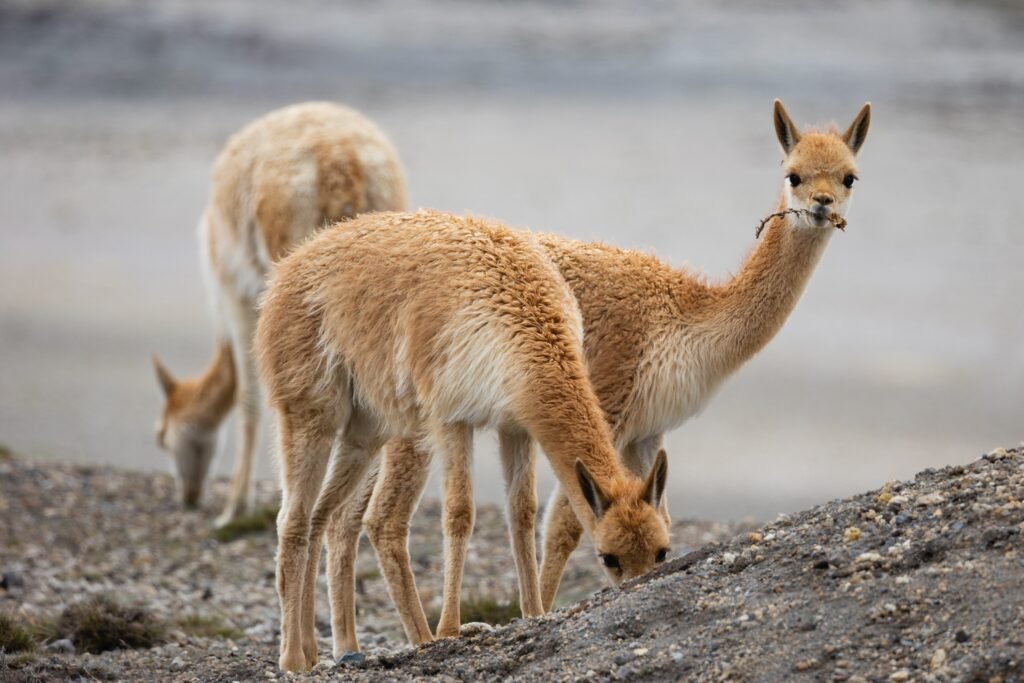
- Native Wildlife Encounters: Ride alongside wild herds of vicuñas, caracaras, and high-altitude foxes roaming freely across the protected reserves of the páramo
- Adaptable Trail Routes: Choose between technical dirt single-track for experienced off-roaders or smooth, winding secondary roads tailored for relaxed gravel cruisers
- Highland Cultural Connections: Pass through traditional Kichwa farming hamlets and share authentic, locally prepared Andean lunches in small communities like San Juan
- Multi-Day Expedition Routes: Link Mount Chimborazo with Cotopaxi, Quilotoa, and the cloud forests of Baños on a grand multi-day traverse along Ecuador’s Avenue of the Volcanoes
Volcán Chimborazo.
Stand at the furthest point from the centre of the Earth
1. The classic high-altitude downhill descent
Rating & reviews
(6+ verified reviews on GetYourGuide)
Why this tour stands out
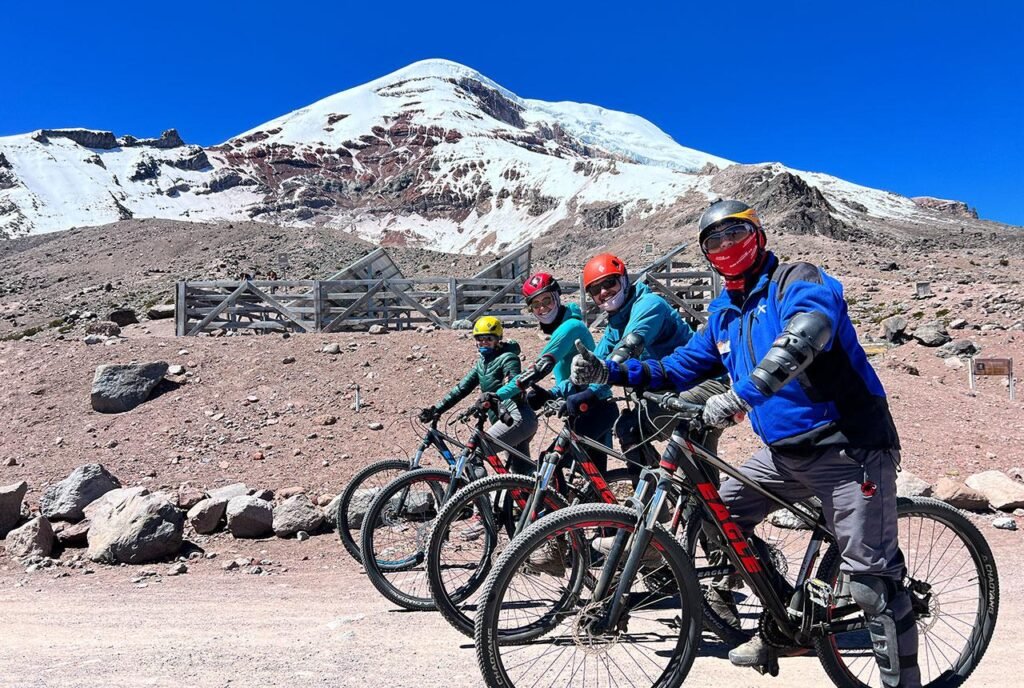
If you are staging your Andean journey from the historical highland hub of Riobamba, this full-day adventure is the gold standard for volcano cycling. The journey begins with a scenic 90-minute private transfer into the Reserva de Producción de Fauna Chimborazo.
Upon reaching Refugio Carrel at 4,800 metres, riders take on an optional, guided acclimatisation hike up to Refugio Whymper (5,050 metres) and the glacial waters of Condor Cocha lagoon (5,100 metres).
Once back at the base refuge, you are fitted with a front-suspension Marin mountain bike, full-face helmet, and knee and elbow protection. Depending on your confidence on loose terrain, the operators offer two tailored routes: an approachable mixture of smooth dirt tracks and winding tarmac (Route 1) or a technical 24-kilometre single-track descent across steep gravel and volcanic sand (Route 2).
A dedicated 4×4 support vehicle follows behind throughout the ride, offering a safe haven if the high-altitude weather shifts or your legs demand a brief rest.
Key highlights
- High-altitude trek to Condor Cocha lagoon at 5,100 metres altitude
- Exhilarating 12 to 28-kilometre downhill ride dropping over 1,900 vertical metres
- Encounters with native wildlife, including wild vicuñas, Andean foxes, and caracaras
- Dual route options tailored for either casual gravel riders or experienced mountain bikers
- Traditional, locally sourced Andean lunch at a family-run restaurant in the village of San Juan
Ideal for
Active day-trippers and independent cyclists staying in Riobamba who want a seamless balance of high-altitude trekking, thrilling downhill cycling, and authentic local food.
Local cycling insight
The climate on Chimborazo changes rapidly. Even on clear mornings, wind chills at 4,800 metres frequently hover near 0°C before warming significantly during the descent. Layering is vital: wear a windproof, water-resistant outer shell over thermal base layers, and bring full-finger cycling gloves to preserve your grip and braking control during the initial cold kilometres.
The Ecuadorian Sierra.
Get lost in the hills
2. The cross-valley adventure from Baños
Rating & reviews
(New activity on GetYourGuide)
Why this tour stands out
For travellers using the vibrant sub-tropical town of Baños de Agua Santa as their base, this tour bridges the gap between the lush cloud forests and the stark, high-altitude páramo.
Providing hotel pick-up in Baños, the private transport climbs through the central valley past Urbina—the highest railway point in Ecuador—before entering the Chimborazo Reserve.
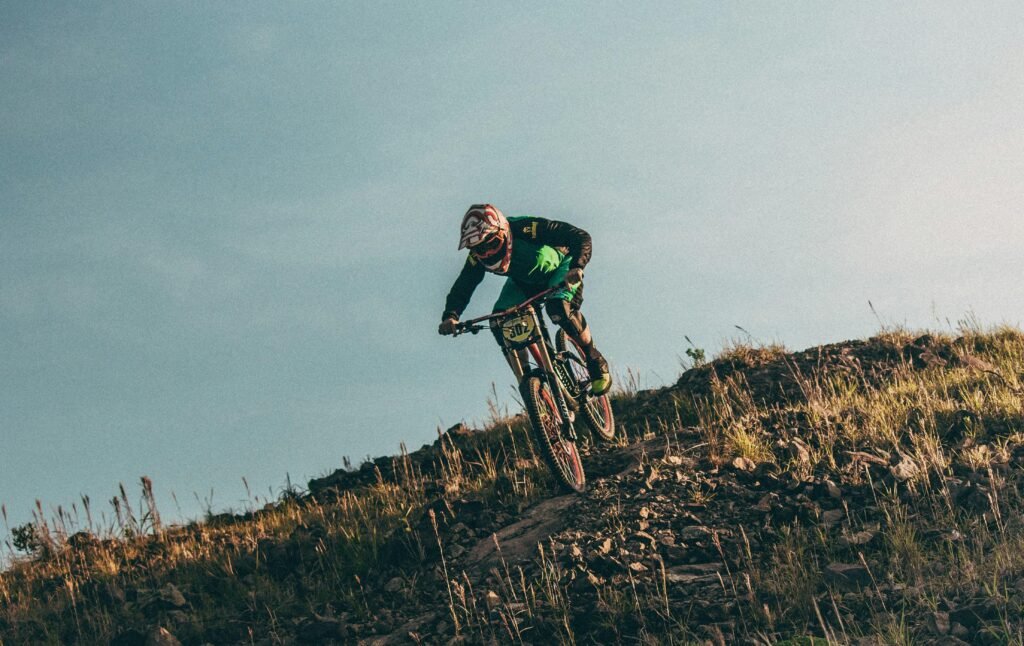
This ride focuses on immersive, off-the-beaten-path mountain trails. Starting near the upper refuges, the route navigates past the Urkuwasi Refuge and through the protected reserve’s interpretation sectors before descending towards the agricultural town of San Juan.
Guided by local mountain bike specialists who understand the subtle lines of volcanic terrain, you’ll take in views of neighbouring peak Carihuairazo while riding across dynamic single-track and rustic dirt roads. A comprehensive box lunch is served in the field, surrounded by sweeping alpine vistas.
Key highlights
- Convenient round-trip private transport directly from your accommodation in Baños de Agua Santa
- Traverse unique geological zones, from high-altitude volcanic plains to agricultural terraces
- High-spec front-suspension mountain bikes tailored specifically for loose volcanic dirt
- Full safety kit, professional bilingual cycling guide, and continuous 4×4 trail support
- Panoramic stopovers overlooking the twin volcanic peaks of Chimborazo and Carihuairazo
Ideal for
Adventure travellers and mountain bike enthusiasts based in Baños who want to experience the high Andes without having to change hotels or arrange complex private transport.
Local cycling insight
The upper sections of this descent feature loose volcanic ash and coarse scree. Resist the urge to grab your front brake aggressively when cornering; instead, drop your heels, keep your weight back over the rear wheel, and rely on smooth, progressive rear braking to control your speed down the steep, dusty switchbacks.
The Galápagos.
Ecuador’s Enchanted Isles
3. The grand Ecuadorian volcano expedition
Rating & reviews
(169+ verified reviews on TourRadar)
Why this tour stands out
For cyclists seeking the ultimate multi-day bikepacking expedition through Ecuador’s iconic Avenue of the Volcanoes, this 10-day itinerary is a masterclass in active travel design.
Beginning in Quito, the route systematically moves south, offering structured altitude progression across Pichincha’s cloud forests, the equatorial valleys near Cayambe, the artisan hamlets of Otavalo, and the wild double-tracks of Cotopaxi National Reserve.
Day seven marks the crown jewel of the itinerary: a high-altitude assault and long-distance descent on Mount Chimborazo at 4,800 metres, followed by a transition down into the thermal valleys of Baños de Agua Santa and the crater rim of Quilotoa.
The tour balances physical challenge with sustainable ecotourism, utilising local boutique lodges, serving organic regional meals, and employing native Andean guides who share deep insights into local indigenous culture and flora.
Key highlights
- Comprehensive 10-day guided mountain biking traverse across Ecuador’s major volcanic peaks
- Features a dedicated Chimborazo summit refuge ride and long-range Andean descent
- Includes rides around Cotopaxi, the Quilotoa crater lake rim, and through the Llanganates range
- Fully vehicle-supported expedition with all meals, high-end mountain bike hire, and lodging included
- Cultural stops at Peguche weaving villages, local markets, and natural thermal hot springs
Ideal for
Dedicated cyclists, endurance riders, and active travellers who want a fully supported, end-to-end multi-day mountain biking holiday across South America’s most iconic volcanic corridor.
Local cycling insight
Riding at high altitude for 10 consecutive days requires careful stamina management. Do not attempt a multi-day itinerary like this without spending at least two days resting and walking in Quito (2,850 metres) beforehand. Maintain constant hydration with electrolyte solutions—thin mountain air dehydrates the body far faster than sea-level riding, even in cold temperatures.
The Ecuadorian Amazon.
The most biodiverse place in the world
Our practical Chimborazo cycling & ride planning guide
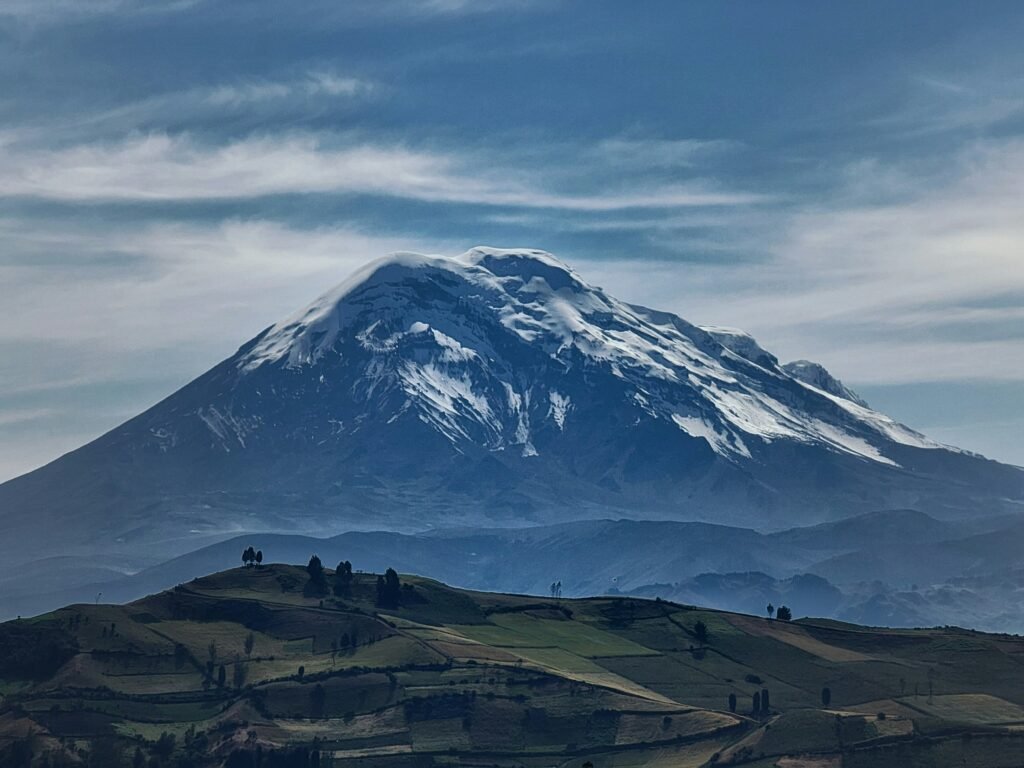
Planning a ride on the highest mountain in Ecuador requires a blend of respect for the environment, physical preparation, and solid gear choices. Here are our top practical rules for riding Mount Chimborazo:
Prioritise altitude acclimatisation
Never head straight to Chimborazo upon arriving in Ecuador. The bike rides start between 4,000 and 4,800 metres above sea level—elevations where atmospheric pressure drops significantly, and oxygen levels are reduced. Spend a minimum of 48 to 72 hours acclimatising at intermediate altitudes such as Quito (2,850m), Cuenca (2,560m), or Riobamba (2,750m). Take short walks, drink plenty of water, and consider sipping traditional coca or chame tea to help your body adapt.
Master the high-altitude layering system
Temperatures at the Refugio Carrel can drop below freezing in seconds if a cloud rolls in, yet you will quickly warm up as you descend into the valleys. Follow a strict three-layer system: a breathable moisture-wicking synthetic base layer, an insulating fleece middle layer, and a high-quality windproof and waterproof jacket. Full-finger mountain bike gloves, neck gaiters, and thermal skullcaps that fit comfortably under a helmet are essential.
Choose the right rig
While paved road descents are possible along the main highway, the truest way to experience Chimborazo is via its dirt tracks, volcanic scree trails, and farm roads. Ensure your tour provides a well-maintained hardtail or full-suspension mountain bike equipped with wide, knobby tyres (2.25” minimum) and hydraulic disc brakes. Mechanical rim brakes simply do not offer the stopping power needed on long, steep gravel descents.
Observe Andean road & trail etiquette
When riding through indigenous communities and agricultural pastures around San Juan or Urbina, always yield to pedestrians, horseback riders (chagras), and livestock. A friendly “Buenos días” or “Alli puncha” (Kichwa for good morning) goes a long way. Stick strictly to established dirt tracks and trails to avoid eroding the fragile páramo ecosystem, which acts as a vital natural water sponge for the surrounding highlands.
Protect yourself from equatorial UV rays
Due to the combination of extreme altitude and proximity to the equator, solar radiation on Mount Chimborazo is intense. Even on completely overcast days, UV exposure remains severe. Apply broad-spectrum zinc-based sunscreen to all exposed skin, wear UV-blocking cycling sunglasses (category 3 or 4 lenses), and apply lip balm with SPF protection before saddle time.
The Ecuadorian Coast.
Where you’ll find the very best food
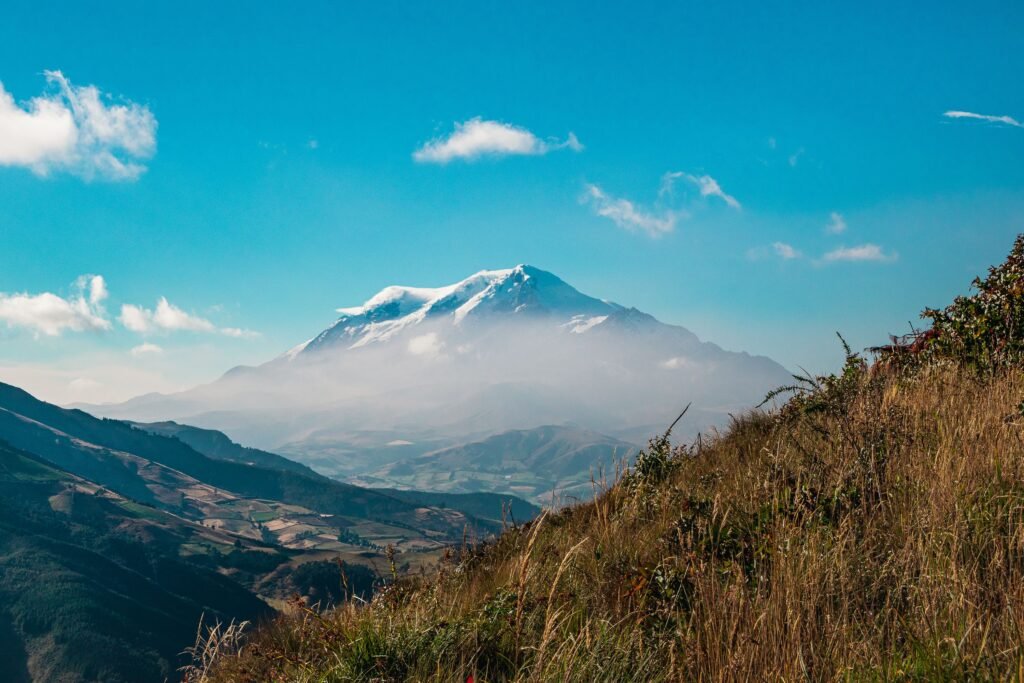
Descend Ecuador’s highest peak
Read this far?
Cycling down an inactive stratovolcano is far more than a simple gravity-fed adrenaline rush. It is an immersive journey through changing air densities, microclimates, and alpine terrain. From the wind-scoured, glaciated reaches of the upper refuges down to the warm, terraced farmlands of the valleys, every kilometre tells a story of natural power and mountain endurance.
Travelling on two wheels allows you to pause where standard tourist buses simply speed past. Whether stopping to watch vicuñas graze against a backdrop of ancient ice, taking in sweeping views of neighbouring Carihuairazo, or pulling into a village square in San Juan for a bowl of piping hot soup, a bicycle anchors you directly into the pace of highland life.
Preparation remains the secret to turning what could be an overwhelming high-altitude outing into a brilliant ride. By spending a few days acclimatising in Quito, Riobamba, or Cuenca, layering against the unpredictable Andean weather, and selecting a vetted tour operator with a dedicated 4×4 support vehicle, you set yourself up for one of the premier downhill rides in South America.
Pack your windproof gear, double-check your brakes, and prepare for a mountain descent like no other. Mount Chimborazo is waiting—and there is no finer way to meet this giant than on two wheels.
Affiliate Disclaimer: Some of the links on Wheely Tyred are affiliate links. If you click through and make a booking or purchase, we may earn a small commission at no extra cost to you. We only recommend gear, tours, stays, and services we genuinely use, trust, and stand behind — our editorial independence always comes first. These commissions help keep our independent cycling guides and travel stories free to read. You can also buy me a coffee here — thanks for supporting the ride!
Frequently asked questions about the best Chimborazo bike tours
While most single-day rides rely primarily on gravity for the descent, riding at 4,800 metres requires decent cardiovascular fitness and sound bike handling skills. You should feel confident controlling a bike on loose gravel, dirt tracks, and uneven surfaces. Because the thin air makes even minor pedalling feel intense, taking time to properly acclimatise before the ride is far more critical than sheer physical stamina.
Reputable local tour operators provide well-maintained front-suspension or full-suspension mountain bikes fitted with hydraulic disc brakes, as well as helmets and knee or elbow protection. You should bring your own warm, windproof cycling layers, full-finger thermal gloves, UV-protective eyewear, and a lightweight daypack to store extra clothes and water.
Riobamba is the nearest major town, situated roughly 90 minutes from the national reserve entrance by road. If travelling independently from Quito, you can take a regional bus south to Riobamba or Ambato before arranging local transport. Most top-rated bicycle tours include convenient hotel pick-up and private transfers directly from accommodations in either Riobamba or Baños de Agua Santa.
Cycling is possible year-round, though the clearest and driest weather typically occurs during the Andean summer months from June to September, with a second dry window in December and January. Mornings consistently offer the clearest skies and light winds, whereas rain, snow, or heavy cloud cover frequently roll over the high pass by mid-afternoon.
Altitude sickness (soroche) can affect any rider regardless of experience. To mitigate the risk, plan to spend at least 48 to 72 hours acclimatising at intermediate elevations such as Quito (2,850m) or Riobamba (2,750m) prior to your tour. Experienced cycling guides carry medical oxygen in their 4×4 support vehicles, which follow behind riders throughout the entire route.
Single-day cycling tours usually provide trail snacks, fresh fruit, and bottled water during the ride, followed by a hearty traditional Andean lunch in a local village like San Juan. You can expect comforting highland dishes such as potato soup (locro de papas), grilled trout or chicken, fresh salads, and hot herbal teas like coca or chame to soothe digestion at high altitude.
Ecuador.
Pure wonder on the equator.


