Escape the cruise ships / The best day tours on Santa Cruz Island, Galápagos
Top-rated Puerto Ayora day trips, island excursions, and wildlife treks
Encounters with giant tortoises, lava tunnels, and uninhabited archipelago wonders
BEN FINCH
For decades, the standard advice for visiting the Galápagos Archipelago was straightforward: book a spot on a multi-day luxury cruise ship, adhere strictly to a rigid bell-to-bell schedule, and view the islands primarily through the window of a shared vessel. At Wheely Tyred, we have always championed a more autonomous, grounded approach to exploring the world.
Land-based travel in the Galápagos—specifically basing yourself in Puerto Ayora on Santa Cruz Island—allows you to set your own pace, support local family-run businesses directly, and experience the pristine biodiversity of Ecuador’s most famous national park without sacrificing your independence.
Santa Cruz is the vibrant beating heart of the archipelago. While Puerto Ayora offers sea-facing craft breweries, vibrant fish markets, and quiet coastal lanes, the surrounding island and nearby uninhabited islets harbour some of the most remarkable ecological spectacles on Earth. Because Galápagos National Park regulations strictly mandate that most protected sites must be visited alongside a licensed naturalist guide, booking curated day excursions is the single best way to access remote reserves, marine sanctuaries, and outlying islands.
To help you navigate the sea of options, we have evaluated the highest-rated bookable day tours operating out of Santa Cruz. Whether you want to trek alongside wild giant tortoises in the humid highlands, sample artisanal sugarcane spirits at an old-world hacienda, or snorkel alongside sea lion pups around volcanic pinnacles, these six small-group excursions represent the absolute pinnacle of ethical, immersion-first travel in the Galápagos.
Essential takeaways / Santa Cruz day excursions
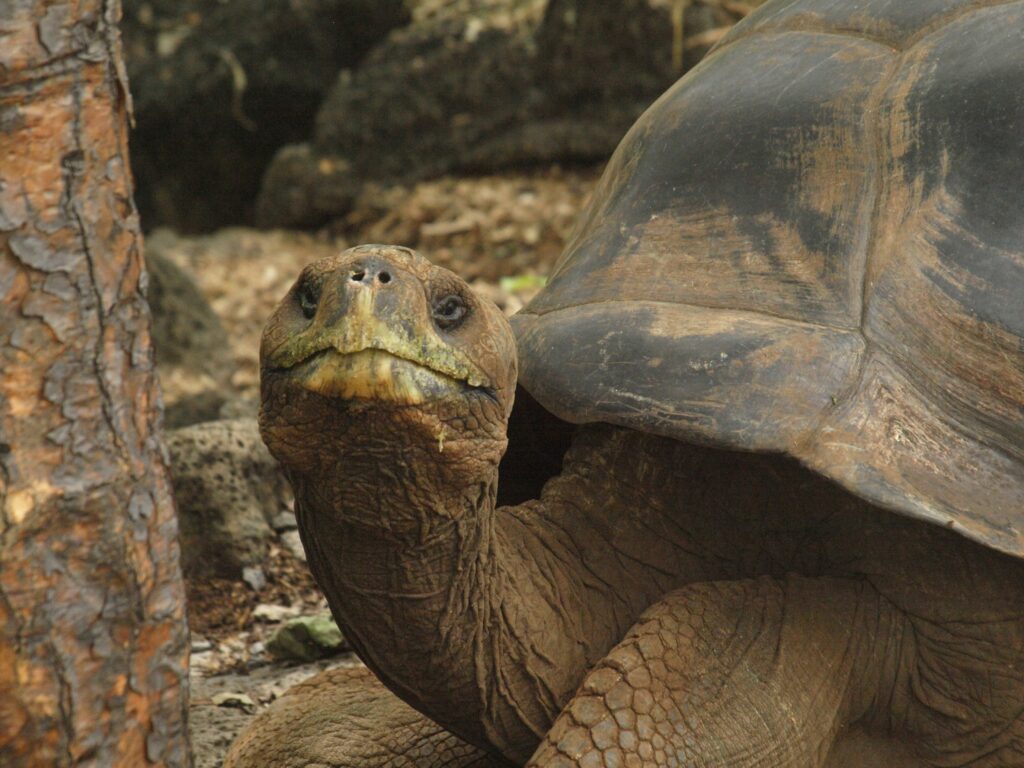
Basing yourself in Puerto Ayora unlocks the very best of the Galápagos Archipelago without locking you into a rigid cruise schedule. Here is what to keep in mind when mapping out your island adventures.
- Highland Giants: Encounter wild Galápagos giant tortoises roaming freely across misty Scalesia cloud forests alongside cavernous basalt lava tunnels
- Agrarian Heritage: Sample artisanal sugarcane spirits (guarapo) and lava-grown coffee at historic family farms like El Trapiche before unwinding on the quiet sands of El Garrapatero
- Volcanic Panoramas: Climb the 372 wooden steps of Isla Bartolomé for the archipelago’s most iconic view looking out across Pinnacle Rock and Sullivan Bay
- Avian Breeding Grounds: Witness blue-footed boobies performing elaborate courtship dances and male frigatebirds inflating crimson throat sacs on North Seymour
- Endemic Treasures: Spot pale-yellow Santa Fé land iguanas resting beneath towering Opuntia cacti along the turquoise lagoon of Barrington Bay
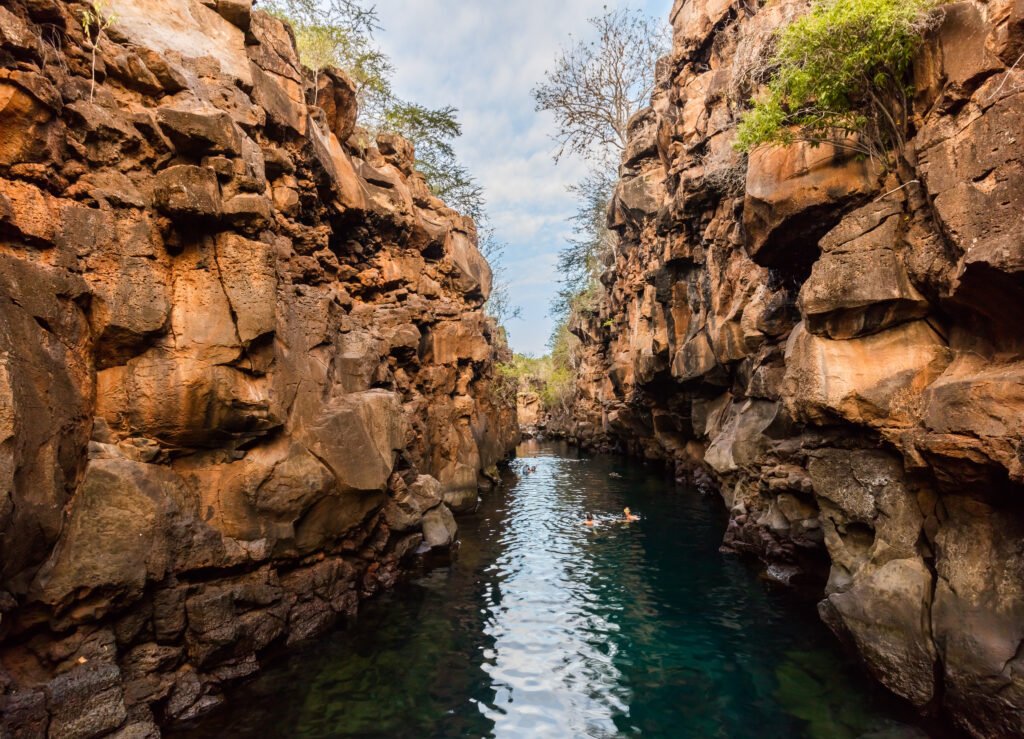
- Coastal Crevices: Explore Puerto Ayora’s immediate harbour highlights with a swim inside the sheer basalt canyon walls of Las Grietas
- Slow Travel Mindset: Support island-based captains and naturalists, carry small USD cash denominations, and always gear up for shifting highland weather
Santa Cruz
Explore highlands full of giant tortoises
Encounter giant tortoises and volcanic wonders in the Santa Cruz highlands
Rating & reviews
(63+ verified reviews on GetYourGuide)
Why this specific tour stands out
While the coast of Santa Cruz is arid and lined with prickly pear cacti, ascending into the island’s interior reveals a lush, misty world dominated by Scalesia forests and rolling green pastures. This half-day highland excursion offers an intimate look at the geological and biological forces that formed the archipelago.
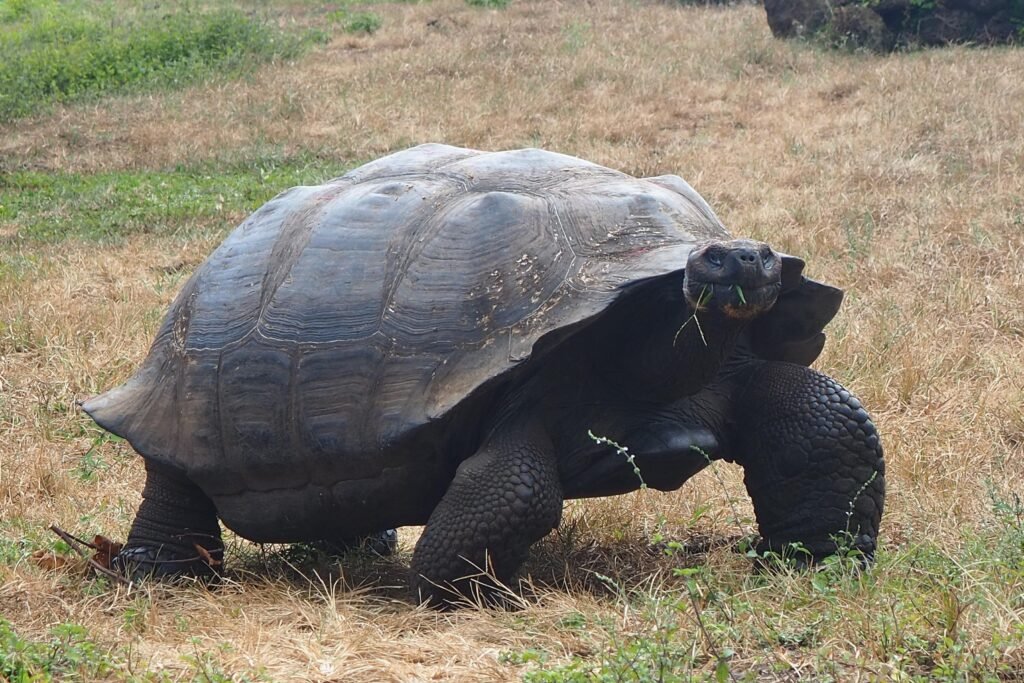
Your journey begins with a drive up to Los Gemelos (The Twins), two colossal pit craters formed by the collapse of underground magma chambers. Flanked by ancient Scalesia trees, this area is a haven for endemic land birds, including vermilion flycatchers and Darwin’s finches. From there, the tour transitions to a private natural reserve where wild Galápagos giant tortoises (Chelonoidis niger) roam freely.
Unlike captive breeding centres, here you walk quietly along muddy farm trails as these gentle giants graze in open fields and wallow in freshwater pools. The final leg takes you underground into subterranean basalt lava tunnels—hollow tubes carved out thousands of years ago by flowing liquid rock—offering a striking perspective on the island’s raw volcanic origins.
Key highlights
- Walk alongside wild giant tortoises in their natural highland feeding grounds
- Explore the deep sinkhole geology and cloud-forest flora of Los Gemelos craters
- Descend into illuminated subterranean lava tunnels formed by ancient basaltic flows
- Learn about endemic avian species from a certified Galápagos National Park naturalist
Ideal for
Wildlife enthusiasts, photographers, and travellers seeking a gentle, highly informative half-day introduction to Santa Cruz’s inland ecology.
Local insight
Highland weather can shift from bright sunshine to dense mist (garúa) within minutes. Wear sturdy walking shoes or boots that can handle deep mud, and bring a lightweight waterproof jacket even if Puerto Ayora looks completely clear when you set off.
The Galápagos.
Ecuador’s Enchanted Isles
Uncover local heritage, coffee, and pristine beaches at El Garrapatero
Rating & reviews
(New activity on GetYourGuide)
Why this specific tour stands out
Too many visitors focus solely on the wildlife of the Galápagos, overlooking the fascinating human history and agricultural traditions of the islanders. This immersive day tour seamlessly blends local heritage with coastal wilderness, taking you off the standard tour-bus track to sample agrarian life before unwinding on one of the island’s quietest beaches.
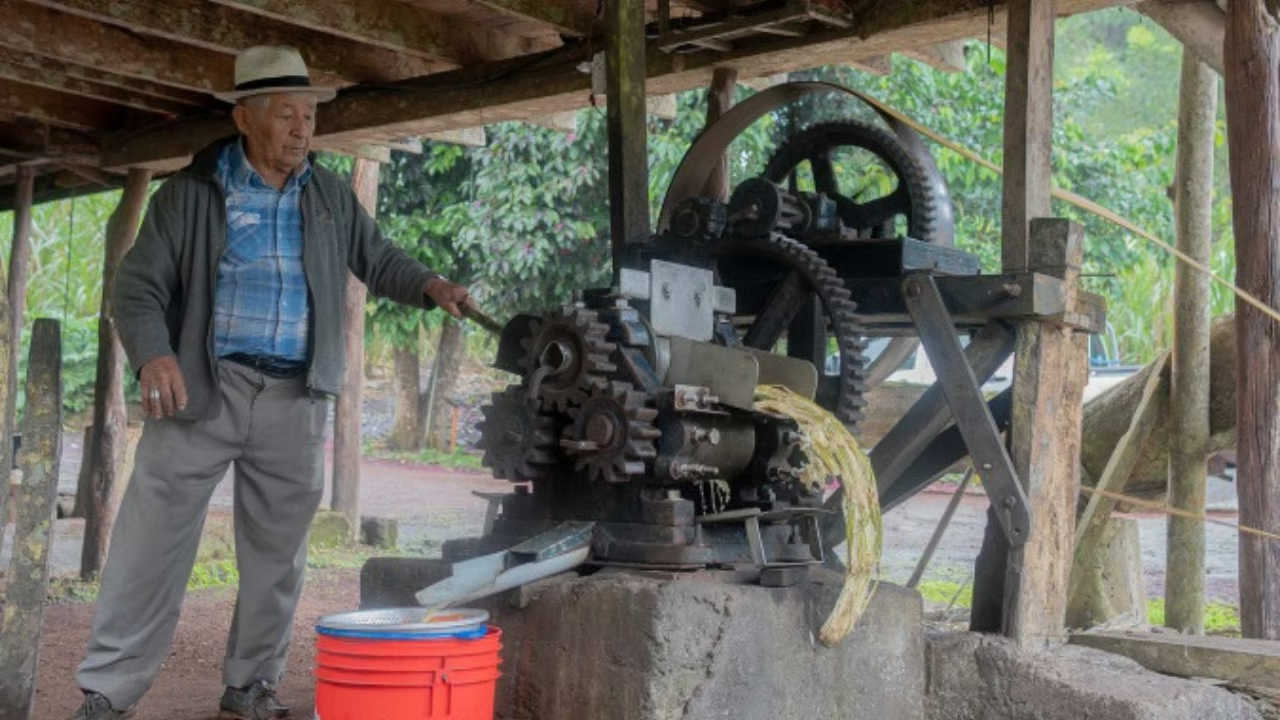
The trip starts at El Trapiche, a historic family-run farm tucked in the agricultural zone of Santa Cruz. Here, local hosts demonstrate how traditional sugar cane is crushed using a wooden mill powered by mules, yielding fresh cane juice (guarapo) and artisanal Galápagos rum. You will also inspect micro-lots of lava-grown Galápagos coffee cherries, watching the roasting process and tasting freshly brewed coffee rich in volcanic minerality.
Afterwards, the tour moves to the secluded eastern shoreline of Playa El Garrapatero. Accessible via a short walk past mangrove lagoons where pink flamingos frequently feed, this turquoise bay offers calm waters for swimming, kayak rentals, and pristine white sand far removed from urban crowds.
Key highlights
- Private guided tour of El Trapiche farm with live demonstrations of traditional sugar cane processing.
- Tasting of estate-grown Galápagos volcanic coffee and artisanal sugarcane spirits.
- Wildlife spotting near the brackish coastal lagoon at El Garrapatero, including flamingos and shorebirds.
- Leisure time for swimming, relaxing, or kayaking along the sheltered beach of Playa El Garrapatero.
Ideal for
Travellers passionate about sustainable agriculture, local culinary heritage, and escaping crowded tourist hotspots for a relaxing beach day.
Local insight
Buy a bag of whole-bean coffee directly from the farm at El Trapiche. Small-scale coffee cultivation in the highlands provides vital economic diversification for local families away from mass tourism.
The Ecuadorian Sierra.
Get lost in the hills
Iconic volcanic panoramas / Bartolomé Island & Sullivan Bay
Rating & reviews
(4+ verified reviews on GetYourGuide)
Why this specific tour stands out
If you have ever seen a postcard or travel documentary about the Galápagos Islands, chances are you are already familiar with Pinnacle Rock on Isla Bartolomé. This small volcanic island, situated just east of Santiago, offers the single most famous postcard panorama in the entire archipelago.
This full-day tour begins with an overland transfer across Santa Cruz to the Itabaca Canal, where you board a spacious, comfortable passenger yacht. After cruising across open waters, you land on Bartolomé’s dry landing dock and ascend a carefully constructed wooden boardwalk consisting of 372 steps. Along the climb, your guide explains the pioneer plant species, spatter cones, and lava tubes that form this pristine lunar landscape. From the summit, the sweeping view of Pinnacle Rock, Sullivan Bay, and surrounding volcanic cones is simply unmatched.
The afternoon transitions to marine exploration. You will take a panga (dinghy) ride along the jagged shoreline to spot Galápagos penguins perched on volcanic ledges before dropping anchor for a snorkelling session along the pale golden beach.
Key highlights
- Guided summit trek up the iconic wooden boardwalk of Isla Bartolomé for panoramic views
- Snorkelling near the base of Pinnacle Rock with chances to swim alongside Galápagos penguins
- Coastal panga cruise to observe shorebirds, sea turtles, and volcanic basalt formations
- Full-day yacht navigation including a hot buffet lunch and morning/afternoon snacks
Ideal for
Photographers, geology buffs, and bucket-list travellers wanting to capture the most iconic landscape in Ecuador.
Local insight
Due to strict national park carrying capacities, vessel permits for Isla Bartolomé are heavily restricted and sell out weeks in advance. If Bartolomé is a non-negotiable highlight for your trip, secure your booking well before arriving in Puerto Ayora.
Seabird breeding grounds / North Seymour & Las Bachas Beach
Rating & reviews
(1 verified review on Viator)
Why this specific tour stands out
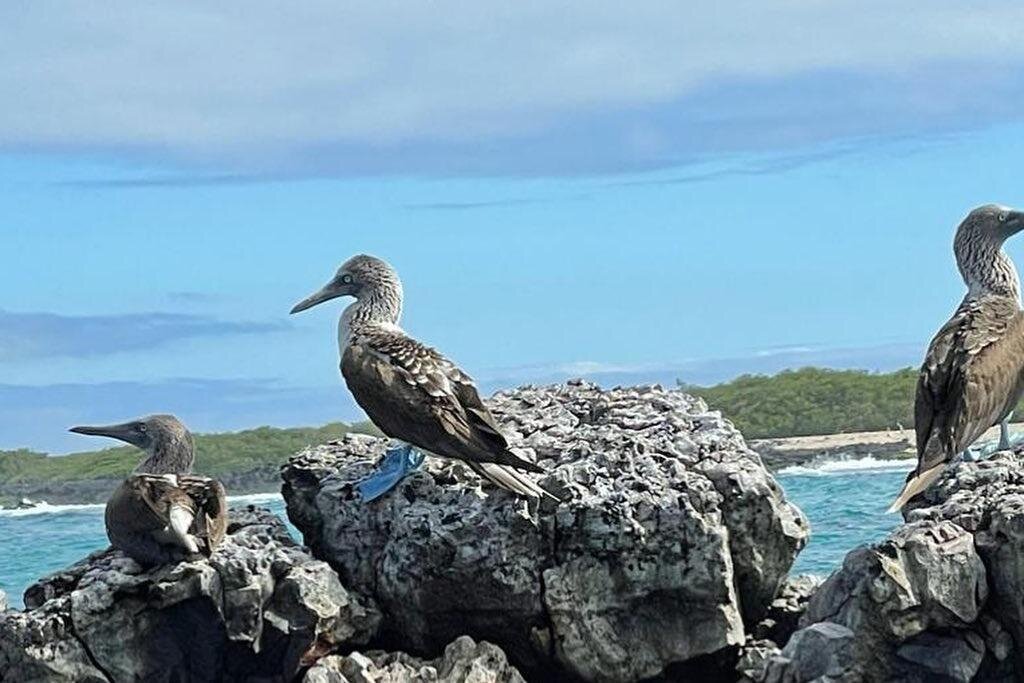
For birdwatching enthusiasts and wildlife lovers, Isla Seymour Norte (North Seymour) represents the absolute pinnacle of terrestrial wildlife viewing in the central islands. Located just north of Baltra, this flat, uplifted lava formation is a bustling nesting colony for some of the archipelago’s most famous avian inhabitants.
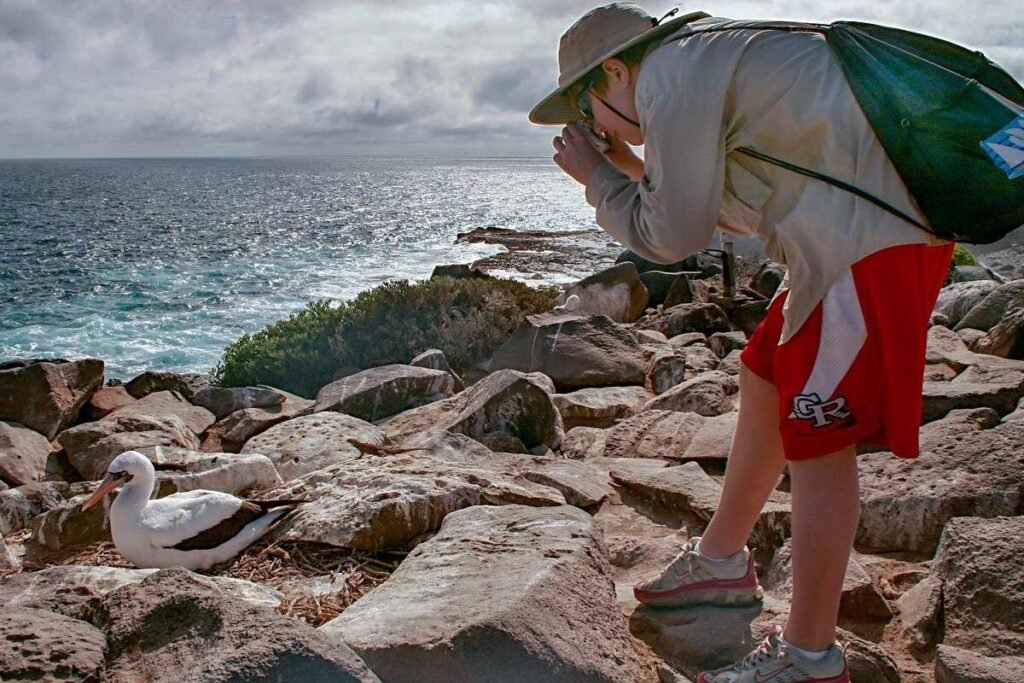
This day tour pairs a guided circular land hike on North Seymour with a beach landing at Las Bachas on northern Santa Cruz. On North Seymour, the inland trail brings you remarkably close to blue-footed boobies performing their elaborate, high-stepping courtship dances, as well as magnificent frigatebirds nesting in low-lying palo santo bushes. During breeding season, male frigatebirds inflate their crimson throat sacs to the size of basketballs to attract mates. Land iguanas (Conolophus subcristatus) also roam freely across the trail, feeding on fallen cactus pads.
In the afternoon, the yacht navigates to Las Bachas, a soft, coral-sand beach named after two WWII US Navy barges abandoned on the shore. Here, you can relax, swim, snorkel in gentle waters, or spot wild flamingos feeding in the brackish coastal lagoon behind the dunes.
Key highlights
- Unrivalled close-up birdwatching: blue-footed boobies, frigatebirds, and swallow-tailed gulls
- High density of land iguanas and coastal sea lion nurseries along the volcanic rock paths
- Relaxed beach landing and snorkelling at Las Bachas Beach
- Comprehensive naturalist-guided interpretation of avian breeding habits and island ecology
Ideal for
Avian photographers, wildlife lovers, and families seeking an engaging, walking-focused nature tour.
Local insight
Keep a watchful eye on the ground while walking on North Seymour. Marine and land iguanas blend seamlessly into the grey and reddish volcanic soil, and national park rules require maintaining a mandatory 2-metre distance from all wildlife at all times.
The Ecuadorian Amazon.
The most biodiverse place in the world
Turquoise waters & endemic fauna / Santa Fé Island
Rating & reviews
(New activity on GetYourGuide)
Why this specific tour stands out
Isla Santa Fé is one of the geologically oldest islands in the Galápagos archipelago, featuring ancient submarine lava flows that have been pushed above sea level over millions of years. This island is famous for two things: its towering forest of giant Opuntia cactus trees and its calm, mirror-like bay protected by a natural barrier reef.
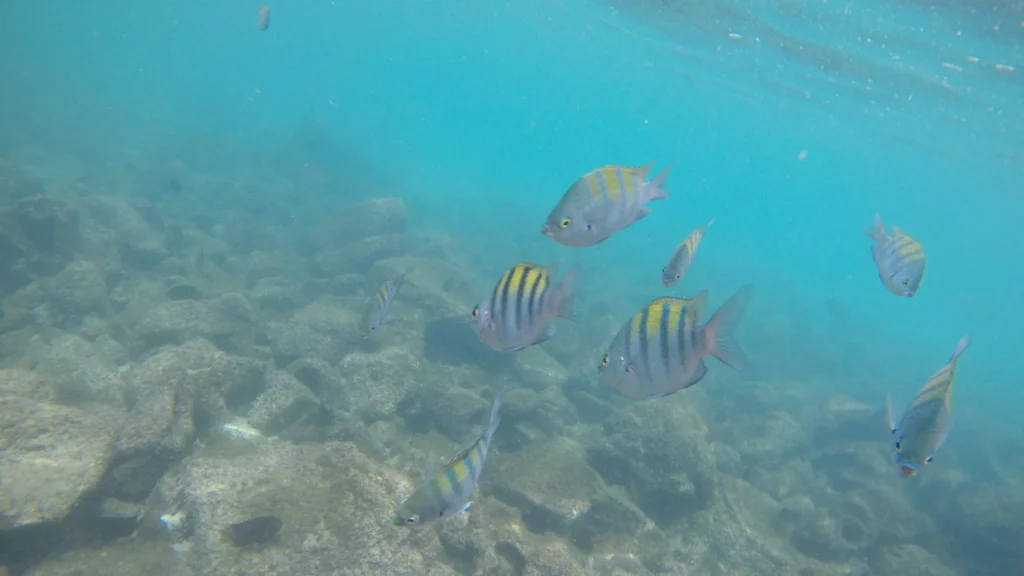
This day tour from Puerto Ayora focuses on relaxed marine exploration and pristine beach access. The boat anchors in the calm, emerald-green waters of Barrington Bay, where curious sea lion pups often swim right up to the vessel. Your first activity is a guided snorkel through the shallow, crystal-clear lagoon, where you can easily spot spotted eagle rays, green sea turtles, and vibrant schools of parrotfish.
Following a freshly cooked lunch on board, the tour visits Playa Escondida (Hidden Beach), a secluded stretch of sand accessible only by small craft. Here, guests can walk along the shore to observe endemic Santa Fé land iguanas — a distinct pale-yellow species found nowhere else on Earth — resting beneath the shade of giant cacti.
Key highlights
- Calm, shallow-water snorkelling in Barrington Bay, ideal for beginners and families
- Encounters with endemic Santa Fé land iguanas and giant Opuntia cactus forests
- Excursion to the remote, crowd-free shores of Playa Escondida
- Onboard lunch and small-group setting (limited to 12–16 passengers)
Ideal for
First-time snorkellers, families with children, and travellers seeking a balanced day of relaxed swimming and gentle shore walking.
Local insight
Because Barrington Bay is exceptionally calm and shallow, it provides some of the best conditions in the Galápagos for underwater photography without heavy currents. Bring an underwater camera or waterproof phone housing with a secure wrist strap.
Western archipelago wildlife / Isabela Island & Las Tintoreras
Rating & reviews
(77+ Verified reviews on GetYourGuide)
Why this specific tour stands out
Isabela is the largest island in the Galápagos, shaped like a seahorse and carved by six massive shield volcanoes. While spending several nights on Isabela is ideal, travellers based on Santa Cruz who are tight on time can take this action-packed full-day excursion to sample Isabela’s iconic highlights.
The day begins with an early morning speedboat navigation from Puerto Ayora harbour across to Puerto Villamil. Upon arrival, you board a smaller, open-air pangita to explore the jagged lava channels of Las Tintoreras Islet. Here, a narrow natural crevice in the black basalt fills with crystal-clear ocean water at high tide, creating a natural resting sanctuary where dozens of whitetip reef sharks (tintoreras) can be observed resting motionless just metres below the viewing platform.
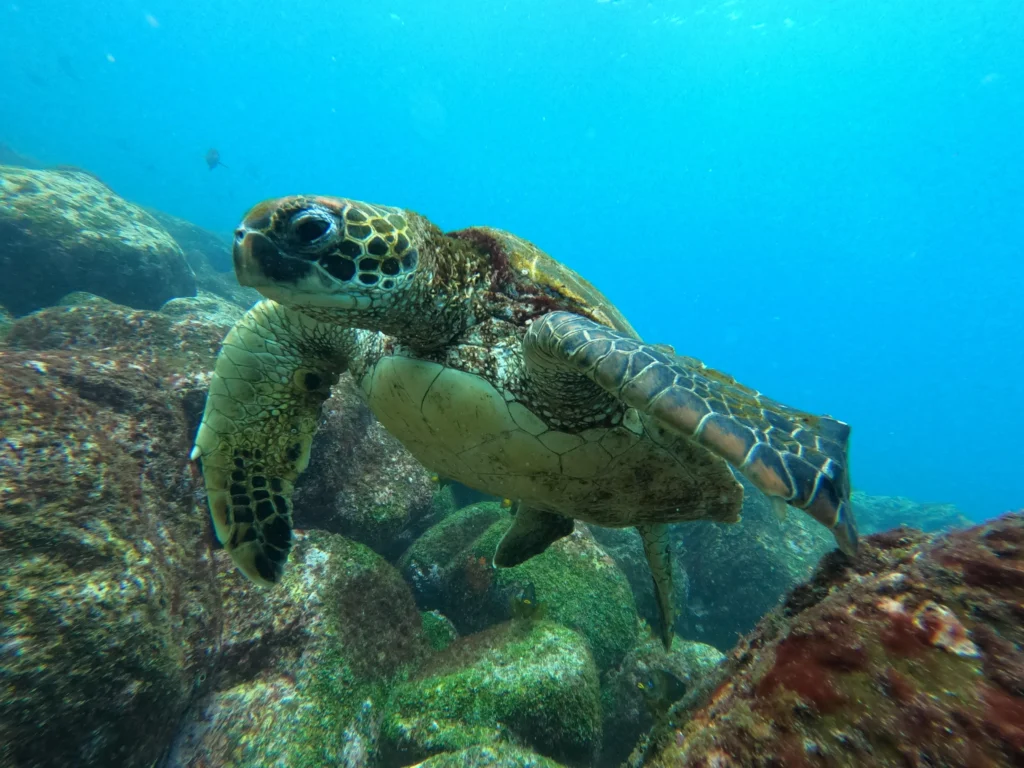
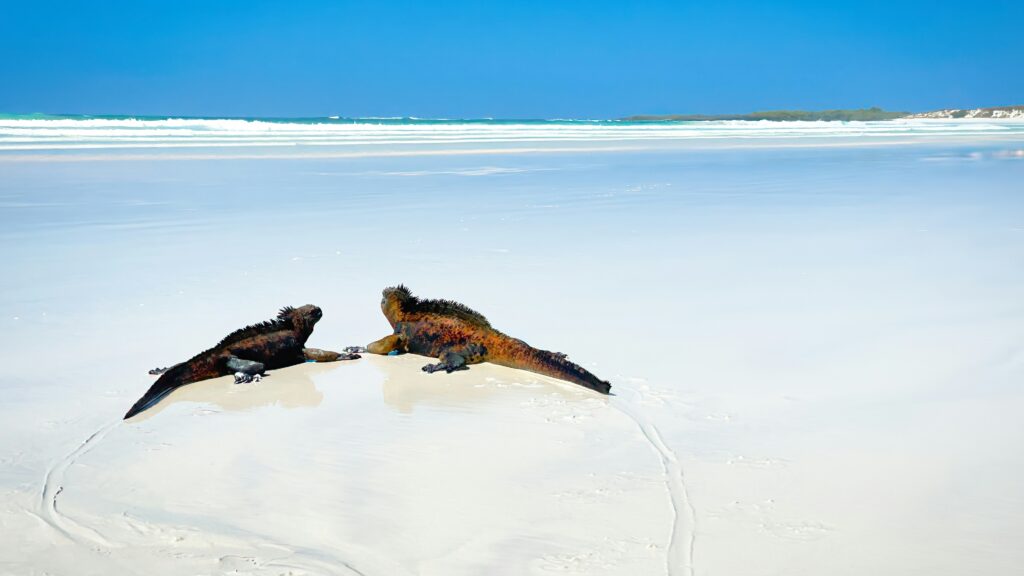
After a guided walk across the rough lava fields home to thousands of marine iguanas, you will snorkel in the calm bay alongside Galápagos penguins and sea turtles. Following an oceanfront restaurant lunch in Puerto Villamil, the tour concludes with a visit to the Arnaldo Tupiza Giant Tortoise Breeding Centre and the coastal flamingo lagoons.
Key highlights
- Sightseeing across two major islands in a single day
- Unique observation of resting whitetip reef sharks in the natural volcanic lava channels of Las Tintoreras
- High chances of spotting Galápagos penguins, flamingos, and marine iguanas
- Visit to the Arnaldo Tupiza Breeding Centre to learn about giant tortoise conservation efforts
Ideal for
Active, ambitious travellers who want to explore a different island without changing their hotel base on Santa Cruz.
Local insight
The 2-hour speedboat journey between Santa Cruz and Isabela crosses open ocean channels that can become remarkably choppy, especially from August to November. If you are prone to seasickness, take motion-sickness medication at least 30 minutes before boarding the boat at Puerto Ayora pier.
The Ecuadorian Coast.
Where you’ll find the very best food
Our practical excursion planning guide
Setting out on day excursions across Santa Cruz and the surrounding islands requires a bit of practical preparation. To ensure your trips run smoothly while respecting the delicate natural environment, keep these expert tips in mind:
Acclimatisation & sea preparedness
The central Galápagos waters are generally calm, but open-ocean crossings to island destinations like Bartolomé or North Seymour can involve swell, particularly during the garúa season (July to December). If you are prone to motion sickness, take medication 30 minutes before boarding your yacht.
National park rules & guide mandate
Over 97% of the Galápagos landmass falls within Galápagos National Park boundaries. You must always stay on marked trails, never touch or feed wildlife, and follow your naturalist guide’s instructions immediately. Remember to bring your original passport on day trips, as park rangers occasionally verify documentation at dock checkpoints.
Currency & cash logistics
Ecuador uses the US dollar ($). While major hotels and established restaurants in Puerto Ayora accept credit cards, day tour operators, taxi drivers, water taxis ($1–$2 per ride), and small highland shops operate strictly on cash. ATMs in Puerto Ayora can occasionally run out of bills on weekends, so carry sufficient small-denomination cash ($5, $10, and $20 notes) from the mainland.
Environmentally responsible gear
Protect the delicate reef ecosystem by using exclusively mineral-based, reef-safe sunscreen (active ingredients: non-nano zinc oxide or titanium dioxide). Chemical sunscreens containing oxybenzone or octinoxate are harmful to marine life. Bring a sturdy dry bag to protect camera gear during zodiac boat transfers.
Direct support for local operators
Whenever possible, choose tour providers that employ local Galápagueño captains, sailors, and naturalists. Land-based travel offers a vital opportunity to keep tourism revenue directly within the island economy, helping local communities build sustainable livelihoods centred on conservation.
Chart your own course across the Galápagos
Read this far?
Independent travel in the Galápagos Archipelago is far more than just an alternative to a floating resort. By establishing your base in Puerto Ayora, you claim full authority over your schedule, leaving room for spontaneous coffee stops, slow coastal rambles, and quiet evenings spent enjoying a locally brewed craft beer right by the harbour edge.
Small-group day excursions offer the ideal middle ground: expert naturalists guiding you through protected ecological reserves while leaving your evenings open to support family-run eateries and local craftspeople. Every dollar spent on island-based captains, local guide services, and highland farms directly fuels community resilience and incentivises sustainable, land-based conservation.
Whether you choose to climb the volcanic ash steps of Bartolomé, dive into the refreshing waters of Las Grietas, or spend a quiet morning watching giant tortoises graze across damp pastures, Santa Cruz proves that the truest way to experience these enchanted islands is with your feet firmly on the ground.
Pack your mineral sunscreen, lace up your trail boots, and prepare to discover a side of the Galápagos that generic cruise itineraries simply cannot reach.
Affiliate Disclaimer: Some of the links on Wheely Tyred are affiliate links. If you click through and make a booking or purchase, we may earn a small commission at no extra cost to you. We only recommend gear, tours, stays, and services we genuinely use, trust, and stand behind — our editorial independence always comes first. These commissions help keep our independent cycling guides and travel stories free to read. You can also buy me a coffee here — thanks for supporting the ride!
Frequently asked questions about the best Santa Cruz day tours
Most organised day tours include land transport—typically in private minivans or double-cab taxis—picking you up directly from central Puerto Ayora or designated meeting points near the main passenger pier. For short coastal hops around Academy Bay, small water taxis (taxis marítimos) run constantly from the harbour dock for $1–$2 per ride.
Cash is essential across the Galápagos. While larger hotels and established restaurants in Puerto Ayora accept major credit cards, day tour operators, taxi drivers, water taxis, and small highland farms operate strictly in US dollars ($). ATMs in town can run out of cash on weekends, so bring plenty of small-denomination bills ($5, $10, and $20 notes) from mainland Ecuador.
Santa Cruz microclimates vary dramatically within short distances. Highland trips to tortoise reserves and lava tunnels are often cool, misty (garúa), and muddy, requiring sturdy walking shoes and a waterproof jacket. Coastal excursions to Bartolomé or North Seymour require wide-brimmed sun hats, long-sleeved UV rash guards, reef-safe mineral sunscreen, and reusable water bottles to comply with national park regulations.
Yes, particularly between July and December when the cool Humboldt Current sweeps through the archipelago, dropping sea surface temperatures to 18–22°C. Wearing a 3mm wetsuit (typically supplied by tour operators) keeps you warm enough to stay in the water comfortably without getting fatigued by the chill.
Very few areas permit unguided access. While you can walk independently to Tortuga Bay or town beaches, over 97% of the national park landmass requires a certified Galápagos National Park naturalist guide. Booking verified day tours ensures full compliance with local conservation regulations while giving you expert context on the flora and fauna.
El Trapiche is a historic family-run farm located in the agricultural highlands of Santa Cruz. It offers visitors a look into traditional island agriculture, demonstrating how sugar cane is crushed using a mule-drawn wooden mill to yield fresh cane juice (guarapo) and artisanal spirits, while also producing small batches of volcanic-soil Galápagos coffee.
Ecuador.
Pure wonder on the equator.