
A guide to Ingapirca Archaeological Complex / Independent travel to the Inca heart of Ecuador
Ingapirca Ruins, Ecuador / Opening hours, travel routes from Cuenca, and history
Stand where empires merged under the high Andean sky

BEN FINCH
Perched on a windswept plateau at 3,160 metres above sea level in the southern sierra of Ecuador, the archaeological complex of Ingapirca presents one of the most compelling historical landscapes in South America.
While many travellers pass through on tightly managed group coach tours, true engagement with this ancient citadel requires a slower, more deliberate approach. Visiting independently allows you to set your own pace, absorb the stark beauty of the Cañar province, and explore the intricate layers of two distinct pre-Columbian civilisations.
At Wheely Tyred, we advocate for travel that honours personal schedule and local depth. Ingapirca is not a location to be ticked off a hurried bus itinerary. It is a place where stonework tells the story of an empire adapting to an indomitable local culture, set against the dramatic backdrop of the high Andean páramo.
Ingapirca at a glance / Essential highlights
Ingapirca stands as South America’s most profound example of pre-Columbian cultural integration. Here is everything you need to remember for a seamless, self-guided journey into the high Andes.
- Dual Heritage: The site showcases a rare fusion of matriarchal Cañari lunar architecture and imperial Inca Cusco-style sun masonry
- The Temple of the Sun: The only known elliptical Inca temple in South America, engineered with exact solstice astronomical alignments around a sacred rock outcrop
- Pilaloma and Lunar Astronomy: Explore rounded Cañari foundations and stone tacillas—carved water pools used as celestial mirrors to map agricultural cycles
- Cara del Inca Loop: A quiet 1.5-kilometre walking path into the Intihuayco ravine leads to a dramatic human profile carved into the cliffside by natural erosion
- Highland Transit: Direct morning buses depart daily from Cuenca’s Terminal Terrestre, or you can connect via local transport through El Tambo or Cañar
- Páramo Preparation: Situated at 3,160 metres, unpredictable weather demands layered clothing, sturdy waterproof footwear, and reliable sun protection
- The Royal Road Approach: Adventurous travellers can reach the complex via the three-day Qhapaq Ñan trek starting from the mountain village of Achupallas
Ingapirca.
Where Cañari history meets the grandeur of the Inca
An introduction to Ingapirca
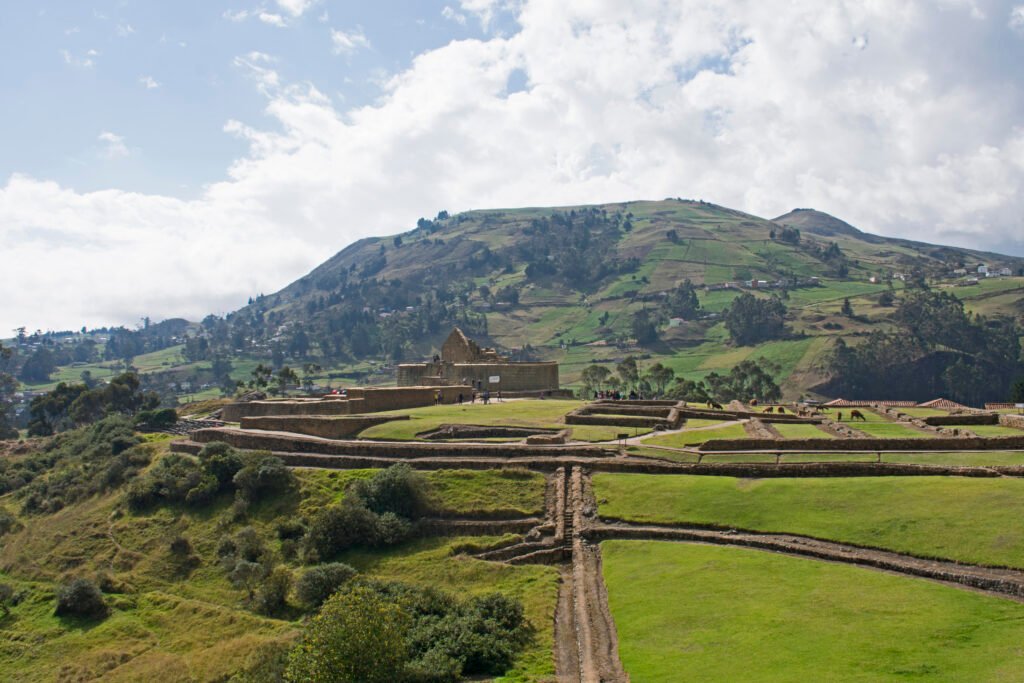
The name Ingapirca translates from Kichwa as Inca wall, yet this description understates the complexity of the site. Located roughly 80 kilometres north of Cuenca, Ingapirca is the largest and best-preserved archaeological complex in Ecuador.
What makes Ingapirca extraordinary compared to Peruvian sites like Machu Picchu is its dual heritage. Before the Incas arrived in the late 15th century, the region was the ancestral home of the Cañari people.
Rather than completely eradicating the existing settlement, the expanding Inca Empire under Túpac Yupanqui and later Huayna Cápac established a strategic alliance with the Cañari. The resulting complex became a vibrant administrative, military, and religious centre where two distinct worldviews existed side by side.
Two civilisations, one sacred hill / Cañari and Inca heritage
To appreciate the architectural remains at Ingapirca, one must understand the fundamental differences between the Cañari and the Inca cultures.
The Cañari were a matriarchal society whose spiritual practices revolved around lunar cycles. They were fierce defenders of their territory, skilled metalworkers, and deeply attuned to the natural topography of the Andes. Their architecture favoured rounded, organic structures built from fieldstones and mortar, reflecting their reverence for the moon and water.
Conversely, the Incas brought a rigid, patriarchal social structure centred on the worship of Inti, the sun god. Inca imperial architecture is renowned for its imperial Cusco-style stonework: heavy volcanic blocks carved with meticulous precision, fitted together without mortar so tightly that a knife blade cannot pass between them.
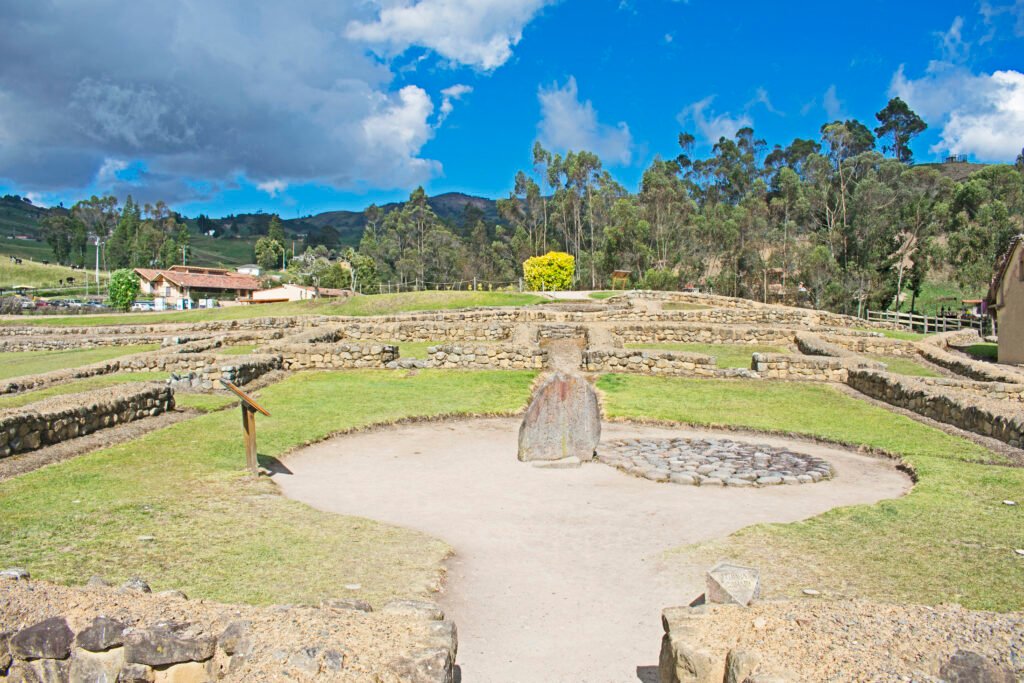
At Ingapirca, these two traditions merged. The Incas built their grandest monument, the Temple of the Sun, directly atop a sacred Cañari ceremonial site. Nearby, Cañari lunar calendar stones and burial sites remain visible, demonstrating a rare example of cultural syncretism in the ancient world.
The Ecuadorian Sierra.
Get lost in the hills
Key archaeological features at Ingapirca
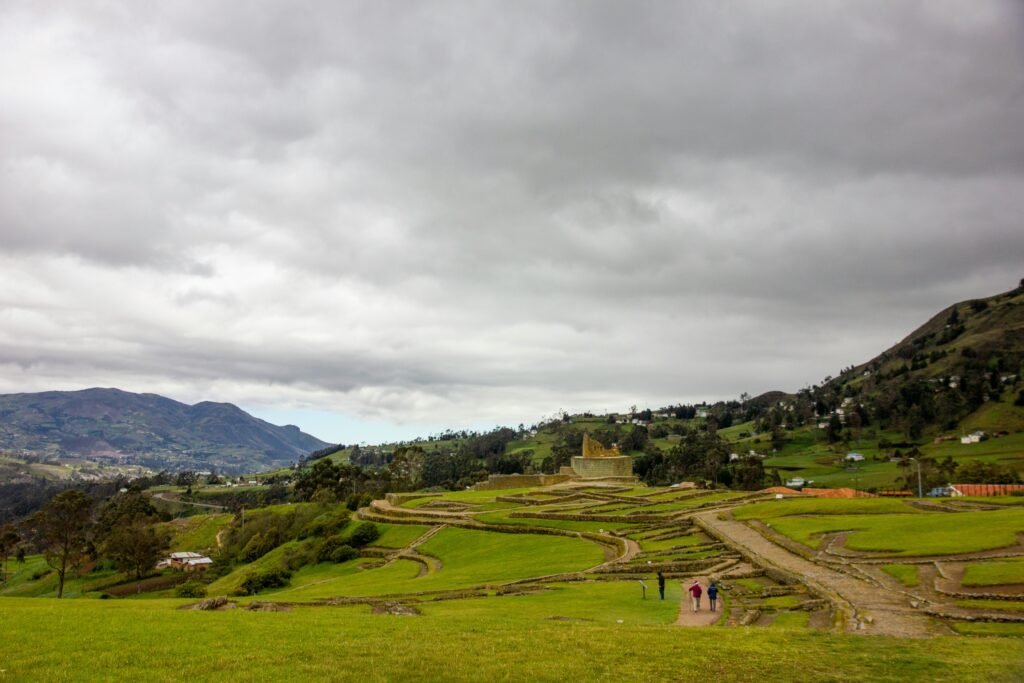
Exploring the site independently gives you the freedom to examine the distinct architectural zones without feeling rushed by a tour group guide.
The Temple of the Sun
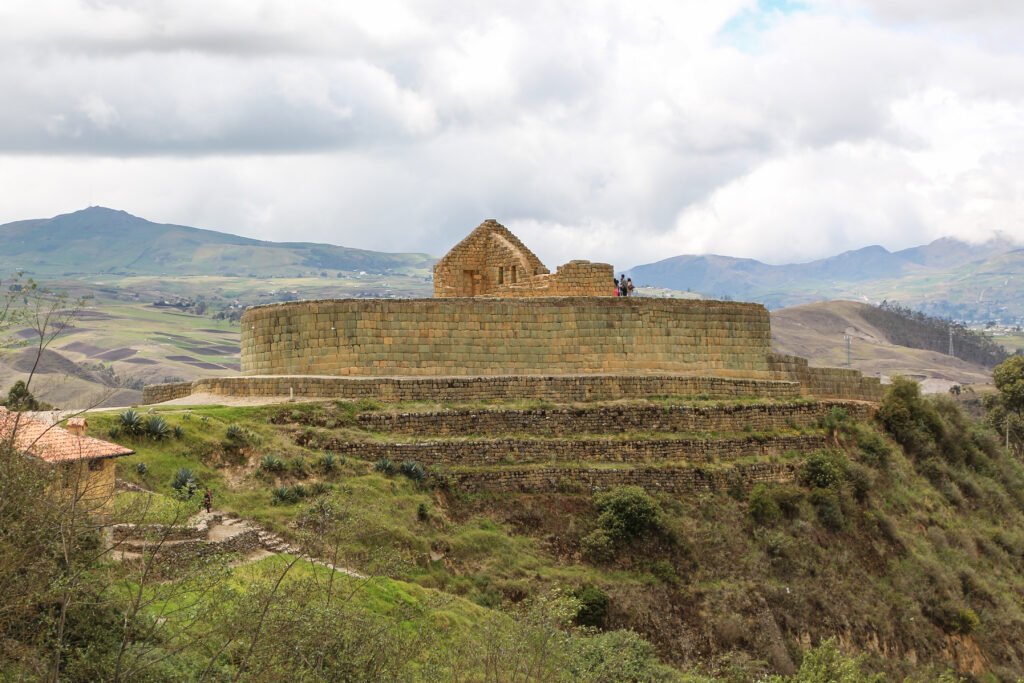
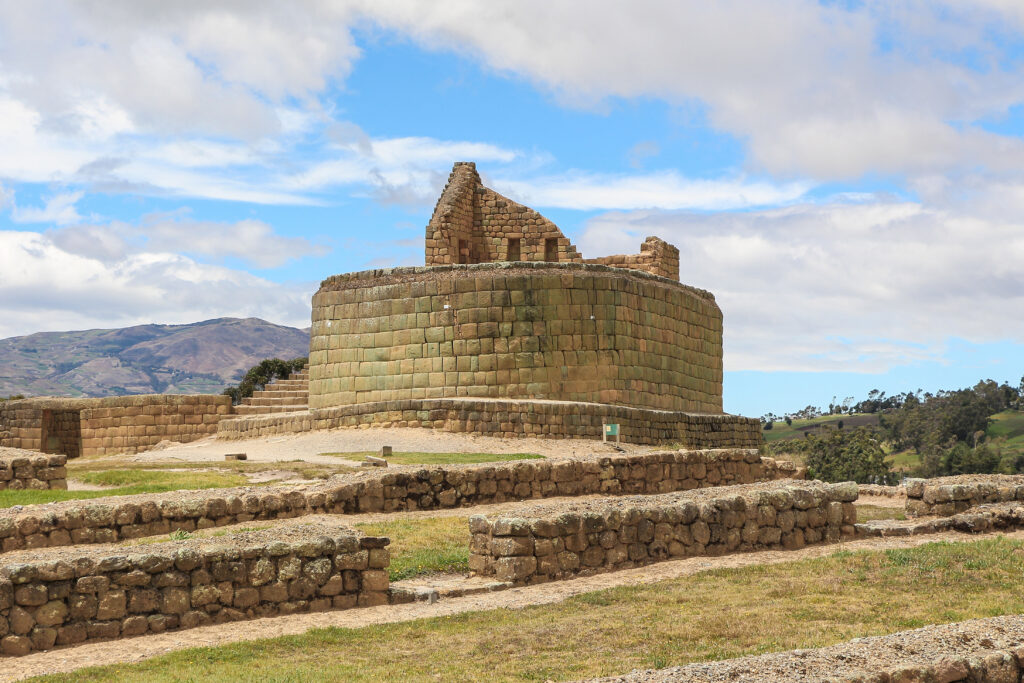
The centrepiece of the entire complex is the Temple of the Sun, often referred to as El Castillo. It stands as the only elliptical Inca temple discovered anywhere in South America. Constructed around a massive natural rock outcropping, the building features greenish andesite stone blocks hand-carved to perfection.
The temple was engineered with exact astronomical alignments. During the summer and winter solstices, sunlight passes directly through trapezoidal doorways to illuminate specific interior niches. The elliptical shape itself is believed to be a tribute to Cañari architectural preferences, constructed using pure Inca masonry techniques.
The Cañari Moon Temple and Pilaloma
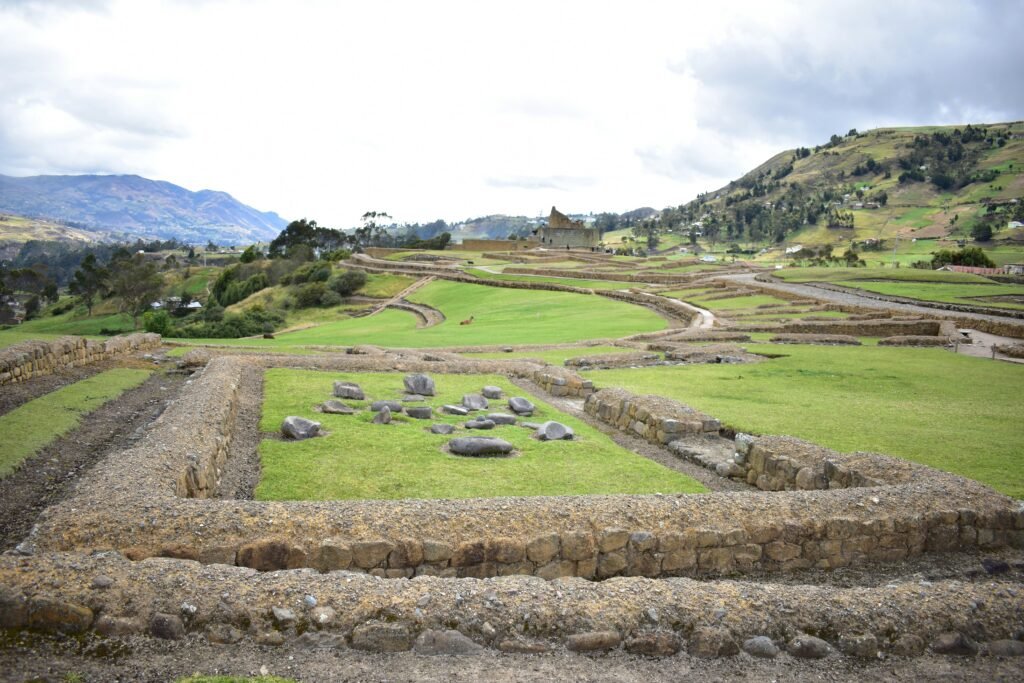
Located near the entrance of the main ruins, Pilaloma represents the oldest section of the complex. Here, the foundations of rounded Cañari structures surround a central burial site. Archaeologists discovered the remains of a high-ranking Cañari priestess alongside 10 attendants, buried with elaborate pottery, copper items, and spondylus shell ornaments.
Nearby, carved mortar stones known as tacillas feature round depressions that were filled with water by Cañari priests. At night, these water pools reflected the moon and stars, serving as precise lunar calendars for planting and harvesting cycles.
The Cara del Inca and Intihuayco Trail
Beyond the central stone walls lies a short, unpaved walking loop of roughly 1.5 kilometres that leads into the Intihuayco ravine. Most large tour groups skip this trail entirely, making it a serene walk for independent visitors.
The trail leads to the Cara del Inca, a towering natural rock formation where weather and erosion have carved the distinct profile of a human face into the cliffside. The Cañari and Incas considered this natural anomaly sacred, utilising the ravine for ceremonial washings and ritual games.
The site museum
The Museo de Sitio, located at the main entrance, provides essential context before you step onto the grounds. It houses a detailed scale model of the complex alongside excavated Cañari pottery, textiles, metal weapons, and skeletal remains. Visiting the museum first allows you to visualise the full scale of the ancient city before exploring the foundation walls.
The Galápagos.
Ecuador’s Enchanted Isles
Plan your visit / Essential logistics for independent travellers
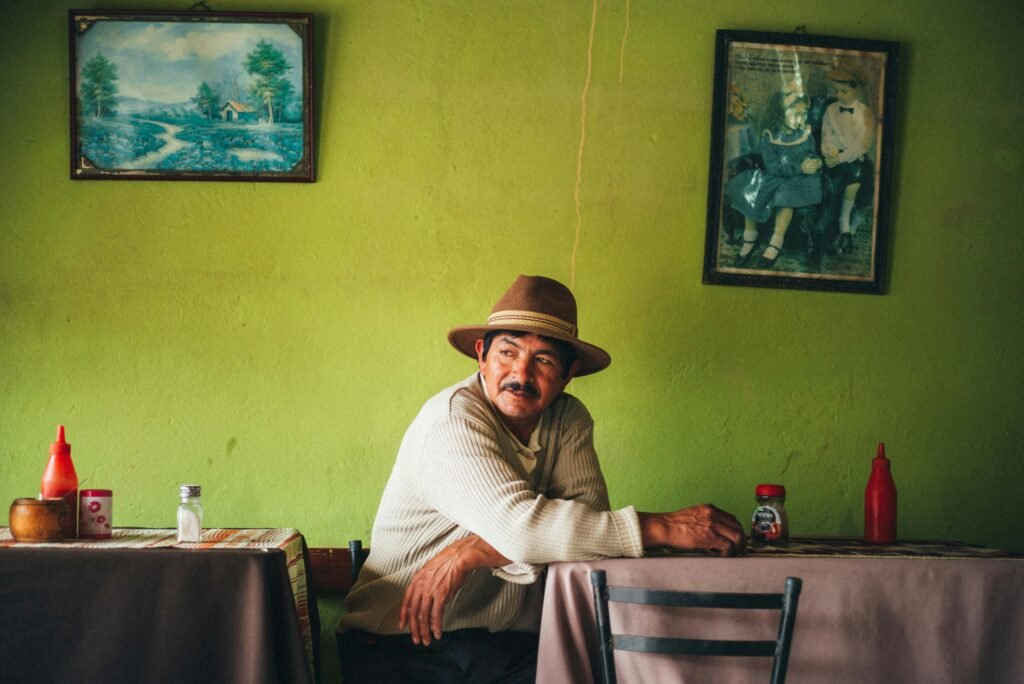
Proper preparation ensures a smooth trip to the high altitude of the Cañar province.
Elevation and climate requirements
Ingapirca sits at an elevation of 3,160 metres. The Andean climate at this altitude can shift rapidly from bright, intense equatorial sunshine to cold, driving wind and rain within minutes.
Daytime temperatures average between 8°C and 15°C. Layered clothing is essential: bring a moisture-wicking base layer, an insulating fleece, and a high-quality waterproof windbreaker.
Due to the high altitude, UV exposure is extreme even on overcast days, so sunscreen, sunglasses, and a wide-brimmed hat are mandatory. Strong, waterproof trekking footwear is strongly recommended, especially if you plan to walk the trail to Cara del Inca.
Entry fees, tickets, and operating hours
- Standard Entrance Fee: $2 USD per person
- Operating Days: Wednesday to Sunday (Strictly closed on Mondays and Tuesdays for site maintenance)
- Opening Hours: 09:00 to 16:30
- Guided Tours: General admission includes a mandatory 45-minute guided tour led by local state-certified guides. Independent walking inside the primary temple loop is restricted to protect the fragile stonework. Tours are primarily conducted in Spanish and Kichwa; if you require an English-speaking guide, it is advisable to request one at the ticket counter upon arrival or arrange a private bilingual guide in advance
- Advance Reservations: Visitors should register or check ticket availability at least 24 hours prior to arrival through the official institute portal of the Instituto Nacional de Patrimonio Cultural
Reach Ingapirca without a tour bus

Reaching Ingapirca independently from Cuenca or nearby towns is straightforward and offers complete control over your morning schedule.
Travel from Cuenca
Cuenca is the most common base for visiting Ingapirca. From the Terminal Terrestre in Cuenca, local bus companies operate direct morning routes straight to the entrance of the ruins. The journey takes approximately two to two and a half hours each way, winding through scenic highland agricultural valleys.
Alternatively, you can catch any northbound bus heading towards Cañar or Alausí, disembark at the small town of El Tambo or Cañar, and take a local taxi or secondary bus for the remaining 15-minute drive to the site entrance.
Stop at El Tambo or Cañar
Choosing to break your trip in El Tambo or Cañar gives you an authentic glimpse into everyday life in the Ecuadorian highlands.
Cañar holds a vibrant Sunday market where indigenous locals gather from surrounding villages to trade produce, livestock, and handwoven textiles.
El Tambo offers quiet streets, historic stone churches, and small family-run eateries serving traditional Andean fare.
The Ecuadorian Amazon.
The most biodiverse place in the world
Trek the Qhapaq Ñan / The Inca Trail from Achupallas
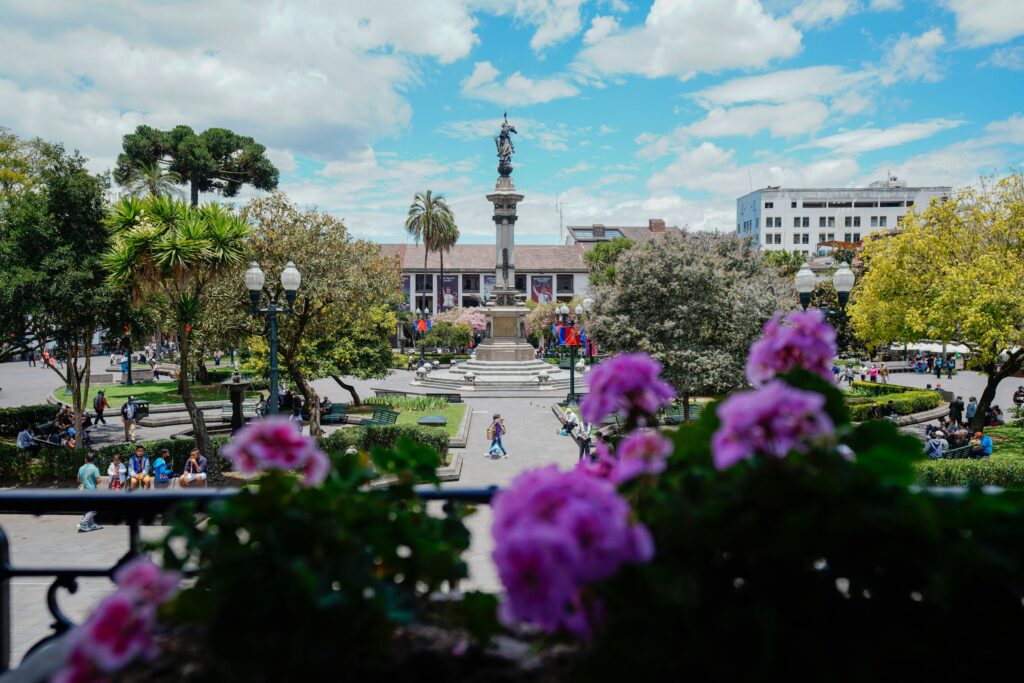
For travellers seeking a deeper connection to the landscape, the three-day trek along the Qhapaq Ñan offers an unforgettable approach to Ingapirca.
This 40-kilometre stretch follows the ancient Royal Road that once connected Cusco with Quito. Starting in the mountain village of Achupallas at 3,300 metres, the trail traverses high mountain passes, skirts past the pristine waters of Laguna Culebrillas, and crosses vast expanses of páramo grasslands before descending directly into the complex of Ingapirca.
Completing this trek requires proper camping gear, cold-weather clothing, navigation skills, or a local indigenous guide from Achupallas. Arriving at the Temple of the Sun on foot after three days in the wilderness provides a sense of scale and reverence that no road vehicle can match.
Experience Ingapirca on your own terms
Read this far?
Visiting Ingapirca independently transforms a simple sightseeing excursion into a deliberate journey through South American history. By stepping off the pre-packaged tour circuit, you gain the freedom to sit among ancient stone walls, observe the shifting Andean light, and absorb the quiet solemnity of the páramo at your own pace.
The true allure of this high-altitude citadel lies in its subtleties—the contrast between mortarless volcanic blocks and rounded fieldstones, the gentle whisper of wind across the Intihuayco ravine, and the quiet rhythm of rural highland life surrounding the ruins. Taking local buses or walking the surrounding trails allows you to experience the region on a human scale.
Travel is at its most rewarding when you retain complete ownership over your time. Whether you spend hours inspecting Cañari lunar calendar stones, hiking down to the Cara del Inca, or enjoying a slow coffee in nearby El Tambo, independent exploration ensures that your connection to Ingapirca is authentic, unhurried, and uniquely your own.
Affiliate Disclaimer: Some of the links on Wheely Tyred are affiliate links. If you click through and make a booking or purchase, we may earn a small commission at no extra cost to you. We only recommend gear, tours, stays, and services we genuinely use, trust, and stand behind — our editorial independence always comes first. These commissions help keep our independent cycling guides and travel stories free to read. You can also buy me a coffee here — thanks for supporting the ride!
The Ecuadorian Coast.
Where you’ll find the very best food
Frequently asked questions about visiting the Ingapirca Ruins
Direct morning buses run regularly from Cuenca’s main bus station, Terminal Terrestre, straight to the site entrance. Alternatively, take any northbound bus towards Cañar or Alausí, disembark at El Tambo or Cañar, and take a quick 15-minute taxi or local bus to the ruins.
The complex is open Wednesday to Sunday from 09:00 to 16:30, with site closure on Mondays and Tuesdays. Entry costs $2 USD per person. It is recommended to register online via the official Instituto Nacional de Patrimonio Cultural portal prior to visiting.
Standard admission includes a mandatory 45-minute guided walk led by certified local guides to protect the fragile stonework within the main temple loop. Once finished, you are free to explore the site museum and the surrounding Cara del Inca trail at your own pace.
Sitting at 3,160 metres, weather conditions can shift rapidly from bright equatorial sunshine to freezing wind and rain. Wear layered technical clothing, bring a waterproof windbreaker, pack high-SPF sunscreen, and wear sturdy trekking shoes suitable for uneven stone paths.
Because the site sits above 3,000 metres, travellers arriving from lower elevations may experience mild breathlessness. Spending two days acclimatising in Cuenca (2,560 metres), staying well hydrated, and walking at a measured pace will significantly ease your visit.
Yes, experienced trekkers can hike the 40-kilometre trail from Achupallas independently. However, due to high-elevation páramo terrain and changing mountain weather, you must carry full cold-weather camping equipment, reliable offline navigation, or hire an independent local guide in Achupallas.
Ecuador.
Pure wonder on the equator.

