Sacred summits and equatorial pedalling / A history of Chimborazo, Ecuador
Chimborazo, Ecuador, travel guide, historic high-altitude routes, and Humboldt climb legacy
From indigenous deity and Enlightenment obsession to the ultimate cycling frontier
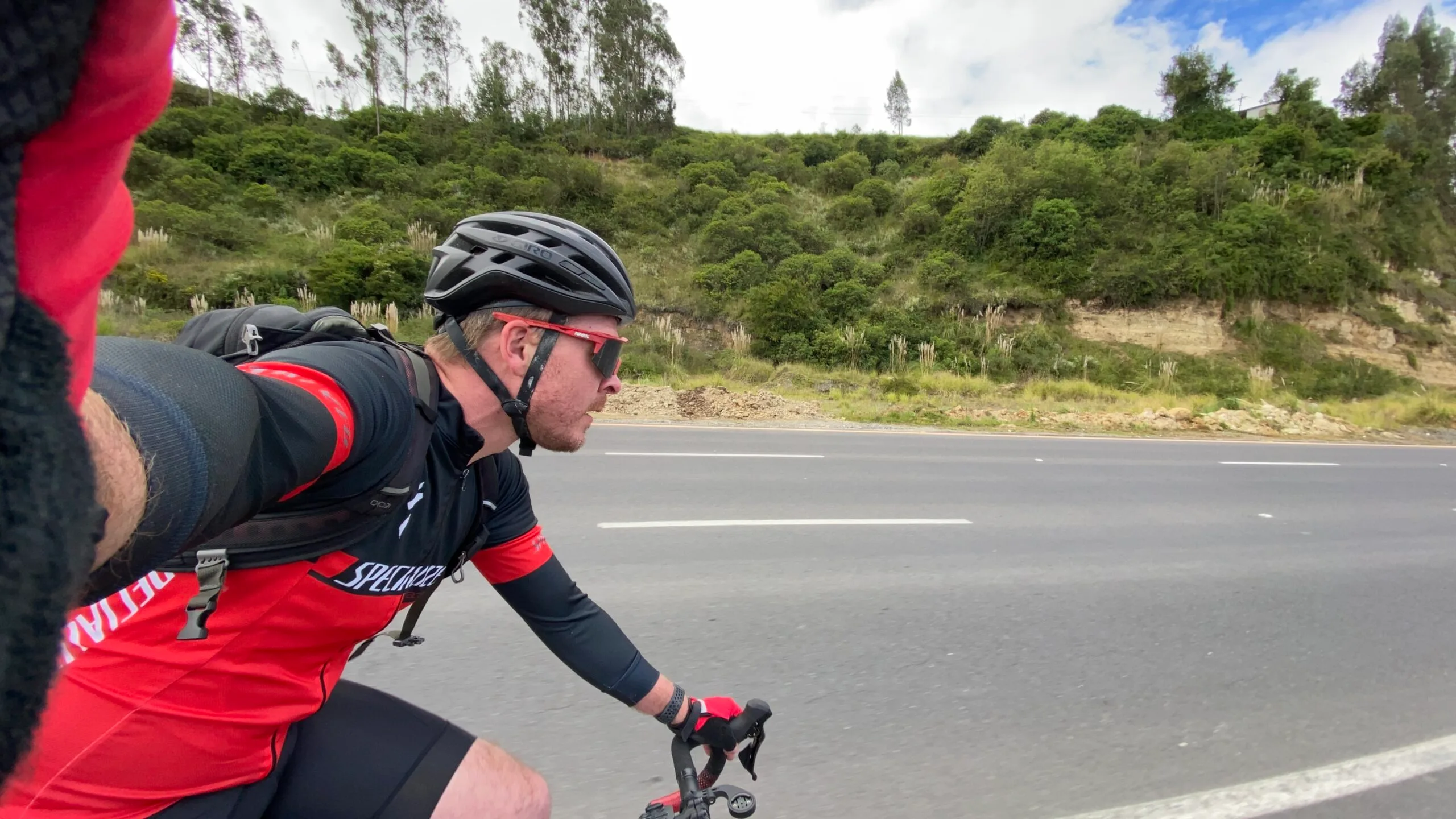
BEN FINCH
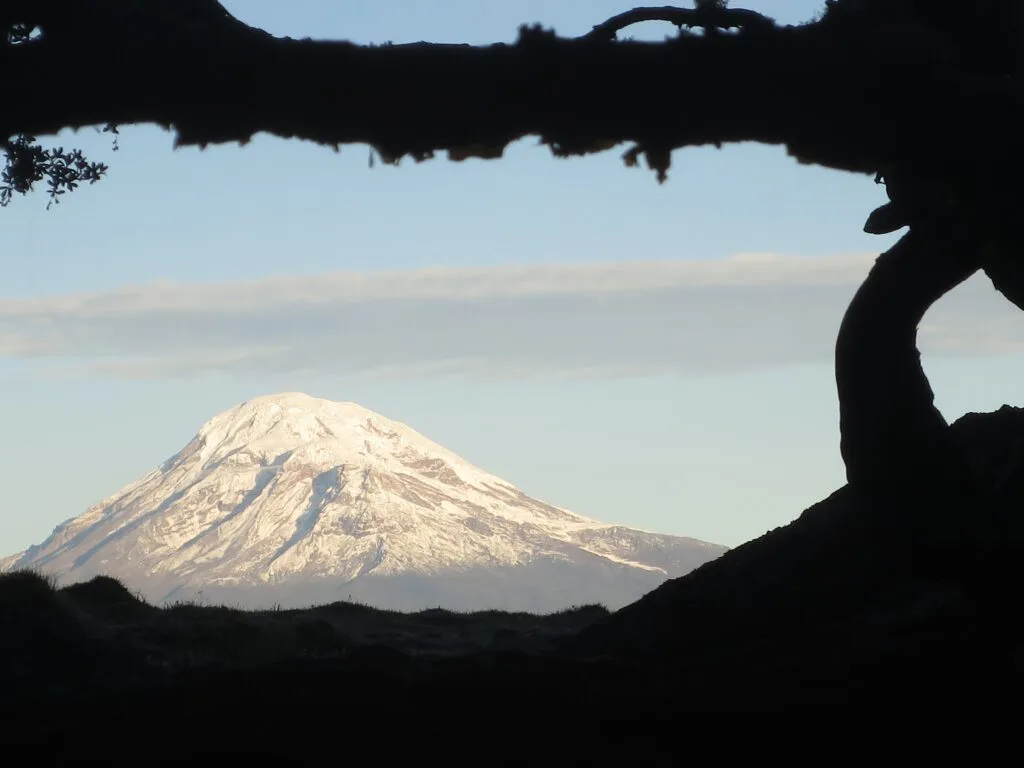
Standing on the vast windswept plains of central Ecuador, the colossal ice-capped silhouette of Chimborazo dominates the horizon. Rising to an altitude of 6,263 metres above sea level, this dormant stratovolcano has captivated human imagination for millennia.
Yet sea level measurements fail to capture its true physical marvel. Because the Earth bulges around its equator, Chimborazo holds the extraordinary distinction of being the furthest point on the surface of the planet from the Earth’s centre. Its icy apex sits more than two kilometres further from the core than the summit of Mount Everest, making it literally the closest place on Earth to the sun and stars.
For cyclists, explorers, and history enthusiasts, the slopes of Chimborazo represent far more than a physical peak. The surrounding landscape, marked by open tussock grass, high-altitude alpine tundras, and jagged volcanic ridges, carries centuries of human endeavour.
Long before modern gravel bicycles traversed the high-altitude tracks of the Chimborazo Wildlife Reserve, this mountain was a sanctuary for indigenous civilisations, an obsession for European Enlightenment scientists, and a vital trade corridor connecting the High Andes to the Pacific coast.
Key takeaways from Taita Chimborazo
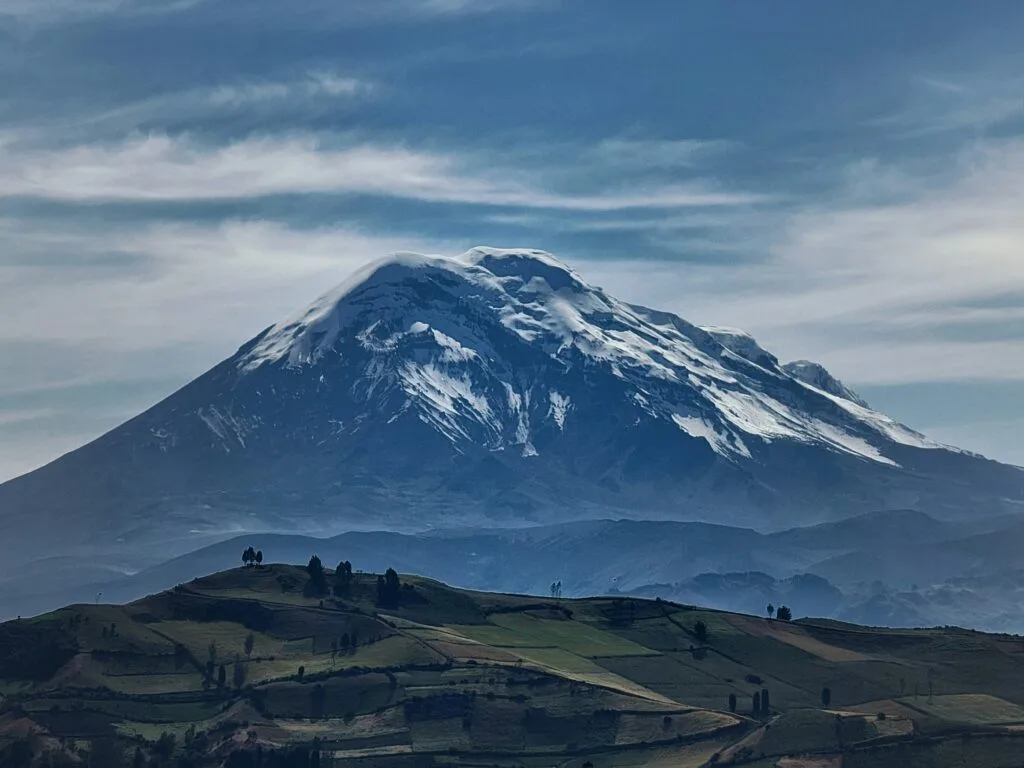
Traversing the high-altitude shoulders of Ecuador’s highest peak offers an extraordinary blend of remote gravel riding, profound Indigenous heritage, and ecological history. Here are the essential takeaways and historical highlights to keep in mind before planning your expedition.
- The closest point to the stars: Standing at 6,263 metres above sea level, Chimborazo’s peak is the furthest point on the surface of the planet from the Earth’s centre due to the equatorial bulge
- Sacred Indigenous guardianship: Revered as Taita (Father) Chimborazo by the native Puruhá nation, the mountain remains a spiritual protector and historical meteorological compass for Highland communities
- Birthplace of modern ecology: Alexander von Humboldt’s historic 1802 ascent inspired his revolutionary Naturgemälde, proving how elevation and climate dictate plant life and establishing modern ecological science
- Legacy of the ice harvesters: For generations, local hieleros hiked above 4,800 metres to carve blocks of glacial ice, wrapping them in native chuquiragua páramo grass for transport to valley markets
- Ultimate high-altitude road climb: The asphalt road climbing through the wildlife reserve to the Hermanos Carrel Refuge at 4,850 metres represents one of the highest paved cycling challenges in the world
- Unpaved Andean adventure: Off-road cyclists and bikepackers can navigate ancient trade networks and volcanic tracks along sections of the Trans Ecuador Mountain Bike Route
- Essential páramo respect: High elevations demand careful acclimatisation, windproof layering, and strict adherence to trails to protect wild vicuña populations and fragile alpine ecosystems
Volcán Chimborazo.
Stand at the furthest point from the centre of the Earth
Indigenous roots and the legend of Taita Chimborazo
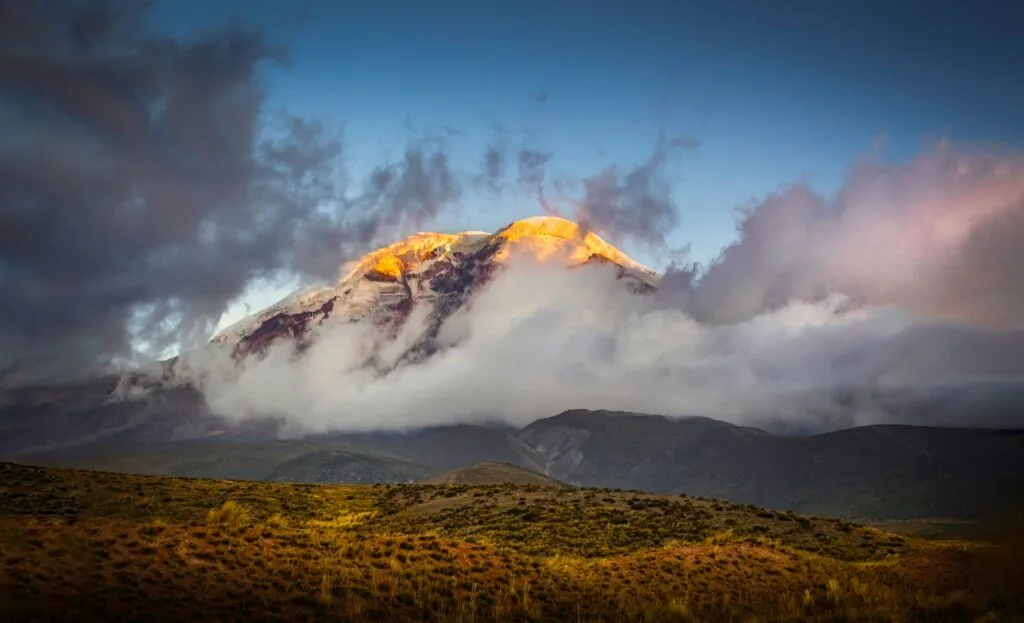
Long before Spanish chroniclers set foot in the northern Andes, the central Highlands were inhabited by the Puruhá nation. To the Puruhá people, the landscape was alive with spiritual force.
Chimborazo was not merely a landmark; it was Taita Chimborazo, or Father Chimborazo, a grand protective patriarch standing in balance with nearby female volcanoes such as Mama Tungurahua. Local mythology recorded tales of divine romance, fiery volcanic tempests, and cosmic harmony between the earth and the heavens.
Linguistic historical research suggests that the name Chimborazo stems from ancient regional dialects. In the Cayapa language, shimbu translates to a great lady of snow, while Quechua roots blend chinú (hot or burning) with rase (snow), reflecting the paradox of a snow-covered mountain born from subterranean fire.
Indigenous communities cultivated complex terrace farming along the lower valleys and grazed herds on the high grassland known as the páramo. The mountain served as a meteorological compass for planting seasons and water management.
Pathways carved through the high passes by the Puruhá and later integrated into the Inca Empire’s extensive road network established early trade channels through the mountains, setting the geographical template for roads that cyclists use today.
Alexander von Humboldt and the birth of ecology
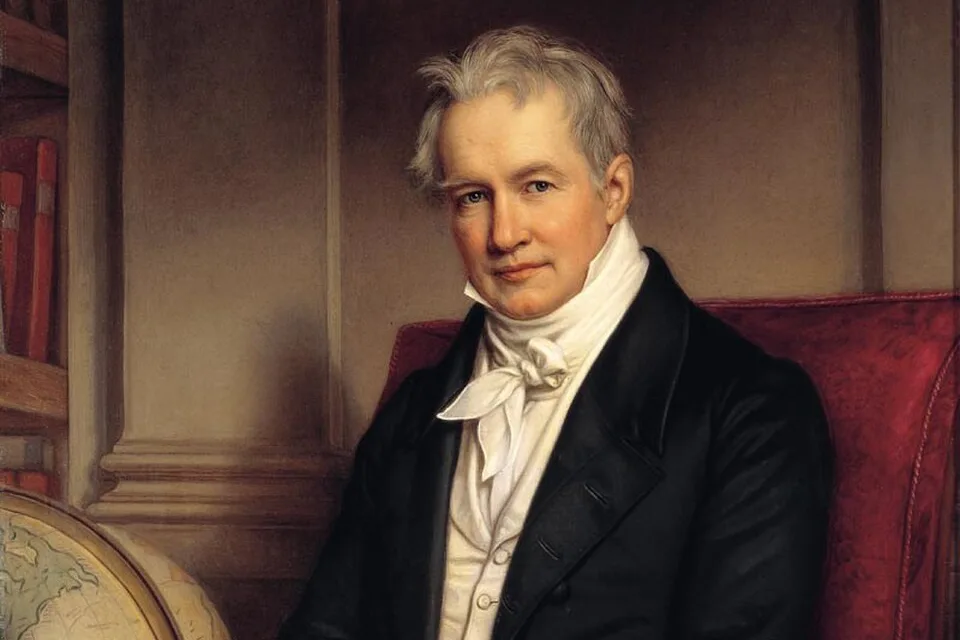
In the European imagination of the eighteenth century, Chimborazo was widely believed to be the highest mountain in the world. This reputation drew the famous Prussian polymath Alexander von Humboldt to Ecuador in 1802 during his historic five-year expedition across the Americas.
On 23 June 1802, Humboldt, accompanied by the French botanist Aimé Bonpland and the Quiteño nobleman Carlos de Montúfar, set out to scale the giant volcano. Clothed in inadequate woollen coats and thin leather boots, carrying heavy brass barometers, sextants, and thermometers, the party pushed upward through freezing mist and blinding snow.
At roughly 5,875 metres above sea level, shivering, suffering from severe altitude sickness, and faced with an impassable crevasse, Humboldt was forced to turn back. Though he did not reach the summit, the expedition was a milestone in scientific history. As Humboldt climbed, he systematically recorded changes in temperature, air pressure, and plant distribution across different elevation bands.
These precise field notes directly inspired his famous work, the Naturgemälde (Picture of Nature), which illustrated how climate and altitude shape living ecosystems. Humboldt proved that nature is an interconnected global web rather than a collection of isolated species.
Today, cyclists riding through the distinct vegetation zones of the páramo are tracing the exact ecological gradient that laid the foundations of modern environmental science.
The Ecuadorian Sierra.
Get lost in the hills
Conquest, ice harvesters, and high-altitude exploration
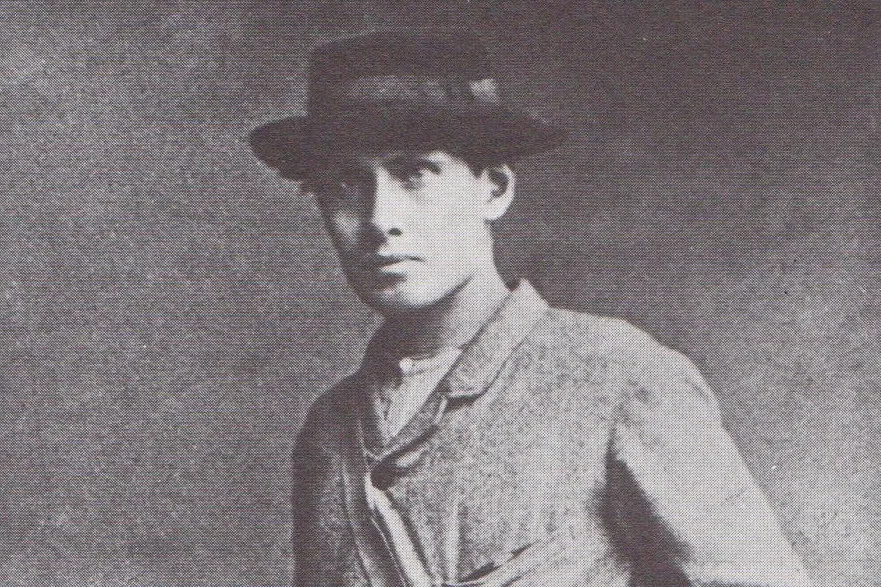
Following Humboldt’s dramatic expedition, Chimborazo became the ultimate goal for international mountaineers. The summit was finally conquered on 4 January 1880 by the British explorer Edward Whymper, who climbed alongside the skilled Italian Alpine guides Jean-Antoine Carrel and Louis Carrel.
Whymper’s successful ascent proved that humans could survive and function at extreme equatorial altitudes, opening up a new chapter in Andean exploration.
Yet while foreign mountaineers sought glory on the ice, local workers established a unique and gruelling relationship with the mountain glacier. For generations, the hieleros (ice harvesters) of Chimborazo made daily journeys high into the ice fields to extract natural glacial ice.
Men like Baltazar Ushca, widely celebrated as the last traditional ice harvester of the mountain, hiked up past 4,800 metres with pickaxes and donkeys. They chopped massive blocks of pristine ice, wrapped them tightly in native chuquiragua grass for insulation, and transported them down to the markets of Riobamba and Guaranda to chill juices and produce artisanal ice cream.
This human history of resilience, trade, and adaptation is woven into the very dirt roads and mule tracks that crisscross the foothills of the volcano today.
Pedal through history / Cycle the slopes of Chimborazo
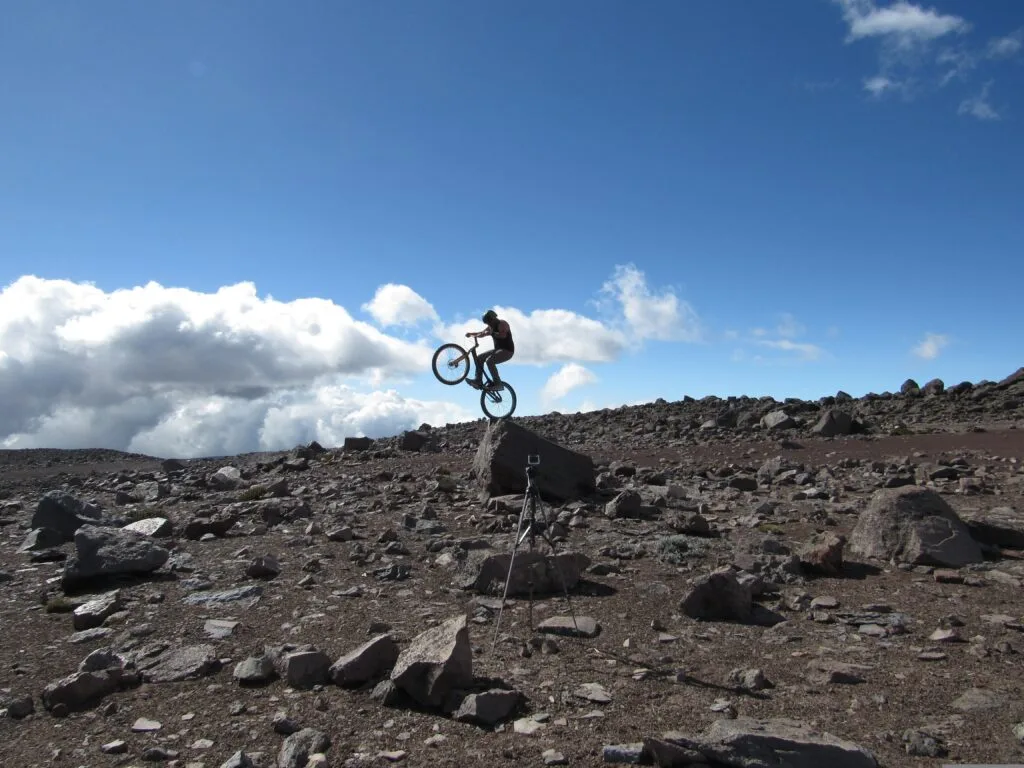
In recent years, Chimborazo has emerged as one of the premier high-altitude adventure cycling destinations in South America. The combination of sweeping volcanic vistas, well-maintained unpaved roads, challenging elevation gains, and rich cultural history makes it an unmissable destination for gravel riders, bikepackers, and road cyclists.
Ride to the edge of space / The Hermanos Carrel ascent
For road cyclists seeking an extraordinary climbing challenge, the asphalt road leading into the Chimborazo Wildlife Reserve offers a continuous climb that rivals the hardest passes in the European Alps.
Starting from the valley cities of Riobamba or San Juan, the road climbs thousands of metres through agricultural hillsides before entering the protected páramo landscape.
The air thins dramatically as riders approach the Hermanos Carrel Refuge at 4,850 metres above sea level. Passing herds of wild vicuñas grazing peacefully alongside the road, cyclists experience the sharp contrast between equatorial sunlight and freezing mountain winds.
Reaching the refuge on two wheels is a testament to human endurance, matching the determination of the early explorers who mapped these slopes centuries ago.
Off-road routes and the Trans Ecuador Mountain Bike Route
For off-road and bikepackers, the networks surrounding Chimborazo offer access to ancient routes. The renowned Trans Ecuador Mountain Bike Route (TEMBR) skirts the flanks of the mountain, guiding self-supported riders along remote dirt tracks, cobblestone sectors, and highland pastures.
Events such as the Chimborazo Extremo highlight the demanding nature of mountain biking in this terrain, where riders tackle steep gradients, cold mountain rains, and loose volcanic soil. Navigating these tracks allows cyclists to connect directly with the historic trails forged by Indigenous traders, trade convoys, and ice harvesters.
The Ecuadorian Amazon.
The most biodiverse place in the world
Prepare for a high-altitude expedition
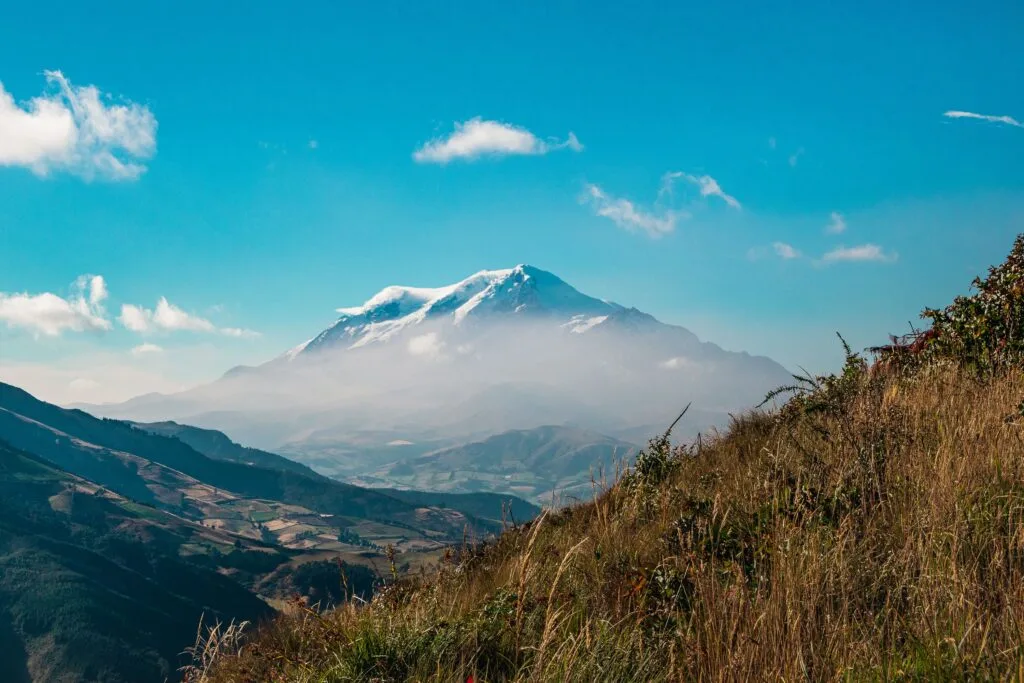
Riding around Chimborazo requires respect for both the historical landscape and the physical environment. High altitude presents real challenges, and thorough preparation is essential for a safe and enjoyable journey.
- Acclimatisation: Spend several days in high-altitude hubs such as Quito, Cuenca, or Riobamba before attempting high-elevation rides
- Layering and equipment: Weather on the páramo can change rapidly. Riders should carry windproof and waterproof outer layers, thermal gloves, and reliable lighting
- Environmental respect: The Chimborazo Wildlife Reserve protects delicate Andean ecosystems and endangered native species like the vicuña. Cyclists should adhere strictly to established trails and leave no trace
- Cultural engagement: Support local communities by visiting markets in Riobamba, tasting local food, and engaging respectful local guides who understand the deep cultural heritage of the mountain
By riding with awareness of the mountain’s rich past, cyclists do not merely cover distance; they become part of an enduring legacy of human exploration at the highest point from the centre of the world.
Ride in the footsteps of legends
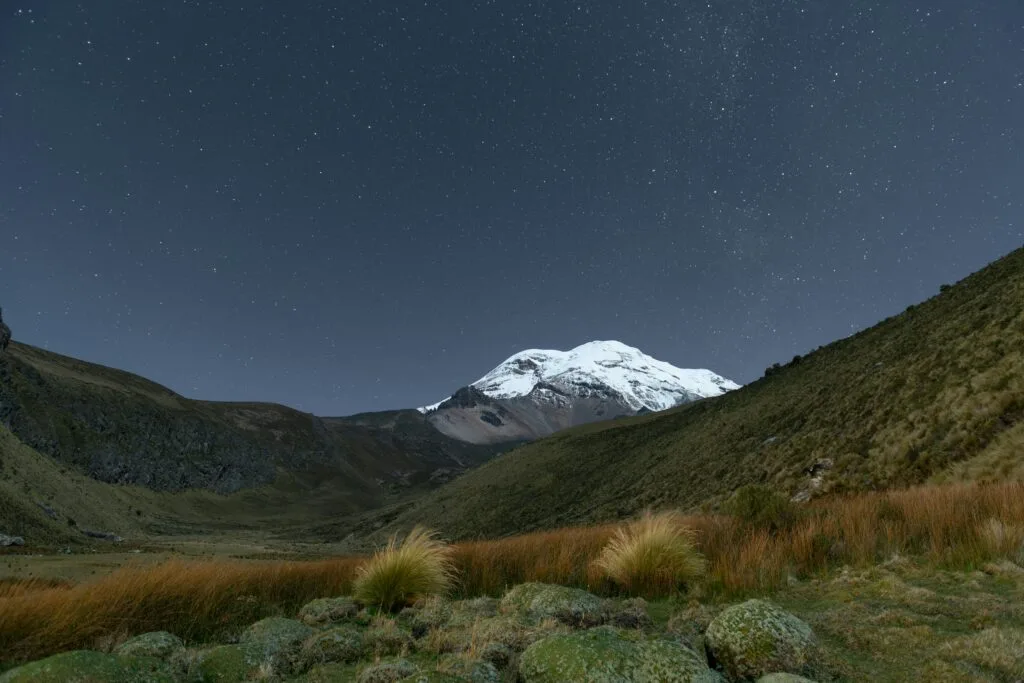
Read this far?
Cycling around Chimborazo is a humbling reminder of human endurance and nature’s scale. As you haul your bicycle through thin air across the tussock grass of the páramo, you are sharing a trail with Puruhá traders, Enlightenment polymaths, and generations of mountain dwellers who carved a living out of these volcanic slopes. Few places on Earth demand such physical effort while offering such profound rewards.
Whether you choose to test your legs on the unrelenting tarmac gradient up to the Hermanos Carrel Refuge or negotiate loose volcanic gravel along the flanks of the reserve, the mountain forces a slower, more deliberate pace.
It encourages independent travellers to look past the physical challenge and appreciate the fragile equatorial tundra, where wild vicuñas move across vast plains beneath glaciers that have witnessed centuries of Andean history.
To ride here is to become part of an ongoing narrative of exploration. As long-distance bikepacking and gravel riding continue to reshape how we experience remote landscapes, Chimborazo stands out as an iconic frontier—a place where history, ecology, and adventure intersect at the very top of the world.
Pack carefully, respect the local heritage, allow your body time to adapt to the thin air, and let the legendary slopes of Taita Chimborazo set the rhythm for an unforgettable Andean journey.
Affiliate Disclaimer: Some of the links on Wheely Tyred are affiliate links. If you click through and make a booking or purchase, we may earn a small commission at no extra cost to you. We only recommend gear, tours, stays, and services we genuinely use, trust, and stand behind — our editorial independence always comes first. These commissions help keep our independent cycling guides and travel stories free to read. You can also buy me a coffee here — thanks for supporting the ride!
The Ecuadorian Coast.
Where you’ll find the very best food
Frequently asked questions about the history of Chimborazo
From the city of Riobamba, local buses depart regularly toward Guaranda and can drop passengers at the main entrance of the Reserva de Producción de Fauna Chimborazo. Cyclists usually ride directly from Riobamba or San Juan, tackling the long ascent via the paved E492 highway before taking the turn-off for the Hermanos Carrel Refuge.
Because rides around Chimborazo reach elevations between 3,800 and 4,850 metres above sea level, you should spend at least three to four days acclimatising in high-altitude hubs such as Quito (2,850 m), Cuenca (2,560 m), or Riobamba (2,750 m) before attempting sustained physical efforts on the mountain.
The hieleros were traditional ice harvesters from local Indigenous communities who climbed high onto Chimborazo’s glaciers to chop blocks of natural ice. They insulated the ice in native chuquiragua grass and transported it down via donkeys to sell in the markets of Riobamba and Guaranda for making traditional ice creams and chilled fruit juices.
Weather on the páramo is notoriously unpredictable. Intense equatorial sunlight can quickly yield to freezing mountain winds, dense fog, hail, or rain. Cyclists must pack layered technical clothing, including a quality windproof and waterproof jacket, thermal gloves, shoe covers, and high-SPF sunscreen.
Entrance to the Chimborazo Wildlife Reserve is free for independent day visitors entering by bicycle or on foot along public roads. However, if you plan to trek onto the glacier, attempt a summit climb, or embark on remote multi-day wilderness routes, hiring a certified local guide is mandatory.
The high páramo is home to thousands of protected vicuñas—a wild South American camelid related to the alpaca and llama. Riders frequently spot them grazing alongside the roads. You may also see Andean condors soaring overhead, carunculated caracaras, and hummingbirds adapted to high elevations.
Ecuador.
Pure wonder on the equator.