Best Cajas National Park day tours from Cuenca / Complete 2027 guide
Top-rated treks, birdwatching, and alpine lake excursions to Parque Nacional Cajas
High-altitude wonders, glacial lakes, and paper-bark forests
BEN FINCH
Just 30 kilometres west of the cobblestone streets and colonial domes of Cuenca sits one of the most ecologically vital high-altitude landscapes on Earth: Parque Nacional Cajas.
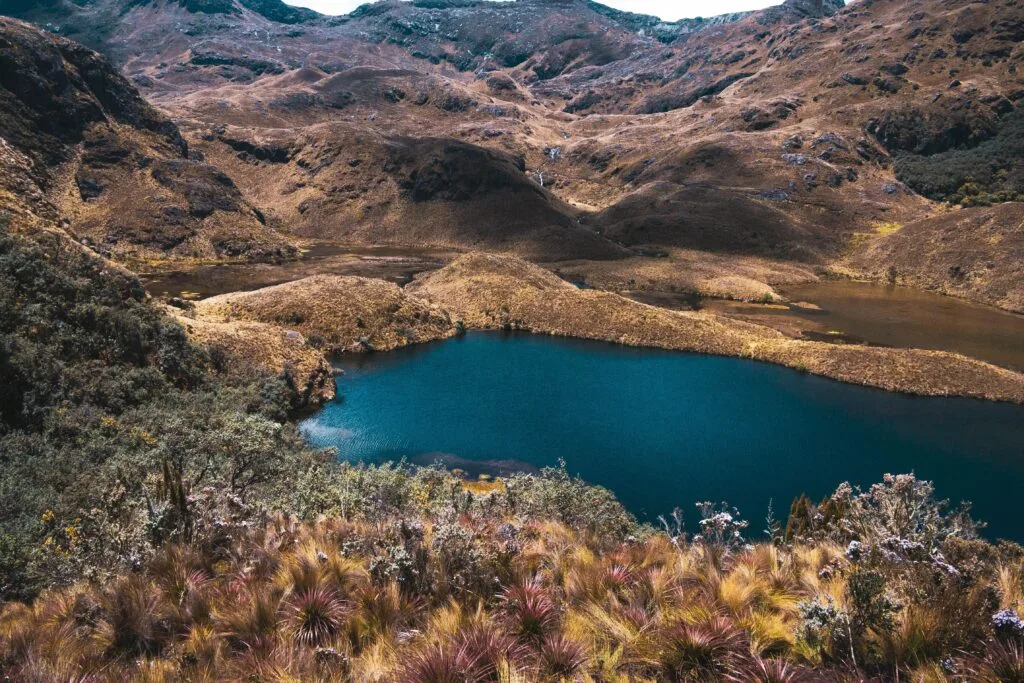
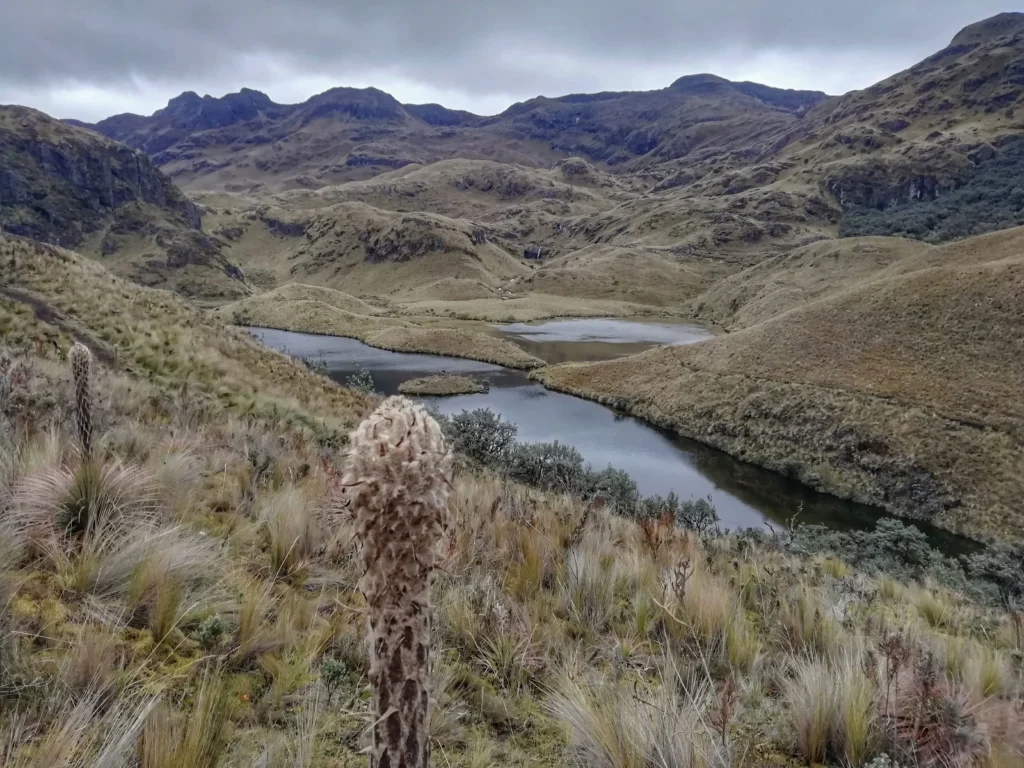
Rising rapidly from the inter-Andean valley to dizzying heights over 4,000 metres above sea level, Cajas is a stark, ethereal expanse defined by undulating páramo grasslands, dark glacial tarns, and gnarled forests of paper-bark Polylepis trees.
Building upon our initial recommendations in our 2026 Cajas National Park day tours guide, this fully updated 2027 edition reflects the latest local operator offerings, updated trail access, and refined travel logistics for independent adventurers.
At Wheely Tyred, our approach to travel is rooted in slow exploration, deep respect for fragile ecosystems, and meaningful support for local mountain guides. Cajas is not a place for giant, air-conditioned tour buses or rushed photo-ops. The weather here is notoriously volatile—shifting from bright highland sun to dense mountain mist in minutes—and the trails can be treacherous without proper navigation.
Joining a vetted, small-group or private excursion with an experienced local guide ensures you navigate the delicate alpine terrain safely while gaining invaluable insight into the region’s hydrology, botanical adaptations, and ancient Inca trade routes. Below are six exceptional bookable day tours operating out of Cuenca for 2027.
Essential Cajas takeaways
Navigating Southern Ecuador’s most iconic alpine reserve requires a balance of environmental respect, altitude awareness, and smart route selection. Here is a quick breakdown of what makes exploring Parque Nacional Cajas so rewarding for independent travellers.
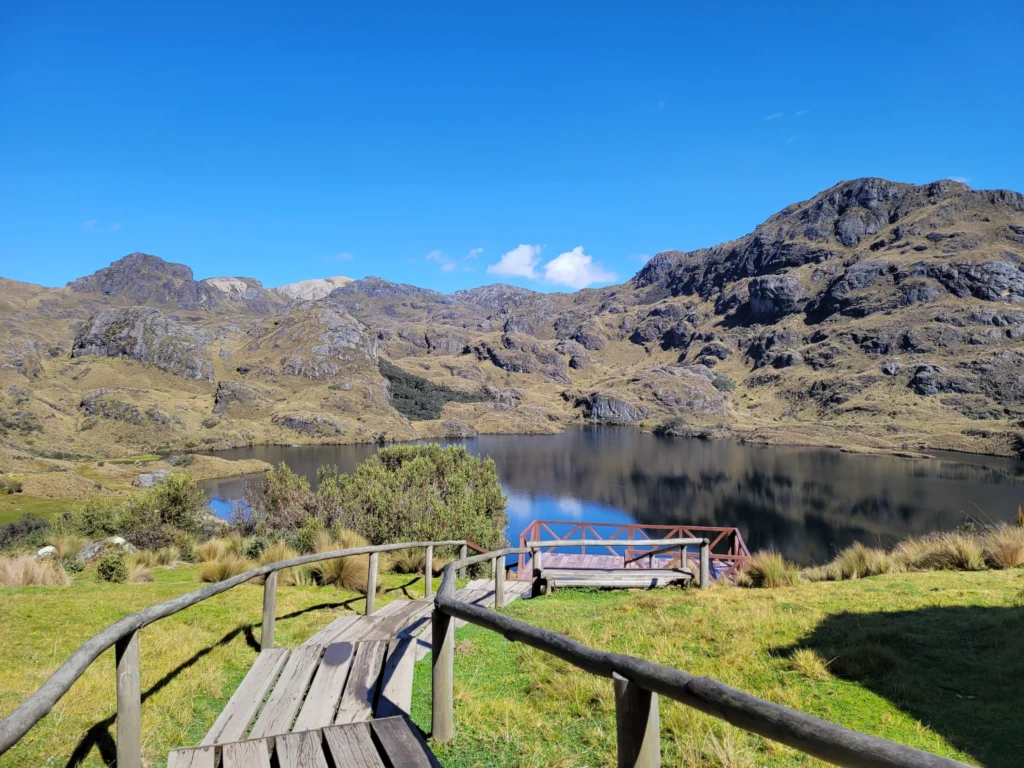
- Laguna Toreadora: The primary high-altitude hub of the park (~3,900m), offering accessible perimeter trails, an interpretive centre, and immediate entry into paper-bark forests
- Polylepis Forests: Ancient, twisted woodlands of paper-bark trees that form unique micro-ecosystems harbouring endemic mosses, orchids, and high-altitude birdlife
- Lake Llaviuco: A lower-elevation (~3,100m) montane forest sanctuary known for rich birdwatching, dense vegetation, and gentler, warmer walking trails
- Continental Divide: A dramatic high-mountain pass where rainwater splits, flowing either west toward the Pacific Ocean or east toward the Amazon River basin
- Endemic Avian Life: A designated RAMSAR wetland housing rare species such as the Violet-throated Metaltail, Carunculated Caracara, and Giant Hummingbird
- Layered Weather Strategy: Essential preparation requiring moisture-wicking base layers, fleece mid-layers, and waterproof outerwear to handle rapid highland weather shifts
Cajas National Park.
The most beautiful national park
1. Budget-friendly alpine half-day trekking
Rating & reviews
(76+ verified reviews on Viator)
Why this tour stands out
For travellers mindful of their budget who still want a genuine, immersive hike through the páramo, this half-day outing offers extraordinary value without compromising on safety or group intimacy.
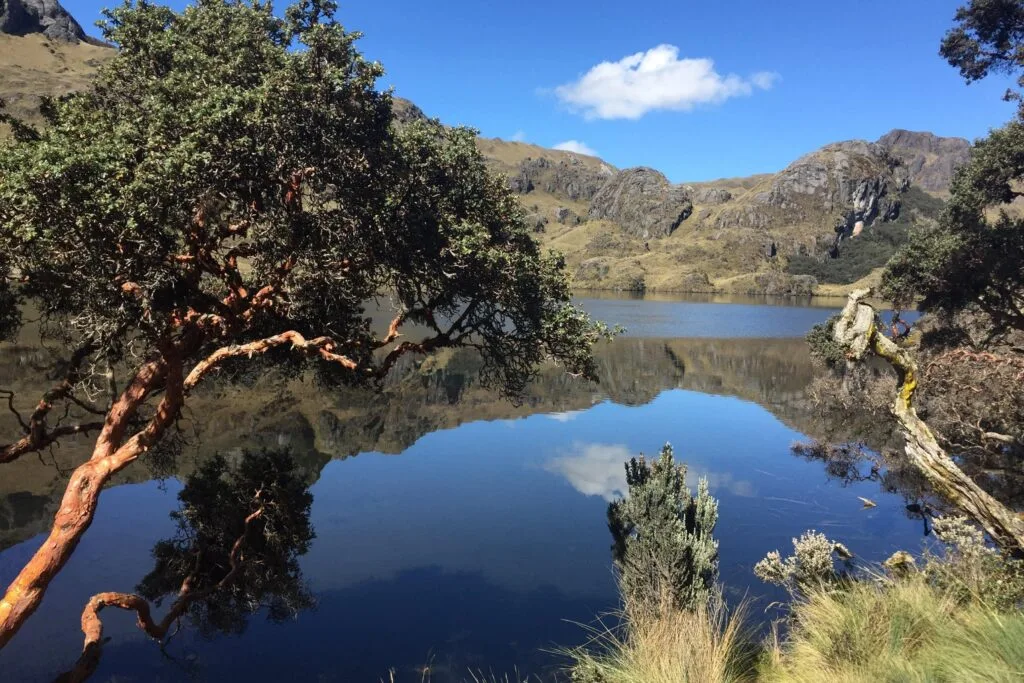
Departing early from Cuenca, the route focuses on the core highland trails around Laguna Toreadora, allowing you to experience the vastness of the park without spending a full eight hours at altitude.
The local guides are exceptionally skilled at pacing the hike for varied fitness levels, pointing out endemic cushion plants, giant hummingbirds, and the unique water-retention ecology of the Andean grasslands.
Key highlights
- Transport to and from central Cuenca in comfortable, small-capacity vehicles
- Guided walk along the perimeter trails of Laguna Toreadora
- Exploration of a dense, fairy-tale grove of native Polylepis (paper-bark) trees
- Interpretive ecology overview covering Cajas’s role as the primary watershed for Cuenca
Ideal for
Budget-conscious independent travellers, light hikers, and those looking for a high-impact morning excursion that leaves the afternoon free to explore Cuenca’s historical centre.
Local insight
Even on short half-day trips, the altitude around Laguna Toreadora exceeds 3,900 metres. Drink plenty of water before departure, avoid heavy meals the night before, and dress in breathable layers.
2. Speciality high-altitude birding excursion
Rating & reviews
(62+ verified reviews on Viator)
Why this tour stands out
Parque Nacional Cajas is designated as an Important Bird Area (IBA) and a RAMSAR wetland site of international importance, housing rare avian species adapted to cold, oxygen-thin environments. Led by specialist naturalists from Polylepis Tours, this dedicated birdwatching excursion is tailored specifically around high-altitude avian habitats.
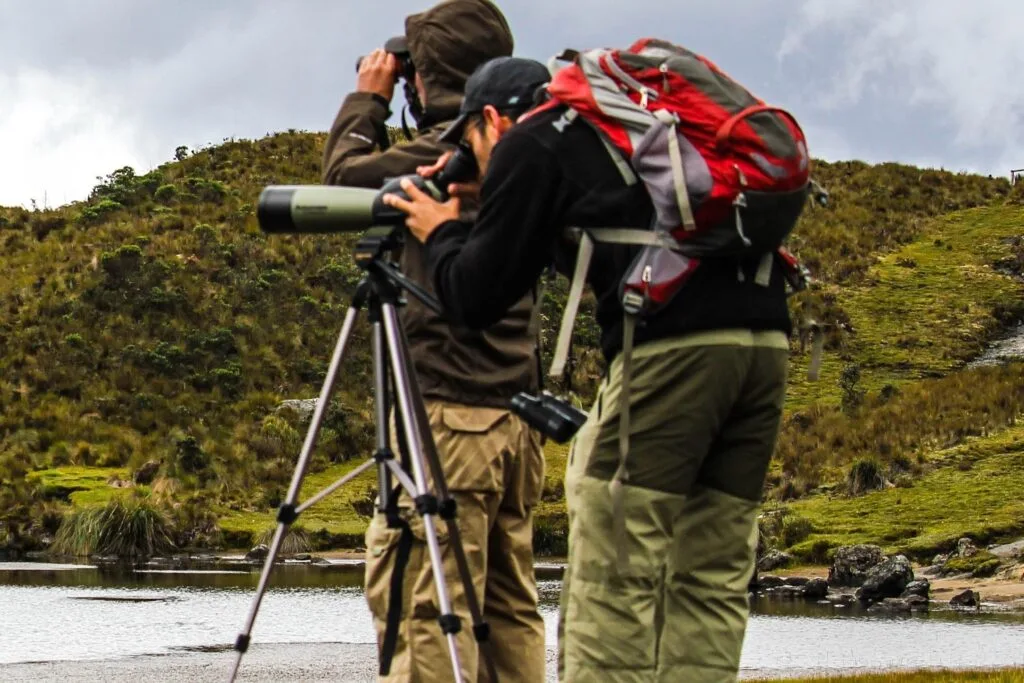
Rather than marching at a rapid hiking pace, the focus shifts to silent observation, patience, and tracking endemic species such as the Violet-throated Metaltail, the Giant Hummingbird, the Carunculated Caracara, and the elusive Andean Condor.
Key highlights
- Small group size ensuring quiet, unobtrusive trail movement
- Focused visits to key micro-habitats, including high-altitude Polylepis woodlands and lake edges
- Led by certified, English-speaking birding guides equipped with high-grade optics
- Comprehensive species checklist provided for trackable field logs
Ideal for
Avian enthusiasts, wildlife photographers, and nature lovers seeking a slow-paced, deeply informative environmental experience.
Local insight
Birds in Cajas are most active in the early, crisp morning hours before the cloud cover settles over the passes. Binoculars are essential, and waterproof footwear will keep your feet warm while standing in soggy páramo mosses.
The Ecuadorian Sierra.
Get lost in the hills
3. Accessible express highland immersion
Rating & reviews
(55+ verified reviews on GetYourGuide)
Why this tour stands out
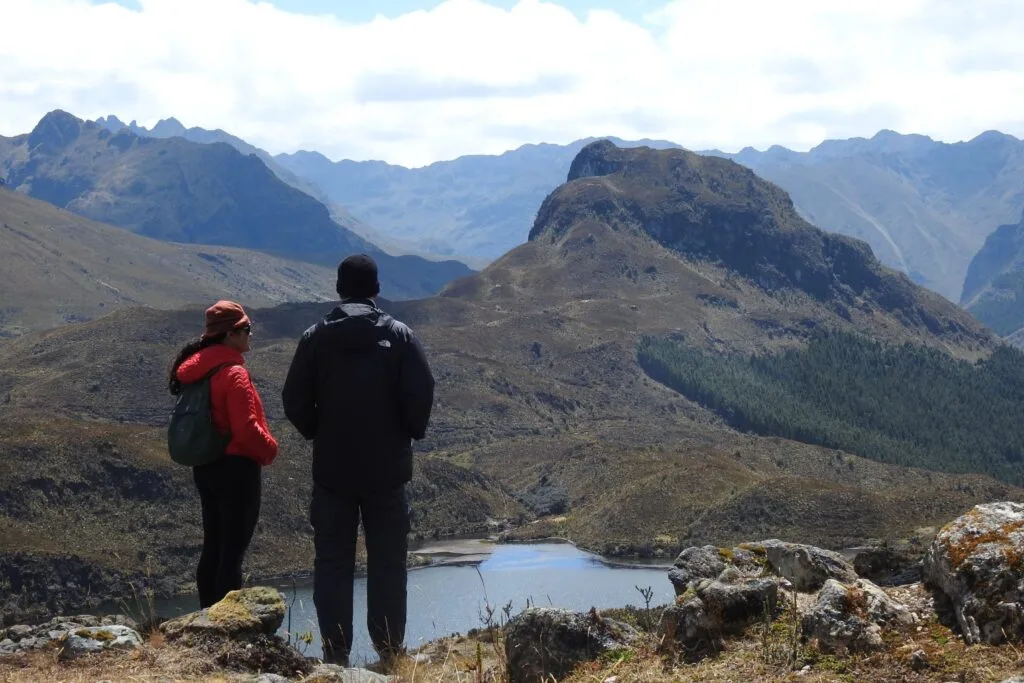
Operated with seamless logistics, this 4-hour half-day tour provides an efficient yet meaningful touchpoint with Cajas. Designed for travellers short on time or those concerned about extended physical exertion at high elevations, it hits the park’s primary visual highlights—including sweeping panoramic viewpoints overlooking glacial valleys and crystal-clear mountain tarns.
The narrative delivered by the guides focuses on the geological origins of the park, formed by ancient glacial carving during the Ice Age.
Key highlights
- Convenient hotel pick-up and drop-off in Cuenca
- Scenic drive winding up through changing eco-zones from 2,500m to nearly 4,000m
- Interpretive trek around the park’s main interpretive boardwalks and accessible trail segments
- Short stop at the Continental Divide, where water flows either towards the Pacific Ocean or the Amazon Basin
Ideal for
Families, older travellers, or those on a tight travel itinerary who still want to experience the grand scale of the Ecuadorian Andes without committing to a full-day trek.
Local insight
The weather at the Continental Divide pass is almost always windy and cold. Keep a windproof shell and a light wool hat in your daypack for easy access during roadside stops.
4. Deep wilderness dual-ecosystem trek
Rating & reviews
(38+ verified reviews on GetYourGuide)
Why this tour stands out
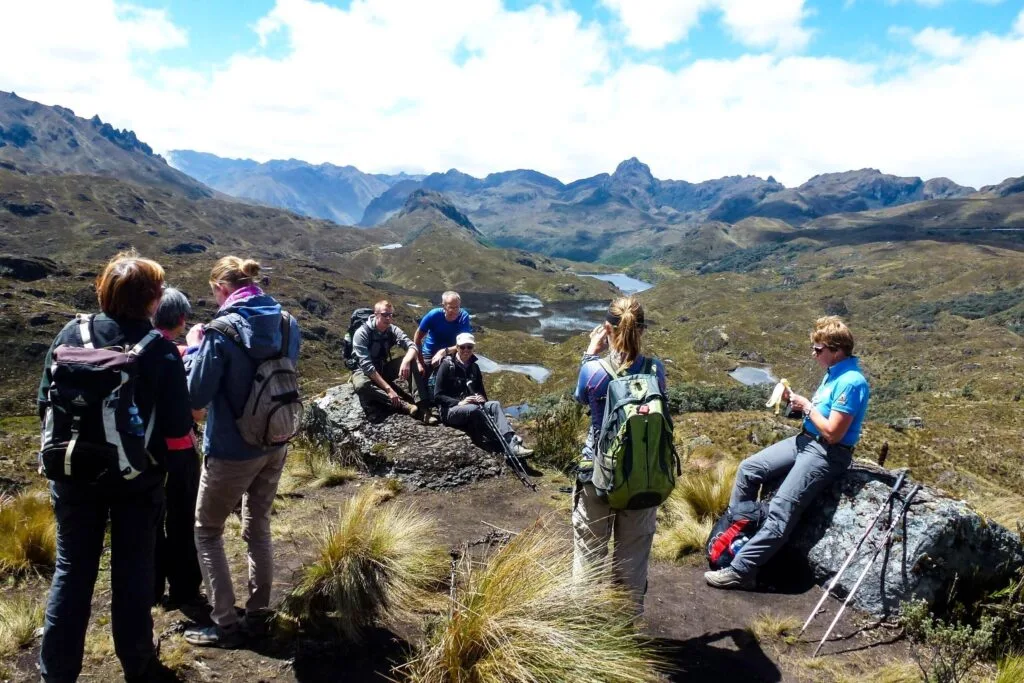
This flagship full-day itinerary offers the most ecologically complete understanding of Cajas by showcasing two distinctly different altitude zones within the park. The morning is spent high in the upper páramo around Laguna Toreadora, trekking through the rugged tundra landscape.
After a warming, locally sourced trout lunch at a mountain lodge, the tour descends into the lower, lush montane forest zone around Lake Llaviuco. Here, the vegetation transforms into towering, moss-draped primary cloud forest filled with orchids and bromeliads.
Key highlights
- 7.5- to 8-hour comprehensive exploration across upper and lower ecological zones
- 2.5-hour morning hike in the high páramo followed by a 1-hour walk around Llaviuco Lake
- Authentic traditional lunch included, featuring fresh local trout or vegetarian options
- Door-to-door hotel transfers in Cuenca
Ideal for
Active hikers and eco-conscious travellers who want a rich, immersive physical workout paired with a comprehensive understanding of Andean biodiversity.
Local insight
Lake Llaviuco in the lower section of the park is at a significantly lower altitude (~3,100m) and tends to be much warmer and more humid than the upper tundra. Wearing modular, layered clothing allows you to adjust easily as you shift elevations.
The Galápagos.
Ecuador’s Enchanted Isles
5. Comprehensive small-group mountain adventure
Rating & reviews
(15+ verified reviews on GetYourGuide)
Why this tour stands out
Prioritising small group dynamics and personalised commentary, this full-day trek emphasises authentic cultural history alongside raw landscape photography. Guides take guests onto lesser-frequented trail loops where you can cross ancient stone pathways originally constructed by the Cañari civilisation and later expanded by the Incas as part of the Qhapaq Ñan road network.
The narrative connects past indigenous land stewardship with modern conservation efforts protecting Cuenca’s freshwater supply.
Key highlights
- In-depth exploration of native flora, including the medicinal properties of high-altitude plants
- Trekking past remote glacial tarns away from standard tourist hotspots
- Hearty meal stop featuring regional dishes from the Azuay province
- Knowledgeable local guides dedicated to environmental leave-no-trace principles
Ideal for
History buffs, cultural enthusiasts, and outdoor adventurers who appreciate deep context and quiet, undisturbed trails.
Local insight
Highland páramo soil functions like a massive sponge; even on non-rainy days, the trails can be muddy and wet. Waterproof hiking boots with good ankle support make a massive difference in comfort.
6. Culture & nature combo excursion
Rating & reviews
(5+ verified reviews on Viator)
Why this tour stands out
For travellers with limited calendar days in Southern Ecuador, this combined full-day itinerary seamlessly bridges the gap between wilderness and heritage. The morning is dedicated to exploring the wild, windswept highlands of Cajas, absorbing the natural splendour and mountain air.
In the afternoon, you return to urban level to explore Cuenca’s UNESCO World Heritage-listed historic centre. Your guide walks you through colonial plazas, past the iconic blue domes of the New Cathedral, and along the picturesque Tomebamba River, offering a holistic perspective on how geography shaped this historic mountain city.
Key highlights
- Dual-focus itinerary combining wild outdoor nature with urban cultural heritage
- Morning hike at Parque Nacional Cajas
- Afternoon walking tour of historic Cuenca, including visits to artisan Panamá hat workshops
- Full transportation logistics managed throughout the entire day
Ideal for
First-time visitors, short-stay travellers, and those wanting a well-rounded single-day overview of the region’s best natural and historical assets.
Local insight
Pacing is everything on combo days. Take full advantage of the transport legs between the park and the city to rest your legs and rehydrate before starting the urban walking segment.
The Ecuadorian Amazon.
The most biodiverse place in the world
Our practical Cajas excursion planning guide
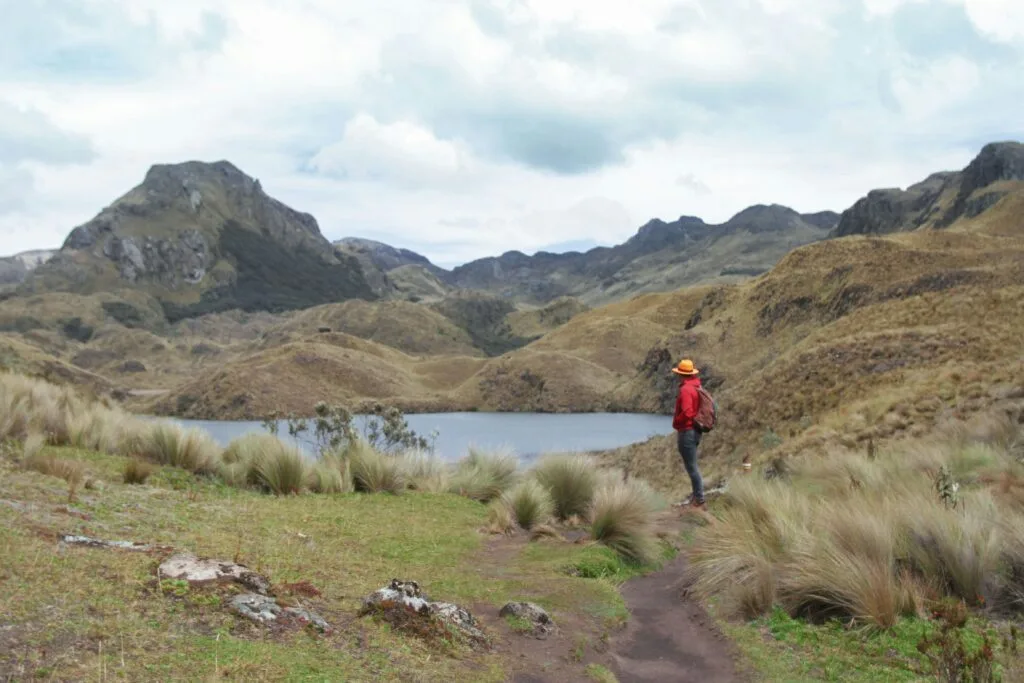
Preparing for a day excursion into Parque Nacional Cajas requires a bit more foresight than your standard lowland hike. Here are five practical tips to ensure your day runs smoothly.
Acclimatisation is essential
Cuenca sits at roughly 2,560 metres above sea level, while trails in Cajas routinely range between 3,100 and 4,150 metres. Spend at least two full days relaxing and exploring Cuenca before tackling a high-altitude hike in the park to allow your body time to adjust.
Master the three-layer system
Weather in the high Andes can cycle through sunshine, freezing drizzle, intense wind, and fog in a single afternoon. Wear a moisture-wicking base layer, a warm fleece or down mid-layer, and a reliable waterproof/windproof outer jacket.
Sun protection at high altitude
UV radiation is extremely intense near the equator at 4,000 metres elevation. Bring high-SPF sunscreen, polarised sunglasses, and a wide-brimmed hat—even on overcast days when the cloud cover can be deceptive.
Currency and small bills
While tour fees are settled digitally online, bring small physical U.S. dollar bills ($1, $5, and $10) for tipping your driver and mountain guide, or for buying hot mote pillo or coca tea at local roadside stops.
Respect the fragile ecosystem
Stick strictly to established paths. The spongy páramo vegetation takes decades to recover if trampling damages the root systems that hold the watershed together. Always pack out all trash you bring in.
The Ecuadorian Coast.
Where you’ll find the very best food
Ancient waters, misty trails, and modern stewardship
Read this far?
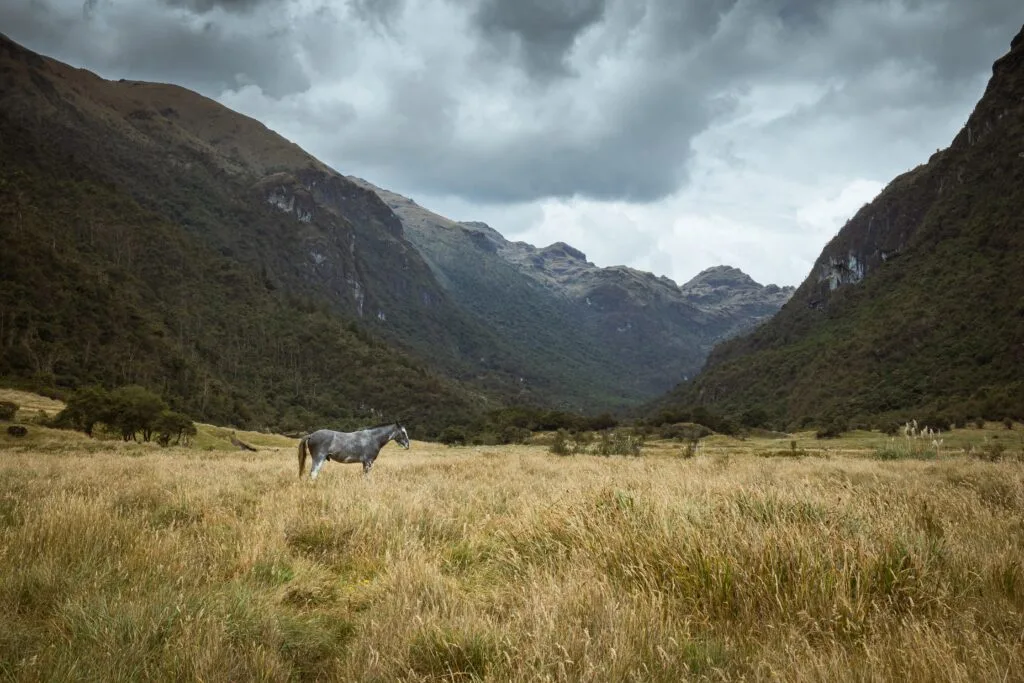
From the sponge-like mosses of the high páramo to the dark, paper-bark groves of Polylepis trees, Parque Nacional Cajas is far more than a scenic backdrop for Cuenca—it is a living ecological sanctuary that sustains Southern Ecuador. Exploring this fragile landscape alongside dedicated local guides gives you a profound connection to the geological power and cultural history embedded in these ancient mountains.
Whether you have half a day to take in the quiet vistas of Laguna Toreadora or a full day to trace ancient Incan stone trails down into the lush cloud forest around Lake Llaviuco, Cajas rewards those who approach it with patience and preparation. Step onto the trails slowly, let the mountain mist clear, and experience one of the planet’s most extraordinary high-altitude wildernesses on its own terms.
Affiliate Disclaimer: Some of the links on Wheely Tyred are affiliate links. If you click through and make a booking or purchase, we may earn a small commission at no extra cost to you. We only recommend gear, tours, stays, and services we genuinely use, trust, and stand behind — our editorial independence always comes first. These commissions help keep our independent cycling guides and travel stories free to read. You can also buy me a coffee here — thanks for supporting the ride!
Frequently asked questions about the best Cajas National Park day tours 2027
Parque Nacional Cajas is located approximately 30 kilometres west of Cuenca. By guided tour vehicle or local bus departing from Cuenca’s Terminal Terrestre (such as buses heading toward Guayaquil via the northern park entrance), the drive takes between 45 minutes and one hour along a paved, winding mountain highway.
Yes, altitude is a major factor. Cuenca sits at around 2,560 metres, but key trailheads in Cajas range from 3,100 to over 4,100 metres above sea level. It is highly recommended to spend at least two full days in Cuenca acclimatising before embarking on a hike in the park. Stay well-hydrated, walk at a steady pace, and avoid heavy meals or alcohol prior to your trek.
Weather in Cajas changes rapidly. You should pack a waterproof and windproof jacket, a warm fleece or down sweater, sturdy waterproof hiking boots with good traction, a hat, gloves, high-SPF sunscreen, and sunglasses. Bringing a reusable water bottle and small U.S. dollar bills for snacks or tipping is also advisable.
The region surrounding Cajas is famous for fresh mountain trout (trucha), raised in the cold alpine waters flowing from the park’s glacial lakes. Most full-day tour itineraries include a stop at a rustic mountain restaurant where trout is served fried, grilled, or baked alongside mote (hominy corn), potatoes, and warm herb teas.
While independent hiking is permitted on designated short trails around Laguna Toreadora, hiring an experienced local guide is strongly recommended for safety and conservation reasons. The park is notorious for sudden, dense fog (neblina) that can obscure trails within minutes, making navigation difficult without intimate local knowledge of the terrain.
Entry to Parque Nacional Cajas is free of charge for both domestic and international visitors as part of Ecuador’s national park system initiatives. However, visitors must register their passports or identification details at the park ranger control stations (such as Toreadora or Llaviuco) upon entering for safety tracking.
Ecuador.
Pure wonder on the equator.