
Safety in Baños, Ecuador / The complete 2027 traveller security guide
Baños, Ecuador, travel safety 2027 guide to local crime rates, transport security, and solo adventure travel
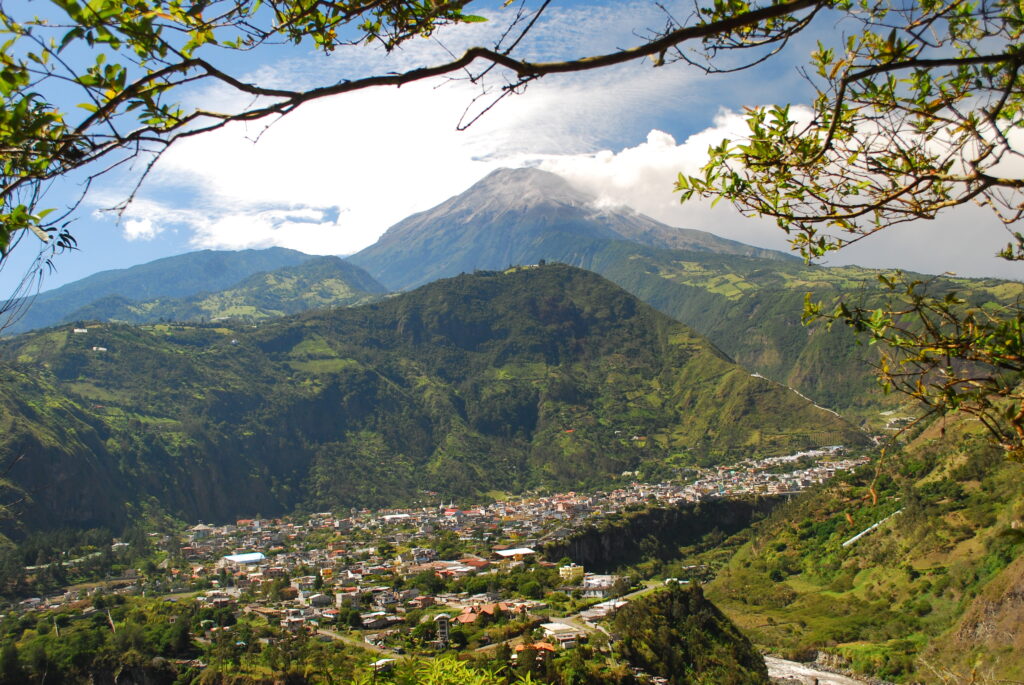
Navigate Ecuador’s adventure capital with confidence, clarity, and awareness

BEN FINCH
At Wheely Tyred, we believe that independent travel relies on clear, unfiltered factual awareness rather than anxiety. Understanding the real security context of your destination lets you explore with peace of mind.
As we move through 2027, news headlines regarding Ecuador continue to highlight national security measures and coastal security challenges. However, experienced travellers and route planners know that Ecuador cannot be evaluated as a single monolith.
The security profile of Baños de Agua Santa—nestled high in the Andean valley of Tungurahua—remains vastly different from coastal transit zones. In this fully updated 2027 guide, we break down what has changed since our earlier analysis in the 2026 Baños security guide.
We cover practical security measures for navigating the town, vetting active sports operators, cycling the famous Ruta de las Cascadas, and keeping your gear protected from transit to trail.
Essential takeaways for exploring Baños de Agua Santa
Navigating the gateway between the high Sierra and the Amazon basin requires a clear understanding of mountain security, road etiquette, and local transit. Here is a quick breakdown of the core safety insights from our 2027 security guide.
- Geographical security divide: Violent crime remains low across the central Andean highlands, keeping Baños de Agua Santa distinct from coastal transit zones
- Opportunistic theft prevention: Keep daypacks secured on your lap in open cafés and use heavy-duty padlocks for lockers at Termas de la Virgen
- Ruta de las Cascadas tunnel protocol: Never ride through motor vehicle tunnels; always use the dedicated cobbled bypass paths along the canyon wall
- Bike pre-ride audits: Inspect brake pads, tyre treads, and helmet retention systems before setting off down the descent toward Puyo
- Adventure operator vetting: Choose operators displaying official Ministerio de Turismo registration and demand maximum ratios of five clients per guide
- Volcanic monitoring awareness: Familiarise yourself with local evacuation routes for Volcán Tungurahua posted in hotel lobbies upon arrival
Baños.
Explore the Road of the Waterfalls
Understand the 2027 security landscape in Ecuador
To evaluate safety in Baños de Agua Santa accurately, one must first understand the geographical security divide across Ecuador. The vast majority of major security incidents and violent crimes in the country remain concentrated within specific coastal provinces affected by international shipping corridors.
In contrast, the central Andean highlands, including Tungurahua province, maintain a significantly lower violent crime rate and a stable, tourism-oriented environment.
In 2027, local government authorities and municipal police in Baños de Agua Santa maintain a visible presence throughout the central grid. Police patrols operate day and night around Parque Sebastián Bernal, Calle Ambato, and the main commercial streets. Violent crime against tourists in Baños remains exceptionally rare.
For the independent cyclist, hiker, or adventure traveller, the primary security considerations are not organised criminal activity, but rather three distinct elements:
- Opportunistic petty theft in crowded venues and transit hubs
- Physical hazards during road transport and active cycling routes
- Environmental factors in a dynamic mountain valley bordered by an active volcano
By taking straightforward precautions, you can mitigate these risks and enjoy everything this remarkable region offers.
Petty crime in Baños de Agua Santa and how to avoid it
While violent crime is uncommon in town, opportunistic theft remains the most frequent issue reported by travellers. Local thieves rely on moment-of-inattention distractions rather than direct confrontation.
The café distraction
Baños de Agua Santa features dozens of excellent coffee shops where cyclists gather to refuel. A common tactic involves a thief entering a crowded café, creating a minor distraction—such as dropping map leaflets or asking for directions—while an accomplice slides a daypack off the back of a chair.
When taking a break, keep your bag in your lap or thread your leg through the shoulder strap. Never leave mobile phones or wallets sitting loosely on outdoor tables facing the street.
The thermal baths and public pools
The mineral-rich hot springs at Termas de la Virgen and Termas de El Salado draw hundreds of visitors daily. These bustling areas attract opportunistic pickpockets. Leave unnecessary valuables, credit cards, and passports secured in your hotel safe.
When using lockers at the thermal baths, bring a robust, heavy-duty padlock rather than relying on basic luggage locks.
Transit hub vigilance
The bus terminal in Baños de Agua Santa, along with connecting hub terminals in Quito and Ambato, requires heightened awareness. When travelling on long-distance regional buses:
- Never place daypacks containing electronics, passports, or cash in the overhead racks or on the floor beneath your seat
- Keep your main backpack locked when stowed in the lower luggage hold and secure your claim ticket
- Keep your essential personal items inside a small bag resting on your lap with your arms looped through the straps
Cash management and ATMs
Ecuador uses the US dollar, which simplifies budgeting but makes physical cash an attractive target. Small businesses in Baños de Agua Santa rarely accept high-denomination notes such as 50- or 100-dollar bills.
Carry small notes—specifically one-, five-, 10-, and 20-dollar bills. Withdraw cash strictly from bank-adjacent ATMs located inside brightly lit buildings or major supermarkets, avoiding standalone street-facing machines at night.
The Ecuadorian Sierra.
Get lost in the hills
Safety considerations for solo travellers, women, and minorities
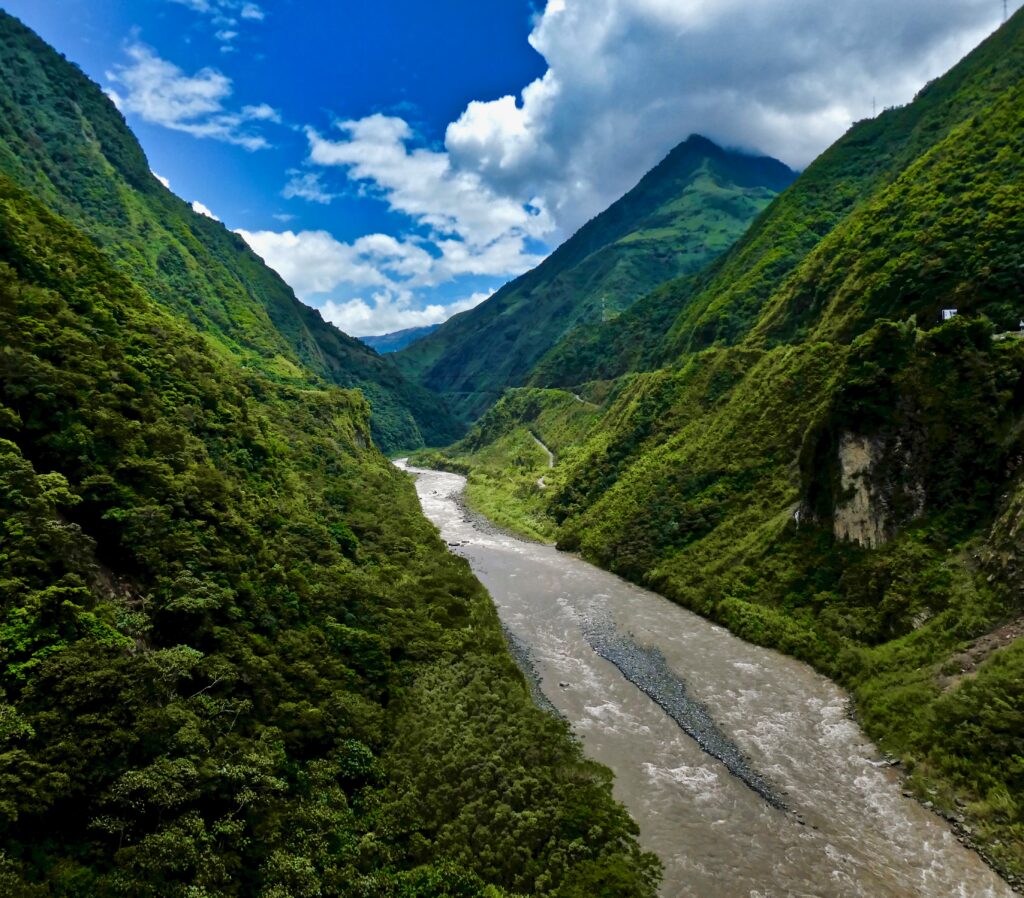
Baños de Agua Santa ranks among the most accessible and comfortable destinations in South America for solo travellers. The compact nature of the town makes navigation straightforward, and the large community of independent explorers provides easy opportunities to pair up for tours or rides.
Safety for women travelling solo
Women travelling solo or in small groups will find Baños de Agua Santa welcoming and generally secure. Calle Ambato and the central plaza remain active and lit late into the evening. However, standard urban precautions apply after dark:
- Avoid walking alone along unlit perimeter roads, particularly near the banks of the Río Pastaza or dark stretches leading up toward trail viewpoints
- If enjoying the town’s nightlife, watch your drink being prepared and never leave it unattended
- Arrange nighttime transportation through your hotel or hostel receptionist rather than hailing unmarked street cars
Inclusivity and minority travellers
Baños de Agua Santa relies heavily on international tourism, fostering an open and tolerant local atmosphere. Hostels, cafes, and tour agencies are accustomed to welcoming visitors from diverse global backgrounds.
While public displays of affection may attract curious looks in more conservative rural mountain villages outside town, local residents in Baños de Agua Santa are uniformly helpful and hospitable to all travellers.
Cycling safety on the Ruta de las Cascadas
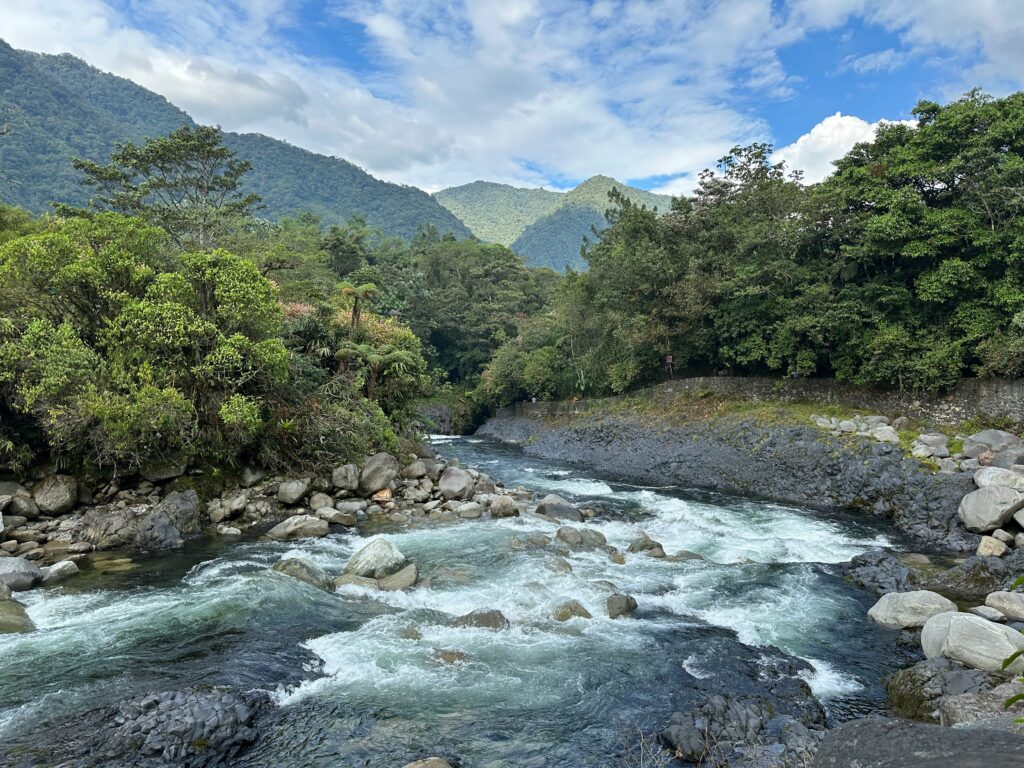
The Ruta de las Cascadas—the dramatic 61-kilometre descent from Baños de Agua Santa down toward Puyo—is one of the premier cycling experiences in South America.
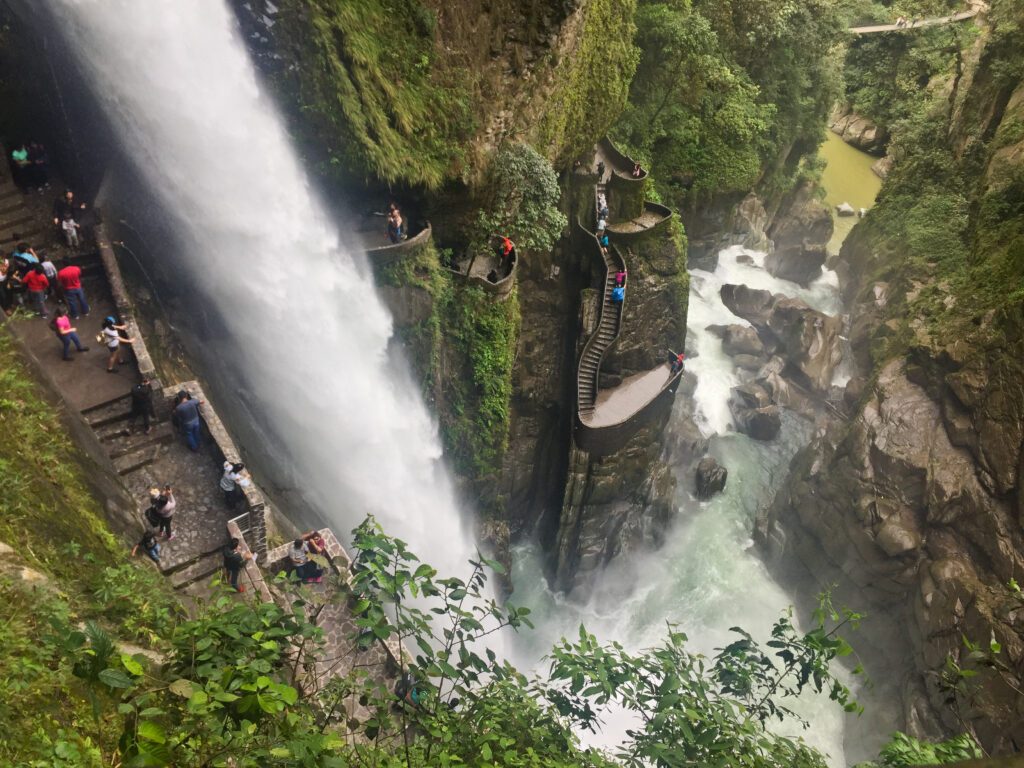
The route winds through steep canyon walls, past cascading waterfalls such as Agoyán and Pailón del Diablo. While the ride is predominantly downhill, it follows a shared mountain highway that requires strict adherence to safety protocols.
Tunnel bypass protocol
The most critical safety rule on the Ruta de las Cascadas involves the highway tunnels. Bicycles are strictly prohibited inside the main motor vehicle tunnels along this corridor. Modern tunnels lack bike lanes, are poorly lit, and carry heavy truck traffic.
Before every tunnel, clear signage directs cyclists to the right onto the designated tunnel bypass roads. These bypasses follow the historic, cobbled cliffside paths that hug the canyon walls. They offer safer cycling routes and far superior views of the river gorge. Always use these designated bypasses without exception.
Bike pre-ride inspection
Do not accept a rental bicycle without executing a full pre-ride safety audit. Many rental shops in town offer low daily rates, but equipment maintenance varies significantly. Ensure you inspect the following:
- Braking power: You will be riding continuous downhill gradients. Ensure both front and rear brake pads have ample thickness and responsive lever tension
- Tyre condition: Check for deep tread depth and ensure sidewalls show no bulges or cracks
- Helmet fit: Verify that the provided helmet is free from structural cracks and that the retention harness tightens securely
- Active lighting: Even when riding during the day, use a flashing red rear LED light to remain visible to overtaking vehicles
Returning from Puyo or Río Verde
After completing your ride to Pailón del Diablo or continuing on toward Puyo, do not attempt to cycle back uphill along the narrow highway as traffic increases late in the afternoon.
Instead, flag down one of the frequent local chivas or pickup trucks that specialise in transporting cyclists and their bikes back to Baños de Agua Santa for a modest fee.
The Galápagos.
Ecuador’s Enchanted Isles
Vet adventure tour operators in Baños
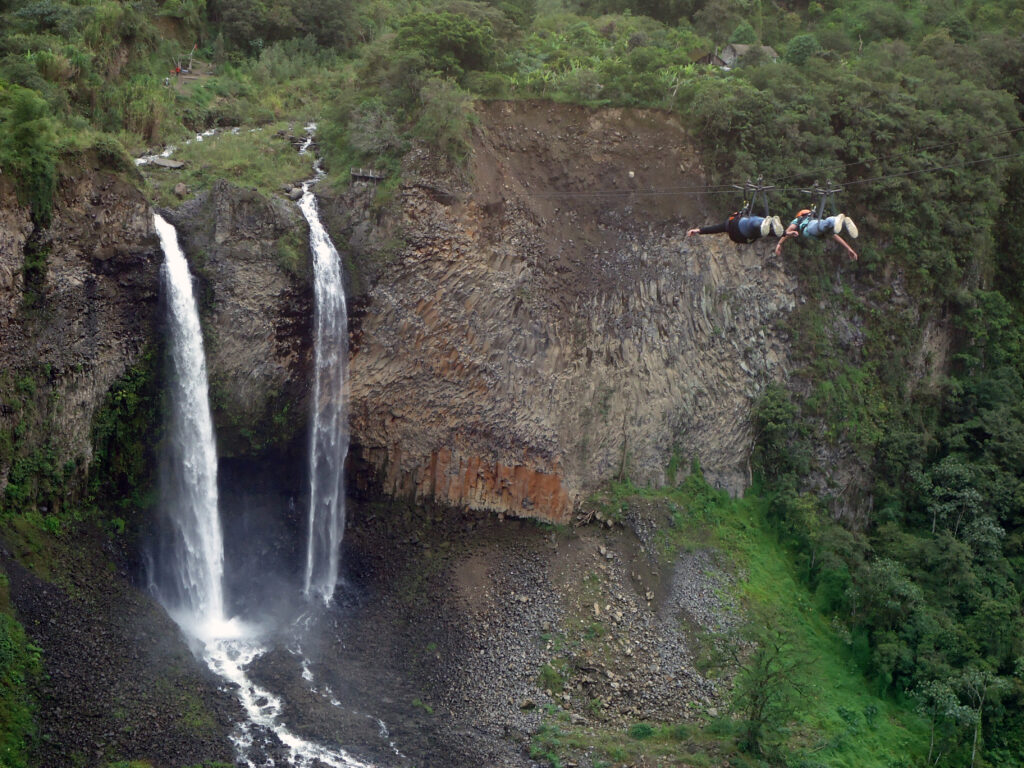
Baños de Agua Santa is world-renowned for white-water rafting on the Río Pastaza, canyoning down waterfalls, rock climbing, and ziplining. However, extreme sports carry inherent risks, and operator standards across town are not uniform. At Wheely Tyred, we apply a strict vendor vetting protocol before booking any excursion.
Checklist for your tour vendors
- Official Licensing: Check Ministry of Tourism ID
- Equipment Integrity: Inspect ropes, helmets, suits
- Guide Ratios: Maximum 5 clients per guide
- Safety Kayaker: Mandatory for rafting trips
1. Verify official registration
Avoid street brokers standing on footpaths offering discounted tour tickets. Walk directly into established shop offices and verify that the business displays an active registration certificate from the Ministry of Tourism (Ministerio de Turismo) and the local municipality.
2. Inspect gear before paying
Ask to see the exact equipment you will be using on your activity. Reject frayed climbing ropes, cracked helmets, or thin, worn lifejackets with broken buckles. High-quality operators proudly maintain clean, well-kept gear.
3. Confirm guide-to-client ratios
For technical activities such as canyoning and white-water rafting, safety depends directly on supervision ratios. Ensure there are no more than four to five clients per certified guide.
For Class III and IV rafting on the Río Pastaza, confirm that a dedicated safety kayaker will accompany your boat downriver.
The Ecuadorian Amazon.
The most biodiverse place in the world
Environmental hazards and volcanic monitoring
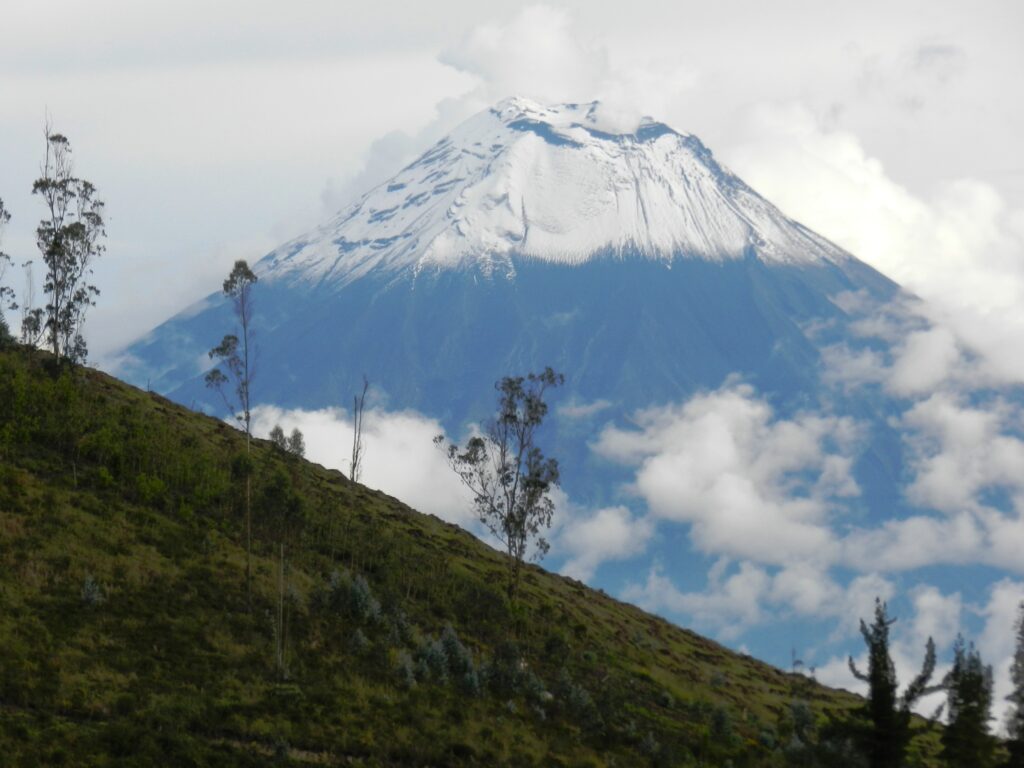
Staying safe in Baños de Agua Santa also means respecting the dynamic natural environment of the high Andes.
Volcán Tungurahua
Baños de Agua Santa sits at the base of Volcán Tungurahua, an active stratovolcano standing 5,023 metres above sea level. The volcano is continuously monitored by the Geophysical Institute of the National Polytechnic School (Instituto Geofísico).
Early warning sirens are installed throughout the town grid, and clear evacuation signs indicate designated safe zones on higher ground. Familiarise yourself with the evacuation map posted in your hotel lobby upon arrival.
Weather, landslides, and altitude
The weather in this transition zone between the high Sierra and the Amazon basin can shift rapidly. Heavy rainfall can trigger localised landslides along mountain roads, particularly between June and August. Check local road conditions before setting off on long road transfers or backcountry rides.
Additionally, at an elevation of 1,820 metres, Baños de Agua Santa is lower than Quito (2,850 metres), making it a comfortable place to acclimatise.
However, the equatorial sun remains intense even on cloudy mountain days. Apply high-SPF sunscreen, wear protective eyewear, and stay well hydrated throughout your rides.
Essential 2027 Baños security checklist
- Keep cash low: Carry small bill denominations (one-, five-, 10-, and 20-dollar notes) and leave excess cash secured in your hotel accommodation
- Lock your daypack: Loop your bag straps around your arm or chair leg when relaxing in open cafes or public squares
- Use tunnel bypasses: Always take the designated cobbled bypass roads when cycling past highway tunnels on the Ruta de las Cascadas
- Vet your tour operator: Verify active Ministerio de Turismo licenses and inspect safety gear prior to booking adventure sports
- Protect belongings at thermal baths: Bring your own heavy-duty padlock for lockers at public hot springs
- Avoid street taxi hailing at night: Use pre-arranged transport through your hotel or trusted radio taxi services
- Stay bright on the road: Use active front and rear lights when cycling mountain passes
The Ecuadorian Coast.
Where you’ll find the very best food
Ride with confidence through the Andean gateway
Read this far?
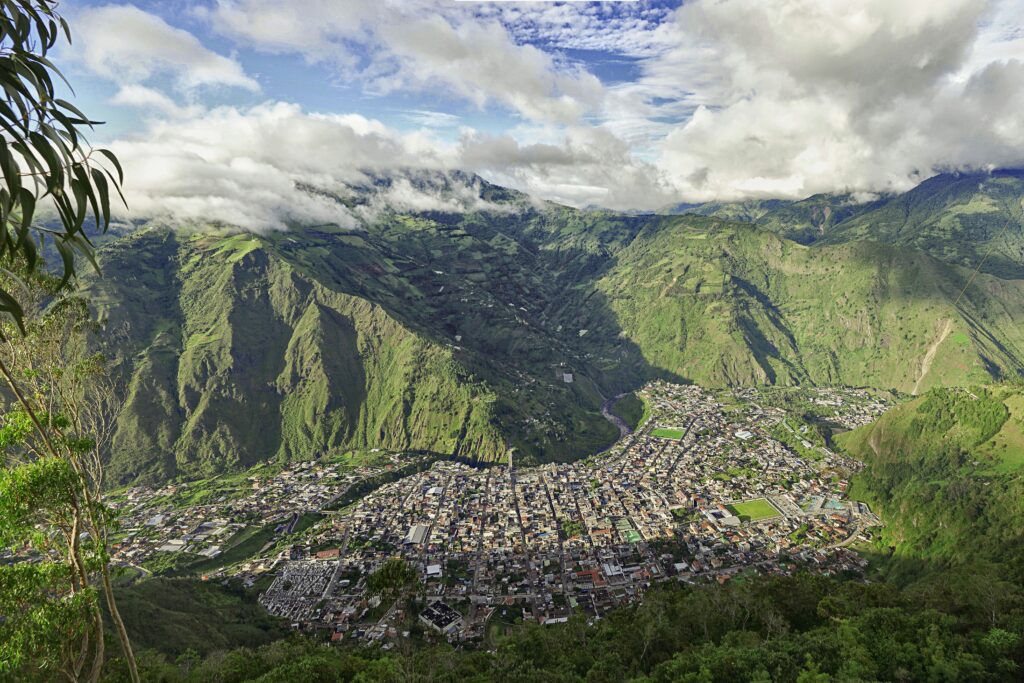
Baños de Agua Santa remains one of the most rewarding hubs in Ecuador for independent travellers, route planners, and cyclists. The combination of dramatic cliffside roads, geothermal baths, and easy access to the Pastaza canyon makes it a unique transition point where the high Sierra meets the Amazonian cloud forest.
By applying straightforward situational awareness and respecting the mountain environment, you can enjoy the region without unnecessary anxiety.
Whether you are descending the Ruta de las Cascadas on two wheels, soaking in the mineral waters beneath the waterfall at Termas de la Virgen, or boarding a regional bus toward Ambato, local systems are reliable when approached with preparation.
Keeping cash low, securing your luggage in transit hubs, and inspecting rental bikes before setting off will ensure your journey remains smooth and rewarding.
As highlighted in our earlier 2026 Baños security guide, independent travel relies on factual clarity rather than fear. We continuously update our security briefs to reflect real ground conditions across South America, giving you the tools to explore responsibly and autonomously.
Take the time to verify your adventure operators, respect the volatile mountain weather, and enjoy every kilometre of the ride. Safe travels, keep your eyes on the road, and enjoy the adventure through Tungurahua province.
Affiliate Disclaimer: Some of the links on Wheely Tyred are affiliate links. If you click through and make a booking or purchase, we may earn a small commission at no extra cost to you. We only recommend gear, tours, stays, and services we genuinely use, trust, and stand behind — our editorial independence always comes first. These commissions help keep our independent cycling guides and travel stories free to read. You can also buy me a coffee here — thanks for supporting the ride!
Frequently asked questions about Safety in Baños, Ecuador, 2027
Yes, Baños de Agua Santa is widely considered one of the safest and most accessible towns in Ecuador for solo travellers. The central town grid is compact and well lit, with visible municipal police patrols around Parque Sebastián Bernal and Calle Ambato. Standard precautions apply after dark, such as avoiding unlit perimeter trails along the Río Pastaza and arranging taxis through hotel receptionists rather than hailing unmarked cars on the street.
Riding back uphill along the narrow canyon highway is not recommended due to heavy afternoon vehicular traffic. Instead, head to the pickup points near Pailón del Diablo or Río Verde. Local truck drivers and custom chivas frequently collect cyclists and secure bikes in rear racks, offering a safe and inexpensive transport transfer back to central Baños de Agua Santa.
Volcán Tungurahua is continuously monitored by the Instituto Geofísico. Early warning sirens exist throughout town, and clearly marked evacuation signs direct residents and tourists to designated safe zones on higher ground. Upon checking into your hotel or hostel, locate the posted evacuation map and familiarise yourself with the nearest escape route.
Tap water in Baños de Agua Santa is not recommended for drinking without purification. Stick to boiled, filtered, or bottled water, especially when preparing for long bike rides. Local food stalls around Mercado Central offer cooked specialities such as melcocha sugar cane candy and roasted pork, which are generally safe and fresh due to high customer turnover.
The thermal baths at Termas de la Virgen and Termas de El Salado draw large crowds, creating opportunities for pickpockets. Leave non-essential items, credit cards, and passports secured in your hotel safe. When using public changing lockers, bring a sturdy padlock rather than a flimsy luggage lock to ensure your daypack remains secure while you soak.
Most small eateries, bike rental shops, and market vendors operate strictly on a cash basis. Larger hotels and established tour agencies may accept cards, but often charge a processing surcharge. Carry low-denomination US dollar bills (one-, five-, 10-, and 20-dollar notes) for daily expenses and withdraw cash from bank-adjacent ATMs during daylight hours.
Ecuador.
Pure wonder on the equator.


