Escape the tour bus / The ultimate guided city walking tours in Ecuador
Best urban walking excursions and cultural city tours in Quito, Cuenca, and Guayaquil
Uncover colonial backstreets, Andean food markets, and maritime history
BEN FINCH
At Wheely Tyred, we have always maintained that the true soul of a city cannot be appreciated through the tinted, double-glazed windows of a bus. Cities are living organisms, best understood at human walking pace—where you can smell the roasted aromas of ground cacao drifting from doorframes, hear church bells reverberating off 16th-century volcanic stone facades, and pause to converse with market vendors who have occupied the same stalls for generations.
Ecuador presents one of South America’s most fascinating urban tapestries. Tucked high in the cloud-kissed Andean valleys, Quito and Cuenca boast two of the best-preserved colonial historic centres on the continent, both designated UNESCO World Heritage sites. Meanwhile, along the Pacific coast, the energetic port city of Guayaquil offers a completely different rhythm, framed by riverfront promenades, tropical parks, and hillside artisan quarters.
Navigating these complex, multi-layered urban environments independently can sometimes feel overwhelming, particularly when attempting to unpack centuries of Indigenous, Inca, and Spanish colonial heritage. Joining a small-group or private walking tour led by a passionate local guide provides essential historical context, grants access to hidden courtyards, and supports local community tourism. Below, we have curated six of the absolute best bookable city walking tours across Ecuador—experiences that deliver rich cultural immersion without the commercial shortcuts.
Ecuador’s architectural, gastronomic, and craft highlights
Exploring Ecuador on foot reveals a country of remarkable geographic, historical, and cultural contrast. From atmospheric Andean cobblestones to tropical riverfront promenades, these key takeaways capture the very best of slow, independent urban discovery across the nation.
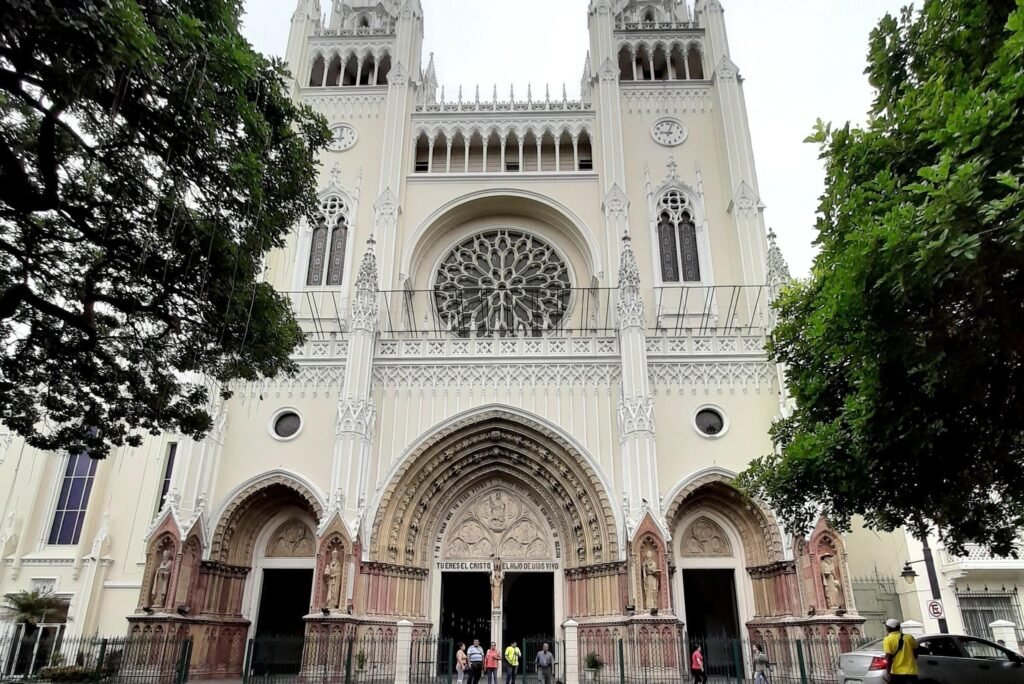
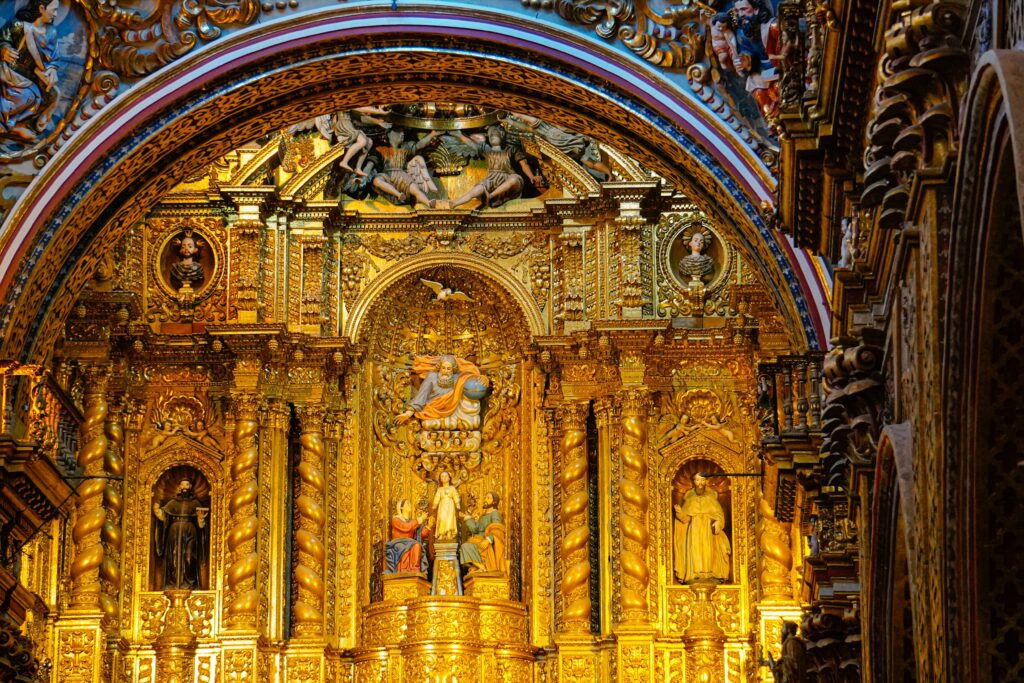
- UNESCO Architectural Heritage: Quito’s sprawling Centro Histórico presents the Americas’ most intact colonial core, where volcanic stone churches like the Basilica del Voto Nacional bear native animal gargoyles alongside gilded Spanish Baroque altars
- High-Altitude Street Gastronomy: Historic food hubs such as Quito’s Mercado Central offer direct access to ancestral Andean flavours, from crispy empanadas de morocho to slow-braised seco de chivo and warming ceramic jugs of canelazo
- Colonial Elegance in Cuenca: Bisected by four rushing rivers, Cuenca balances blue-domed neoclassical cathedrals, open-air floral markets, and picturesque riverside casonas along the terraced banks of El Barranco
- Authentic Living Craftsmanship: Discover the genuine origin of the world-famous paja toquilla hat—mistakenly known as the Panamá hat—by visiting historic artisan workshops and master weavers in southern Ecuador
- Tropical Urban Renewal: Guayaquil’s historic maritime identity shines through the bustling Malecón 2000 riverfront promenade, free-roaming iguanas in Parque Seminario, and the colourful, 444-step climb up Las Peñas and Santa Ana Hill
- Ancestral Cacao Heritage: Trace chocolate back over 5,300 years to its Amazonian birthplace through hands-on bean-to-bar workshops nestled inside Quito’s historic Loma Grande quarter
- Smart High-Altitude Navigation: Exploring the Andes comfortably requires a measured pace, low-denomination US dollar bills ($1 and $5 notes), rubber-soled footwear for slick cobblestones, and smart use of modern transit like the Metro de Quito
The Ecuadorian Sierra.
Get lost in the hills
Exploring Quito’s UNESCO colonial core
Rating & reviews
(2+ verified reviews on GetYourGuide)
Why this specific tour stands out
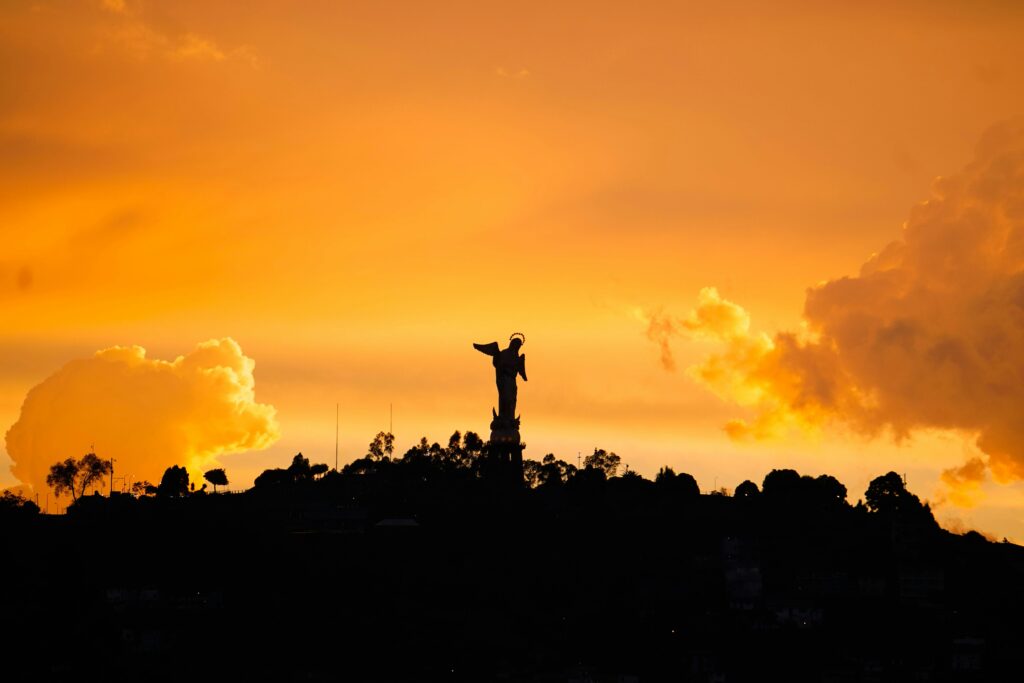
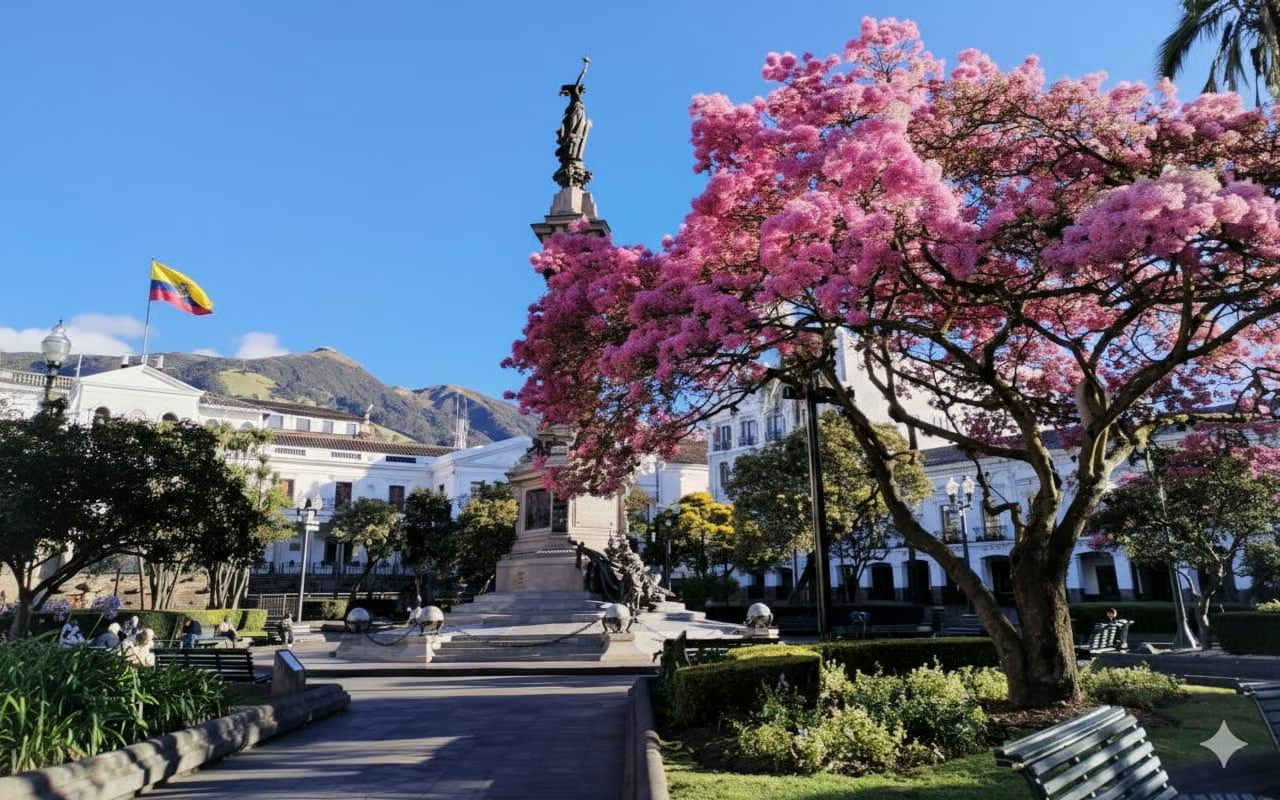
Quito’s Centro Histórico is the largest and least-altered historic centre in the Americas. Built upon the remnants of an ancient Inca city high in the Andes at 2,850 metres, its narrow streets climb steep volcanic contours lined with baroque monasteries, grand public squares, and whitewashed colonial mansions. Attempting to navigate this architectural labyrinth without local guidance often means missing the subtle details—the hidden inner courtyards, the indigenous syncretic motifs carved into church stonework, and the legends embedded in local folklore.
This focused three-hour walking excursion begins at the northern perimeter of the Old Town at the towering Basilica del Voto Nacional. Unlike European Gothic cathedrals, this neo-Gothic masterpiece features stone gargoyles carved in the likeness of native Ecuadorian animals, including iguanas, armadillos, and Galápagos tortoises. The walk continues along the historic Calle de las Siete Cruces (Street of the Seven Crosses), passing the Archbishop’s Palace—where you pause to sample traditional colaciones (hand-rolled Quito sweets cooked in copper kettles)—before entering Plaza de la Independencia. Here, surrounded by the Presidential Palace and the Metropolitan Cathedral, your guide unpacks Ecuador’s complex path to independence.
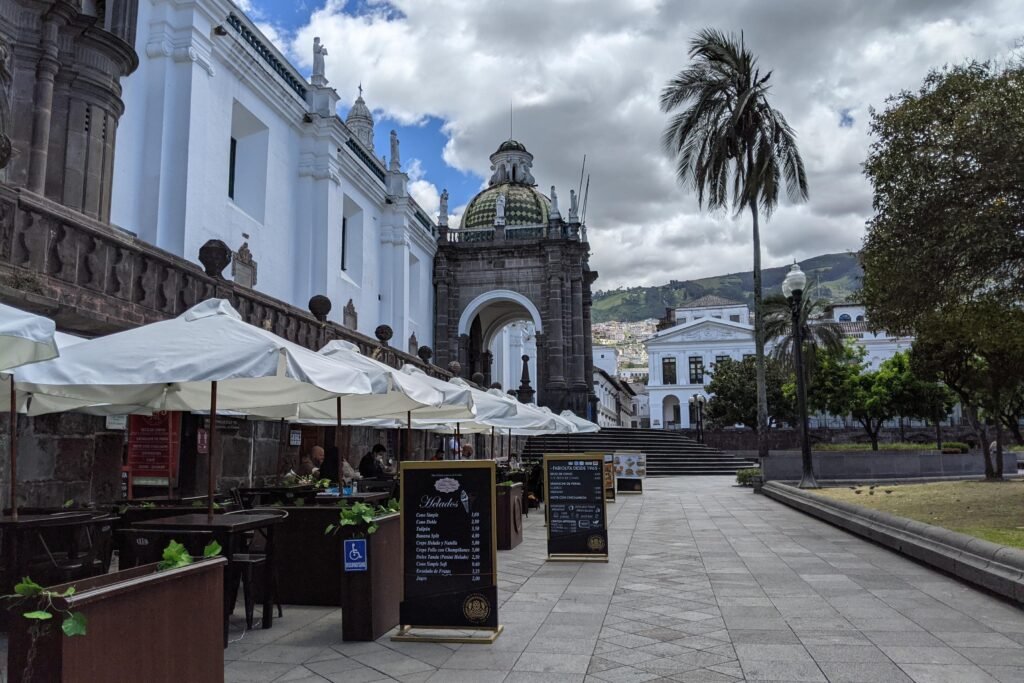
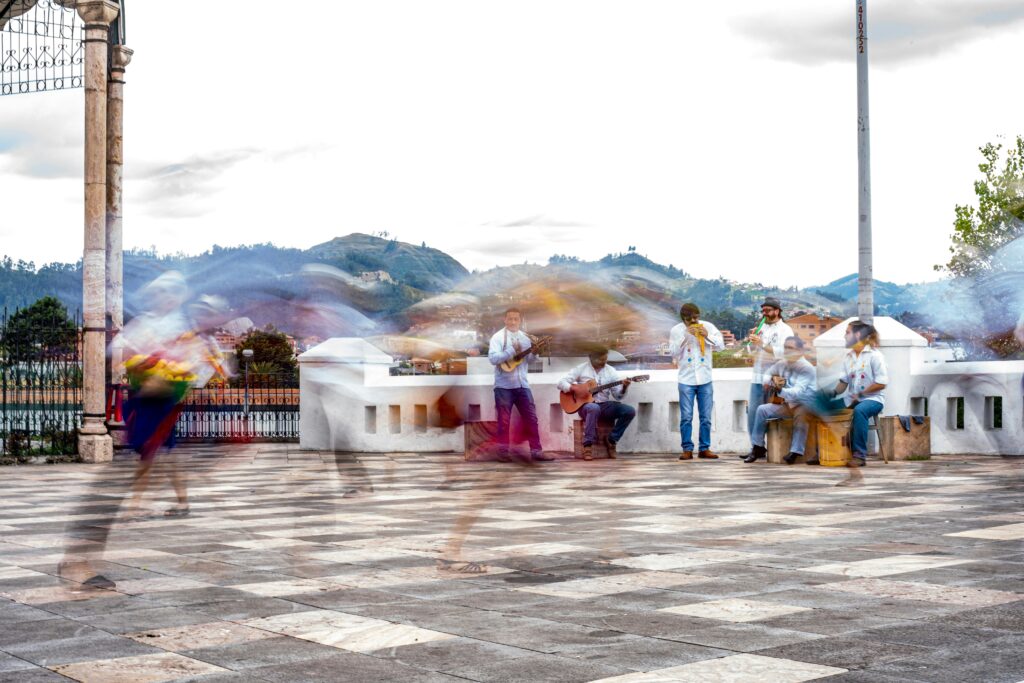
The itinerary leads to the dramatic Plaza de San Francisco, home to the vast 16th-century church and convent complex. You will learn the famous indigenous legend of Cantuña, the native stonemason who supposedly tricked the devil to complete the church’s atrium. The tour concludes along La Ronda, a romantic cobblestone alleyway long associated with Quiteño poets, bohemian musicians, and traditional artisan workshops.
Key highlights
- Architectural examination of the neo-Gothic Basilica del Voto Nacional and its endemic animal gargoyles
- Tasting of traditional Quiteño sweets inside the historic Archbishop’s Palace
- Deep dive into political history at Plaza Grande (Plaza de la Independencia)
- Exploration of the Plaza de San Francisco and the bohemian alleyways of Calle La Ronda
Ideal for
First-time visitors to Quito seeking a solid, context-rich grounding in Andean architecture, colonial history, and local urban legends.
Local insight
Quito sits at high altitude where weather shifts rapidly. Morning walks offer the crispest mountain light for photography before afternoon cloud cover rolls off Mount Pichincha. Wear sturdy, broken-in walking shoes to navigate polished, uneven cobblestones.
A culinary walk through Quito’s historic food markets
Rating & reviews
(25+ verified reviews on Viator)
Why this specific tour stands out
Understanding Andean gastronomy requires looking beyond standard restaurant menus. High-altitude Ecuadorian cuisine is a rich, comforting fusion of pre-Columbian agricultural staples—such as native corn varieties, tubers, and Andean tubers—blended with Spanish culinary traditions. The best way to experience this authentic food culture is by stepping into the bustling municipal markets and family-run stalls where Quiteños have eaten for decades.
This private, four-and-a-half-hour gastronomic walking tour treats food as a window into social history. Guided by a local culinary specialist, you wind through the atmospheric streets of the Old Town, making strategic stops at neighbourhood bakeries, fruit markets, and historic eateries. The experience kicks off with fresh quesadillas—a traditional Quiteño baked sweet pastry—and a guided tasting of native equatorial fruits like lulo (naranjilla), maracuyá, and tree tomato (tomate de árbol).
The walk builds towards a substantial lunch inside the bustling Mercado Central, navigating away from tourist-oriented establishments to sit alongside locals. Here, you sample authentic empanadas de morocho (crispy corn-dough turnovers filled with seasoned meat and rice) alongside your choice of coastal-style ceviche or seco de chivo (braised goat stew served with yellow rice and avocado). The tour finishes along Calle La Ronda with a warm ceramic jug of canelazo—a traditional hot Andean cocktail brewed from cinnamon, fruit juice, and sugarcane spirit (aguardiente).
Key highlights
- Market walk through Mercado Central to sample seasonal, high-altitude native fruits
- Authentic tasting of empanadas de morocho, mote, and warm quesadillas
- Traditional market lunch featuring seco de chivo or Ecuadorian-style seafood ceviche
- Premium Ecuadorian single-origin chocolate tasting followed by hot canelazo on Calle La Ronda
Ideal for
Culinary travellers, food historians, and adventurous eaters who want to taste authentic street-food staples in verified, hygiene-conscious settings.
Local insight
Come hungry; the portions across the multiple stops accumulate to more than a full lunch meal. Keep a small supply of low-denomination US dollar bills ($1 and $5 notes) in hand if you wish to purchase extra dried spices or roasted cacao beans directly from market vendors.
The Galápagos.
Ecuador’s Enchanted Isles
Walk through colonial elegance in Cuenca
Rating & reviews
(17+ verified reviews on GetYourGuide)
Why this specific tour stands out
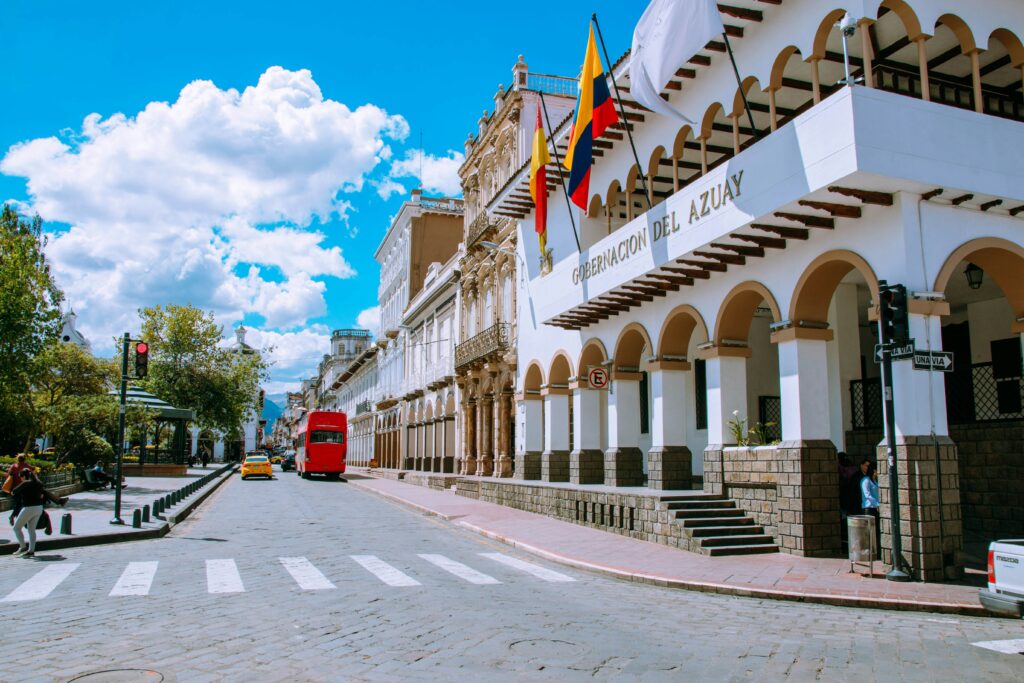
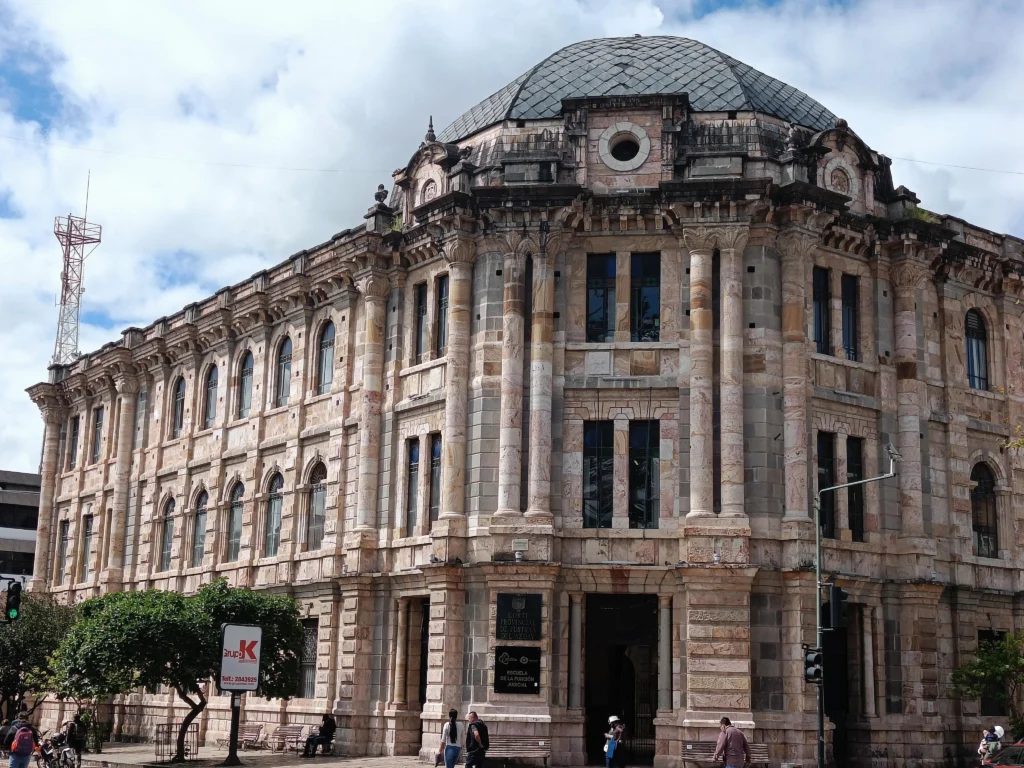
Located in the southern Andean highlands of Ecuador, Santa Ana de los Ríos de Cuenca (commonly known simply as Cuenca) is widely regarded as the nation’s cultural and intellectual heart. Bisected by four rushing rivers, Cuenca’s historic centre features grid-iron Spanish colonial planning, elegant 19th-century French-influenced architecture, wrought-iron balconies, and flower-filled plazas.
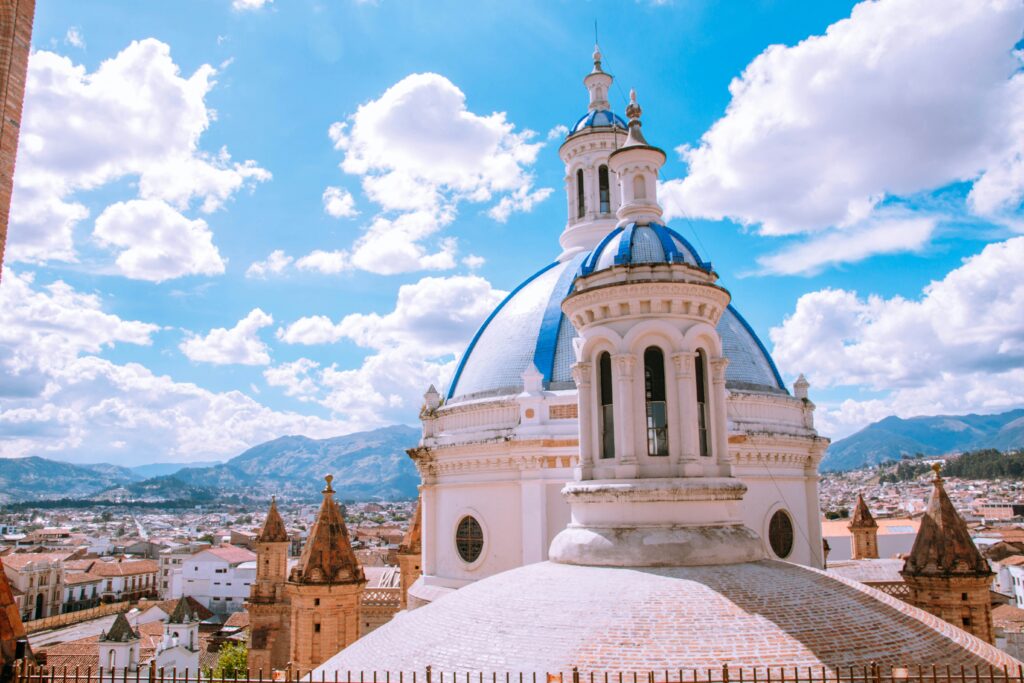
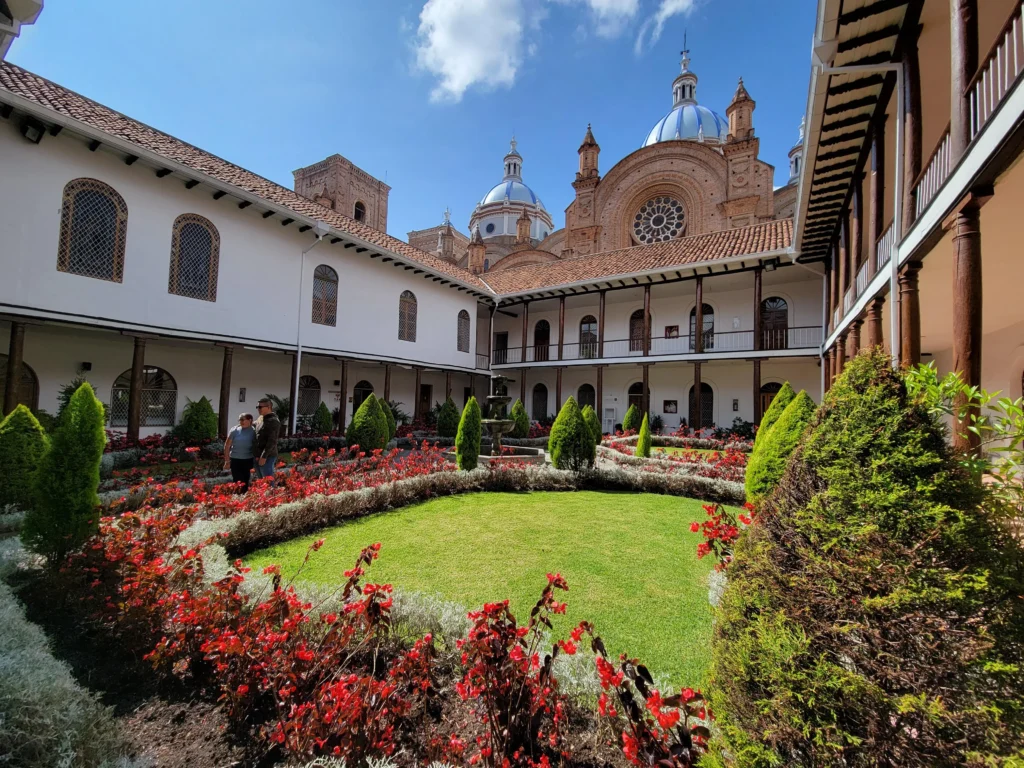
This four-and-a-half-hour, small-group walking tour offers an immersive dive into Cuenca’s architectural and social evolution. The walk begins in the quiet, historic neighborhood of San Sebastián, passing the Museum of Modern Art before moving into the vibrant heart of the city. You explore Parque Calderón, the central square anchored by two contrasting cathedrals: the Old Cathedral (El Sagrario), built in 1557 using stones quarried from the nearby Inca city of Tomebamba, and the massive New Cathedral (Catedral de la Inmaculada Concepción), famous for its striking sky-blue Czech tile domes.
A major highlight of the route is a visit to the Plaza de las Flores (Flower Market), consistently ranked among the world’s most beautiful open-air floral markets. Here, indigenous Cañari and Cholita Cuencana women sell fragrant roses and orchids. The tour also explores El Barranco, the terraced historic district sloping gracefully down to the Tomebamba River, where colonial houses hang dramatically over the riverbanks.
Key highlights
- Comprehensive exploration of Parque Calderón and both the Old and New Cathedrals
- Atmospheric walk through the world-famous open-air Plaza de las Flores flower market
- Stroll through El Barranco, observing riverside colonial architecture along the Tomebamba River
- Access to historic interior courtyards and restored 19th-century French-style casonas
Ideal for
Architecture enthusiasts, photographers, and slow travellers seeking an unhurried, highly detailed exploration of southern Ecuador’s heritage.
Local insight
Take advantage of the optional opportunity to climb the interior stairs to the high balcony of the New Cathedral. The view across the blue domes and clay-tiled rooftops of Cuenca provides one of the best urban photography viewpoints in South America.
Artisanal heritage and architectural wonders in Cuenca
Rating & reviews
(9+ verified reviews on GetYourGuide)
Why this specific tour stands out
One of the greatest misnomers in global travel history is the Panamá Hat. Despite its name, this world-renowned, hand-woven straw hat originated entirely in Ecuador, with Cuenca standing as the historic heartland of its refining, shaping, and global export. Understanding how delicate strands of paja toquilla (a palm-like fibre native to the Ecuadorian coast) are woven into UNESCO-recognised masterworks is essential to understanding Cuenca’s economic and cultural identity.
This four-hour guided urban excursion pairs historic neighbourhood walks with a deep dive into local craft traditions. The journey moves through San Francisco Market and the surrounding artisan quarters, where local tradespeople continue centuries-old metalworking and textile traditions. Your guide explains the distinct attire of the local Cholitas Cuencanas—including their hand-embroidered velvet skirts and polished straw hats—offering respectful context on indigenous highland identity.
The highlight of the walk is an exclusive behind-the-scenes visit to a historic Panamá hat workshop and museum (Museo del Sombrero de Paja Toquilla). Here, master weavers demonstrate the laborious process of grading, washing, bleaching, and pressing the straw on heavy vintage iron molds. You will learn how mislabelling during the construction of the Panamá Canal forever tied the hat to Panamá rather than its true Ecuadorian birthplace. The tour wraps up with a short climb up to the Mirador de Turi, offering panoramic views over the entire valley.
Key highlights
- Educational workshop visit demonstrating the authentic hand-weaving of paja toquilla hats
- Clarification of the historic trade route error that led to the Panamá Hat name
- Walking tour through the San Francisco artisan craft markets and San Sebastián Square
- Scenic viewpoint visit to Mirador de Turi overlooking the red-tiled roofs of Cuenca
Ideal for
Travellers interested in living craft heritage, fashion history, and supporting sustainable local artisan industries.
Local insight
When purchasing an authentic paja toquilla hat, inspect the weave density at the crown. Fine hats take months to weave, feel like silk, and can be folded into a ring without damaging the fibres.
The Ecuadorian Amazon.
The most biodiverse place in the world
Navigate Guayaquil’s historic waterfront and hills
Rating & reviews
(New tour on Viator)
Why this specific tour stands out
Guayaquil, Ecuador’s largest city and chief commercial port, presents a dramatic physical contrast to the mountain capitals of the Andes. Situated along the wide banks of the Guayas River near the Pacific Ocean, Guayaquil is warm, tropical, and energetically maritime. Exploring Guayaquil on foot reveals a city that has reinvented its urban public spaces through ambitious riverfront revitalisation while preserving its oldest hillside settlements.
This three-hour guided walking tour introduces travellers to Guayaquil’s urban core. The route begins at Parque Seminario (famously known as Iguana Park), where dozens of wild, semi-aquatic land iguanas roam freely across manicured lawns and climb ornamental trees right outside the Metropolitan Cathedral. Your guide explains the unique urban ecosystem before leading you past the historic Plaza de San Francisco and the neoclassical City Hall.
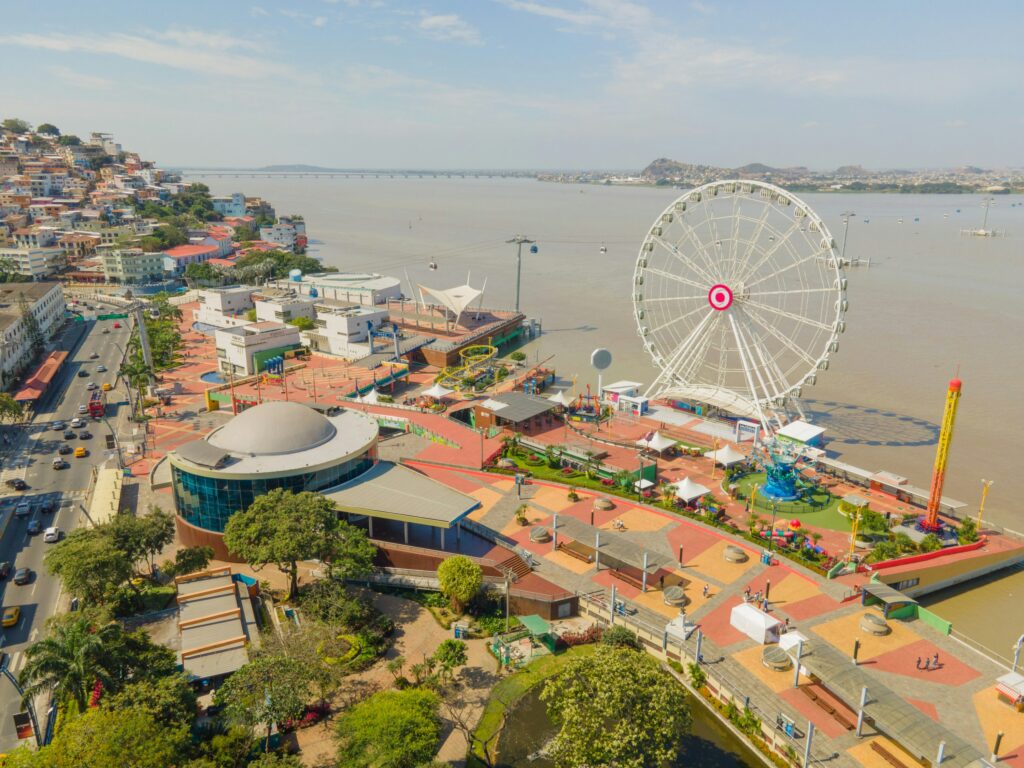
From there, the walk transitions to the Malecón 2000, a world-renowned 2.5-kilometre pedestrian riverfront promenade featuring botanical gardens, historic monuments, and scenic views over the Guayas River. The tour culminates in Las Peñas, Guayaquil’s oldest neighborhood. Here, 400-year-old wooden colonial houses painted in vivid pastel hues line a narrow cobblestone staircase. Climbing the 444 numbered steps past art galleries and cafes leads to the summit of Santa Ana Hill (Cerro Santa Ana), where a chapel and lighthouse offer sweeping 360-degree views across the city skyline and estuary.
Key highlights
- Close encounter with wild urban iguanas in historic Parque Seminario
- Stroll along the pedestrian riverfront promenade of Malecón 2000
- Architectural walk through the 400-year-old colourful hillside neighbourhood of Las Peñas
- Guided climb up Santa Ana Hill to the lighthouse for panoramic views of the Guayas River
Ideal for
Active travellers, urban renewal enthusiasts, and maritime history buffs keen to explore Ecuador’s tropical coastal culture.
Local insight
Guayaquil is warm and humid year-round. Schedule walking tours for early morning, carry plenty of water, wear light linen or moisture-wicking clothing, and apply sun protection before tackling the steps up Santa Ana Hill.
Quito’s cacao culture and historic Old Town heritage
Rating & reviews
(New tour on GetYourGuide)
Why this specific tour stands out
Ecuador is the birthplace of cultivated cacao. Recent archaeological evidence confirms that native Amazonian cultures in southern Ecuador were harvesting and consuming cacao over 5,300 years ago—predating Mesoamerican chocolate cultivation by more than a millennium. Today, Ecuador’s fine-flavor Arriba cacao beans are coveted by chocolatiers worldwide for their complex floral and fruity notes.
This six-hour combined city and cultural experience connects Quito’s urban architecture with Ecuador’s rich agricultural heritage. The tour starts with a guided walk through the historic centre, taking in key plazas, Baroque altars, and colonial architecture. You then transition to a restored colonial house in the historic Loma Grande district for an immersive, hands-on Cacao Experience.
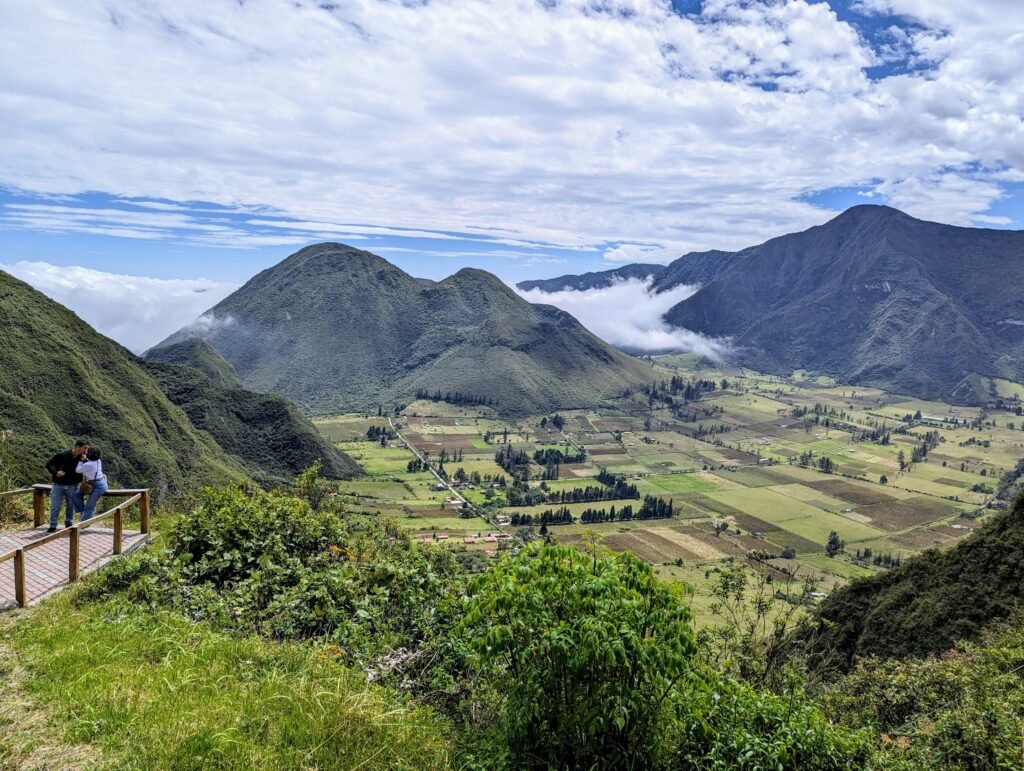
During the interactive tasting session, expert chocolatiers guide you through the complete bean-to-bar transformation. You roast raw cacao beans, crush them using traditional stone pestles, and sample raw nibs, rich chocolate fondue, warm spiced hot chocolate, and artisanal cacao beer. Following the urban tasting, private transport takes you north to the equatorial line at Mitad del Mundo and the nearby Pululahua Geobotanical Reserve—one of the few inhabited volcanic craters on Earth.
Key highlights
- Guided walk through Quito’s UNESCO historic core
- Hands-on bean-to-bar chocolate workshop inside a restored Loma Grande colonial home
- Tasting flight including raw cacao nibs, single-origin chocolate, hot chocolate, and cacao beer
- Visit to the Mitad del Mundo equatorial monument and views into the inhabited Pululahua volcanic crater
Ideal for
Foodies, chocolate lovers, and families seeking a balanced mix of urban history, culinary workshop, and natural landscapes.
Local insight
Pure dark chocolate crafted from native Nacional or Arriba cacao should taste naturally fruity and floral without excessive added sugar. Pay attention to how the flavour profile shifts as the chocolate melts slowly on your tongue.
The Ecuadorian Coast.
Where you’ll find the very best food
Comparative overview of featured Ecuador city tours
| Tour Title | Destination City | Primary Focus | Duration | Walking Difficulty |
| Quito Historic Centre Walking Tour | Quito | Architecture, UNESCO Heritage, Colonial History | 3 Hours | Moderate (Cobblestones, incline) |
| Private Famous Food Tour | Quito | Street Food, Local Markets, Andean Gastronomy | 4.5 Hours | Easy to Moderate |
| Cuenca Historic Center Sightseeing | Cuenca | Colonial Architecture, Flowers, Rivers | 4.5 Hours | Easy (Mostly flat terrain) |
| Cuenca Panamá Hat & City Tour | Cuenca | Artisan Heritage, Hat Weaving, Views | 4 Hours | Easy to Moderate |
| Guayaquil Guided City Walk | Guayaquil | Waterfronts, Iguana Park, Hillside Staircase | 3 Hours | Moderate (444 stairs on hill) |
| Quito Historic & Cacao Experience | Quito | Old Town, Chocolate Workshop, Equator Line | 6 Hours | Moderate |
Our guide to Ecuador city exploration
Exploring Ecuador’s urban spaces on foot is deeply rewarding, but navigating high-altitude mountain terrain and tropical coastal environments requires a little preparation:
Manage altitude in mountain cities
Quito sits at 2,850 metres above sea level, and Cuenca rests at 2,560 metres. Upon arrival, take it easy for your first 24 hours. Drink plenty of water, avoid heavy meals, and walk at a measured pace. If climbing church towers or hills like Santa Ana, take short, frequent breaks.
Master the local public transit
Rather than relying entirely on taxis, use Ecuador’s modern urban transit networks. Quito’s sleek underground Metro (Metro de Quito) connects the north, centre, and south cleanly and efficiently. In Cuenca, the modern Tranvía light rail glides smoothly along the perimeter of the historic centre.
Carry small-denomination currency
Ecuador uses the United States dollar ($) as its official national currency. While major hotels and upscale restaurants accept credit cards, market vendors, small bakeries, and street guides almost exclusively require cash. Always keep $1, $5, and $10 bills handy; $20 notes are often difficult for small vendors to change.
Prepare for sudden microclimates
In the Andean highlands, locals often joke that you can experience four seasons in a single morning. Bright equatorial sunshine can rapidly give way to cool mountain rain. Layer your clothing with a breathable T-shirt, a warm fleece, and a light windproof/waterproof jacket.
Smart urban footwear
The polished marble walkways and historic cobblestones in Quito and Cuenca become slick when wet. Ditch flat-soled dress shoes or flimsy flip-flops in favour of comfortable, supportive walking shoes or light trail runners with rubber traction grips.
Quito.
Explore the Middle of the World
Step off the bus, step into Ecuador’s living heritage
Cities are never static museum pieces; they are vibrant, breathing landscapes defined by the people who walk their streets, sweep their market stalls, and preserve their craft traditions. When you commit to exploring Quito, Cuenca, or Guayaquil on foot, you trade the passive, glass-shielded perspective of a tour bus for an intimate, tactile engagement with South American history.
Whether you find yourself leaning over a steaming clay cup of canelazo on Calle La Ronda, discussing indigenous botany with market vendors in Mercado Central, or tracing the delicate weave of a paja toquilla hat in a Cuencan workshop, small-group walking tours deliver genuine human connection. They support local storytelling, direct tourism revenue straight to neighbourhood creators, and ensure that cultural preservation remains deeply rooted in community pride.
At Wheely Tyred, we believe that the best journeys leave ample room for spontaneity—the unexpected detour down a quiet residential alleyway, the sudden peal of church bells echoing off 16th-century volcanic stone, or a quiet moment spent watching late afternoon light hit the clay-tiled roofs of the Andes. Ecuador rewards those who slow down, take the time to acclimate, and meet its urban spaces on their own terms. Pack a trusty pair of walking shoes, keep your eyes open, and let the streets tell their story.
Affiliate Disclaimer: Some of the links on Wheely Tyred are affiliate links. If you click through and make a booking or purchase, we may earn a small commission at no extra cost to you. We only recommend gear, tours, stays, and services we genuinely use, trust, and stand behind — our editorial independence always comes first. These commissions help keep our independent cycling guides and travel stories free to read. Thanks for supporting the ride!
Frequently asked questions about the best Ecuador city tours
Quito sits high in the Andes at 2,850 metres above sea level, while Cuenca rests at approximately 2,560 metres. To acclimate comfortably, schedule lighter activities on your arrival day, drink plenty of water, and avoid heavy meals or alcohol initially. When participating in walking tours, pace yourself on steep uphill inclines, take short breaks, and wear a broad-brimmed hat—equatorial ultraviolet rays are exceptionally strong at high elevations.
The paja toquilla straw hat originated along the coast and in the southern highlands of Ecuador, particularly around Cuenca and Montecristi. During the construction of the Panamá Canal in the late 19th and early 20th centuries, thousands of these lightweight, sun-blocking hats were shipped to Panamá for workers and engineers, earning them their famous misnomer. You can purchase authentic, hand-woven hats directly from master weavers and historic workshops in Cuenca, where guides explain how to grade weave density and palm fibre quality.
Ecuador uses the United States dollar ($) as its official national currency. While upscale hotels and modern restaurants accept credit cards, market vendors, street food stalls, and public transport operators rely almost exclusively on cash. Always carry small-denomination paper notes ($1, $5, and $10 bills) alongside $1 coins. Market vendors frequently struggle to break $20 notes for small purchases.
Yes, both cities offer modern, safe, and efficient public transit options. Quito features a clean, underground train network (Metro de Quito) that glides directly beneath the historic core, connecting northern and southern urban districts in minutes. Cuenca operates a smooth light-rail system (Tranvía de Cuenca) that skirts the perimeter of its UNESCO-listed historic centre. Both systems are affordable and ideal for independent travellers navigating between walking tour meeting points.
Guided market food tours partner exclusively with long-established, vetted stallholders who maintain rigorous hygiene standards. Stick to freshly cooked, piping-hot dishes such as empanadas de morocho or seco de chivo, and enjoy peeled or freshly washed native fruits. As a standard safety precaution, drink bottled or purified water rather than tap water throughout Ecuador.
In the Andean highlands (Quito and Cuenca), morning walking tours starting around 09:00 offer clear skies, crisp photography light, and vibrant market activity before afternoon rain showers occasionally sweep down from the mountains. In tropical coastal Guayaquil, early morning or late afternoon walking tours are strongly recommended to avoid the intense midday heat and high humidity along the riverfront.
Ecuador.
Pure wonder on the equator.