Rolling through the Avenue of Volcanoes / The ultimate guide to Ecuador’s best bike tours
Best bike tours in Ecuador / Downhill trails, urban e-bikes & canyon routes
Discover Ecuador from mountaintops to cloud forests on two wheels
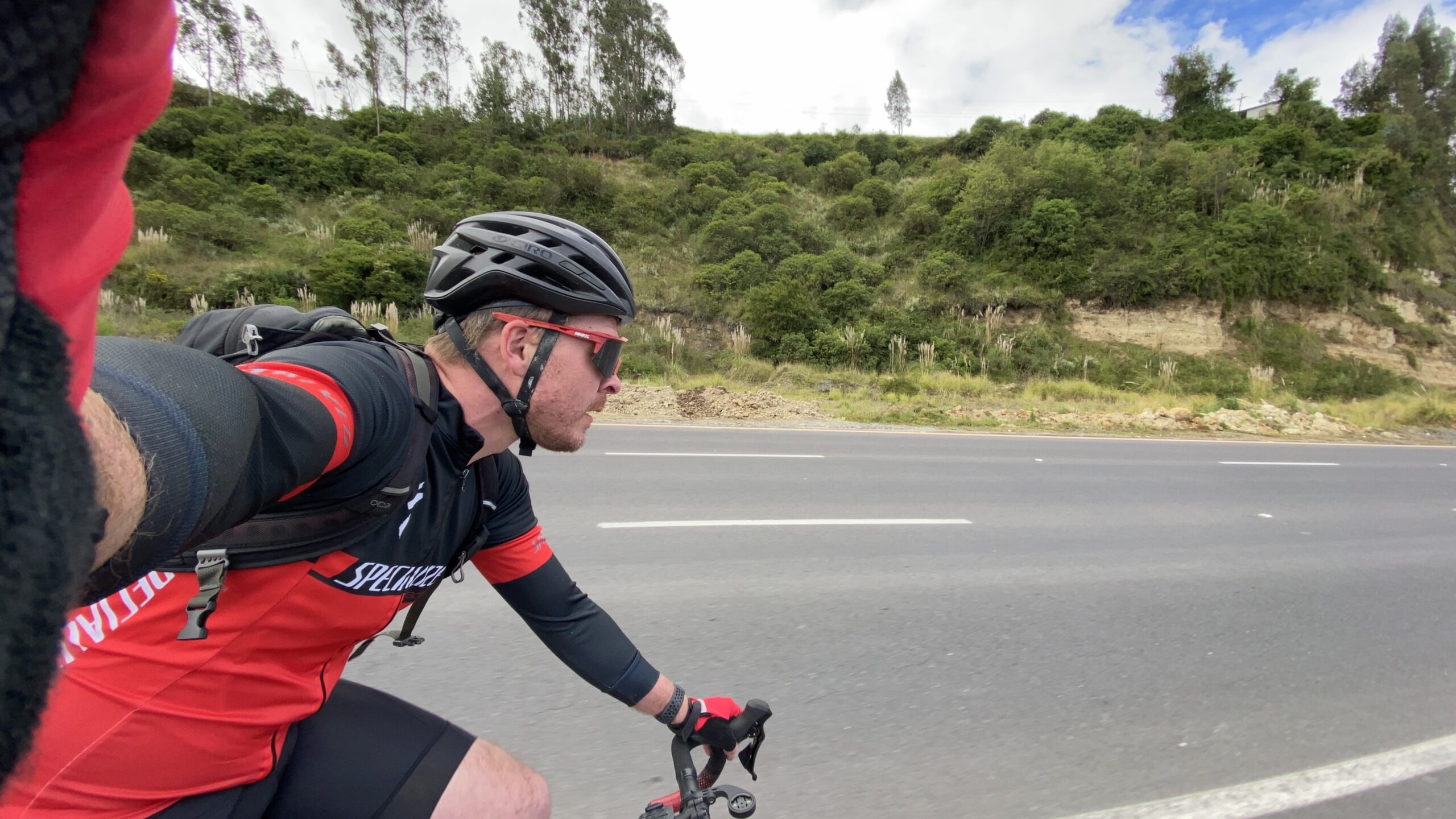
BEN FINCH
There is no substitute for exploring Ecuador at human speed. Wedged between the Pacific Coast, the high Andean spine, and the vast Amazonian basin, this compact South American country packs some of the most dramatic terrain on earth into a remarkably concise footprint. While most travellers view the Andean peaks through the tinted glass of a tour bus or rush between sights in private taxis, cyclists experience Ecuador with all five senses: the crisp, thin air of the high-altitude páramo moorlands, the sudden rush of humid air as you descend towards the jungle, and the tactile clatter of historic cobblestones beneath two wheels.
At Wheely Tyred, we advocate for slow, autonomous travel that honours regional landscapes and supports local communities. We despise mass-market tourist traps and cookie-cutter bus itineraries. Bicycles—whether precision mountain bikes equipped for volcanic gravel or quiet, pedal-assist e-bikes built for colonial avenues—offer the ultimate key to unlocking Ecuador’s authentic rhythm. Cycling allows you to cover vast distances across variable terrain while remaining intimately connected to the environment and the people who call it home.
From thrilling downhill descents down active snow-capped volcanoes to peaceful riverside cruises along UNESCO-listed rivers and tropical island trails, we have audited, vetted, and selected the six absolute best guided bike tours across Ecuador. Pack your windbreaker, adjust your helmet, and let us take you on an unforgettable journey through the heart of the Andes.
Wheels, waterfalls and volcanoes / The Ecuador bike tours summary
Ecuador offers an uncommonly rich spectrum of landscapes crammed into a compact, accessible footprint. From high-altitude volcanic descents to subtropical canyon rides and quiet coastal island tracks, exploring this Andean nation on two wheels provides an authentic, sensory connection to its land and people.
- Cotopaxi Downhill: Carve down the raw, volcanic gravel of an active snow-capped peak, descending from high-altitude refuges down to the serene shores of Limpiopungo Lagoon
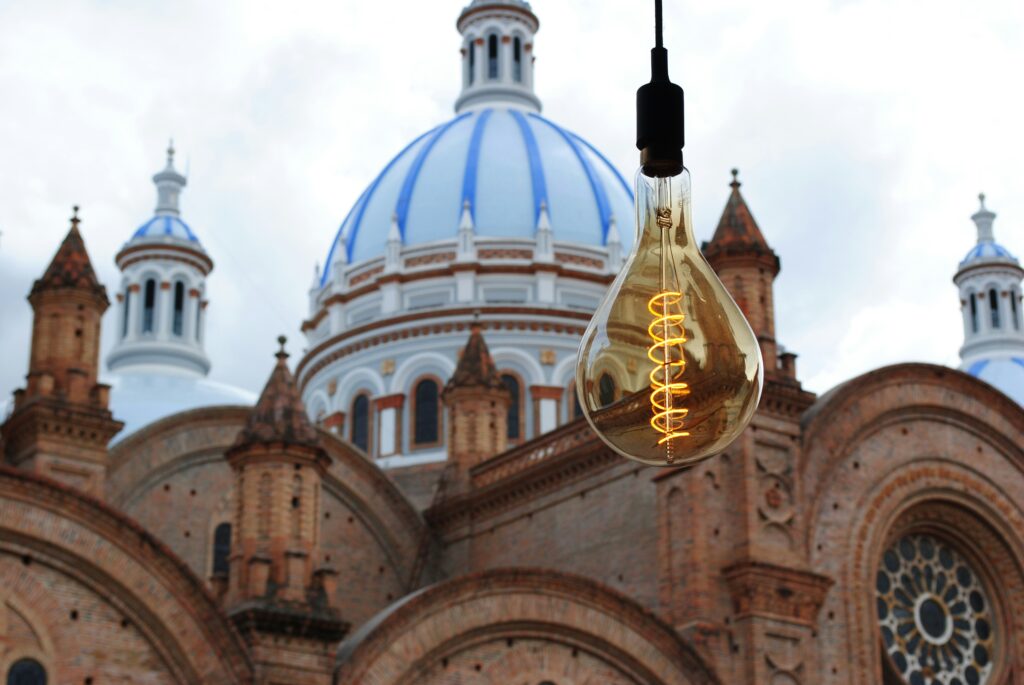
- Quito 360 Circuit: Traverse Quito from its modern northern parks into the UNESCO-listed colonial heart before finishing with an artisan Ecuadorian single-origin chocolate tasting
- All-Inclusive Waterfalls Canyon: Ride the famous downhill Ruta de las Cascadas from Baños into the cloud forest with full vehicle support, cable car flights, and local lunch included
- Cuenca Riverways: Glide effortlessly on pedal-assist e-bikes alongside the Tomebamba and Yanuncay rivers, taking in historic riverbanks, botanical gardens, and local craft workshops
- The Yunguilla Descent: Experience a dramatic 40-kilometre continuous downhill road ride transition from chilly Andean highlands to warm, sugarcane-filled subtropical valleys
- Galápagos Island Trails: Ride fat-tyre e-bikes through the lush interior highlands of Santa Cruz to observe giant tortoises roaming freely in their natural habitat
- High-Altitude Readiness: Respect the Andean elevation by layering technical clothing, staying well hydrated, and allowing at least two full days in Quito or Cuenca to acclimatise before tackling major rides
The Ecuadorian Sierra.
Get lost in the hills
1. Descent from the active volcano / Cotopaxi National Park downhill ride
Rating & reviews
(18+ verified user reviews on GetYourGuide)
Why this specific tour stands out
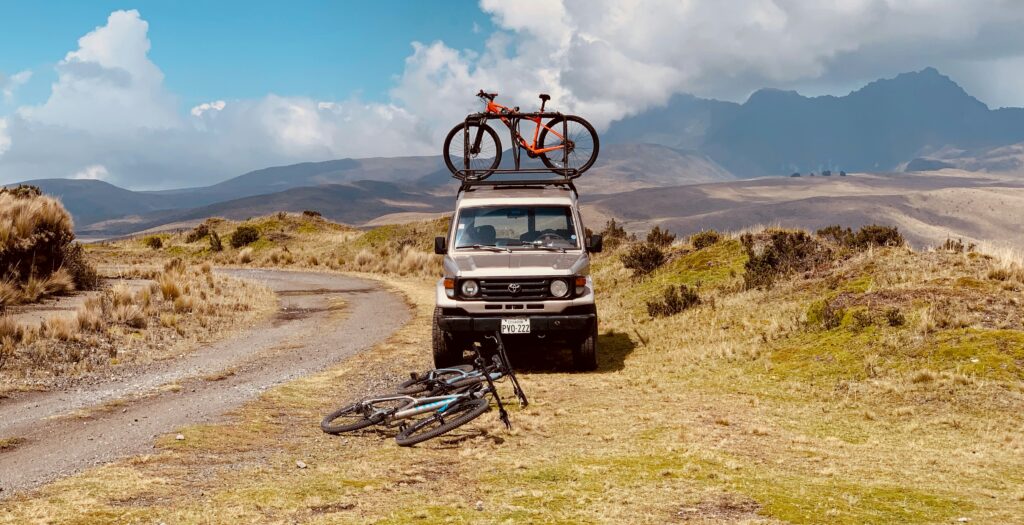
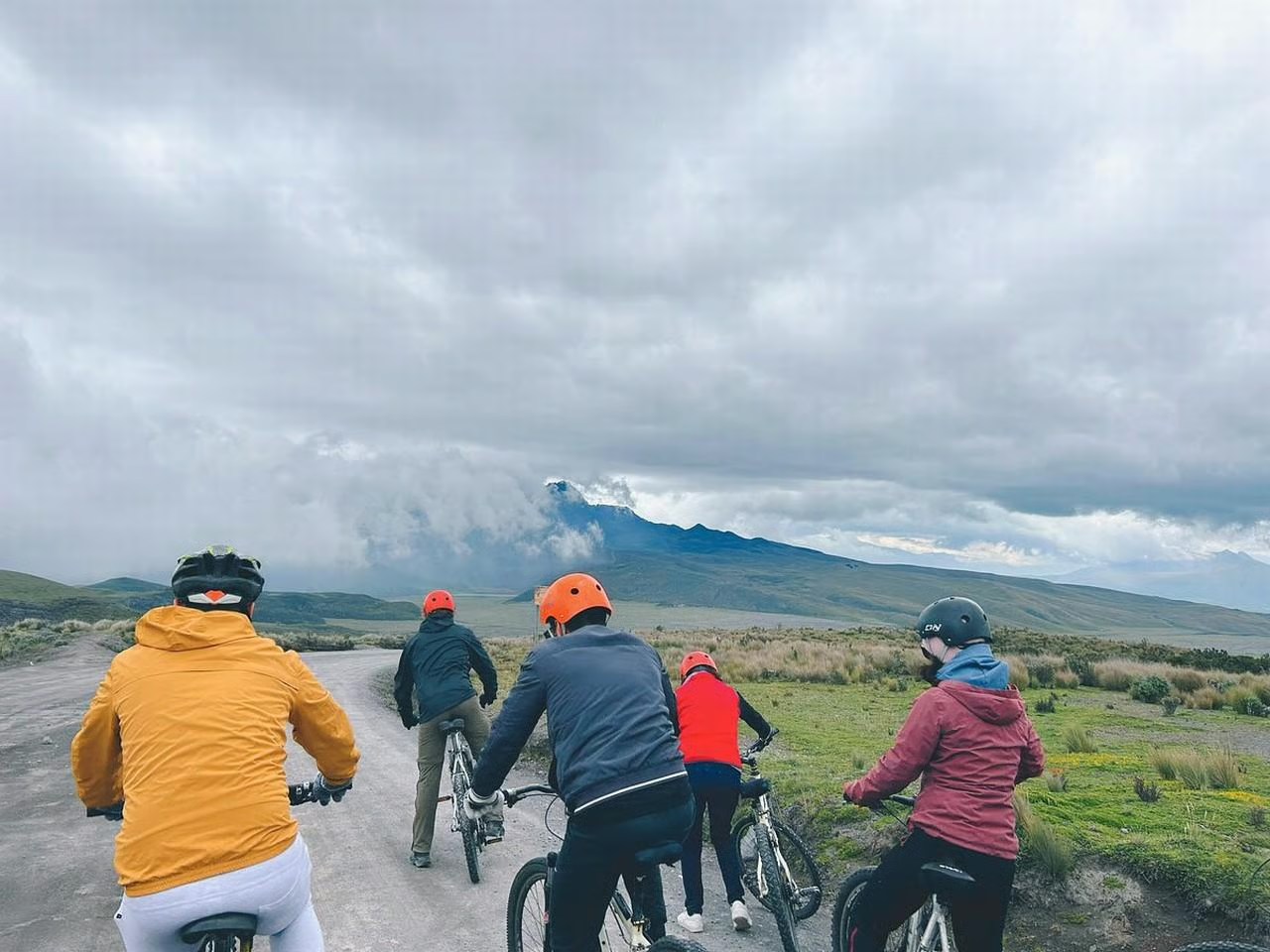
Cotopaxi (5,897 metres) is one of the world’s highest active volcanoes, and riding down its glacial flanks is widely considered the holy grail of South American mountain biking day trips. Departing early from Quito, this excursion ascends the Pan-American Highway into the high Andes. After a scenic hike up to the iconic José Rivas Refuge at 4,860 metres above sea level, riders swap hiking boots for front-suspension mountain bikes equipped with hydraulic disc brakes.
The descent covers roughly 10 to 12 kilometres of volcanic gravel, dirt tracks, and sweeping highland switchbacks down to the high-altitude Limpiopungo Lagoon at 3,800 metres. The operator provides a dedicated support vehicle trailing the group at all times, making it accessible for intermediate riders who want high-adrenaline scenery without technical singletrack dangers.
Key highlights
- High-altitude mountain bike descent across raw, unpaved volcanic gravel trails
- Scenic hike to the iconic high-altitude José Rivas Refuge
- Observation of wild horses, Andean condors, and rare páramo flora
- Leisurely lap around the glacial shores of Limpiopungo Lagoon with snow-capped views
- Traditional Andean breakfast stop in Machachi and cozy hot coca tea at the refuge
Ideal for
Adrenaline seekers, outdoor enthusiasts, and intermediate cyclists looking for a world-class high-altitude downhill experience without exhausting uphill pedalling.
Local cycling insight
Riding at 4,500 metres requires a distinct technique. The loose volcanic ash and gravel (ripio) can act like marbles beneath your tyres. Keep your weight centred slightly back over the saddle, stay off the front brake when cornering, and let the bike roll naturally. Weather at Cotopaxi changes rapidly: pack thermal layers, full-finger gloves, and a windproof outer shell.
2. Modern urban paths to colonial cobbles / Quito 360 bike tour
Rating & reviews
(6+ verified user reviews on GetYourGuide)
Why this specific tour stands out
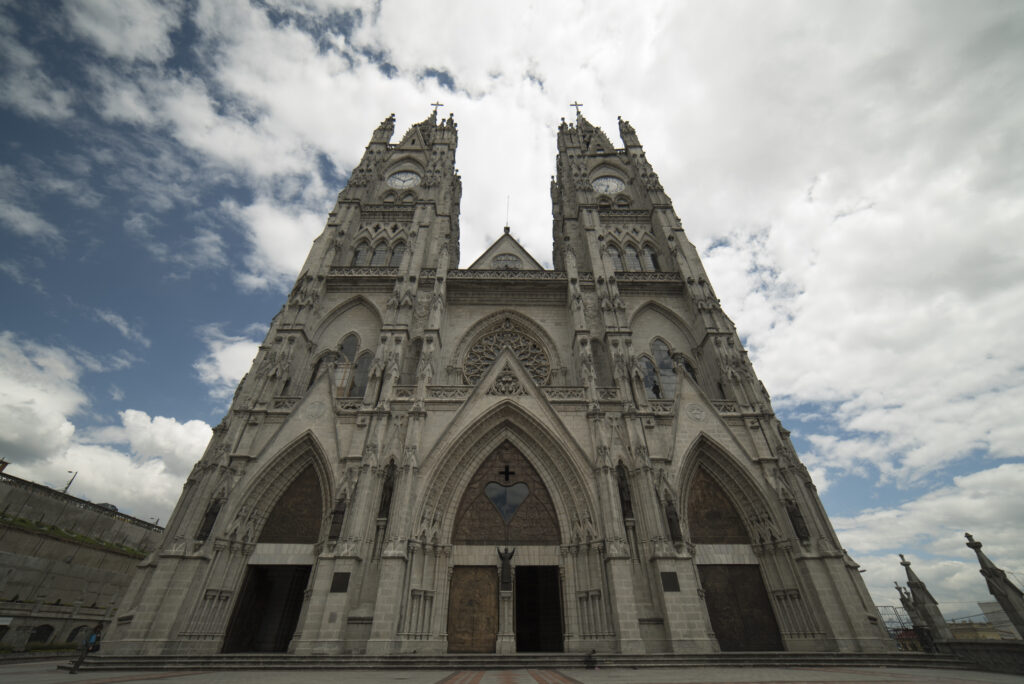
Quito boasts the largest and best-preserved colonial historic centre in the Americas, but navigating its elevation changes on foot can be exhausting at 2,850 metres altitude. The Quito 360 Bike Tour provides a seamless, panoramic overview of Ecuador’s capital by bridging its contrasting districts.
Starting in the contemporary northern sector, you pedal through expansive parks and along dedicated urban cycleways before descending into the narrow cobblestone lanes, grand plazas, and Baroque churches of the UNESCO-listed historic core. The journey finishes on a culinary high with an artisan chocolate-tasting session, exploring the nuanced flavours of single-origin Ecuadorian fine-flavour cacao (Nacional).
Key highlights
- Comprehensive 360-degree circuit connecting Quito’s modern financial district with its 16th-century historic core
- Guided riding through iconic plazas including Plaza de la Independencia and Plaza de San Francisco
- Safe transit using protected bike paths (ciclovías) and quiet, pedestrianised lanes
- Architectural and historical commentary from a licensed local guide
- Premium single-origin Ecuadorian dark chocolate tasting experience
Ideal for
Culture enthusiasts, first-time visitors, urban explorers, and casual cyclists seeking an active, engaging introduction to Quito’s history and flavours.
Local cycling insight
If you can, time your stay in Quito for a Sunday morning. Every Sunday, the municipality closes over 30 kilometres of major avenues to motor vehicles for the Ciclopaseo, allowing thousands of locals to claim the streets on bicycles. When riding on colonial cobblestones, lower your tyre pressure slightly for better traction and a smoother ride.
The Galápagos.
Ecuador’s Enchanted Isles
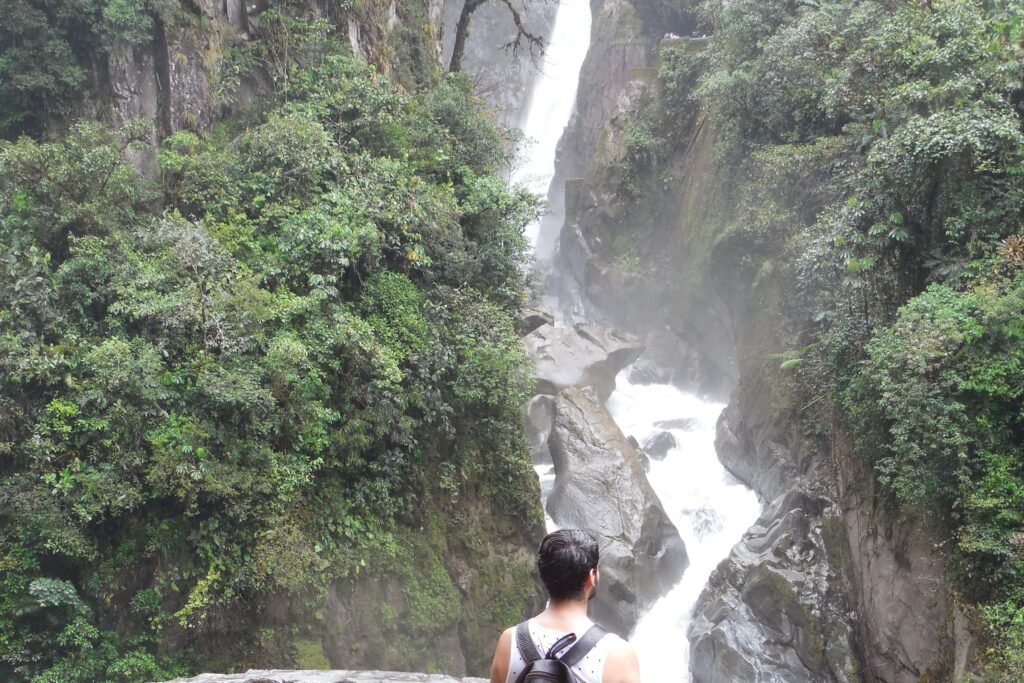
3. Riding the Pastaza Canyon / Baños Route of the Waterfalls
Rating & reviews
(1+verified user review on Viator)
Why this specific tour stands out
The Ruta de las Cascadas connecting the Andean gateway town of Baños de Agua Santa to the edge of the Amazon rainforest is arguably Ecuador’s most famous road ride. This all-inclusive guided day tour follows the Pastaza River canyon downward along a dramatic route carved into a vertical cliffside rock face.
You will ride sturdily equipped mountain bikes past six magnificent cascades, through mountain tunnels, and across suspension bridges. Choosing an all-inclusive option takes the hassle out of logistics: professional traffic navigation through mountain tunnels, included entrance fees, a flight across the gorge on a traditional cable car (tarabita), a traditional local lunch, and support transport for the return leg are all covered.
Key highlights
- Thrilling, mostly downhill 18-kilometre road ride from cloud forest to subtropical jungle
- Panoramic views of roaring falls including Agoyán, Manto de la Novia, and San Pedro
- Soaring across the Pastaza Canyon in a high-wire cable car (tarabita)
- Short hike through rainforest trails to stand beneath the thunderous Pailón del Diablo (Devil’s Cauldron)
- All-inclusive logistics with equipment, safety escort, local lunch, and return transport back to Baños
Ideal for
Active families, nature photography lovers, and recreational riders seeking a visually stunning ride with minimal uphill strain.
Local cycling insight
The road between Baños and Pailón del Diablo is shared with local buses and transport trucks. While cyclists have dedicated side bypasses around several long tunnels, a couple of shorter tunnels require good rear lights and clear group positioning. Ensure your bike is fitted with strong disc brakes, as spray from moisture and tropical waterfalls can make rim brakes slippery.
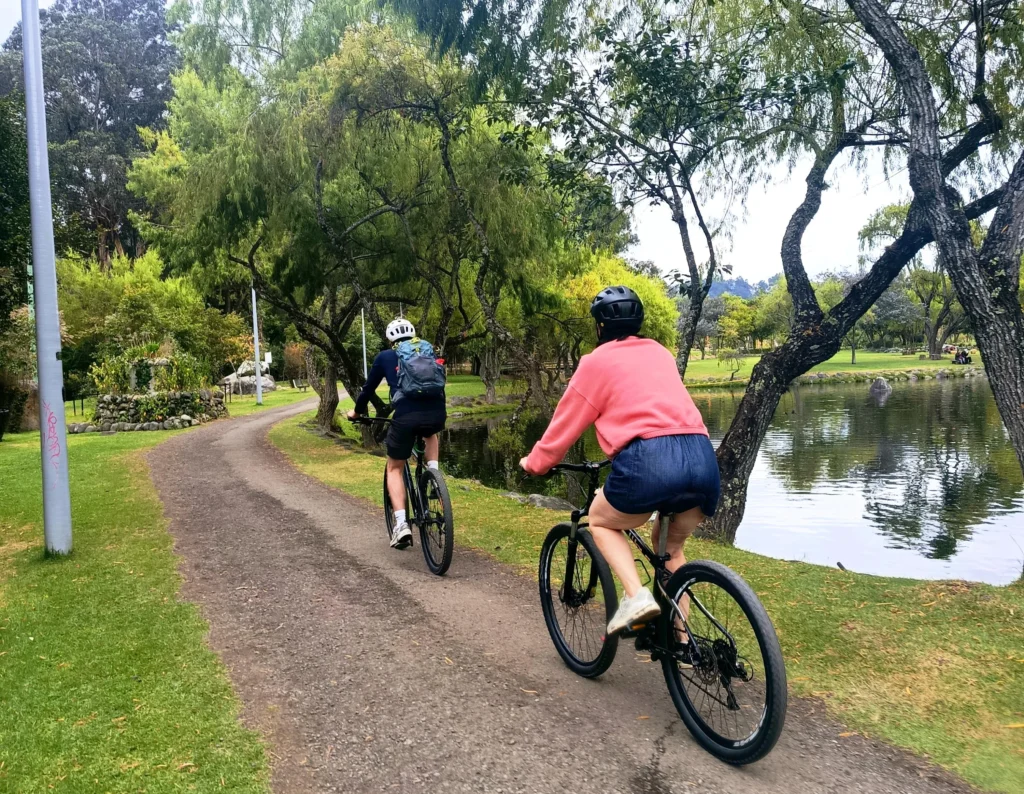
4. Riverside wandering in the southern Andes / Cuenca city & rivers e-bike trip
Rating & reviews
(3+ verified user reviews on GetYourGuide)
Why this specific tour stands out
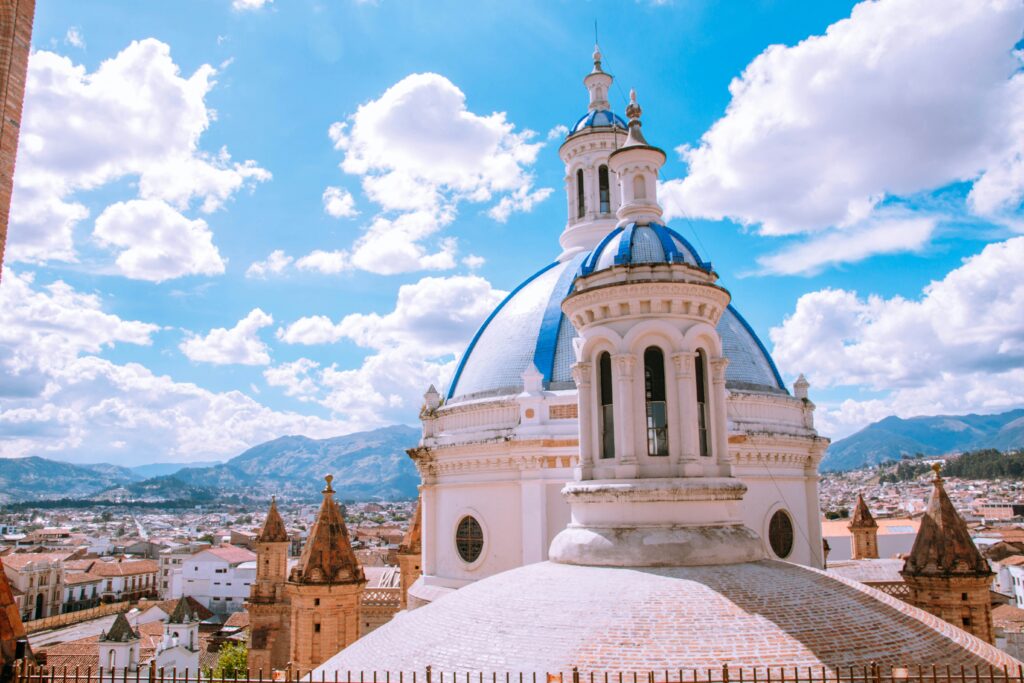
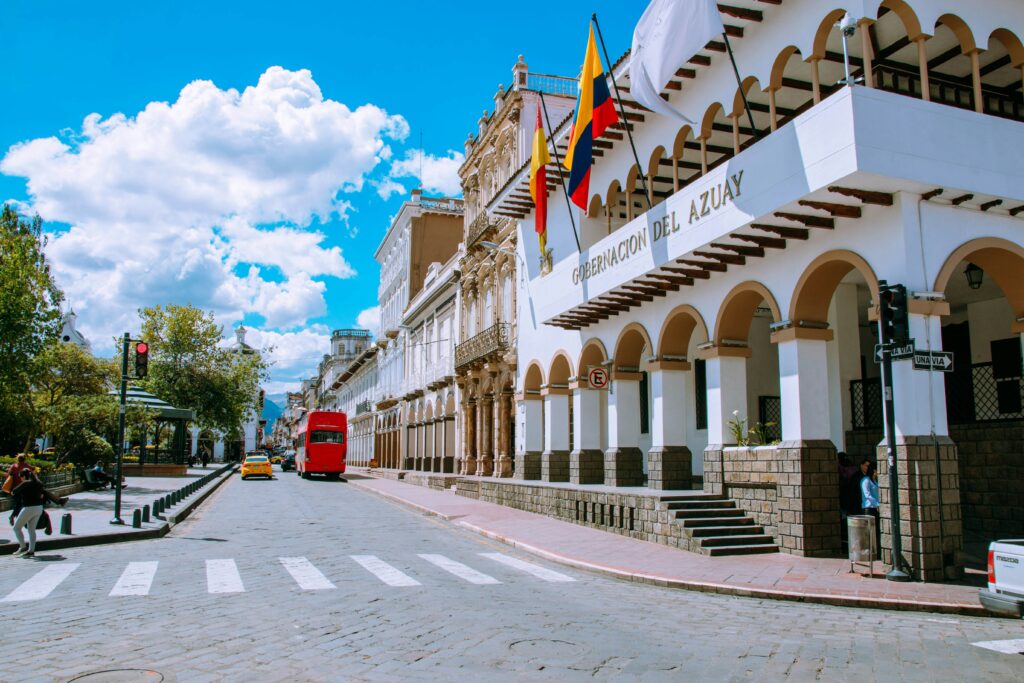
Cuenca, Ecuador’s cultural jewel in the southern Andes, is defined by its four rushing rivers and red-tiled colonial architecture. Riding an e-bike here is pure joy. This small-group urban route utilizes smooth, modern pedal-assist electric bikes to breeze along the greenways hugging the Tomebamba and Yanuncay rivers.
You will effortlessly traverse elevation changes between the upper historic quarter and the lower riverbanks (El Barranco), visiting hidden botanical gardens, ancient Cañari and Incan sites, and quiet craft workshops without overexerting yourself in the thin mountain air.
Key highlights
- Effortless riding along the picturesque linear parks of the Tomebamba and Yanuncay rivers
- Stops at iconic landmarks such as the Broken Bridge (Puente Roto) and El Barranco cliffs
- Guided walk through the lush Cuenca Botanical Garden (Jardín Botánico)
- Architectural commentary on colonial mansions, wrought-iron balconies, and modern public art
- Stop at an artisan workshop to learn the true origin of the famous Panamá hat (which is entirely Ecuadorian)
Ideal for
Leisure travellers, mature cyclists, heritage enthusiasts, and anyone wanting to cover Cuenca’s expansive river corridors comfortably.
Local cycling insight
Cuenca has invested heavily in separated cycle paths (ciclovías) and low-speed river corridors. Drivers in Cuenca are generally more accustomed to bicycles than in other Andean cities, but pedestrians frequently wander into riverbank bike tracks. Keep your bell handy and maintain a respectful, gentle pace through park zones.
The Ecuadorian Amazon.
The most biodiverse place in the world
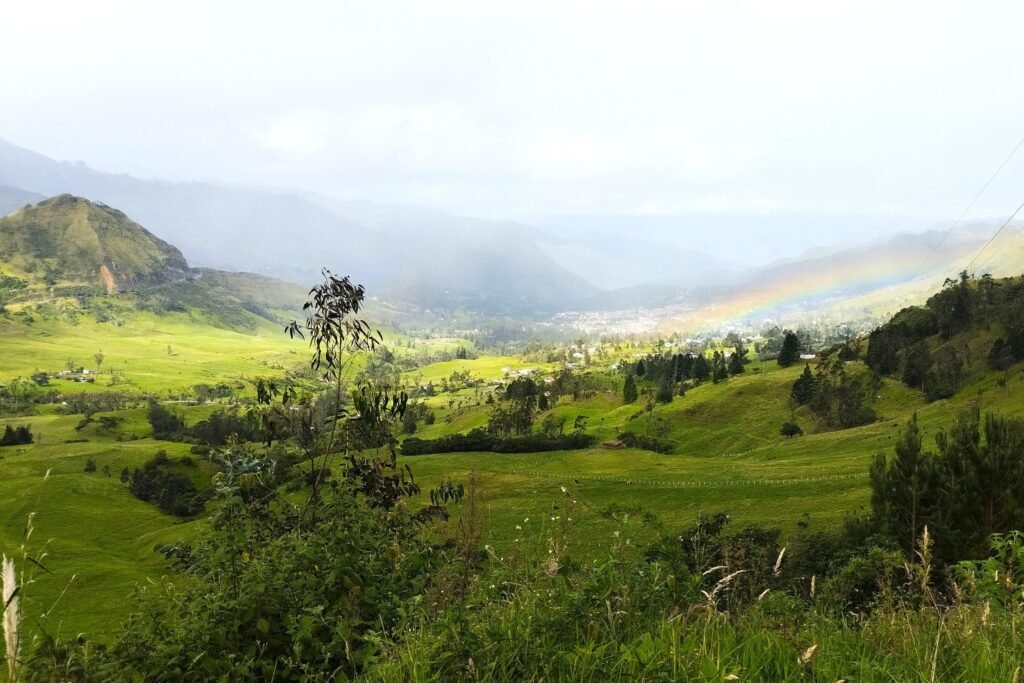
5. High-Andean downhill epic / Descent of the Andes to Yunguilla Valley
Rating & reviews
(6+ verified user reviews on Viator)
Why this specific tour stands out
For cyclists seeking a full day of wide-open mountain landscapes without intense uphill grinding, this 40-kilometre downhill journey is an absolute masterpiece. Starting in the chilly high-altitude ridges outside Cuenca at 2,760 metres elevation, riders embark on El Camino Viejo (The Old Road).
Over four hours of continuous, gentle downhill riding, the route descends through native cloud forests, traditional livestock farms, and rural indigenous settlements before ending in the warm, sugarcane-filled Yunguilla Valley. The transition in ecosystems, temperature, and scenery over a single ride is breathtaking. A private support vehicle follows the entire route, carrying extra water, gear, and tired riders whenever needed.
Key highlights
- A staggering 40-kilometre pure downhill mountain bike ride along quiet rural backroads
- Dramatic transition from cool Andean highland air to warm, tropical valley microclimates
- Unfiltered views of deep southern Andean valleys and traditional agrarian lifestyle
- Fresh tropical fruit and cane juice tastings at local valley farms
- Full vehicle escort and private return transport back up to Cuenca
Ideal for
Intermediate riders, road and gravel enthusiasts, and adventurous travellers looking for a full-day rural escape from the city.
Local cycling insight
Temperature management is key on this ride. You will start the morning shivering in windproof jackets at nearly 2,800 metres and finish in short sleeves basking in 25°C tropical heat in Yunguilla. Use lightweight, easily stowed layers. Furthermore, long descents place continuous demand on your hands and wrists—remember to drop your shoulders, keep a relaxed grip on the handlebars, and pump your brakes rather than riding them continuously to prevent brake fade.
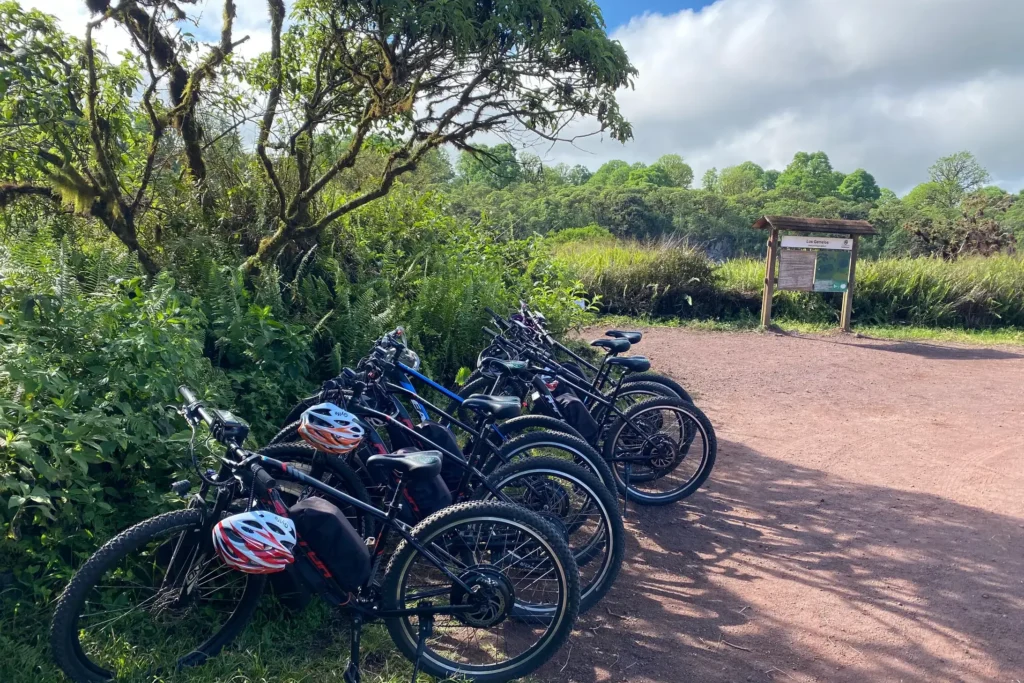
6. Island volcanic trails / Galápagos Santa Cruz e-bike & giant tortoise safari
Rating & reviews
(7+ verified user reviews on GetYourGuide)
Why this specific tour stands out
Most visitors explore the Galápagos Islands via cruise ships or motorized land transfers, missing the subtle beauty of the highland interior. This innovative e-bike excursion on Santa Cruz Island transports you off the tourist trail. Beginning with a short vehicle transfer to the agricultural community of Santa Rosa, you mount fat-tyre pedal-assist electric bikes to navigate quiet gravel tracks, lush Scalesia forests, and volcanic farms.
The route leads directly into the private El Chato reserve, where iconic Galápagos Giant Tortoises roam freely across natural pastures. Riding an e-bike allows you to quietly observe wildlife and cover rolling island terrain without engine noise or pollution.
Key highlights
- Quiet, eco-friendly e-bike ride through the lush highland agricultural zone of Santa Cruz
- Up-close encounters with wild Giant Tortoises in their natural habitat at El Chato Ranch
- Guided subterranean walking tour through massive natural volcanic lava tunnels
- Visits to local artisan coffee and sugar-cane workshops
- Eco-conscious travel footprint in a fragile national park ecosystem
Ideal for
Wildlife lovers, active eco-tourists, and island travellers looking for a unique, low-impact day excursion.
Local cycling insight
Galápagos National Park rules are strict and strictly enforced. You must maintain a minimum distance of two metres from all wildlife, including giant tortoises crossing farm tracks. Highland trails on Santa Cruz can get muddy quickly during garúa (misty rain) season—make sure your guide provides bikes fitted with fenders, and wear footwear you don’t mind getting dusty or muddy.
The Ecuadorian Coast.
Where you’ll find the very best food
Our guide to cycling & ride planning in Ecuador
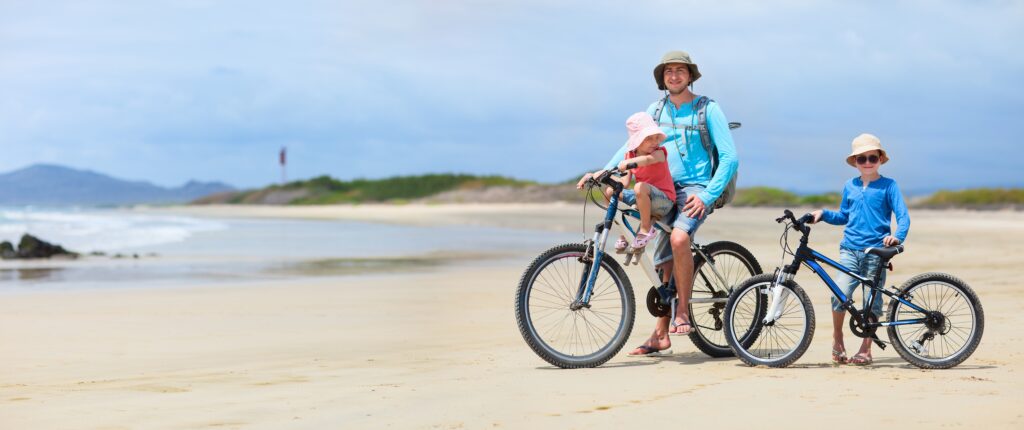
Planning a cycling trip across Ecuador requires a bit of extra preparation due to extreme topography, high altitudes, and variable weather. Here are our non-negotiable local tips for a smooth, safe ride:
1. High-altitude adaptation & pacing
Much of Ecuador’s best cycling takes place above 2,500 metres, with volcano tours reaching over 4,500 metres. Altitude thins the air significantly, reducing your aerobic output. Give yourself at least 48 hours in Quito or Cuenca to acclimatise before embarking on demanding rides. Drink twice as much water as usual, limit alcohol intake, and don’t hesitate to take advantage of e-bike pedal assist or support vehicles when offered.
2. Mastering the Andean microclimate layer
Equatorial weather is dictated by elevation rather than seasons. You can experience scorching equatorial sun, freezing mountain winds, and torrential cloud forest rain all within a single four-hour ride. Always pack using a three-layer system: a breathable base layer, an insulating mid-layer (fleece), and a quality packable windproof/waterproof outer shell. High-SPF sunscreen and UV-blocking sunglasses are non-negotiable—the sun at 3,000 metres on the equator will burn unprotected skin in under 15 minutes.
3. Shared road dynamics & local traffic etiquette
While urban cycling infrastructure is improving rapidly in cities like Quito and Cuenca, rural highways (interprovinciales) require vigilance. Heavy vehicles and intercity buses (flotas) often pass close. When riding on open roads, always ride single file, wear high-visibility gear, use daytime running lights, and follow your tour guide’s lane positioning instructions.
4. Mechanical vs e-bike / Choosing the right setup
- E-Bikes: Essential for city tours with steep climbs (like Cuenca or Quito) or for riders who want to enjoy high-altitude scenery without cardiovascular strain
- Mountain Bikes (Standard): Ideal for technical downhill descents (Cotopaxi, Baños) where bike weight matters and gravity does 90% of the work. Ensure your rental bike has functioning front suspension and hydraulic disc brakes
5. Local respect & environmental footprint
Always stick to designated trails, especially in fragile alpine páramo ecosystems and national parks like Cotopaxi and Galápagos. Never leave trash behind, buy snacks from local indigenous vendors along your route, and tip your bike mechanics and guides generously—they work hard behind the scenes to keep equipment safe in harsh Andean environments.
Why Ecuador belongs on your cycling radar
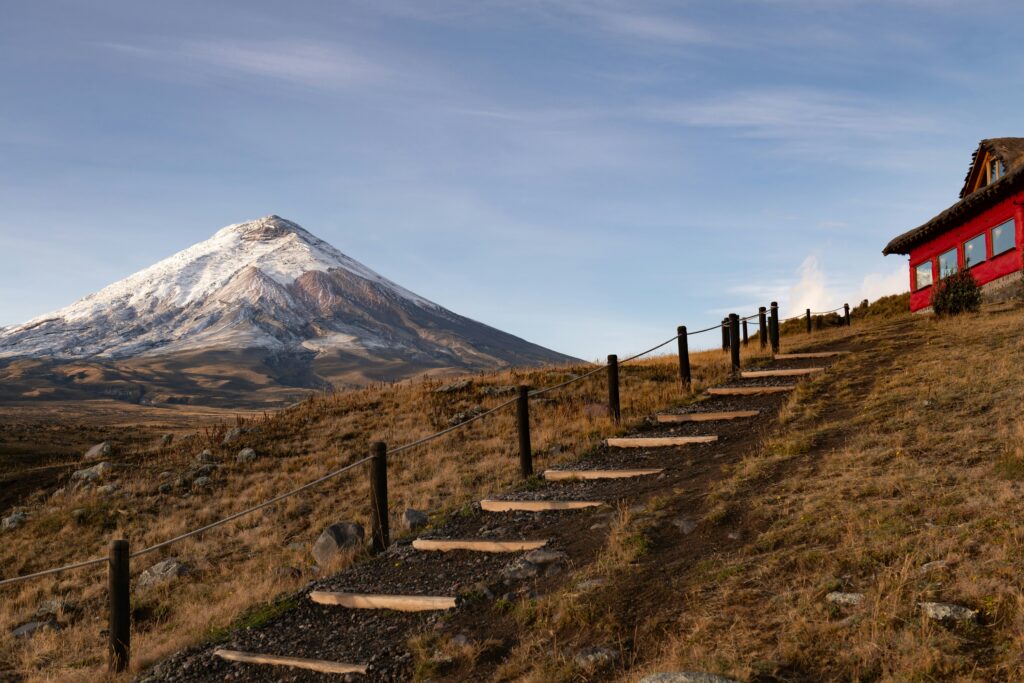
There is a quiet magic to crossing a country under your own power. When you swap the insular comfort of a tour bus for the tactile reality of two wheels, Ecuador opens up in ways that standard itineraries simply cannot match. You feel the sudden drop in temperature as cloud forest mist rolls off the mountains, smell the sweet aroma of boiling sugarcane in the southern valleys, and hear the crunch of volcanic ash beneath your tyres long before you see the next peak appear through the clouds.
Cycling here forces you to slow down and engage with the landscape on its own terms. Whether you are navigating the historic cobbles of Quito on a Sunday morning during the Ciclopaseo or coasting downhill along the Pastaza River canyon, travelling by bike invites genuine human interaction. A wave from a roadside fruit seller, a shared smile with a local rider at an Andean pass, or a quiet pause beside a high-altitude lagoon are the moments that define independent travel.
Ecuador’s geography is admittedly fierce, but modern pedal-assist e-bikes, well-maintained support vehicles, and expertly guided routes have made these epic landscapes accessible to any adventurous traveller. You do not need to be an elite endurance athlete to experience the exhilaration of descending an active volcano or pedalling alongside giant tortoises in the Galápagos—you simply need a sense of curiosity and a willingness to see the world at human speed.
So, pack your windbreaker, adjust your helmet, and set your sights on the equator. The roads are waiting, the views are endless, and there is no better way to experience the beating heart of the Andes than from behind a set of handlebars.
Affiliate Disclaimer: Some of the links on Wheely Tyred are affiliate links. If you click through and make a booking or purchase, we may earn a small commission at no extra cost to you. We only recommend gear, tours, stays, and services we genuinely use, trust, and stand behind — our editorial independence always comes first. These commissions help keep our independent cycling guides and travel stories free to read. Thanks for supporting the ride!
Frequently asked questions about the best bike tours in Ecuador
Not at all. While Ecuador features dramatic terrain, the recommended guided tours cater to a wide range of skill levels. Routes like the Cotopaxi descent and the all-inclusive Ruta de las Cascadas in Baños are primarily downhill on wide gravel tracks or paved roads, supported by trailing vehicles for anyone who needs a break. Urban rides in Quito and Cuenca utilise flat cycle paths, quiet backstreets, and modern e-bikes to make pedalling simple for casual cyclists.
Altitude is the single biggest factor when cycling in the Ecuadorian Andes. Quito sits at 2,850 metres, and mountain tours can reach over 4,500 metres. We strongly recommend spending at least 48 hours acclimatising in a high-altitude city before participating in strenuous rides. Drink plenty of water, eat light meals, limit alcohol intake, and let your guide set a comfortable, steady pace.
Ecuador’s equatorial weather changes quickly according to elevation. Pack using a flexible layering system: a moisture-wicking base layer, a warm fleece or mid-layer, and a packable windproof and waterproof outer jacket. Full-finger gloves are essential for cold, high-altitude descents like Cotopaxi. Don’t forget high-SPF sunscreen, UV-blocking sunglasses, and sturdy closed-toe shoes or light trail trainers. Helmets and bikes are provided by all official tour operators.
Yes, provided you stick to designated routes and follow local guidance. Cities like Cuenca and Quito have made significant investments in separated cycle lanes (ciclovías) and linear river parks. Joining a guided experience like the Quito 360 tour ensures you navigate safe, vetted corridors away from heavy traffic. If you are in Quito on a Sunday morning, the city closes over 30 kilometres of main thoroughfares to motor vehicles for the weekly Ciclopaseo, creating a fantastic, safe environment for urban cycling.
On point-to-point downhill rides—such as the Cotopaxi volcano tour, the Baños waterfall route, or the descent to the Yunguilla Valley—a dedicated support van follows the group at a safe distance. The vehicle carries your day packs, extra water, toolkits, and spare parts. If you feel tired, affected by the altitude, or simply want to rest, you can hop into the van at any scheduled stop and ride comfortably for as long as you like.
Yes, e-bikes are an ideal, low-impact way to explore the inhabited islands like Santa Cruz. Guided e-bike routes follow established agricultural tracks and paved roads through the highlands, allowing you to cover rolling terrain quietly without disturbing local wildlife. Always maintain a respectful distance of at least two metres from native species, including giant tortoises crossing the trails.
Ecuador.
Pure wonder on the equator.