The colours of Imbabura / An independent guide to Plaza de Ponchos in Otavalo
Plaza de Ponchos, Otavalo / The ultimate guide to Ecuador’s historic indigenous market
Discovering the art of slow travel in the heart of Otavalo
BEN FINCH
There is a distinct moment when a destination reveals its true rhythm, and it rarely happens from the window of a crowded tour bus. In the northern highlands of Ecuador, nestled under the watchful gaze of the Imbabura Volcano, that rhythm is dictated by the click-clack of traditional wooden looms and the quiet murmur of market negotiations. Welcome to Otavalo, home to the world-renowned Plaza de Ponchos, a spectacular open-air marketplace that serves as the beating heart of Andean craftsmanship.
For the independent traveller, this vibrant square is far more than a place to pick up traditional souvenirs. It is a gateway to a centuries-old living culture, a masterclass in indigenous artistry, and an invitation to slow down. Wheely Tyred believes that travel should be dictated by your own curiosity, not a tour leader waving an umbrella or a rigid schedule forcing you back onto a transport coach. By exploring Otavalo on your own terms, you unlock the freedom to look beyond the brightly coloured stalls, connect genuinely with local artisans, and understand the profound heritage woven into every thread.
Threads of tradition in Otavalo
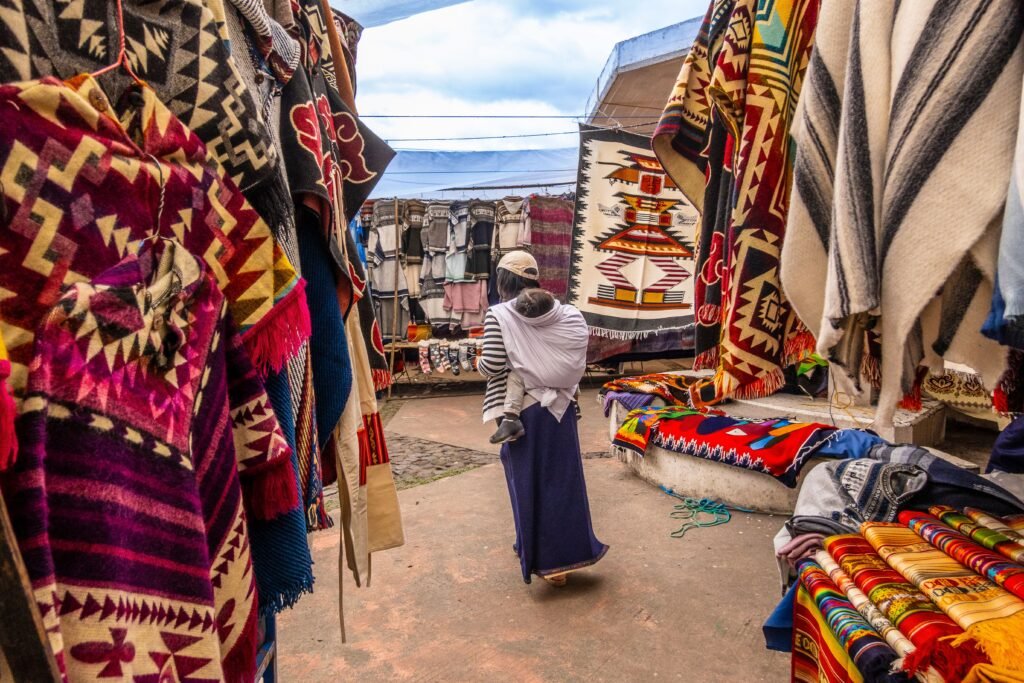
Navigating South America’s grandest artisan market requires a blend of cultural appreciation and tactical timing. Here is what you need to know to experience the true essence of the plaza at your own pace.
- Ancestral Artistry: Kichwa weaving traditions date back to pre-colonial eras, seamlessly evolving through history to preserve an enduring cultural identity and economic autonomy
- The Timing Spectrum: Saturday offers a grand, sprawling spectacle across the entire town, while quieter weekdays provide the breathing room needed for genuine interactions with local makers
- Spotting Genuine Craft: True alpaca items carry a signature weight and cool texture, standing in stark contrast to lighter, statically charged synthetic alternatives
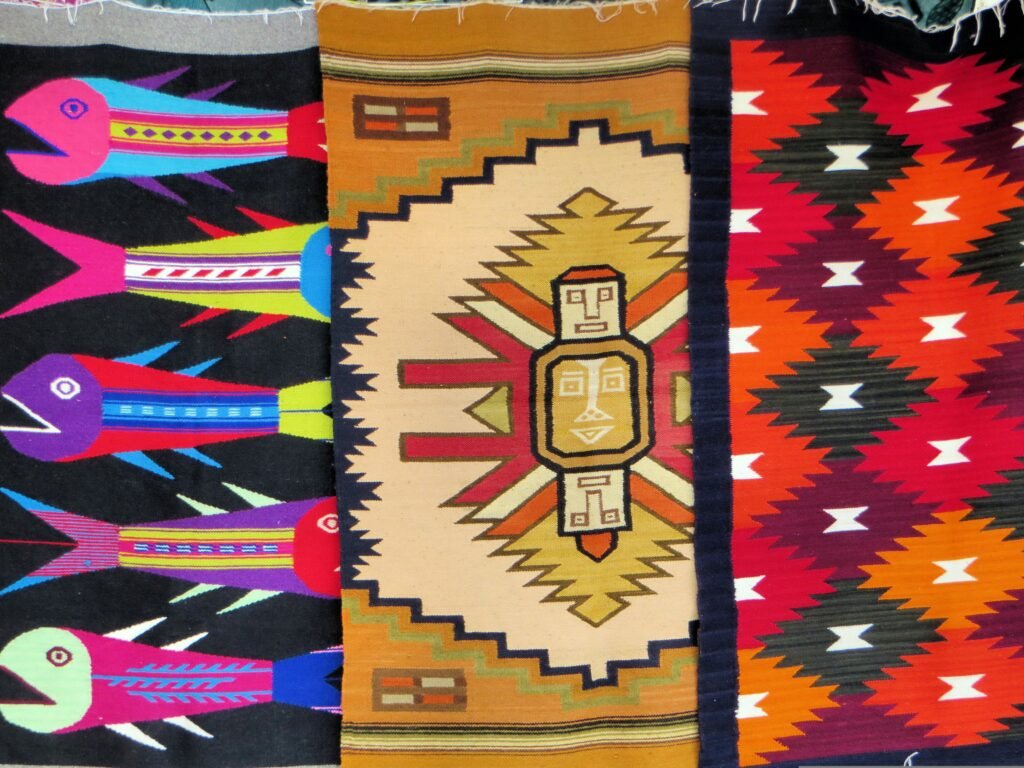
- Masterful Weaves: Double-faced textiles feature an intricate, highly technical weave where the geometric pattern appears in inverted colours on the reverse side
- Respectful Barter: Negotiation is a deep-seated local custom best approached with a light-hearted manner, genuine mutual respect, and small denominations of US currency
- Cultural Pride: Traditional clothing—from hand-embroidered blouses to classic woven fajas—is a proud aspect of daily contemporary life, not a staged performance for tourists
- Beyond the Stalls: Exceptional slow travel experiences lie just outside the square, including the sacred waters of Peguche Waterfall and traditional weaving workshops in Agato and Ilumán
Otavalo.
Home to Plaza de Ponchos
The deep history of Kichwa weaving
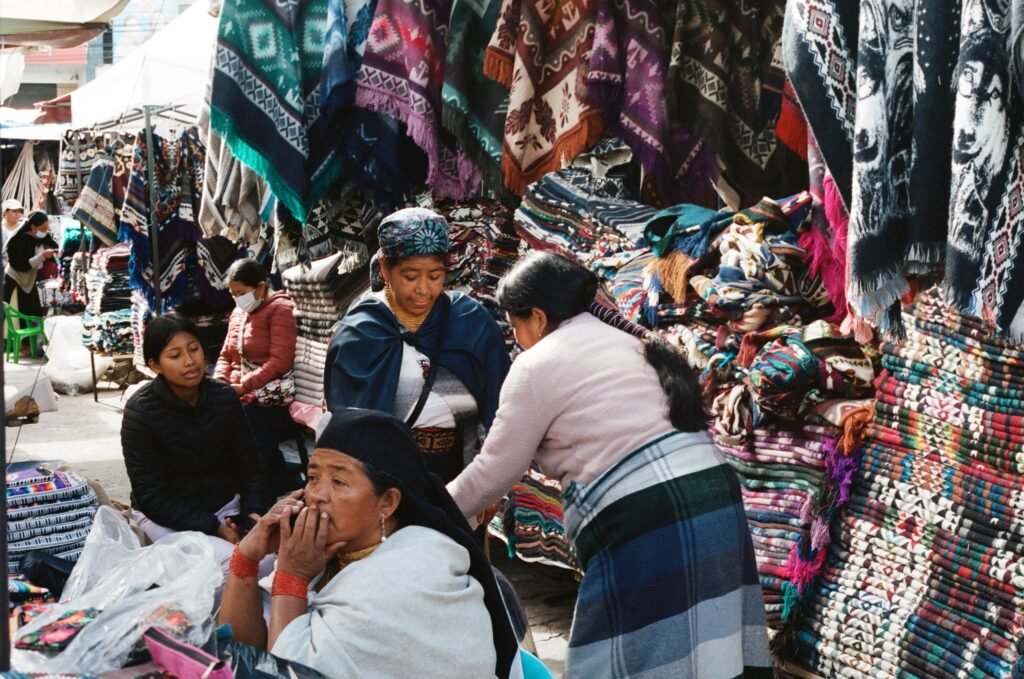
To truly appreciate Plaza de Ponchos, also known historically as the Centennial Market, one must understand that the textiles on display represent a historical lineage stretching back long before the arrival of the Spanish or the Incas. The indigenous Kichwa people of the Otavalo region, known as Otavaleños, have been celebrated weavers for millennia. Historically, they used backstrap looms to create clothing and tapestries from native cotton and camelid fibres, utilising natural dyes extracted from local plants, insects, and mineral deposits.
When Spanish colonisers arrived, they recognised the incredible skill of the local weavers and established large textile workshops, known as obrajes, introducing European foot-treadle looms and sheep’s wool to the region. Rather than allowing their traditional identity to be erased, the Otavaleños adapted these foreign tools to perfect their craft. Today, this blend of ancient pre-colonial symbolism and evolved technique has made the community one of the most successful and economically autonomous indigenous groups in the Americas.
When you stand in the centre of Plaza de Ponchos, you are witnessing a living museum. The intricate geometric patterns, the depictions of native flora and fauna, and the deep, rich hues of the fabrics are direct links to an ancestral past that has resiliently survived centuries of profound social change.
Choosing your tempo / Saturday splendour versus weekday calm
One of the most critical decisions for an autonomous traveller visiting Otavalo is timing. The market operates every single day of the year, but its scale and atmosphere shift dramatically depending on when you choose to wander through.
Saturday is the undisputed peak day. Early in the morning, the market expands far beyond the physical boundaries of Plaza de Ponchos, spilling out into the surrounding cobblestone streets and transforming the entire town into a colossal, bustling bazaar. The energy is electric, filled with thousands of vendors from rural mountain communities, local food stalls, and traditional musicians. For those who thrive on sensory overload and want to see the marketplace in its most expansive, magnificent form, Saturday is unmissable. However, it also brings large crowds of holidaymakers and tour groups arriving from Quito.
If you prefer a quieter, more contemplative experience where you can actually converse with the weavers without the pressure of a crowded aisle, plan your visit for a weekday. Wednesday serves as the second-largest market day, offering an excellent balance of variety and breathing room. Exploring the plaza on a Tuesday or Thursday morning allows you to watch the merchants set up their stalls with a sense of calm alignment. You can take your time inspecting the density of a weave, asking questions about the origins of a pattern, and watching local life unfold at a civilised pace.
The Ecuadorian Sierra.
Get lost in the hills
The art of the authentic find / What to look for
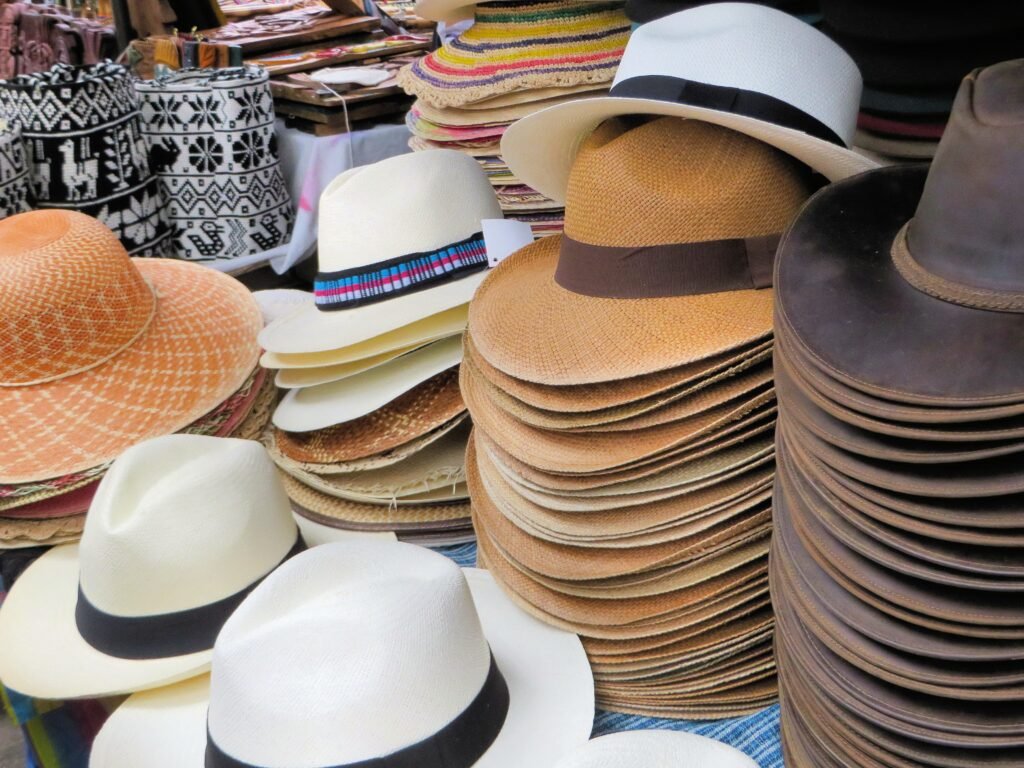
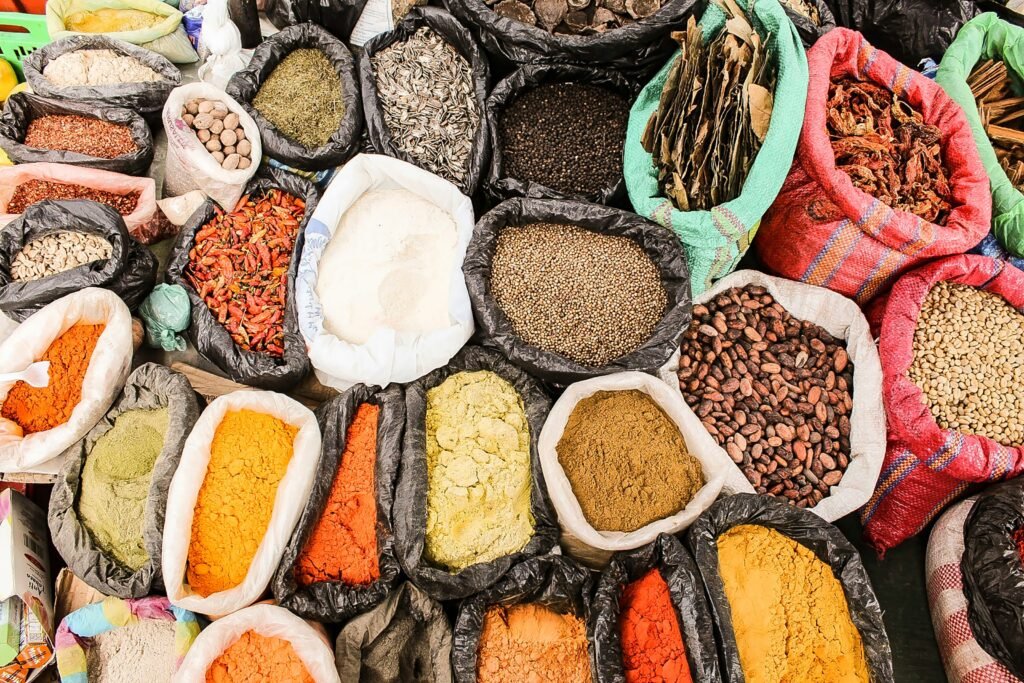
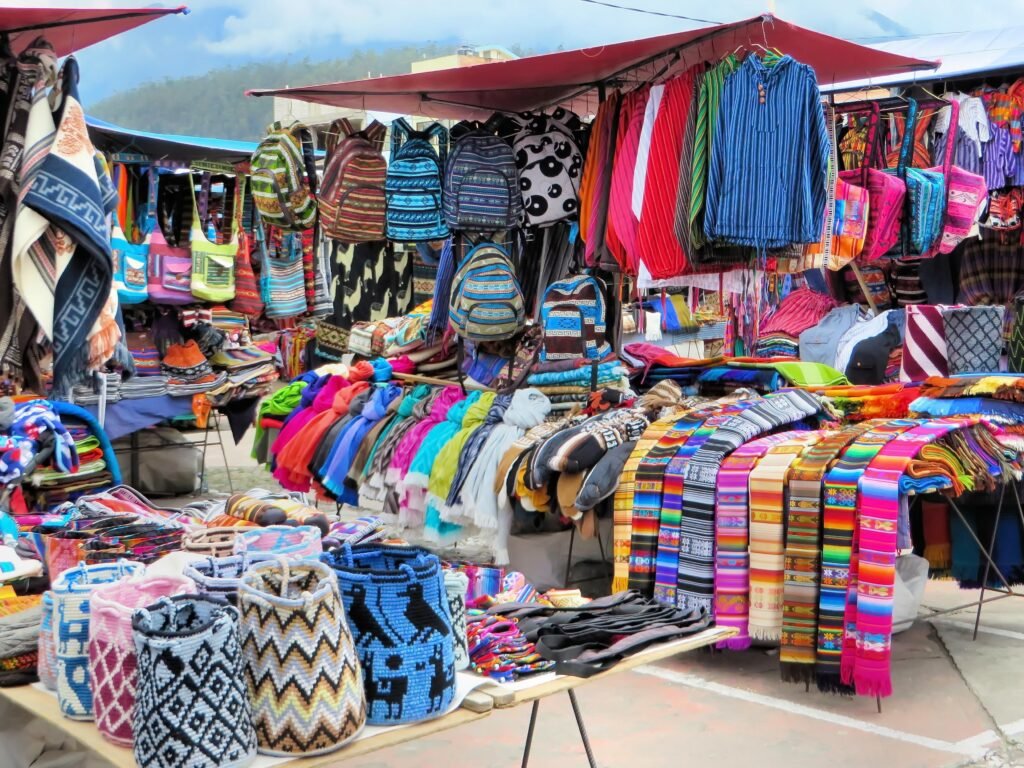
The sheer volume of items at Plaza de Ponchos can be dizzying. Stalls are piled high with thick blankets, intricate wall hangings, embroidered garments, silver jewellery, hand-painted ceramics, and traditional musical instruments. Because the market has evolved to cater to global tourism, mass-produced factory items occasionally sit alongside genuine, hand-crafted masterpieces. Part of the joy of independent travel is developing the discernment to spot true artisan quality.
When browsing the iconic alpaca wool sweaters and scarves, take a moment to feel the weight and texture of the material. Genuine alpaca fibre is distinctively heavy, cool to the touch initially, and incredibly soft. If an item feels overly light, fuzzy, or statically charged, it is likely a synthetic acrylic blend.
Keep an eye out for double-faced textiles, a legendary speciality of the Otavalo region. These extraordinary blankets and tapestries feature a complex weave where the pattern appears in inverted colours on the reverse side. Inspect the stitching density on the back of wall hangings; a tighter, tighter knotting pattern indicates weeks or even months of painstaking manual work on a traditional loom, rather than a rapid machine-woven production run.
You will also find rows of beautiful, wide-brimmed hats designed to protect against the intense equatorial sun. While commonly associated with other nations, these traditional toquilla straw hats actually originate right here in Ecuador. Look for vendors who can explain the tight weave patterns and demonstrate how a high-quality hat can be rolled up for travel without losing its shape.
Navigating negotiations with respect
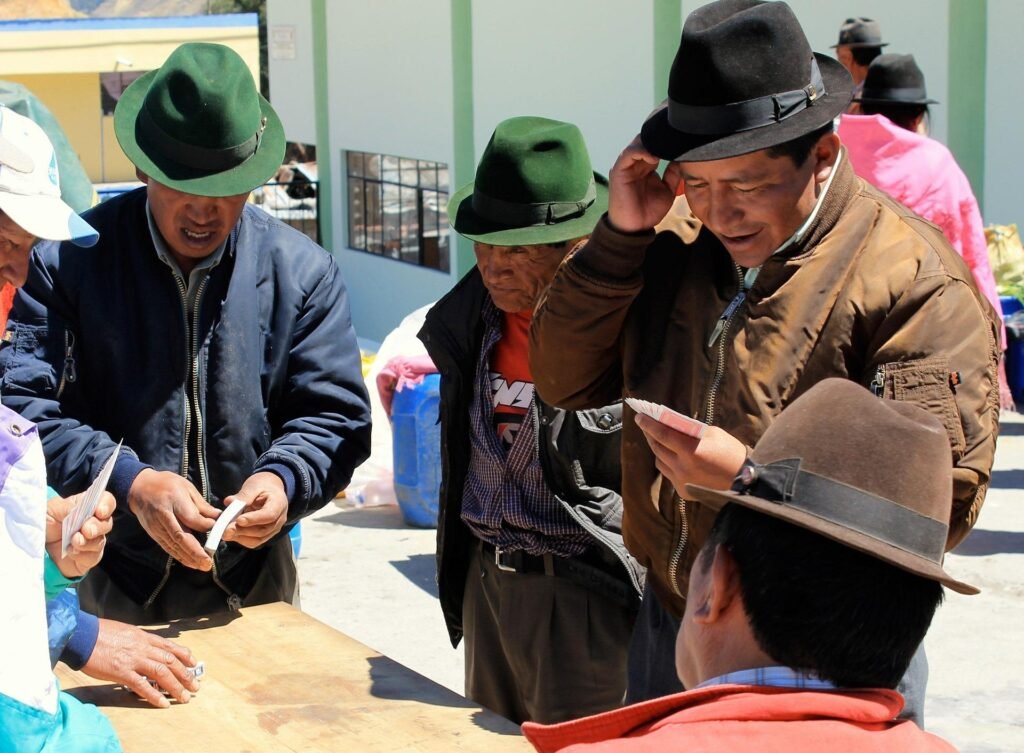
Haggle with courtesy is the golden rule of Plaza de Ponchos. In Otavalo, negotiation is a deeply ingrained cultural practice and a standard part of doing business, but it should always be approached as a respectful conversation rather than an aggressive battle.
As an independent traveller with the luxury of time, avoid the temptation to buy from the very first stall you encounter. Walk the entire perimeter of the plaza first to get a baseline understanding of pricing, quality, and the diversity of options. When you find a piece that truly resonates with you, greet the vendor warmly in Spanish or use the Kichwa word for friend, Mashi.
When discussing the price, understand that a few dollars may mean very little to your holiday budget but represent a meaningful return for a family that has spent weeks crafting a single textile. Offer a fair counter-proposal, keep the interaction light-hearted, and always remember that a smile and mutual respect are the finest currencies you can bring to the square. It is highly recommended to carry small denominations of United States dollars, which is the official currency of Ecuador, as local merchants often find it difficult to change larger bills.
The Ecuadorian Amazon.
The most biodiverse place in the world
The highland wardrobe / A symbol of pride
While exploring the plaza, take time to observe the striking traditional clothing worn with immense pride by the Otavaleños. Unlike many parts of the world where ancestral dress is reserved only for special festivals, here it is a part of everyday contemporary life.
Otavaleño women wear beautiful, pristine white blouses featuring intricate, hand-embroidered floral patterns across the chest and flared lace sleeves. This is paired with long, dark over-skirts made of heavy wool, secured tightly at the waist with beautifully woven multi-coloured belts known as fajas. Their hair is typically wrapped in a fine fabric band and complemented by rows of golden glass-bead necklaces, which symbolise prosperity and cultural heritage. The men are equally distinctive, often wearing dark blue or grey wool ponchos, white calf-length trousers, and keeping their hair in a single, long traditional braid called a guimba.
By travelling independently, you have the space to admire this living expression of identity without rushing through for a superficial photograph. It reminds us that Plaza de Ponchos is not a performance for tourists; it is a profound manifestation of community endurance and dignity.
Highland flavours / A slow food exploration
No immersive journey to Otavalo is complete without exploring the culinary traditions that fuel the marketplace. Tucked along the edges of the square and inside the nearby local food markets, an array of authentic Andean dishes awaits the culinary adventurer.
Look for stalls serving hornado, a magnificent local delicacy consisting of tender, slow-roasted whole pork cooked in traditional wood-fired ovens. It is typically served alongside llapingachos, which are pan-seared potato cakes stuffed with cheese, accompanied by a generous helping of mote, a large-grained boiled hominy corn. The contrast of textures and rich savoury flavours provides the perfect sustenance for a long day of exploration.
If you have a sweeter palate, seek out street vendors selling quimbolitos. These traditional highland treats are made from a delicate batter of corn flour, eggs, and raisins, carefully wrapped in the broad green leaves of the achira plant and gently steamed. They are light, fragrant, and pair beautifully with a cup of locally grown highland coffee. For a truly seasonal experience, sample a glass of Chicha del Yamor, a deeply historical fermented beverage crafted from seven distinct varieties of corn, traditionally prepared during the vibrant harvest festivals of September.
The Galápagos.
Ecuador’s Enchanted Isles
Extending the journey beyond the plaza
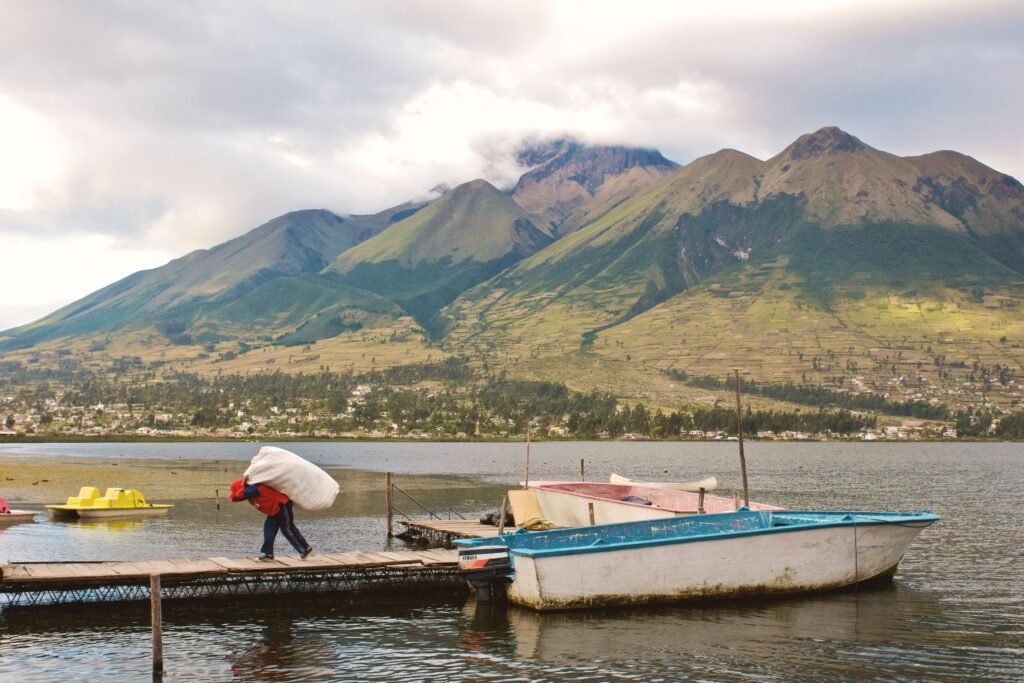
When you travel autonomously, the borders of an attraction naturally expand. Once you have fully absorbed the energy of Plaza de Ponchos, use your freedom to explore the magnificent landscape and artisan villages that surround the town of Otavalo.
A short journey from the town centre leads to the sacred Peguche Waterfall, a beautiful site nestled within a fragrant eucalyptus forest. This waterfall holds immense spiritual significance for the Kichwa people, serving as a site for ritual purification baths during the annual Inti Raymi solstice celebrations. The gentle walking paths leading to the falls offer a tranquil escape from the vibrant energy of the market.
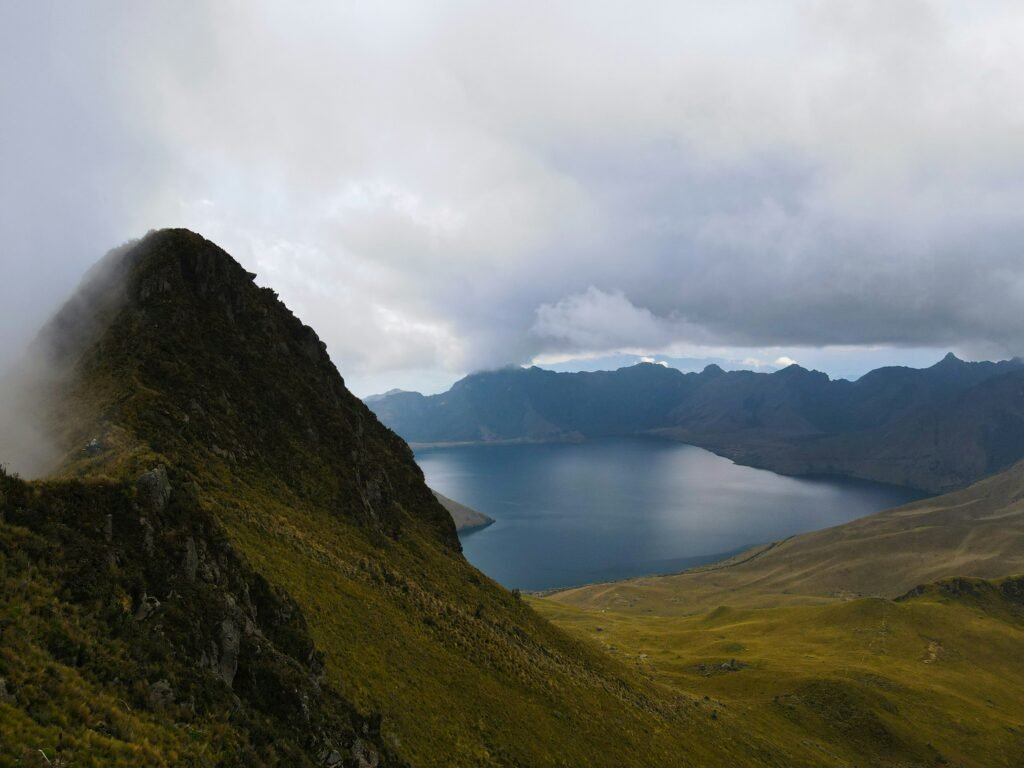
To see exactly where the magic happens, consider wandering to the rural weaving workshops of Agato and Ilumán. Here, away from the commercial stalls, you can witness master craftsmen operating large wooden pedal looms and explaining the natural dye processes from scratch. Additionally, the breathtaking crater lake of Laguna de Cuicocha, situated within the Cotacachi Cayapas Ecological Reserve, offers incredible hiking opportunities along its volcanic rim, providing sweeping vistas of the Imbabura province.
By refusing to be confined to a standard tourist itinerary, you transform a simple shopping trip into an expansive, deeply enriching Andean odyssey. Plaza de Ponchos is the perfect starting point, but the true magic lies in having the independence to follow wherever the road leads.
Affiliate Disclaimer: Some of the links on Wheely Tyred are affiliate links. If you click through and make a booking or purchase, we may earn a small commission at no extra cost to you. We only recommend gear, tours, stays, and services we genuinely use, trust, and stand behind — our editorial independence always comes first. These commissions help keep our independent cycling guides and travel stories free to read. Thanks for supporting the ride!
The Ecuadorian Coast.
Where you’ll find the very best food
Frequently asked questions about Plaza de Ponchos
While Saturday is the main market day when the stalls spill out into the surrounding streets, weekdays offer a much calmer environment. Tuesday and Thursday mornings are particularly peaceful, while Wednesday serves as the second-largest market day, providing an excellent balance of variety and breathing room.
Ecuador uses the United States dollar as its official currency. When visiting the market, it is essential to carry small denominations, as local merchants often find it difficult to provide change for larger bank notes.
Genuine alpaca fibre is distinctively heavy, exceptionally soft, and feels slightly cool to the touch initially. If a garment feels overly light, fuzzy, or generates static electricity, it is likely a mass-produced acrylic or synthetic blend.
You should look for hornado, a local delicacy of slow-roasted whole pork served alongside llapingachos (cheese-stuffed potato cakes) and mote (boiled hominy corn). For something sweet, try quimbolitos, which are fragrant steamed corn-flour cakes wrapped in the green leaves of the achira plant.
The attire is a powerful, everyday expression of cultural endurance and dignity. Women wear white blouses with hand-embroidered floral patterns and dark wool over-skirts secured by multi-coloured woven belts (fajas). Men are equally distinctive in their dark wool ponchos and long, traditional hair braids (guimbas).
Yes, the region is ideal for extended exploration. You can walk through a fragrant eucalyptus forest to the sacred Peguche Waterfall, visit ancestral weaving workshops in the villages of Agato and Ilumán, or hike along the volcanic rim of the breathtaking crater lake, Laguna de Cuicocha.
Ecuador.
Pure wonder on the equator.