The thread of time / A guide to the rich history of Otavalo
Discover the deep history of Otavalo, its world-famous indigenous textile market, and the best high-altitude gravel cycling routes in Ecuador
Where Andean winds whisper ancestral stories and every climb leads to a living past
BEN FINCH
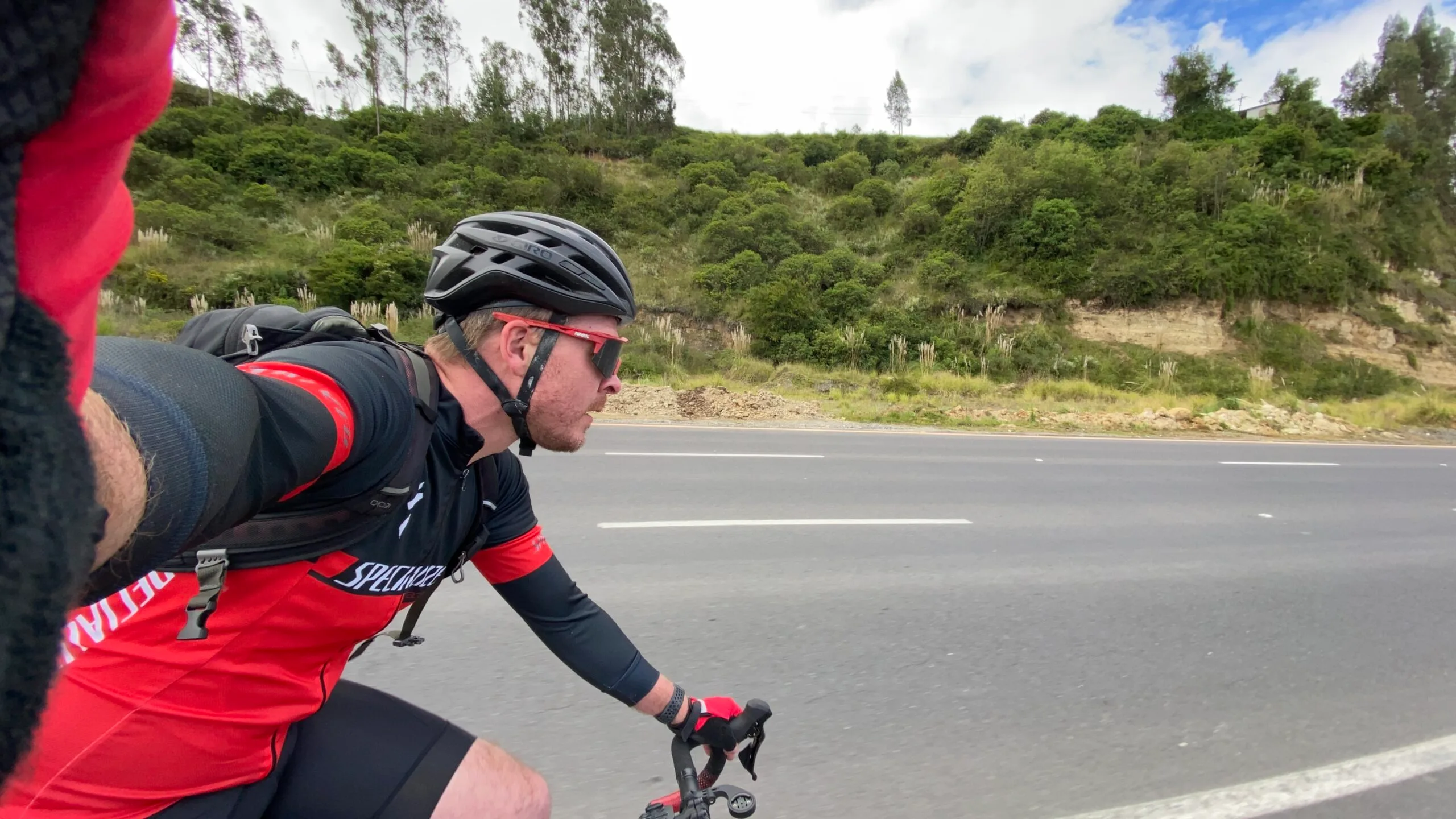
High in the northern Ecuadorian Andes, nestled in a fertile valley at an elevation of 2,573 metres, Otavalo is much more than a convenient stopover on the Pan-American Highway. Guarded by the towering, dormant stratovolcano Taita Imbabura and the jagged peaks of Mama Cotacachi, this high-altitude basin has served as a cultural and commercial crossroads for millennia. For the independent traveller, and particularly the self-supported cyclist, arriving here feels like crossing an invisible boundary into a landscape where the past is not merely remembered; it is actively woven into the fabric of daily life.
At Wheely Tyred, we believe that the best way to understand a place is to slow down, feel the gradient of the earth beneath your tyres, and learn the stories of the people who shaped the land. To pedal through the cobblestone streets of Otavalo is to follow the ancient footsteps of pre-Inca merchants, Spanish-era weavers, and a resilient indigenous population that has successfully navigated centuries of foreign imposition to become one of the most successful self-determined communities in the Americas.
High-altitude heritage and the rhythm of the loom
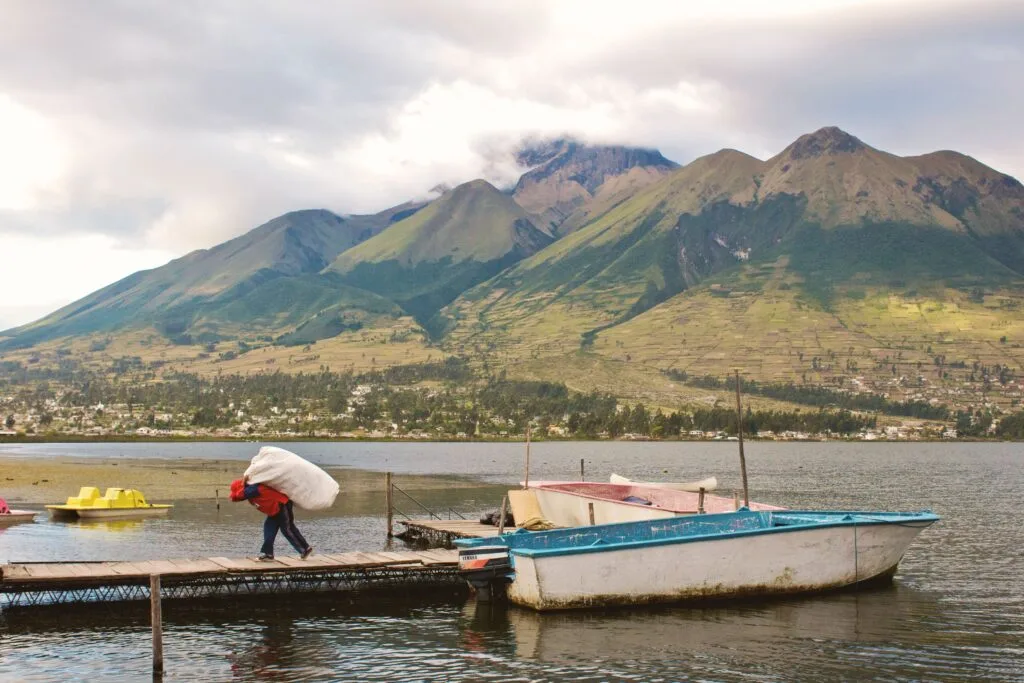
Otavalo is a place where history is felt in the vibration of the cobblestones under your tyres and seen in the vibrant threads of the marketplace. For the slow traveller, this Andean basin offers a profound look at indigenous resilience, ancient trade networks, and dramatic volcanic landscapes.
- The mindalaes legacy: Discover how elite pre-Inca merchants established Otavalo as a thriving commercial hub long before the arrival of Spanish conquistadors
- Taita Imbabura and Mama Cotacachi: Journey in the shadow of these sacred, towering volcanic peaks that guard the fertile valley and shape local mythology
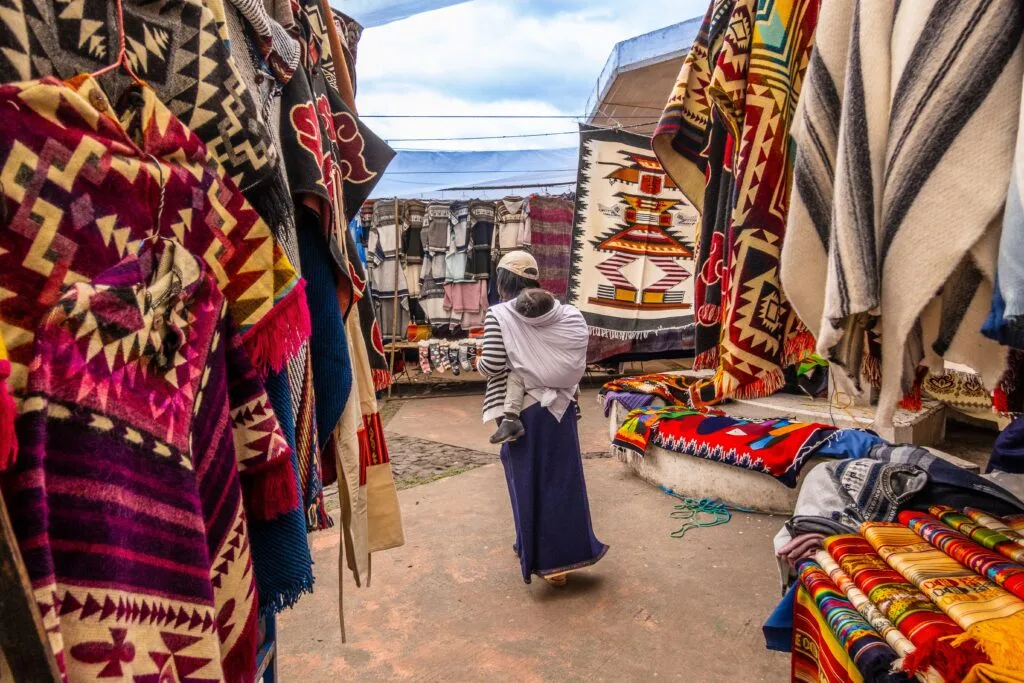
- Plaza de los Ponchos: Explore South America’s largest open-air indigenous market, a sensory kaleidoscope where ancestral weaving techniques remain vibrant and active today
- The tragedy of Yahuarcocha: Learn about the fierce northern resistance to the Inca empire, culminating in the historic battle at the Lake of Blood
- Cobbled mountain passes: Tackle the demanding basalt adoquín roads that connect remote Kichwa communities and lead up to the windswept páramo
- Weaving villages of the basin: Slow down in artisanal hamlets like Agato and Peguche to witness the transition from traditional backstrap looms to colonial-era treadle looms
Otavalo.
Home to Plaza de Ponchos
Pre-Inca foundations and the elite merchants
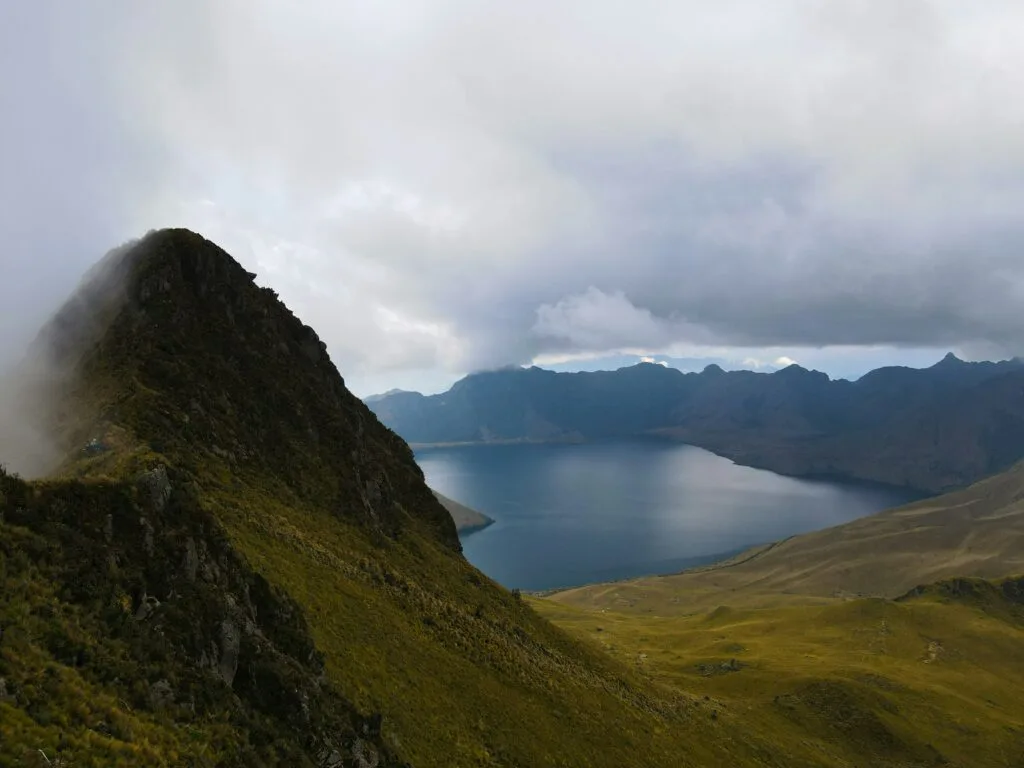
Before the first Inca warrior ever gazed upon the northern volcanic corridor, the valleys of modern-day Imbabura and Pichincha provinces were home to the Caranqui and Cayambi chiefdoms. Far from being isolated mountain dwellers, these pre-Inca societies developed highly sophisticated agricultural systems. They engineered stepped terraces to prevent erosion on steep slopes and constructed massive earth mounds, known locally as tolas, which served as ceremonial platforms and elite burial sites.
What truly set the ancestors of the modern Otavaleños apart, however, was their mastery of regional commerce. Long before European contact, this region was famed for its skilled weavers who utilised the pre-Hispanic backstrap loom, spinning cotton and local plant fibres to create elaborate blankets and clothing.
Trade was facilitated by a specialised class of elite merchants known as mindalaes. Operating independently of the local chiefs, these nomadic traders travelled vast distances across the Andean cordilleras and down into the coastal valleys. They bartered high-value luxury goods—including sacred Spondylus shells, coca leaves, salt, and finely woven textiles—weaving a vast economic network that positioned Otavalo as a vital trade hub centuries before the Spanish arrived.
The Inca storm and the blood of Yahuarcocha
The relative autonomy of the northern chiefdoms was shattered in the late 15th century by the rapid northward expansion of the Inca Empire. Led by the emperor Huayna Capac, the Inca armies sought to integrate these rich agricultural valleys and expert weavers into their expanding territory, known as Tawantinsuyu.
However, the Caranqui and Cayambi did not submit easily. They mounted a fierce, decades-long resistance, utilising fortified stone positions along the mountain ridges. The climax of this bloody conflict took place just north of Otavalo at a lake that would forever bear the scars of the war: Yahuarcocha, which translates to Lake of Blood in the Kichwa language. According to historical accounts, when the Inca forces finally broke the northern resistance, thousands of Caranqui warriors were executed, their bodies thrown into the water, turning the lake red.
Despite the brutality of the conquest, the Inca presence in Otavalo was relatively brief, lasting only a few decades before the Spanish invasion. Yet, the Incas left a permanent mark. They introduced the Kichwa language (the northern variant of Quechua), which remains widely spoken today, and integrated the region into their imperial road system, the Qhapaq Ñan. Crucially, the Incas were so impressed by the textile craftsmanship of the local weavers that they exempted them from standard military service, choosing instead to tribute them as official weavers for the imperial nobility.
The Ecuadorian Sierra.
Get lost in the hills
The crucible of Spanish rule / Forced looms and resilience
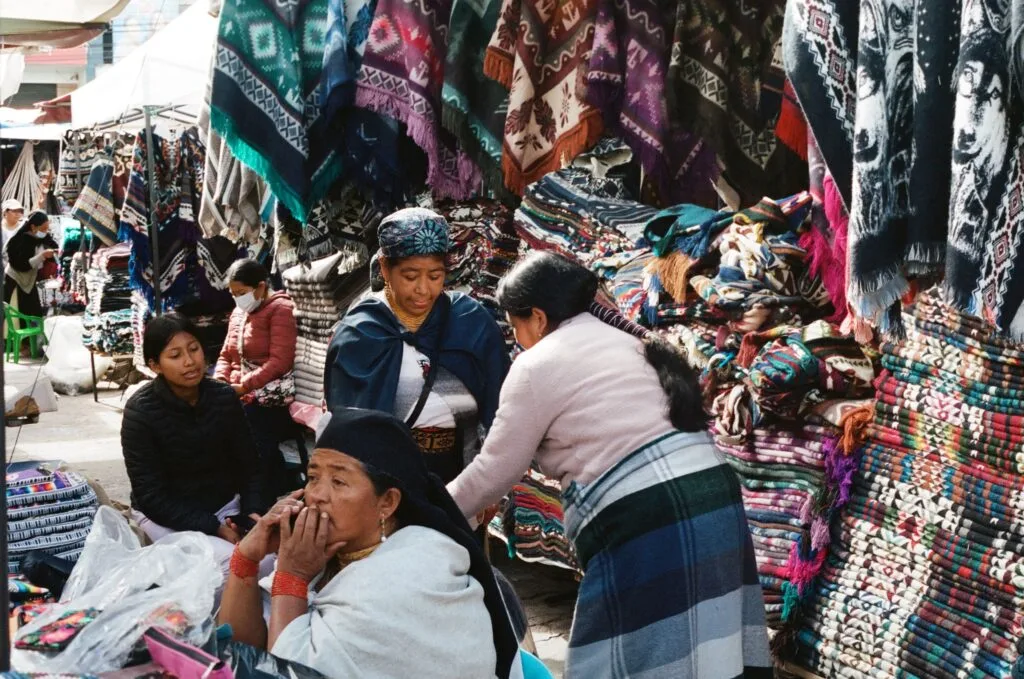
The arrival of the Spanish conquistadors in the 1530s brought a devastating new wave of exploitation. Unlike Peru or Bolivia, northern Ecuador lacked massive deposits of gold and silver. Realising this, the Spanish crown and colonial administrators turned to the region’s other great resource: its dense, highly skilled indigenous population.
Under the encomienda system, Spanish colonists were granted control over large groups of indigenous people. In the mid-1550s, a massive weaving factory known as an obraje was established in Otavalo. These obrajes were essentially forced-labour sweatshops where indigenous men, women, and children were forced to work under incredibly harsh conditions, spinning and weaving wool to supply the growing colonial markets.
The Spanish introduced sheep to the Andes, replacing or supplementing local camelid fibres like llama and alpaca wool with sheep’s wool, alongside introducing the European treadle loom and hand carders.
Over the 18th century, the encomienda system evolved into large, privately owned agricultural estates called haciendas. Indigenous families were tied to these estates through the wasipungu system—a form of debt servitude where families were granted a small plot of land to grow food in exchange for endless, unpaid labour on the hacienda’s fields and in its textile workshops.
Yet, even in the face of this systemic oppression, the Otavaleño people demonstrated extraordinary resilience. They did not lose their identity. Instead, they adapted. They mastered the Spanish-introduced treadle loom, blended European weaving techniques with their ancestral knowledge, and maintained their tight-knit communal structures. When the colonial era ended and Ecuador gained independence in 1822, the weavers of Otavalo were positioned to reclaim their destiny.
The global Runa / The modern renaissance of Otavalo
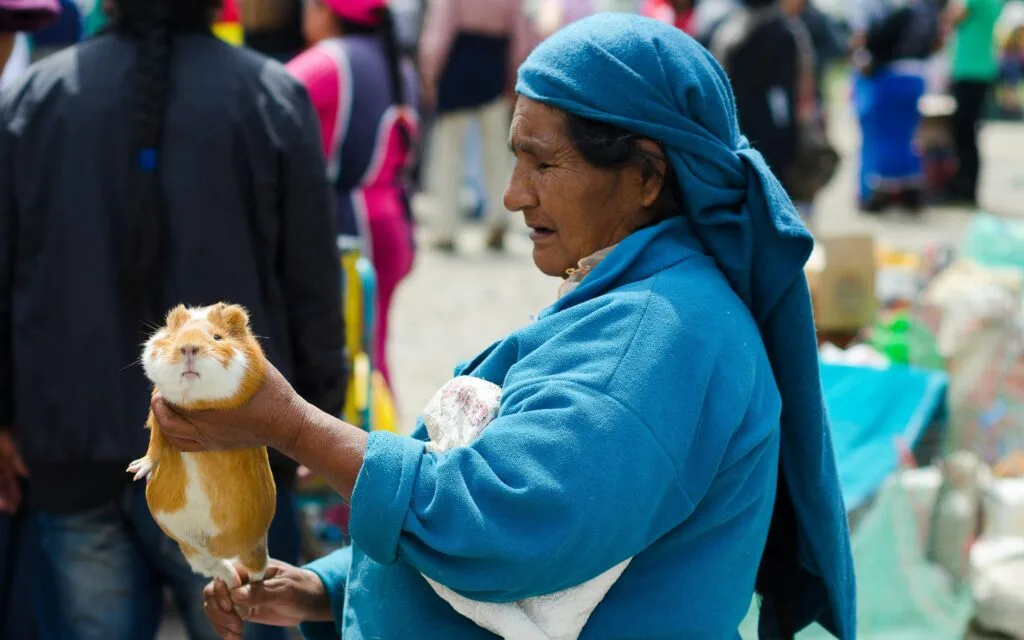
During the 20th century, the wasipungu system was finally dismantled through land reform, allowing the Otavaleños to reclaim ownership of their ancestral lands. This triggered a dramatic cultural and economic renaissance.
The modern Otavaleños, who refer to themselves as Runa (meaning the people in Kichwa), revived their ancient heritage as independent merchants. They transformed the central Plaza de los Ponchos into South America’s largest open-air indigenous market. Today, this vibrant marketplace is a kaleidoscope of colour, where handwoven tapestries, woollen ponchos, intricately embroidered blouses, and silver jewellery are traded daily.
What makes the Otavaleño story unique is that their economic success has not come at the cost of cultural assimilation. Unlike many indigenous groups globally, the Runa have used their commercial prosperity to reinforce and protect their heritage. Men proudly wear their hair in a single long braid (trenza) and dress in dark woollen ponchos, white calf-length trousers, and felt hats. Women wear beautifully hand-embroidered white blouses, dark wrap-around skirts (anacos), and rows of golden glass beads (gualcas) wrapped around their necks.
Today, Otavalo is not just a local market town; it is the epicentre of a global indigenous network. Many Runa families travel the world, from New York to Paris, selling their crafts and playing traditional Andean music, returning to their highland homes to invest in their communities and celebrate ancestral festivals like Inti Raymi (the Sun Festival in June) and Yamor (the harvest festival in September).
The Ecuadorian Amazon.
The most biodiverse place in the world
High-altitude historic cycling routes in Imbabura province
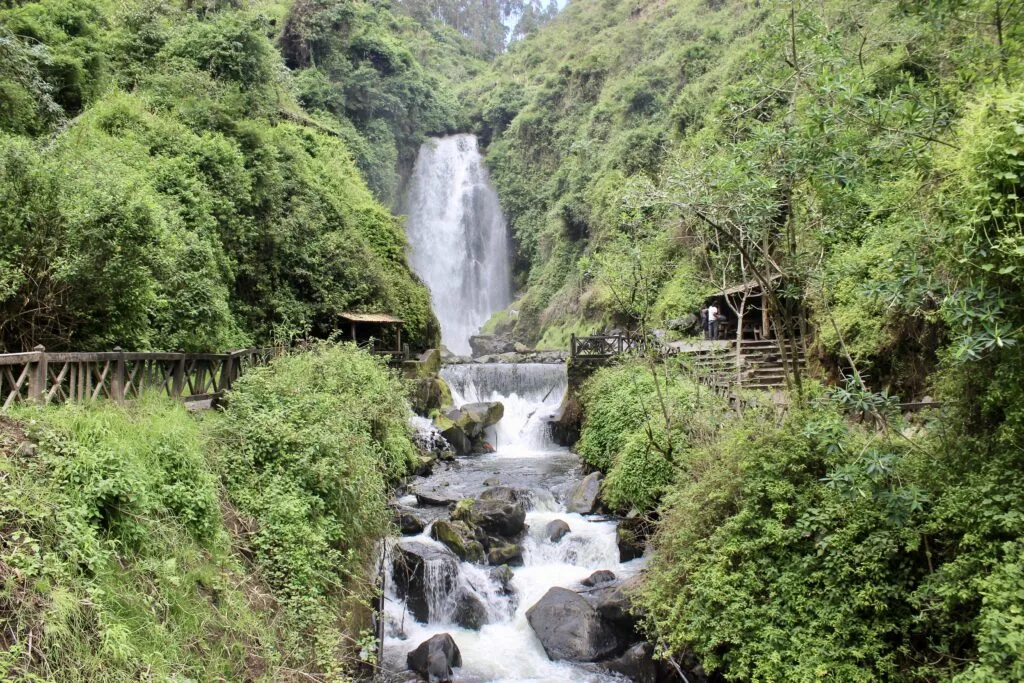
For those exploring on two wheels, the historic geography of the Otavalo region offers some of the most rewarding and physically demanding gravel and mountain biking in South America. The ancient paths carved out by the mindalaes and the cobbled roads laid down during the colonial era now serve as incredible conduits for slow travel.
The table below highlights three exceptional, history-rich cycling routes that allow you to experience Otavalo’s past and present at a human-powered pace.
| Route name | Distance & elevation | Cultural & historical highlight | Terrain & difficulty |
| The Sacred Mojanda Climb | 30 km / +1,150 m | Climbs an ancient, colonial-era cobbled road to the high-altitude volcanic lakes of Mojanda, a sacred pre-Inca ritual site. | Demanding; steep basalt cobblestones transitioning to sandy high-altitude dirt. |
| The Imbabura Foothills Loop | 40 km / +780 m | Winds through traditional Kichwa weaving villages like Agato and Peguche, stopping at ancestral workshops and the sacred Peguche Waterfall. | Moderate; a mix of dirt tracks, country lanes, and smooth gravel. |
| The Zuleta Valley Traverse | 35 km / +650 m | Traverses the historic farming valley of Zuleta, famous for its pre-Inca tolas (burial mounds) and colonial-era haciendas. | Moderate; well-maintained gravel roads with rolling climbs. |
Feeling the cobbles / The physical reality of Andean slow travel
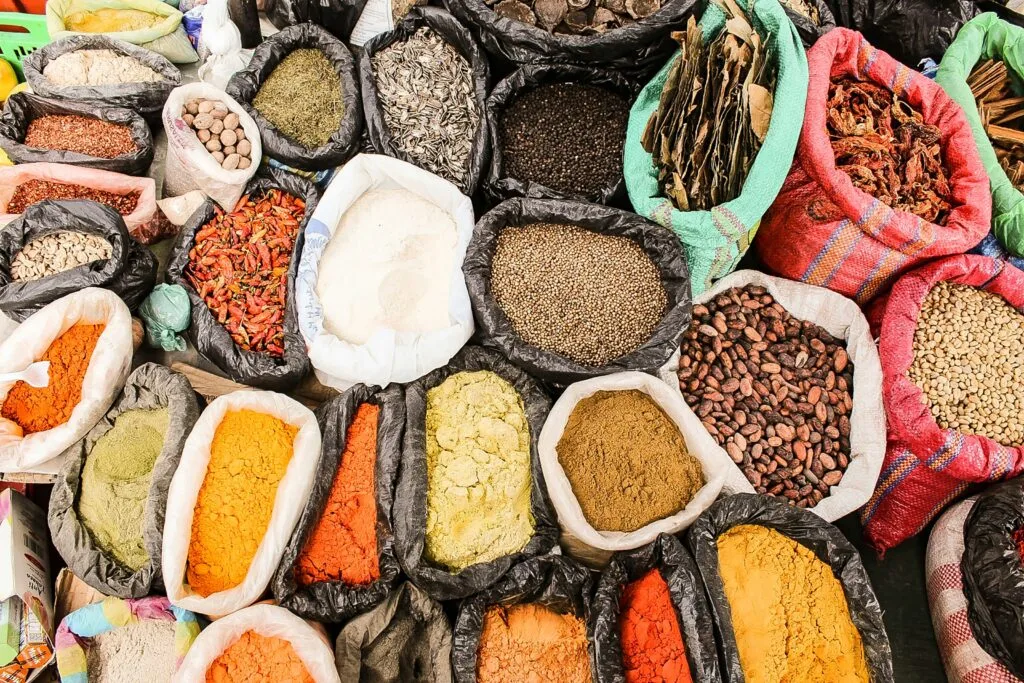
To ride a bicycle in the Imbabura province is to understand history through your muscles and bones. The region’s defining road surface is the adoquín—meticulously laid basalt cobblestones that line the tertiary roads connecting the valley’s indigenous parishes. These cobbles, polished by generations of foot traffic, horse hooves, and now bicycle tyres, demand focus, a sturdy frame, and wider tyres.
As we climb out of the Otavalo basin towards the windswept páramo (high-altitude Andean grasslands), the thin air at 3,500 metres forces a slow, meditative cadence. This is slow travel in its purest form. You cannot rush the Andes. Every pedal stroke is a negotiation with the altitude, mirroring the deliberate, patient work of the weavers down in the valley throwing their shuttles across the loom.
Riding through the small communities of Agato, Ilumán, or Peguche, you are far removed from the sterile tourist experience. You will pass fields of maize, potatoes, and quinoa being tended by families in traditional dress. The scent of eucalyptus woodsmoke fills the air, and children greet you in Kichwa with a warm Alli shamushka (welcome). By choosing to explore Otavalo on two wheels, you align yourself with a centuries-old tradition of independent movement, discovering that the true magic of the Andes lies in the spaces between the famous viewpoints.
The Galápagos.
Ecuador’s Enchanted Isles
The enduring legacy of Otavalo
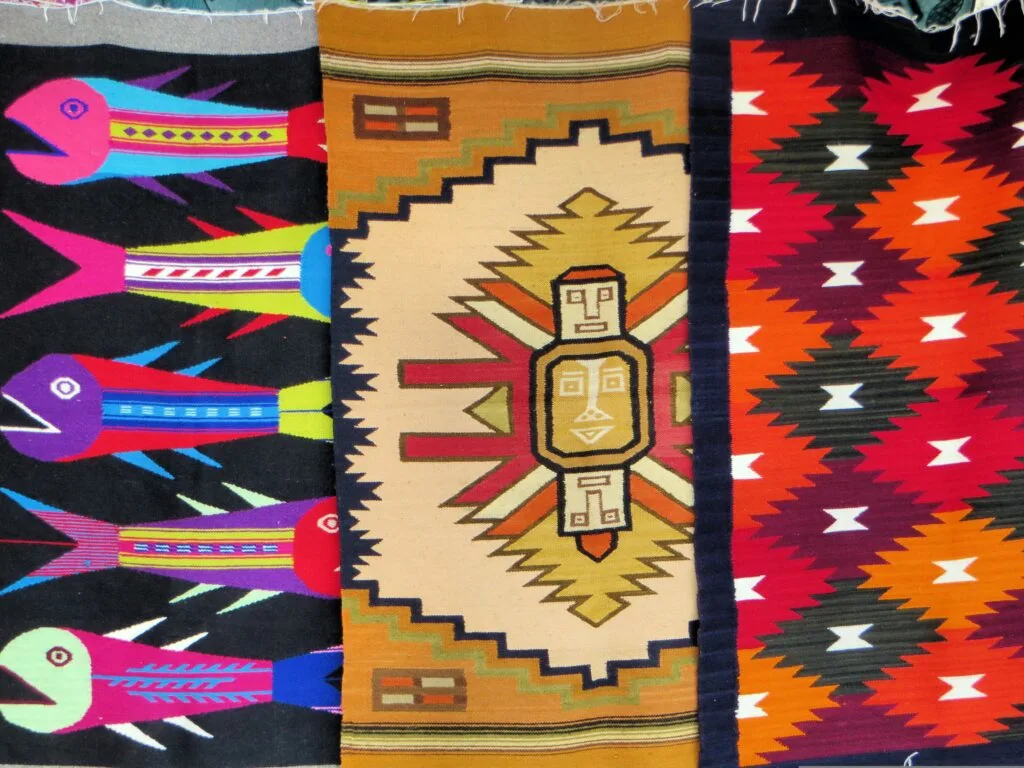
Otavalo is a testament to the power of cultural preservation through economic autonomy. The threads of the past—from the pre-Inca mindalaes trading across the cordilleras to the modern Runa merchant boarding a flight to Europe—have never been broken. They have simply been woven into a larger, more complex pattern.
For the conscious cyclist and slow traveller, visiting Otavalo is not about consuming an exotic culture; it is about witnessing a masterclass in resilience and self-determination. When you eventually pack your panniers and leave this mountain basin, you carry with you more than just a beautifully woven woollen blanket or a set of photographs. You carry a profound appreciation for a people who, despite the storms of empire and globalisation, have held fast to their threads, ensuring that their history remains a living, breathing reality.
Affiliate Disclaimer: Some of the links on Wheely Tyred are affiliate links. If you click through and make a booking or purchase, we may earn a small commission at no extra cost to you. We only recommend gear, tours, stays, and services we genuinely use, trust, and stand behind — our editorial independence always comes first. These commissions help keep our independent cycling guides and travel stories free to read. Thanks for supporting the ride!
The Ecuadorian Coast.
Where you’ll find the very best food
Frequently asked questions about the history of Otavalo
Most travellers arrive via public bus from Quito’s Carcelén terminal, which takes around two hours and drops you at the central terminal in Otavalo. If you are cycling, the route along the old Pan-American highway offers stunning vistas but requires preparation for high-altitude climbing and busy stretches of traffic.
Renting a sturdy gravel bike or walking along the quiet country lanes is highly recommended. Villages like Peguche and Agato are only a few kilometres from the town centre and are easily accessible via dirt tracks and cobblestone roads, allowing you to bypass the busy main highways.
The secondary roads are lined with adoquín, which are traditional basalt cobblestones. They can be incredibly bumpy and slick when wet. Wide, lower-pressure tyres (at least 40 mm if you are on a gravel bike) and a robust frame are essential for keeping your balance and comfort.
The Otavaleño people (Runa) maintain a strong cultural identity. It is polite to ask for permission before taking photos of individuals, particularly in the active market spaces. Learning a few basic Kichwa greetings, such as alli puncha (good day), goes a long way in showing respect and building a warm connection.
Because Otavalo sits at over 2,500 metres, the weather can change rapidly. Mornings are often bright and warm, whilst afternoons can bring sudden rain and a sharp drop in temperature, particularly as you climb towards the páramo grasslands. Layering is key.
Many colonial haciendas, such as those in the Zuleta Valley, have transitioned into working eco-farms, community tourism projects, or boutique lodgings. While some are private, many welcome day visitors to explore their grounds, learn about their history, and view traditional embroidery projects.
Ecuador.
Pure wonder on the equator.