Staying safe in Otavalo / A slow traveller’s guide to Ecuador’s highland heart
Essential safety tips, travel advice, and local insights for visiting Otavalo, Ecuador
How to explore the famous market town with confidence
BEN FINCH
Tucked into a dramatic volcanic valley in northern Ecuador, Otavalo is a place where ancient traditions do not just survive—they thrive. Famous across South America for its spectacular, explosion-of-colour textile market at the Plaza de Ponchos, this highland town is a dream destination for slow travellers, culture seekers, and adventurous cyclists.
However, if you have been watching the news recently, you might feel a lingering sense of hesitation about visiting Ecuador. With the country navigating a complex security landscape, it is completely natural to ask: “Is Otavalo actually safe to visit right now?”
At Wheely Tyred, we believe that travel should be independent, authentic, and above all, safe. To help you plan your journey with total confidence, we have put together this practical, honest guide to staying safe in Otavalo, whether you are exploring the markets on foot or tackling the mountain passes on two wheels.
Highland vigilance
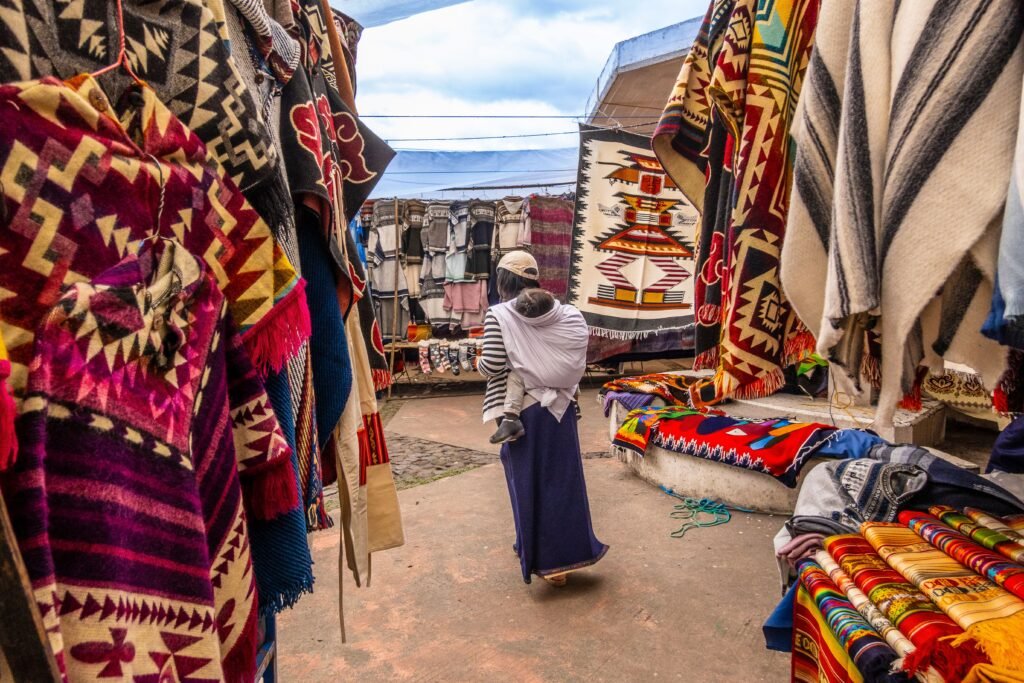
Navigating the bustling markets and dramatic mountain passes of Otavalo is an incredibly rewarding experience for the independent explorer. A little local insight goes a long way in ensuring your highland adventure remains safe, smooth, and memorable.
- Regional safety variance: While parts of coastal Ecuador face complex security challenges, the northern Andean Sierra—including Imbabura province—remains a peaceful corridor with low violent crime rates
- Crowd awareness at Plaza de Ponchos: Keep your wits about you in the famous textile market, where distraction-based petty theft like pickpocketing is the primary concern in crowded areas
- The front-pocket rule: Secure your cash, phone, and cards in your front pockets or in a flat crossbody bag worn across your chest to deter opportunistic thieves
- Community-led protection: Benefit from the protective presence of justicia indígena (indigenous community justice), which acts as a powerful deterrent to crime and maintains a highly respectful environment in Otavalo
- Altitude and climate prep: Respect the 2,532-metre elevation by acclimatising for a couple of days, staying well-hydrated, and packing high-SPF sunscreen alongside warm, waterproof layers
- Defensive cycling strategies: Choose secondary agricultural and cobblestone roads rather than the busy Pan-American Highway to avoid heavy freight traffic, and always ride predictably
- Secure overnight parking: Protect your bicycle and gear by staying at established guesthouses with indoor storage, or seek out local fire stations (bomberos) for safe, welcoming shelter
Otavalo.
Home to Plaza de Ponchos
The Andean divide / Understanding Ecuador’s security landscape

To understand safety in Otavalo, you first have to understand the geography of Ecuador’s current security challenges. It is a country of massive regional contrasts, and painting the entire nation with a single brush does a massive disservice to your travel plans.
In recent years, Ecuador has experienced an increase in violent crime, which has led to nationwide security declarations. However, the vast majority of this serious, gang-related violence is highly concentrated in five coastal provinces. The ports and lowlands of the coast, such as Guayaquil and Esmeraldas, are sadly caught up in transnational drug trafficking routes.
The Andean Highlands—known locally as the Sierra—tell an entirely different story.
Otavalo sits in the northern province of Imbabura, deep within the safe mountain corridor. Here, the homicide and violent crime rates are incredibly low, often sitting well below those of major cities in Europe or North America. The threat of organised crime is virtually non-existent in these valleys. While you must remain alert, you do not need to let the national headlines deter you from visiting this highland paradise.
Market day magic / Navigating Plaza de Ponchos safely
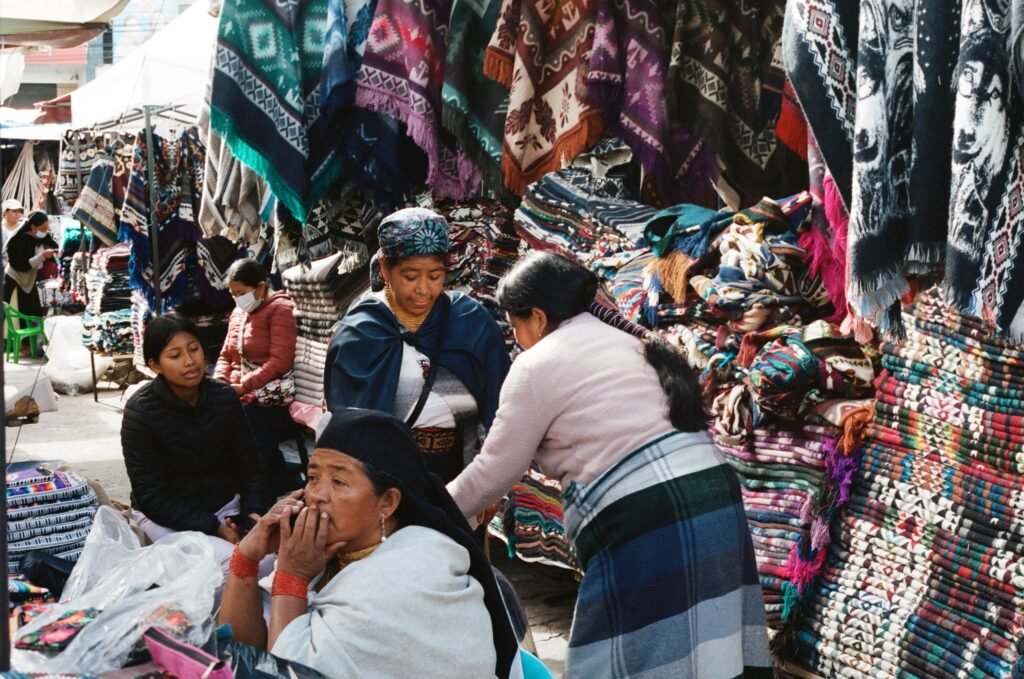
The beating heart of Otavalo is the Plaza de Ponchos. On Saturdays, the market spills out into the surrounding streets, creating a kaleidoscope of handwoven blankets, intricate embroidery, silver jewellery, and musical instruments. It is an unforgettable experience, but like any world-famous market, it is also a magnet for opportunistic petty thieves.
Pickpocketing and bag-slitting are the primary safety concerns here. These are not violent crimes; they are crimes of distraction and opportunity.
To keep your belongings secure while shopping, follow these local golden rules:
- Ditch the backpack: A backpack on your back is an open invitation in a crowded market. Leave your main pack at your accommodation and use a secure crossbody bag or a slim waist pack worn across your chest. If you must carry a small backpack, wear it on your front in crowded areas
- The front-pocket rule: Keep your phone and wallet in your front pockets. Tight front pockets make it almost impossible for a pickpocket to slide their hand in unnoticed. Never leave your phone sticking out of a loose coat pocket or a back pocket
- Cash is king, but carry it wisely: Ecuador uses the US dollar. While highly convenient, you should avoid pulling out large wads of cash. Carry small denominations ($1, $5 and $10 notes) for market transactions. Most vendors cannot easily make change for a $50 or $100 bill, and displaying large notes marks you out as an easy target
- Be aware of the squeeze: Pickpockets often work in pairs or small groups. One might accidentally bump into you, drop something at your feet, or ask for directions, while the other quietly slips into your bag or pocket. If someone suddenly crowds your personal space, immediately place a hand over your valuables
The Ecuadorian Sierra.
Get lost in the hills
Solo, female, and minority travellers in the Sierra
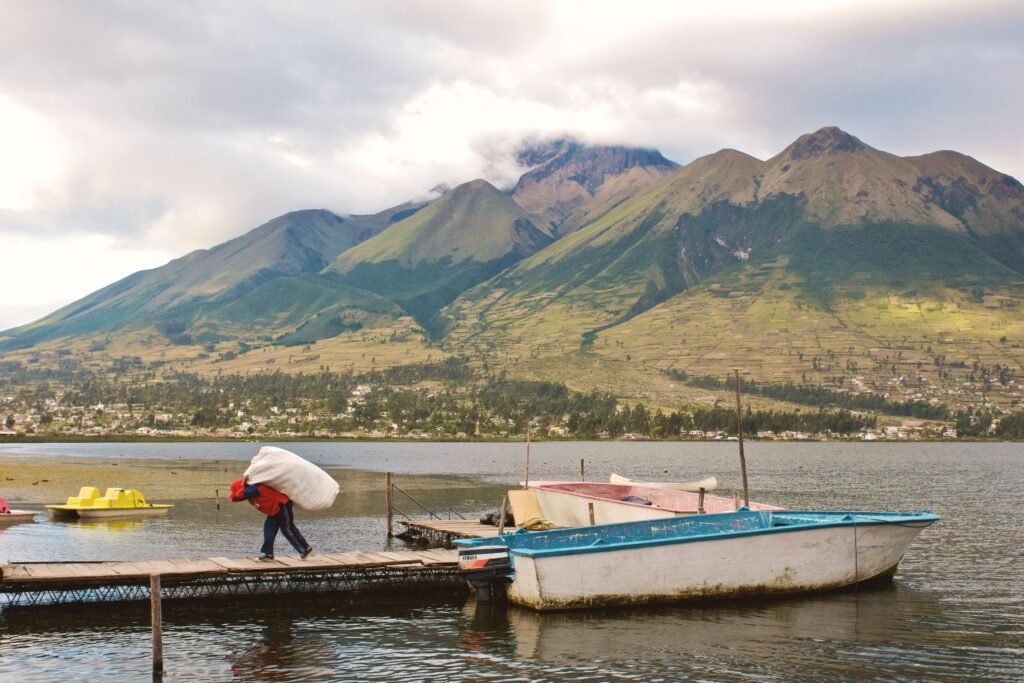
For solo travellers, including solo female travellers, Otavalo is widely regarded as one of the most welcoming and secure destinations in mainland Ecuador.
The local Kichwa Otavalo people are incredibly proud, industrious, and independent. Indigenous communities in this region practice a form of community justice (justicia indígena), which acts as a powerful deterrent against crime. Because the community itself enforces peace and order, the streets of Otavalo feel significantly safer and more respectful than those of major urban transit hubs.
However, a few practical considerations will ensure a smooth trip:
Navigating cultural norms
Ecuadorian society, particularly in rural and semi-urban areas, retains traditional gender roles. Solo female travellers may occasionally experience catcalling or unwanted male attention. The best approach is to remain confident, maintain clear boundaries, and walk away without engaging.
Language as a safety tool
While the tourist infrastructure is excellent, English is not widely spoken once you step away from the main hotels and tour operators. Learning even basic Spanish—how to ask for directions, buy a bus ticket, or ask for help—will instantly make you less vulnerable and help you connect with the incredibly warm and helpful locals.
Evening safety
During the day, Otavalo is vibrant and safe to explore. After dark, the town quietens down significantly. Avoid walking alone at night, especially in dimly lit or isolated residential areas outside the immediate town centre. Stick to well-populated main streets, and if you are returning to your accommodation late, ask your hostel or restaurant to call a registered taxi rather than hailing one on the street.
The Ecuadorian Amazon.
The most biodiverse place in the world
Pedalling the páramo / Cycling safety and road conditions
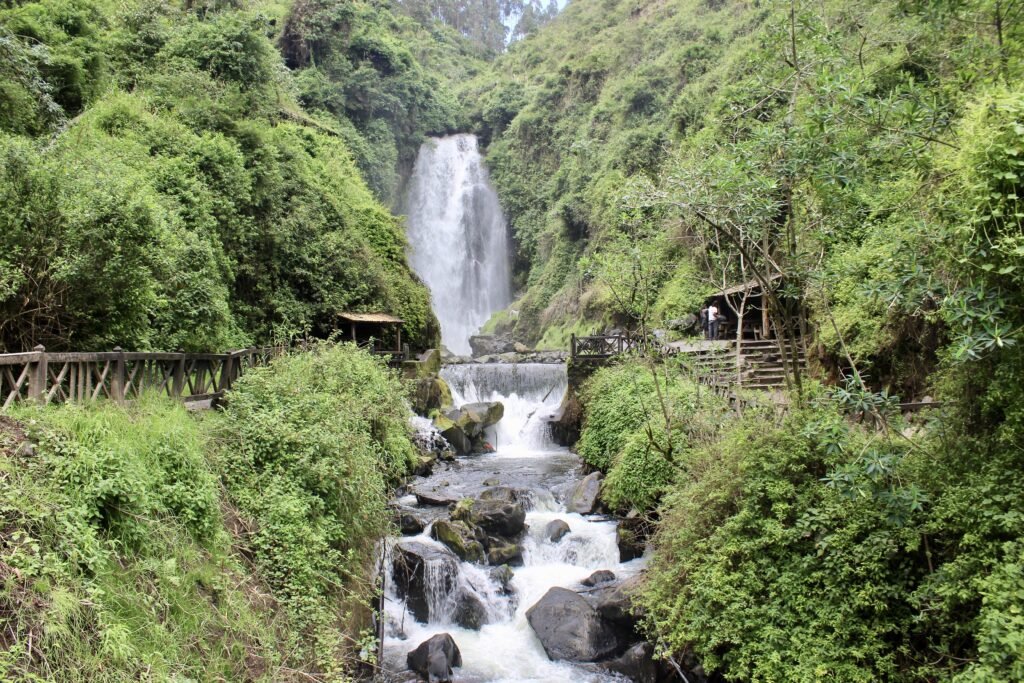
If you are visiting Otavalo to ride, you are in for an absolute treat. The surrounding Imbabura province is a playground of quiet dirt roads, spectacular volcanic crater lakes like Cuicocha, and challenging alpine climbs. However, riding in the Ecuadorian Andes requires a specific set of safety strategies.
Navigating the cobbles and climbs
Ecuadorian road building is notoriously direct. While European mountain roads snake up slopes with gentle hairpin turns, Ecuadorian roads often go straight up the mountainside. Prepare yourself for incredibly steep gradients. Additionally, many secondary roads are paved with historic cobblestones (empedrado). Ensure your bike is equipped with wide, high-volume tyres and that your brakes are in perfect working order before embarking on any long descents.
Driver attitudes and the rules of the road
Ecuador is a highly car-centric country. While cyclists legally have the right of way and the right to use public roads, you must ride defensively.
Large interprovincial buses and heavy trucks often pass closer than you might be used to. Expect drivers to use their horns constantly. In the UK, a horn is an expression of anger, but in Ecuador, a short, sharp beep simply means: “I am here, and I am about to overtake you. I won’t give you space.” Do not take it personally—just keep a steady, predictable line.
To maximise your safety, we highly recommend planning your routes along secondary agricultural roads rather than the bustling Pan-American Highway.
Camping and bike security
While the locals are wonderfully hospitable, opportunism does exist. We strongly advise against wild camping in isolated areas around Otavalo without local permission. There have been historic reports of thefts targeting bikepackers camping near remote highland lakes.
Instead, opt for established campgrounds, secure hostels, or family-run guesthouses where you can park your bike inside overnight. If you find yourself in a bind in a rural village, you can always knock on the door of the local fire station (bomberos) or police station. They are legendary within the cycle touring community for offering safe, indoor spaces to pitch a sleeping mat for the night.
The Galápagos.
Ecuador’s Enchanted Isles
Practical vigilance / Your Sierra safety checklist
To ensure your journey to Otavalo is entirely memorable for the right reasons, keep this quick safety checklist in mind:
- Watch the altitude: Otavalo sits at 2,532 metres above sea level. Even fit cyclists will feel the thin air immediately. Give yourself at least two to three days to acclimatise before planning any major physical exertions. Stay exceptionally well-hydrated, as the mountain air is incredibly dry
- Prepare for extreme weather: The equatorial sun at this altitude is incredibly strong and can cause severe sunburn in minutes. However, the moment a cloud covers the sun or you crest a high mountain pass, the temperature can plummet to near freezing. Always carry high-SPF sunscreen and quality layers, including a waterproof jacket, even on short day rides
- Transit safety: When travelling to Otavalo by public bus from Quito, the bus terminals and the journey itself are prime spots for baggage theft. Never place your small daypack on the floor of the bus or in the overhead rack. Keep it securely on your lap with your arms looped through the straps at all times
- Keep your documents close: You are legally required to carry identification at all times in Ecuador. Keep a colour photocopy of your passport photo and entry stamp in your daypack, and keep your physical passport safely locked in your hotel or hostel locker
By practising basic situational awareness, respecting the local culture, and choosing the right roads, your visit to Otavalo will be an absolute highlight of your South American adventure. The warmth of the people, the majesty of the mountains, and the richness of the culture are waiting for you.
The Ecuadorian Coast.
Where you’ll find the very best food
Community, connection, and your Andean adventure
When you look past the sensationalised headlines and focus on the reality on the ground, Otavalo emerges as one of the most rewarding destinations in the Ecuadorian Andes. Safety here is not just about hyper-vigilance; it is about mutual respect. By dressing modestly, respecting local photography boundaries (always ask before taking a photo of someone in traditional Kichwa dress), and supporting local businesses, you actively contribute to the positive, protective relationship between travellers and the community.
Before you set off on your highland journey, Wheely Tyred recommends taking a few simple administrative steps to secure complete peace of mind:
- Embassy registration: Register your travel plans with your national embassy travel advisory service before departure
- Specialised insurance: Ensure your travel insurance policy specifically covers high-altitude cycling and cycle touring if you plan to ride
- Emergency contacts: Keep a list of local emergency numbers—such as 911, which is the universal emergency number in Ecuador—saved offline on your phone
Ultimately, the slow traveller is an observant traveller. By keeping your wits about you in the busy markets, planning your cycling routes along quiet secondary roads, and embracing the warmth of the Imbabura province, you will experience the absolute best of Ecuador. Otavalo is waiting to share its rich tapestry of colour, culture, and mountain magic with you—all you need to do is prepare wisely and enjoy the ride.
Affiliate Disclaimer: Some of the links on Wheely Tyred are affiliate links. If you click through and make a booking or purchase, we may earn a small commission at no extra cost to you. We only recommend gear, tours, stays, and services we genuinely use, trust, and stand behind — our editorial independence always comes first. These commissions help keep our independent cycling guides and travel stories free to read. Thanks for supporting the ride!
Frequently asked questions about travelling safely in Otavalo
Yes, the bus journey is generally safe and highly scenic, but bus terminals in Quito and the transit itself are hotspots for opportunistic luggage theft. Always keep your daypack on your lap with your arms looped through the straps, and never place your absolute valuables in the overhead racks or in the under-bus cargo hold.
Always ask for permission before taking photos of individuals, particularly elders and children in traditional dress. The Kichwa Otavalo are a proud and independent people; seeking consent is a fundamental sign of respect that fosters a warm, positive relationship between travellers and the local community.
Wild camping in remote highland areas is not recommended due to occasional reports of opportunistic theft targeting campers. It is significantly safer to use established campsites, secure family-run guesthouses, or to ask the local bomberos (firefighters) at a station if you can pitch your sleeping mat safely inside for the night.
Ecuadorian drivers are highly car-centric and will pass closer than you might be used to at home. Drivers use their horns constantly; a short, sharp beep is not an expression of anger, but rather a friendly local signal meaning: “I am here. I am about to overtake. I won’t give you space.” Ride predictably, take primary if necessary, and give large vehicles plenty of room.
Ecuador uses the US dollar, but local market vendors and small family eateries rarely have change for $50 or $100 notes. Flashing large bills also marks you out to pickpockets, so it is best to keep a steady supply of $1, $5 and $10 notes on hand for daily transactions.
There is no official curfew, but the town becomes incredibly quiet after dark. It is best to avoid walking alone in poorly lit or isolated residential areas at night. Stick to well-populated central streets, and always ask your accommodation to call a registered taxi if you are returning late.
Ecuador.
Pure wonder on the equator.