48 hours in Quito / An independent traveller’s itinerary
The complete self-guided 48-hour itinerary for independent explorers in Quito
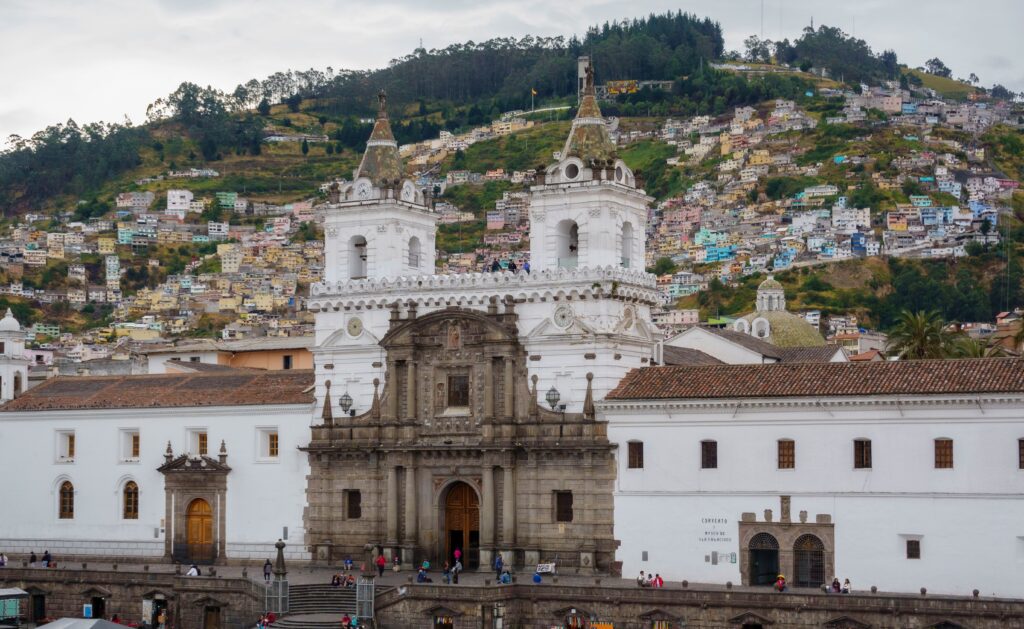
A vertical city of volcanic stone, Baroque gold, and high-altitude clarity
BEN FINCH
To arrive in the Ecuadorian capital is to instantly understand the power of geography. Strung along a narrow, high-altitude valley at 2,850 metres above sea level, Quito is flanked by the dramatic peaks of the Andes, with the active Pichincha volcano looming directly to the west. It is a city that requires you to slow down, quite literally. The air is thin, crisp, and carries the faint scent of woodsmoke and eucalyptus.
For the independent traveller, Quito is a revelation. It rewards those who eschew the insulated bubble of tour buses and choose instead to navigate its sheer topography via the sleek new underground Metro, the rumbling electric trolleybuses, and the quad-burning climbs of its colonial staircases. This is not a city to be rushed through on the way to the Galápagos; it is a complex, living monument where pre-Columbian roots, Spanish Baroque architecture, and modern active urbanism collide.
Here is how to spend 48 deliberate, immersive hours uncovering the authentic pulse of the city.
The thin air of San Francisco de Quito
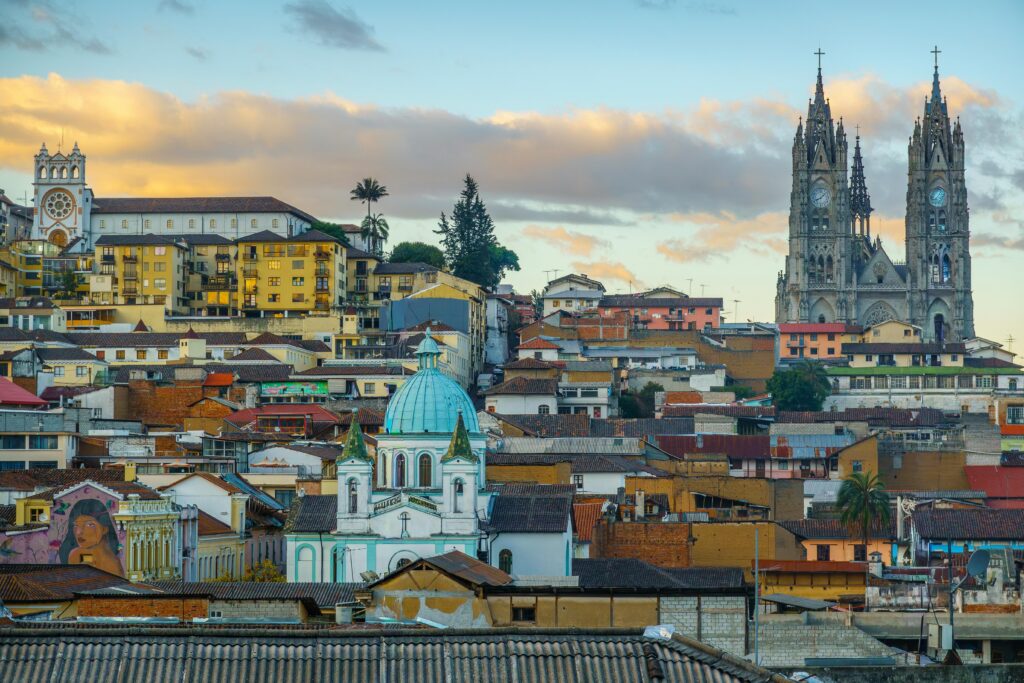
Perched at 2,850 metres above sea level, Quito is a city defined by volcanic stone, golden-domed history, and thin, crisp mountain air. It is a destination that demands a slower pace, rewarding those who navigate its steep streets and high-altitude ridges on their own terms.
- The Basílica del Voto Nacional: A neo-Gothic triumph, this site features gargoyles shaped as indigenous fauna rather than demons, offering a sweeping, breathless perspective of the old town from its high towers
- The UNESCO Historic Centre: Far more than a mere collection of plazas, this grid of stone lanes and gilded churches—like La Compañía de Jesús—houses centuries of architectural and cultural layering
- The Culinary Pulse of Mercado Central: Skip the tourist traps and head to the market for locro de papa, a robust, velvety potato soup that is the true comfort food of the Andean highlands
- Artisan Heritage on Calle La Ronda: A former bohemian refuge, this historic alleyway now preserves the city’s vanishing trades, from lutherie and wood-turning to traditional tin-smithing
- High-Altitude Landscapes at TelefériQo: Ascend via cable car to over 4,000 metres for a humbling view of the Avenue of the Volcanoes, witnessing the stark, windswept páramo ecosystem firsthand
- Guayasamín’s Vision at La Capilla del Hombre: An essential, deeply moving architectural space showcasing the raw, expressionist work of Oswaldo Guayasamín, dedicated to the resilience of the Latin American spirit
- Independent Transit: Navigate the capital like a local by utilising the clean, efficient Metro and the dedicated surface trolleybuses, effectively bypassing the congestion and isolation of private tour transport
The Ecuadorian Sierra.
Get lost in the hills
Day one / Colonial layers and culinary foundations
Morning / High-altitude architecture and climbing the spires
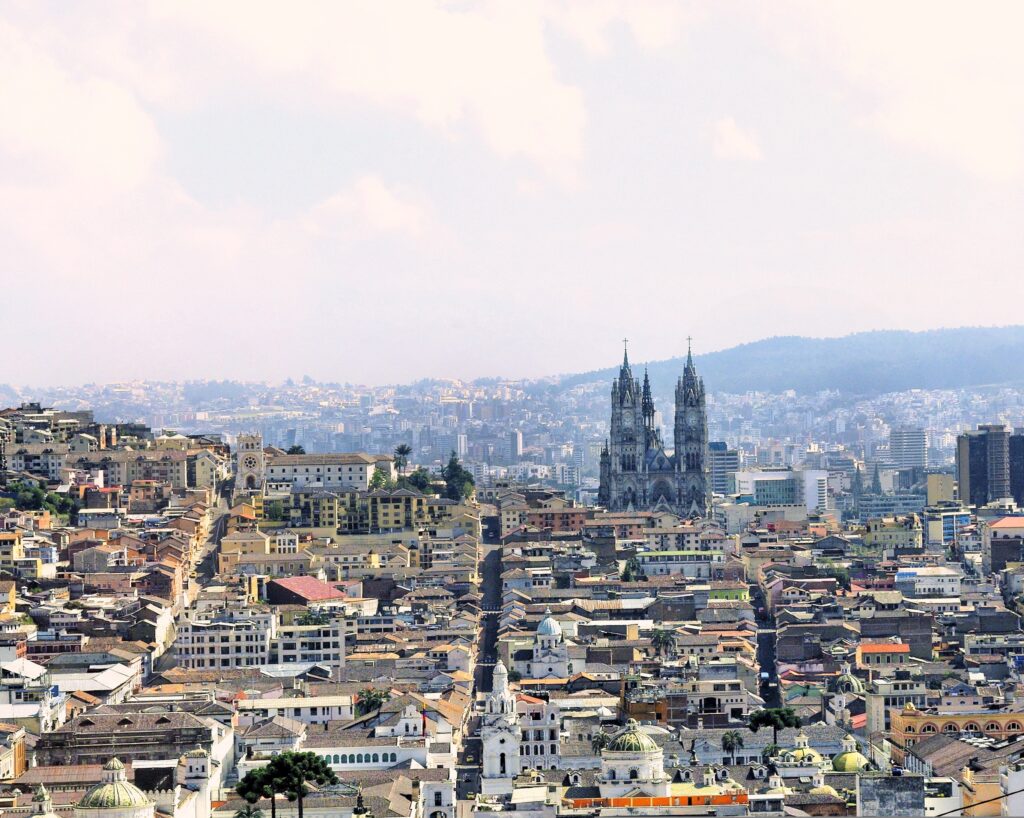
Begin your first morning in the oldest heart of the city: the historic centre. Designated as one of the very first UNESCO World Heritage sites in 1978, this dense grid of stone lanes and whitewashed plazas is best experienced before the midday heat and afternoon rains arrive.
Walk to the northern edge of the old town to confront the Basílica del Voto Nacional. Unlike the classic Spanish colonial structures found deeper in the centre, this neo-Gothic colossus is made of dark volcanic stone and features a brilliant regional twist. Look closely at the gargoyles stretching out from the steep stone walls; instead of mythical demons, they are sculpted as native Ecuadorian fauna, including tortoises, iguanas, and condors.
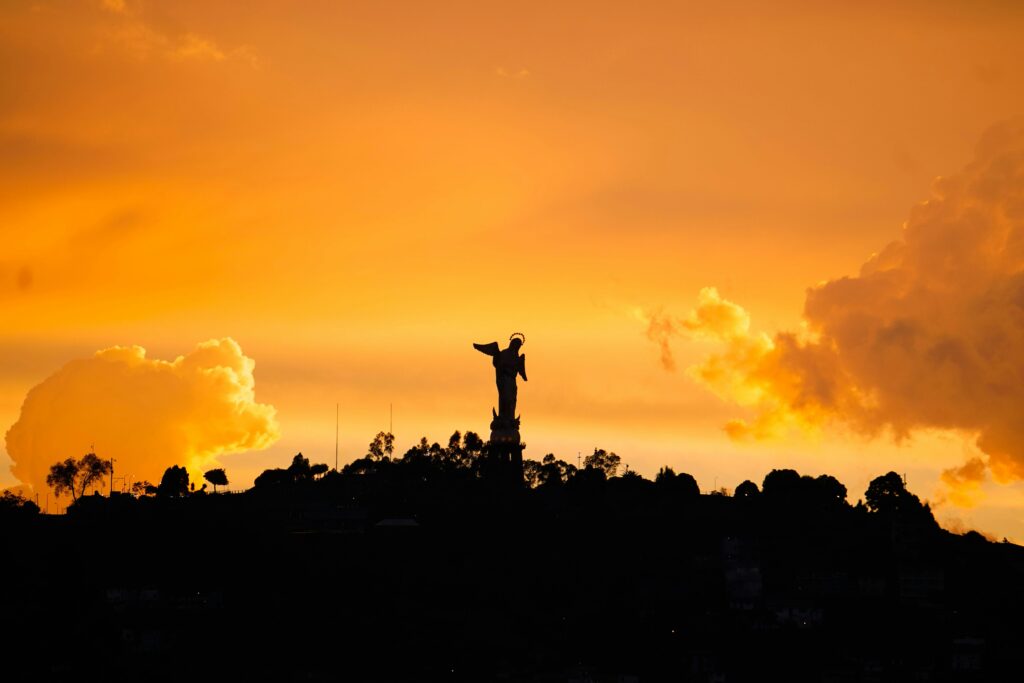
Skip the interior nave and head straight for the steep wooden ladders that lead up into the condor towers. The climb is exposed and will test your lungs in the high mountain air, but the reward is unmatched. From the open-air wooden platforms, you can look down the entire spine of the old town, watching the morning light hit the domes of distant churches while the silhouette of the winged Virgin of El Panecillo watches over the valley from her hilltop perch.
From the Basílica, walk south down the steep incline of Calle Venezuela towards the Plaza Grande. This is the political and social anchor of the city, where older Quiteños gather on benches under the palms to debate the news of the day. On the western side of the square sits the Palacio de Carondelet, the presidential palace, while the low-slung municipal buildings frame the rest of the plaza.
A short block away sits the Iglesia de la Compañía de Jesús. Do not let the austere volcanic ashlar facade fool you. Step inside, let your eyes adjust to the dim light, and you will find an interior completely sheathed in leaf gold. It is a masterwork of the Quito School of art, blending European Baroque design with Moorish geometries and indigenous sun symbols hidden within the gilded pillars. Take your time walking the side aisles to notice how the architectural choices were intentionally designed to awe and convert the local population centuries ago.
Lunch / A ritual of broth and stone fruits at Mercado Central
By midday, hunger will draw you away from the grand plazas towards the sensory roar of the Mercado Central. Located on the eastern edge of the historic core, this covered market is where the true culinary life of the city unfolds, far removed from tourist-oriented bistros.
Navigate past the vibrant pyramids of tree tomatoes, blackberries, and passion fruit to find the central food stalls. Look for the busiest counters serving locro de papa, a rich, velvety potato soup infused with achiote, served piping hot with a massive slice of local avocado and fresh white cheese crumbled into the broth. It is the ultimate Andean comfort food, thick enough to coat a spoon and perfectly engineered to combat the midday mountain chill. Pair it with a tall glass of fresh jugo de mora (blackberry juice) pressed on the spot by the stall owners.
The Galápagos.
Ecuador’s Enchanted Isles
Afternoon / Artisan heritage along Calle La Ronda and San Marcos
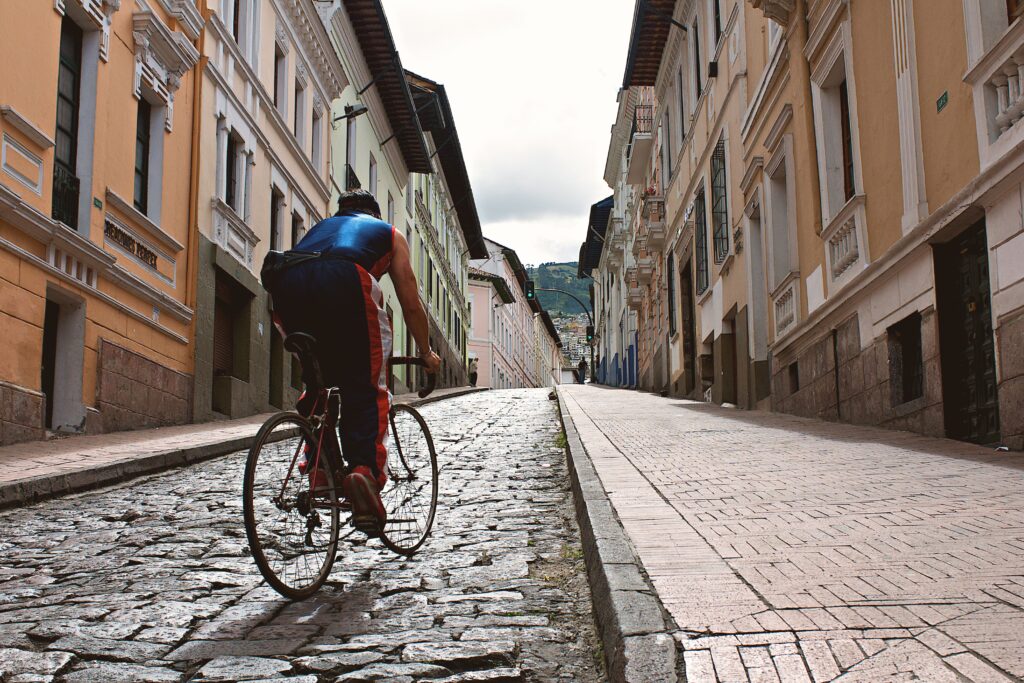
With a satisfied appetite, spend your afternoon exploring the southern and eastern residential pockets of the historic core. Walk south towards the old ravine of the city to find Calle La Ronda, a narrow, curving cobblestone alleyway that dates back to the pre-Inca era when it was a foot trail used to access fresh water.
During the early twentieth century, La Ronda was the bohemian refuge of Quito, home to poets, musicians, and political radicals. Today, a concerted effort by local residents preserves the traditional workshops that line the street. Peer through the doorways to discover independent artisans keeping heritage trades alive. You will find wood-turners shaping classic spinning tops, luthier workshops handcrafting acoustic guitars, and traditional tin-smiths hammering out decorative lanterns.
After dipping into La Ronda, cross back northward into the quieter, pastel-hued neighbourhood of San Marcos. This is arguably the most atmospheric residential enclave in the old town. It is a neighbourhood of quiet interior courtyards, independent art galleries, and small community museums. Walk down the main thoroughfare, Calle Junín, and admire the neoclassical balconies overflowing with geraniums. Stop by a local workshop to watch an independent artisan restore religious colonial oil paintings, or sit quietly on a stone bench in the small plaza at the end of the street to watch school children play against a backdrop of distant green peaks.
Dinner / Sunset over the tiles of the old town
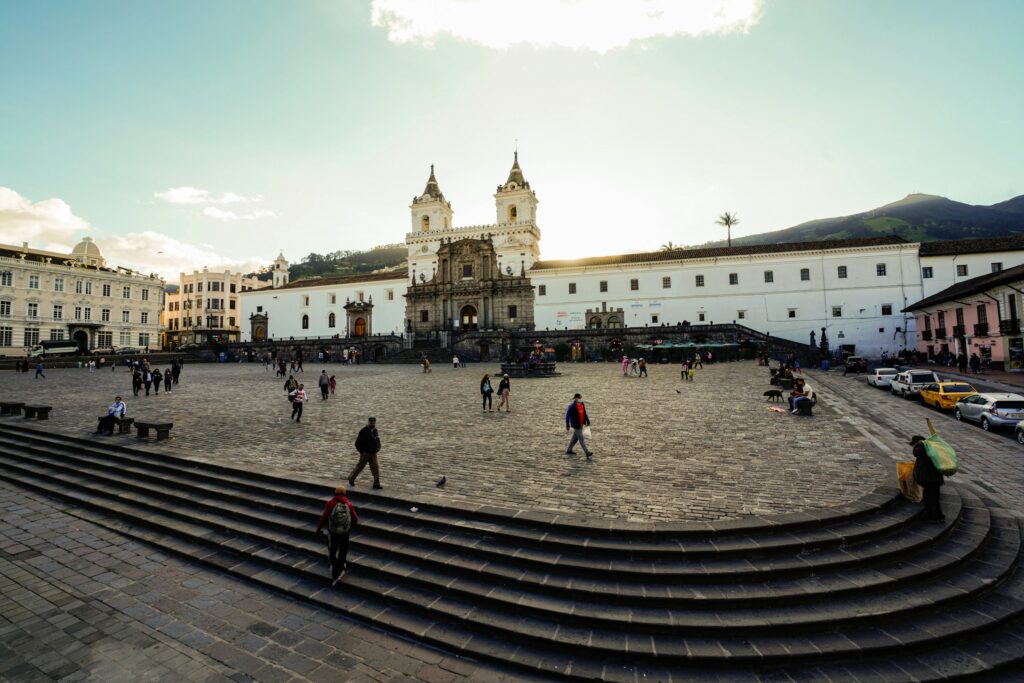
As evening approaches and the shadows lengthen across the valley, find a seat at an independent restaurant built into the upper floors or terraces of an old colonial home near Plaza San Francisco.
Order a plate of seco de chivo, a slow-braised goat stew simmered in a rich, tangy sauce of chicha de jora (fermented corn beer) and naranjilla fruit, served alongside spiced rice and sweet fried plantains. As you eat, watch the street lamps flicker to life across the historic centre, illuminating the whitewashed walls and terracotta tiled roofs in a warm, amber glow that looks remarkably unchanged from two centuries ago.
The Ecuadorian Amazon.
The most biodiverse place in the world
Day two / Vertical horizons and revolutionary canvas
Morning / Ascending the Pichincha massif
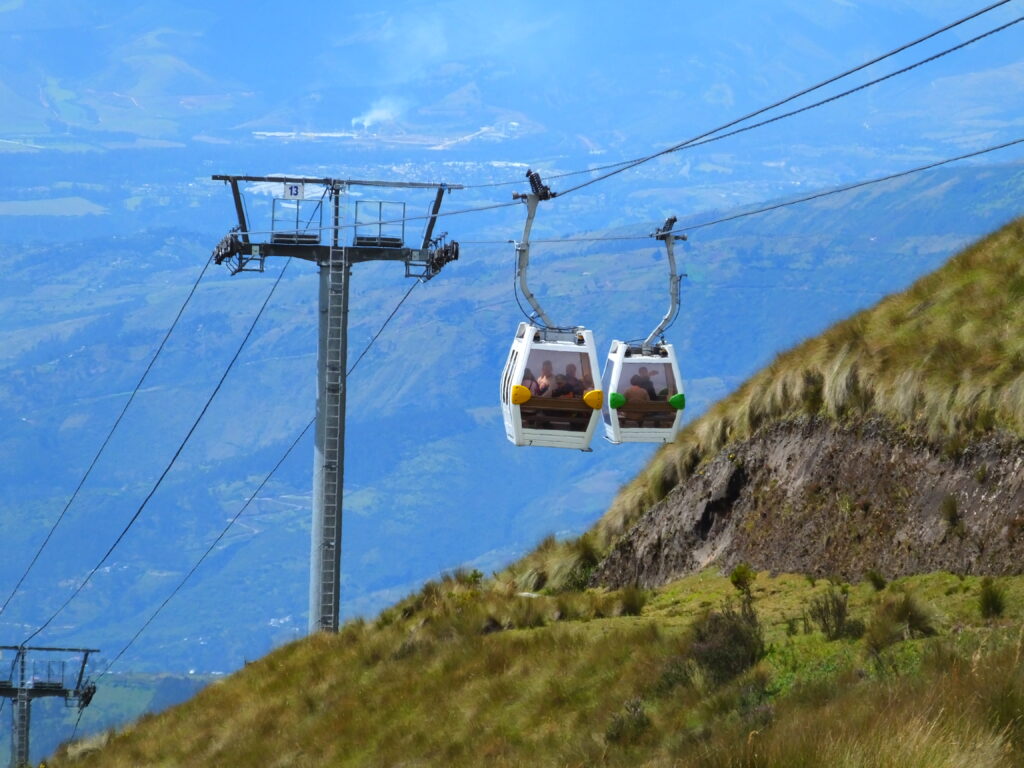
On your second morning, rise early to take advantage of the clear Andean skies before the afternoon clouds inevitably roll in over the peaks. Your destination is the slopes of the active Pichincha volcano.
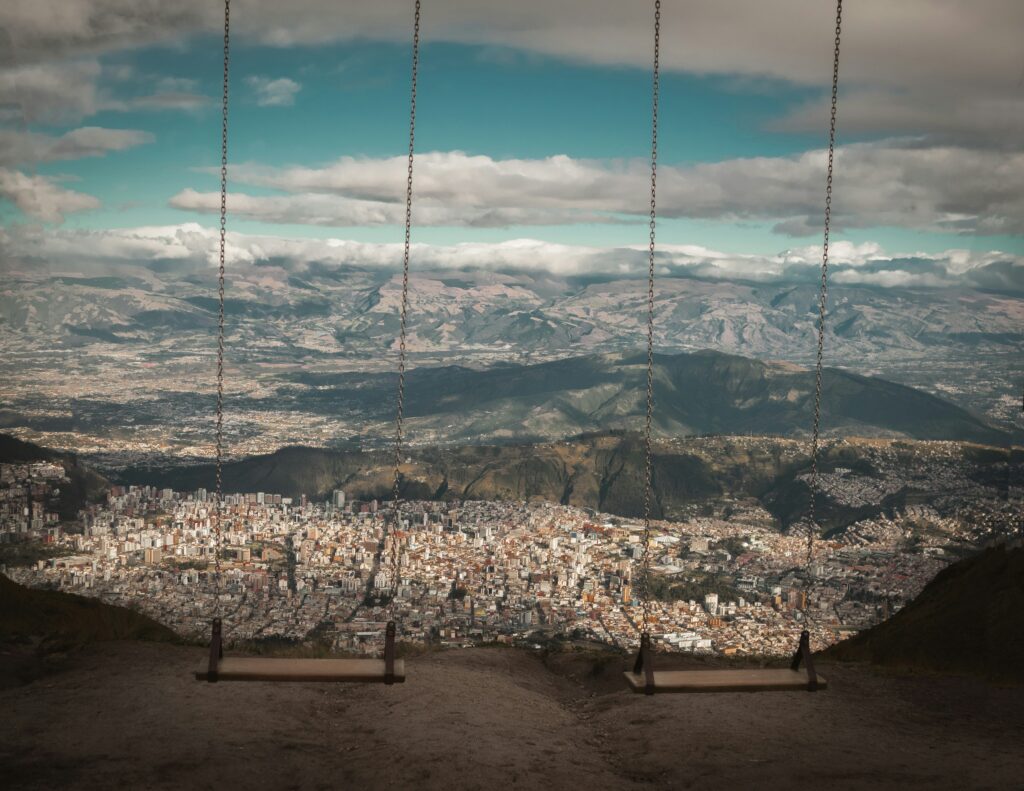
To get there independently, take a local bus or a quick taxi to the base station of the TelefériQo on the western edge of the city. This cable car is one of the highest in the world, lifting passengers from the valley floor up to a high-altitude ridge known as Cruz Loma at 4,050 metres. The transition is stark; within fifteen minutes, the urban density of Quito falls away, replaced by the vast, windswept grasslands of the páramo, the unique alpine ecosystem of the high Andes.
Step out of the upper station and take a moment to breathe deeply. The temperature drops dramatically here, and the wind whips across the ridge with immense force. Walk along the dirt trails that wind up towards the summit of Rucu Pichincha. The vegetation here is low, resilient, and adapted to extreme weather, consisting of thick bunchgrasses and tiny, hardy alpine flowers.
Looking eastward, the entire city of Quito is laid out below you like an impossibly long, narrow ribbon tucked into the valley floor. On an exceptionally clear day, the horizon reveals the snow-capped, symmetrical cones of the wider Avenue of the Volcanoes, including the massive white shield of Cayambe to the north and the jagged, icy peak of Cotopaxi to the south. It is a humbling reminder of the sheer scale of the landscape that shapes daily life in the capital.
Lunch / Bohemian enclaves and exceptional beans in La Floresta
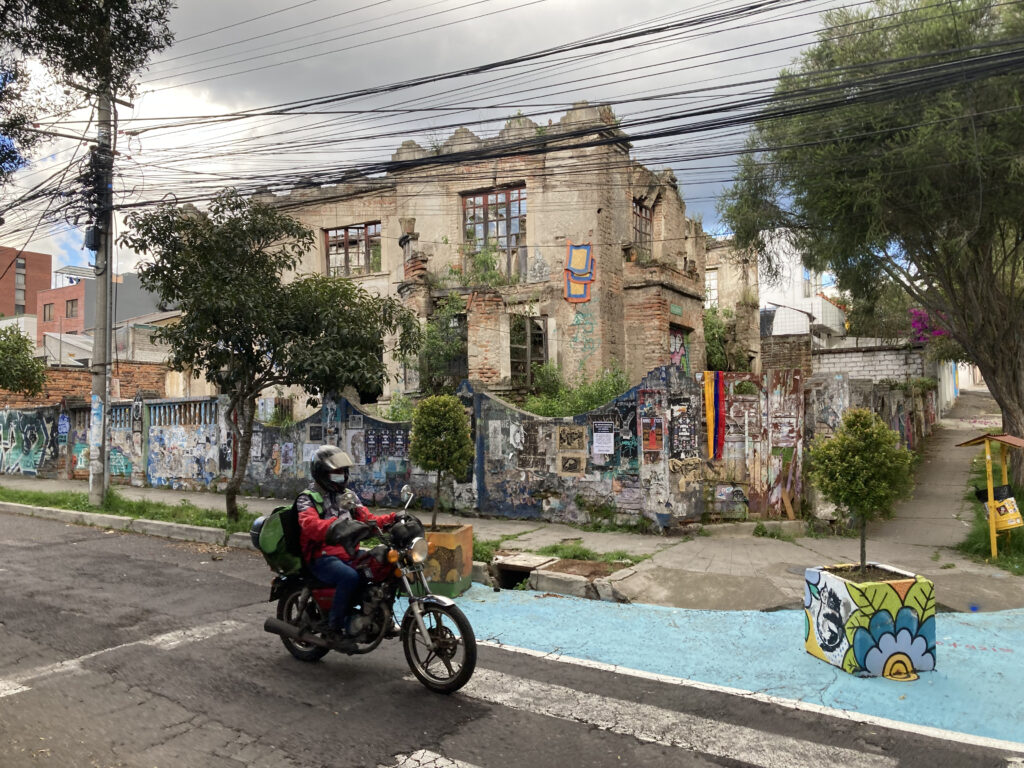
Descend from the mountain and head towards the northern part of the city to explore La Floresta, a leafy, creative neighbourhood that serves as the culinary and artistic hub for modern Quiteños.
La Floresta is an enclave of low-rise mid-century houses, massive avocado trees, and striking street art. It is highly walkable and completely distinct from the colonial old town. For lunch, seek out an independent café or an urban bistro that focuses on sourcing ingredients directly from small agricultural cooperatives in the cloud forests surrounding the city.
Order an artisan sandwich made with sourdough baked in the neighbourhood, paired with fresh local microgreens and wild mushrooms. Afterwards, seek out a dedicated speciality coffee shop to experience Ecuador’s burgeoning third-wave coffee scene. Order a pour-over coffee using beans grown in the volcanic soils of the nearby Pichincha foothills or the northern Intag Valley. The flavour profile is clean, bright, and deeply complex, boasting notes of stone fruit and raw cane sugar. Sit by the window and watch the neighbourhood’s independent designers, students, and writers move between workshops and communal spaces.
The Ecuadorian Coast.
Where you’ll find the very best food
Afternoon / The weight of history at La Capilla del Hombre
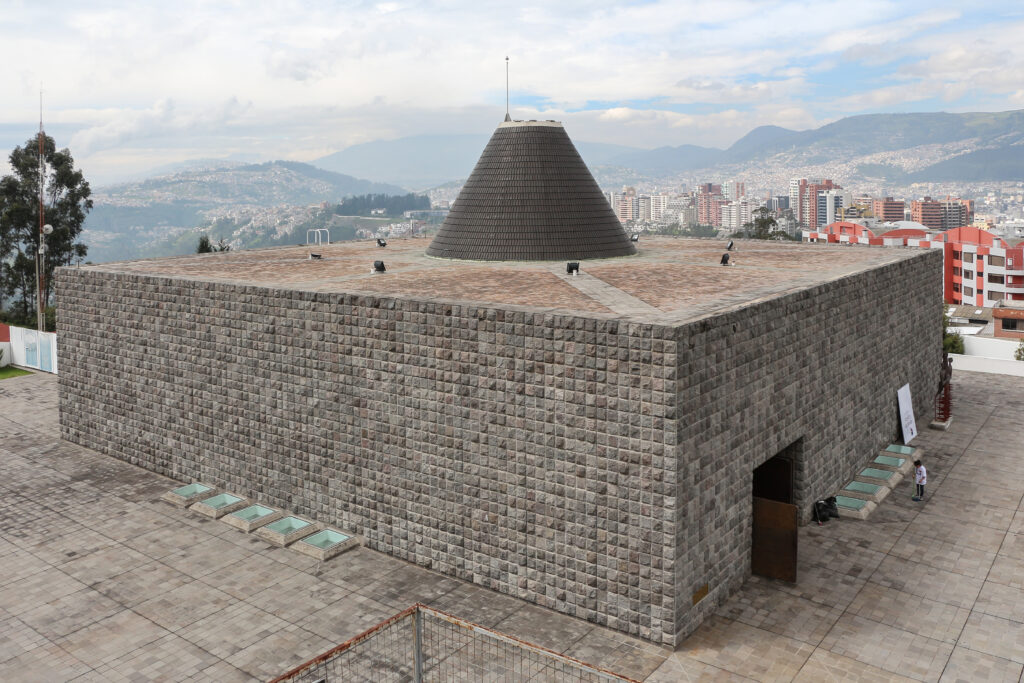
In the afternoon, walk or take a brief transit ride further up into the hills of the Bellavista neighbourhood to reach La Capilla del Hombre (The Chapel of Man). This architectural monument was conceived and designed by Oswaldo Guayasamín, Ecuador’s most revered twentieth-century visual artist and cultural figure.
The building itself is a monolithic, austere structure of dark stone that resembles an ancient stone temple, designed to sit harmoniously against the Andean sky. Step inside the soaring interior to confront Guayasamín’s monumental expressionist paintings. His work focuses intensely on the pain, resilience, and spiritual strength of the indigenous, mestizo, and impoverished peoples of Latin America across centuries of colonisation and political turmoil.
The oversized canvases, painted in raw, earth-toned triptychs of weeping eyes, powerful hands, and contorted faces, carry an immense emotional weight. The space is non-religious but deeply spiritual, featuring a central eternal flame dedicated to the defence of human rights. Next to the chapel sits the Casa-Museo Guayasamín, the artist’s actual home preserved exactly as it was when he died, filled with his personal collection of pre-Columbian ceramic figures and colonial religious art. The views from the museum garden look out over the northern valley of Quito and the deep canyon of Guayllabamba, offering a serene space to process the intense emotional impact of the artwork.
Guayasamín famously wrote that his art was a weapon against injustice, and walking through this space provides an essential, unvarnished insight into the complex cultural identity of the modern Andean world.
Dinner / Fermentation and fireside flavours
For your final evening in the capital, remain in the creative pockets of northern Quito or return to the borders of La Floresta to explore the city’s independent beverage and dining scene.
Seek out a small, locally owned craft brewery. Ecuador has developed an incredibly sophisticated independent brewing culture over the last decade. Order a pint of ale infused with local ingredients, such as Andean goldenberries (uvillas) or dark stouts brewed with raw Ecuadorian cacao nibs.
For dinner, choose an independent restaurant that reinterprets traditional highland ingredients through a contemporary lens. Look for dishes that highlight native tubers like melloco, wild varieties of corn known as mote, and fresh mountain trout caught in the glacial streams of the surrounding national parks. It is a fitting end to 48 hours in a city that balances the immense weight of its past with a fresh, independent vision of its future.
Quito.
Explore the Middle of the World
Navigating the capital on foot and rail
| Transit Mode | Best For | Practical Tip |
| Quito Metro | Fast north-south travel | Underground, clean, and avoids all surface traffic jams. |
| Trolebús / Ecovía | Scenic, direct surface hops | Uses dedicated lanes, very inexpensive, but can get crowded at peak hours. |
| Walking | Historic centre exploration | Essential for details, but remember to pace yourself on steep hills due to altitude. |
To get the most out of your independent journey, remember that Quito’s weather follows its own rules. Located just kilometres from the equator, the city experiences a constant spring-like climate, but the altitude means that when the sun is out, the UV rays are intense, and when the clouds roll in, the temperature drops rapidly. Always pack a reliable waterproof layer and a warm jumper in your daypack, even if the morning sky appears completely cloudless.
Give your body time to adjust to the elevation during your first few hours. Hydrate constantly with water or traditional guayusa tea, walk with a deliberate, unhurried stride up the steep stone staircases, and allow the rhythm of this high-altitude capital to unfold on its own terms.
Frequently asked questions about Quito
Acclimatisation is key. Quito sits at 2,850 metres, so take your first few hours slowly. Hydrate constantly with water or traditional guayusa tea, and move with a deliberate, unhurried stride when climbing the city’s many staircases.
Absolutely. The recently opened Quito Metro is the gold standard for north-south travel, while the surface trolleybus system is an inexpensive and reliable way to navigate the historic centre. Avoid the temptation of tour buses, which often shield you from the city’s authentic, bustling character.
Quito enjoys a perpetual spring, but the altitude makes the climate volatile. The sun is intense, while sudden cloud cover brings an immediate drop in temperature. Always carry a reliable waterproof layer and a warm jumper in your daypack, regardless of how clear the morning sky appears.
Look for locro de papa (a rich, avocado-topped potato soup) and seco de chivo (a slow-braised goat stew). For a drink, sample fresh jugo de mora (blackberry juice) or, if exploring the craft scene, a local ale brewed with Andean goldenberries or Ecuadorian cacao.
The historic centre is a masterclass in syncretism. You will find grand European Baroque designs that, upon closer inspection, incorporate indigenous sun symbols and local decorative motifs, a hallmark of the Quito School of art.
While the historic centre offers a window into the colonial past, La Floresta provides a look at modern Quito. It is a leafy, bohemian enclave of mid-century houses, independent art spaces, and a third-wave coffee scene that showcases the city’s burgeoning creative future.
Ecuador.
Pure wonder on the equator.