
Is Olón safe to visit in 2027? An updated expert travel safety guide
Olón, Ecuador, travel safety guide 2027, crime rates, solo female travel advice, and coastal security

Navigate the Pacific with quiet confidence along the Santa Elena coastline

BEN FINCH
Where the dense green of the coastal hills meets the sweeping rollers of the Pacific Ocean, the village of Olón remains one of Ecuador’s most tranquil coastal retreats. Famous for its broad sandy beach, welcoming local eateries, and relaxed pace, it stands in stark contrast to the high-energy party atmosphere of its close neighbour, Montañita.
For overlanders touring the coast, digital nomads seeking a long-term base, and independent travellers exploring South America, Olón offers an appealing sanctuary.
However, entering 2027 requires an honest and updated appraisal of security across Ecuador. Building upon our 2026 guide, this comprehensive assessment examines the latest safety conditions in Olón, detailing what has shifted, what remains stable, and how you can safeguard your journey.
At Wheely Tyred, we believe that independent exploration is entirely achievable when paired with accurate ground knowledge and practical vigilance.
Key coastal safety takeaways

Olón remains one of coastal Ecuador’s quietest havens, provided you approach the region with sharp situational awareness and local intelligence. Here is what every independent traveller needs to know before hitting the sand or setting out on two wheels.
- The regional divide: While national headlines focus on high-risk urban shipping ports like Guayaquil, Olón sits within Santa Elena province, maintaining a significantly calmer and more welcoming atmosphere
- Olón vs Montañita: Positioned just minutes from Montañita’s bustling nightlife, Olón offers a peaceful retreat, though travellers should guard against opportunistic petty theft filtering over from its neighbour
- Ruta del Spondylus cycling: This sweeping coastal highway provides exceptional riding but requires absolute vigilance regarding aggressive heavy transport, unpredictable shoulders, and sudden seasonal downpours
- The 3 pm highway cutoff: To mitigate the risk of targeted highway robbery on isolated rural stretches, schedule all cycling itineraries to conclude well before dusk
- Guayaquil transit logistics: Arrive safely by bypassing unregistered street cabs in Guayaquil; book pre-arranged private transfers or trusted airport taxi cooperatives to reach the coast securely
- The secondary phone strategy: Protect sensitive personal data and primary electronics by carrying a lower-value decoy smartphone for daily use in beachside cafes and on public buses
Olón.
Ecuador’s coastal hidden gem
The 2027 security landscape on the Ecuadorian coast

To understand the safety environment in Olón today, travellers must look at the macro security picture across Ecuador. Over recent years, the national government has deployed ongoing security measures and targeted states of emergency to combat organised crime and transnational narcotics transit. News headlines regarding mainland Ecuador can understandably alarm prospective visitors. Yet, security data demonstrates a clear and persistent regional divide.
Violent crime in Ecuador remains concentrated within specific high-risk urban and logistics corridors, particularly major container shipping ports and industrial transit routes in provinces such as Guayas, Manabí, Esmeraldas, Los Ríos, and El Oro. Olón sits in the coastal province of Santa Elena, a region that continues to operate under fundamentally different local dynamics.
In 2027, Olón remains a peaceful and functional tourism hub. During daylight hours, locals, expats, and visitors move freely between beachside cafes, surf breaks, and village shops.
However, the overall baseline for situational awareness across coastal Ecuador is permanently higher than it was a decade ago. While Olón itself is removed from major gang conflicts, visitors must maintain active vigilance, respect local advice, and plan transit routes with extreme care.
Olón versus Montañita / Two beaches, two distinct risk profiles
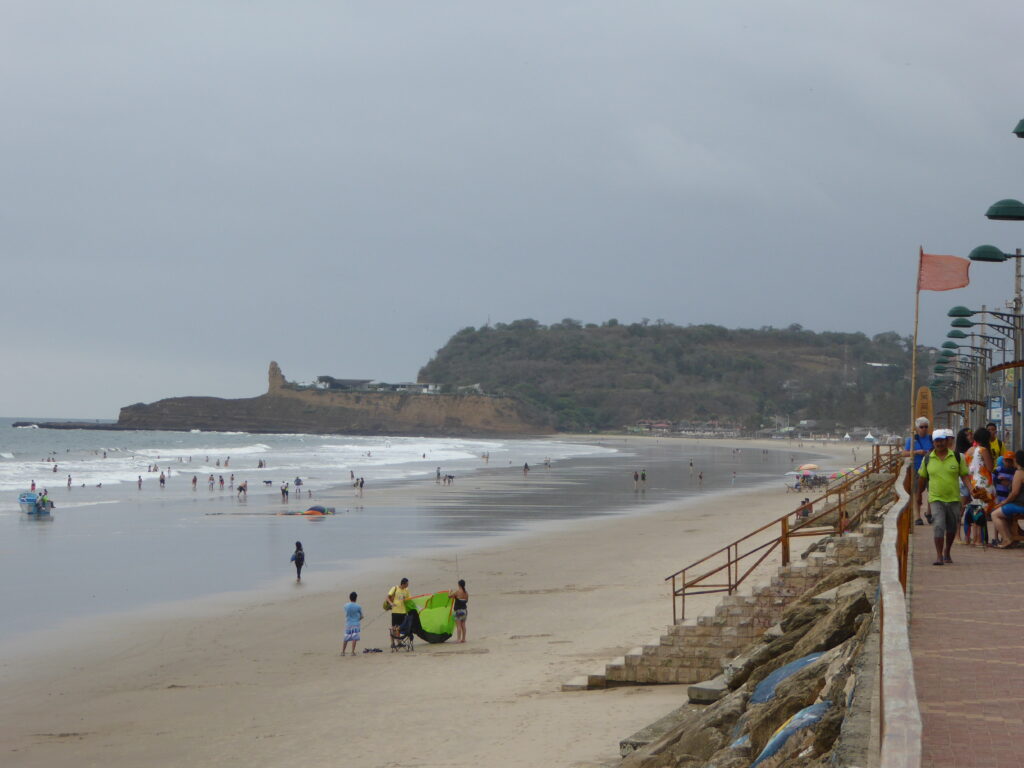
A defining geographic feature of Olón is its close proximity to Montañita. Separated only by a dramatic rocky cliff known as El Peñón, these two coastal settlements offer vastly different environments and distinct safety considerations.
Montañita is world-renowned as a high-density surf and nightlife hub. While it provides vibrant energy, its nightlife density makes it a natural focal point for opportunistic crime. International travel advisories continue to flag Montañita for heightened risks of pickpocketing, drink spiking, targeted theft, and occasional physical altercations outside late-night venues.
Olón, by comparison, maintains a tight-knit community structure that actively protects its quiet reputation. The village consists primarily of family-owned businesses, artisanal markets, and long-term international residents. This strong social fabric creates an effective buffer against severe crime.
Nonetheless, because the two towns lie just minutes apart, opportunistic criminals operating in Montañita occasionally move into Olón to target unattended items on the beach or unsecured holiday rentals. Basing yourself in Olón provides a far safer environment, but basic precautions—such as locking doors and guarding electronic gear—remain essential.
The Ecuadorian Coast.
Where you’ll find the very best food
Realities of crime and local hazards for travellers
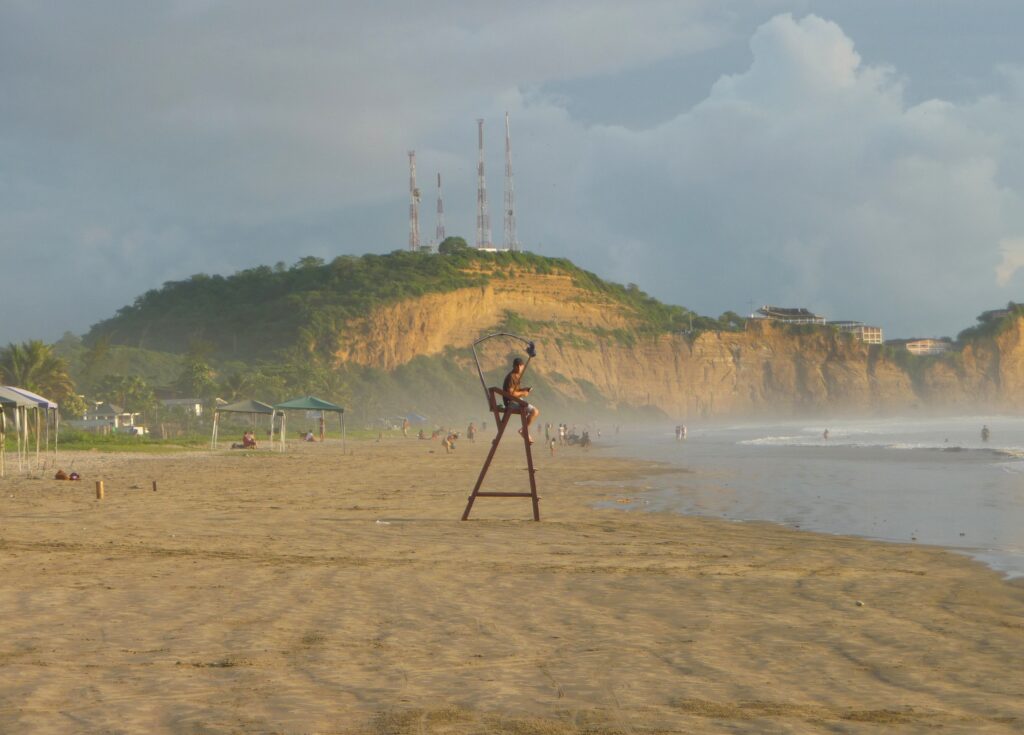
Violent crime directed at international tourists within Olón remains exceedingly rare. The primary security issues affecting visitors in 2027 fall under opportunistic property crime and transit-related hazards.
Opportunistic theft and distraction scams
The most frequent crime reported along the Santa Elena coast is petty theft. This includes unattended bags being taken off the sand, laptops disappearing from open-air cafe tables, or wallets pinched in busy markets.
Distraction techniques, where one individual engages you in conversation while an accomplice grabs an unattended bag, are common in transit hubs and beach areas.
Transit security and express kidnapping risks
Express kidnapping—a crime where victims are briefly abducted and forced to withdraw cash from multiple automated teller machines—remains a serious threat in major urban centres, particularly Guayaquil. This crime almost exclusively targets travellers who hail unregistered taxis off the street.
Within Olón, internal transport is managed by trusted local mototaxis and established community drivers, making the village itself very low risk for this threat. The critical danger point occurs during transit to or from airport terminals in Guayaquil.
Residential security for holiday rentals
With an increasing number of visitors booking private villas and long-term apartments, residential burglaries have seen minor upticks along remote coastal pockets. When selecting accommodation in Olón, prioritise properties that feature physical security measures, such as perimeter walls, secure gate locks, or on-site staff.
The Ecuadorian Amazon.
The most biodiverse place in the world
Guidance for solo travellers, women, and minorities in Olón

Personal security varies depending on individual identity and travel style. Understanding local social dynamics ensures a safer, smoother experience.
Solo travellers
For individuals exploring Olón alone, the primary risk factor is isolation. Walking solo along deserted stretches of beach—especially north towards the quieter cliffs or south towards unlit stretches past dusk—increases vulnerability to opportunistic robbery.
Joining local surf sessions, group rides, or co-working spaces early in your visit helps build a network of trusted companions for day trips.
Women travellers
Women travelling independently should exercise heightened caution, particularly regarding night-time mobility and social venues. Walking alone after dark along the unlit beach corridor or the main highway connecting Olón and Montañita is strongly discouraged.
In nightlife settings, particularly in neighbouring Montañita, risks related to spiked beverages persist. Always monitor your drinks, refuse open beverages offered by strangers, and pre-arrange transport back to Olón with a known local driver.
LGBTQ+ and minority travellers
Olón is widely recognised as one of the most welcoming and open-minded communities on the Ecuadorian coast, driven largely by its diverse international expat population. Overt discrimination inside the village is rare.
However, rural inland villages and traditional fishing communities nearby remain socially conservative. Demonstrating cultural awareness and discretion when travelling outside main tourist areas ensures respectful interactions.
The Ecuadorian Sierra.
Get lost in the hills
Cycle the Ruta del Spondylus with two-wheeled vigilance

For cyclists, Olón serves as a spectacular base along the famous Ruta del Spondylus, the coastal highway running along Ecuador’s Pacific edge. Riding this route offers magnificent ocean views, but it demands strict safety protocols regarding traffic and equipment security. We recommend that you don’t ride along the Ecuadorian coast in 2027.
Traffic dynamics and road conditions
Coastal highways in Ecuador feature aggressive heavy transport. Intercity buses and heavy commercial trucks frequently travel at high speeds on single-lane roads, passing with narrow margins.
The hard shoulder along the highway is unpredictable, shifting rapidly from paved surface to loose dirt, or disappearing entirely near bridges. High-visibility clothing and powerful daytime running lights are mandatory safety equipment.
Seasonal hazards
During the wet season between December and May, sudden downpours can cause localised mudslides, standing water, and slick road surfaces along coastal bluffs. Always check local weather reports before setting out on long rides.
The 3 pm highway cutoff rule
From a security perspective, high-end bicycles represent valuable targets for theft. To minimise the risk of targeted highway robbery on isolated rural stretches, schedule all cycling itineraries to conclude by 3 pm. Most reported highway incidents occur during dusk transitions on quiet roads between major towns.
Tactical street smarts and practical logistics for Olón

Applying consistent daily protocols significantly reduces your risk profile while staying in Olón.
- Implement the secondary phone protocol: Carry a secondary, lower-value smartphone when navigating public spaces, taking public transport, or using maps. Keep your primary device and sensitive financial applications secure in your accommodation safe
- Practice secure cash withdrawals: Avoid street-facing automated teller machines where card skimmers or onlookers can target you. Use machines located inside secure banking facilities or large commercial centres during daylight hours
- Secure transit from Guayaquil: Never take street cabs upon arrival in Guayaquil. Pre-book a private transfer through your Olón accommodation or use authorised airport taxi counters. If travelling by public bus, keep your daypack on your lap with your arms through the straps at all times; never store high-value gear in overhead racks or lower luggage bays
- Recognise seismic and environmental markers: The Ecuadorian coast is located in an active seismic zone. When arriving at your stay, take note of green tsunami evacuation signs marking routes to high ground
By staying informed, maintaining sharp street smarts, and respecting regional conditions, you can fully enjoy the breathtaking coastal beauty, warm ocean surf, and serene community life that Olón offers. Travel safely, stay alert, and keep your wheels turning.
The Galápagos.
Ecuador’s Enchanted Isles
Embrace the slow ride along the Santa Elena coastline

Read this far?
Travelling through coastal Ecuador in 2027 demands a thoughtful balance of respect for local realities and an openness to authentic discovery. Olón continues to stand out as a rare gem along the Pacific edge—a place where the rhythmic crash of ocean rollers, the shade of tropical palms, and the warmth of a tight-knit community come together. By taking measured precautions, staying informed on regional transit dynamics, and riding with purpose, you unlock an extraordinary slice of South America.
Whether you are dropping into surf breaks along El Peñón, working remotely from a village cafe, or pedalling north along the ocean bluffs, the key to a rewarding journey lies in quiet preparation. Respecting local advice, setting firm daily routines, and supporting community businesses ensure that your presence contributes positively to the region while keeping your own security grounded.
As the sun dips below the horizon, casting a golden light across the wide sands of Olón, the noise of national security headlines fades into the steady rhythm of coastal life. Approach this coastline with open eyes, sharp instincts, and genuine curiosity, and you will find an unforgettable journey waiting along the Spondylus Route.
Affiliate Disclaimer: Some of the links on Wheely Tyred are affiliate links. If you click through and make a booking or purchase, we may earn a small commission at no extra cost to you. We only recommend gear, tours, stays, and services we genuinely use, trust, and stand behind — our editorial independence always comes first. These commissions help keep our independent cycling guides and travel stories free to read. You can also buy me a coffee here — thanks for supporting the ride!
Frequently asked questions about safety in Olón
If taking the communal bus from the Terminal Terrestre in Guayaquil, keep your daypack on your lap at all times with your arms looped through the straps. Avoid placing high-value electronics or travel documents in overhead racks or lower luggage bays, where bag-slashing and opportunistic theft can occur during transit stops.
During daylight hours, walking around the rocky headland of El Peñón is fine, but you should never attempt the beach corridor or the unlit sections of the highway after dark. The boundary areas between the two towns carry an elevated risk of opportunistic crime at night.
Expect breathtaking ocean views alongside aggressive intercity buses and heavy trucks overtaking with tight margins. Road shoulders transition quickly from tarmac to loose gravel, and the wet season between December and May frequently introduces standing water and localised mudslides along coastal bluffs.
Always avoid street-facing ATMs where card skimmers or onlookers could compromise your transaction. Plan cash withdrawals during daylight hours inside enclosed banking facilities or major shopping centres in larger transit hubs before heading to smaller coastal villages.
While Olón itself maintains a calm, family-friendly atmosphere, nightlife in nearby Montañita requires strict vigilance. Never leave beverages unattended or accept open drinks from strangers due to risks of drink spiking. Always arrange a trusted local mototaxi for late-night transport back to Olón rather than walking.
The Ecuadorian coastline sits in an active seismic zone. When checking into your accommodation in Olón, take a moment to locate the green tsunami evacuation route signs that direct residents and travellers toward designated high ground inland.
Ecuador.
Pure wonder on the equator.


