
Journey beneath the Sun King / Best Chimborazo multi-day tours
Top bookable multi-day tours, trekking circuits, and overland expeditions in the Ecuadorian Andes to Chimborazo
Immersive multi-day adventures across Chimborazo and the Avenue of the Volcanoes

BEN FINCH
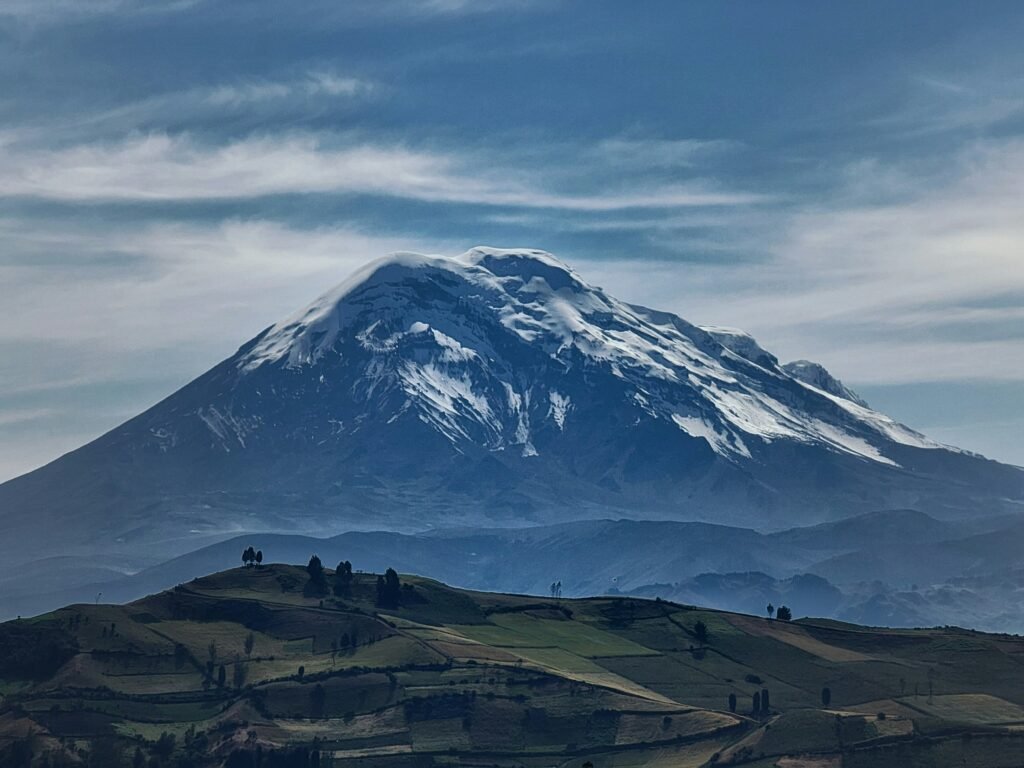
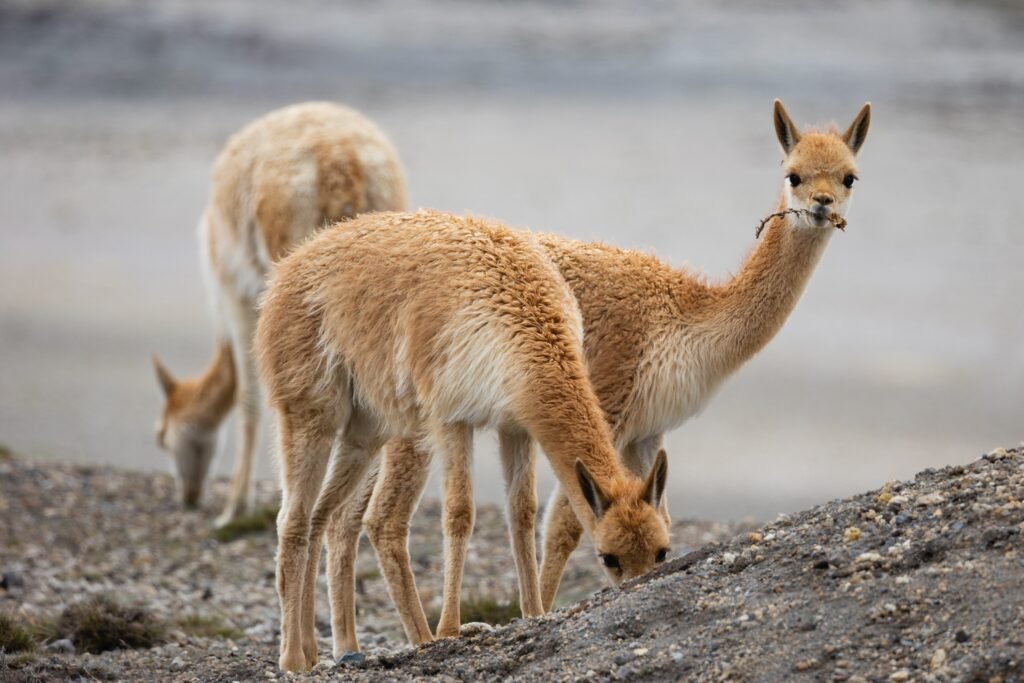
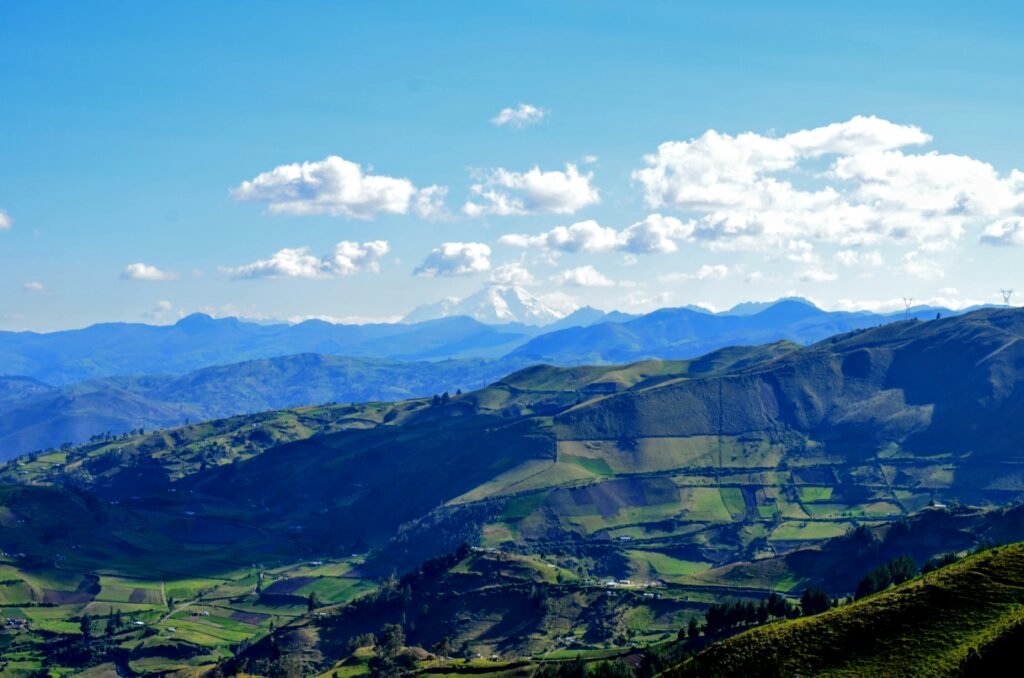
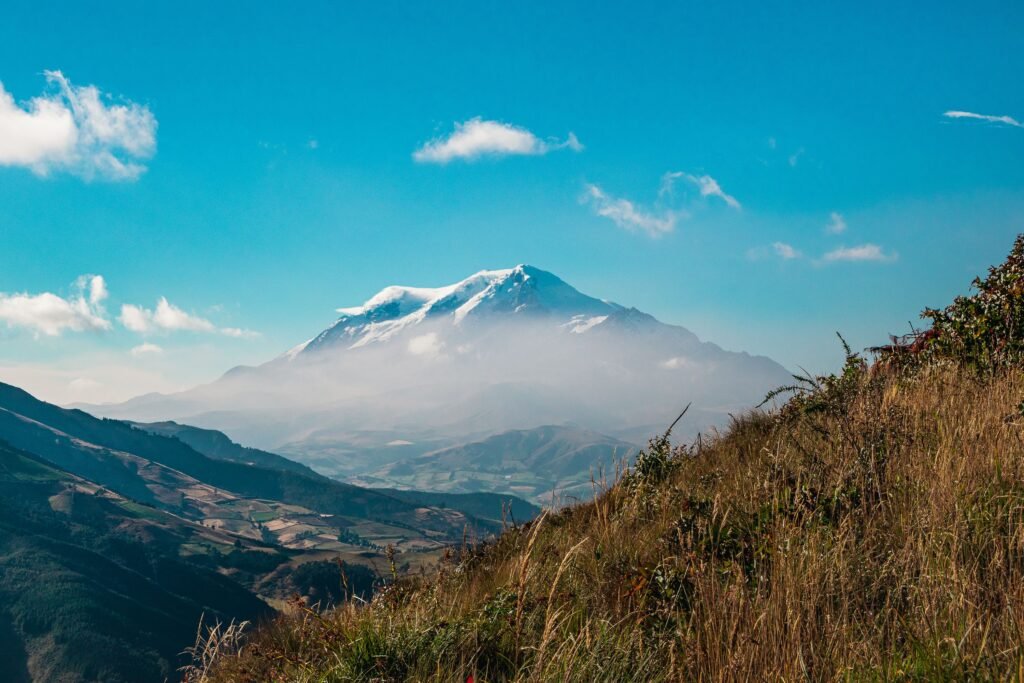
Rising majestically above the central Andean altiplano, Volcán Chimborazo (6,263 metres) is not merely Ecuador’s tallest peak; due to the equatorial bulge of our planet, its glaciated summit represents the closest point on Earth to the sun. Surrounding this massive stratovolcano is the Reserva de Producción de Fauna Chimborazo, a high-altitude sanctuary of windswept páramo grasslands, wild vicuña herds, and deep-rooted indigenous Puruhá culture.
For the autonomous adventure traveller, exploring Chimborazo and the broader Avenue of the Volcanoes requires a deliberate, considered pace. Rushing through on fragmented day trips from Quito often results in altitude sickness, long hours trapped in transit, and shallow encounters with local communities.
By contrast, embarking on a structured multi-day expedition allows you to acclimatise safely, traverse interconnected mountain passes, stay in family-run haciendas or mountain refuges, and forge genuine connections with highland guides and artisans.
Logistically, navigating high-altitude mountain passes, remote trailheads, and variable weather systems can prove challenging for independent travellers. Joining an expertly guided multi-day tour resolves these complex logistics seamlessly—providing 4×4 support vehicles, mountain equipment, certified local leadership, and curated accommodation.
Below, the editorial team at Wheely Tyred has vetted and selected five of the finest bookable multi-day itineraries that highlight Chimborazo and the central Ecuadorian Andes.
Highland epochs / Chimborazo’s essential takeaways
Navigating the glaciated peaks and high páramo of central Ecuador requires a thoughtful approach to altitude, terrain, and local culture. Here are the core insights to guide your multi-day expedition through the realm of Chimborazo:
- Volcán Chimborazo: Standing as Earth’s closest point to the sun due to the equatorial bulge, this glaciated stratovolcano offers high-altitude hikes up to the 5,000-metre Whymper Refuge and technical downhill mountain bike descents dropping thousands of vertical metres
- El Altar & Laguna Amarilla: Tucked inside Sangay National Park, this extinct, collapsed volcano features an alpine horseshoe caldera enclosing an emerald lake surrounded by nine jagged, snow-capped spires
- Equestrian Trails: Traversing traditional Chagra cowboy routes on hardy Criollo horses provides access to high páramo grasslands, wild vicuña herds, and community-run stays in Salinas de Guaranda
- Avenue of the Volcanoes: Comprehensive overland routes link UNESCO-listed Quito to colonial Cuenca, taking in crater hikes at Laguna Quilotoa, waterfalls in Baños de Agua Santa, and ancient Cañari-Inca ruins at Ingapirca
- Altitude Acclimatisation: Success above 4,000 metres demands spending at least two to three days in intermediate valleys such as Quito or Otavalo before attempting steep mountain passes
- Local Economies: Supporting mountain communities involves purchasing artisan cheeses and textiles, choosing certified local guides, and carrying small US dollar cash denominations ($1–$10) for rural markets
Volcán Chimborazo.
Stand at the furthest point from the centre of the Earth
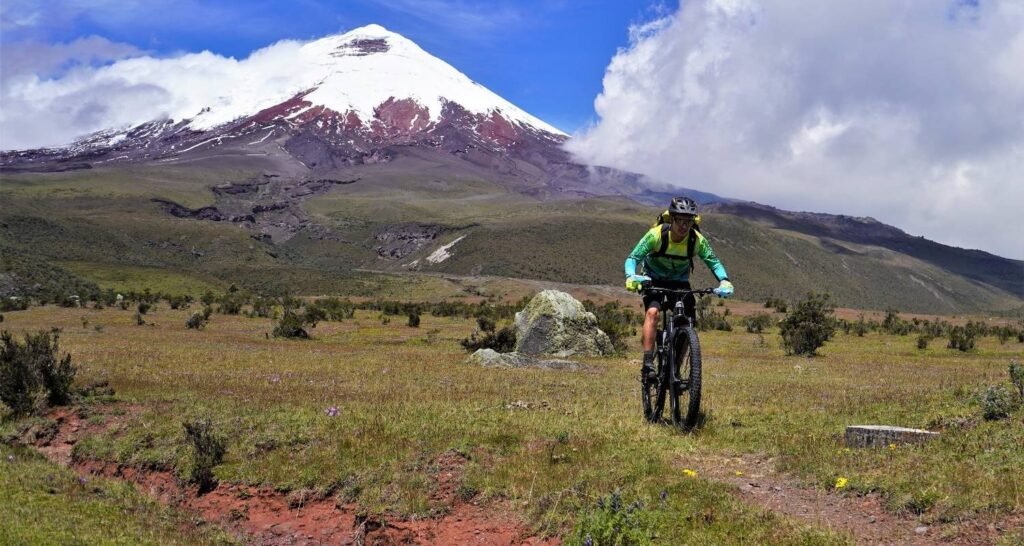
Descend volcanic slopes on two wheels
Rating & reviews
(169+ verified reviews on TourRadar)
Why this tour stands out
For cycle touring enthusiasts and mountain bikers, this 10-day expedition by bike represents the ultimate pedal-powered exploration of Ecuador’s volcanic backbone. The itinerary is meticulously crafted to showcase diverse ecosystems, starting from cloud forest descents on Pichincha down to the indigenous valleys of Otavalo and Zuleta, before tackling the high country.
The undisputed crown jewel of the journey occurs on Day 7, when riders are driven up to the first refuge on Volcán Chimborazo at 4,800 metres above sea level. From this oxygen-thin vantage point, participants embark on a thrilling, technical downhill mountain bike descent that drops thousands of vertical metres into the lush, subtropical town of Baños de Agua Santa.
A dedicated 4×4 support vehicle accompanies the group throughout, carrying all luggage, spare bike parts, and tired riders when high passes require a lift.
Key highlights
- Unforgettable 4,800-metre high-altitude bicycle descent down the flanks of Chimborazo
- Multi-day gravel and trail cycling across Pichincha, Imbabura, Cotopaxi, and Quilotoa crater
- Cultural stops in Otavalo Market and the traditional embroidery village of Zuleta
- Waterfall trail riding near Pailón del Diablo in Baños de Agua Santa
- Full 4×4 vehicle support, mechanical assistance, and comfortable hotel/lodge accommodation
Ideal for
Keen mountain bikers, gravel cyclists, and active adventure travellers wanting a high-adrenaline, physical journey across Ecuador’s most famous volcanic landscapes.
Local insight
The descent from Chimborazo begins in near-freezing temperatures at 4,800 metres and ends in subtropical heat in Baños. Ensure you wear full-finger cycling gloves, thermal wind-stopper layers at the start, and carry a lightweight backpack to stow layers as the ambient temperature rises rapidly during the descent.
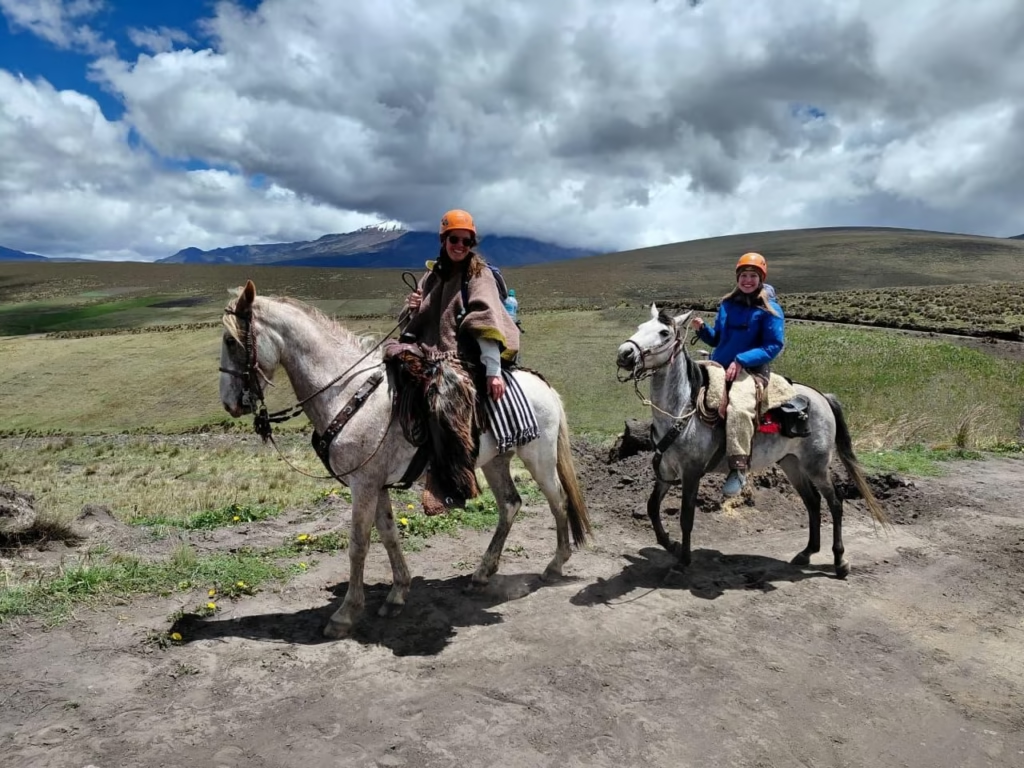
High-altitude equestrian trails across the windswept páramo
Rating & reviews
(New activity on GetYourGuide)
Why this tour stands out
This 2-day equestrian journey provides an intimate look into Ecuador’s mountain heritage, tracing traditional Chagra (Andean cowboy) trails along the lower flanks of Volcán Chimborazo.
Departing from historic Riobamba, riders mount hardy local Criollo horses specially bred for sure-footed endurance at extreme altitudes. The route climbs through windswept páramo ecosystems where wild vicuñas graze freely beneath the towering glaciers of Chimborazo.
Rather than returning to a commercial city hotel, the tour traverses down into the famous mountain community of Salinas de Guaranda. Here, travellers stay in community-run lodging and gain direct insight into the town’s renowned cooperative economic model, visiting local workshops producing artisan cheeses, chocolates, and woollen textiles.
The pace is relaxed yet invigorating, balancing hours in the saddle with rich cultural exchanges.
Key highlights
- Ride sure-footed Criollo horses across high-altitude páramo grasslands
- Spot wild vicuñas roaming in their native high-Andean habitat
- Overnight stay in the cooperative mountain village of Salinas de Guaranda
- Guided visits to local artisan workshops (cheesemaking, chocolate crafting, wool spinning)
- Full support from experienced local Andean Chagra guides
Ideal for
Active travellers, horse-riding enthusiasts, and culture seekers looking for an authentic short-duration wilderness getaway away from standard vehicular routes.
Local insight
High-altitude winds across the páramo can cause temperatures to drop sharply, even under clear skies. We recommend packing warm thermal baselayers, riding trousers, leather riding gloves, and a windproof, waterproof hard-shell jacket to stay comfortable throughout the ride.
The Ecuadorian Sierra.
Get lost in the hills
The grand overland highway through central Ecuador
Rating & reviews
(New activity on GetYourGuide)
Why this tour stands out
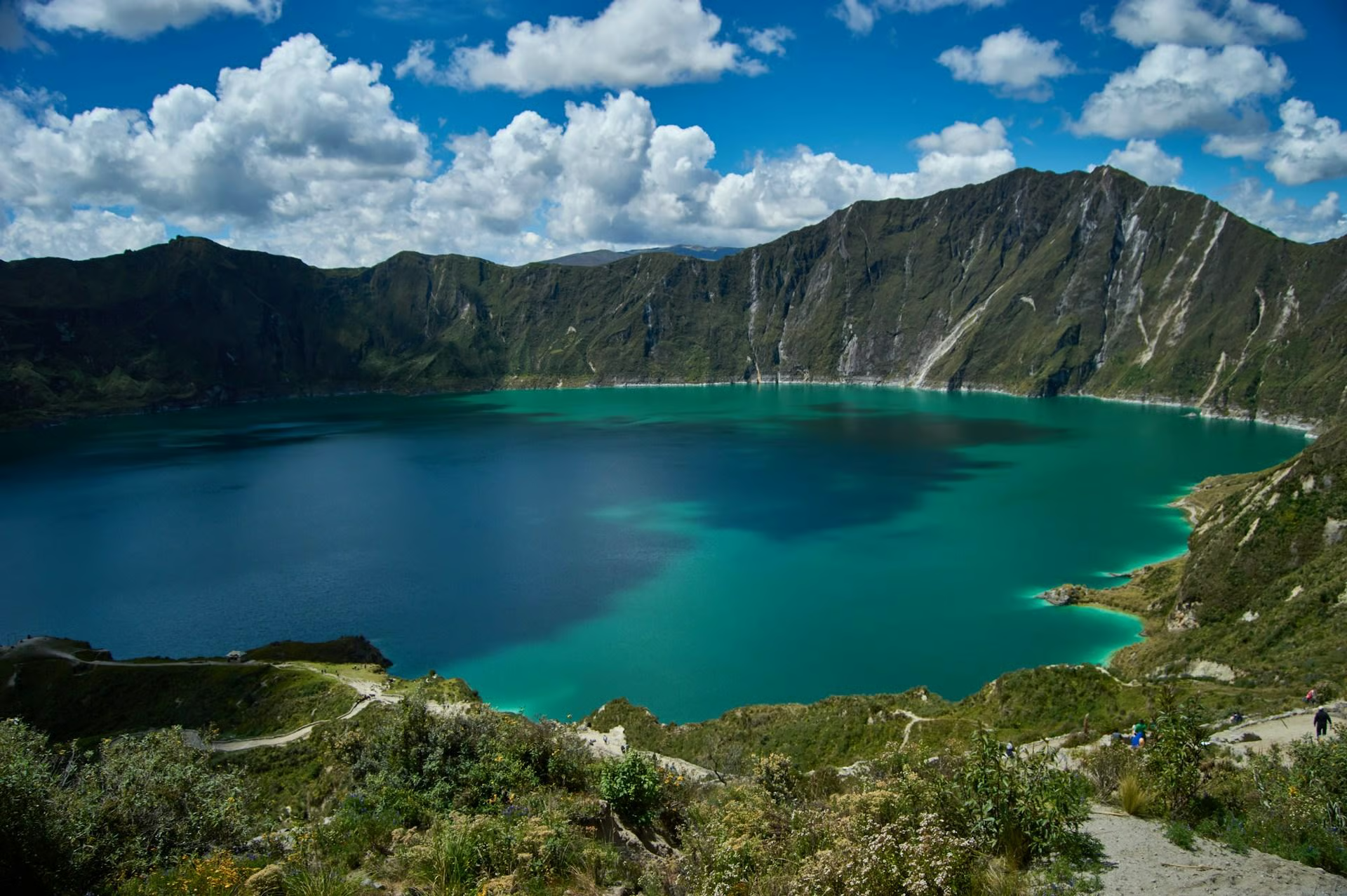
If you seek a comprehensive, well-paced overland journey that links Ecuador’s iconic northern landmarks with its southern cultural centres, this 8-day expedition offers an exceptional structural arc. Starting in the UNESCO-listed historic core of Quito, the route journeys southward along the Pan-American Highway, pausing for crater hiking at Laguna Quilotoa and waterfall exploration in Baños de Agua Santa.
As the journey reaches the central highlands, travellers explore the base camp of Volcán Chimborazo to observe wild vicuñas and high-altitude flora. The itinerary then traverses south through the striking sand dunes of the Palmira Desert and the historic railway country of Alausí, visiting the pre-Columbian Cañari-Inca ruins of Ingapirca before concluding in colonial Cuenca.
Operating with comfortable ground transport and curated heritage hotels, it eliminates the hassle of public bus transfers across provincial boundaries.
Key highlights
- Complete continuous overland transit from Quito to Cuenca via central mountain highways
- High-altitude excursion to Chimborazo Volcano Reserve and the Palmira Desert
- Crater rim trek into the turquoise waters of Laguna Quilotoa
- Excursion along the Route of the Waterfalls in Baños, including Pailón del Diablo
- Guided historical tour of Ingapirca, Ecuador’s most important Inca archaeological complex
Ideal for
Travellers seeking an all-encompassing, comfortable overland expedition that balances high mountain scenery, cultural heritage sites, and hassle-free regional transit.
Local insight
Because this tour spans multiple climatic zones—from chilly volcanic peaks to warm valleys—packing versatile layers is essential. Keep a small daypack inside the transport vehicle containing sunscreen, water, warm clothing, and camera gear for quick roadside photo stops and trail walks.
The Galápagos.
Ecuador’s Enchanted Isles
Thermal springs, ancient trails, and southern valleys
Rating & reviews
(5 verified reviews on TourRadar)
Why this tour stands out
Operated by the highly praised local outfit GUIDEcuador Travel, this 10-day small-group circuit is a masterclass in regional variety. The itinerary combines northern artisan highlights in Otavalo and Cotacachi with thermal relaxation in the volcanic hot springs of Papallacta, before heading south into the high volcanic corridor.
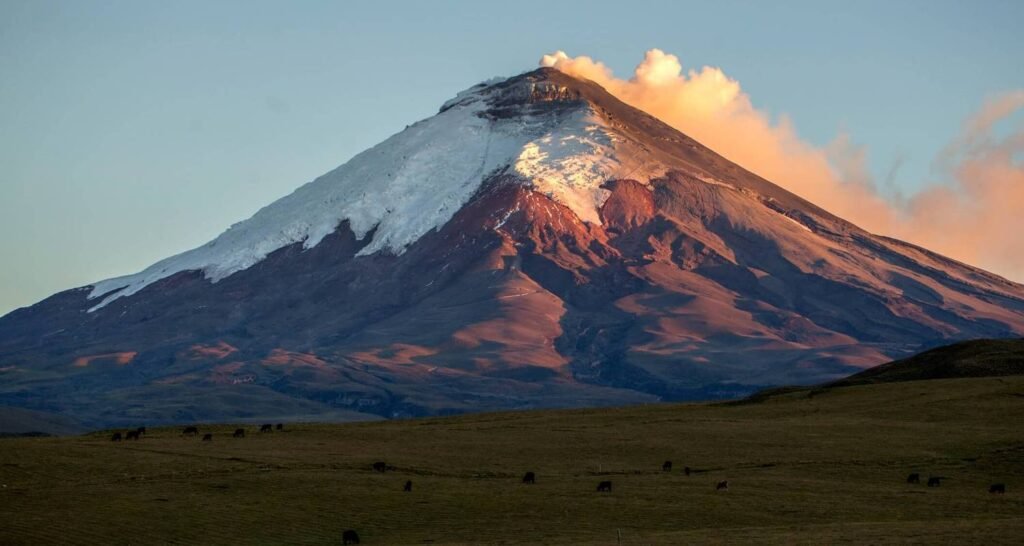
On Day 6, travellers ascend Volcán Chimborazo, hiking from the Hermanos Carrel refuge at 4,700 metres up to the Whymper Refuge at 5,000 metres above sea level. After taking in the views beneath the glaciers, the journey continues south to the Ingapirca ruins, the colonial streets of Cuenca, and finishes in the tranquil, subtropical climate of Vilcabamba—the famed Valley of Longevity.
Accommodations include historic 4-star haciendas and boutique mountain hotels.
Key highlights
- Hike to the 5,000-metre Whymper Refuge on Volcán Chimborazo
- Soaking in the natural geothermal pools of Papallacta Hot Springs
- Exploration of Otavalo craft market, Cuicocha lake, and Cotopaxi National Park
- Guided tour of the Ingapirca archaeological site and Cuenca’s colonial centre
- Relaxing finale in the subtropical valley of Vilcabamba with optional hiking to Mandango Hill
Ideal for
Couples, active seniors, and small-group travellers who want a balanced multi-day itinerary combining moderate mountain walking, thermal wellness, and rich cultural history.
Local insight
Reaching 5,000 metres at the Whymper Refuge on Chimborazo requires steady, deliberate breathing and slow pacing. Drink plenty of water or mña tea prior to the hike, and take small, rhythmic steps to prevent altitude headaches.
Alpine wilderness trekking into extinct calderas
Rating & reviews
(New activity on Viator)
Why this tour stands out
Located just east of Chimborazo within Sangay National Park, Volcán El Altar (Capac Urcu in Kichwa) is an extinct, collapsed stratovolcano considered by mountaineers to be one of the most visually stunning peaks in the Americas.
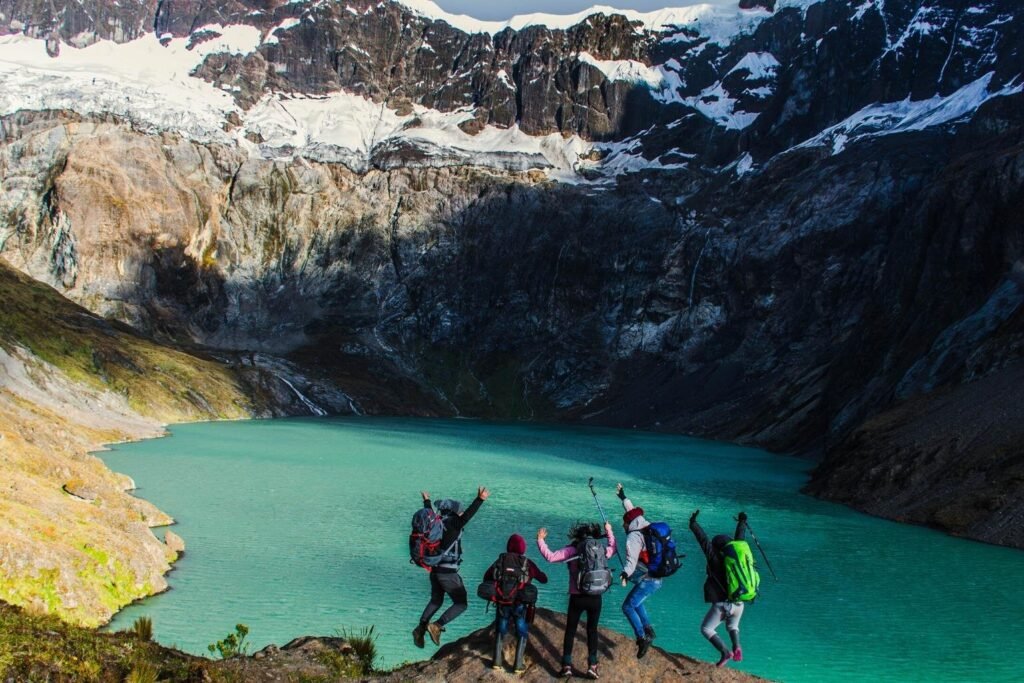
This intensive 2-day backcountry trek takes hikers into the heart of El Altar’s giant horseshoe caldera to view Laguna Amarilla (Yellow Lagoon), an emerald-yellow glacial lake encased by nine jagged, snow-capped spires.
Departing from Riobamba, the trek navigates the famously boggy Collanes Valley (Valle de Collanes), testing hikers with true wilderness terrain. Accompanied by experienced mountain guides and pack horses for heavy gear, travellers stay overnight in basic mountain refuges or backcountry campsites.
The reward is unmatched solitude and breathtaking alpine vistas of hanging glaciers crashing into crater lakes.
Key highlights
- Multi-day wilderness trekking in UNESCO-listed Sangay National Park
- Hike through the pristine alpine wetlands of the Collanes Valley
- Ascend to the rim of El Altar caldera for panoramic views of Laguna Amarilla and hanging glaciers
- Remote backcountry camping and mountain refuge experience away from commercial tourist circuits
- Certified local mountain guides handling trail navigation, safety, and backcountry meals
Ideal for
Experienced hikers, wilderness backpackers, and fit adventure seekers looking for an authentic, challenging alpine trek off the mainstream tourist grid.
Local insight
The lower Collanes Valley is notoriously wet and muddy year-round. Standard hiking boots can easily become soaked; local guides strongly recommend wearing knee-high rubber boots (botas de caucho) for the valley crossing, switching to sturdy trekking boots for the steep, rocky ridge ascent up to Laguna Amarilla.
The Ecuadorian Amazon.
The most biodiverse place in the world
Our practical Chimborazo multi-day expedition planning guide
Essential expedition preparation
- Altitude Strategy: Spend 2+ days above 2,500m before attempting 4,500m+ passes
- Layering System: Technical hard-shell and fleece for sub-zero páramo weather
- Cash & Currency: Carry small US dollar notes ($1-$10) for remote mountain stalls
- Travel Insurance: Ensure policy covers active multi-day trekking above 4,000m
1. High-altitude acclimatisation strategy
Volcán Chimborazo’s high refuges sit between 4,800 and 5,000 metres above sea level. Attempting these heights without prior acclimatisation carries a significant risk of Acute Mountain Sickness (AMS).
We advise spending at least two to three days at intermediate altitudes—such as Quito (2,850m) or Otavalo (2,500m)—before embarking on high-altitude treks or cycle descents around Cotopaxi, Quilotoa, or Chimborazo.
Stay well hydrated, avoid alcohol during transit days, and communicate openly with your tour guide if you experience dizziness or headaches.
2. Technical clothing & temperature swings
Ecuador’s equatorial mountain climate is defined by microclimates rather than distinct thermal seasons. In a single day on an overland or cycling tour, you may experience near-freezing mornings on the wind-whipped páramo at 4,500 metres, followed by 25°C sunshine in a sheltered valley like Baños.
Adhere to a strict three-layer clothing system:
- Base Layer: Moisture-wicking synthetic or Merino wool thermal tops and bottoms
- Insulating Layer: Mid-weight fleece jacket or down sweater
- Outer Layer: Windproof, waterproof hard-shell jacket with sealed seams (Gore-Tex or similar)
3. Financial logistics in highland villages
While Ecuador uses the US dollar ($) as its official currency, credit cards are rarely accepted in small Andean villages, artisan markets, or roadside cafes.
Always carry $30 to $50 in cash, strictly in small denominations ($1, $5, and $10 bills). Shopkeepers and indigenous vendors in places like Salinas, Zumbahua, or Otavalo often cannot break $20 or $50 notes.
4. Environmental ethics & páramo conservation
The high-altitude páramo ecosystem acts as a massive natural sponge, absorbing rainwater and glacial melt to supply fresh water to millions of people in the valleys below.
The vegetation is fragile and slow-growing. When hiking or riding, stick strictly to established trails to prevent soil erosion, pack out all non-biodegradable waste, and refrain from feeding wild vicuñas.
Choosing tours that employ certified local guides ensures that entry fees directly support conservation efforts within national parks and fauna reserves.
The Ecuadorian Coast.
Where you’ll find the very best food
Find your path along the equatorial spine
Read this far?
Travelling through the Ecuadorian Andes is not about rushing to check off high-altitude summits or snapping quick photos from the window of a long-distance bus. It is an invitation to slow your pace, align your breath with the thin mountain air, and engage deeply with the landscapes and communities that make this region so extraordinary.
From the solitary winds of the páramo to the warm hospitality of family-run haciendas, a well-planned multi-day expedition yields encounters that single-day excursions simply cannot match.
By choosing curated itineraries that prioritise certified local guides, small-group logistics, and community-led tourism—like the cooperative workshops in Salinas de Guaranda or backcountry treks in Sangay National Park—you ensure that your journey directly sustains the heritage and ecosystems of the central highlands.
These mountains have sustained indigenous Puruhá and Cañari cultures for centuries, and stepping lightly upon their trails is essential to preserving their integrity.
Whether you elect to trace the high ridges on foot, descend volcanic slopes on two wheels, or ride alongside Chagra horsemen beneath the glaciated peak of Chimborazo, the key lies in deliberate preparation and open-minded exploration.
Respect the altitude, pack for shifting equatorial microclimates, and give yourself the time required to absorb the sheer grandeur of the landscape.
The high trails of the equatorial Andes are waiting. Pack your kit, fine-tune your gear, and step out onto the ancient pathways beneath the sun.
Affiliate Disclaimer: Some of the links on Wheely Tyred are affiliate links. If you click through and make a booking or purchase, we may earn a small commission at no extra cost to you. We only recommend gear, tours, stays, and services we genuinely use, trust, and stand behind — our editorial independence always comes first. These commissions help keep our independent cycling guides and travel stories free to read. You can also buy me a coffee here — thanks for supporting the ride!
Frequently asked questions about the best Chimborazo multi-day tours
Allocate at least two to three nights at intermediate altitudes (such as Quito at 2,850 metres or Otavalo at 2,500 metres) before venturing above 4,000 metres. Drink plenty of water or herbal muña tea, keep physical exertion gradual during your first few days, and avoid alcohol prior to high-altitude ascents.
While Ecuador can be visited year-round, the dry season months from June to September and December to January generally offer the clearest skies, stable trail conditions, and the best mountain visibility for trekking and cycling.
Reputable multi-day operators provide technical gear such as front-suspension or full-suspension mountain bikes, helmets, and pack horses for heavy gear. You will need to supply your own high-quality personal layering system, sturdy waterproof hiking boots, windproof outer shells, and a 20–30 litre daypack.
The trail through the Collanes Valley (Valle de Collanes) passes through extremely boggy, waterlogged páramo wetlands year-round. Standard hiking boots quickly get submerged in deep mud, so local guides strongly advise wearing fitted rubber boots (botas de caucho) for the valley crossing before switching into trekking boots for the steep crater climb.
Ecuador uses the US dollar. In rural Andean villages, mountain refuges, and artisanal cooperatives, credit card processing is practically non-existent. Always carry $30 to $50 in crisp, small cash denominations ($1, $5, and $10 notes), as vendors rarely have change for larger bills.
Joining a guided small-group or private expedition solves complex high-altitude transit, provides experienced local leadership, and ensures emergency support on remote mountain trails, making it the safest and most practical choice for independent adventure travellers.
Ecuador.
Pure wonder on the equator.


