
Uncover Cañar’s ruins / The ultimate first-timer’s guide to Ingapirca, Ecuador
Master the logistics, altitude, and weather for a seamless trip to Ecuador’s premier archaeological site
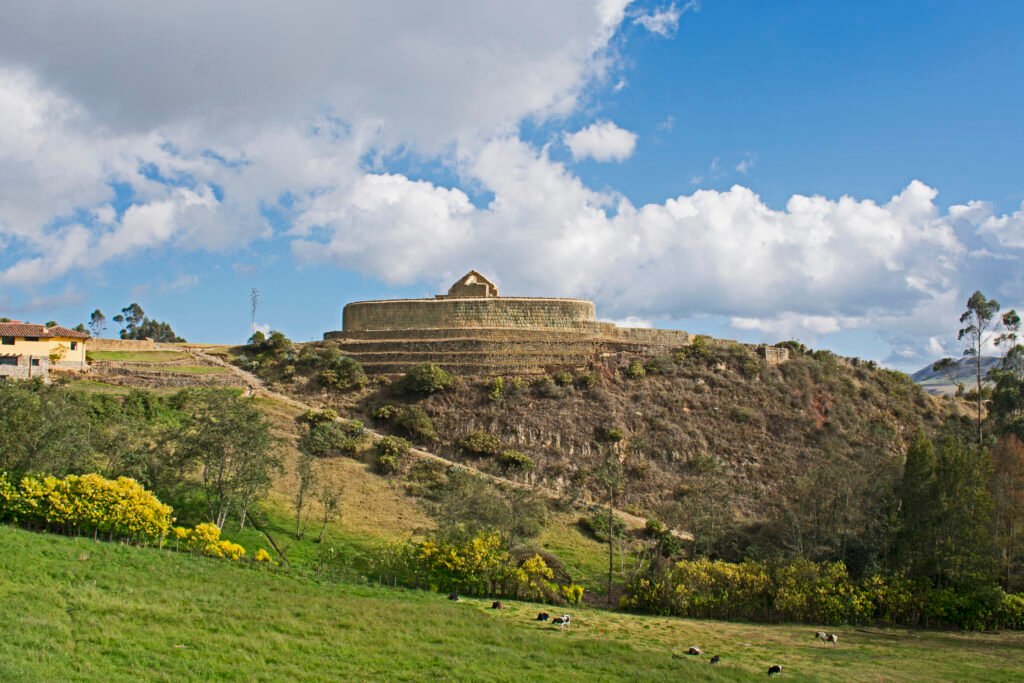
Where Cañari sun-worshippers met Inca stonemasons

BEN FINCH
Perched high in the wind-swept hills of the Cañar province, 3,160 metres above sea level, lies Ingapirca—Ecuador’s largest and most significant archaeological complex. For centuries, this strategic mountain plateau was a sacred site for the indigenous Cañari people, who worshipped the moon, before the expanding Inca Empire merged their own sun-worshipping architecture into the existing foundations.
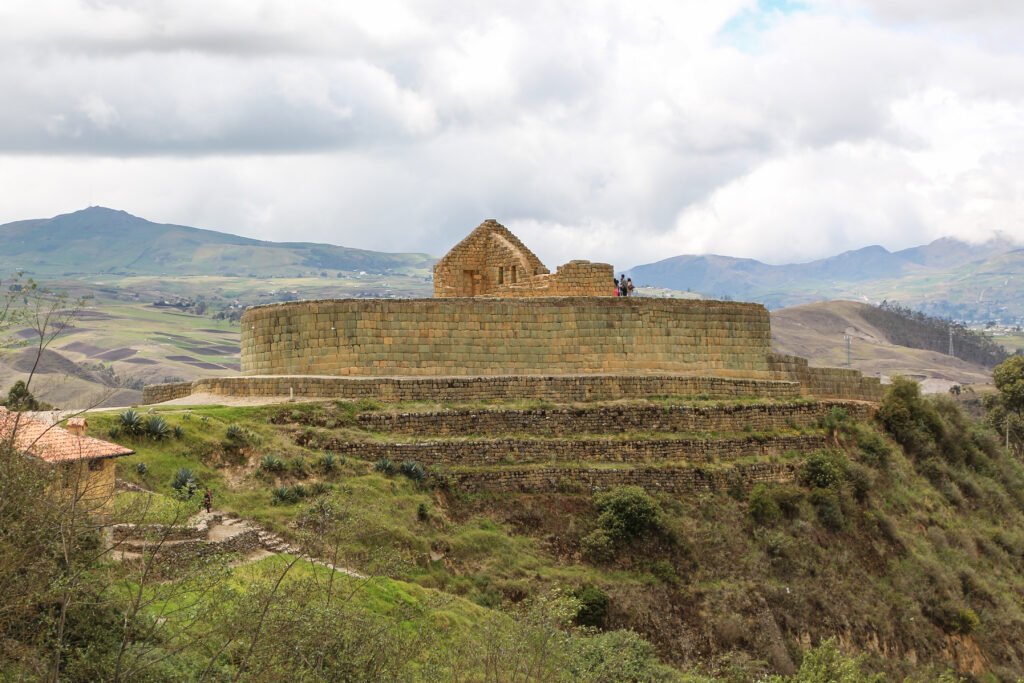
Today, it stands as a testament to cultural synthesis, home to the country’s only surviving elliptical Sun Temple.
Yet, despite its historical weight, visiting Ingapirca independently remains delightfully low-key if you know how to navigate the Andean highlands on your own timeline. Independent travellers do not need to sit on a crowded tour bus or adhere to a rigid group itinerary to experience this ancient marvel.
By taking local transport, understanding the unique microclimates, and knowing what to expect on arrival, you can experience Ingapirca with absolute autonomy.
Essential Ingapirca takeaways for the independent explorer
Everything you need to navigate Ecuador’s foremost archaeological site on your own schedule. Here are the core details to keep in mind before heading into the Cañar highlands.
- Dual Heritage: Admire the unique combination of Cañari moon-worshipping foundations and precise Inca sun-temple masonry
- Altitude and Climate: Prepare for rapid weather shifts at 3,160 metres with versatile layers and sturdy waterproof footwear
- Morning Advantage: Arrive before noon to catch clear skies and uninterrupted valley views before afternoon cloud rolls over the páramo
- Public Transport: Catch a direct Cooperativa Cañar bus from Cuenca terminal or connect via Cañar town using local camionetas
- The Trail Less Travelled: Walk the nearby Cara del Inca loop to see the natural rock face and escape tour bus crowds
- Highland Comforts: Refuel with a bowl of warm locro de papa or a spiced canelazo from the small family-run stalls near the entrance
- Cash Readiness: Bring small denominations and coins, as local buses and vendors cannot break large banknotes
Ingapirca.
Where Cañari history meets the grandeur of the Inca
The microclimate reality / Weather at 3,160 metres
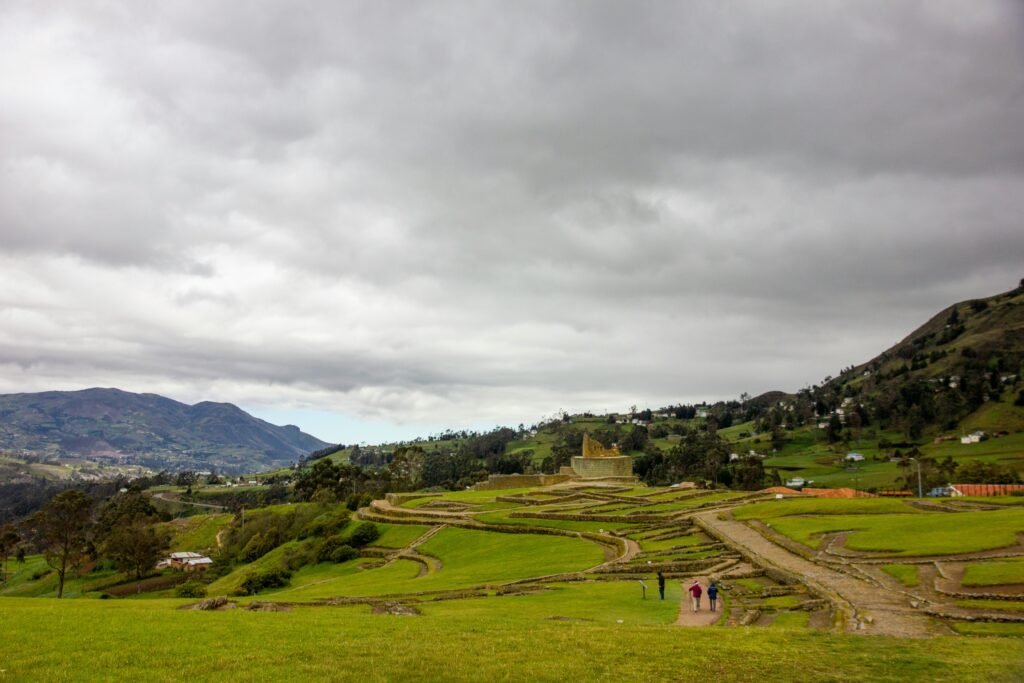
One of the biggest mistakes first-time visitors make when travelling to Ingapirca is assuming the weather will resemble nearby Cuenca. While Cuenca enjoys a relatively gentle spring-like climate, Ingapirca sits several hundred metres higher in an exposed mountain pass.
The weather here is notoriously volatile and can cycle through four seasons in a single morning. Strong paramo winds sweep across the complex, bringing sudden temperature drops, dense fog rolling over the valley, and quick, localised downpours.
- Mornings are your best friend: Plan to arrive as close to opening as possible. Clear skies are far more common before noon, offering brilliant sunlight across the stonework and panoramic views of the surrounding green valleys. By 14:00, cloud cover almost always rolls in
- The Layering Rule: Wear versatile layers. A warm base layer, a fleece, and a high-quality wind- and waterproof jacket are essential
- Footwear matters: Leave canvas trainers or open shoes at your accommodation. The stone paths, grassy terracing, and nearby natural trails can become slick and muddy within minutes of a rain shower
The Ecuadorian Sierra.
Get lost in the hills
Getting there independently / Transport without the tour group
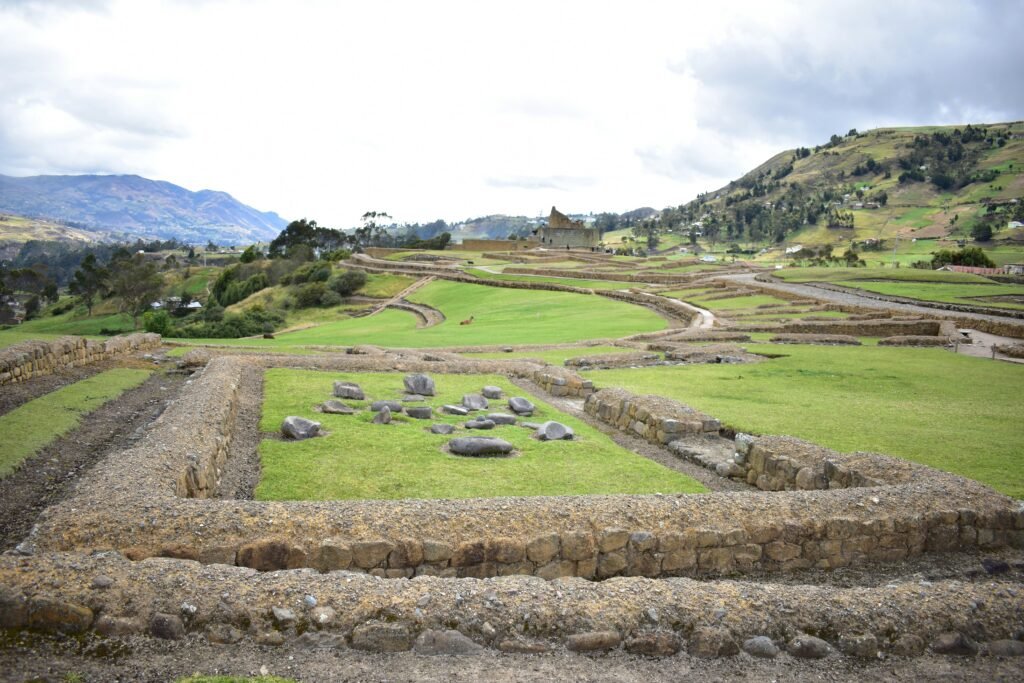
Many travel agencies in Cuenca will try to convince you that booking an organised day tour is the only convenient way to visit Ingapirca. That is simply not true. Travelling independently via public transport is straightforward, budget-friendly, and allows you to set your own pace.
Direct bus from Cuenca
The most seamless route for independent travellers is the direct bus operated by Cooperativa Cañar, departing from Cuenca’s main bus terminal (Terminal Terrestre).
- Buses typically leave early in the morning and take roughly 2.5 hours, winding through picturesque highland farmland and small rural villages
- The bus drops you off directly outside the entrance to the ruins and waits there before making the return journey back to Cuenca in the early afternoon
- Pro-tip: Always double-check return departure times directly with the driver when you step off the bus, as schedules can fluctuate slightly
Travel via Cañar town
If you miss the direct morning bus, do not worry. You can take any frequent northbound bus heading towards Cañar or El Tambo. From either town, local green buses or small shared pickup trucks (camionetas) run regularly up the hill directly to the complex. This multi-leg route gives you ultimate flexibility if you prefer a later start or wish to explore the rural towns along the way.
The Ecuadorian Amazon.
The most biodiverse place in the world
Navigate the archaeological site
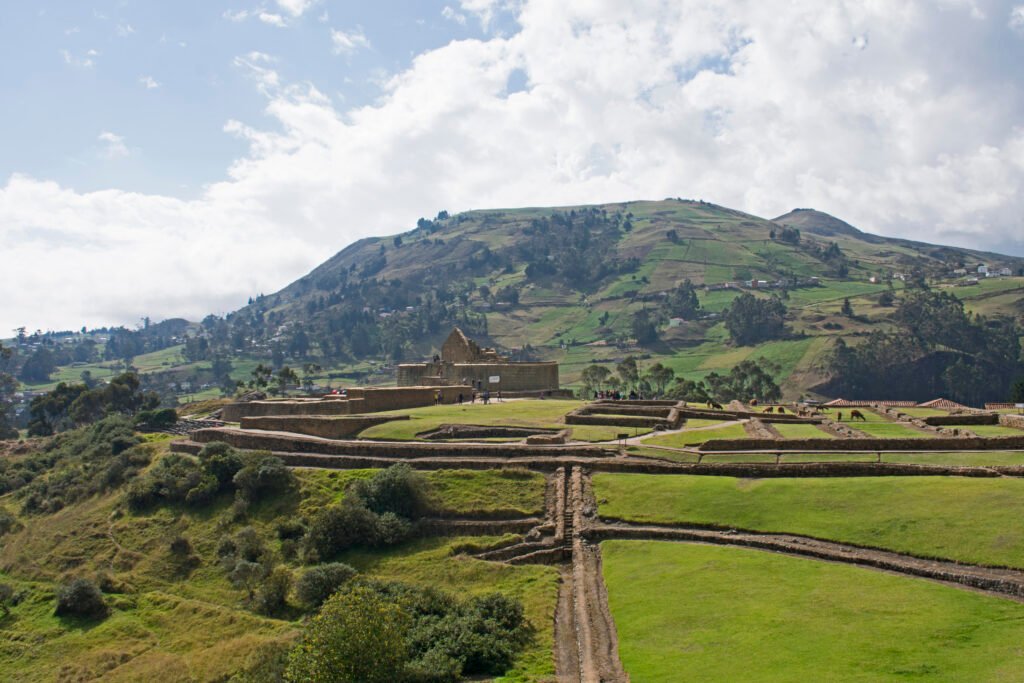
Upon arrival at the site, you will purchase your entry ticket at the visitor centre. Entry includes access to the main archaeological site, as well as the on-site museum, which houses fascinating artefacts including Cañari pottery, textiles, and burial relics discovered during excavations.
Local etiquette and guided routes
To preserve the delicate stone structures, visitors walk along a designated circular trail accompanied by an official site guide. The cost of the guide is included in your entry fee.
- Respecting the Sacred Stones: Please resist the urge to climb on the ancient stone walls or cross marked ropes. The mortarless masonry of the Sun Temple relies on precise balance and friction, and preserving these ancient structures requires everyone’s cooperation
- Language: Official guides are usually available in both Spanish and English. If you arrive early, you may get a private or small-group experience simply by waiting a few minutes at the entrance
The Galápagos.
Ecuador’s Enchanted Isles
What first-timers often overlook
To get the absolute most out of your visit to Ingapirca, keep these local nuances in mind:
1. Small bills are essential
Cash remains king throughout the Ecuadorian highlands. Neither the local transit operators, small fruit stalls, nor nearby family-run eateries will be able to break $20 or $50 notes. Carry plenty of $1, $5, and $10 bills, along with loose $1 coins, for tickets, snacks, and transport.
2. The altitude factor
At over 3,100 metres above sea level, even a mild walk up the stone terraces can leave you short of breath. Take slow, deliberate steps, stay well-hydrated, and give yourself a couple of days to acclimatise in Cuenca or Quito before tackling high-altitude walks.
3. Cara del Inca Trail
Most tour groups rush visitors through the central ruins and straight back onto the bus. Independent travellers have the freedom to stay longer and explore the surrounding landscape.
Just beyond the main complex lies a short, scenic hiking path leading to the Cara del Inca (Inca Face)—a striking natural rock formation carved by wind and rain that resembles a human profile. The walk takes roughly 30 to 45 minutes round trip, winding through peaceful native flora with beautiful views across the valley.
4. Local cuisine to warm you up
After walking through the chilly mountain air, skip any tourist-oriented cafes and pop into the small, family-run eateries located along the road just outside the site entrance.
Order a steaming bowl of locro de papa—a rich, traditional Ecuadorian potato soup topped with fresh avocado and farmer’s cheese—or enjoy freshly brewed canelazo, a warm spiced cinnamon drink that is perfect for taking the edge off the Andean chill.
The Ecuadorian Coast.
Where you’ll find the very best food
Stand where cultures met in the clouds
Read this far?
Visiting Ingapirca on your own terms transforms a standard day trip into an immersive journey through time. Stepping off the local bus into the crisp, thin air of the Cañar province immediately sets a quieter, more reflective rhythm.
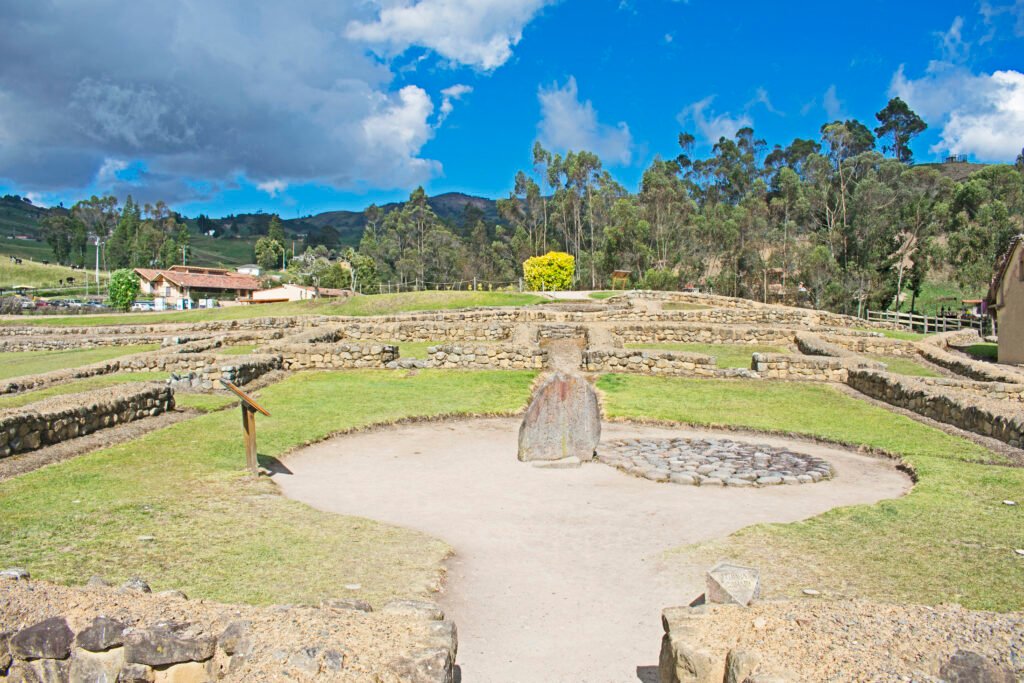
Without the ticking clock of a group itinerary or a guide hustling you back onto a coach, you are free to trace the curves of the Sun Temple at your own speed, noticing the subtle shift from soft Cañari structures to rigid Inca stonework.
The true magic of independent travel in the southern Andes lies in these unscripted moments. It is found in sitting on the grass terraces as mist drifts across the valley, chatting with local vendors over a hot mug of canelazo, or wandering the Cara del Inca trail in total solitude.
These experiences cannot be packaged or rushed; they require the time and space that only managing your own transport provides.
As you head back down the winding mountain roads towards Cuenca or Cañar, you carry away far more than a few photographs of ancient ruins. You leave with a genuine appreciation for the complex layerings of Ecuadorian history and the quiet satisfaction of having navigated the highlands on your own steam.
Plan thoughtfully, pack for the mountain weather, and let the wild beauty of Ingapirca unfold naturally.
Affiliate Disclaimer: Some of the links on Wheely Tyred are affiliate links. If you click through and make a booking or purchase, we may earn a small commission at no extra cost to you. We only recommend gear, tours, stays, and services we genuinely use, trust, and stand behind — our editorial independence always comes first. These commissions help keep our independent cycling guides and travel stories free to read. You can also buy me a coffee here — thanks for supporting the ride!
Frequently asked questions about visiting Ingapirca for the first time
Entry costs $2 USD for international visitors, which includes access to both the archaeological complex and the on-site museum, as well as a guided circuit in English or Spanish.
Arriving between 09:00 and 11:00 is ideal. High-altitude mountain weather often brings heavy fog or rain by early afternoon, so morning visits offer the best chances for clear skies and sunlight across the stonework.
Not at all. Direct buses run daily from Cuenca’s Terminal Terrestre directly to the complex gates, taking roughly two and a half hours. Alternatively, frequent buses run to Cañar or El Tambo, where you can easily catch a local camioneta or bus up to the site.
The complex sits at 3,160 metres above sea level. Spend a couple of days acclimatising in Cuenca (2,560 metres) or Quito first, drink plenty of water, and pace yourself while walking up the terraced stone pathways.
Look for small family-run eateries outside the entrance serving locro de papa, a creamy potato soup served with avocado and fresh cheese, or canelazo, a hot spiced cinnamon drink made with local sugarcane spirit.
To protect the fragile mortarless stonework, visitors must follow the circular trail alongside an official site guide. However, once you finish the guided circuit, you can freely walk the unguided Cara del Inca trail nearby at your own pace.
Ecuador.
Pure wonder on the equator.


