Markets, artisans & crater lakes / The best day tours to Otavalo and the Imbabura highlands
Otavalo day tours / Best guided trips to Ecuador’s indigenous capital
Slow travel through an artisan heartland, sacred waterfalls, and volcanic crater lakes
BEN FINCH
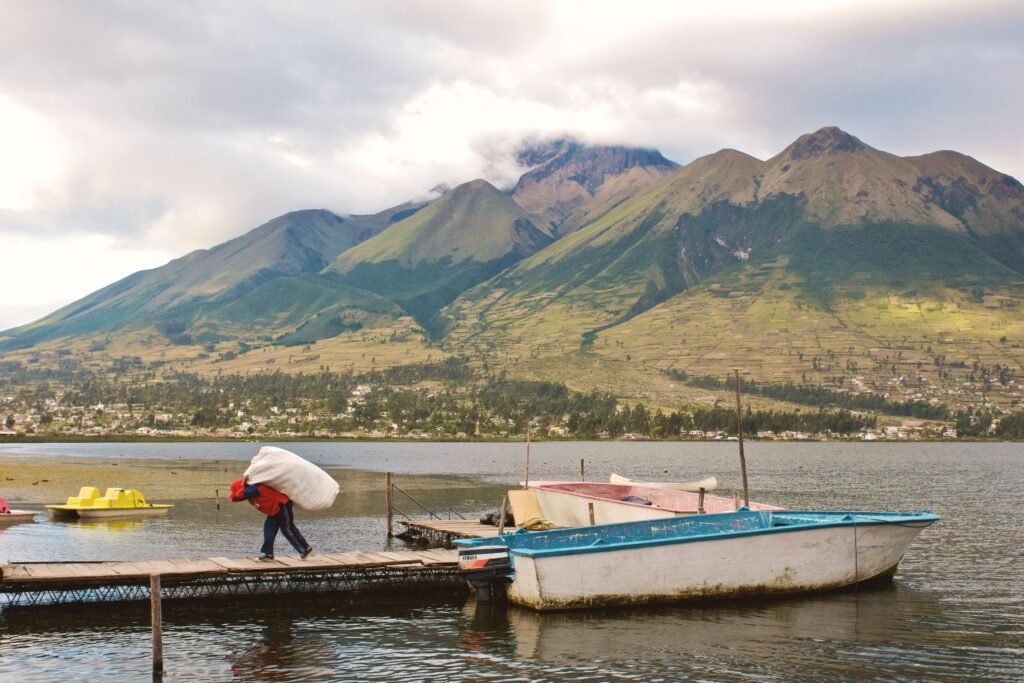
Travelling north from Quito along the winding artery of the Pan-American Highway, the urban sprawl of the capital gives way to the dramatic contours of the Northern Ecuadorian Andes. Towering peaks like Mount Imbabura and the snow-capped peak of Mount Cayambe frame a landscape shaped by ancient volcanic activity, deep-rooted indigenous traditions, and fertile highland valleys.
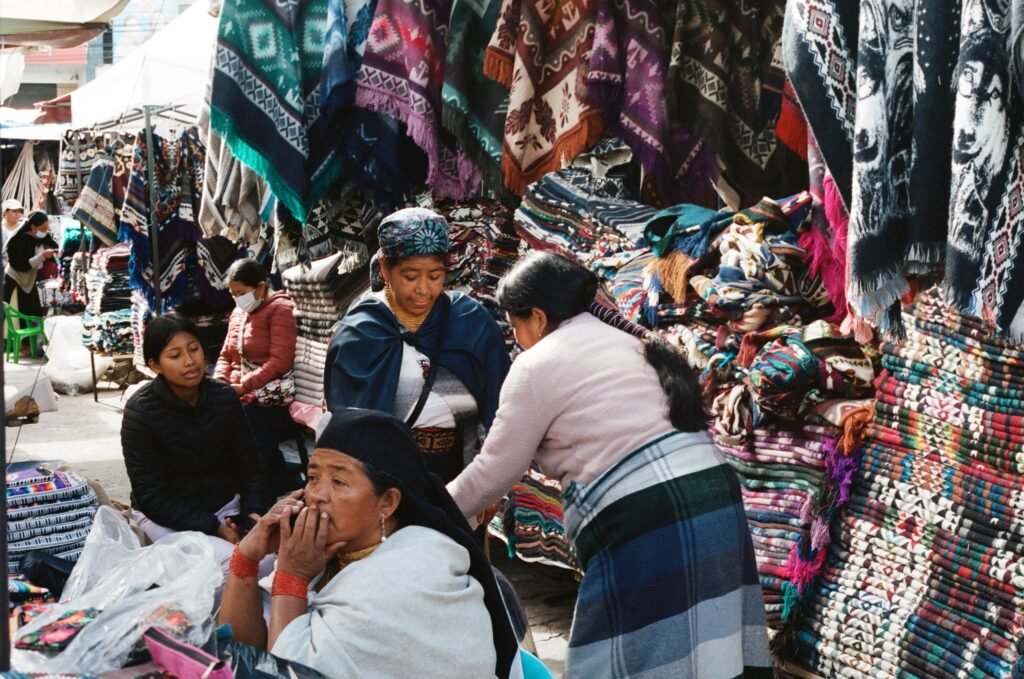
At the epicentre of this region lies Otavalo, home to the Kichwa Otavalo people and what is universally recognised as the largest and most vibrant indigenous market in South America.
At Wheely Tyred, our philosophy centres on slow, intentional travel. While independent exploration is at the core of what we do, navigating the sprawling Imbabura Province in a single day can present distinct logistical hurdles for autonomous travellers.
Navigating regional bus schedules, arranging rural transport to outlying artisan hamlets like Agato or Peguche, and reaching the rim of high-altitude crater lakes like Laguna Cuicocha often consume valuable hours.
This is where thoughtfully curated, small-group or private guided excursions excel. The right local guide does not merely provide seamless door-to-door transport; they grant meaningful access to generations-old weaving families, interpret the complex symbolism behind traditional Kichwa attire, and share regional delicacies that standard tourist stops overlook.
Below, we have thoroughly vetted and selected six exceptional day tours that offer authentic cultural immersion, environmental respect, and unparalleled local insight.
The highlands at a glance / Key takeaways for Otavalo
Imbabura Province offers one of South America’s richest cultural and geographical landscapes, blending indigenous craft traditions with towering volcanic scenery. Here are the essential highlights and slow-travel insights for navigating Ecuador’s northern highlands:
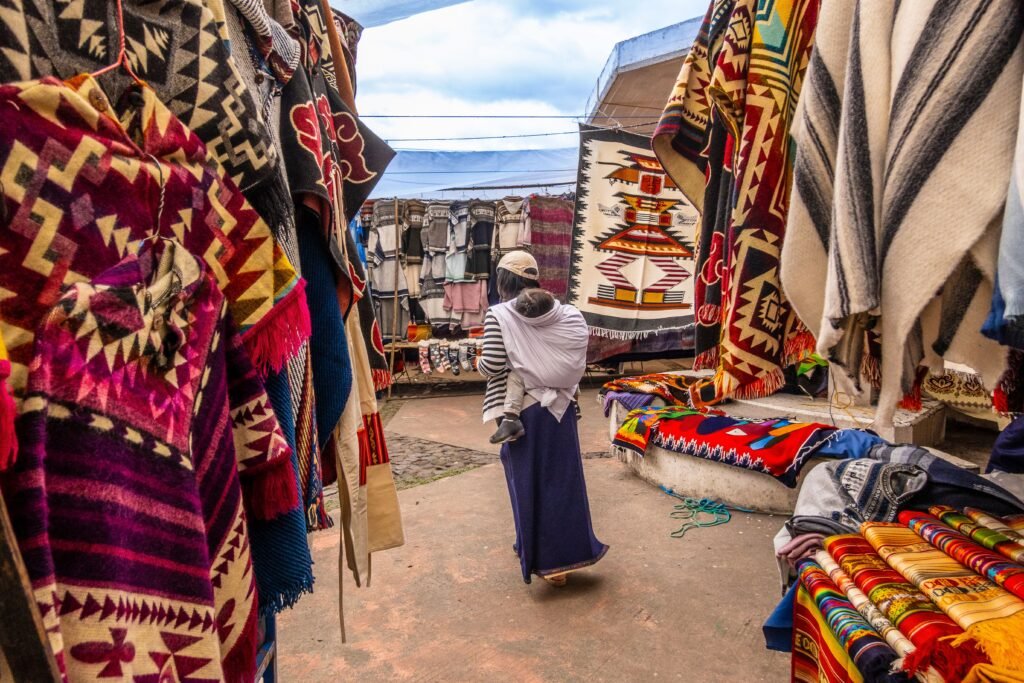
- Plaza de Ponchos: South America’s largest indigenous artisan market, brimming with hand-woven alpaca textiles, tapestries, and generations of Kichwa cultural heritage
- Laguna Cuicocha: A dramatic 3-kilometre-wide volcanic crater lake at 3,060 metres altitude, offering serene crater-rim hikes inside the Cotacachi-Cayapas Ecological Reserve
- Master Weavers of Agato & Peguche: Rural family workshops preserving ancient backstrap loom techniques and botanical yarn dyeing using cochineal, indigo, and walnut leaves
- Cotacachi Leather Quarter: Ecuador’s artisanal leather capital, where independent craftspeople hand-make jackets, boots, and bags along quiet village streets
- Cayambe’s Culinary Heritage: The traditional highland gateway town, famed for warm, flaky bizcochos baked in wood-fired brick ovens and served with fresh queso de hoja
- Sacred Waterfalls & Traditional Sound: Cascada de Peguche and Ñanda Mañachi, combining tranquil forest trails to ceremonial waterfalls with live demonstrations of hand-crafted Andean flutes
- Highland Logistics & Cash Culture: Crucial preparation for independent travellers—layering against rapid mountain weather shifts and carrying small-denomination US Dollar bills for rural stallholders
Otavalo.
Home to Plaza de Ponchos
1. The heritage & equator route
Rating & reviews
(443+ verified reviews on Viator)
Why this tour stands out
For travellers wanting an expansive overview of northern Ecuador’s cultural and geographical milestones, this itinerary delivers exceptional depth without feeling hurried. Departing early from Quito, the route tracks through the dramatic Guayllabamba Valley before stopping at Cayambe, the global capital of bizcochos—flaky, buttery highland biscuits baked in traditional brick ovens and paired with local leaf cheese (queso de hoja).
What elevates this tour above standard bus runs is its inclusion of both the Quitsato Equator Monument and the musical heritage village of Peguche. Rather than visiting commercial tourist hubs, guests visit Ñanda Mañachi, a celebrated local family home and workshop where traditional Andean panpipes, charangos, and flutes are handcrafted and demonstrated by master musicians. You then enjoy ample, unstructured time at Otavalo’s Plaza de Ponchos to interact directly with local vendors.
Key highlights
- Cayambe Culinary Stop: Freshly baked bizcochos and artisanal cheese tasting
- Plaza de Ponchos: Two full hours of free exploration at Otavalo’s central artisan market
- Cascada de Peguche: A peaceful forest walk to the sacred 18-metre waterfall used for ritual cleansing baths during the Inti Raymi festival
- Ñanda Mañachi Workshop: Live music performance and instrument-making demonstration inside an indigenous family workshop
Ideal for
First-time visitors to Ecuador who want a balanced blend of gastronomy, indigenous music, textile shopping, and geography.
Local insight
Bring small US dollar denominations ($1, $5, and $10 notes). Market vendors in the Plaza de Ponchos rarely have change for $20 or $50 notes, and card readers are non-existent among small stallholders.
The Ecuadorian Sierra.
Get lost in the hills
2. The artisan & leather village excursion
Rating & reviews
(62+ verified reviews on GetYourGuide)
Why this tour stands out
This trip focuses intensely on Imbabura’s world-renowned artisan communities. While Otavalo dominates the textile trade, the neighbouring town of Cotacachi sits at the foot of the extinct Cotacachi Volcano and is recognised as Ecuador’s premier centre for fine leather craftsmanship.
Led by highly rated local guides like Christian and Javier, this small-group excursion balances structured visits with generous free time. The itinerary provides an authentic glimpse into everyday rural life, allowing travellers to observe Kichwa women wearing traditional embroidered blouses (blusas bordadas), gold-beaded necklaces (gualcamayanas), and dark wool wraps (anacos) as part of their daily routine—not merely for tourist presentation.
Key highlights
- Cotacachi Leather District: Dedicated exploration of independent boutiques producing handmade leather jackets, boots, and bags
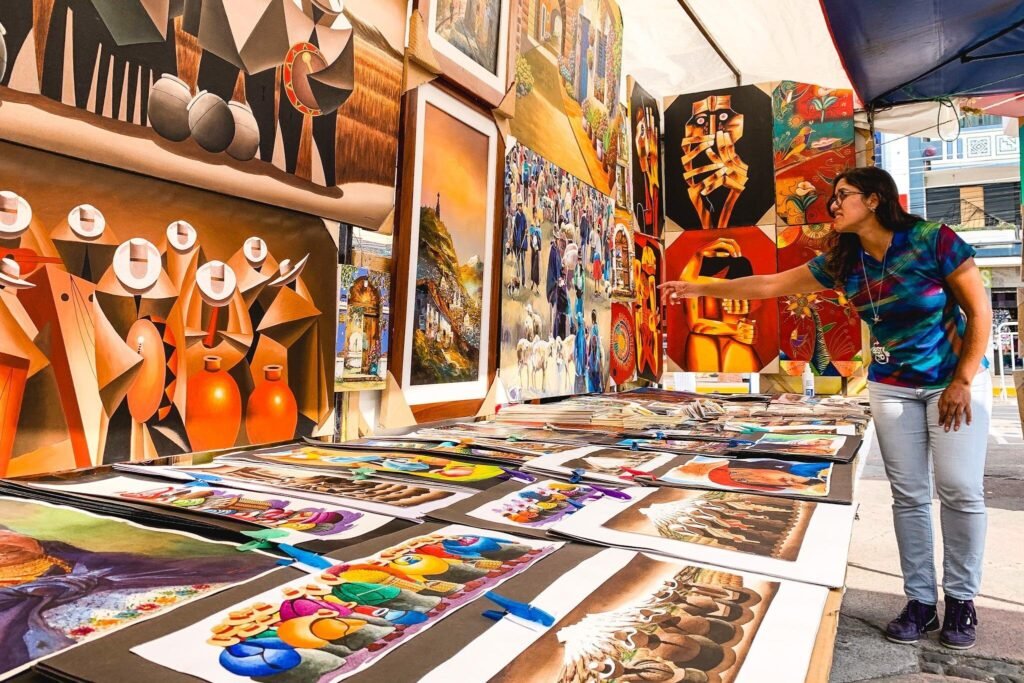
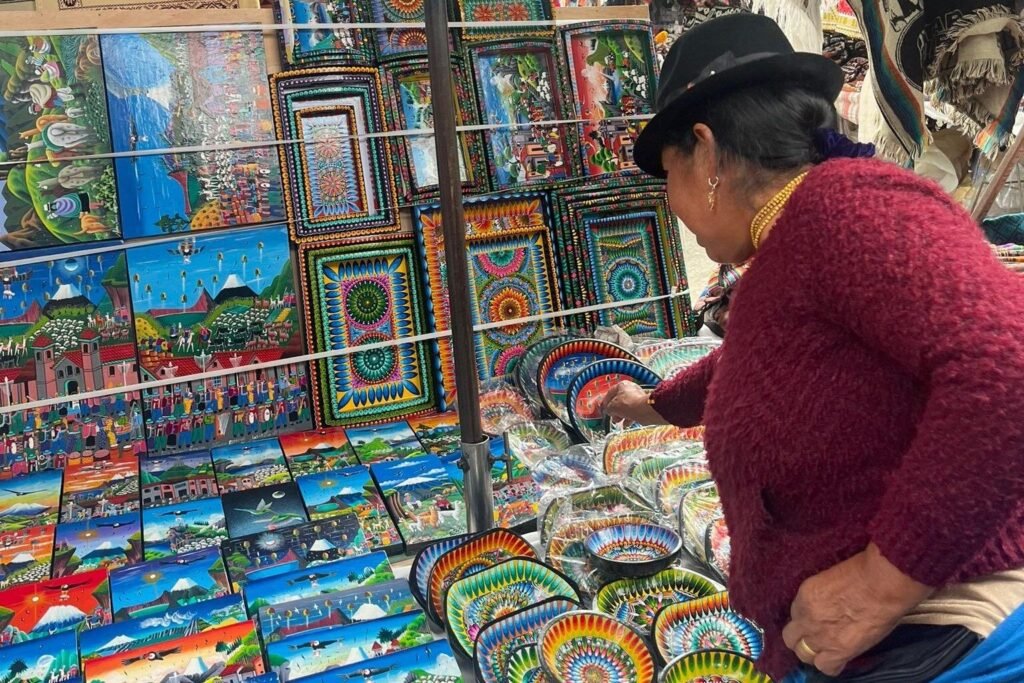
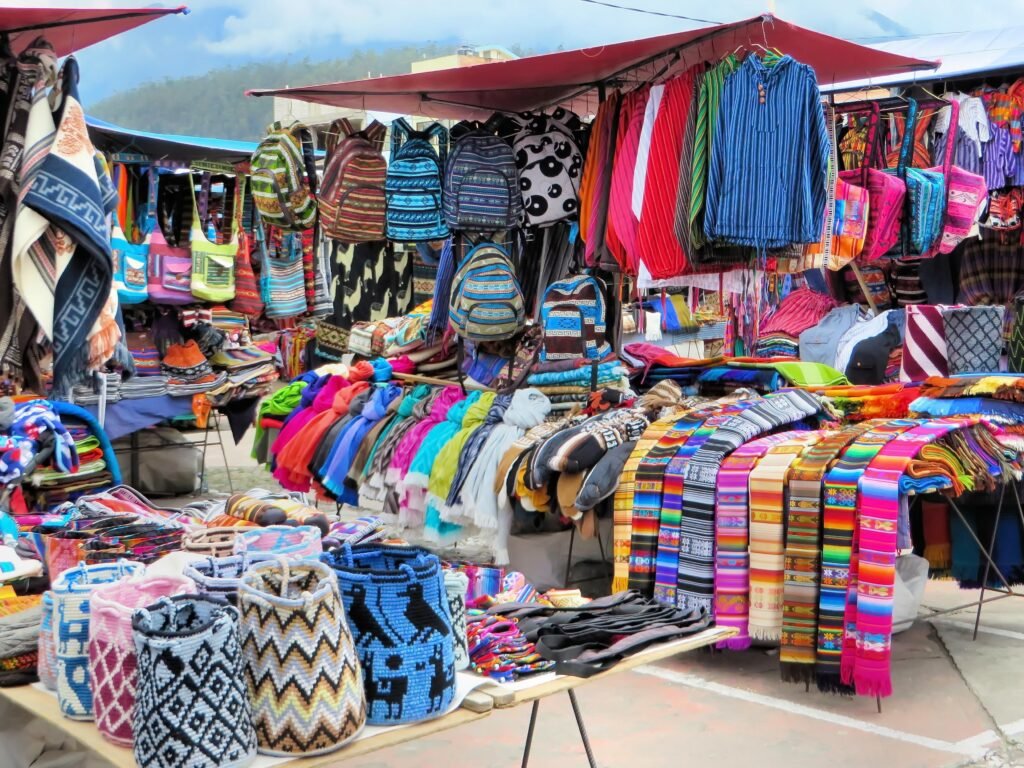
- Otavalo Craft Market: Ample time to browse hand-woven alpaca blankets, tapestries, and hammocks
- Peguche Waterfall Walk: A relaxing nature trail through eucalyptus groves to the spiritual fall
- Highland Gastronomy: A sit-down lunch stop at a vetted local restaurant serving traditional Andean trout and potato soups
Ideal for
Travellers passionate about slow fashion, handmade leather goods, and rural village architecture.
Local insight
When visiting Cotacachi, look beyond the main street boutiques. Wander down the side avenues near the central plaza to find smaller master leatherworkers who take custom orders and craft items directly inside their workshops.
The Galápagos.
Ecuador’s Enchanted Isles
3. The Andean nature & crater lake panorama
Rating & reviews
(41+ verified reviews on Viator)
Why this tour stands out
Operated by Ecuatraveling, this trip pairs the sensory bustle of Otavalo’s markets with the serene, high-altitude wilderness of the Cotacachi-Cayapas Ecological Reserve. The crown jewel of this reserve is Laguna Cuicocha (meaning Lake of the Guinea Pig in Kichwa), a stunning 3-kilometre-wide caldera lake located at 3,060 metres above sea level.
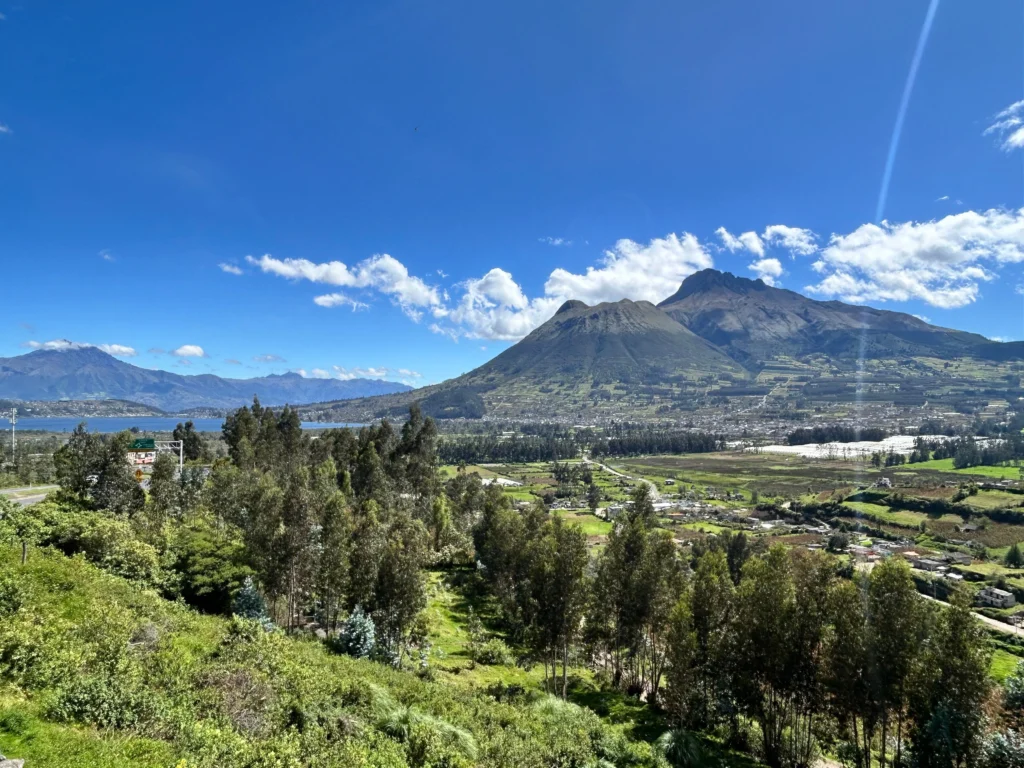
The tour stops first at the Miralago viewpoint for sweeping views of Lago San Pablo cradled beneath Mount Imbabura. After navigating the stalls of the Plaza de Ponchos, the group ascends to the rim of Laguna Cuicocha. Here, you will hike along the caldera edge, surrounded by native páramo vegetation, wild orchids, and volcanic dacite domes rising from the deep blue water.
Key highlights
- Miralago Viewpoint: Panoramic views across Lago San Pablo and the surrounding agricultural terraces
- Otavalo Market Exploration: Guided walkthrough of the market followed by independent shopping time
- Laguna Cuicocha Nature Hike: Guided crater-rim walk inside Cotacachi-Cayapas Ecological Reserve
- Solar Museum & Equator Stop: Informative cultural stop highlighting pre-Inca astronomical knowledge
Ideal for
Nature enthusiasts, hikers, and photographers who want to combine cultural markets with dramatic volcanic landscapes.
Local insight
Weather at Laguna Cuicocha (3,060m) changes rapidly. Even if Quito is warm and sunny, the crater rim is frequently windy and cold. Pack a windproof jacket, a warm beanie, and sturdy walking shoes with good tread.
4. The cultural & sacred waters journey
Rating & reviews
(28+ verified reviews on GetYourGuide)
Why this tour stands out
This highly rated small-group experience emphasises the spiritual connection between the local Kichwa population and their natural surroundings. Rather than treating stops as mere photo opportunities, the itinerary explores the cultural meaning of water and mountains in Andean cosmology.
Guests spend significant time visiting traditional artisan families in Peguche and Agato who continue to practice ancestral backstrap loom weaving and natural yarn dyeing using indigo, cochineal, and local plants.
Combined with a tranquil visit to Laguna Cuicocha and an unhurried exploration of Otavalo’s markets, this trip offers an intimate, respectful immersion into rural Ecuadorian traditions.
Key highlights
- Ancestral Textile Craft: Demonstration of backstrap weaving and organic dyeing techniques using local flora and insects
- Peguche Sacred Grove: Walk through ancient eucalyptus trees to the ceremonial waterfall
- Crater Lake Rim Exploration: Guided discussion on the geological formation and spiritual reverence of Laguna Cuicocha
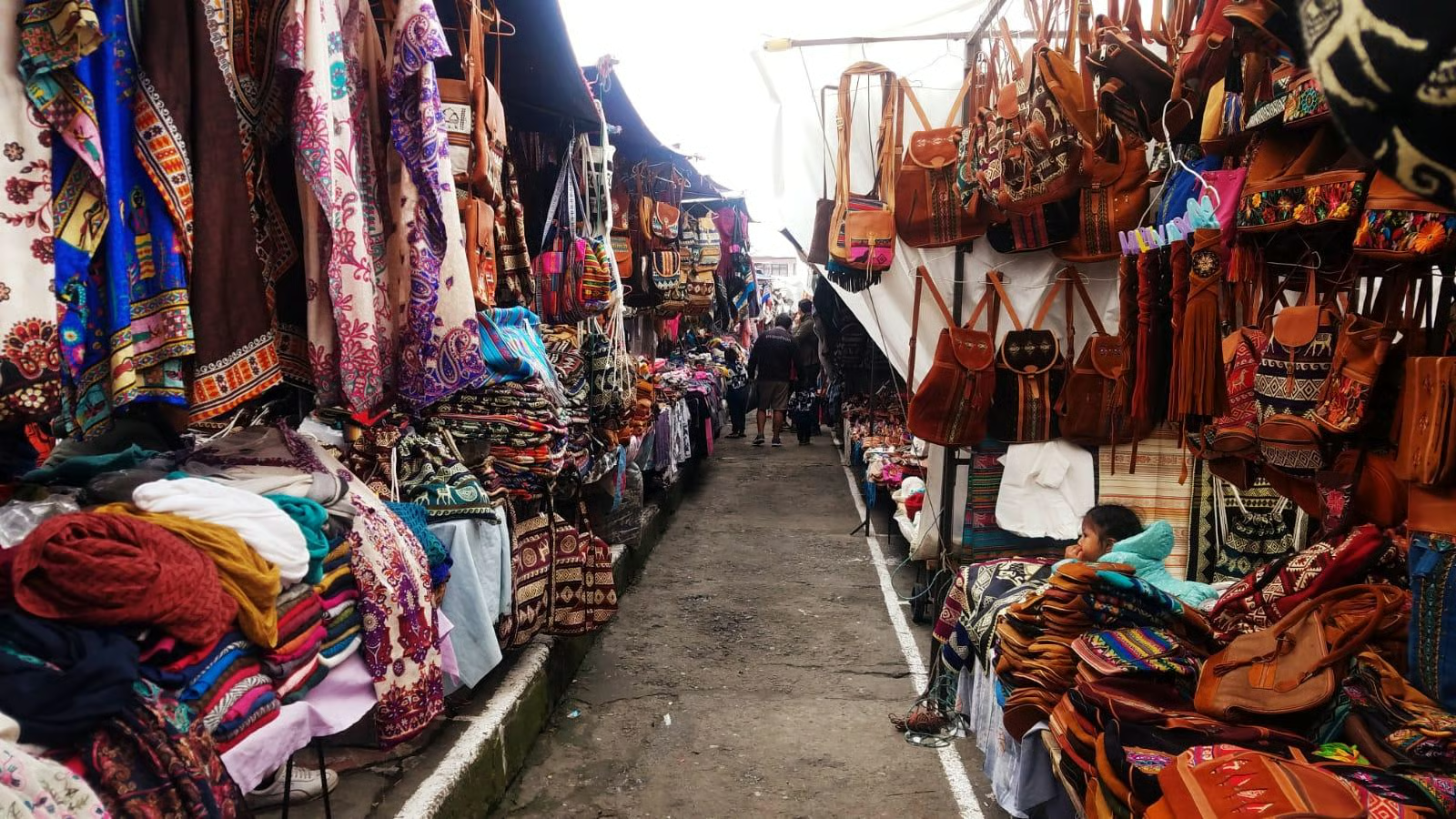
- Otavalo Plaza de Ponchos: Focused time to source direct-from-artisan textiles, woodcarvings, and silver jewellery
Ideal for
Mindful travellers, cultural heritage enthusiasts, and visitors seeking an educational, unhurried pace.
Local insight
Take time to converse with the weaving artisans. Asking about the symbols woven into the tapestries—such as the double-headed eagle, the Andean condor, or the Chakana cross—reveals centuries of oral history.
The Ecuadorian Amazon.
The most biodiverse place in the world
5. The master weavers & heritage immersion
Rating & reviews
(6+ verified reviews on GetYourGuide)
Why this tour stands out
While much of the mass-market textile trade in Otavalo has shifted toward acrylic blends and factory looms, true master weavers still preserve the ancient techniques in the hamlets surrounding the city. This dedicated private tour avoids commercial outlets to take you directly into the homes and studios of renowned indigenous master weavers.
You will observe the step-by-step process of preparing raw sheep wool and alpaca fibre—from hand-carding and spinning on wooden spindles to dyeing yarns in copper cauldrons using natural fixatives like walnut leaves, moss, and crushed cochineal.
Sitting beside a master weaver working a pre-Columbian backstrap loom provides an appreciation for Andean textile art that no marketplace browsing can match.
Key highlights
- Private Master Workshop Access: Exclusive entry into family weaving compounds in Peguche and Agato
- Natural Dyeing Demonstration: Live preparation of botanical and mineral dye baths
- Backstrap & Treadle Loom Mastery: Comparative demonstration of ancient pre-Columbian and Spanish colonial weaving methods
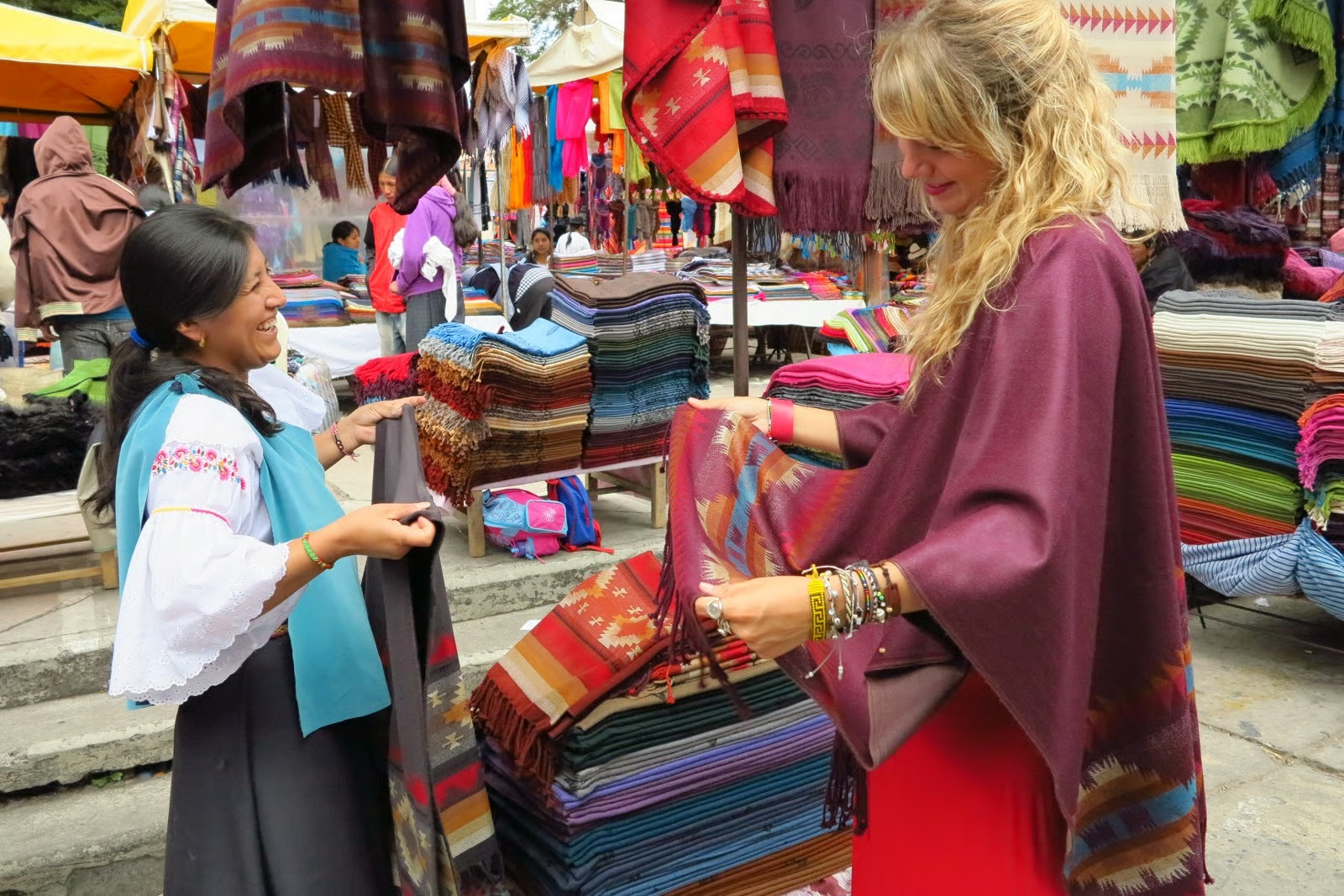
- Tailored Market Time: Flexible visit to Otavalo’s Plaza de Ponchos with your guide assisting in identifying authentic hand-spun items versus factory products
Ideal for
Textile arts aficionados, collectors, ethical shoppers, and travellers who prefer complete privacy and deep cultural engagement.
Local insight
To identify genuine hand-spun, naturally dyed wool textiles versus synthetic factory items, check the reverse side of the pattern. Hand-spun wool exhibits subtle variations in yarn thickness and soft, earth-toned dye hues, whereas synthetic blankets feature uniform, bright neon dyes.
6. The bespoke private highland journey
Rating & reviews
(20+ verified reviews on GetYourGuide)
Why this tour stands out
For travellers with specific interests—such as photography, birdwatching, extended hiking, or specialised craft sourcing—a fixed group itinerary can feel restrictive. This fully customisable private day tour grants complete control over your schedule while providing a dedicated driver and expert local guide.
Want to skip the equator monument to spend two extra hours hiking around Laguna Cuicocha? Prefer to spend the early morning capturing light at Lago San Pablo before the crowds arrive? Or perhaps you wish to visit the woodcarving village of San Antonio de Ibarra? This private experience adapts entirely to your pace, providing comfortable transport and deep local expertise.
Key highlights
- 100% Flexible Itinerary: Design your day alongside your private guide based on your exact preferences
- Scenic Guayllabamba & San Pablo Stops: Take unhurried photo stops overlooking the Andean valleys
- Otavalo Market at Your Pace: Spend as much or as little time at Plaza de Ponchos as you desire
- Optional Extension Visits: Add stops in Cotacachi, Peguche Waterfall, or regional fruit markets without group constraints
Ideal for
Families, couples, professional photographers, and autonomous travellers seeking comfort, flexibility, and personalised attention.
Local insight
If booking this private option on a Saturday (the biggest market day in Otavalo), ask your driver to depart Quito by 6.30am. Arriving in Otavalo before 8.30am allows you to experience the vibrant morning animal market (Feria de Animales) on the outskirts of town before the main tourist buses arrive.
The Ecuadorian Coast.
Where you’ll find the very best food
Our practical Otavalo excursion planning guide
Essential Otavalo packing & preparation list
- Cash in Small Bills: US Dollars ($1, $5, $10 notes essential for market stalls)
- Layered Clothing: Thermal base layer, fleece jacket, windproof/waterproof outer
- Sun Protection: SPF 50+ sunscreen, UV sunglasses, wide-brimmed sun hat
- Hydration & Snacks: Refillable water bottle, highland snacks (dry fruit/nuts)
- Trail Footwear: Comfortable walking shoes or lightweight trail runners
1. High-altitude acclimatisation & comfort
Otavalo sits at approximately 2,530 metres above sea level, while surrounding highlights like Laguna Cuicocha reach over 3,060 metres. If you have recently arrived in Quito (2,850m), give yourself at least 24 to 48 hours to acclimatise before undertaking active crater hikes. Drink plenty of water throughout the day, limit alcohol consumption, and consider sipping traditional coca tea (mate de coca) or muña tea to mitigate mild altitude symptoms.
2. Weather dynamics & the highland layering system
Weather in the Ecuadorian Andes is famously unpredictable, often delivering four seasons in one day. Early mornings are typically crisp and clear, mid-day equatorial sun can be intense, and late afternoons frequently bring sudden mountain mist or showers. Dress in versatile layers: a breathable moisture-wicking base layer, a warm fleece mid-layer, and a waterproof, windproof jacket. High-factor sunscreen (SPF 50+) and a wide-brimmed hat are non-negotiable due to the intense UV radiation at high altitude.
3. Ethical bargaining & supporting local artisans
Otavalo’s Plaza de Ponchos is a commercial marketplace, and polite negotiation is culturally accepted. However, at Wheely Tyred, we advocate for fair-trade principles. Keep bargaining respectful and light-hearted—remember that a dollar or two makes a negligible difference to a traveller’s budget but directly impacts an artisan family’s livelihood. When buying textiles, ask whether the item was hand-spun locally or mass-manufactured. Supporting independent weavers in nearby villages ensures traditional craft knowledge remains economically viable for future generations.
4. Currency logistics & cash readiness
Ecuador uses the US dollar ($) as its official currency. While high-end hotels and restaurants in Quito accept major credit cards, cash is king across Imbabura Province. Small stallholders, street food vendors, and village artisans cannot process card payments or break $20, $50, or $100 notes. Visit an ATM in Quito prior to your trip and explicitly break large notes at bank counters or supermarkets to ensure you carry a healthy supply of $1, $5, and $10 bills.
5. Responsible photography ethics
The indigenous Kichwa people of Otavalo maintain rich cultural traditions and distinctive dress. While the colourful markets are a photographer’s dream, always ask for permission before taking close-up portraits of locals, particularly elders and children (“¿Puedo tomar una foto, por favor?”). Many artisans are delighted to pose if you engage in conversation or purchase a small item from their stall first.
More than the market stall / Why Otavalo demands slow exploration
Read this far?
Otavalo is too often reduced to a whistle-stop day trip from Quito—a quick tick on a hurried itinerary where travellers rush through the crowded aisles of the Plaza de Ponchos before boarding a return bus to the capital. Yet, as any seasoned highland traveller knows, the true magic of Imbabura Province lies just beyond the central market square.
Stepping into the surrounding hamlets reveals an Andean rhythm that has endured for centuries. From watching a master weaver card raw fleece beside a loom in Agato to breathing in the crisp, eucalyptus-scented air along the trail to Cascada de Peguche, these experiences reward those willing to slow down and look closer.
Guided small-group excursions shouldn’t isolate you from local reality; the best ones act as bridge-builders, opening doors to family workshops and high-altitude trailheads that rural public transit renders difficult to coordinate in a single day.
Whether you find yourself sipping mate de coca overlooking the volcanic expanse of Laguna Cuicocha or admiring the intricate embroidery of a Kichwa anaco, Imbabura leaves an indelible mark. It demands curiosity, patience, and a deep respect for the communities who call these dramatic valleys home. Pack your layers, bring small bills, and let the northern highlands show you Ecuador at its most authentic.
Affiliate Disclaimer: Some of the links on Wheely Tyred are affiliate links. If you click through and make a booking or purchase, we may earn a small commission at no extra cost to you. We only recommend gear, tours, stays, and services we genuinely use, trust, and stand behind — our editorial independence always comes first. These commissions help keep our independent cycling guides and travel stories free to read. You can also buy me a coffee here — thanks for supporting the ride!
Frequently asked questions about visiting Otavalo & Imbabura
While the Plaza de Ponchos operates every day of the week, Saturday is the primary market day when vendors expand into surrounding city streets and the early morning Feria de Animales (livestock market) takes place on the edge of town. Wednesday is the second-largest market day. If you prefer a quieter, less overwhelming experience with more opportunities to converse with artisans, visiting on a weekday provides a more relaxed atmosphere.
Ecuador uses the US dollar as its official currency. Cash is the absolute king across Imbabura Province. Market stallholders and rural workshop owners rarely accept credit cards and frequently struggle to provide change for $20, $50, or $100 banknotes. Be sure to visit an ATM in Quito prior to your departure and break larger bills into a healthy supply of $1, $5, and $10 notes.
Bizcochos are traditional, buttery highland biscuits baked in wood-fired brick ovens, a speciality of the town of Cayambe. They are traditionally eaten warm alongside queso de hoja—a fresh, unsalted, stringy white cheese wrapped in native achira leaves—and dipped into sweet dulce de leche (manjar).
Otavalo sits at approximately 2,530 metres above sea level, while Laguna Cuicocha rests higher at 3,060 metres. If you have recently arrived in the Andes, take 24 to 48 hours in Quito (2,850m) to acclimatise before undertaking rim hikes. Stay well-hydrated, walk at an easy pace, and consider sipping traditional mate de coca (coca tea) or muña tea to ease altitude adjustment.
Authentic hand-spun wool or alpaca products exhibit subtle variations in yarn thickness, soft earth-toned dyes (derived from organic sources like cochineal, indigo, or walnut leaves), and double-sided woven details. Mass-manufactured factory items are often made from synthetic acrylic blends, featuring bright neon colours, perfectly uniform machine textures, and single-sided printed patterns.
Andean weather changes rapidly throughout the day. Wear a versatile layering system featuring a breathable base layer, a warm fleece mid-layer, and a waterproof, windproof outer jacket. High-factor sunscreen (SPF 50+) and a wide-brimmed sun hat are essential due to intense equatorial UV levels at high altitude, along with sturdy walking shoes or trail runners for uneven cobblestones and dirt paths.
Ecuador.
Pure wonder on the equator.