How to summit Volcán Cotopaxi / The complete high-altitude guide
How to summit Cotopaxi, Ecuador, with ASEGUIM guides and acclimatisation routes
Conquer Ecuador’s snow-capped giant
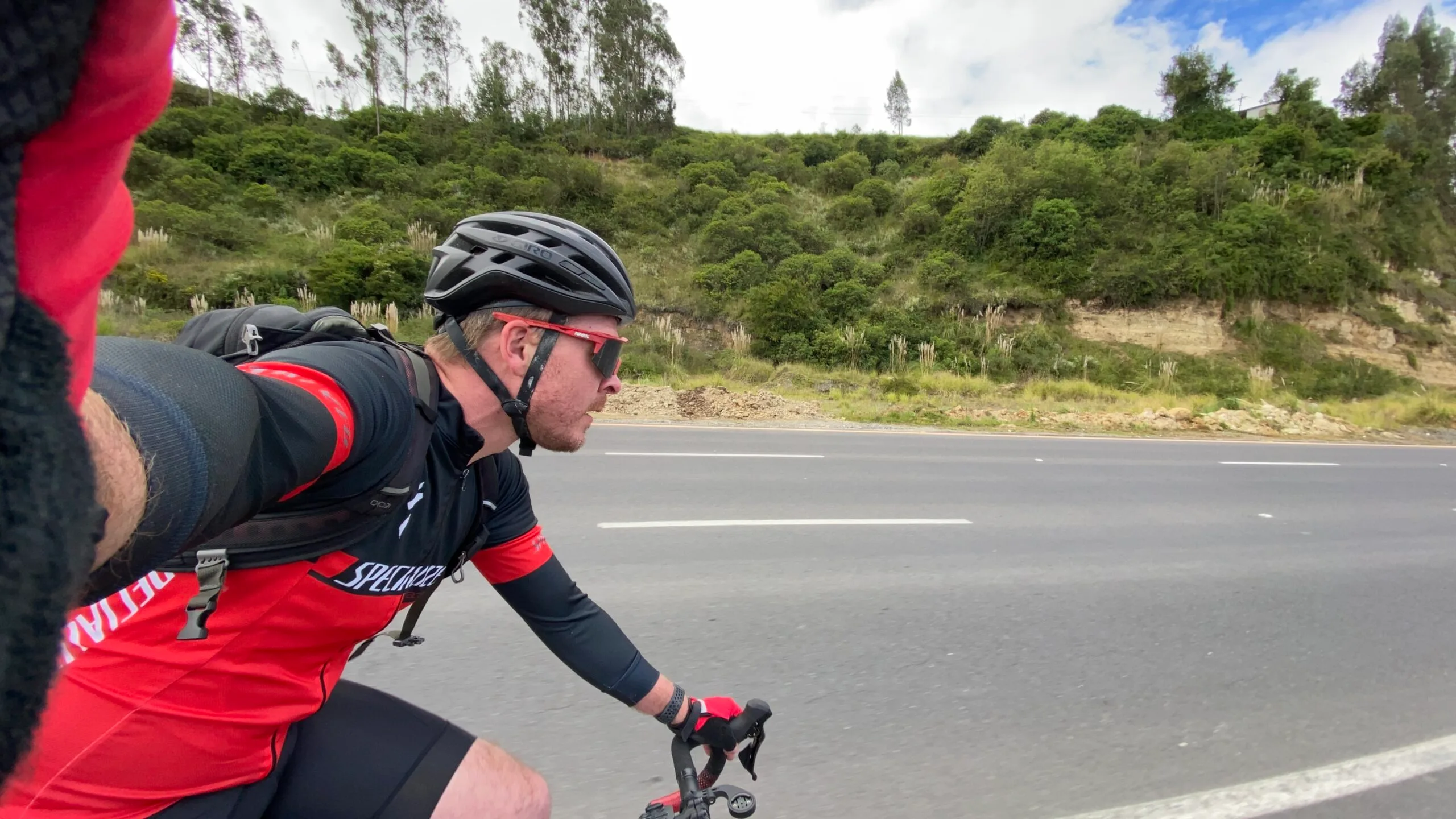
BEN FINCH
To summit Cotopaxi (5,897 m), travellers must legally hire a certified ASEGUIM or UIAGM mountain guide with a maximum 1:2 guide-to-climber ratio. The classic climb departs at midnight from José Rivas Refuge (4,864 m), taking five to seven hours across glaciated terrain following three to five days of proper altitude acclimatisation.
High-altitude essentials for the Andean crest
Tackling Ecuador’s second-highest peak requires far more than physical grit; it demands a strategic altitude plan and respect for glaciated terrain. Here are the core pillars to keep in mind for a successful, independent summit bid.
- Legal Guide Mandatory: Ecuadorian law dictates that all climbers must hire an accredited ASEGUIM or UIAGM guide, operating at a maximum 1:2 guide-to-climber ratio
- Acclimatisation Schedule: Spend four to five days warming up across the páramo on peaks like Pasochoa, Corazón, and Rumiñahui to build crucial red blood cells before attempting high camp
- José Rivas Refuge: Your high-altitude base camp sits at 4,864 metres, serving as the primary launch pad for gear adjustments, a short rest, and the midnight alpine start
- The Midnight Ascent: Leaving the refuge at 00:30 ensures you cross frozen, stable glacier bridges before solar radiation destabilises the snowpack after sunrise
- Technical Gear: Rigid welted boots, twelve-point steel crampons, an ice axe, and Category 4 glacier glasses are non-negotiable requirements on the upper slopes
- Budgeting Realities: Expect to pay between $300 and $400 USD per person for a standard two-climber guided package including park transit, refuge meals, and technical hardware
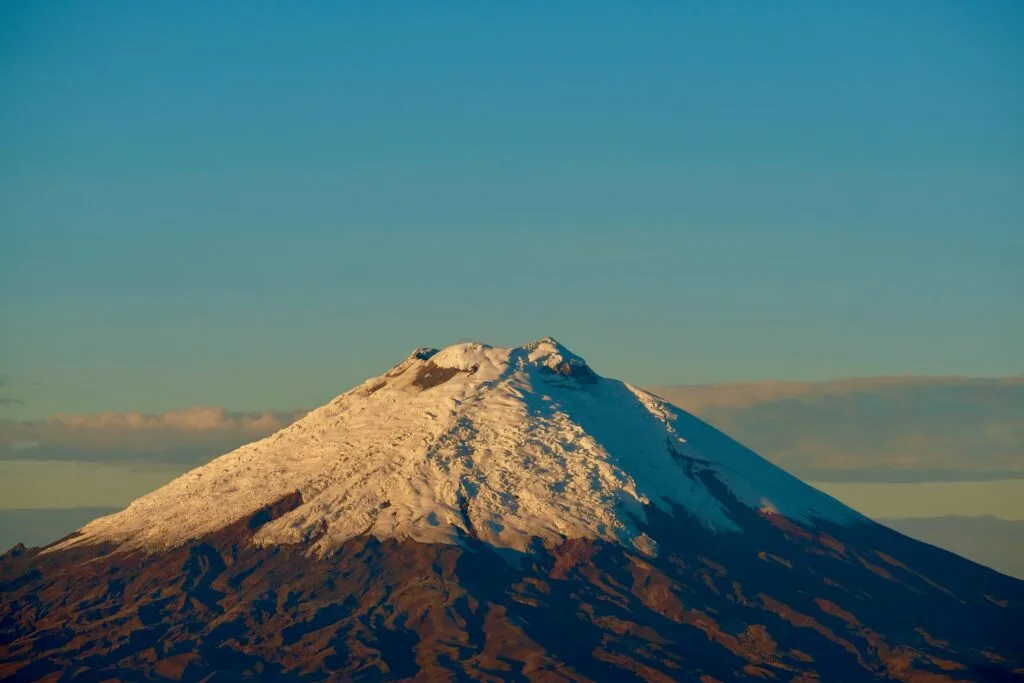
Cotopaxi.
The iconic volcano
Quick facts and logistics
| Parameter | Specification |
| Summit Elevation | 5,897 metres (19,347 feet) |
| Base Refuge | José Rivas Refuge at 4,864 metres |
| Route Difficulty | Grade II / PD (Poco Difficile) – Glaciated alpine slopes |
| Duration | 2 days / 1 night (5–7 hours ascent, 2–3 hours descent) |
| Legal Requirement | Mandatory ASEGUIM or UIAGM guide (Max 1:2 ratio) |
| Typical Tour Cost | $300–$450 USD per person (2-climber group) |
| Location | Cotopaxi National Park, Central Highlands, Ecuador |
Acclimatisation strategy across the páramo
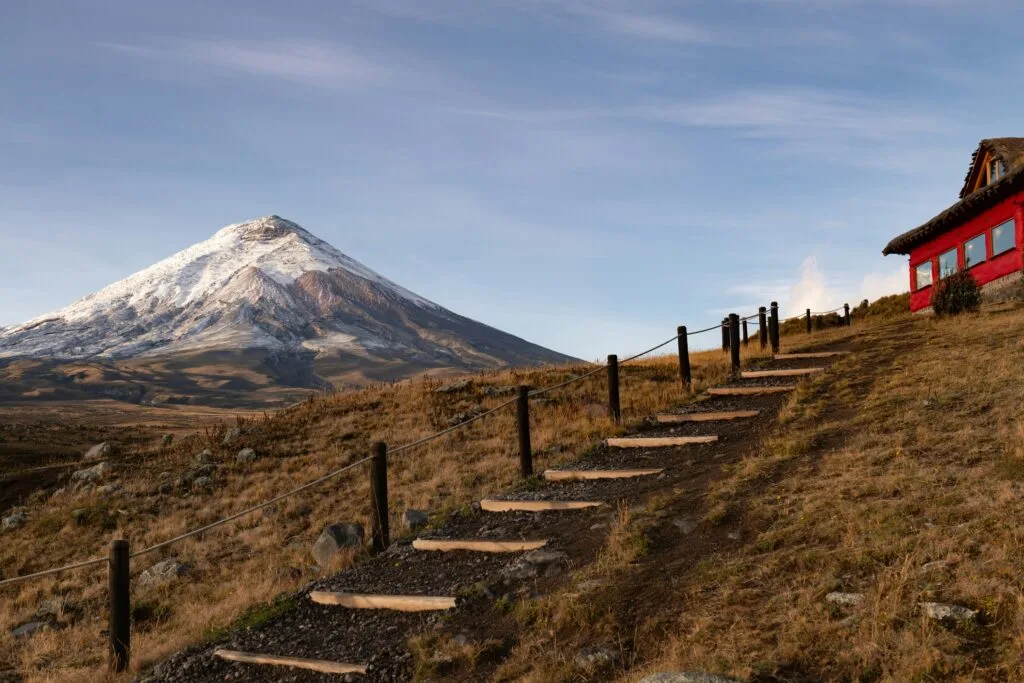
Four-day warm-up trekking schedule
- Day 1 / Pasochoa (4,200 m)
- Distance: 11 km
- Elevation Gain: 800 m
- Focus: Gentle acclimatisation through native Polylepis cloud forest and high grasslands. Starting near 3,400 metres, this trek allows your body to adjust to moderate altitude while keeping physical strain minimal
- Day 2 / Corazón (4,790 m)
- Distance: 9 km
- Elevation Gain: 1,000 m
- Focus: Steep ridge hiking to test stamina. Volcán Corazón introduces steeper grassy slopes and thinner air, pushing your lungs above the 4,500-metre threshold before returning to lower ground to rest
- Day 3 / Rumiñahui (4,630 m)
- Distance: 12 km
- Elevation Gain: 850 m
- Focus: Rocky scrambles directly opposite Cotopaxi. Climbing the central or summit peaks of Rumiñahui provides direct exposure to the weather patterns of Cotopaxi National Park while offering panoramic views of your main objective
- Day 4 / Active Rest and Hydration
- Location: Machachi, Lasso, or Cotopaxi National Park plateau (3,800 m)
- Focus: Recovery, gear fitting, and metabolic rest. Spend this day spinning gently on a bicycle, testing mountaineering boots, and drinking four to five litres of water rich in electrolytes
Standing at 5,897 metres above sea level, the summit of Volcán Cotopaxi exposes human lungs to roughly half the effective atmospheric pressure found at coastlines. The primary barrier to reaching the crater rim is rarely physical stamina or technical ice climbing ability; it is acute mountain sickness brought on by an unconsidered, rapid gain in elevation. Building a methodical altitude profile across the high Andean páramo over four to five days allows your cardiovascular system to adapt, stimulating red blood cell production so you arrive at José Rivas Refuge feeling capable rather than compromised.
An ideal preparation sequence combines active trekking across the Andean highlands with steady elevation gains. Spending days on two wheels across the surrounding valleys offers an ideal low-impact method to build aerobic endurance while taking in the high-altitude landscape.
Your high-altitude acclimatisation schedule begins on Day 1 with an eleven-kilometre trek up Pasochoa (4,200 m). Starting around 3,400 metres, this route winds through native Polylepis cloud forest before emerging into open grasslands. The eight-hundred-metre elevation gain provides a gentle entry into thin-air trekking without overtaxing your muscles.
Day 2 escalates the effort on Volcán Corazón (4,790 m). This nine-kilometre hike involves a steep one-thousand-metre vertical push up exposed grassy ridges. Breathing becomes noticeably heavier as you cross the 4,500-metre threshold, serving as an excellent diagnostic test for your body’s initial response to altitude before descending to lower elevations to rest.
Day 3 delivers the crucial conditioning step on Rumiñahui (4,630 m). Traversing twelve kilometres across rocky crags directly opposite Cotopaxi, this route requires hands-on scrambling across sharp rock towers. Reaching the peak exposes you to the exact weather patterns and wind conditions of Cotopaxi National Park, while offering panoramic views of the ice-capped cone you are about to tackle.
Day 4 is dedicated entirely to active rest and hydration around Machachi, Lasso, or the lower plateau of Cotopaxi National Park at 3,800 metres. This is the time for light recovery, testing mountaineering boots, adjusting backpack straps, and drinking four to five litres of water fortified with electrolytes.
The Ecuadorian Sierra.
Get lost in the hills
The two-day summit push
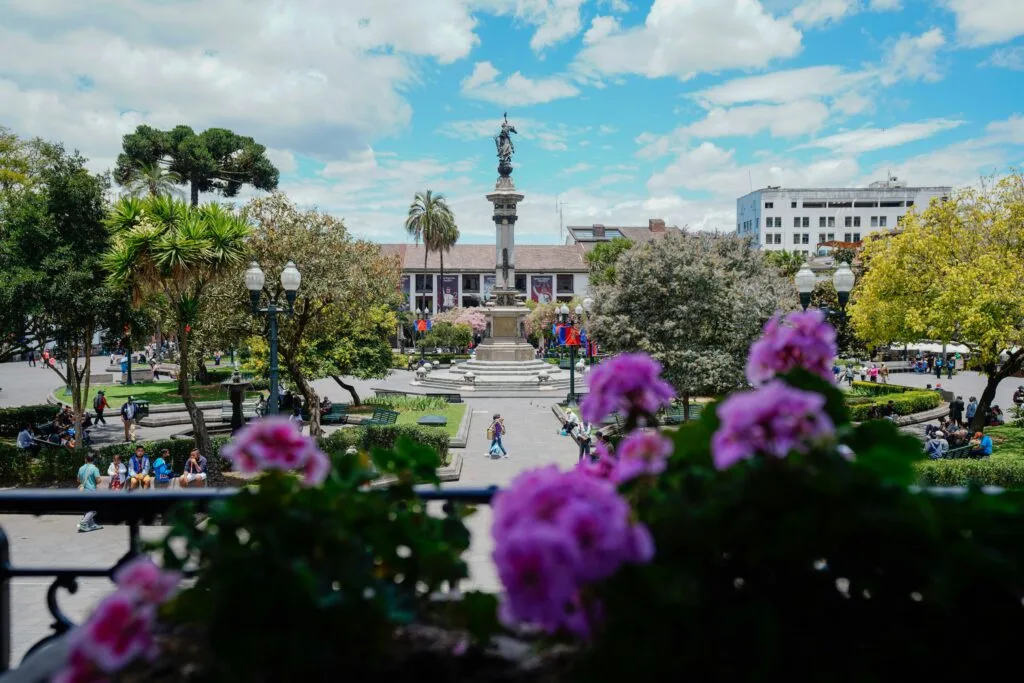
Day 1 / Base refuge approach and glacier skills
- 10:00 / Departure from Quito or Latacunga: Drive south along the Panamericana highway toward the main entrance of Cotopaxi National Park
- 12:30 / Arrival at Park Parking Area (4,500 m): Transport reaches the upper car park at 4,500 metres. Gear is sorted, daypacks are adjusted, and double boots are tied for the hike up
- 13:30 / Hike to José Rivas Refuge (4,864 m): Ascend the steep, sandy scree path to the refuge. The walk takes between 45 and 60 minutes. Carry a slow, rhythmic pace to conserve energy and avoid sudden heart rate spikes
- 15:00 / Glacier Training Session (5,000 m): Walk 20 minutes from the refuge to the lower tongue of the glacier. Your ASEGUIM guide will check crampon fit, review dynamic rope team movement, demonstrate proper ice axe self-arrest techniques, and refine front-pointing technique on steep ice slopes
- 17:00 / Alpine Dinner: Eat a carbohydrate-rich dinner at the refuge refectory
- 18:00 / Sleep and Mandatory Rest: Retire to the bunk rooms. Bunk accommodation is communal, so bring earplugs and an eye mask to maximise rest before the midnight wake-up call
Day 2 / Midnight ascent, summit rim, and descent
- 23:30 / Midnight Wake-Up Call: Dress in thermal layers, drink hot coca tea or coffee, and swallow light foods such as porridge or toast
- 00:30 / Departure from José Rivas Refuge: Step into the cold night wearing headlamps. The first hour follows a zig-zagging dirt and scree trail up the volcanic cone
- 01:30 / Glacier Entrance and Roping Up (5,150 m): At the edge of the permanent ice cap, clip into your harness, strap on crampons, and rope up with your guide in a maximum 1:2 ratio
- 02:00 to 05:30 / Ascending the Glaciated Slopes: Progress upward at a steady, deliberate pace. Navigate around crevasses and snow bridges along the Normal Route. The incline remains consistent at 35 to 45 degrees
- 05:30 / Passing Yanasacha (5,400 m): Pass the dark, prominent volcanic rock wall known as Yanasacha. This section presents the steepest incline of the climb, requiring precise crampon placement and controlled breathing as air density drops
- 06:30 / Reaching the Summit Rim (5,897 m): Crest the final snow dome as sunrise lights up the Avenue of Volcanoes. Stand on the edge of the crater rim, looking down into the 800-metre-wide active steam vent. View neighbouring giants, including Chimborazo, Antisana, Cayambe, and the Ilinizas
- 07:15 / Commencement of Descent: Begin descending while the snow remains frozen and stable. As the sun rises, solar radiation quickly warms glacier bridges, increasing the objective danger
- 09:30 / Return to José Rivas Refuge: Arrive back at the refuge to remove technical gear, drink soups, pack sleeping bags, and rest briefly
- 11:00 / Descent to Parking Area and Return: Walk down the scree path to the vehicle for onward transport to Latacunga or Quito
The journey onto the mountain begins on Day 1 with a late-morning drive south from Quito or Latacunga along the Panamericana highway, entering Cotopaxi National Park and winding up toward the upper parking area at 4,500 metres. Upon arrival, travellers shoulder their packs and begin the steep, forty-five-minute hike up loose, red volcanic scree to José Rivas Refuge (4,864 m). The key here is maintaining a slow, rhythmic pace to conserve energy and keep your heart rate steady.
After settling into the refuge during the early afternoon, you strap on double boots for a glacier skills session. A short twenty-minute walk brings you to the lower ice tongue at 5,000 metres, where your ASEGUIM guide verifies crampon fittings, demonstrates self-arrest techniques using the ice axe, and reviews dynamic rope team movement on steep ice slopes. Returning to the refuge, you share a hearty, carbohydrate-heavy dinner at 17:00 before retreating to the communal bunkhouse for an early rest. Earplugs and an eye mask are essential investments to block out the rustle of preparing climbers.
Day 2 starts under the cover of darkness with a 23:30 wake-up call. After forcing down hot coca tea, porridge, and toast, you step outside into the freezing night at 00:30, your headlamp illuminating the trail. The first hour involves a steady, zig-zagging trudge up loose scree toward the edge of the permanent ice cap at 5,150 metres.
At the glacier margin, the team clips into harnesses, fastens twelve-point crampons, and ropes up with the guide in a strict 1:2 ratio. The route weaves deliberately between massive crevasses and snow bridges along the Normal Route, climbing consistent 35-to-45-degree snow slopes. By 05:30, you reach the dark, towering rock outcrop known as Yanasacha at 5,400 metres. This wall marks the steepest and most demanding section of the climb, where thin air tests your mental focus and forces a steady, step-by-step breathing rhythm.
Pushing past Yanasacha brings you onto the final snow dome just as the first rays of equatorial sunlight ignite the horizon. Cresting the crater rim at 5,897 metres around 06:30 reveals an extraordinary landscape: an eight-hundred-metre-wide, steaming volcanic crater yawning beneath you, framed by distant views of Chimborazo, Antisana, Cayambe, and the Ilinizas rising above the cloud deck.
After twenty minutes taking in the view at the summit, the descent begins by 07:15. Moving swiftly is critical, as rising temperatures soften the snowpack and compromise the stability of glacier bridges over crevasses. Returning to José Rivas Refuge by 09:30 allows time to pack gear, drink warm soup, and reflect on the climb before making the final walk down to the parking area for transport back to Latacunga or Quito.
The Galápagos.
Ecuador’s Enchanted Isles
Guide regulations and tour pricing
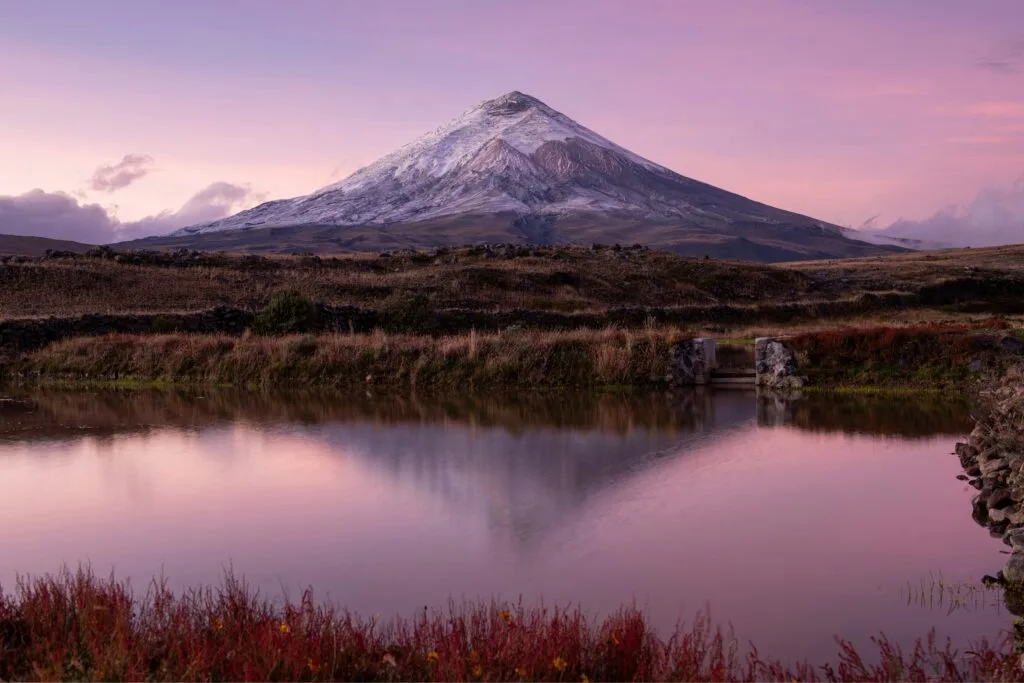
Hiring guides and expected costs
Climbing Volcán Cotopaxi without a certified guide is illegal under Ecuadorian national park regulations. All mountaineers must be accompanied by a guide credentialed by either ASEGUIM (Asociación Ecuatoriana de Guías de Montaña) or the international UIAGM / IFMGA governing body.
Regulations strictly enforce a maximum 1:2 guide-to-climber ratio. If you travel as a pair with a single guide and one member must turn back due to fatigue or altitude sickness, the entire party must descend together to ensure safety. Independent solo travellers will be paired 1:1 with a guide.
Typical cost structure / Per person in USD
- Standard 2-Day Package / 2 Climbers to 1 Guide: $300 – $400 USD per person. Includes private transport from Quito/Latacunga, refuge fees, all meals on the mountain, guide salary, and technical gear rental
- Private 1-on-1 Package / 1 Climber to 1 Guide: $500 – $650 USD. Recommended for climbers wanting flexible pacing, personal safety reserves, or a dedicated guide
- Full Acclimatisation & Summit Package / 5 to 7 Days: $800 – $1,300 USD. Includes guided warm-up hikes on Pasochoa, Corazón, and Rumiñahui, hotel transport, national park permits, and the final 2-day Cotopaxi climb
Package inclusions and exclusions
- Included Standard Services: ASEGUIM guide certification, group transport, overnight refuge beds, dinner, breakfast, technical equipment (boots, crampons, ice axe, harness, helmet)
- Standard Exclusions: Personal clothing layers, headlamps, AAA batteries, personal snacks/energy gels, tips for guides and refuge staff, and private travel or medical insurance covering high-altitude rescue above 5,000 metres
Attempting to climb Cotopaxi without a certified guide is strictly prohibited under Ecuadorian national park law. Every mountaineer must be accompanied by a professional holding credentials from either ASEGUIM (Asociación Ecuatoriana de Guías de Montaña) or the international UIAGM / IFMGA governing body.
Regulations enforce a mandatory 1:2 guide-to-climber ratio. This rule is designed for maximum safety on glaciated terrain. If two climbers are paired with a single guide and one person develops altitude sickness or physical exhaustion, the entire rope team must turn back and descend together. Solo travellers are paired 1:1 with a guide, providing maximum flexibility and a personal safety margin on the glacier.
Standard two-day packages generally range between $300 and $400 USD per person based on a shared guide arrangement for two climbers. This fee typically covers private transport to and from the national park, mountain refuge accommodation, all meals while on the peak, professional guide fees, and technical gear rentals. Travellers opting for a private 1:1 ratio should expect costs between $500 and $650 USD.
Comprehensive five-to-seven-day itineraries incorporating acclimatisation treks across Pasochoa, Corazón, and Rumiñahui, alongside transfers, park entrance administration, and lodging, range from $800 to $1,300 USD. While agencies supply technical hardware, travellers remain responsible for providing their own personal thermal clothing, headlamps, trail snacks, and high-altitude travel insurance covering medical evacuation above 5,000 metres.
The Ecuadorian Amazon.
The most biodiverse place in the world
Essential gear and layering
Technical mountaineering hardware / Provided or rented
- Rigid Mountaineering Boots: Double plastic or leather hybrid boots with full crampon welts
- Crampons: Twelve-point steel mountaineering crampons correctly fitted and anti-balling plates attached
- Ice Axe: Classic walking ice axe with leash, sized appropriately to your height
- Climbing Harness & Carabiners: Adjustable sit harness fitted over thick thermal layers, equipped with two locking carabiners
- Climbing Helmet: Standard-rated alpine helmet
Personal thermal & shell layering
- Base Layer Top & Bottom: Two sets of high-grade synthetic or merino wool thermal underwear
- Mid-Layer Insulation: Grid fleece jacket or mid-weight synthetic fleece trousers/leggings
- Outer Insulation: Heavy down or synthetic summit jacket rated for sub-zero temperatures (-10°C to -15°C)
- Hard Shell Jacket & Trousers: Waterproof, windproof GORE-TEX (or equivalent) outer layers to stop high-altitude mountain winds
- Socks: Two pairs of thick merino wool mountaineering socks
- Gloves: Thin liner gloves plus heavy, waterproof mountaineering gloves or alpine mittens
- Headwear: Thermal balaclava, woollen beanie, and a warm neck gaiter or buff
Personal gear and trail essentials
- Eyewear: Category 4 glacier sunglasses with side shields, plus dark-tinted ski goggles for blowing snow conditions
- Headlamp: High-lumen LED headlamp with fresh batteries, plus two extra sets of AAA batteries stored warm in an inside pocket
- Hydration: Two 1-litre wide-mouth insulated water bottles or vacuum flasks. Bladder hoses freeze solid within minutes on the upper glacier
- Nutrition: High-calorie energy gels, chews, nuts, chocolates, and electrolyte tablets
- Sun Protection: SPF 50+ broad-spectrum sunscreen and zinc lip balm
- Pack: 30- to 40-litre alpine daypack equipped with external straps for securing an ice axe
Navigating Cotopaxi requires a balanced combination of technical hardware and personal thermal layering capable of handling sub-zero wind chills on exposed high-altitude slopes. Tour agencies routinely provide technical gear, but taking time to check proper fit at the agency gear shop prior to departure is critical to avoiding mid-climb discomfort.
Your technical equipment features rigid, double mountaineering boots made from leather or synthetic materials with dedicated heel and toe welts. Twelve-point steel crampons must be carefully adjusted to these boots and equipped with anti-balling plates to prevent wet snow from sticking to the undersides. A classic walking ice axe sized to your height, an adjustable sit harness fitted over heavy winter trousers, two locking carabiners, and a rated alpine climbing helmet complete the mandatory technical setup.
Personal clothing should rely on a disciplined three-layer system. Start with high-grade merino wool or synthetic thermal base layers for both upper and lower body to wick sweat away during strenuous ascents. Add a mid-layer grid fleece jacket and synthetic insulating trousers to trap body heat. The outer layer requires a heavy down or synthetic summit jacket rated for temperatures between -10°C and -15°C, paired with fully windproof and waterproof GORE-TEX jacket and trousers to block biting alpine winds.
To protect extremities, pack two pairs of thick merino wool socks, thin liner gloves, heavy waterproof mountaineering gloves or mittens, a thermal balaclava, a fleece beanie, and a warm neck gaiter. Eyewear demands careful attention: bring Category 4 glacier sunglasses with side protection to prevent snow blindness, along with dark-tinted ski goggles for high-wind or blowing-snow conditions. Finally, carry a high-lumen LED headlamp with spare batteries kept warm in an inside pocket, wide-mouth insulated water bottles (as hydration bladder tubes freeze solid in minutes), high-calorie energy snacks, and SPF 50+ sunscreen.
The Ecuadorian Coast.
Where you’ll find the very best food
Claim the summit of Volcán Cotopaxi
Read this far?
Standing on the crater rim of Volcán Cotopaxi as dawn breaks over the Avenue of Volcanoes is one of the most defining high-altitude experiences in South America. The physical exertion of grinding up 35-degree glaciated slopes in the freezing dark vanishes the moment steam from the active crater mixes with the golden morning light. It is a genuine mountaineering milestone that bridges the gap between high-altitude trekking and technical alpine climbing.
Success on Cotopaxi relies on self-discipline and patience rather than rushed ambition. Respecting the altitude profile by spending time in the surrounding valleys—whether hiking through native Polylepis forests or pedalling the high dirt tracks of the Central Highlands—builds the aerobic foundation necessary to thrive above 5,000 metres. Rushing the process almost guarantees an early turnaround; taking the time to absorb the wild beauty of the páramo turns a brutal climb into an unforgettable journey.
When you strap on crampons and rope up at the glacier margin, you join a long tradition of Andean exploration. Supported by the deep expertise of certified local ASEGUIM guides, independent travellers can experience the raw power of Ecuador’s active volcanic heart safely and responsibly. Prepare thoroughly, pack your warmest layers, and embrace the rhythm of the mountain.
Affiliate Disclaimer: Some of the links on Wheely Tyred are affiliate links. If you click through and make a booking or purchase, we may earn a small commission at no extra cost to you. We only recommend gear, tours, stays, and services we genuinely use, trust, and stand behind — our editorial independence always comes first. These commissions help keep our independent cycling guides and travel stories free to read. You can also buy me a coffee here — thanks for supporting the ride!
Frequently asked questions about how to summit Cotopaxi
No, advanced technical climbing experience is not strictly required, but high physical fitness and prior exposure to thin air are essential. The Normal Route is graded PD (Poco Difficile), consisting mostly of non-technical snow and ice walking. Your ASEGUIM guide will run a mandatory glacier skills training session at 5,000 metres on Day 1 to review crampon technique, rope travel, and ice axe self-arrest skills.
Because national park rules mandate a strict 1:2 guide-to-climber ratio for safety on glaciated terrain, both climbers must descend if one member develops severe altitude sickness or fatigue. If you want to ensure your own summit bid is not dependent on a partner, consider booking a private 1:1 guided package.
Temperatures on the upper glacier routinely drop between -5°C and -15°C, with biting wind chills making it feel significantly colder. A disciplined three-layer clothing system—including high-grade thermal base layers, a fleece mid-layer, windproof GORE-TEX outer shells, and a heavy down summit jacket—is vital to stay safe and warm.
Yes. Accredited agencies supply or rent all technical hardware, including rigid double mountaineering boots, steel crampons, ice axes, harnesses, and helmets. Always inspect equipment thoroughly at the gear shop prior to departure to ensure double boots fit comfortably and crampons adjust securely to the soles.
Independent travellers can take a southbound bus from Quito’s Quitumbe terminal toward Latacunga and ask the driver to drop them at the Cotopaxi park entrance on the Panamericana highway. From the park control point, you must arrange a 4×4 pickup truck to transport you and your gear up the dirt road to the 4,500-metre parking area below José Rivas Refuge.
While the refuge serves a carbohydrate-heavy dinner and light early-morning tea, you need personal energy sources that will not freeze solid on the mountain. Carry high-calorie energy gels, soft chews, nuts, and chocolates in inside pockets close to your body heat. Avoid hard, chewy bars, which become unbiteable in sub-zero alpine conditions.
Ecuador.
Pure wonder on the equator.