Uncover historic Cuenca / The ultimate walking tour guide
Best walking tours in Cuenca, Ecuador / Historic streets, artisan crafts & market gastronomy
Reveal the authentic heart of Ecuador’s cultural capital
BEN FINCH
Santa Ana de los Ríos de Cuenca—perched at 2,560 metres in the southern Andean highlands of Ecuador—is a city made for walking. Flanked by four rivers (the Tomebamba, Yanuncay, Tarqui, and Machángara), this UNESCO World Heritage site is a masterclass in architectural preservation, where red-tiled roofs, wrought-iron balconies, and flower-filled courtyards frame cobblestone streets steeped in Cañari, Incan, and Spanish colonial lore.
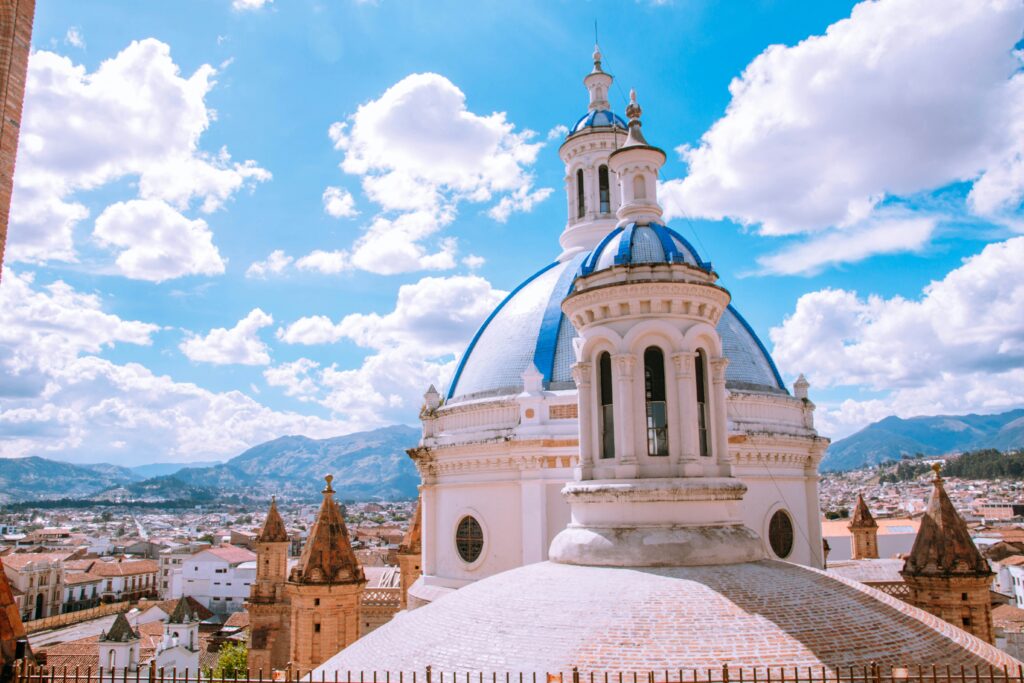
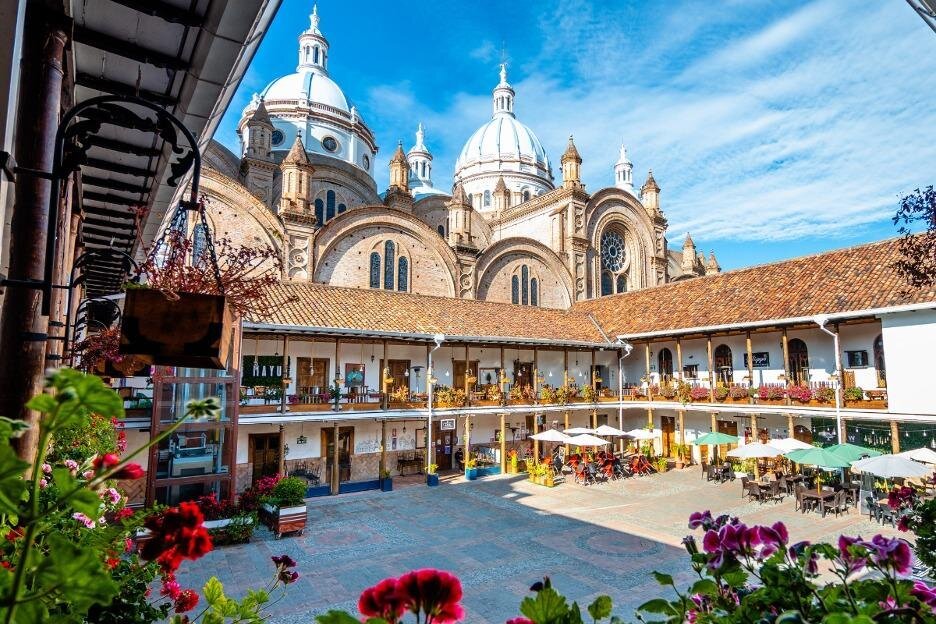
At Wheely Tyred, we firmly believe that real urban discovery happens at ground level. Stepping through Cuenca on foot with an expert local guide opens doors that generic sightseeing skips. You step inside private colonial mansions, converse with three-generation vendors at bustling food halls, and pause to admire how morning light hits the glazed blue domes of the New Cathedral.
Whether you are seeking a deep dive into Republican architecture, a hands-on cocoa tasting, or a culinary trail through highland food markets, these six small-group walking tours offer the most authentic ways to experience Cuenca.
Key takeaways for the independent traveller
Santa Ana de los Ríos de Cuenca rewards travellers who trade rigid tour buses for cobblestone streets and riverbank footpaths. Here is what you need to know about navigating Ecuador’s cultural capital at ground level.
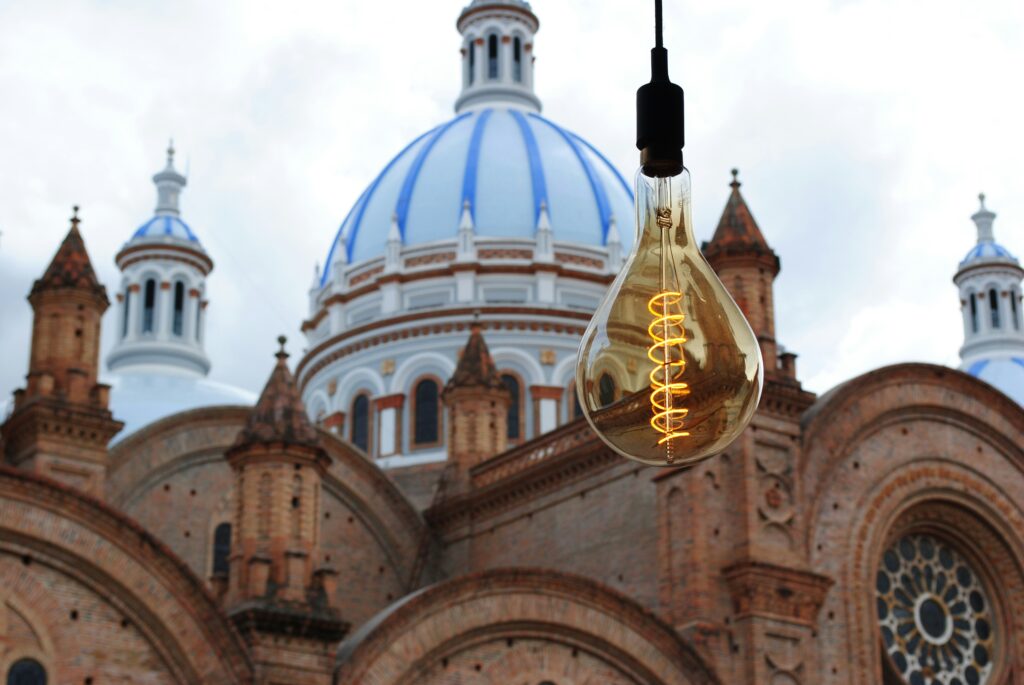
- UNESCO Colonial Architecture: Exploration of Cuenca’s historic core revolves around Parque Calderón, contrasting the 16th-century simplicity of El Sagrario (Old Cathedral) with the monumental marble portals and glazed blue azulejo domes of the New Cathedral
- Authentic Panamá Hat Heritage: The world-famous paja toquilla hats are rooted entirely in Ecuadorian artisan craftsmanship rather than Panamá, with master weavers in Cuenca shaping intricate, hand-crafted palm fibre designs passed down across generations
- Andean Market Gastronomy: Bustling institutions like Mercado 10 de Agosto offer rich culinary immersion through traditional highland specialities such as hornado (slow-roasted pig), llapingachos (crispy potato cakes), and morocho (spiced corn drink)
- Cacao and High-Altitude Chocolate: Ecuador’s native Arriba Nacional cacao bean is showcased through hands-on roasting, winnowing, and stone-grinding workshops tucked inside the historic quarter’s colonial courtyards
- Riverbanks and Archaeological Layering: The grassy banks of the Río Tomebamba and the terraced ethnobotanical gardens of Pumapungo reveal a city layered with Incan stonework, Cañari foundations, and French-inspired Republican townhouses
- Highland Microclimates and Elevation: Sitting at 2,560 metres above sea level, Cuenca requires a steady pace, sun protection against intense equatorial UV rays, and flexible layering to adapt to sudden mountain weather shifts
The Ecuadorian Sierra.
Get lost in the hills
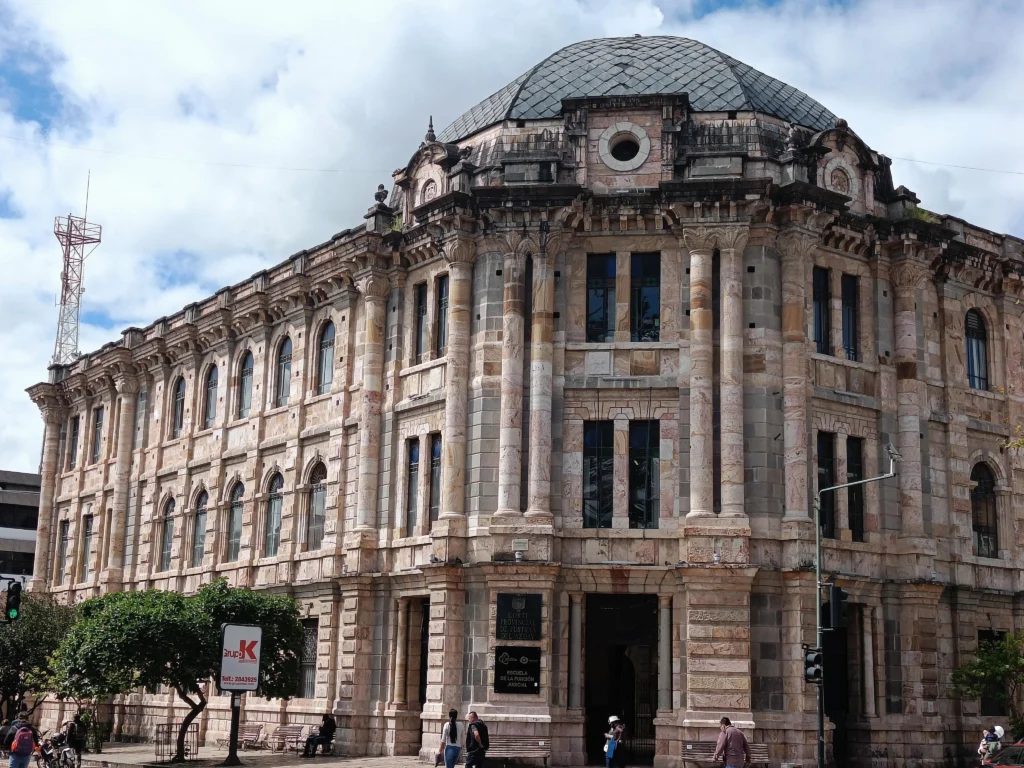
1. Architectural heritage & colonial secrets / Historic centre deep dive
Rating & reviews
(17+ verified user reviews on GetYourGuide)
Why this tour stands out
Led by deeply knowledgeable local historian guides, this small-group walking tour bypasses standard surface-level commentary to deliver a true insider’s journey through Cuenca’s UNESCO-listed core. The four-and-a-half-hour itinerary prioritises intimate access over hasty photos, guiding guests into private colonial courtyards (patios interiores) and historical mansions that remain closed to the general public.
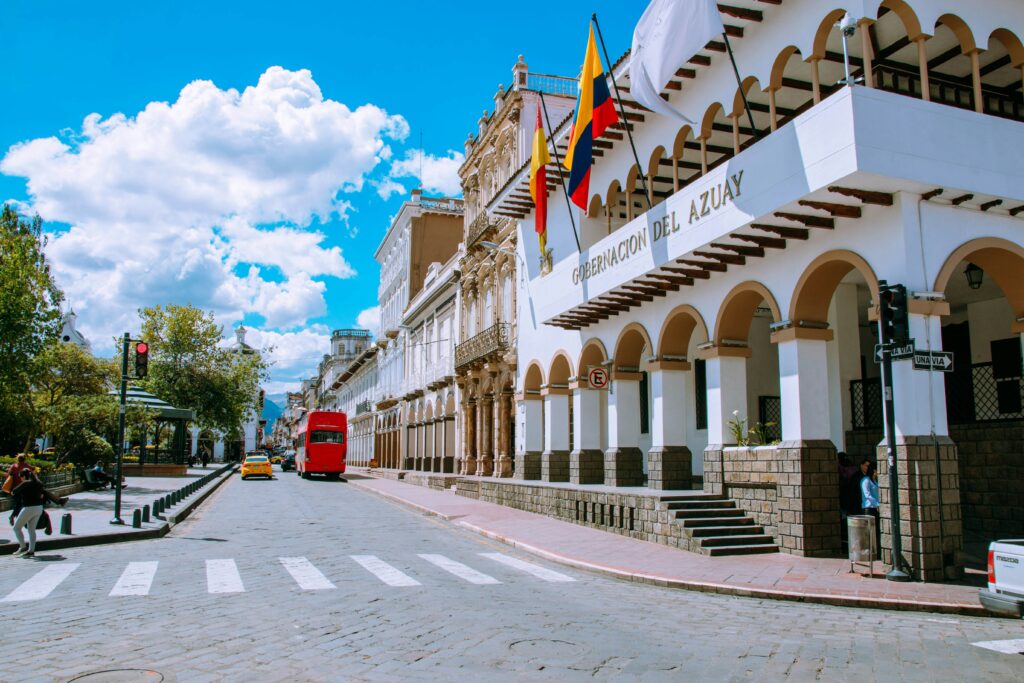
Rather than viewing monuments from across a crowded boulevard, you walk through the historic marble portal of the Catedral de la Inmaculada Concepción (New Cathedral) to study its gold-leaf altar, contrast it with the 16th-century simplicity of El Sagrario (Old Cathedral), and step onto the balcony of Azuay’s provincial government hall for sweeping views across Parque Calderón.
The pace is comfortably slow, combining rich architectural context with stops at independent artisan spots and craft beer taprooms hidden inside restored 18th-century townhouses.
Key highlights
- Comprehensive architectural walk-through of Parque Calderón and surrounding colonial streets
- Exclusive access to private interior courtyards, historical mansions, and administrative balconies
- In-depth exploration of both El Sagrario (Old Cathedral) and the monumental New Cathedral
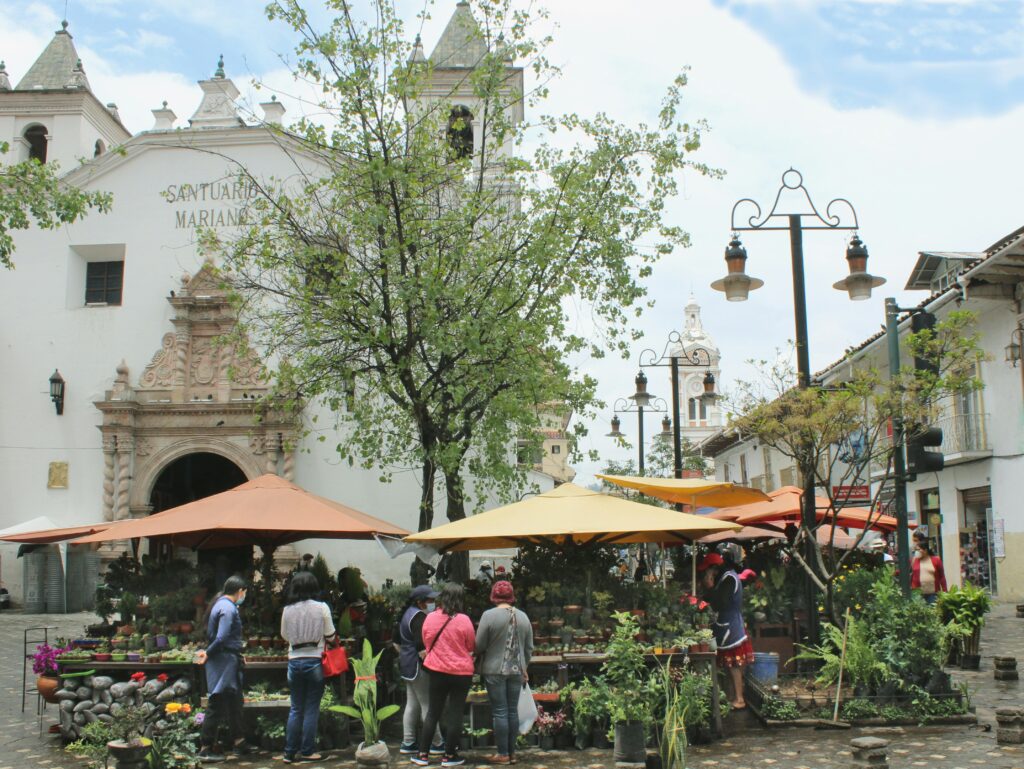
- Visits to the vibrant Plaza de las Flores and independent local tasting stops along the route
Ideal for
Architecture lovers, photography enthusiasts, and first-time visitors seeking an authoritative, orientation-style walk through Cuenca’s historical quarter.
Local insight
Morning light in Parque Calderón (around 09:00) offers the best illumination for photographing the blue azulejo tile domes of the New Cathedral. Wear comfortable, cushioned walking shoes, as Cuenca’s historic cobblestones can be slick and uneven underfoot.
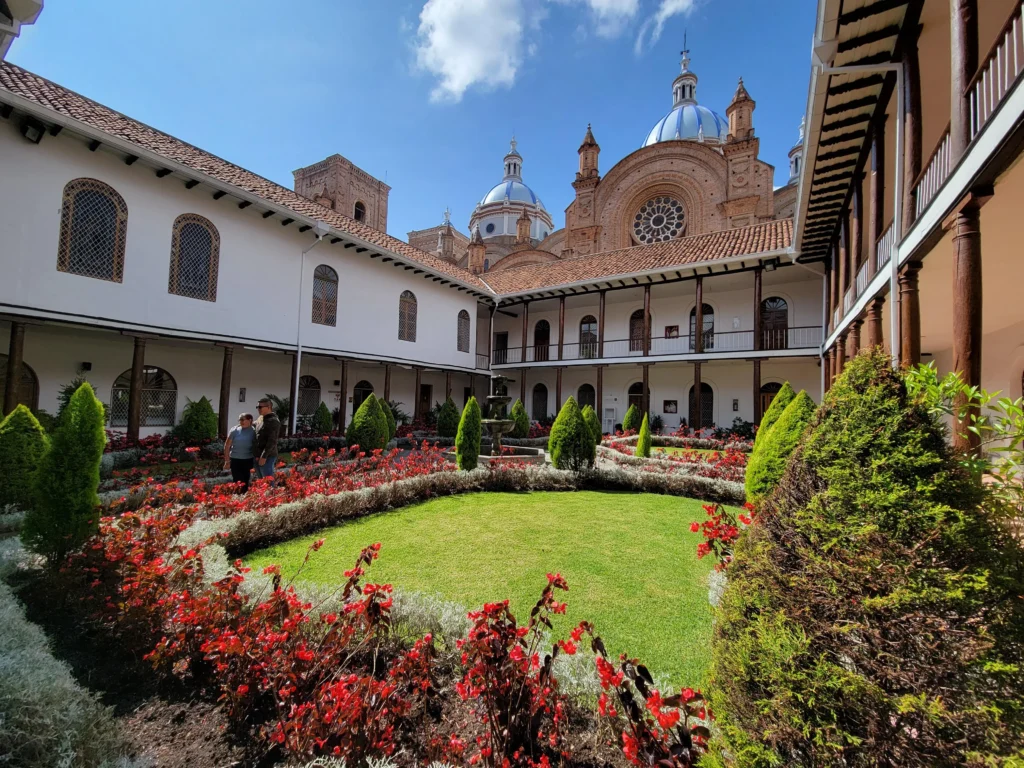
2. The artisan trail / Colonial quarters, flowers & Panamá hat craft
Rating & reviews
(10+ verified user reviews on GetYourGuide)
Why this tour stands out
Cuenca’s identity is bound up with its master craftspeople, none more legendary than the weavers of paja toquilla—the fine palm fibre used to craft authentic Panamá hats. This half-day walking excursion connects the city’s artistic western fringe with its central cultural plazas and riverfront heritage.
Beginning in the quiet, historic neighbourhood of San Sebastián, the tour explores the Municipal Museum of Modern Art before meandering through the bustling Mercado San Francisco and the sensory overload of Plaza de las Flores, consistently ranked among the world’s best open-air flower markets.
The centrepiece of the walk is an immersive visit to the Homero Ortega Panamá Hat Factory museum, where guides untangle the historical misconception of the hat’s name (popularised during the construction of the Panamá Canal) while showcasing master artisans executing intricate, hand-woven patterns passed down across centuries.
Key highlights
- Guided stroll through the tranquil San Sebastián neighbourhood and the Municipal Museum of Modern Art
- Sensory walk through Plaza de las Flores and Mercado San Francisco
- Live demonstration of paja toquilla weaving at the world-renowned Homero Ortega workshop
- Scenic footpaths along El Barranco overlooking the cliffside terraced houses above the Tomebamba River
Ideal for
Culture seekers, craft enthusiasts, and travellers keen to support native Ecuadorian artisan heritage and ethical manufacturing.
Local insight
When purchasing a paja toquilla hat at the factory, check the weave density on the interior crown. Finer weaves (fino or superfino) take months to complete by hand and offer superior flexibility, allowing the hat to be rolled for travel without breaking the fibres.
The Galápagos.
Ecuador’s Enchanted Isles
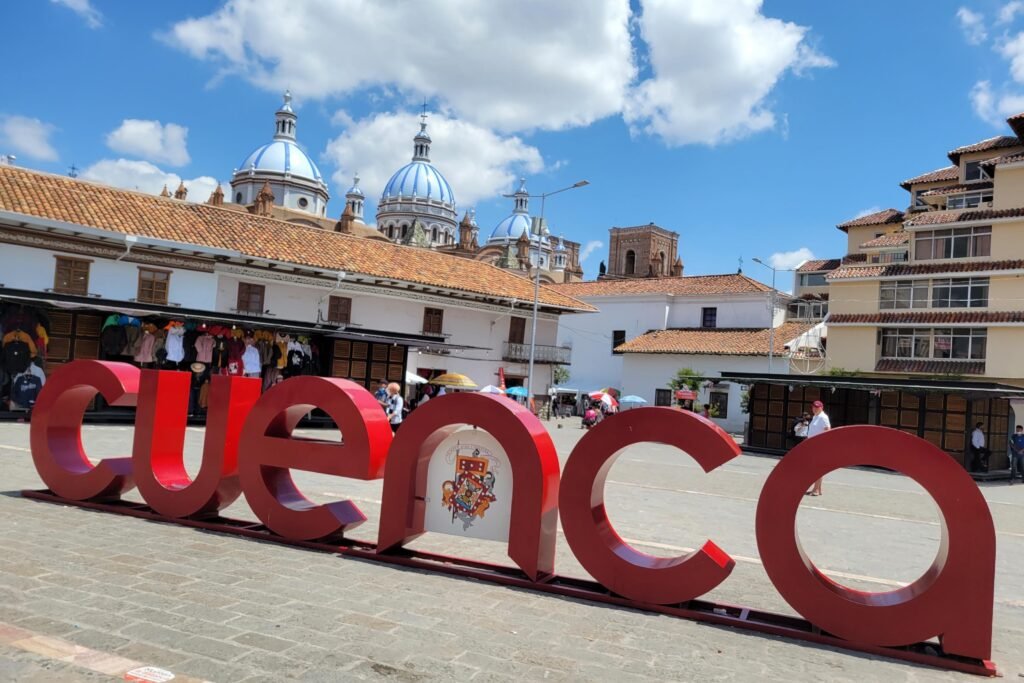
3. Custom-tailored urban exploration / The bespoke heritage walk
Rating & reviews
(46+ verified user reviews on Viator)
Why this tour stands out
For travellers who prefer setting their own rhythm or delving into niche historical interests, this private walking tour operated by Cuenca Bestours offers total flexibility without sacrificing expert local commentary. Rather than sticking to a rigid group script, your private guide adapts the route to your curiosity—whether that means spending extra time investigating Cañari and Incan stone foundations at Pumapungo Archaeological Park or exploring French Republican architecture along Calle Bolívar.
The tour seamlessly links Cuenca’s grandest monuments with everyday community life, guiding you through the fragrant herbal medicine and tropical fruit aisles of Mercado 10 de Agosto before strolling along the cliffside promenade of Calle Larga. Because it is completely private, your guide can easily adjust walking distances, pause for spontaneous coffee breaks at independent roasteries, or adapt itineraries for varying mobility needs.
Key highlights
- Fully customizable, private walking itinerary tailored to your group’s exact historical or cultural interests
- In-depth exploration of Mercado 10 de Agosto, focusing on native highland produce and traditional herbal lore
- Guided walk through the ruins and ethnobotanical gardens of Pumapungo Museum and Archaeological Park
- Flexible stops along Calle Larga and the picturesque pedestrian staircases of El Barranco
Ideal for
Couples, families, small groups of friends, or curious travellers who want a private guide to answer detailed questions at an unhurried pace.
Local insight
Ask your guide to include a walk through the outdoor ethnobotanical gardens at Pumapungo. Tucked behind the main museum building, these terraced gardens feature native Andean crops and offer views over the ancient Cañari canal system.
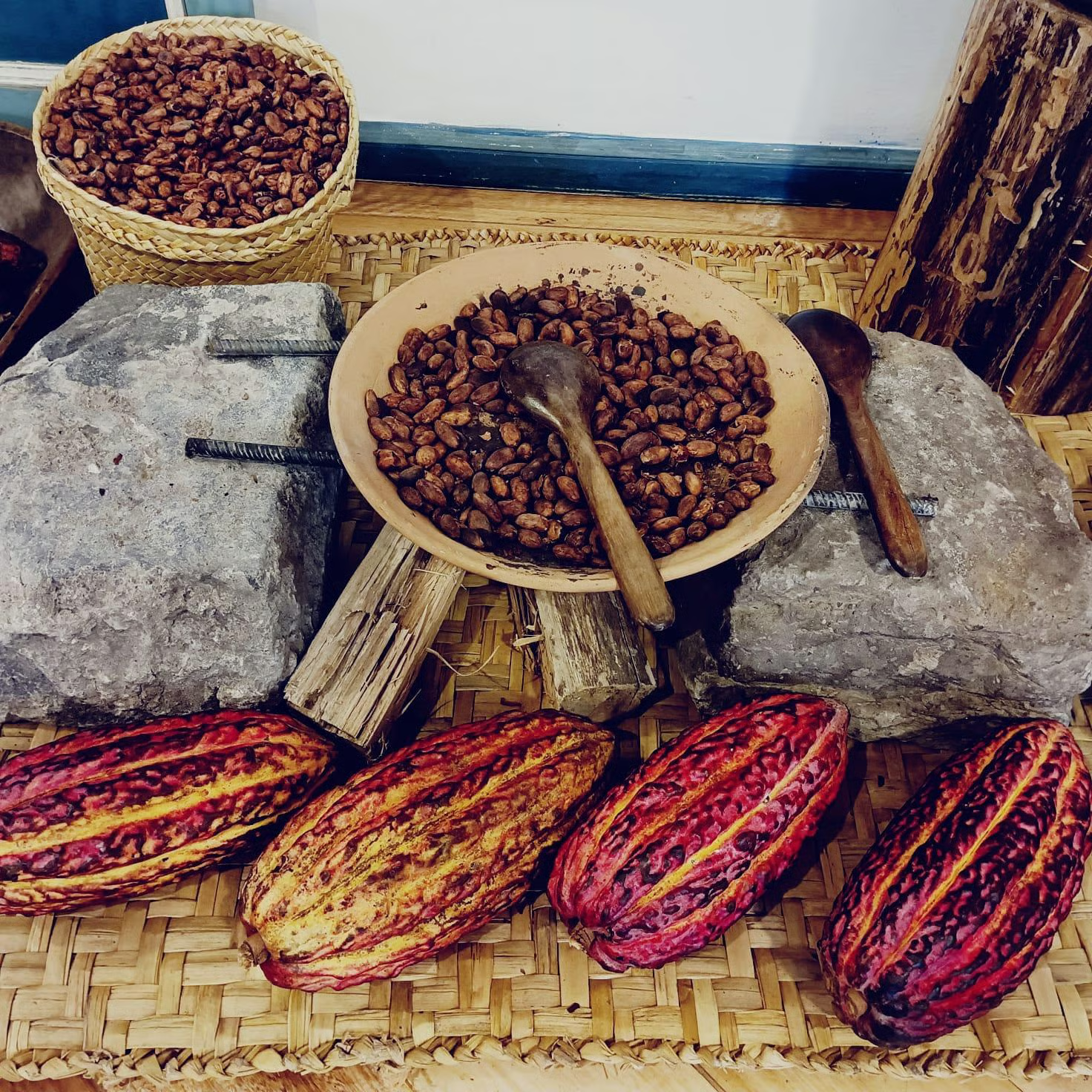
4. Sensory highlighting / High-altitude chocolate & cacao workshop walk
Rating & reviews
(11+ verified user reviews on GetYourGuide)
Why this tour stands out
Ecuador is the birthplace of cultivated cacao, home to the prized Arriba Nacional bean known for its floral and fruity flavour profile. Situated in the historic heart of Cuenca at the Museo del Chocolate Huachi, this specialised two-hour walking workshop and cultural deep dive explores how fine flavour cacao shaped Ecuador’s economic and agricultural landscape.
Guided by passionate local chocolatiers, the experience begins with a short walk through the historic district to contextualise cocoa trade routes before moving into the interactive kitchen space. Here, you take part in every stage of small-batch chocolate crafting: hand-sorting raw beans, roasting them over open heat, winnowing shells, and grinding the nibs on traditional stone metates. The session concludes with a curated tasting of single-origin chocolates ranging from 55% to 100% purity, paired with frothy hot chocolate and traditional highland bizcochos.
Key highlights
- Guided walk and historical presentation on Ecuador’s ancient cacao domestication
- Hands-on workshop: roast, winnow, and stone-grind raw cacao beans
- Custom chocolate bar creation using organic local toppings to take home
- Guided tasting session of 30%, 70%, and 100% single-origin chocolates with hot chocolate and bizcochos
Ideal for
Foodies, families, sweet tooths, and travellers interested in sustainable agriculture and indigenous food history.
Local insight
Sampling 100% pure Ecuadorian cacao can be intense if you are accustomed to mass-market confectionery. Take tiny bites and allow the chocolate to melt slowly on your tongue to release subtle notes of orchid, blackberry, and toasted walnut.
The Ecuadorian Amazon.
The most biodiverse place in the world
5. Market gastronomy & Andean flavours / The ultimate food walk
Rating & reviews
(4+ verified user reviews on GetYourGuide)
Why this tour stands out
Highland Ecuadorian cuisine is a rich tapestry of native Andean tubers, heirloom maize, tropical fruits from the nearby coastal foothills, and slow-roasted meats. Led by proud Cuencano guides Martin and Gustavo, this four-hour culinary walking marathon takes you behind the scenes of Cuenca’s most cherished food institutions and multi-generational market stalls.
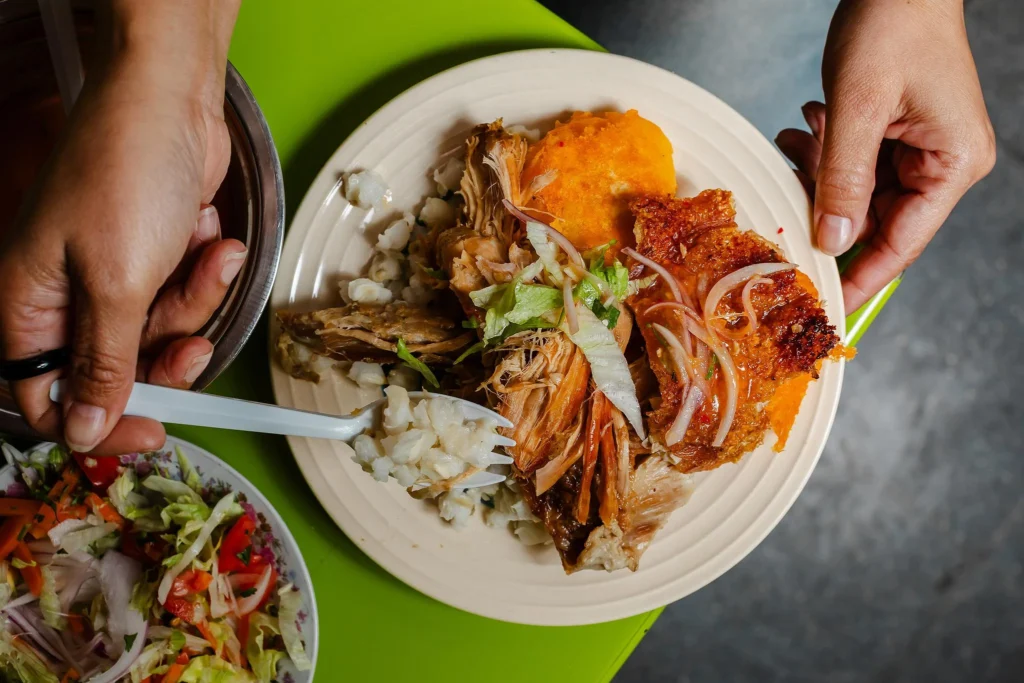
Winding through the vibrant aisles of Mercado 10 de Agosto and neighbourhood eateries, the tour introduces up to 18 distinct regional specialities. Rather than tourist-oriented restaurants, you sit down with local stallholders whose families have perfected their recipes across three generations.
You will sample succulent hornado (slow-roasted whole pig with crispy skin), golden llapingachos (seared potato cakes stuffed with cheese), aromatic tamales wrapped in achira leaves, artisanal mountain cheeses, and refreshing glasses of morocho (a thick, spiced corn drink).
Key highlights
- 15 to 18 generous tastings across traditional food markets, family bakeries, and street vendors
- Guided exploration of Mercado 10 de Agosto with commentary on Andean biodiversity and food heritage
- Direct interactions with multi-generational food artisans and market vendors
- Tastings of iconic dishes including hornado, llapingachos, tamales, and freshly squeezed tropical fruit juices
Ideal for
Culinary adventurers, hungry travellers, and anyone seeking a genuine, unvarnished look at local daily life through its food culture.
Local insight
Come hungry and skip breakfast before this morning tour. The walking intervals between tastings are short and gentle, designed to give your digestion a breather, but the portion sizes across 15+ stops are extremely generous.
6. Street bites & cultural lore / Culinary trails through hidden gems
Rating & reviews
(9+ verified user reviews on Viator)
Why this tour stands out
Ecuadorian cuisine is a rich, interwoven tapestry reflecting the country’s four distinct geographical regions—the Pacific Coast, the high Andes, the Amazon basin, and the Galápagos Islands. Operating in small, intimate groups, this three-hour guided walking trail departs from near Parque Calderón on Calle Simón Bolívar to lead travellers off the well-trodden tourist track and into authentic, family-run eateries where local Cuencanos actually eat.
Across six vetted culinary stops tucked away in UNESCO-listed colonial alleyways, your guide contextualises each dish within Ecuador’s diverse agricultural landscape. You will sample encebollado—the iconic coastal cured-fish and yuca soup served with pickled onions—alongside crisp bolón de verde (mashed green plantain stuffed with fresh cheese), succulent slow-roasted sanduche de pernil (pork shoulder sandwich), warm steamed humitas, and freshly baked pan de yuca.
Every tasting is paired with traditional beverages, ranging from fresh coconut juice and high-altitude mountain coffee to ancestral, warming canelazo and a cold local beer.
Key highlights
- Visits to six authentic, family-run food spots hidden throughout Cuenca’s UNESCO-listed historic centre
- Tastings of iconic coastal and highland specialities, including encebollado, bolón de verde, and slow-roasted sanduche de pernil
- Handcrafted local snacks and bites, such as freshly baked pan de yuca, warm corn humitas, and sweet quesitos
- Complete beverage pairings featuring fresh coconut juice, local Ecuadorian coffee, warming spiced canelazo, and cold local beer
Ideal for
Autonomous food lovers, culture seekers, and independent travellers eager to experience genuine regional Ecuadorian gastronomy away from commercial tourist traps.
Local insight
Skip breakfast before joining this morning walk, as the six stops yield surprisingly generous portions across both coastal and Andean specialities. When sipping canelazo, remember that the warming sugarcane spirit and cinnamon brew go down easily in the crisp mountain air, but Cuenca’s high elevation (2,560 metres) amplifies the effects of alcohol—drink slowly and pace yourself!
The Ecuadorian Coast.
Where you’ll find the very best food
Our practical Cuenca city exploration guide
Exploring Cuenca on foot is rewarding, but taking a few practical measures ensures a smooth, enjoyable trip:
Acclimatise to the altitude
At 2,560 metres above sea level, Cuenca’s air is noticeably thinner than on the coast. Give yourself at least 24 hours upon arrival to rest, drink plenty of water, and take gentle strolls before booking intensive walking tours.
Dress in layers for four seasons in one day
Highland mountain weather shifts rapidly. A bright, sunny morning can turn into a chilly afternoon shower. Wear light, breathable layers, carry a compact waterproof jacket, and bring a hat for high-altitude UV protection.
Choose footwear with good arch support
Cuenca’s historic centre is paved with uneven colonial cobblestones and narrow sidewalks. Leave flimsy flip-flops or smooth-soled shoes at your hotel; sturdy walking shoes or sneakers with good traction are essential.
Carry cash in small denominations
While upscale restaurants accept credit cards, market vendors, Panamá hat weavers, and street food stalls operate strictly in cash using the US dollar (Ecuador’s official currency). Keep $1, $5, and $10 notes handy, as change for $20 notes can be hard to find in local markets.
Respect sacred spaces & photography etiquette
Cuenca is a deeply traditional city with numerous active Catholic churches. When entering churches like El Sagrario or the New Cathedral, dress modestly (cover shoulders and knees), remove hats, and refrain from flash photography during religious services. Always ask permission before photographing market stallholders up close.
Embrace Cuenca’s slow rhythm
Santa Ana de los Ríos de Cuenca is not a city meant to be skimmed through a tinted bus window or checked off a hurried itinerary. It is an urban landscape shaped by water, stone, and centuries of overlapping human history—where the mountain runoff of four rushing rivers meets the architectural legacies of Cañari stonemasons, Incan rulers, Spanish colonists, and French-inspired Republican builders.
When you choose to step through these streets on foot, the city opens up in ways impossible from inside a tour coach. The real character of Cuenca lives in the subtle, sensory details: the morning mist rising off the Río Tomebamba, the scent of freshly roasted Arriba Nacional cacao drifting from a hidden colonial courtyard, the rhythmic clatter of a master weaver’s hands shaping fine paja toquilla, and the vibrant banter of market vendors serving steaming bowls of morocho inside Mercado 10 de Agosto.
By investing in small-group walking excursions led by passionate local historians and food artisans, you do more than just orientate yourself—you actively support the families, craftspeople, and independent guides who keep Cuenca’s living heritage alive. Put on a comfortable pair of walking shoes, give yourself permission to wander down cobbled side alleys, and let Ecuador’s cultural capital reveal its secrets at human scale.
Affiliate Disclaimer: Some of the links on Wheely Tyred are affiliate links. If you click through and make a booking or purchase, we may earn a small commission at no extra cost to you. We only recommend gear, tours, stays, and services we genuinely use, trust, and stand behind — our editorial independence always comes first. These commissions help keep our independent cycling guides and travel stories free to read. Thanks for supporting the ride!
Frequently asked questions about the best Cuenca walking tours
Plan for at least two to three full days. This allows sufficient time to acclimatise to the high altitude with gentle riverbank strolls on your first day before tackling more intensive walking tours through the UNESCO historic centre, regional food halls, and artisan workshops.
At 2,560 metres above sea level, Cuenca’s elevation is moderate compared to Quito or the high Páramo, but the thinner air is still noticeable if you arrive directly from the coast. Take it easy on your arrival day, drink plenty of pure water, and save steep pedestrian climbs—such as the stone staircases climbing up from the Río Tomebamba to El Barranco—for after you have rested.
Despite their misleading name, authentic paja toquilla hats originated in Ecuador. They earned the moniker Panamá hats during the 19th and early 20th centuries because Panamá served as the primary international trade transit point for Ecuadorian exports, a profile further cemented when canal workers wore them for sun protection.
Ecuador uses the US dollar as its official currency. While upscale restaurants and hotels accept credit cards, market stallholders, street food vendors, and small weaving studios trade exclusively in cash. Keep a supply of small notes ($1, $5, and $10 bills) on hand, as vendor stalls frequently lack change for $20 notes.
Canelazo is a traditional hot highland drink brewed with water, cinnamon, fruit juice (often naranjilla), and a splash of aguardiente (sugarcane spirit). It is widely served in cosy evening taverns along Calle Larga and is ideal for warming up during chilly Andean nights—though remember that high altitude amplifies the effects of alcohol.
Cuenca remains a culturally traditional city with active places of worship. When entering landmarks like El Sagrario or the New Cathedral, dress modestly with shoulders and knees covered, remove hats inside, and refrain from flash photography during religious services.
Ecuador.
Pure wonder on the equator.