The pinnacle of the Andes / The very best day tours across the Ecuadorian Sierra
Top bookable day trips and guided excursions in Ecuador’s highland region
Slow travel, sacred peaks, and ancestral routes in the heart of the Andes
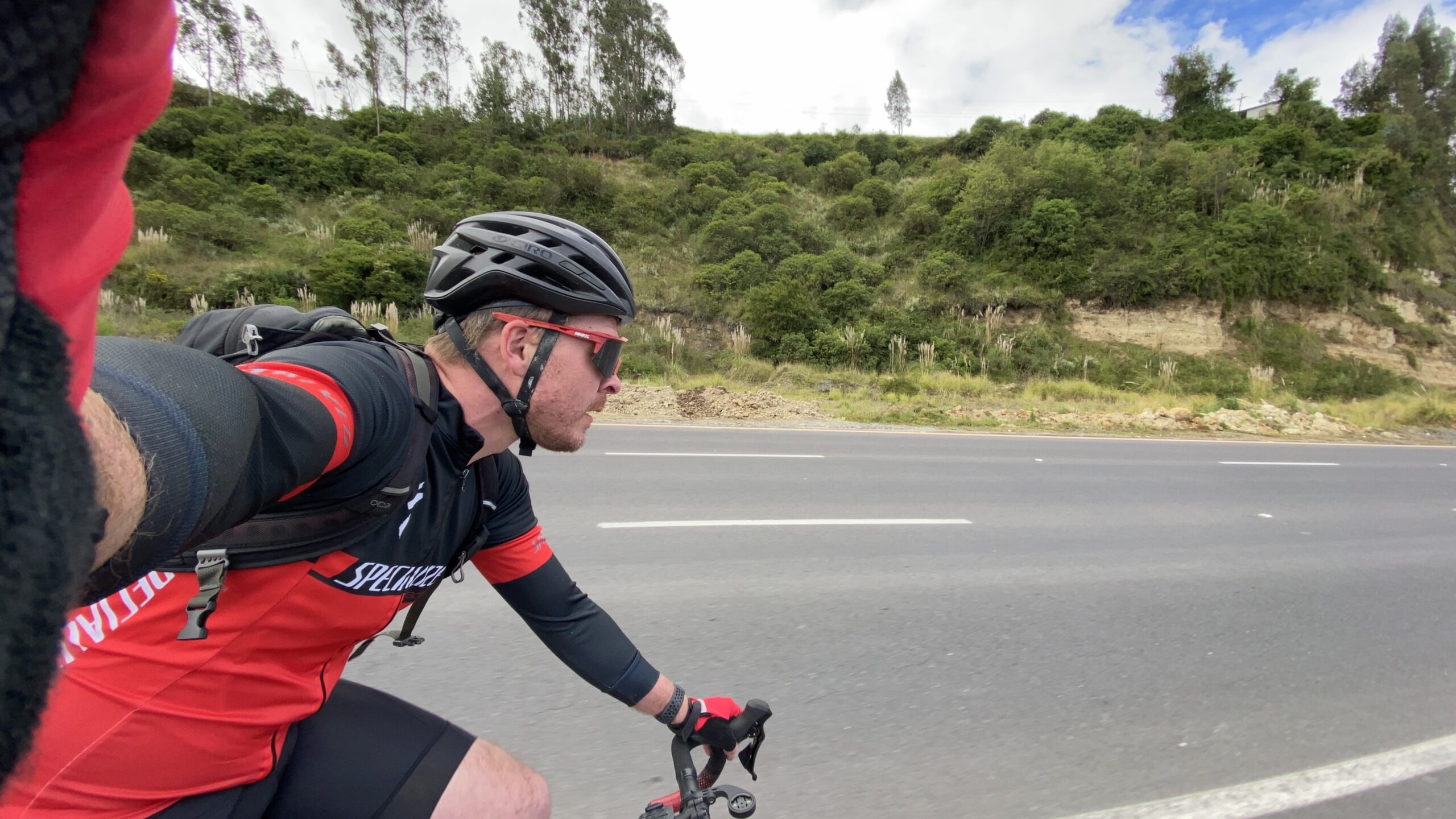
BEN FINCH
Ecuador’s Sierra—the majestic Andean spine running through the centre of the nation—is a landscape of dramatic extremes. Here, snow-capped stratovolcanoes pierce the clouds at nearly 6,000 metres, emerald crater lakes shimmer inside ancient calderas, high-altitude páramo grasslands hold vital water ecosystems, and centuries-old indigenous markets pulse with textile traditions unchanged for generations.
While we at Wheely Tyred naturally advocate for exploring on your own steam whenever possible, the Ecuadorian Sierra presents distinct logistical realities. Navigating winding mountain roads, securing permits for protected national parks, understanding nuanced indigenous histories, and managing extreme altitude shifts can turn self-drive or public bus attempts into stressful endurance tests.
This is where carefully curated, small-group day tours excel. By partnering with verified local naturalists and native guides, you gain seamless transport and deep cultural context without sacrificing your autonomy. You won’t find rigid 50-passenger tourist coaches or superficial souvenir factory traps in our guide.
Every excursion featured below has been hand-selected and verified against strict criteria: active online bookability, transparent itineraries, and a clear commitment to environmental stewardship and local community support.
Whether you are based in the historic high-altitude capital of Quito or the southern colonial jewel of Cuenca, here are the six absolute best day tours across the Ecuadorian Sierra.
Highland footprints in the Ecuadorian Sierra
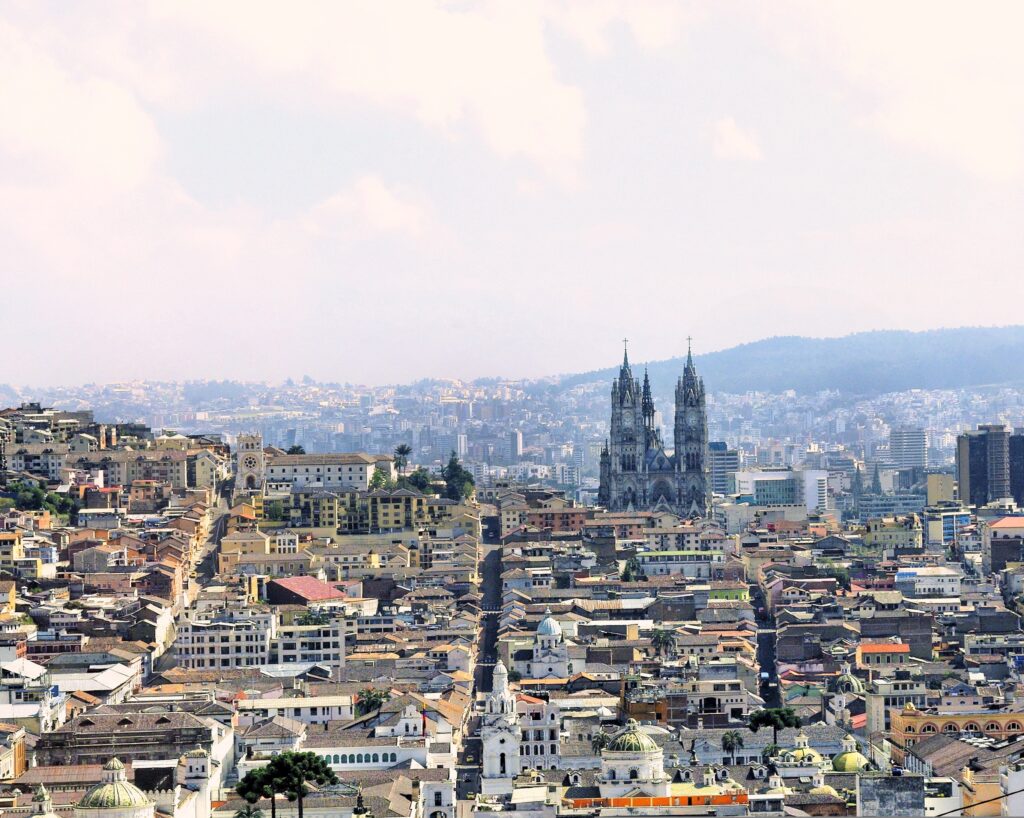
Ecuador’s high-altitude spine demands a thoughtful approach that balances independent spirit with local expertise. Here is what you need to keep in mind before venturing into the high Andes.
- Volcanic Heartlands: Cotopaxi’s glacial slopes and the emerald crater lake of Quilotoa offer a stark, unforgettable glimpse into the raw geological power shaping the Northern Andes
- Living Ancestral Craft: Otavalo’s Plaza de Ponchos market and the leather ateliers of Cotacachi provide authentic access to centuries of Kichwa textile traditions and artisan craft
- Colonial Heights & Equator Science: Quito effortlessly pairs UNESCO World Heritage architecture and mountain panoramas from Pichincha with interactive physics along the equatorial line
- Subtropical Cloud Forest: Dropping off the Andean plateau into Baños de Agua Santa opens up roaring waterfalls like Pailón del Diablo, where the highlands give way to the Amazonian basin
- Wild Southern Tundra: Parque Nacional Cajas showcases high páramo ecosystems, glacial tarns, and rare, ancient Polylepis paper-tree forests just outside Cuenca
- Pre-Colonial Architecture: The ruins at Ingapirca reveal a fascinating fusion of matriarchal Cañari lunar worship and seamless Inca sun-temple stonework
- Essential Highland Protocol: Gradual altitude acclimatisation, warm waterproof layering, high-SPF sun protection, and carrying small cash denominations ensure smooth, respectful travels
The Ecuadorian Sierra.
Get lost in the hills
1. High-altitude Andean drama / Volcanoes, glacial lakes, and crater lagoons
Rating & reviews
(644+ verified reviews on GetYourGuide)
Why this specific tour stands out
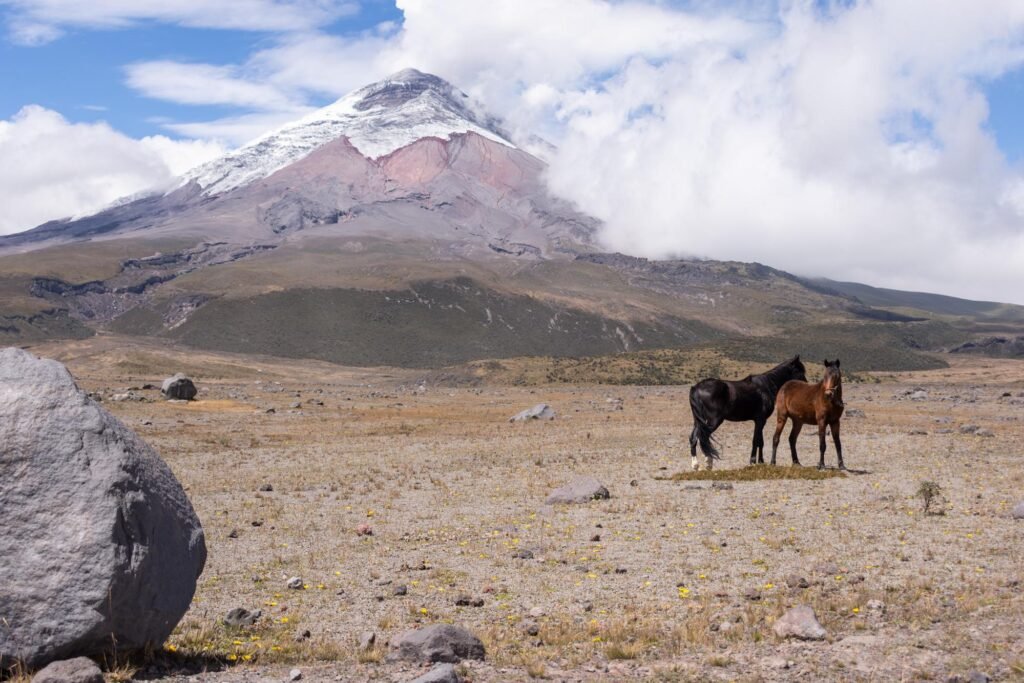
If you have only one day to experience the sheer geological majesty of the Northern Sierra, combining Cotopaxi Volcano and Quilotoa Crater Lagoon is the definitive Andean itinerary. Many mass-market operators rush this route, dropping guests at overcrowded photo spots before speeding off. This small-group day trip, however, approaches the mountains with deep reverence.
The journey begins along the famous Avenue of the Volcanoes before entering Cotopaxi National Park. Right at the park gates, a native guide welcomes the group with a traditional ceremony, offering warm coca tea to assist with acclimatisation and performing ancestral chants asking Pachamama (Mother Earth) for safe passage. You will embark on a guided ecological walk around Limpiopungo Lagoon, nestled at 3,800 metres above sea level on the volcano’s northern slopes. Here, you will spot high-altitude birdlife, wild horses, and unique páramo flora while learning about Cotopaxi’s active stratovolcano dynamics.
From Cotopaxi, the route winds through rural highland farming villages towards the Toachi Canyon and the spectacular Quilotoa caldera. Formed by a catastrophic eruption over 800 years ago, Quilotoa’s 3-kilometre-wide crater lake glows with brilliant emerald and turquoise hues. You will enjoy a localized lunch overlooking the water, visit local Tigua artisan galleries, and have time to hike along the crater rim before returning to Quito.
Key highlights
- Traditional Andean welcome ritual and coca tea tasting at the entrance of Cotopaxi
- Guided flora and wildlife trek around the high-altitude Limpiopungo Lagoon
- Panoramic drive through the Toachi River Canyon
- Stand at the edge of the emerald Quilotoa volcanic crater lake
- Free round-trip pickup and drop-off within Quito’s urban core
Ideal for
Active travellers, nature lovers, and first-time visitors to Ecuador who want to tick off two bucket-list volcanic landscapes in a single, well-paced day.
Local insight
The elevation on this tour ranges between 3,800 and 3,900 metres above sea level. Do not schedule this excursion for your first day in Quito; give yourself at least 48 hours in the capital to acclimatise to the altitude before venturing into the high páramo.
2. Living ancestral heritage / Indigenous markets, weaving traditions, and volcanic crater lakes
Rating & reviews
(60+ verified reviews on GetYourGuide)
Why this specific tour stands out
Heading north from Quito into the province of Imbabura reveals the rich cultural tapestry of the Sierra Norte. While many tourists head straight to Otavalo, snap a photo, and leave, this comprehensive cultural excursion immerses you in the region’s culinary, artistic, and natural heritage.
The morning starts with a stop in Cayambe at the foot of the snow-capped Cayambe Volcano. You will visit a traditional bakery to sample bizcochos—warm, buttery, wood-fired biscuits served alongside fresh queso de hoja (leaf-wrapped cheese) and local preserves. Continuing north, you will take in views from the Miralago viewpoint overlooking Lake San Pablo and the towering Imbabura Volcano.
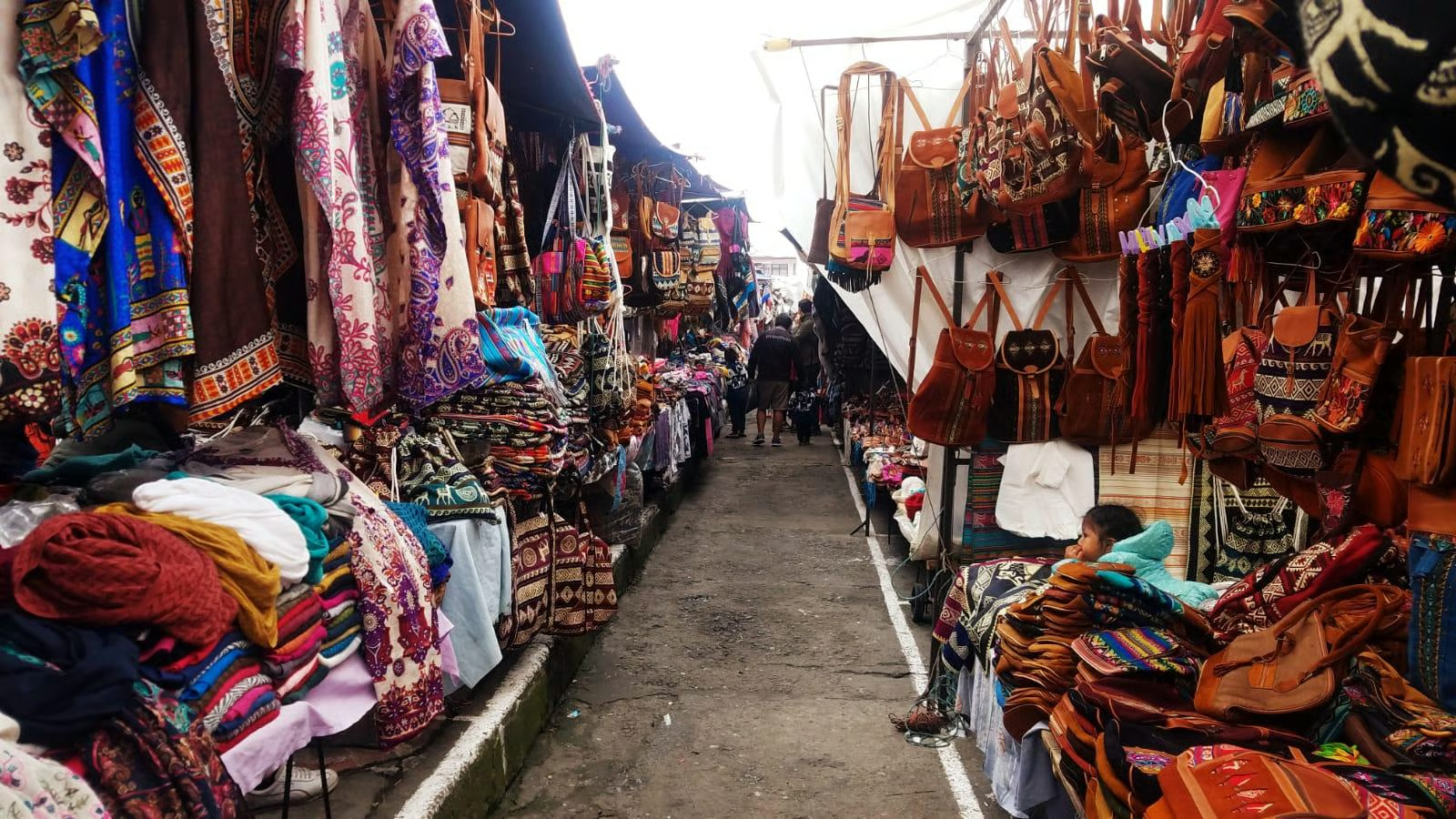
Upon arrival in Otavalo, you are given ample, unhurried time to navigate the famous Plaza de Ponchos market. Here, Kichwa Otavalo artisans display hand-woven alpaca ponchos, intricate tapestries, embroidered blouses, and silver jewellery.
Rather than ending there, the tour ventures deeper into the countryside to Cotacachi, a town renowned for high-quality leather craftsmanship, before concluding at Cuicocha Lagoon. Situated inside the crater of the Cotacachi Volcano, Cuicocha features two massive volcanic island domes rising from its deep blue waters.
Key highlights
- Artisanal bizcocho tasting in the highland town of Cayambe
- Photo stop at Miralago with views over Lake San Pablo and Imbabura Peak
- Self-guided exploration time at Otavalo’s world-renowned Plaza de Ponchos market
- Guided visit to the artisan workshops of Cotacachi
- Nature walk along the rim of Cuicocha crater lake in the Cotacachi-Cayapas Reserve
Ideal for
Culture enthusiasts, craft lovers, photographers, and travellers seeking an authentic connection with Ecuador’s living indigenous communities.
Local insight
When purchasing textiles at Otavalo Market, remember that polite bargaining is accepted, but respect the artisan’s labor. Prices are already very reasonable, so fair haggling supports the local rural economy without undermining native craftspeople.
The Ecuadorian Amazon.
The most biodiverse place in the world
3. The capital at 2,800 metres / Colonial splendour, Pichincha heights, and equatorial physics
Rating & reviews
(113+ verified reviews on GetYourGuide)
Why this specific tour stands out
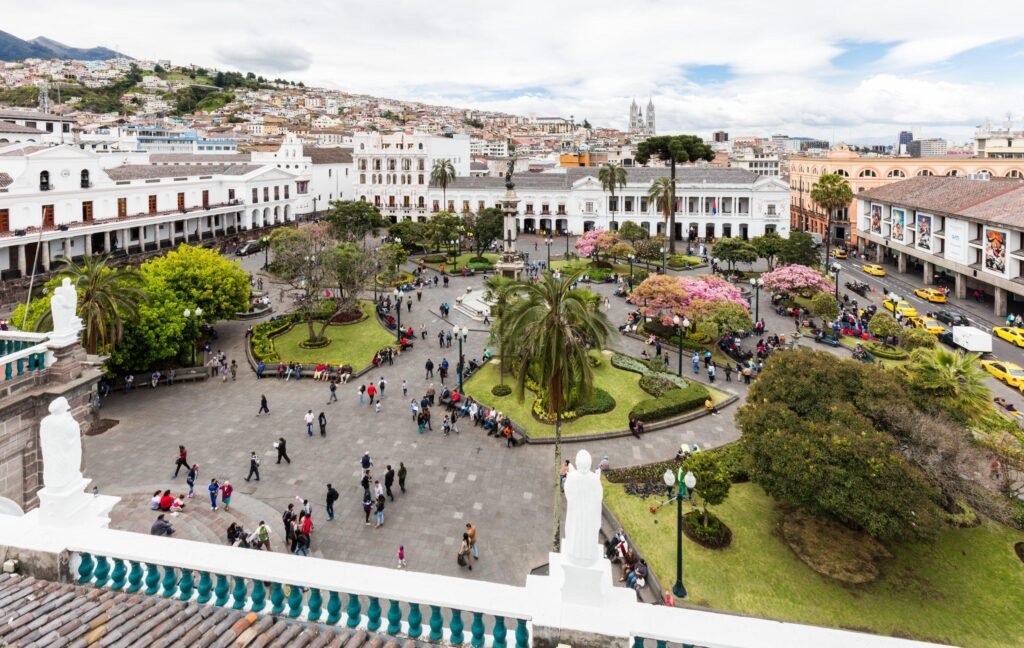
Quito is one of the most dramatically situated capitals on Earth, stretching along a narrow valley beneath the active Pichincha Volcano at an elevation of 2,850 metres. Its UNESCO World Heritage-listed historic centre is the best-preserved colonial quarter in South America. This full-day small-group tour synthesises history, geology, and physics into a seamless itinerary.
The morning focuses on the historic heart of Quito. Led by a knowledgeable local historian, you will walk through cobblestone plazas, marvel at the neo-Gothic towers and Andean-animal gargoyles of the Basílica del Voto Nacional, and step inside La Compañía de Jesús—a Baroque church gilded in seven tonnes of leaf gold. From there, you ascend El Panecillo hill for a panoramic view over the tiled roofs of the city.
Next, you will ride the Teleférico (Quito Cable Car) up the slopes of Pichincha Volcano to 4,100 metres above sea level, taking in views of the surrounding mountains. The day finishes at latitude 0°0’0”.
Rather than only visiting the concrete Mitad del Mundo monument, this tour includes the interactive Intiñán Sun Museum. Located precisely on the magnetic equator, Intiñán lets you perform interactive physics experiments—such as balancing an egg on a nail or watching water drain straight down without a vortex.
Key highlights
- Guided walking tour of Quito’s UNESCO historic centre, including the Basílica and La Compañía
- Panoramic city lookout from the winged Virgin monument at El Panecillo
- Ride the Teleférico cable car up to 4,100 metres on Pichincha Volcano
- Hands-on equatorial physics experiments at the Intiñán Sun Museum
- Small-group setting with private climate-controlled transport
Ideal for
Urban explorers, history buffs, and travellers looking for a comprehensive introduction to Quito’s architecture, geography, and equator lore.
Local insight
The top of the Teleférico (4,100m) can be surprisingly cold and windy even on bright, sunny days. Bring a windproof jacket, warm beanie, and high-SPF sunscreen—UV radiation at the equator at this altitude is intense.
4. Gateway to the Amazon / Volcanic ravines, waterfalls, and cloud forest thrills
Rating & reviews
(63+ verified reviews on GetYourGuide)
Why this specific tour stands out
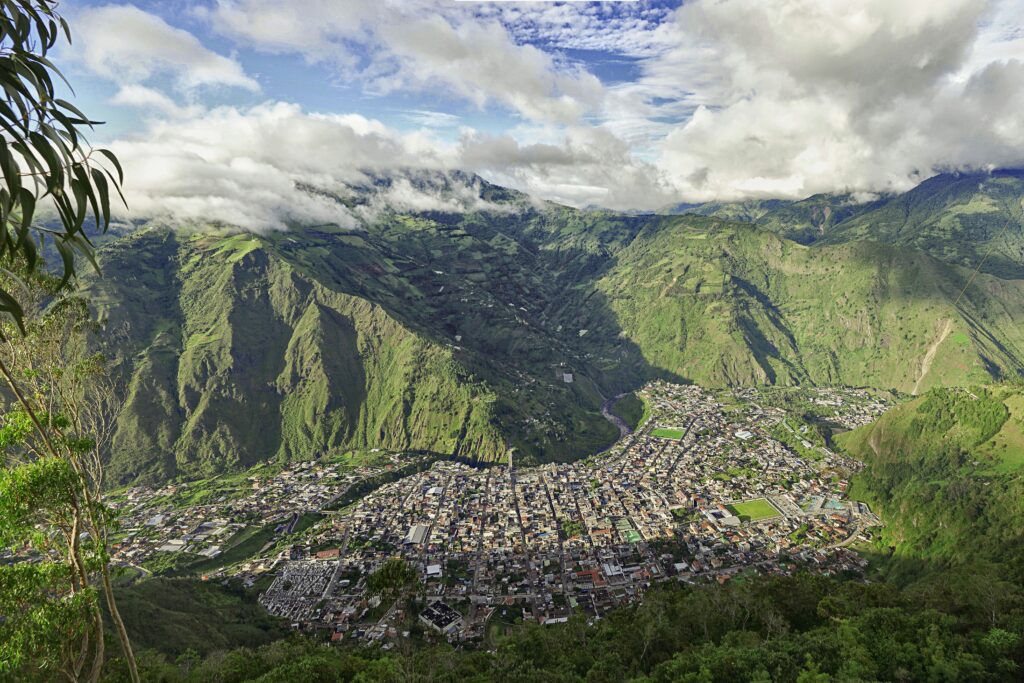
As you drop down the eastern slopes of the Andes towards the Amazon Basin, the dry alpine páramo gives way to lush, emerald cloud forest. Baños de Agua Santa sits at this dramatic geographical crossroads, nestled in a valley carved by the Pastaza River directly beneath the active Tungurahua Volcano. Known as Ecuador’s adventure capital, Baños is famous for its thermal waters and stunning waterfall gorges.
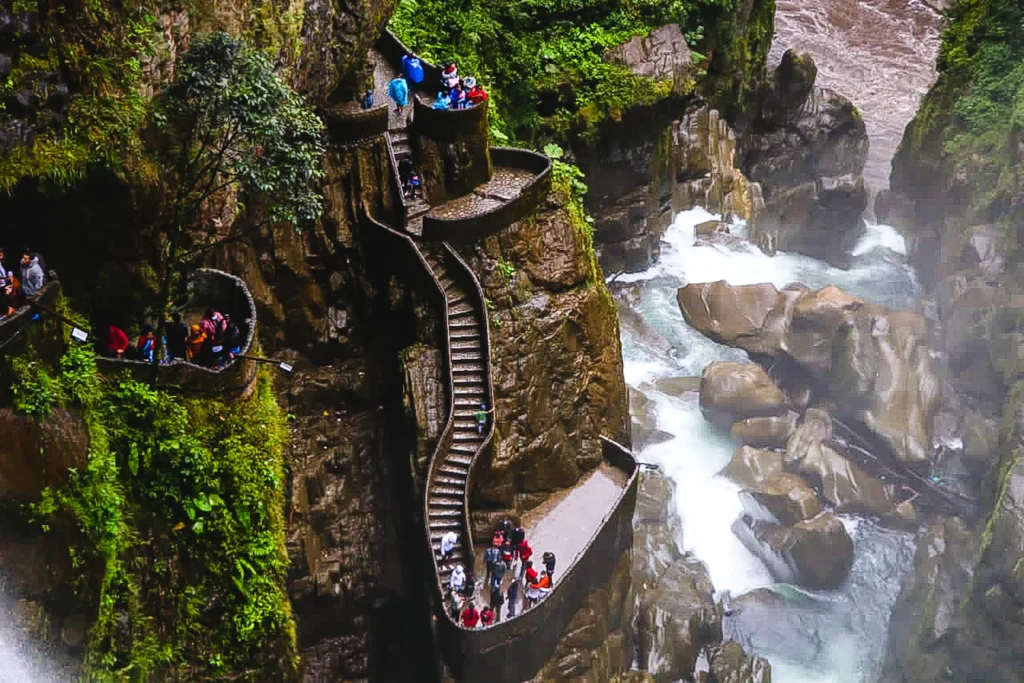
This small-group tour handles the 3-hour journey from Quito with ease. Upon arrival, you navigate the famous Ruta de las Cascadas (Waterfalls Route), tracing the Pastaza Canyon past dramatic falls like Agoyán and Manto de la Novia. The highlight of the day is a guided hike down through rainforest trails to the thunderous Pailón del Diablo (Devil’s Cauldron). Dropping 80 metres into a narrow rock gorge, the sheer power of this waterfall creates a roaring mist you can experience up close via wooden suspended walkways and carved stone staircases.
After exploring the falls, you will visit the iconic Casa del Árbol (Tree House) perched high above the valley. Here, you can ride the famous Swing at the End of the World, soaring over the abyss with views of Tungurahua Volcano. The trip includes all entrance fees, so you won’t encounter unexpected costs on-site.
Key highlights
- Scenic drive down the Pastaza Canyon along the famous Waterfalls Route
- Guided rainforest hike to the roaring Pailón del Diablo waterfall
- Walk across suspension bridges and rock tunnels enveloped in mist
- Ride the Swing at the End of the World at Casa del Árbol overlooking Tungurahua
- All site entrance fees and central hotel transport are included
Ideal for
Thrill-seekers, active families, and nature enthusiasts eager to experience the transition from Andean peaks to subtropical cloud forest.
Local insight
Expect to get wet at Pailón del Diablo! The spray from the waterfall is intense. Pack a lightweight waterproof rain jacket, wear sturdy non-slip footwear, and keep electronic gear inside a dry bag or zip-lock pouch.
The Galápagos.
Ecuador’s Enchanted Isles
5. Southern highland wilderness / Glacial valleys, Polylepis forests, and sky lakes
Rating & reviews
(10+ verified reviews on GetYourGuide)
Why this specific tour stands out
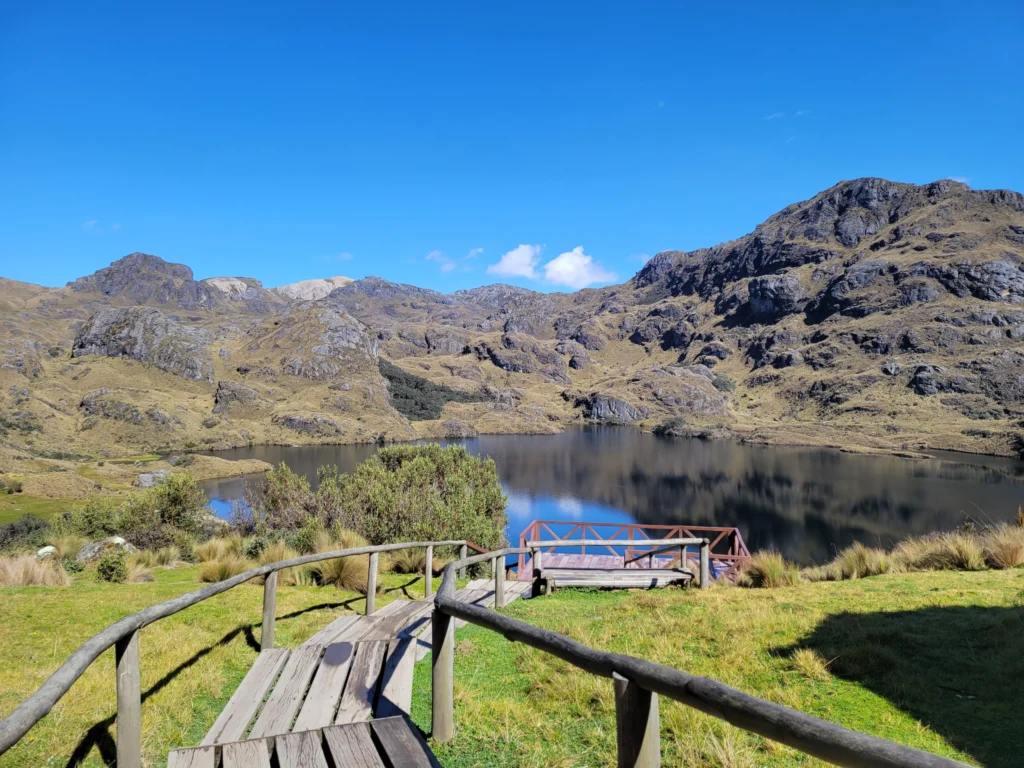
Located just 30 kilometres west of the colonial city of Cuenca, Parque Nacional Cajas is a wild, starkly beautiful expanse of tundra-like páramo, glacial valleys, and over 270 interconnected lakes. Because weather conditions in Cajas can shift rapidly from bright sunshine to dense mountain fog, exploring with an experienced, certified wilderness guide is essential for safety and environmental interpretation.
Unlike brief half-day tours that only stop at the main roadside viewpoint, this full-day excursion takes you deep into two distinct ecological zones within the park. The adventure begins in the lower cloud forest surrounding Laguna Llaviucu at 3,100 metres. Here, you will take a peaceful nature walk through a lush, moss-draped forest, ideal for spotting high-altitude birdlife, including toucanets and hummingbirds.
Next, you climb to the high tundra at Laguna Toreadora (around 4,000 metres). Your guide will lead you along Route 1 trails through rare Polylepis forests (locally known as árboles de papel or paper trees due to their peeling reddish bark). You will learn how this unique ecosystem acts as a giant sponge, retaining water that feeds Cuenca’s rivers. The tour finishes with a stop at Mirador Tres Cruces, the continental divide where water flows west toward the Pacific Ocean and east toward the Amazon and Atlantic.
Key highlights
- Dual-ecosystem trekking: low cloud forest (Llaviucu) and high tundra páramo (Toreadora)
- Walk through rare ancient Polylepis (paper tree) forests
- Visit the Cajas National Park Interpretation Centre
- Stand on the Continental Divide at the Mirador Tres Cruces viewpoint
- Traditional Ecuadorian lunch featuring locally caught fresh trout included
Ideal for
Hikers, birdwatchers, photographers, and travellers seeking immersive outdoor adventure in raw, pristine Andean nature.
Local insight
Cajas is notoriously damp, cool, and windy, with temperatures rarely exceeding 12°C. Dress in thermal layers, bring a waterproof outer shell, and wear sturdy waterproof hiking boots with good ankle support to navigate muddy trails.
6. Pre-colonial citadel secrets / Cañari cosmology and Inca elliptical architecture
Rating & reviews
(47+ verified reviews on GetYourGuide)
Why this specific tour stands out
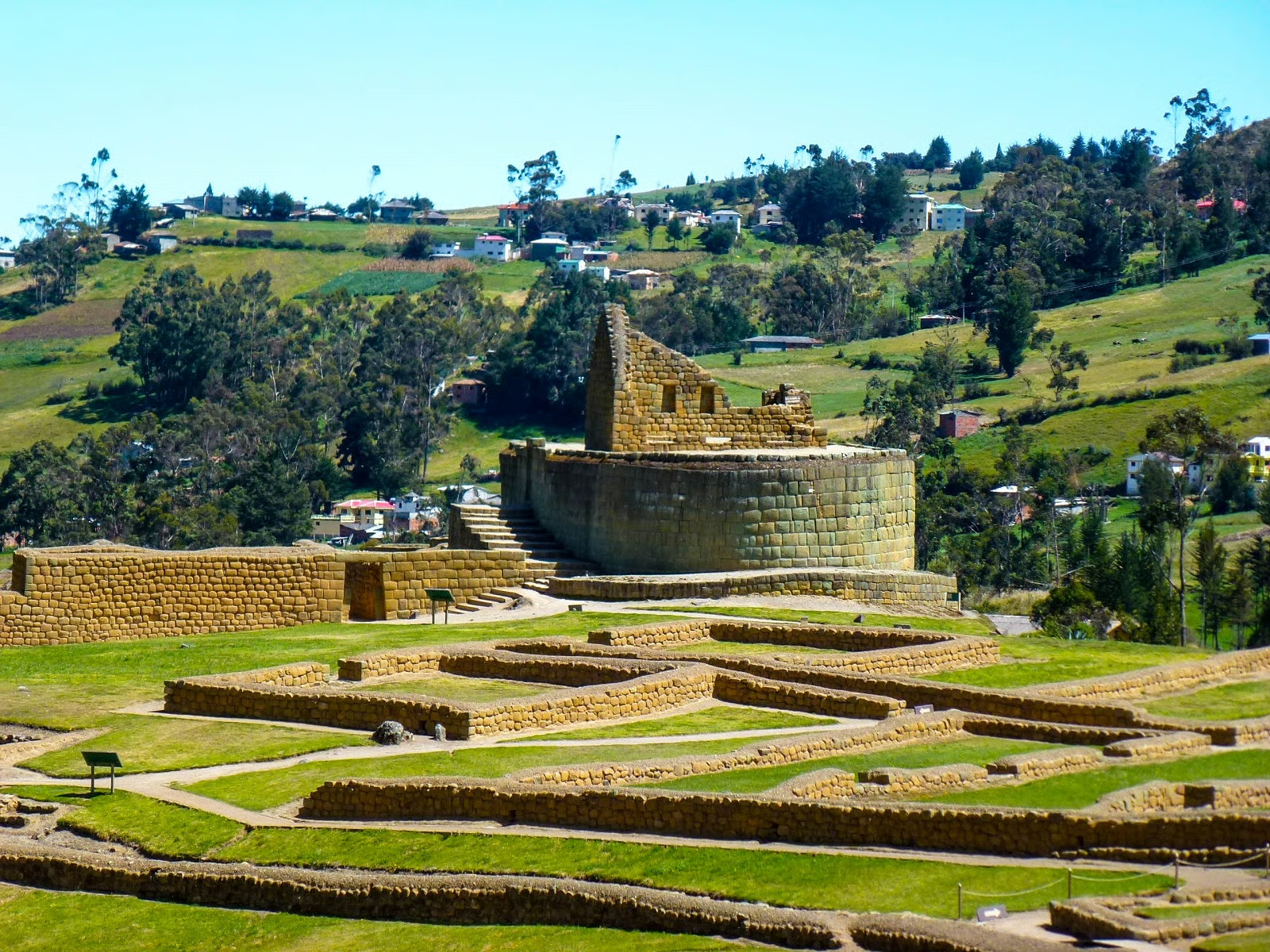
For travellers interested in archaeology and pre-Columbian history, the Ingapirca Archaeological Complex is an essential stop. Perched on a windswept ridge in Cañar province at 3,160 metres, Ingapirca is Ecuador’s largest and most significant Inca site. What makes Ingapirca truly remarkable is that it represents a unique synthesis of two distinct cultures: the native matriarchal Cañari civilisation and the expansionist Inca empire.
Departing from Cuenca, this specialized day tour enriches the journey with meaningful cultural stops. You will visit the town of Biblián to admire the Santuario de la Virgen del Rocío, an extraordinary church built directly into the side of the sacred Shalao mountain. Along the way, your guide will introduce you to traditional Cañari culinary techniques during a roadside tasting.
At the Ingapirca complex, your expert guide will decipher the mortarless stonework. You will examine the Cañari Moon Temple and mortar stones used for astronomical observation, then compare them with the imposing, elliptically shaped Inca Temple of the Sun—the only elliptical Inca temple ever discovered. The tour concludes with an easy walk to the nearby Cara del Inca (Incan Face), a natural rock cliff carved by wind and rain into a profile resembling a warrior.
Key highlights
- Visit the cliff-side church of Santuario de la Virgen del Rocío in Biblián
- Guided tour of the Ingapirca Archaeological Complex, including the Temple of the Sun
- Discover Cañari lunar burial sites and astronomical mortar stones
- Walk to the Incan Face natural rock formation (Cara del Inca)
- Authentic local lunch sampling highland cuisine in Cañar
Ideal for
History enthusiasts, archaeology buffs, and curious travellers wanting to understand Ecuador’s complex pre-colonial heritage beyond standard textbook summaries.
Local insight
Ingapirca is situated on an exposed plateau where icy winds sweep across the mountain pass. Even on sunny days, wind chill can drop temperatures significantly. Pack a fleece, windbreaker, and warm scarf for your walking tour of the ruins.
The Ecuadorian Coast.
Where you’ll find the very best food
Our practical guide to excursion planning in the Sierra
To ensure your day trips across the Ecuadorian Sierra are smooth, comfortable, and respectful of local host communities, keep these practical tips in mind:
Pace your acclimatisation strategy
The Sierra ranges from 2,500 metres in valleys to over 4,000 metres on mountain passes. Spend your first two days taking it easy in Quito (2,850m) or Cuenca (2,560m) before booking high-altitude hikes at Cotopaxi or Cajas. Drink plenty of water, limit alcohol intake, and consider sipping traditional mate de coca (coca leaf tea) offered by local guides.
Master the Andean three-layer system
Weather in the Andes can change rapidly. A sunny 20°C morning in a sheltered valley can drop to a chilly 5°C with wind or rain on a high pass in minutes. Dress in a breathable base layer, an insulating mid-layer (fleece or light down), and a waterproof, windproof outer shell.
Carry cash in small denominations
While day tour bookings are handled digitally online, rural Andean communities operate on cash. Bring small US dollar bills ($1, $5, and $10) for buying handmade crafts in Otavalo, tipping local guides, purchasing hot drinks, or paying small fees (usually $0.50) for public restroom access in rural villages.
Sun protection is non-negotiable
Because of Ecuador’s equatorial location and high altitude, UV rays are intense, even on cloudy days. Apply broad-spectrum SPF 50+ sunscreen, wear UV-blocking sunglasses, and bring a wide-brimmed hat.
Respect indigenous photography protocols
The indigenous peoples of the Sierra—including the Kichwa Otavalo, Cañari, and Salasaca—have rich, living cultural traditions. Always ask politely (“¿Puedo tomar una foto, por favor?”) before photographing local people, particularly elders and children. Buying a small craft item beforehand builds natural goodwill.
Your journey into the Andean spine
Travelling through the Ecuadorian Sierra is less about rushing between photo stops and more about matching your pace to the rhythm of the mountains. Whether you are watching cloud cover roll across the high páramo or listening to the hum of an early-morning village market, this landscape rewards those who slow down, ask questions, and step beyond the standard tourist trail.
Navigating the logistics of mountain passes, variable weather, and winding roads can test even the most experienced independent traveller. Choosing small-group excursions led by native guides does not mean surrendering your autonomy; rather, it bridges the gap between simple sightseeing and genuine cultural context. You gain safe, reliable transport into remote protected areas while supporting the local naturalists and community stewards who know these valleys best.
As you assemble your highland itinerary, leave plenty of room for unscripted moments. Pause at a roadside bakery in Cayambe for warm bizcochos, share a flask of coca tea at the edge of a volcanic crater, or spend an extra hour wandering through the moss-draped cloud forest trails of Cajas. The true magic of the Sierra lies in these quiet intersections between wild nature and centuries of living heritage.
Pack your warmest layers, respect the altitude, and approach the mountain trails with an open mind. The peaks of the Andes are waiting, and there is no better way to experience them than with your feet firmly on the ground.
Affiliate Disclaimer: Some of the links on Wheely Tyred are affiliate links. If you click through and make a booking or purchase, we may earn a small commission at no extra cost to you. We only recommend gear, tours, stays, and services we genuinely use, trust, and stand behind — our editorial independence always comes first. These commissions help keep our independent cycling guides and travel stories free to read. Thanks for supporting the ride!
Frequently asked questions about the best Sierra Ecuador day tours
The best defense against altitude sickness (soroche) is a gradual itinerary. Spend your first 48 hours resting in cities like Quito (2,850m) or Cuenca (2,560m) before tackling high-elevation hikes above 3,500 metres. Stay well-hydrated, avoid heavy meals and alcohol upon arrival, and drink traditional mate de coca (coca leaf tea), which helps expand oxygen uptake.
Ecuador has an extensive and affordable long-distance bus network connecting major hubs like Quito, Ambato, Baños, and Cuenca. Terminal Terrestre bus stations in main cities offer frequent departures. For reaching remote trailhead starts, national park entrances, or rural archaeological sites like Ingapirca without a car, booking a small-group day tour is often far more efficient than stringing together multiple regional bus transfers.
Mountain weather in the Sierra changes rapidly. Follow a strict three-layer system: a breathable, moisture-wicking base layer; a warm insulating mid-layer (such as a fleece or lightweight down jacket); and a fully waterproof, windproof outer shell. Sturdy, waterproof hiking boots with good tread are essential for wet páramo trails like those in Cajas National Park.
Highland Ecuadorian cuisine is hearty and comforting. Must-try dishes include locro de papa (a rich potato soup served with avocado and fresh cheese), bizcochos (buttery, wood-fired biscuits from Cayambe), fresh Andean trout, and llapingachos (pan-fried potato cakes filled with cheese). Wash it down with canelazo, a warm spiced cinnamon drink made with local sugar-cane spirits (aguardiente).
Ecuador uses the United States dollar ($). While credit cards are widely accepted in hotels and upscale restaurants in Quito and Cuenca, cash is the absolute king in rural markets, small cafes, and mountain villages. Always carry small physical notes ($1, $5, and $10 bills) and coins, as stallholders and local drivers rarely have change for $20 bills.
Always approach indigenous communities with humility and awareness. Ask permission before taking photographs of local people—especially elders and children—and take time to learn a few basic Kichwa greetings like “Alli puncha” (Good day). Supporting indigenous artisans directly by paying fair prices without aggressive bargaining helps ensure tourism directly benefits the local rural economy.
Ecuador.
Pure wonder on the equator.