The independent guide to the Ecuadorian Coast / Local tips for first-time travellers
Ecuadorian Coast travel tips / A first-timer’s guide for independent travellers navigating local buses, beach villages, and seasonal weather
Shaped by dust, surf, and the slow rhythm of the tide
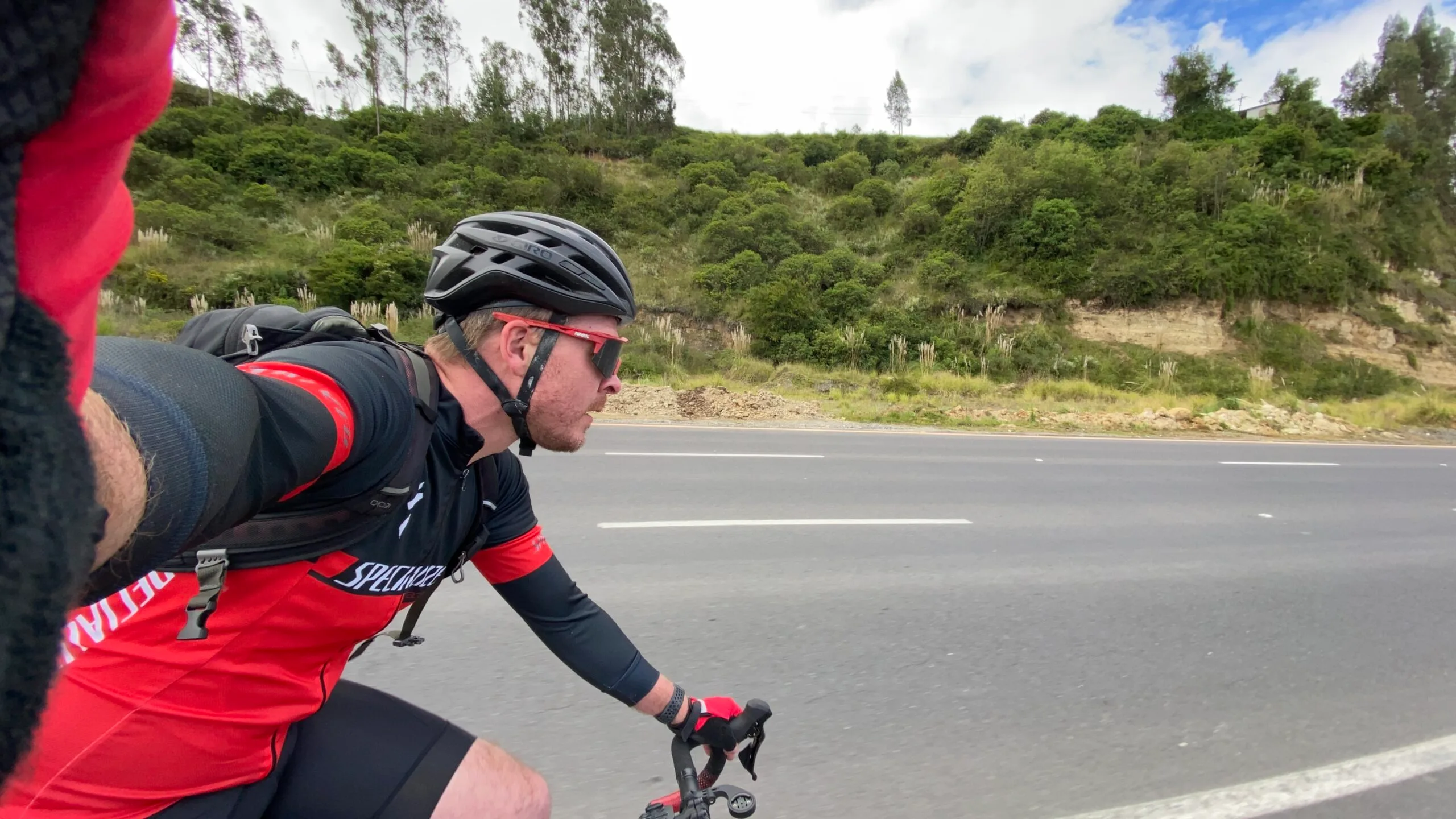
BEN FINCH
The Pacific coast of Ecuador is a world far removed from the high-altitude colonial plazas of Quito or the volcanic peaks of the Andes. Known locally as La Costa, this region is a sun-baked stretch of fishing villages, tropical dry forests, and sweeping ocean views tied together by the Ruta del Spondylus. For the independent traveller who prefers to move without a guide or a rigid schedule, the coast offers total autonomy.
Travelling here by bus or foot means trading predictable tourist bubbles for the authentic pulse of coastal South America. However, arriving unprepared can lead to missing the best experiences or getting caught in seasonal weather traps. This guide provides the practical intelligence needed to navigate the Ecuadorian Coast entirely on your own terms.
The salt-stained edge of La Costa
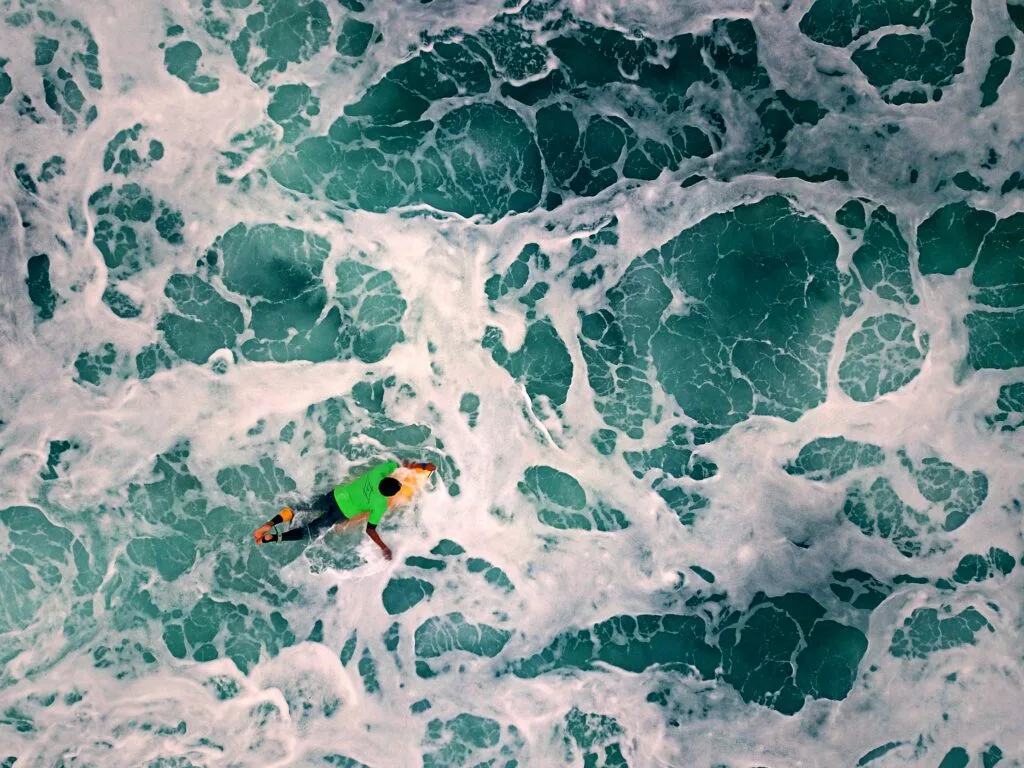
Ecuador’s Pacific fringe rewards those who slow down and navigate by the rhythm of the local buses. From misty maritime forests to isolated surf communities, this coastline demands a flexible schedule and an appetite for authentic coastal life.
- The Garúa Mist: A cool, low-lying fog blankets the coast from June to September, turning the landscape atmospheric and marking the prime migration window for humpback whales
- Atmosphere Matching: Finding the right coastal base requires filtering out the concrete resort strips in favour of places like low-key Olón or the dirt roads of Ayampe, depending on your desire for solitude or surf
- The Green Bus Network: Travelling independently relies on mastering the regional Cooperativa Manglaralto buses, which can be hailed from any stretch of the highway for a minimal fare
- The Cash Rule: Coastal commerce runs strictly on small-denomination US dollar bills, with cash machines frequently running dry during weekends and local holidays
- The Inland Wild: True coastal exploration means leaving the sand behind to hike the fog forests of Parque Nacional Machalilla or the protected wilderness surrounding Playa de Los Frailes
- Peanut and Plantain Staples: Local gastronomy is defined by rich textures, featuring coastal staples like cebiche Jipijapa laced with peanut paste and crispy bolón de verde for breakfast
The Ecuadorian Coast.
Where you’ll find the very best food
Understanding the microclimate trap
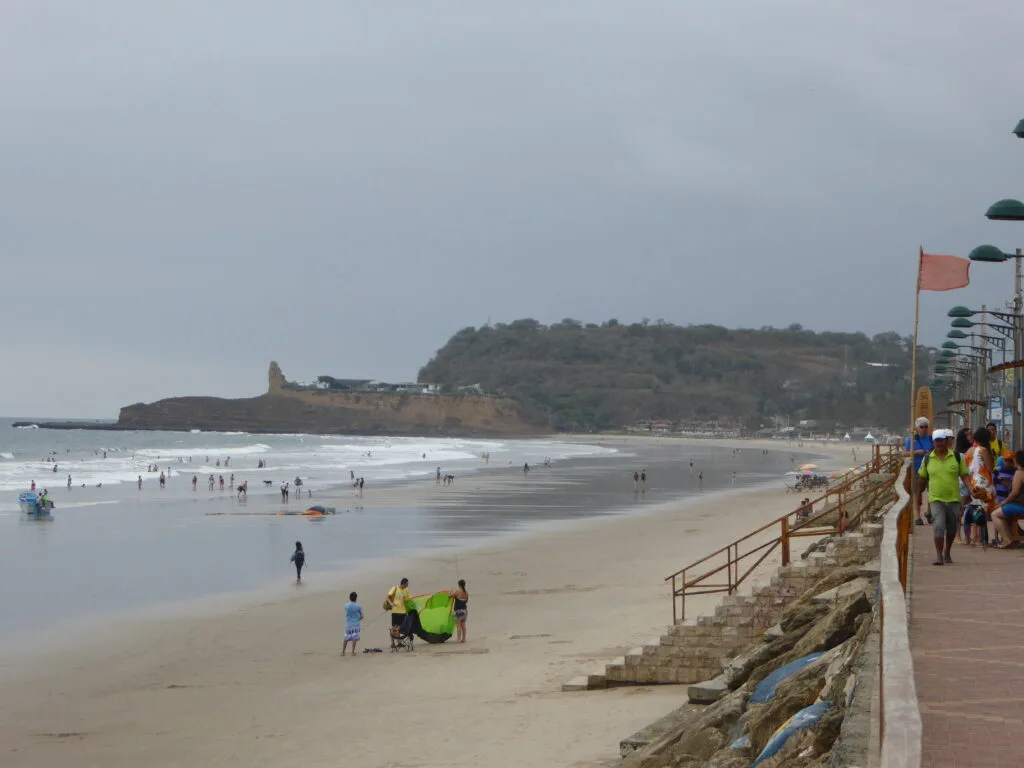
One of the most common mistakes first-time visitors make is assuming the Ecuadorian Coast enjoys uninterrupted tropical sunshine all year round. The coastline is governed by complex ocean currents that create distinct seasonal shifts, and arriving in the wrong month can completely alter your experience.
The Garúa season / June to September
During these months, the cold Humboldt Current dominates the marine ecosystem. This creates a thick, low-lying mist known as the garúa. The sky remains stubbornly grey, temperatures drop to a cool 20 to 24 degrees Celsius, and a fine drizzle often blankets the shore.
While sunseekers might find this depressing, independent travellers can use this atmospheric season to their advantage. This is the prime time for whale watching, as humpback whales migrate from Antarctica to breed in the warm waters around Puerto López. The cool weather is also ideal for hiking through coastal forests without the oppressive heat of the wet season.
The sunny season / December to April
If you want classic beach weather, this is the time to visit. The skies are brilliant blue, and temperatures frequently climb above 30 degrees Celsius. However, this is also the rainy season. Downpours are usually torrential but brief, happening late in the afternoon or at night, leaving the days hot and humid. This period coincides with local holiday peaks, meaning beaches become significantly busier and accommodation prices rise during carnival and Easter.
Choosing your base / Atmosphere selection
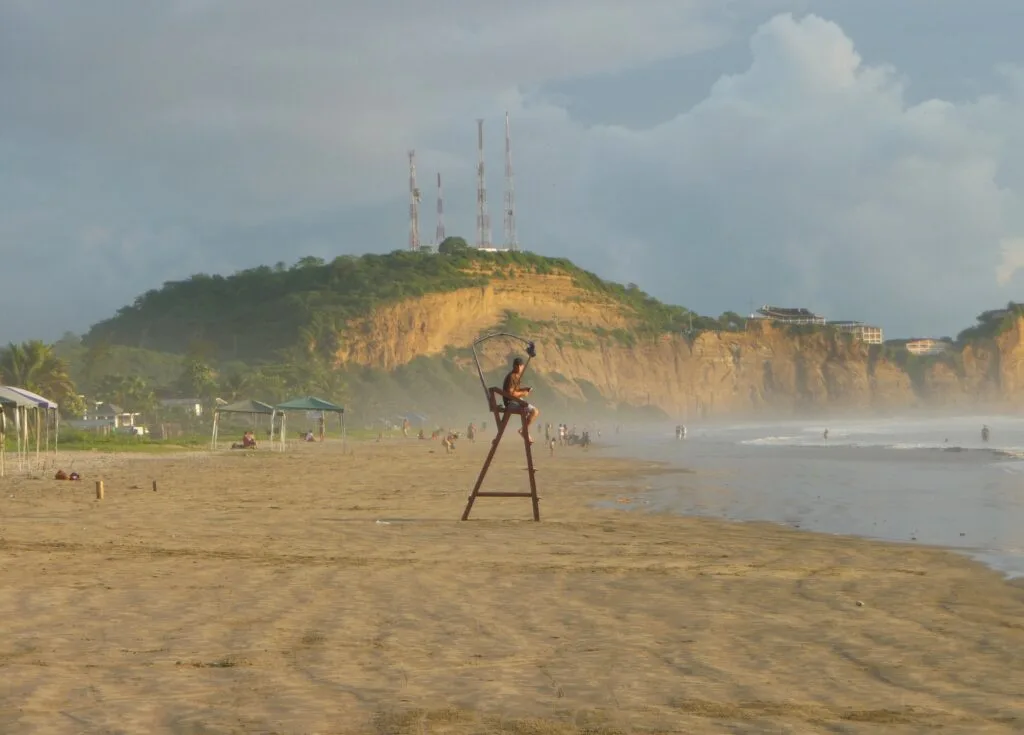
The villages and towns along the Ruta del Spondylus vary wildly in character. Choosing the wrong base can result in a frustrating stay. Independent travellers should avoid the massive, concrete resort strips like Salinas or Manta, which cater to domestic package tourism, and focus instead on the smaller hubs.
Montañita / The high-energy surf hub
Known across the continent as a nightlife capital, Montañita is loud, neon-lit, and constantly pulsing with music. The surf break here is world-class, attracting a young, international crowd. If you want quiet evenings and deep sleep, avoid staying in the village centre. However, it remains a useful stop for accessing banks, surf schools, and reliable internet.
Olón / The laid-back alternative
Located just ten minutes north of Montañita, Olón feels like a different universe. The beach is exceptionally wide and backed by a quiet village filled with local families and low-key expats. It is an ideal base for travellers who want a clean, expansive beach, independent cafes, and a peaceful environment while remaining close enough to Montañita to use its amenities.
Ayampe / The nature and surf sanctuary
Further north along the highway lies Ayampe, a small village where the tropical forest meets the ocean. There are no paved streets or high-rise hotels here. The focus is entirely on surfing, yoga, and biodiversity. It is one of the finest places on the coast to watch the sunset over the Isla Los Ahorcados rock formations. It appeals directly to slow travellers who want to disconnect and observe local birdlife.
The Galápagos.
Ecuador’s Enchanted Isles
Navigating independently / Buses and coast etiquette
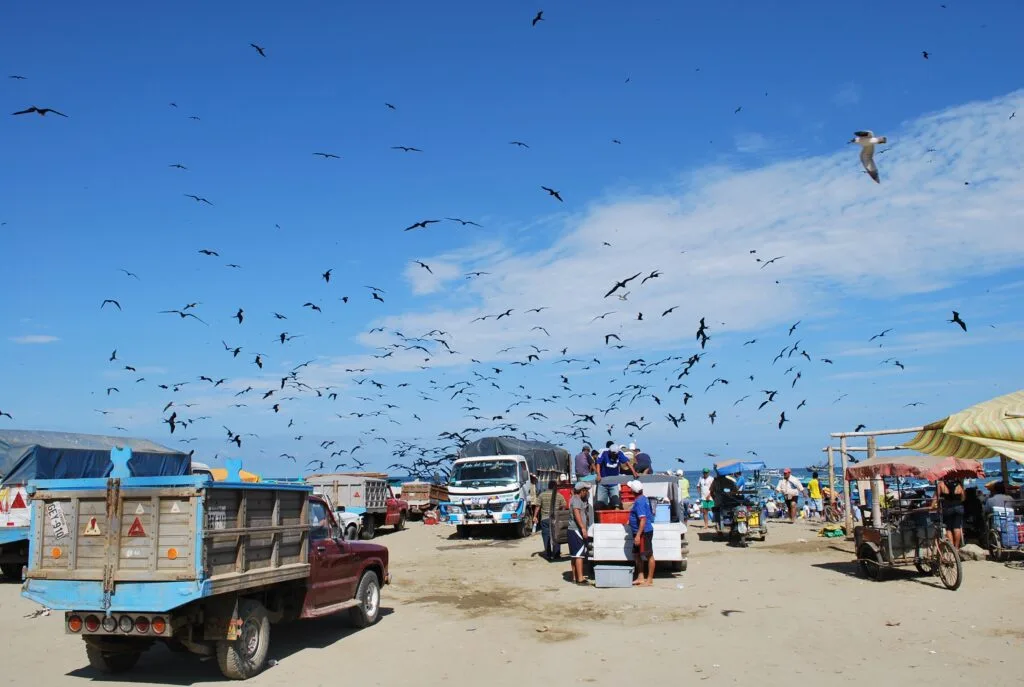
You do not need a rental car to explore La Costa. In fact, driving a foreign rental car can invite unwanted attention and logistical headaches with local parking. The coastal transport network is frequent, affordable, and deeply woven into local life.
Mastering the green buses
The Cooperativa Manglaralto operates a fleet of green and white buses that ply the highway constantly between Santa Elena and Puerto López. You do not need to buy tickets in advance. Simply stand by the side of the Ruta del Spondylus and raise your hand when you see the bus approaching.
A conductor will handle the fares once you are seated. Journeys between adjacent villages usually cost less than a dollar, while longer trips across provinces rarely exceed three or four dollars. Always carry small change; handing a twenty-dollar note to a bus conductor for a fifty-cent fare is highly discouraged and often refused.
The local flow and cash economy
Coastal life moves at a relaxed pace, and commerce is overwhelmingly cash-based. Small family-run guesthouses, beachside food stalls, and transport operators rarely accept credit cards. ATMs are sparse outside major cities like Manta or Santa Elena. There are machines in Montañita and Puerto López, but they frequently run out of cash during weekends or holidays. Keep a secure supply of small US dollar bills ($1, $5, and $10) with you at all times.
The overlooked wild / Nature beyond the sand
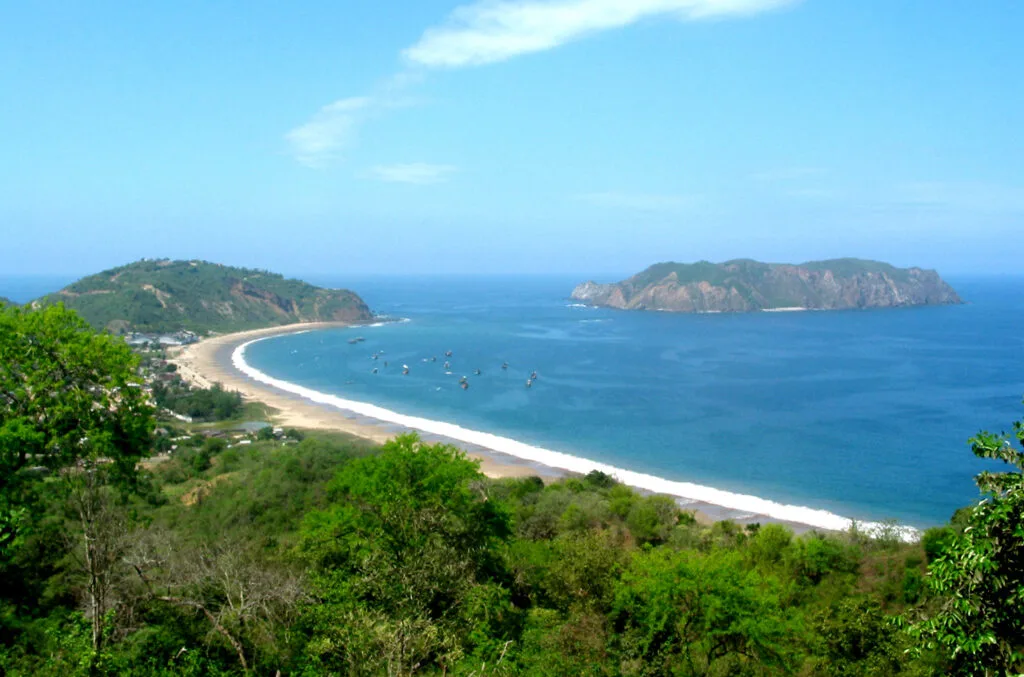
Many visitors spend their entire trip with their toes in the sand, completely missing the extraordinary ecosystems that sit just a few kilometres inland. The coastal strip contains some of the last remaining tracts of tropical dry forest and fog forest in South America.
Parque Nacional Machalilla
This vast national park protects both marine environments and terrestrial forests. Independent travellers can hike the San Sebastián trail within the park to experience a sudden transition from dry scrubland to a lush fog forest teeming with howler monkeys, iguanas, and toucans. To do this independently, take a bus to the village of El Pital and hire a local community guide at the entrance to ensure you do not get lost on the unmapped tracks.
Playa de Los Frailes
Regarded as the most beautiful beach in mainland Ecuador, Los Frailes is a series of three protected crescents of white sand surrounded by cliffs. Because it sits inside the national park, there are no hotels, bars, or vendors.
To visit on your own terms, ask a coastal bus to drop you at the park entrance between Ayampe and Puerto López. Skip the main road and take the nature trail that winds through the dry forest, leading to the spectacular Mirador Las Coronas viewpoint before dropping down to the main beach. Bring your own water and food, as there are no services on the sand.
The Ecuadorian Sierra.
Get lost in the hills
Culinary discoveries along the coastal highway
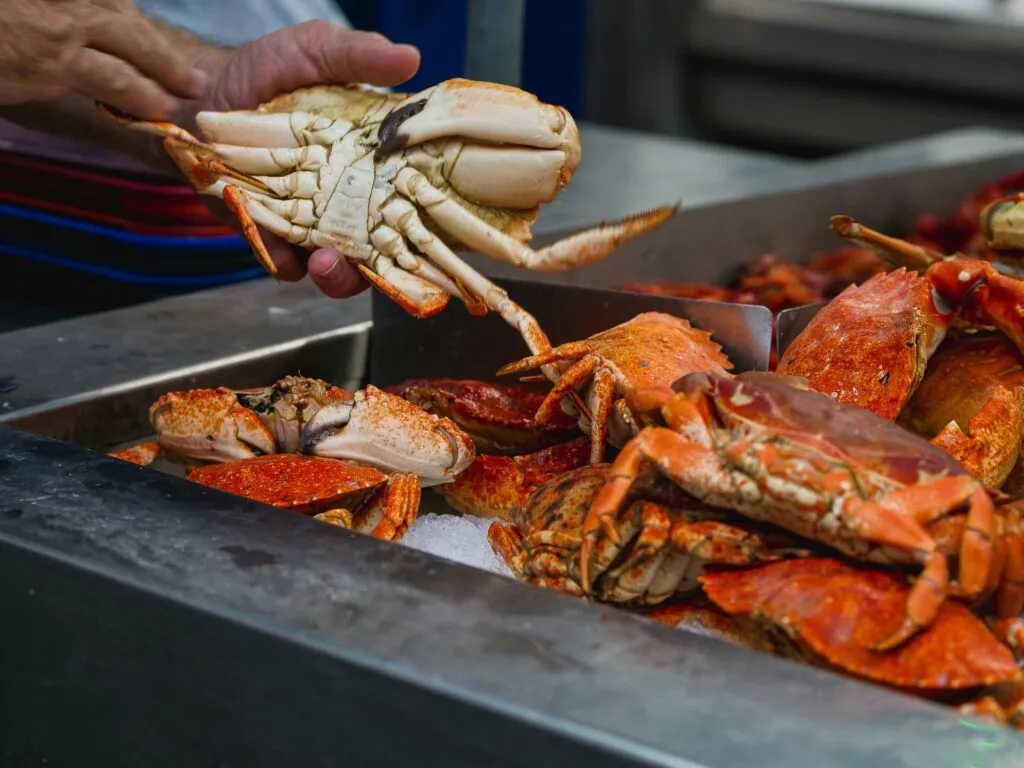
Coastal cuisine in Ecuador is distinct, relying heavily on green plantains, peanuts, and the freshest catch from the Pacific. Avoid the generic international restaurants and look for small, family-operated cebicherías and roadside grills.
- Ceviche Jipijapa: Unlike the Peruvian version, Ecuadorian ceviche is served with plenty of lime juice broth and is often accompanied by a rich peanut paste, particularly in the Manabí province. It is eaten with chifles (thinly sliced fried plantain chips)
- Bolón de Verde: A staple breakfast dish consisting of a large ball of mashed green plantain mixed with cheese, pork rind (chicharrón), or both, then fried until crispy. Pair it with a cup of local black coffee
- Corviche: A popular street food snack made from a dough of green plantain and peanuts, stuffed with seasoned fish, and deep-fried. It is best enjoyed fresh from roadside stalls along the highway
Embracing the coastal flow
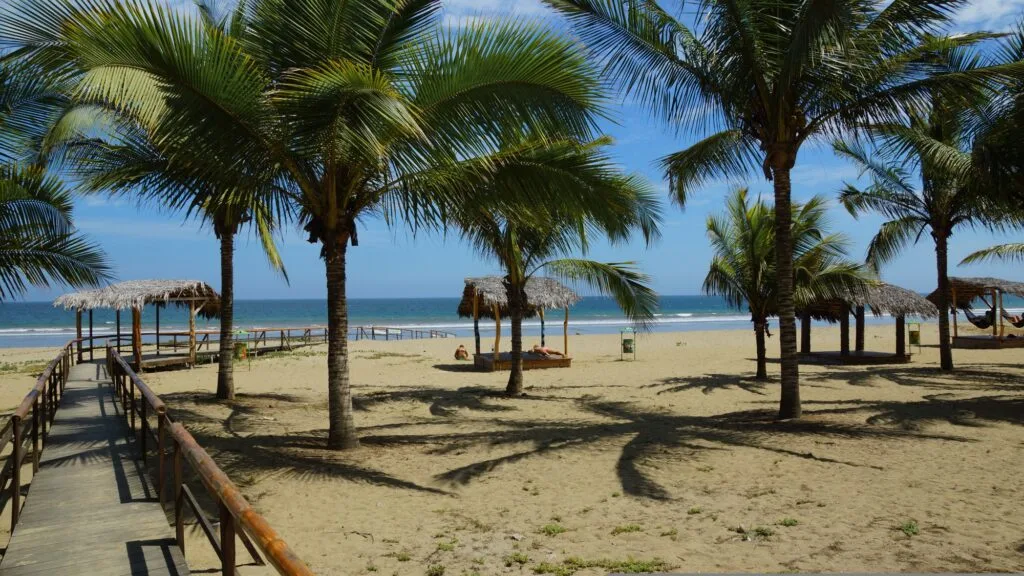
Leaving the curated footprints of a standard holiday itinerary behind is where the true character of the Ecuadorian Coast reveals itself. When you choose to travel by foot, step onto the local regional buses, or linger in a village like Ayampe well past your planned departure date, the region stops being a mere sequence of sights and becomes a continuous, living landscape. The transition from the sun-baked dust of the highway to the dense canopy of the coastal fog forest happens quietly, open only to those moving slowly enough to notice the shift.
Navigating this Pacific edge successfully is less about rigid planning and more about adapting to the local environment. It requires accepting the grey morning mists of the garúa as a natural cue for an inland wilderness hike, rather than a disruption to a sunbathing schedule, and maintaining a pocket full of small change for the bus conductor. By stripping away the insulation of organised groups and private transfers, the independent traveller gains an unfiltered view of a resilient maritime culture shaped entirely by the sea.
Ultimately, La Costa rewards the patient and the autonomous. As you watch the sunset melt into the ocean behind the cliffs of Los Frailes or share a morning bolón de verde at a roadside stall, the value of an open schedule becomes undeniable. The Ruta del Spondylus is waiting, not as a track to be rushed through, but as a path to be unpicked, one coastal village at a time.
The Ecuadorian Amazon.
The most biodiverse place in the world
Frequently asked questions about the Ecuadorian Coast
You do not need to buy tickets in advance. Simply stand by the side of the highway and raise your hand when a green and white Cooperativa Manglaralto bus approaches. A conductor will handle the fares on board once you are seated.
The garúa is a thick, cool mist caused by the ocean currents between June and September. It brings grey skies and lower temperatures, making it less ideal for sunbathing but excellent for hiking coastal trails and whale watching in Puerto López.
The coastal economy is heavily cash-based, and small family-run establishments or bus conductors rarely accept credit cards. Cash machines are rare outside major cities and often run out of money, so keeping a supply of low-value bills is essential.
Manabí cuisine stands out for its unique combination of fresh seafood, peanuts, and green plantains. Local dishes include cebiche Jipijapa, which features a rich peanut paste broth, and corviche, a deep-fried plantain snack filled with fish.
Yes. You can take a coastal bus to the national park entrance and walk the nature trail independently. Because it sits inside a protected area, there are no vendors or amenities on the beach, so you must pack your own water and food.
Though separated by just ten minutes, Montañita is a loud, high-energy surf hub famous for its nightlife, whereas Olón offers an exceptionally wide beach, a quiet village atmosphere, and a slower pace of life suitable for long stays.
Ecuador.
Pure wonder on the equator.