Forty-eight hours in Cuenca / A slow-paced guide to Ecuador’s cultural capital
An independent traveller’s 48-hour itinerary for exploring the historic streets, local food markets, and riverside paths of Cuenca, Ecuador
Trade the tours for walking shoes to uncover the southern Andes
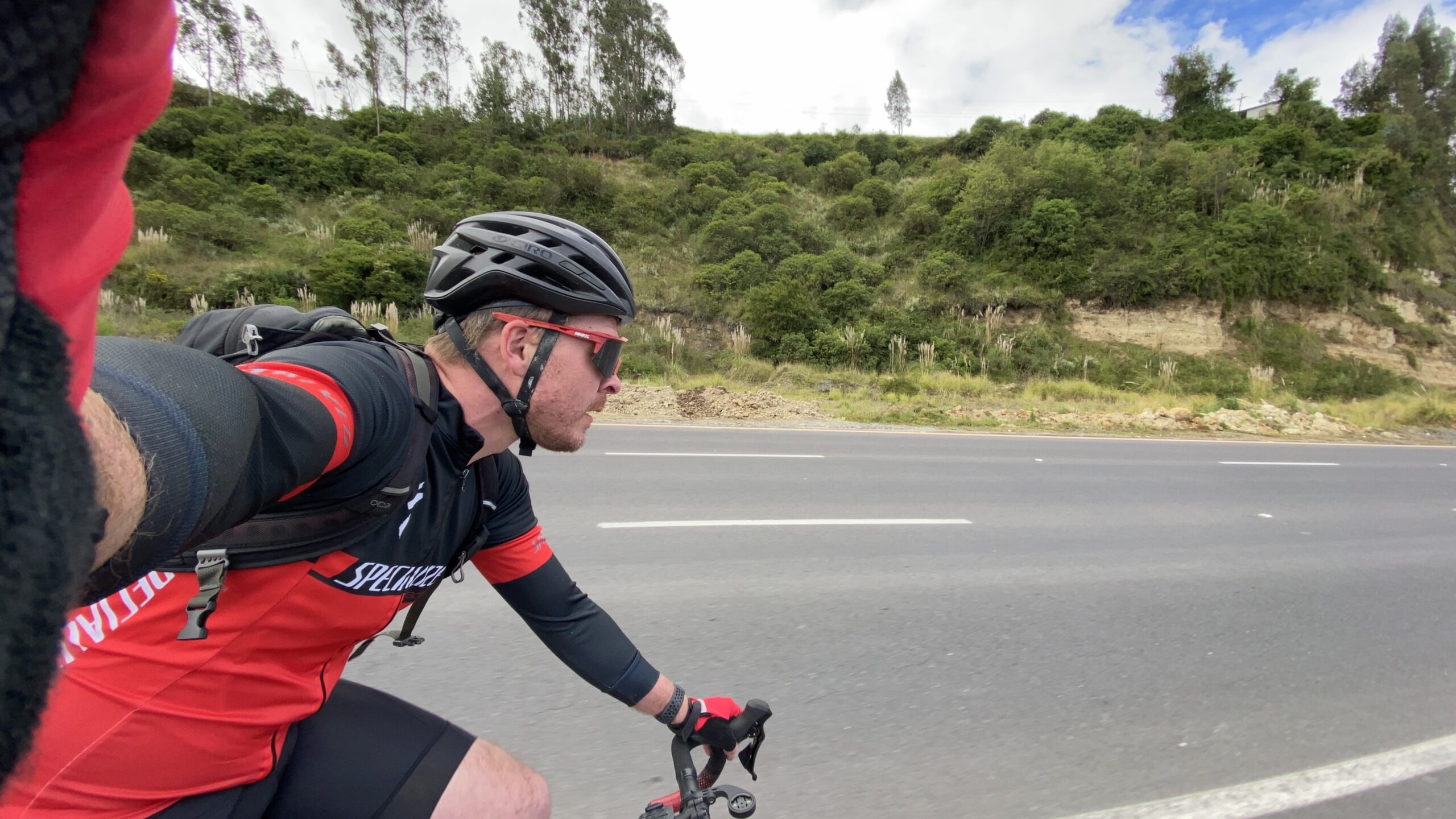
BEN FINCH
Tucked into a fertile valley in the southern highlands of Ecuador, Cuenca—or Santa Ana de los Cuatro Ríos de Cuenca, to use its full, poetic title—is a city that rewards the patient observer. Sitting at an elevation of 2,500 metres above sea level, it lacks the chaotic, high-octane rush of Quito or Guayaquil. Instead, it moves to the steady, rhythmic pulse of its four intersecting rivers.
For the independent traveller, Cuenca is a rarity in South America: an urban landscape explicitly designed for walking, active transport, and slow exploration. The historic centre, a meticulously preserved UNESCO World Heritage site, unfolds in a clean colonial grid flanked by whitewashed facades, heavy iron-studded doors, and hidden interior courtyards. Yet, just steps away from the colonial architecture lies an expansive network of linear parks and dedicated cycling paths that trace the waterways.
To experience Cuenca in 48 hours is not about checking off monuments from a frantic checklist. It is about aligning yourself with the city’s natural pace—wandering its cobblestone lanes, understanding its deep pre-Columbian roots, and exploring its green corridors on foot or on two wheels.
The quiet pulse of the southern Andes
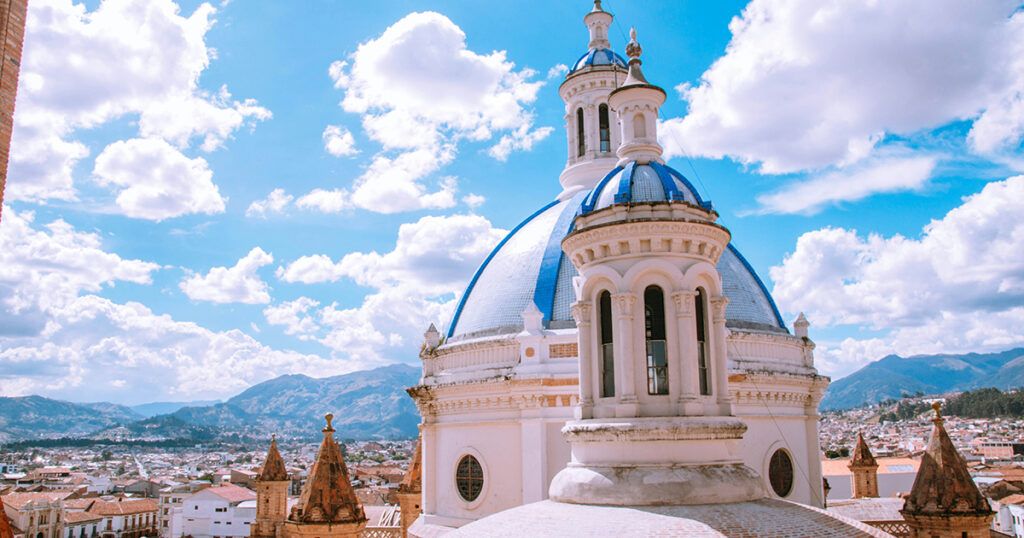
Cuenca reveals its multi-layered history through grand colonial architecture, ancient indigenous foundations, and vibrant public markets. Exploring this Ecuadorian city on two wheels or on foot allows independent travellers to escape the crowds and sync with its natural mountain pace.
- Riverside corridors: The Ciclovía Cuenca Unida offers a flat, well-planned network of paved bicycle tracks tracing the natural bends of the Río Tomebamba and connecting the historic core to expansive green spaces like Parque Paraíso
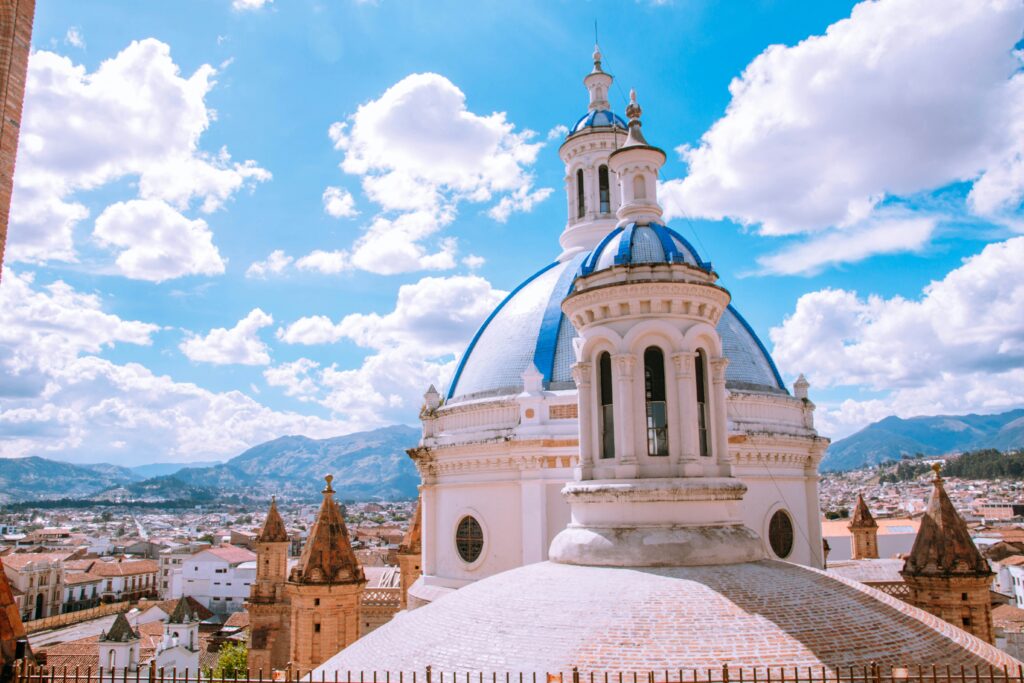
- Colonial textures: Parque Calderón serves as the geographical anchor of the old city, flanked by the simple 16th-century Old Cathedral and the grand, blue-domed New Cathedral
- Living rituals: The daily flower market at Plaza de las Flores fills the streets with local blooms and provides an opportunity to sample traditional agua de pítimas, a herbal pink tea brewed by cloistered nuns
- Market culinary heritage: The upper floor of Mercado 10 de Agosto provides an authentic immersion into regional food culture, highlighted by slow-roasted hornado and hominy-based mote pillo
- Pre-Columbian footprints: The archaeological park at Museo Pumapungo preserves the extensive stone foundations of an ancient imperial capital, complete with terraced agricultural gardens and a resident herd of llamas
- Low-emission transit: The modern electric Tranvía system integrates cleanly with active transport options, offering a quiet, efficient way to travel from the main bus terminal across the historic grid
The Ecuadorian Sierra.
Get lost in the hills
Day 1 / Architectural layers and market rhythms
Morning / The heart of the old core
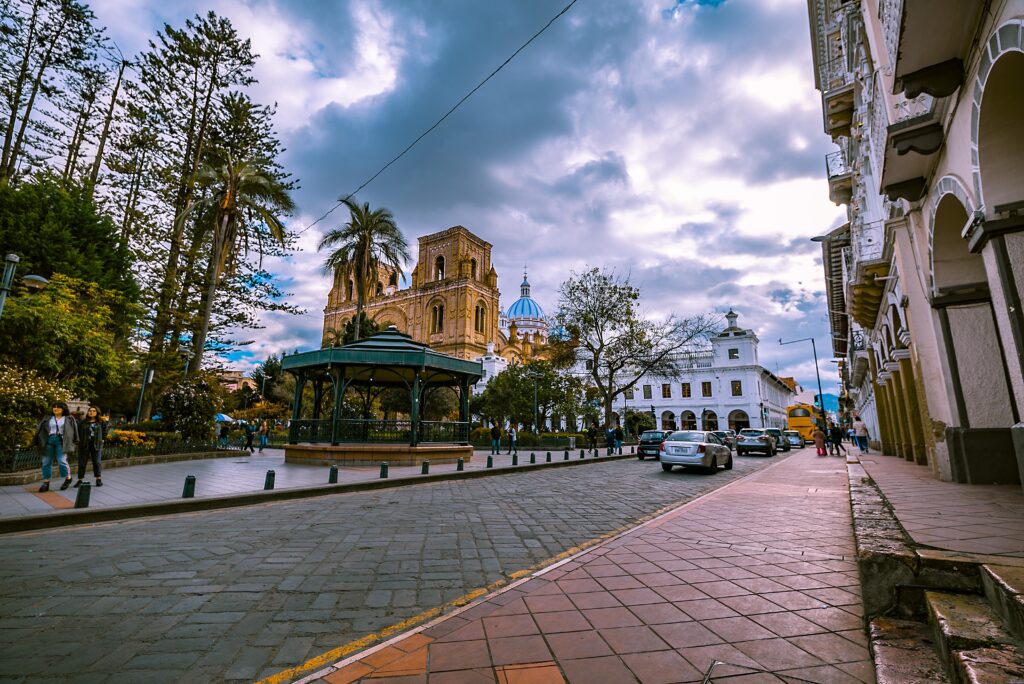
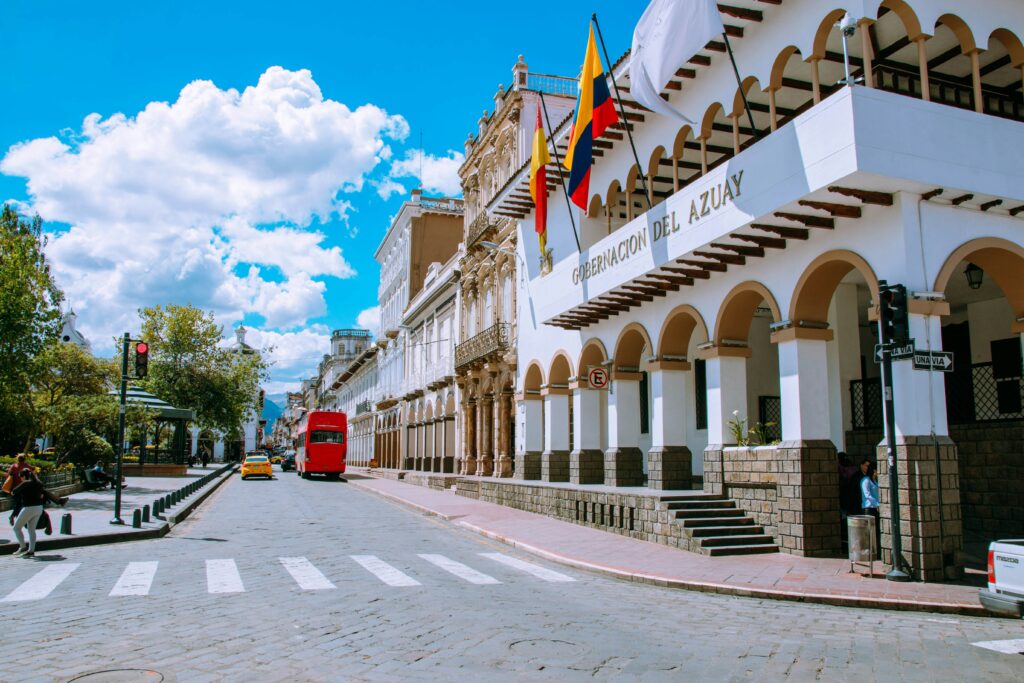
Start your first morning at Parque Calderón, the central plaza that serves as the geographical and social anchor of the historic centre. The square is a shaded oasis of towering Chilean pines and manicured gardens, where locals gather on iron benches to read the morning news or chat under the mountain sun.
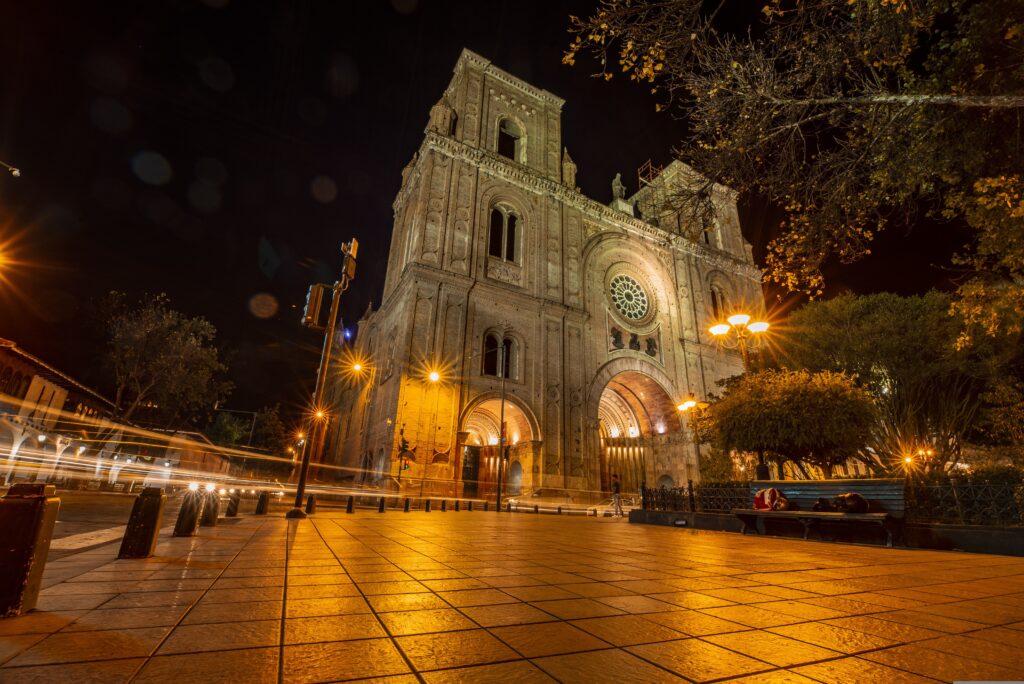
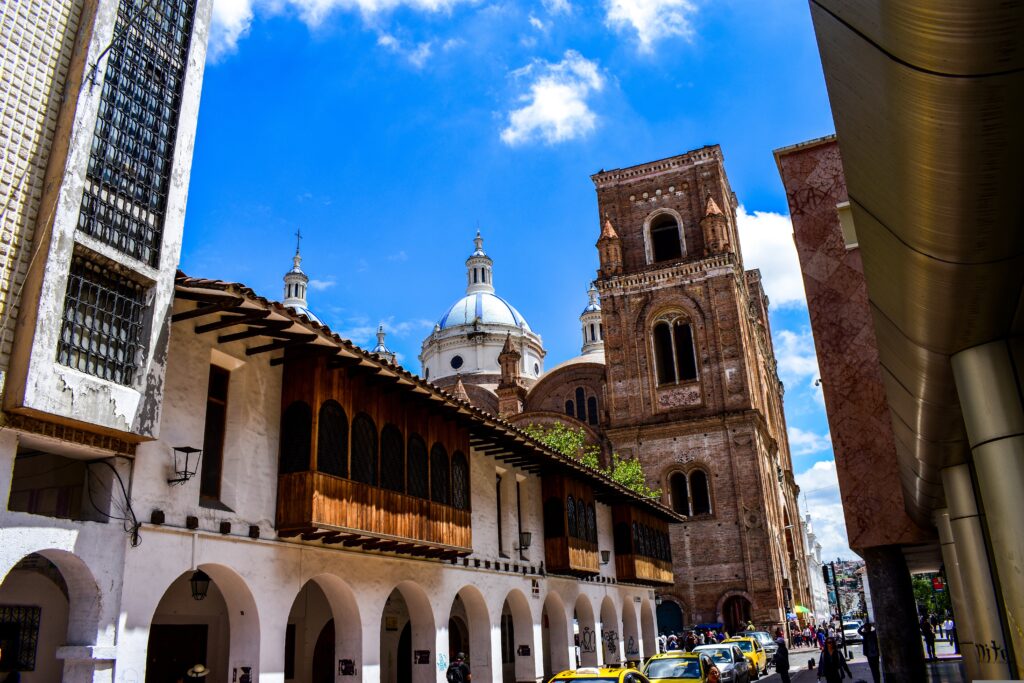
Standing in the centre of the plaza, you can instantly read the city’s architectural history. On the eastern side sits the Old Cathedral (Iglesia de El Sagrario), a simple, earth-toned structure dating back to 1557, shortly after the city’s Spanish founding. Directly opposite rises the New Cathedral (Catedral de la Inmaculada Concepción), an immense neo-Gothic masterpiece whose three sky-blue, Czechoslovakian-tiled domes dominate every view of the city skyline. Step inside the New Cathedral to appreciate the sheer scale of its cavernous nave, illuminated by soft light filtering through stained glass sourced from France and Germany.
From the plaza, walk two blocks west to the Plaza de las Flores. This small, cobblestone square is a sensory marvel, packed with local indigenous vendors selling dense bundles of roses, lilies, and orchids. It is widely considered one of the most beautiful outdoor flower markets in the world. While you take in the colours, look for the small window on the side of the Carmen de la Asunción church. Here, the cloistered nuns sell agua de pítimas, a traditional, bright pink medicinal tea brewed from rose petals, valerian, and local herbs. It is a quiet, local ritual that costs mere coins and offers a gentle introduction to Andean herbalism.
Lunch / A sensory immersion at Mercado 10 de Agosto
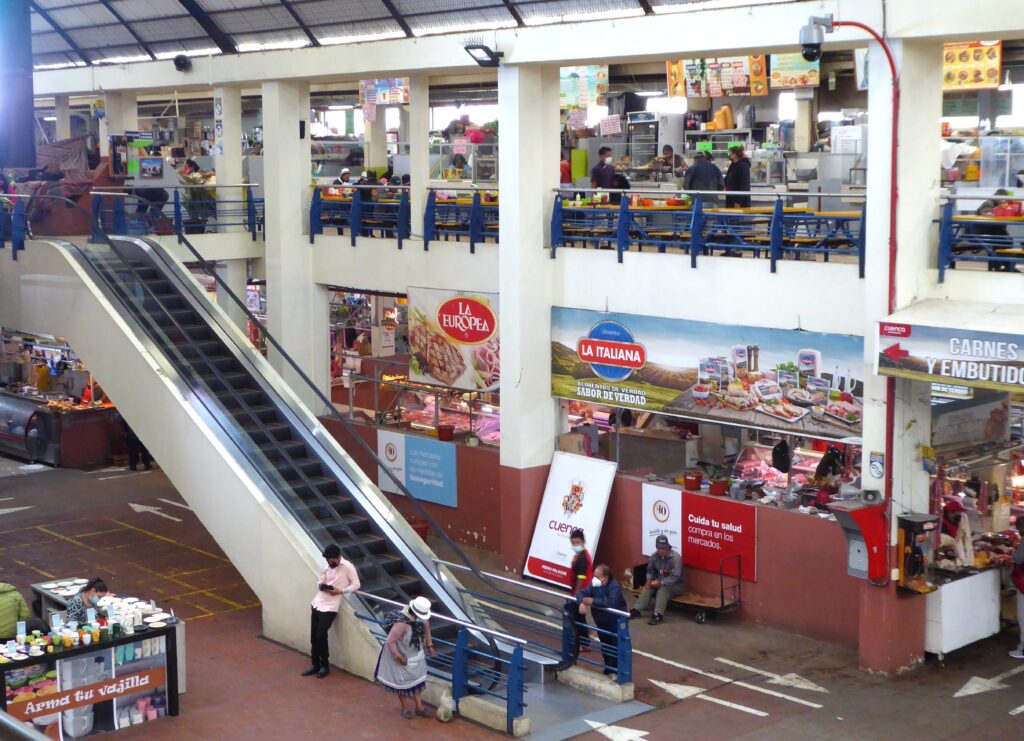
Skip the sanitized tourist cafés surrounding the main plaza and walk five blocks south to Mercado 10 de Agosto. This indoor municipal market is the true beating heart of Cuenca’s daily life. The ground floor is a labyrinth of brilliantly arranged fruit displays, mountain potatoes, and blocks of fresh highland cheese.
Head directly to the second floor, where the cooked-food stalls operate. The air here is thick with the rich, comforting aromas of woodsmoke, roasted spices, and simmering broths. Seek out the crowded stalls serving hornado—whole, slow-roasted pig marinated in garlic, beer, and achiote, resulting in meat so tender it is pulled apart with spoons, topped with shards of deeply blistered, copper-coloured crackling.
Order a plate served alongside mote pillo, a traditional southern Ecuadorian speciality of hominy corn scrambled with eggs, milk, and green onions, accompanied by llapingachos (crispy pan-fried potato cakes stuffed with melted cheese). It is an authentic, deeply satisfying meal that provides a genuine window into Azuay province’s food culture.
The Galápagos.
Ecuador’s Enchanted Isles
Afternoon / Descent to the riverbank
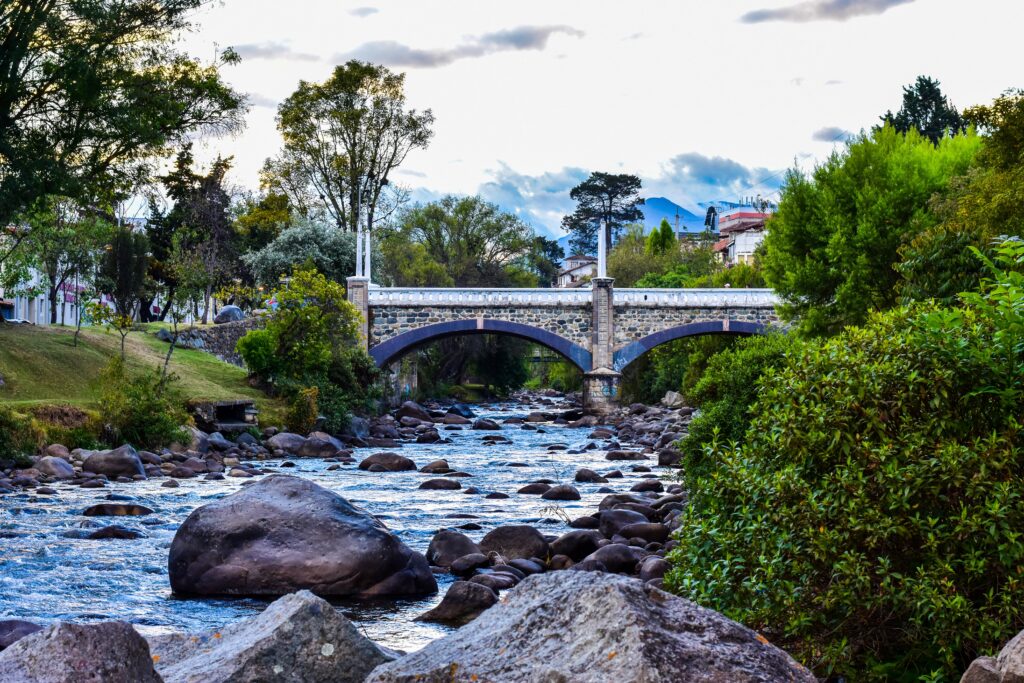
After the intensity of the market, walk south towards Calle Larga, the long, bohemian artery that traces the edge of the historic bluff. From here, a series of steep, stone staircases descends into El Barranco, the lush green cliffside zone that separates the colonial city from the modern districts below.
Spend your afternoon walking the stone paths along the northern bank of the Rio Tomebamba. Shaded by weeping willows and native alders, this riverside promenade feels entirely removed from the city streets just metres above. Follow the path eastwards until you reach the Puente Roto (the Broken Bridge).
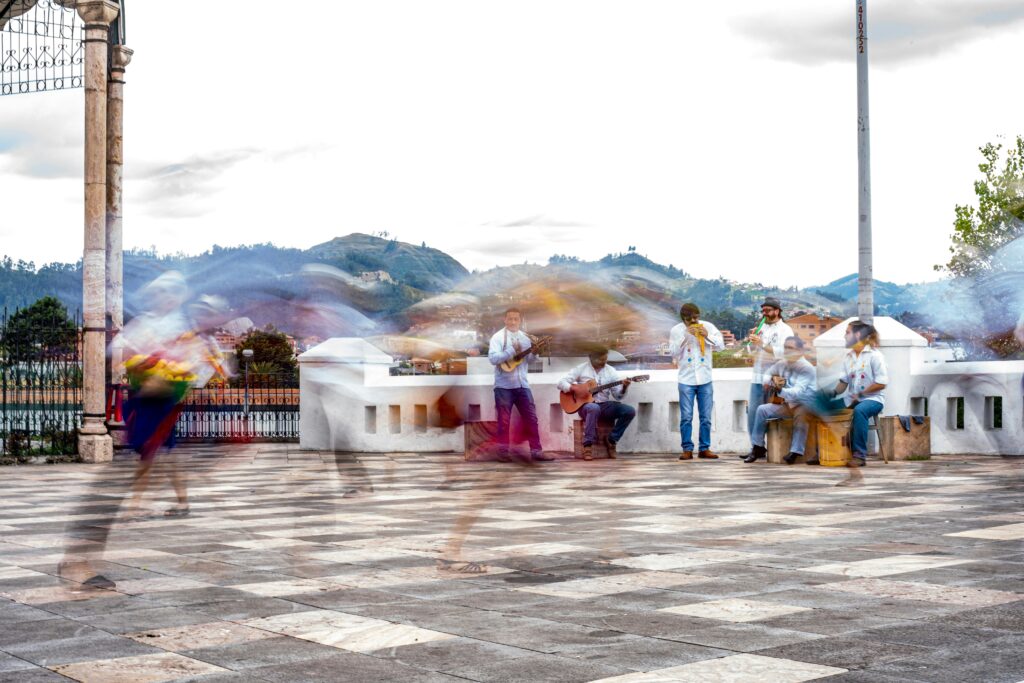
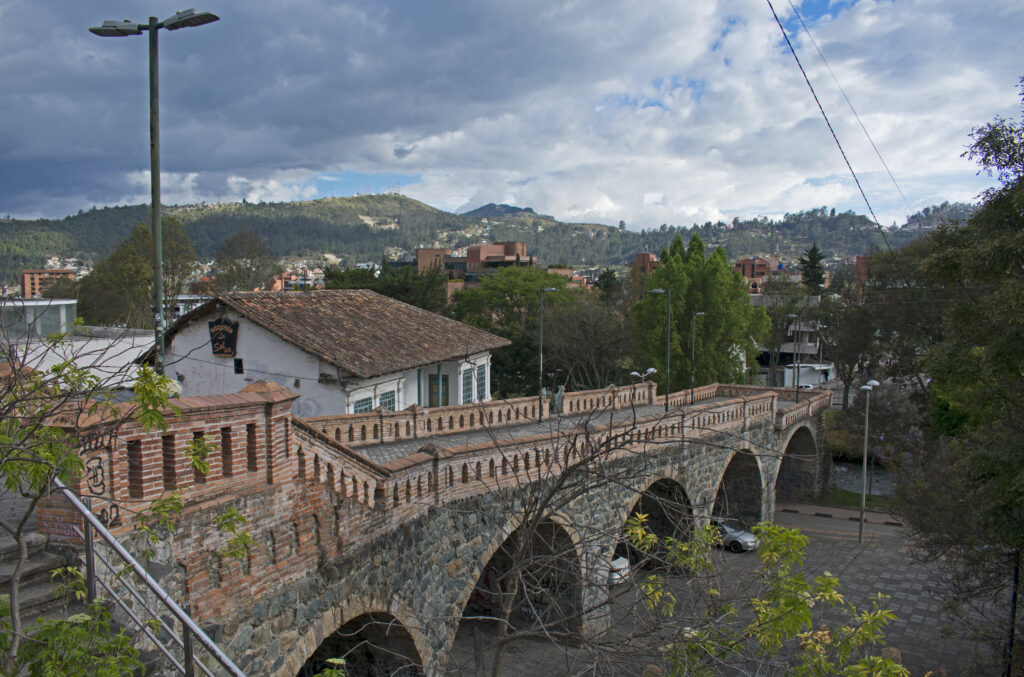
Built in the 1840s, this massive stone structure was half-swept away by a cataclysmic glacial flood in 1950. Instead of rebuilding it, the city left the fractured stone arch terminating abruptly over the rushing waters. Today, it stands as a striking monument to nature’s power and a relaxed public gathering space where independent musicians and artists congregate in the afternoon shade.
Dinner / Independent bistros in San Sebastián
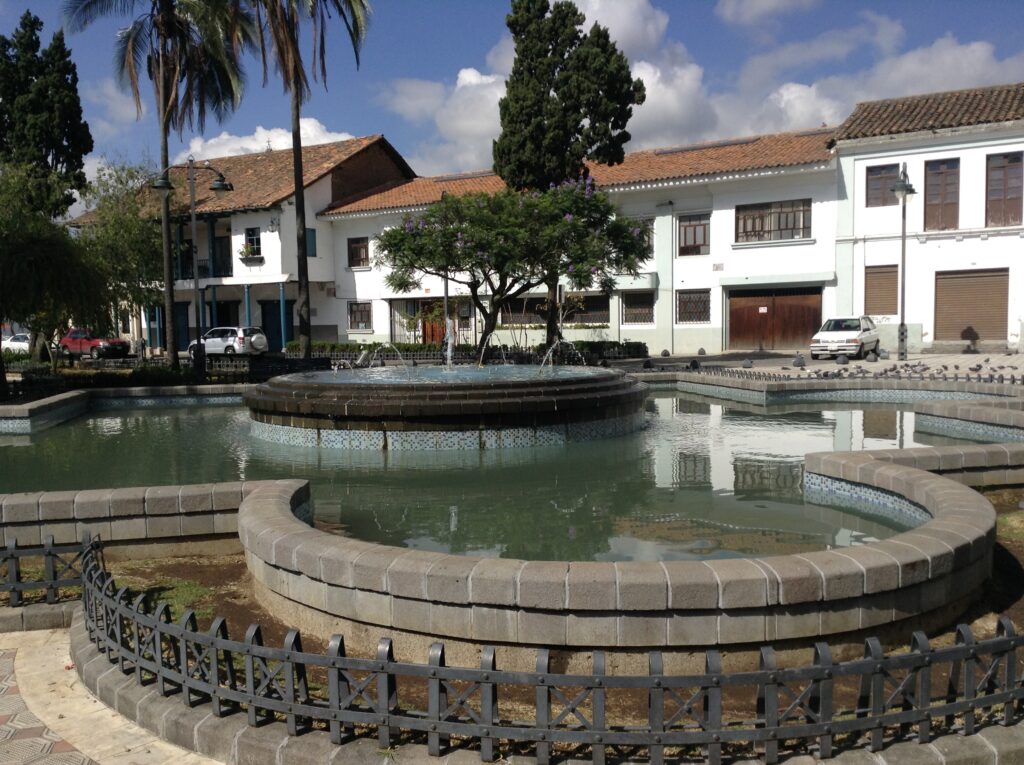
As evening approaches, walk back up the bluffs and head west towards the quiet neighbourhood of San Sebastián. This historic pocket of the city revolves around a peaceful, tree-lined square that houses the Museum of Modern Art.
The streets bordering the plaza are home to several exceptional independent eateries that eschew mass-tourism clichés. Find a table at a local bistro or the independent craft brewpub facing the square, where you can sample inventive dishes utilising seasonal ingredients from the surrounding mountain valleys, paired with microbrews made from pure Andean meltwater. The atmosphere here is grounded and residential, offering a peaceful conclusion to your first 24 hours.
The Ecuadorian Amazon.
The most biodiverse place in the world
Day 2 / River trails, ancient footprints, and panoramic ridges
Morning / Exploring on two wheels
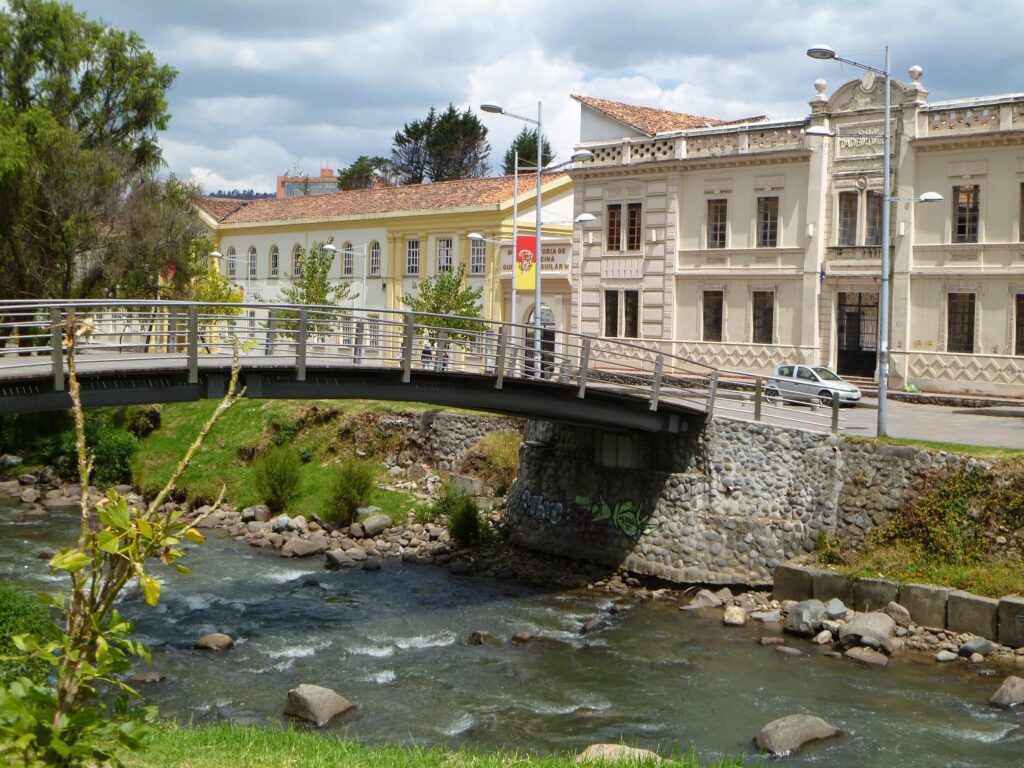
Cuenca is one of the few Andean cities to have invested heavily in active transport infrastructure. Today, you will explore the city via the Ciclovía Cuenca Unida, a well-planned network of flat, paved bicycle paths that follow the natural contours of the river valleys. Rent a bicycle from an independent provider near Plaza La Merced or use the municipal bike-share scheme.
Pedal east along the southern bank of the Rio Tomebamba, watching the historic skyline change perspective as you move down the valley. The path guides you past the modern university campuses and architectural experiments of the lower city before opening up into Parque Paraíso.
Spanning 17 hectares, this is Cuenca’s largest urban park, situated at the peaceful confluence where the Tomebamba meets the smaller Rio Yanuncay. Spend an hour cycling the quiet loops of the park, riding beneath eucalyptus groves and watching local families navigate the waterways in small rowing boats. It is a brilliant demonstration of how the city has integrated natural river ecosystems into everyday urban life.
Lunch / Highland roasts and single-origin beans
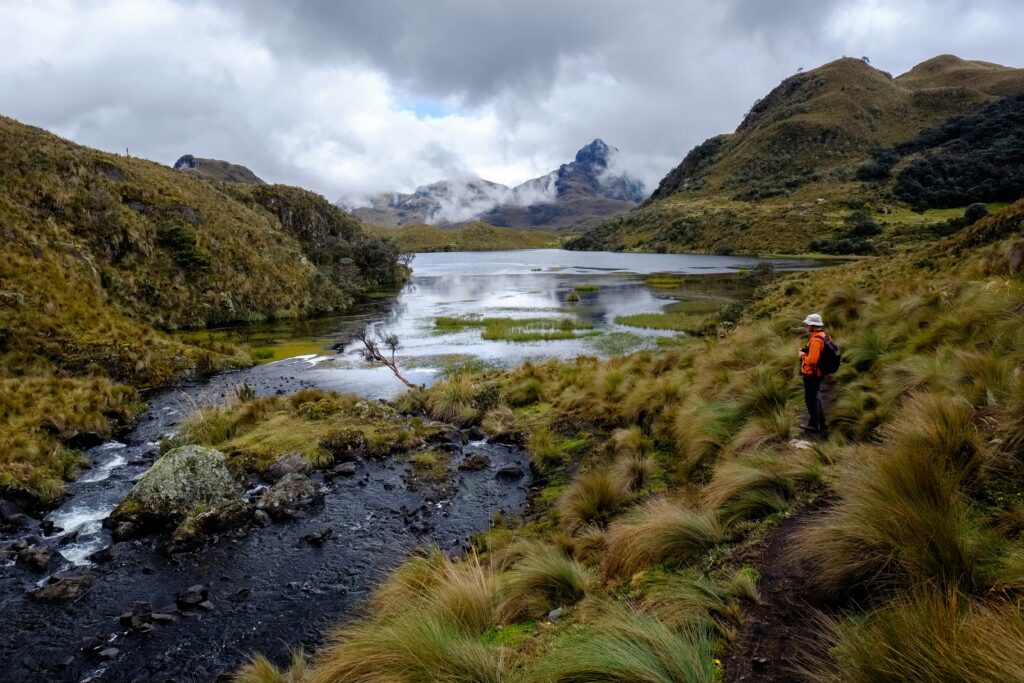
Loop back towards the historic edge along Calle Larga and drop off your bicycle. For lunch, seek out one of the city’s independent speciality coffee roasters, such as Café de Ñucallacta or a similar homegrown establishment.
Ecuadorian speciality coffee is undergoing a massive renaissance, and Cuenca is the perfect place to experience it. Order a pour-over coffee prepared with single-origin arabica beans grown in the unique microclimates of nearby Loja or Zaruma, characterised by clean acidity and bright floral notes. Pair it with a light, fresh lunch plate featuring fresh-caught Andean trout or a seasonal vegetable soup. These independent cafés often occupy beautifully restored colonial homes, allowing you to dine while admiring exposed adobe walls and leafy, open-air central patios.
The Ecuadorian Coast.
Where you’ll find the very best food
Afternoon / The ruins of Pumapungo
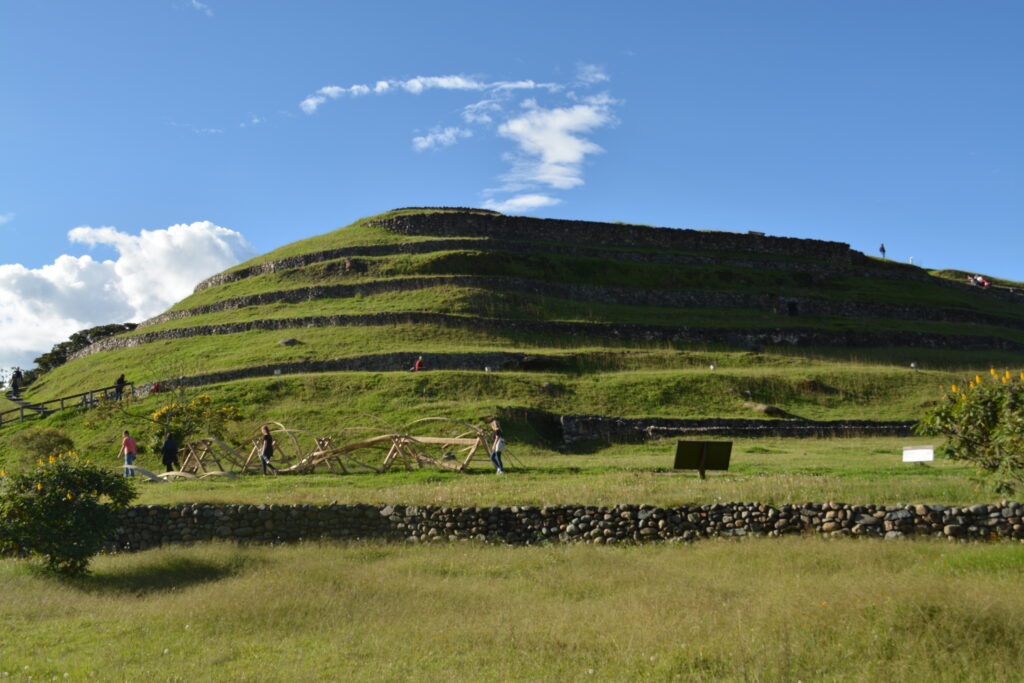
With your afternoon, walk to the eastern end of Calle Larga to visit the Museo Pumapungo. While the indoor galleries house an impressive collection of ethnographic displays and traditional artwork detailing Ecuador’s diverse indigenous cultures, the true treasure lies in the expansive backyard.
Step outside into the archaeological park to discover the stone foundations of Pumapungo, the ancient administrative and religious heart of the Inca Empire’s northern capital, Tomebamba. Long before the Spanish arrived, this site was a massive stone city built by the Inca over an even older settlement belonging to the indigenous Cañari people. Walk completely unguided through the stone foundations, terraced agricultural walls, and ancient canal systems.
The lower terraces have been transformed into a living botanical garden containing over two hundred species of native Andean plants, medicinal herbs, and maize crops. It is an extraordinary historical site that you can explore entirely at your own pace, free from the constraints of rigid tour groups.
Sunset / The panorama from Turi
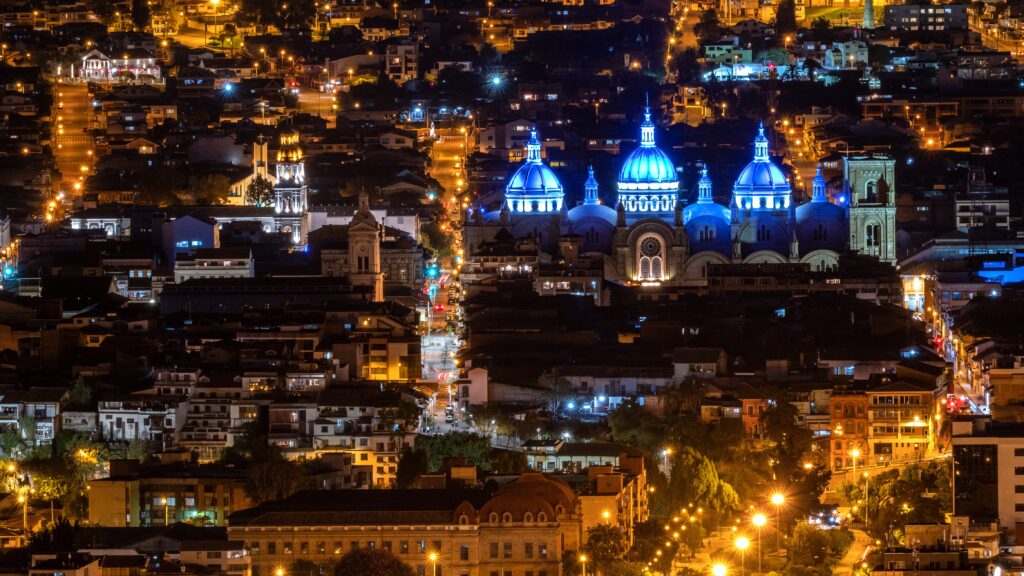
As the afternoon light begins to soften into deep gold, make your way to the south side of the city to catch the sunset. You can take a cheap local municipal bus or challenge your lungs with a steep uphill walk to the Mirador de Turi, a small village perched high on a southern ridge overlooking the valley.
From the terrace of the white church at Turi, the entire geography of Cuenca reveals itself. The viewpoint offers an unmatched perspective of the red-tiled roofs, towering church spires, and the three blue domes of the New Cathedral standing out against the dark, jagged outline of the Cajas Mountains in the distance. Watch as the twilight takes hold and the city lights slowly flicker to life across the valley floor.
Dinner / Riverside reflections in El Vergel
On your way back down from the ridge, avoid the commercial restaurants at the viewpoint and head into the El Vergel district, located near the base of the hill along the river. This neighbourhood hosts a vibrant, independent culinary scene where young Ecuadorian chefs are reinventing traditional highland cuisine.
Conclude your 48 hours by dining at a small, independent bistro tucked away on a quiet side street. Enjoy a meal that highlights local ingredients—such as variations on traditional potato soups or roasted meats infused with highland herbs—while listening to the distant rush of the river, celebrating a destination that is best understood slowly, independently, and on foot.
Cuenca.
The Athens of Ecuador
A note on independent transport in Cuenca
Navigating Cuenca without a car is exceptionally straightforward, thanks to its integrated public transport network.
- The Tranvía: The city features a sleek, modern electric tramway system that cuts across the city from the main bus terminal to the historic core, offering a quiet, low-emission way to travel across town for a nominal fare
- Buses and walking: Local buses serve the outlying neighbourhoods and viewpoints like Turi, while the historic centre itself is best navigated entirely on foot. The grid system is highly intuitive, and pedestrian-first traffic signals make crossing the cobblestone lanes safe and efficient
Frequently asked questions about visiting Cuenca
Cuenca is one of the most accessible cities in South America for independent travellers using active transport or public networks. The historic centre is laid out in an intuitive colonial grid that is best explored entirely on foot. For longer cross-city journeys, the modern electric tramway (the Tranvía) runs quietly from the main bus terminal through the historic core, supplemented by affordable municipal buses for outlying ridges.
The city features dedicated cycling infrastructure, most notably the Ciclovía Cuenca Unida. This network includes flat, paved paths that run along the linear parks bordering the local rivers. Bicycles can be rented easily from independent providers near major plazas or through the local municipal bike-share scheme, making it straightforward to ride out to natural confluence points like Parque Paraíso.
The municipal markets, particularly Mercado 10 de Agosto, offer a safe, authentic, and inexpensive window into southern Ecuadorian cuisine. The cooked-food stalls on the second floor are highly competitive and specialise in traditional highland roasts. The standout dish is hornado (whole roasted pig), which is traditionally served with llapingachos (fried potato cakes stuffed with cheese) and mote pillo (hominy corn scrambled with eggs and green onions).
Known as agua de pítimas, this bright pink medicinal beverage has been brewed for generations by the cloistered nuns of the Carmen de la Asunción church. Sold through a small window facing the Plaza de las Flores, the tonic is made from a proprietary blend of rose petals, valerian, and various hand-gathered Andean herbs. It is traditionally consumed by locals to soothe nerves and reduce stress.
The ruins are located directly behind the indoor galleries of the Museo Pumapungo at the eastern edge of Calle Larga. Independent travellers can enter the grounds without a guide and explore the extensive stone foundations, water canals, and terraced agricultural banks at their own pace. The lower portion of the site includes a living botanical garden displaying native crops and medicinal plants used by the Inca and Cañari civilisations.
The Mirador de Turi sits on a high ridge to the south of the city, offering a panoramic view of the red-tiled roofs and cathedral spires. Independent travellers can reach the viewpoint by catching a local municipal bus from the centre or by taking a steep but rewarding uphill walk. The viewpoint is best visited in the late afternoon as the twilight brings the valley lights to life.
Ecuador.
Pure wonder on the equator.