San Cristóbal uncovered / A slow travel guide to the Galápagos Islands’ volcanic sanctuary
Discover the top hidden gems on San Cristóbal, Galápagos Islands, with essential off-the-beaten-track sights and routes
Journey through highland crater lakes and wild tortoise havens
BEN FINCH
Stepping off the boat or plane onto San Cristóbal immediately sets a distinct pace. As the easternmost island in the Galápagos archipelago, San Cristóbal holds a unique position in natural history. It was here, on 17 September 1835, that HMS Beagle anchored and Charles Darwin first set foot upon the archipelago.
While neighbouring Santa Cruz often draws larger crowds bound for rigid tour schedules, San Cristóbal retains the laid-back charm of an authentic island community where endemic wildlife shares the streets and shores with local residents.
Travelling independently allows you to experience the island on your own terms. Rather than following a tour guide’s umbrella or adhering to strict cruise timetables, moving at your own pace opens up quiet moments of discovery.
The administrative capital, Puerto Baquerizo Moreno, serves as an easygoing harbour base. From here, the island unfolds into distinct ecological zones, ranging from arid coastal lava fields to humid, cloud-cloaked highlands.
Exploring San Cristóbal without a group reveals subtle details that mass tourism overlooks, offering a genuine connection with one of the most remarkable ecosystems on Earth.
San Cristóbal at a glance / Essential stops and secret spots
Whether you are navigating volcanic highlands on two wheels or quiet coastal coves on foot, San Cristóbal rewards those who travel at their own rhythm. Here are the key highlights and practical takeaways for your independent journey across the island.
- Laguna El Junco: Climb to the rim of the only permanent freshwater crater lake in the Galápagos to watch frigatebirds rinse their wings in the highland mist
- La Galapaguera de Cerro Colorado: Walk peaceful cobblestone trails through dry palo santo forests to observe giant tortoises roaming in a semi-wild sanctuary
- Cerro Tijeretas: Take in dramatic cliffside vistas overlooking Charles Darwin’s historical landing cove, followed by world-class snorkelling with young sea lions
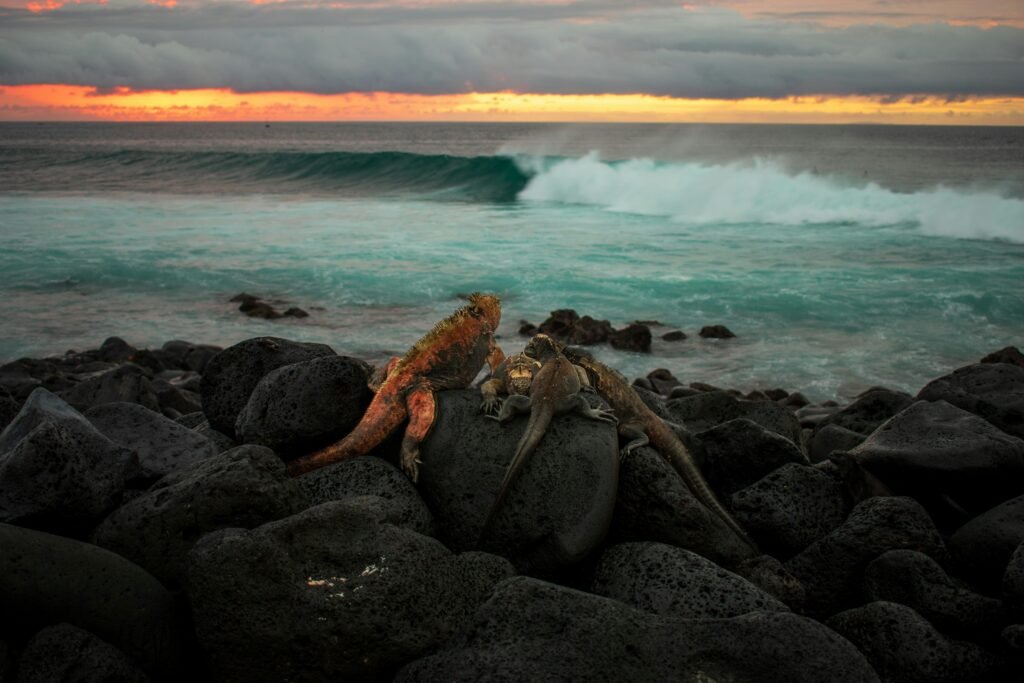
- La Lobería & Barranco Cliffs: Venture past the main sea lion beach along dark lava fields to witness hundreds of marine iguanas and nesting seabirds
- El Progreso & El Socavón: Pedal inland to discover the island’s oldest human settlement and sample rare, shade-grown organic Galápagos coffee
- Puerto Chino: Follow a gentle trail through cactus thickets to reach a quiet, white-sand cove framed by striking basalt rock formations
- Cycling Logistics: Take advantage of the dedicated eight-kilometre paved cycle path from Puerto Baquerizo Moreno to El Progreso for a scenic highland climb
San Cristóbal.
Laid-back in the Galápagos
Laguna El Junco / The freshwater highland sanctuary
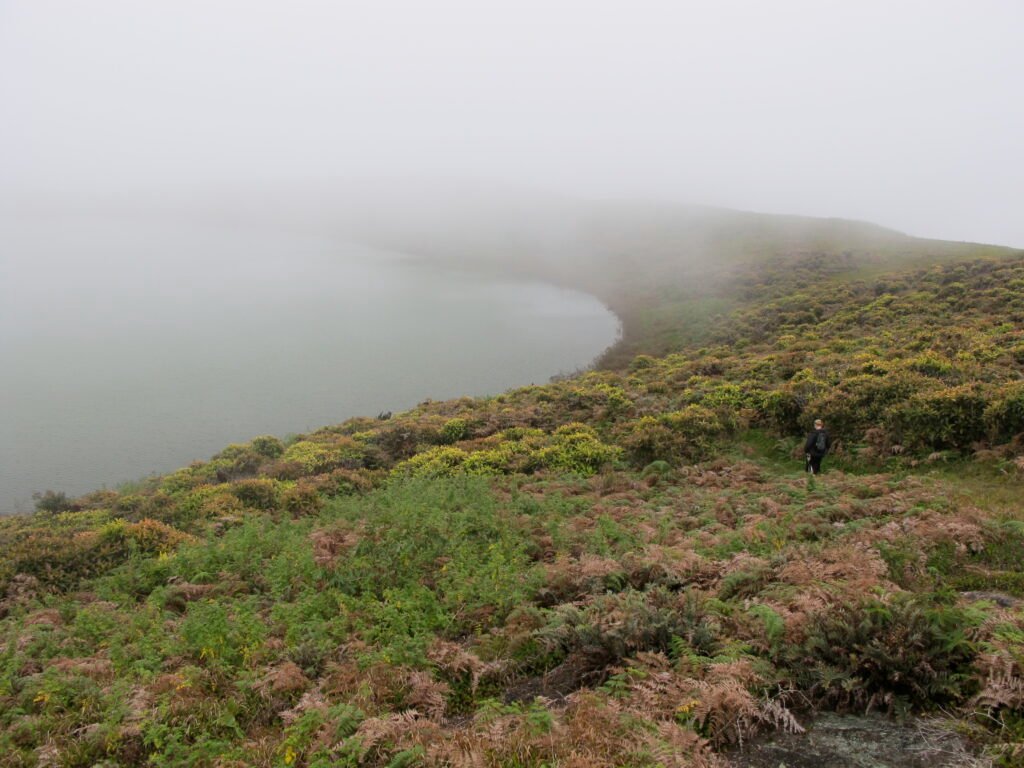
High in the humid interior of San Cristóbal, approximately 700 metres above sea level, lies Laguna El Junco. This remarkable body of water is the only permanent freshwater crater lake in the entire Galápagos archipelago. Formed inside the caldera of an extinct volcano, the lake is fed entirely by rainfall and enveloped in a near-constant mist that creates an ethereal, microclimatic world far removed from the sun-baked coast.
Reaching Laguna El Junco requires a short climb up a wooden staircase that cuts through dense highland vegetation. Upon reaching the rim, visitors are greeted by panoramic views across the rim and down towards the Pacific Ocean. The lake serves as a vital freshwater hub for island birdlife.
Great frigatebirds frequently swoop down across the surface of the water, dipping their wings to rinse away salt accumulated during long ocean hunting sorties. Pintail ducks and San Cristóbal mockingbirds inhabit the surrounding reed beds.
Visiting during the early morning hours provides the quietest experience, allowing you to absorb the peaceful atmosphere before cloud cover settles over the caldera.
La Galapaguera de Cerro Colorado / Wild tortoises among palo santo trees
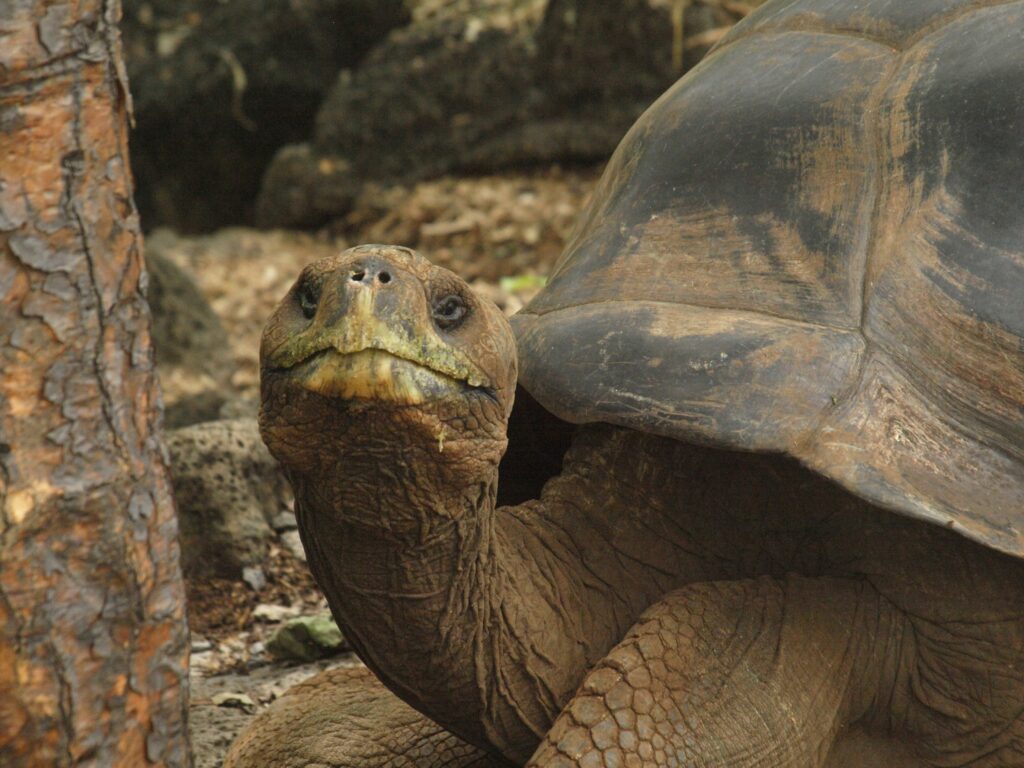
While many visitors head to artificial breeding enclosures, La Galapaguera de Cerro Colorado offers an immersive look at giant tortoise conservation within a semi-wild environment. Located in the south-eastern region of the island, this reserve was established by the Galápagos National Park to protect and restore the population of the island’s endemic giant tortoise species, Chelonoidis chathamensis.
A winding cobblestone trail leads through an arid forest characterised by fragrant palo santo trees, tree cacti, and native shrubs. Here, giant tortoises of various ages roam freely through natural habitat rather than small pens. You can observe these magnificent reptiles foraging for fallen fruit, resting in mud wallows, or moving slowly through the underbrush.
Interpretation points along the path detail the successful captive breeding and repatriation programmes that have saved this endemic population from extinction. Because the site receives far fewer visitors than reserves on other islands, walking through La Galapaguera feels like a serene journey through a prehistoric wilderness.
The Galápagos.
Ecuador’s Enchanted Isles
Cerro Tijeretas / Coastal vistas and historic coves
A pleasant walk from the town centre leads to Cerro Tijeretas, also known as Frigatebird Hill. The site takes its name from the magnificent and great frigatebirds, known locally as tijeretas due to their scissor-like tail feathers, which nest extensively in the surrounding scrub and canopy.
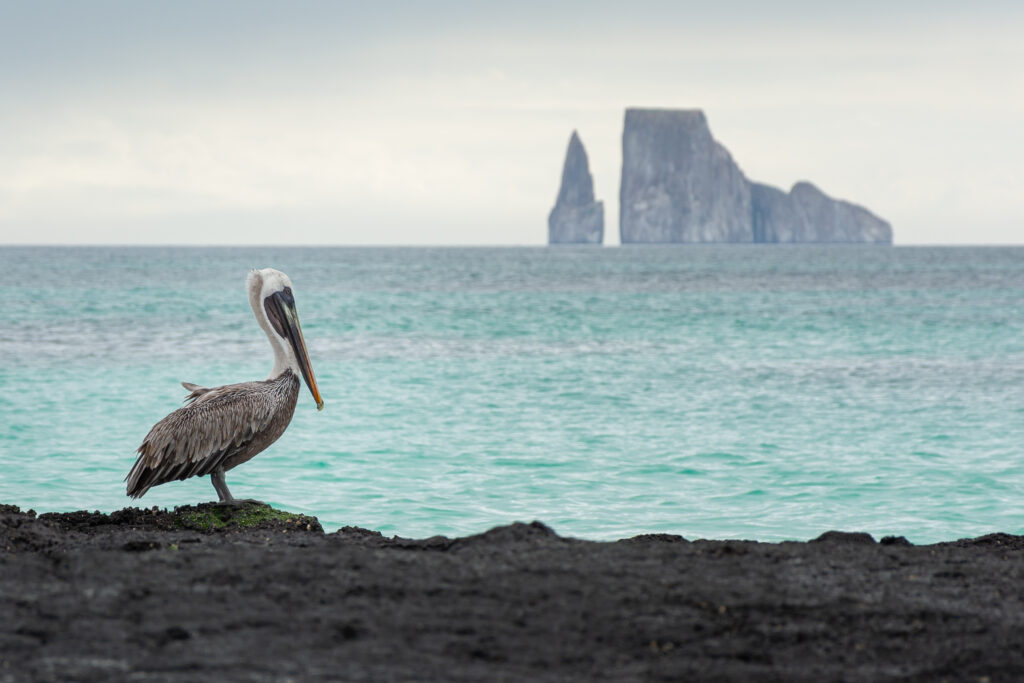
A network of stone paths winds up to three distinct lookout points atop the volcanic ridge. From these elevated perches, visitors enjoy dramatic views across the navy-blue waters of the bay towards the distant outline of León Dormido.
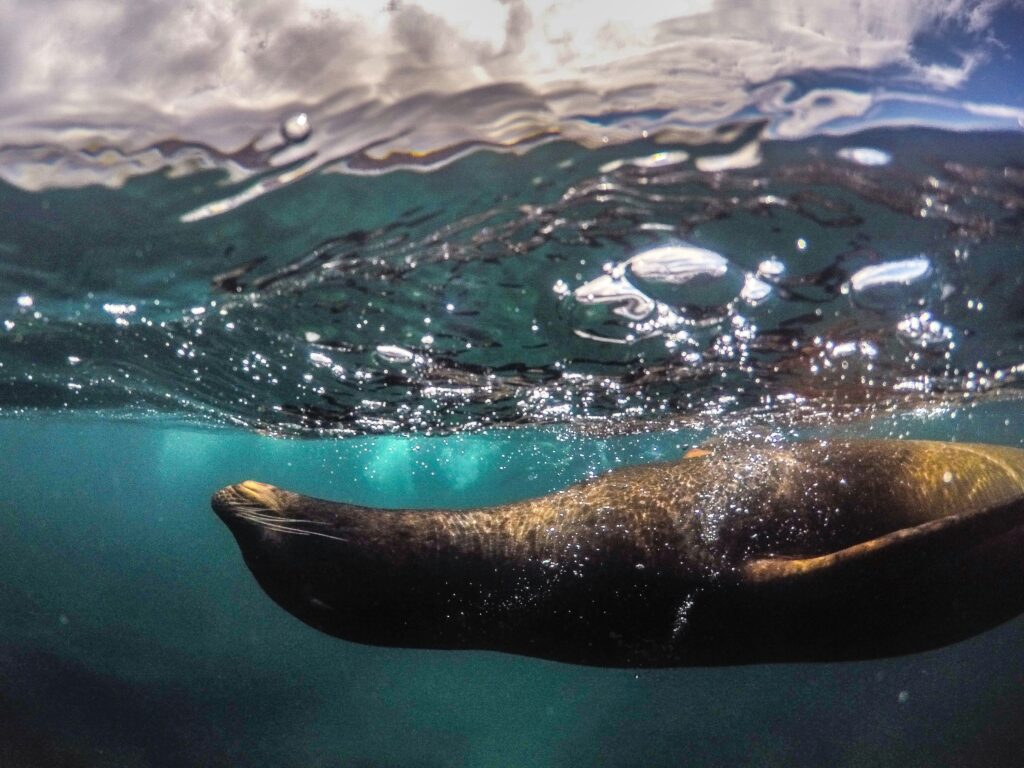
A subtle stone monument marks the nearby cove where Charles Darwin first came ashore during his historic 1835 expedition. Below the cliffs lies Tijeretas Cove, a sheltered inlet with crystal-clear turquoise waters. Descending the wooden staircase to the cove allows for exceptional snorkelling, where curious young sea lions, marine iguanas, and sea turtles regularly swim alongside visitors in the calm, protected bay.
Nearby, a trail branches off towards Playa Punta Carola, a broad crescent beach where sea lions rest beneath a landmark red-and-white striped lighthouse.
La Lobería and the volcanic cliffs of Barranco
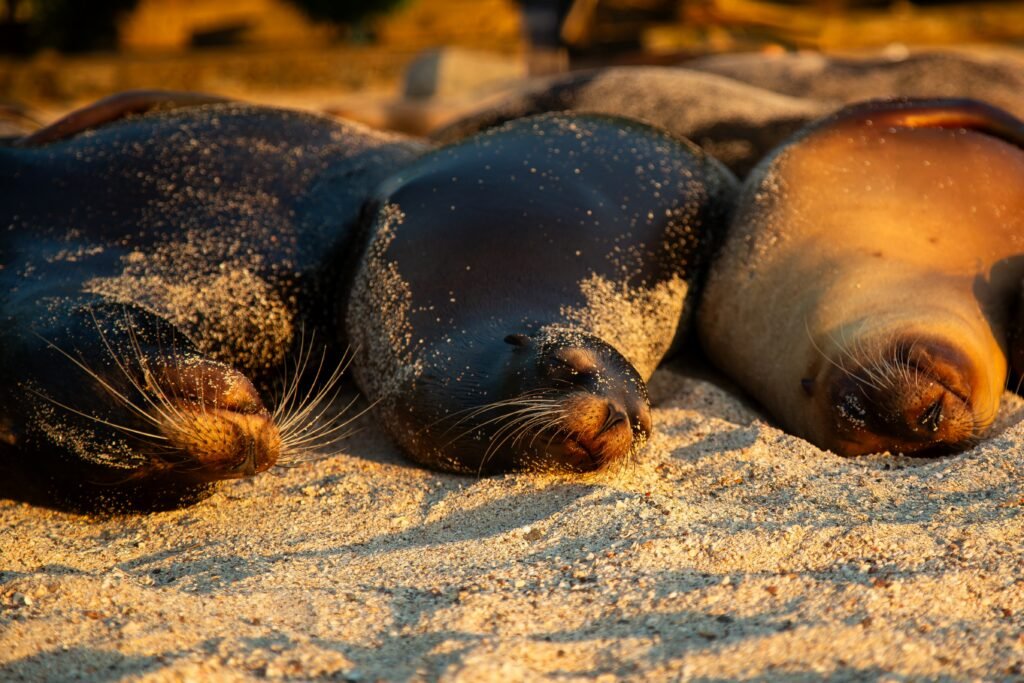
Located just outside Puerto Baquerizo Moreno, La Lobería is widely known for its bustling sea lion nursery on a coral sand beach. However, the true hidden gem lies beyond the main bay along the Barranco cliff trail. Continuing past the lounge area of the sea lion colony, the sandy shore gives way to a rugged terrain of dark, basaltic lava rocks.
Following the marked trail along the edge of the coastal cliffs reveals a dramatic landscape carved by ocean waves. Marine iguanas gather by the hundreds along the black lava, absorbing heat from the sun before plunging into the ocean to feed.
The high vertical cliffs provide nesting sites for swallow-tailed gulls, pelicans, and blue-footed boobies, which can often be seen executing steep dive-bombing manoeuvres into the ocean below.
The contrast between the jet-black lava rock, vibrant turquoise surf, and abundant wildlife makes the Barranco trail one of the most visually striking coastal walks on San Cristóbal.
The Ecuadorian Sierra.
Get lost in the hills
El Progreso and El Socavón / History and coffee culture
Inland from the harbour lies El Progreso, the oldest permanent human settlement in the Galápagos Islands. Founded in 1879 by Manuel J. Cobos as a sugar cane plantation and penal colony, the village holds a complex and dark history that laid the foundation for modern life on the island. Today, El Progreso has transformed into a tranquil agricultural hamlet that offers insight into modern island farming.
Beyond the main square of El Progreso, the lush region of El Socavón features fertile volcanic soil and a damp mountain climate ideal for agriculture. This highland zone is famous for producing shade-grown organic Galápagos coffee, grown under the canopy of endemic trees and fruit orchards.
Exploring the quiet rural lanes around El Socavón offers a look at family-run fincas, local produce markets, and an authentic rural lifestyle that stands in peaceful contrast to the marine-focused coastal areas.
Puerto Chino / A tranquil south-eastern shore
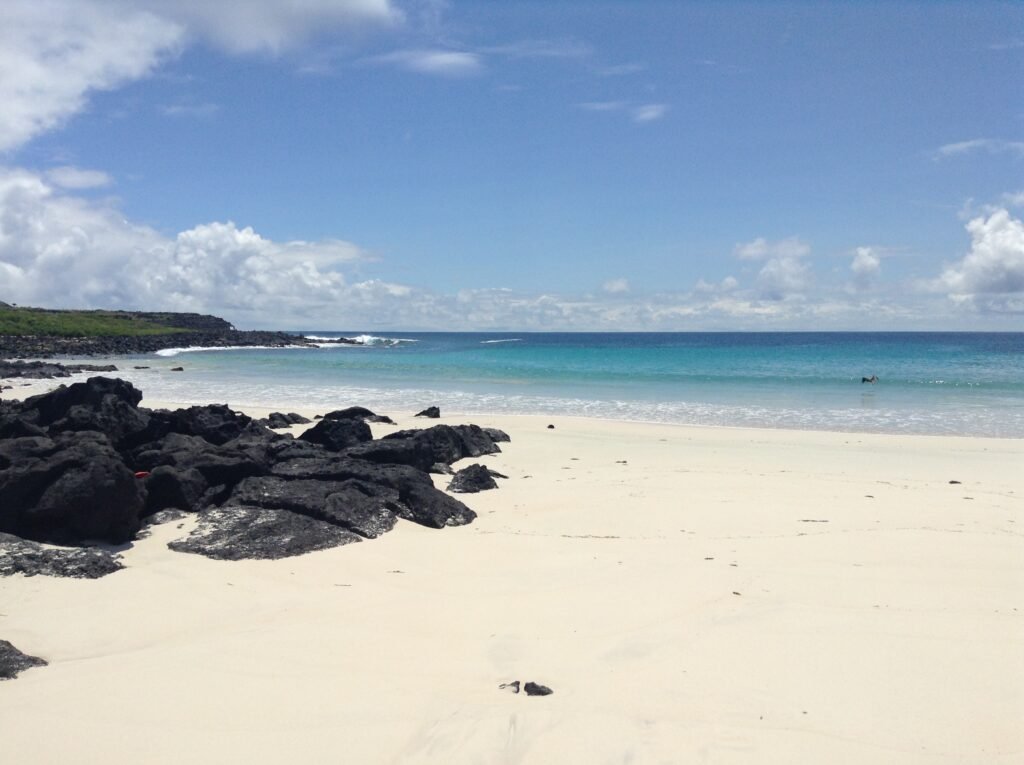
Situated on the far south-eastern corner of San Cristóbal, Puerto Chino is a secluded bay that feels worlds away from the island’s main settlements. Reached via the cross-island road, the beach is accessed by a gentle 15-minute footpath that weaves through dry forest and cactus thickets inhabited by Darwin’s finches and lava lizards.
Opening up at the end of the path is a cove of powdery white sand framed by giant basalt rock formations. The calm, clear waters make Puerto Chino an inviting location for a quiet swim or wildlife watching away from crowded tour groups. Blue-footed boobies frequently perch on the dark rocks surrounding the bay, while marine iguanas amble across the sand.
Because of its remote location, visiting Puerto Chino gives independent travellers the rare opportunity to enjoy a pristine Galápagos beach in relative solitude.
The Ecuadorian Amazon.
The most biodiverse place in the world
Exploring on two wheels and local day trips
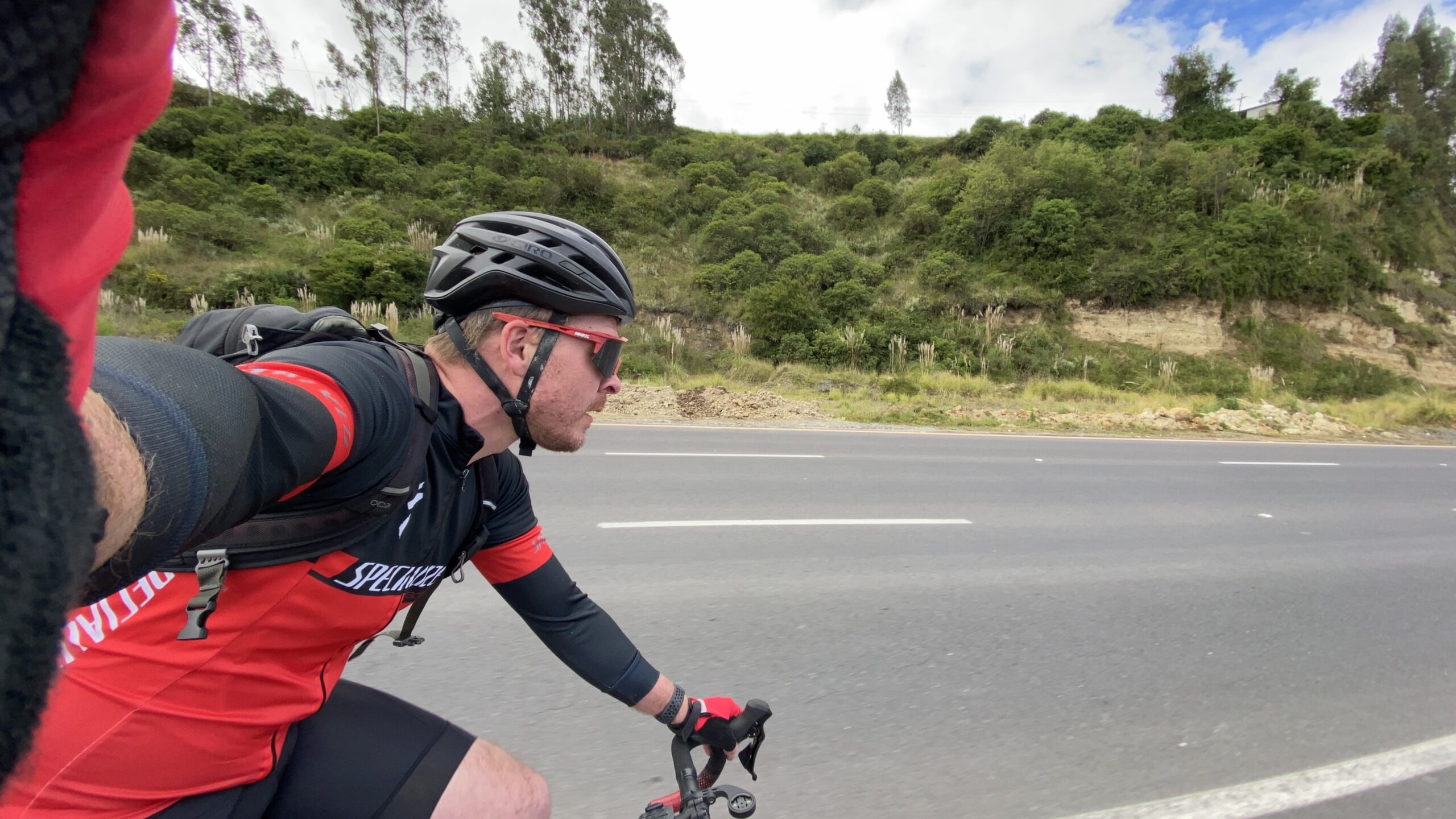
San Cristóbal is uniquely suited for independent exploration by bicycle, offering well-maintained infrastructure and varied terrain for riders of all abilities. Starting from Puerto Baquerizo Moreno, a dedicated paved cycle path runs parallel to the main road for eight kilometres up to the historic village of El Progreso, offering a smooth uphill workout through changing climate zones.
For those seeking a more rigorous highland ride, continuing past El Progreso along the paved and gravel roads leads 16 kilometres inland to the rim of Laguna El Junco, where the rewarding downhill descent passes through the coffee orchards of El Socavón.
Shorter coastal rides within three kilometres of the harbour include the flat road south towards the sea lion colonies at La Lobería, or the northern route towards the trailheads for Playa Punta Carola and Cerro Tijeretas.
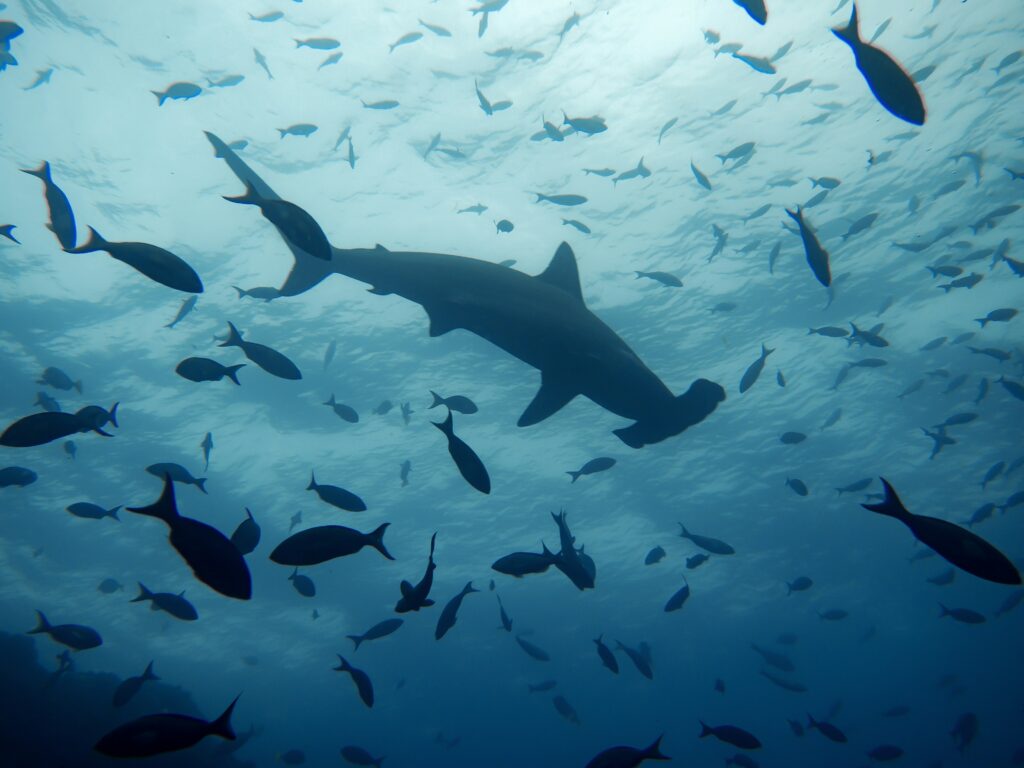
For journeys extending further afield, local day trips by boat open up extraordinary marine ecosystems surrounding the island. A short vessel excursion north leads to the towering basalt sea stacks of León Dormido, where deep channels offer world-class snorkelling alongside hammerhead sharks, eagle rays, and sea turtles.
Nearby, the tiny islet of Isla Lobos provides quiet walking trails among nesting frigatebirds and blue-footed boobies, paired with shallow bays ideal for swimming with juvenile sea lions.
For a full-day adventure, boat trips to Punta Pitt on the far eastern tip of San Cristóbal offer the rare privilege of seeing all three species of Galápagos boobies—blue-footed, red-footed, and Nazca—nesting together on the yellow tuff cliffs, completing an unforgettable exploration of this volcanic haven.
The Ecuadorian Coast.
Where you’ll find the very best food
Chart your own path through the volcanic east
Independent travel across San Cristóbal reveals an island defined by natural rhythm rather than fixed itineraries. Choosing to explore outside organised group tours allows you to spend extra hours watching frigatebirds glide over Laguna El Junco, or sitting quietly beside marine iguanas on the basalt cliffs of Barranco as the sun drops into the Pacific Ocean.
The island’s modest geography makes self-guided travel uniquely rewarding. Whether renting a bicycle to tackle the winding climb to El Progreso, taking local buses up to the highlands, or simply walking along coastal trails to secluded coves, moving at your own pace creates genuine opportunities to connect with local culture and observe wildlife behaving naturally.
As you plan your visit, remember that slow travel yields the richest experiences in the Galápagos. Respect national park guidelines, support locally owned fincas and eateries in Puerto Baquerizo Moreno, and allow time for spontaneous discoveries along the trail.
San Cristóbal stands as a testament to successful conservation and authentic island community life. Step away from the crowded tour docks, set your own tempo, and discover the true soul of this ancient volcanic haven.
Affiliate Disclaimer: Some of the links on Wheely Tyred are affiliate links. If you click through and make a booking or purchase, we may earn a small commission at no extra cost to you. We only recommend gear, tours, stays, and services we genuinely use, trust, and stand behind — our editorial independence always comes first. These commissions help keep our independent cycling guides and travel stories free to read. Thanks for supporting the ride!
Frequently asked questions about the hidden gems on San Cristóbal
San Cristóbal is easily navigated independently. Puerto Baquerizo Moreno is highly walkable, while bicycles can be hired locally to access nearby coastal trails and the paved cycle path up to El Progreso. For longer inland journeys to Laguna El Junco or La Galapaguera, local pickup truck taxis and public buses run regularly from the harbour town.
Head to La Galapaguera de Cerro Colorado in the south-east of the island. Unlike traditional breeding centres with small enclosures, this reserve allows giant tortoises to roam freely across a semi-wild sanctuary, offering an authentic observation experience along quiet cobblestone paths through palo santo forests.
Yes, San Cristóbal is one of the most bicycle-friendly islands in the archipelago. A dedicated eight-kilometre paved cycle path runs parallel to the main road from Puerto Baquerizo Moreno up to El Progreso. Active cyclists can extend their ride further into the highlands towards Laguna El Junco or take flat coastal rides down to La Lobería.
The fertile highland region of El Socavón, situated near El Progreso, produces high-quality, shade-grown organic Galápagos coffee. You can sample and purchase freshly roasted beans by visiting family-run agricultural fincas in the highlands or visiting independent cafes in Puerto Baquerizo Moreno.
Cerro Tijeretas is famous for magnificent and great frigatebirds nesting along the clifftops. Down in the sheltered waters of Tijeretas Cove, swimmers and snorkellers frequently encounter curious sea lion pups, marine iguanas, green sea turtles, and a wide array of colourful reef fish.
While offshore sites like León Dormido (Kicker Rock) require a certified vessel and guide due to Galápagos National Park regulations, independent travellers do not need to book multi-day cruises. Day trips can easily be arranged individually through local boat operators based along the waterfront in Puerto Baquerizo Moreno.
Ecuador.
Pure wonder on the equator.