Uncover the secret world of Floreana / The best hidden gems in the Galápagos
A complete guide to the best off-the-beaten-track attractions and hidden gems on Floreana Island, Galápagos
The forgotten outpost of the archipelago
BEN FINCH
While most visitors to the Galápagos Archipelago spend their time navigating the bustling docks of Santa Cruz or the paved waterfronts of San Cristóbal, Floreana Island offers something altogether rarer: genuine quiet. Officially named Isla Santa María, this southern outpost has a population hovering around 150 permanent residents, making it the least densely inhabited settled island in the region.
Travelling here independently allows you to set your own tempo. There are no loudspeaker announcements urging you onto a group bus, no guide flags to follow down narrow trails, and no arbitrary schedules cutting short your stay at a secluded bay.
Wheely Tyred focuses on highlighting locations where independent travellers can experience the true character of a destination. Floreana is rich in natural splendour and intriguing human drama, offering an authentic glimpse into the wild roots of Ecuador.
Below are six outstanding hidden gems on Floreana Island that reward curious, self-guided exploration.
Essential encounters on Floreana Island
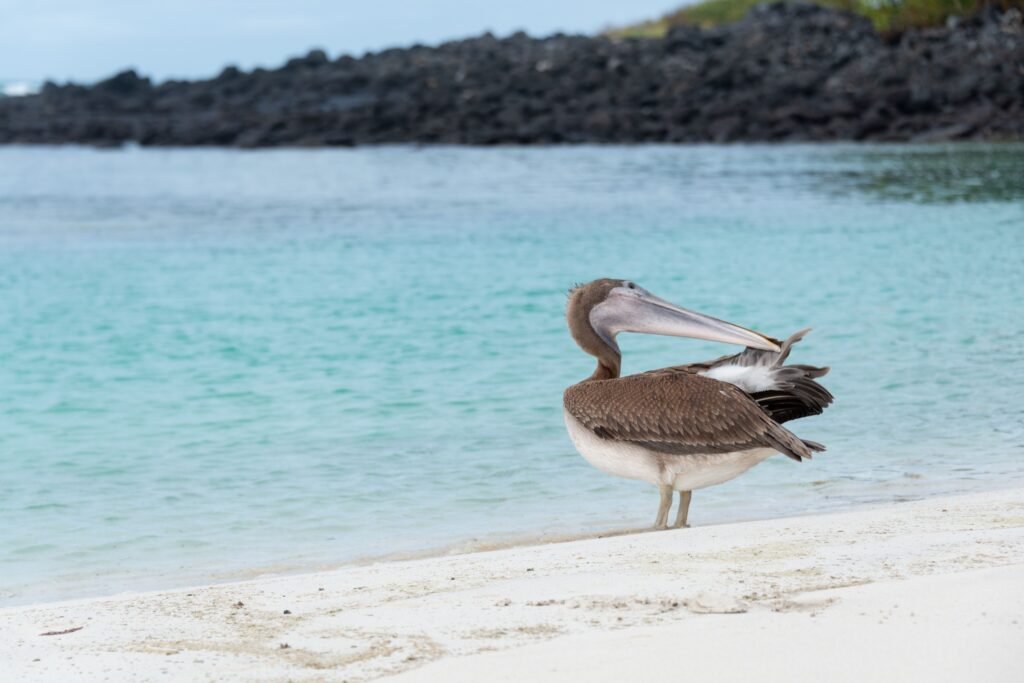
Floreana offers rare solitude and raw natural beauty for travellers who prefer exploring at their own pace. Here is a quick snapshot of the essential locations and experiences that define this isolated Galápagos outpost.
- Asilo de la Paz: Highland basalt caves and a vital freshwater spring where pirates and early German pioneers once built their lives
- Mirador de la Baronesa: A scenic volcanic lookout offering panoramic ocean views connected to an unsolved 1930s disappearance
- Bahía del Correo: The iconic 18th-century wooden mail barrel where travellers drop off and hand-deliver global postcards without stamps
- Punta Cormorant: A striking peninsula boasting olivine green sand, a flamingo-filled brackish lagoon, and fine white coral shores
- La Lobería: An easily accessible coastal cove where sea lions lounge in shallow tidal pools and marine iguanas sunbathe on lava rock
- Corona del Diablo: A dramatic submerged volcanic crater offering world-class open-water snorkelling alongside sea turtles and reef sharks
Isla Floreana.
Murder mysteries and wild biodiversity
Asilo de la Paz / Highland caves, freshwater springs, and giant tortoises
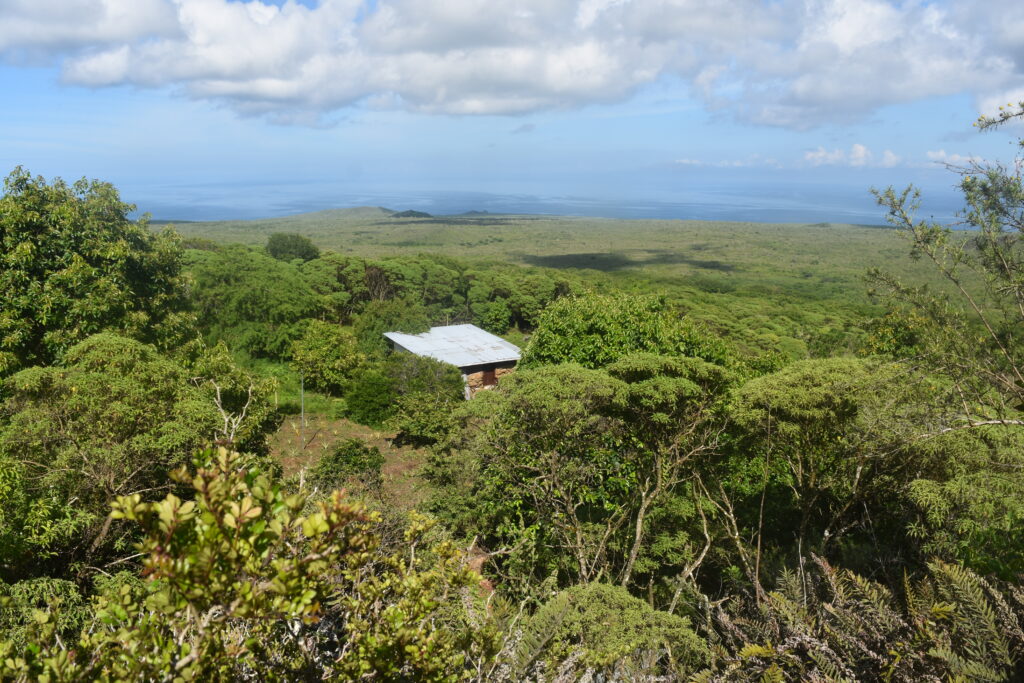
- Key Highlights: Natural basalt caves, historic freshwater spring, stone-carved pirate figures, and highland giant tortoise sanctuary
- Best Approach: Hike or ride along the uphill dirt track from the port, wearing sturdy walking shoes for damp soil
- Atmosphere: Cool, misty, and evocative of early wilderness pioneer life
Rising into the humid, mist-shrouded highlands roughly eight kilometres inland from the coast, Asilo de la Paz is a site where natural history and eccentric human stories intertwine. At 450 metres above sea level, this verdant hill provided refuge for some of the earliest human residents of the Galápagos, including pirates, whalers, and the German Wittmer family who arrived in the 1930s.
A quiet trail winds through native Scalesia forest toward a series of natural basalt caves carved into the hillside. These stone grottos served as crude living quarters for early settlers seeking shelter from equatorial sun and sea storms. Nearby, a rare freshwater spring bubbles up from the volcanic rock—a vital source of life that made permanent human survival on this arid island possible.
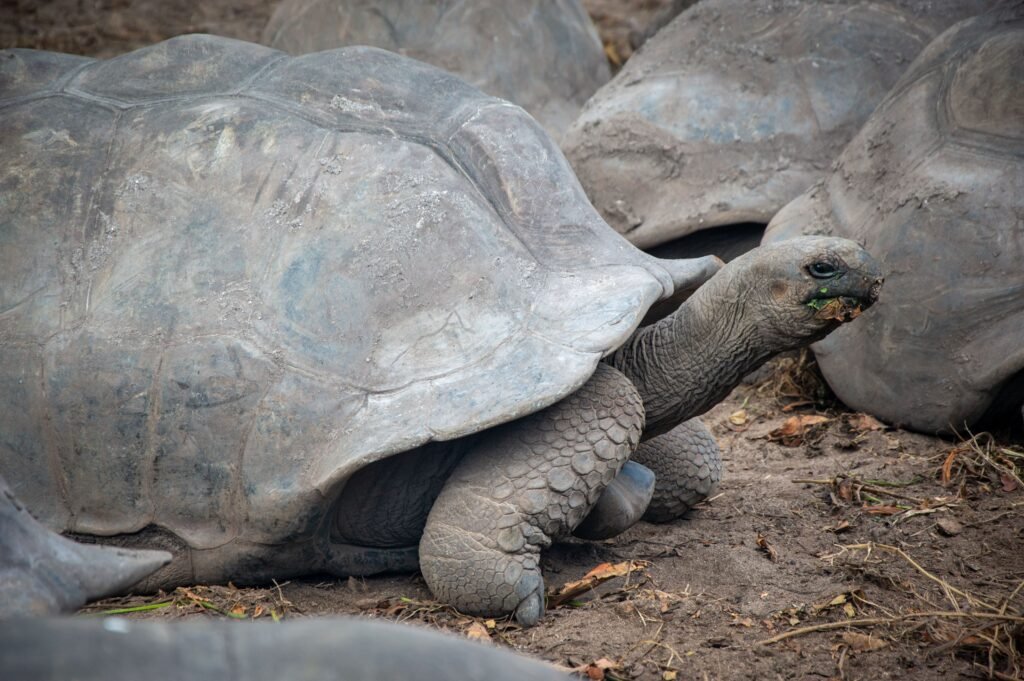
Higher up the trail lies a protected corral established to safeguard Galápagos giant tortoises from San Cristóbal Island alongside native hybrids. Walking among these ancient reptiles in the quiet mountain mist, surrounded by giant ferns and Darwin’s finches, offers an atmospheric encounter with the highland wilderness.
Mirador de la Baronesa / Panoramic coastal views and unsolved mysteries
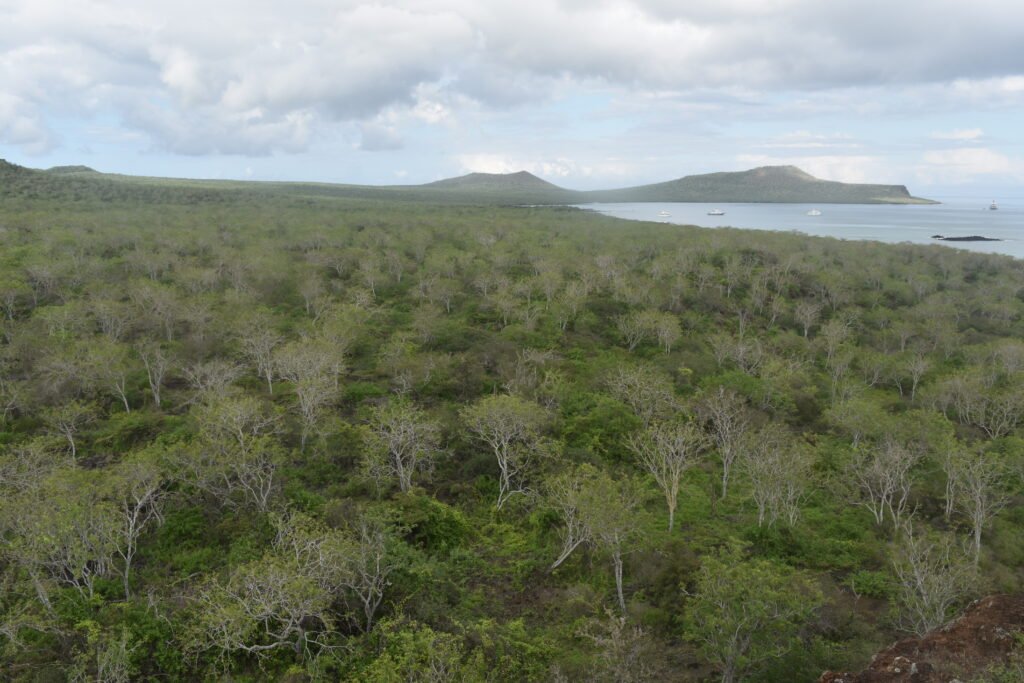
- Key Highlights: Panoramic coastal views, historic lookout, native flora, and intriguing local lore
- Best Approach: Accessible via coastal tracks on foot or as part of a coastal boat landing
- Atmosphere: Windswept, peaceful, and steeped in local intrigue
Overlooking the northern shores of Floreana, Mirador de la Baronesa is a prominent volcanic lookout that offers sweeping views across mangroves, volcanic cinders, and turquoise coves. The viewpoint gets its name from Baroness Eloise von Wagner de Bousquet, an Austrian eccentric who arrived on the island in 1932 accompanied by three lovers, intent on opening a luxury hotel for wealthy cruise passengers.
Her arrival sparked tension with the resident settlers, culminating in her sudden, unexplained disappearance in 1934. To this day, no trace of the Baroness or her companions has ever been recovered, leaving behind one of the most famous mysteries in South American history.
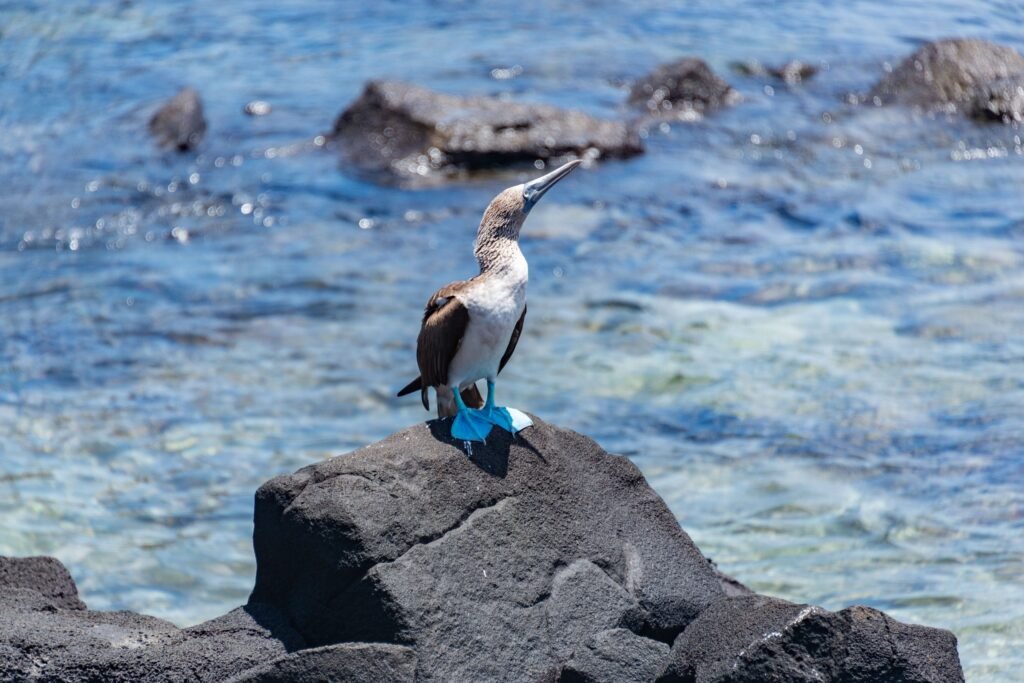
The short ascent to the top of the lookout passes through low-lying Palo Santo trees and lava cacti. At the summit, panoramic views stretch across the northern coastline toward Post Office Bay. It is an ideal spot to study the topography of the island, observe blue-footed boobies gliding along the updrafts, and watch lava lizards darting across sun-warmed basalt.
The Galápagos.
Ecuador’s Enchanted Isles
Bahía del Correo / The historic wooden mail barrel of Post Office Bay
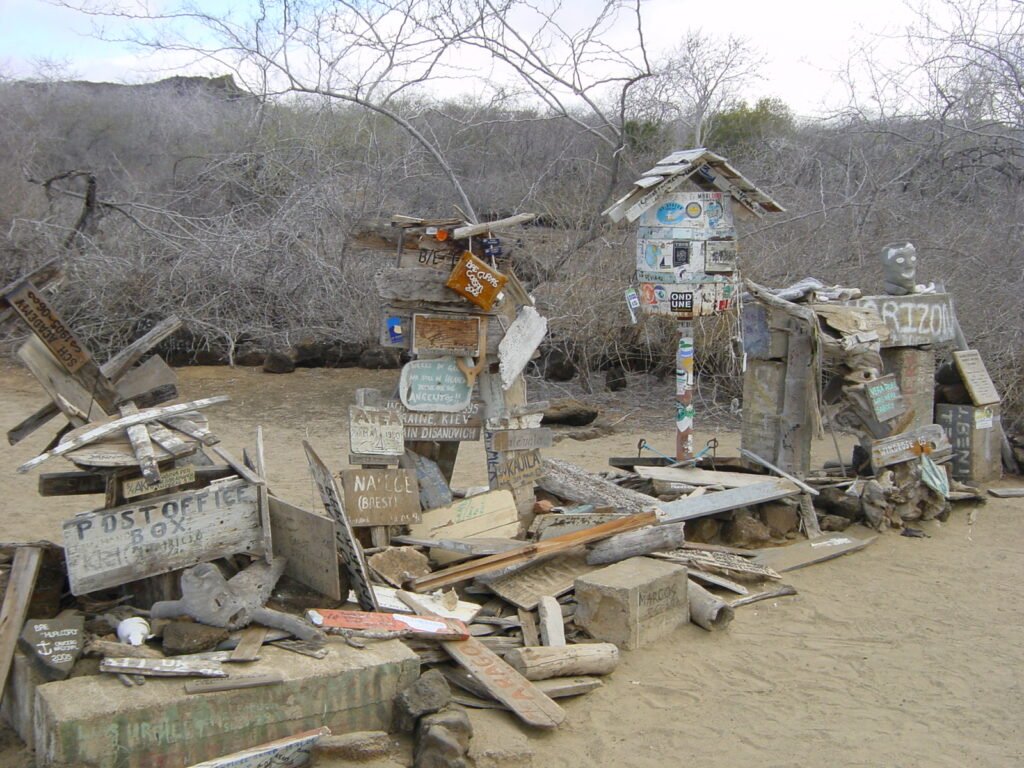
- Key Highlights: 18th-century wooden mail barrel, historic landing bay, and beach walk
- Best Approach: Beach landing along the northern bay with quiet walking trails through coastal scrubland
- Atmosphere: Historic, collaborative, and slow-paced
On the northern coast of Floreana lies Bahía del Correo, better known as Post Office Bay. This historic site preserves an ingenious, informal postal system established in 1793 by British whaling captain James Colnett.
Before modern telecommunications, British and American whaling ships spending years at sea needed a way to send news home. Captain Colnett erected a wooden whiskey barrel near the shoreline to serve as an unmonitored mailbox. Homeward-bound sailors would sift through the letters left in the barrel, selecting those addressed to locations along their return route and hand-delivering them upon arrival.
Remarkably, this tradition endures today without stamps or postal fees. Visitors drop their unsealed postcards into the barrel and sort through the existing mail to see if any letters are destined for their own hometowns. Hand-delivering a stranger’s postcard across the globe remains one of the most charming traditions in modern travel.
Punta Cormorant / Flamingos, olivine sand, and coral shores
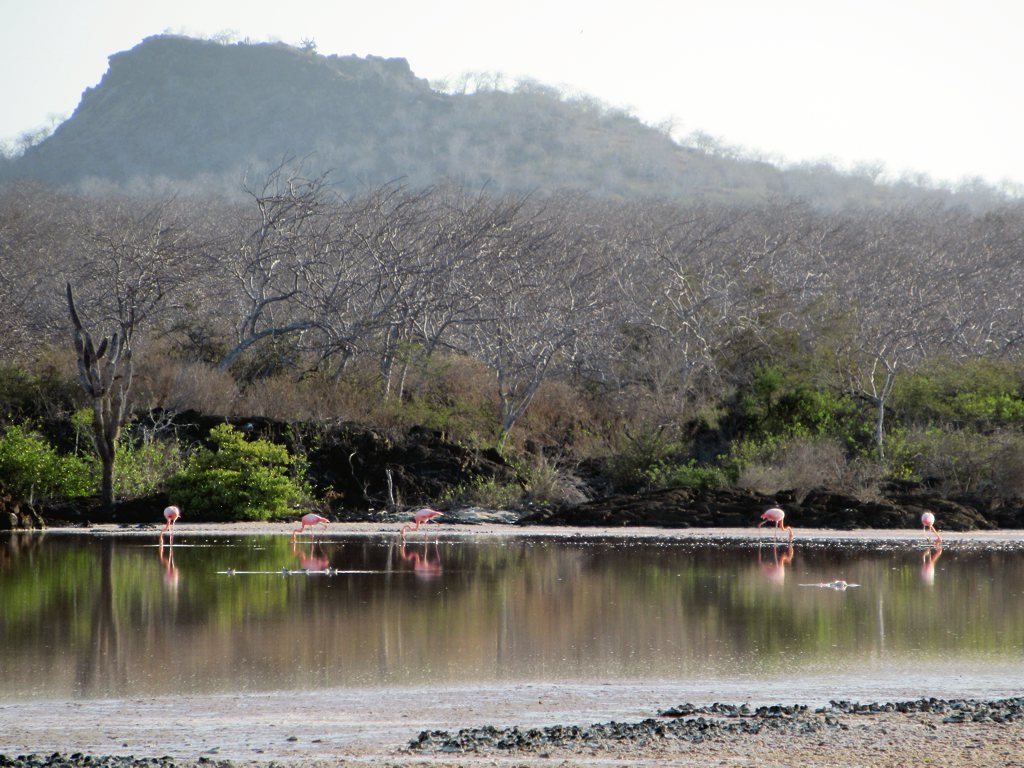
- Key Highlights: Olivine green sand beach, flamingos in brackish lagoon, and white coral sand beach
- Best Approach: Flat walking trail connecting two distinct coastlines across a narrow peninsula
- Atmosphere: Luminous, quiet, and packed with wild birdlife
Located on the northern tip of Floreana, Punta Cormorant offers one of the most ecologically diverse coastal walks in the Galápagos. The landing site begins on Green Beach, a coastline named for its green-tinted sand caused by a high concentration of olivine crystals erupted from nearby volcanic cones.
A flat trail leads inland through Palo Santo woodland to a large, shallow brackish lagoon. Here, vibrant American flamingos wade through the water, sifting for brine shrimp alongside white-cheeked pintail ducks and black-necked stilts. The silence of the lagoon is broken only by the calling of shorebirds and the gentle rustle of wind through saltbush.
Continuing along the trail reveals Flour Sand Beach, a starkly different coastline composed of fine, white coral dust. Walking along the water’s edge, visitors can spot Pacific green sea turtles nesting in the dunes or watch stingrays and small reef sharks gliding through the transparent shallows.
The Ecuadorian Sierra.
Get lost in the hills
La Lobería / A peaceful sanctuary for sea lions and marine iguanas
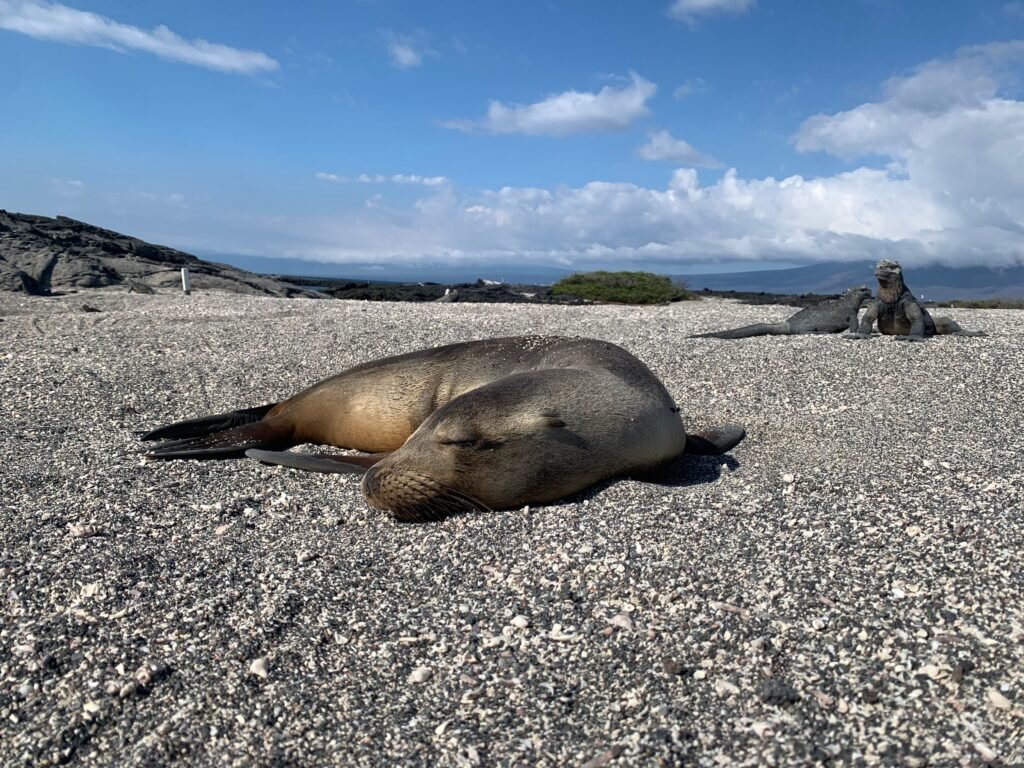
- Key Highlights: Resident sea lion colony, marine iguanas, accessible shore snorkelling, and lava trails
- Best Approach: Easy walk along the southern coastal track from Puerto Velasco Ibarra
- Atmosphere: Relaxed, wild, and intimate
Situated just a 15-minute walk south from the main settlement of Puerto Velasco Ibarra, La Lobería is a quiet coastal sanctuary named after its abundant population of Galápagos sea lions (lobos marinos).
The approach trail crosses exposed lava rocks and sandy inlets where marine iguanas gather to bask in the sun, their dark scales matching the basalt stone. Upon reaching the crescent-shaped bay, visitors will find sea lion pups playing in the calm, sheltered tidal pools while adult sea lions snooze on the warm sand.
Because La Lobería receives far fewer visitors than similar sites on larger islands, you can spend hours sitting quietly by the water’s edge watching natural animal behaviours without interruption. Snorkelling from the shore reveals green sea turtles and sea lions darting playfully around rocky underwater ledges.
Corona del Diablo / Submerged volcanic crater and marine wonderland
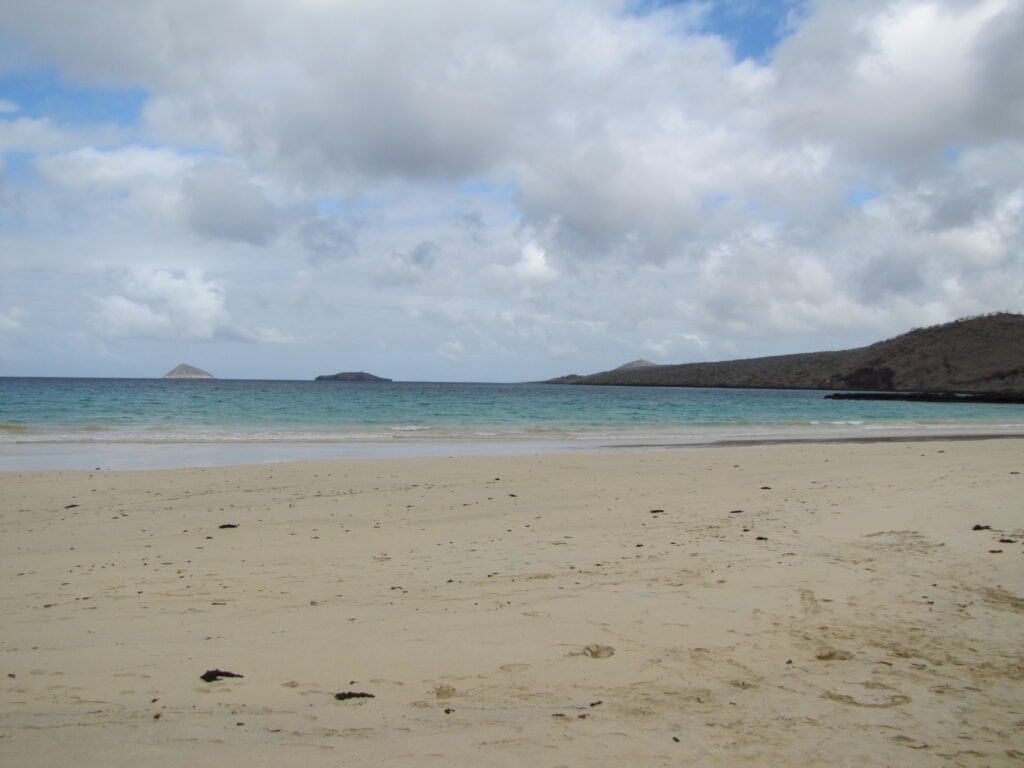
- Key Highlights: Submerged volcanic crater, coral reef, sea turtles, hammerhead sharks, and tropical fish
- Best Approach: Marine access via small boat, followed by guided open-water snorkelling
- Atmosphere: Dramatic, energising, and brimming with marine life
Just offshore from Punta Cormorant lies Corona del Diablo, or Devil’s Crown, a partially submerged volcanic cone whose jagged basalt points protrude from the open ocean like a crown. Over centuries, ocean waves have eroded the crater walls, creating a sheltered internal marine reef flushed by rich oceanic currents.
The underwater landscape of Devil’s Crown is widely regarded as one of the finest marine environments in the Pacific Ocean. Coral reefs cling to the volcanic walls, sheltering parrotfish, king angelfish, and damselfish. Deep channels inside the crater attract white-tip reef sharks, hammerhead sharks, eagle rays, and sea turtles.
Because currents around the outer crater can be swift, snorkelling here requires reasonable confidence in open water. Swimming alongside marine life in this natural aquatic amphitheatre is an unforgettable experience for independent travellers.
The Ecuadorian Amazon.
The most biodiverse place in the world
Self-guided exploration and routes around Floreana
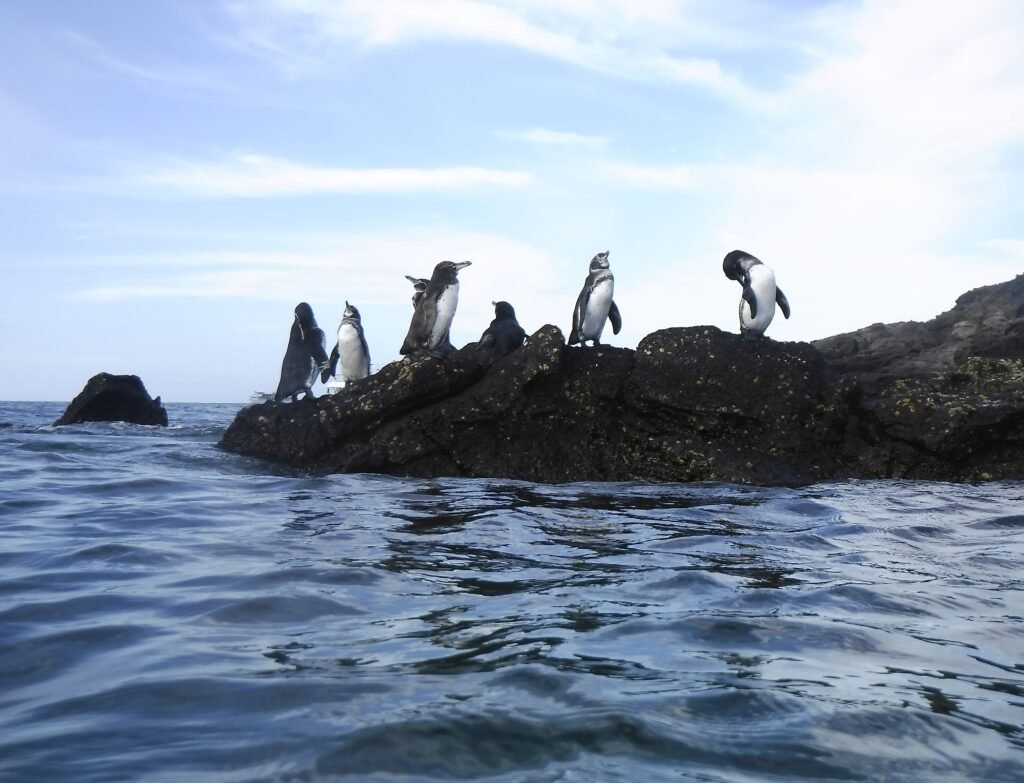
Exploring Floreana under your own steam provides a sense of freedom that group travel simply cannot match. Basing yourself in the peaceful settlement of Puerto Velasco Ibarra allows you to walk or ride along quiet dirt tracks without traffic, dine at small family-run eateries, and enjoy star-filled night skies without light pollution.
For travellers who enjoy exploring on two wheels, the unpaved tracks around Puerto Velasco Ibarra offer rewarding self-guided outings. Riding inland along the gravel road toward Asilo de la Paz covers roughly eight kilometres of steady climbing into the highlands, taking you from dry coastal lava fields up into misty green agricultural landscapes.
Another pleasant ride follows the coastal track south for 1.5 kilometres to La Lobería, ideal for a morning swim alongside sea lions. The dirt track connecting Playa Negra (Black Beach) to the village perimeter provides a simple loop for late afternoon rides as the sun sets over the Pacific.
Beyond the immediate village trails, excellent local day trips can be arranged by boat. Short nautical excursions take you offshore to Champion Islet and Enderby Islet, where deep-water snorkelling and seabird watching reveal rare species such as the Floreana mockingbird.
Regular inter-island ferries also link Floreana to Santa Cruz Island and San Cristóbal Island, providing convenient connections for travellers planning self-guided routes across the broader archipelago.
The Ecuadorian Coast.
Where you’ll find the very best food
Chart your own route through Galápagos history
Visiting Floreana is a reminder of why independent travel remains so deeply rewarding. Far from the rigid itineraries of large cruise vessels, this southern island invites you to slow down, listen to the whisper of the wind through Palo Santo trees, and connect directly with the wildlife and history of the archipelago.
Whether you are pedalling along coastal dirt tracks, hand-delivering mail left decades prior, or swimming alongside sea lion pups in shallow basalt coves, Floreana rewards patience and curiosity. It represents the quiet heart of the Galápagos—a place where nature takes precedence and human stories remain etched into the volcanic landscape.
Planning a trip here takes a bit of extra foresight, but the freedom to set your own schedule makes every effort worthwhile. Take the time to linger on the beaches, speak with the islanders in Puerto Velasco Ibarra, and explore the highland trails on two wheels or on foot.
We always encourage our readers to test these itineraries on the ground, explore at your own tempo, and share your experiences with us. Please feel free to test this copy with your audience to gather direct reader feedback as you plan your next self-guided journey.
Affiliate Disclaimer: Some of the links on Wheely Tyred are affiliate links. If you click through and make a booking or purchase, we may earn a small commission at no extra cost to you. We only recommend gear, tours, stays, and services we genuinely use, trust, and stand behind — our editorial independence always comes first. These commissions help keep our independent cycling guides and travel stories free to read. Thanks for supporting the ride!
Frequently asked questions about the best hidden gems on Floreana, Galápagos
Floreana is accessible via public inter-island ferry speedboats operating from Santa Cruz Island at Puerto Ayora. These journeys usually take around two hours each way. It is advisable to book tickets at least a few days in advance at the harbour, as seating capacity is limited compared to main transport routes.
Small family-run guesthouses and local providers in Puerto Velasco Ibarra often have basic mountain bikes available for daily hire. The main unpaved road leading up toward Asilo de la Paz in the highlands and the short coastal track to La Lobería are ideal for self-guided rides.
The system relies entirely on an honour system established in the 18th century. You drop your unsealed, unstamped postcard into the wooden barrel and sort through the mail left by previous visitors. If you find a letter addressed to a location near your home, you take it with you and hand-deliver it upon your return.
Yes. While many tourists only visit on brief boat day trips, staying overnight in Puerto Velasco Ibarra allows you to experience the island in complete tranquillity once day visitors depart. Small local hostals offer comfortable accommodation and an authentic sense of island life.
Visitors routinely encounter Galápagos sea lions, marine iguanas, Pacific green sea turtles, American flamingos, blue-footed boobies, and Darwin’s finches. Offshore sites like Devil’s Crown also shelter white-tip reef sharks, eagle rays, and diverse marine life.
Fresh water is extremely scarce across Floreana, which is why the spring at Asilo de la Paz was so critical to early settlers. Independent travellers should always carry sufficient drinking water when venturing out on long hikes or cycle rides.
Ecuador.
Pure wonder on the equator.