The emerald heart of the Andes / A guide to the top attractions of Quilotoa
Best things to do and essential sights at Quilotoa Lake, Ecuador
Uncover the dramatic vistas and living traditions of the high páramo
BEN FINCH
The Ecuadorian highlands are defined by drama. Stretching along the spine of the Andes, this high-altitude landscape consists of jagged peaks, patchwork fields clinging to near-vertical slopes, and ancient volcanic terrain. Yet, even in a country celebrated for its tectonic wonders, Laguna de Quilotoa stands out as a masterpiece of natural engineering.
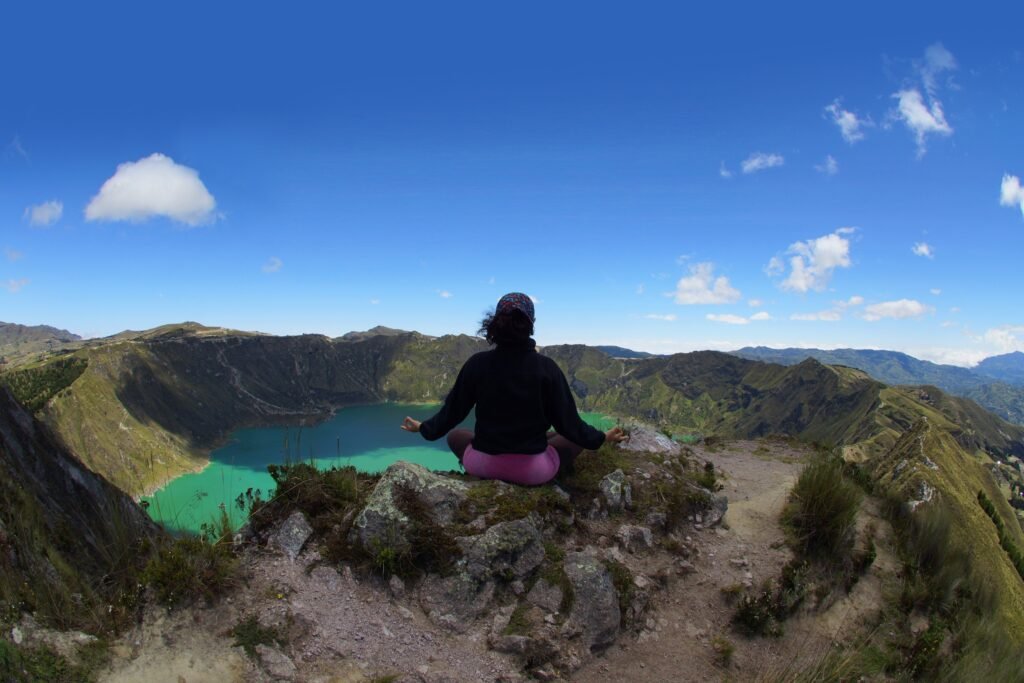
This water-filled caldera, situated at an elevation of nearly 4,000 metres above sea level, represents the westernmost volcano in the Ecuadorian Andes. Formed by a massive, explosive eruption approximately 800 years ago, the three-kilometre-wide crater is now home to a shifting, phosphorescent lake that captivates anyone who reaches its precipitous rim.
For travellers who reject the confines of crowded tour buses and rigid itineraries, the region surrounding the lake offers an unparalleled immersion into rural Andean life. It is a place where nature dictates the pace, and the cultural tapestry remains beautifully intact. To experience the area fully, one must look beyond the water itself and explore the constellation of viewpoints, canyons, and artisan communities that form the historic Quilotoa Loop. Here is the definitive guide to the top sights and attractions that make this corner of Cotopaxi province a non-negotiable stop for independent explorers.
High-altitude wonders / The essence of Quilotoa
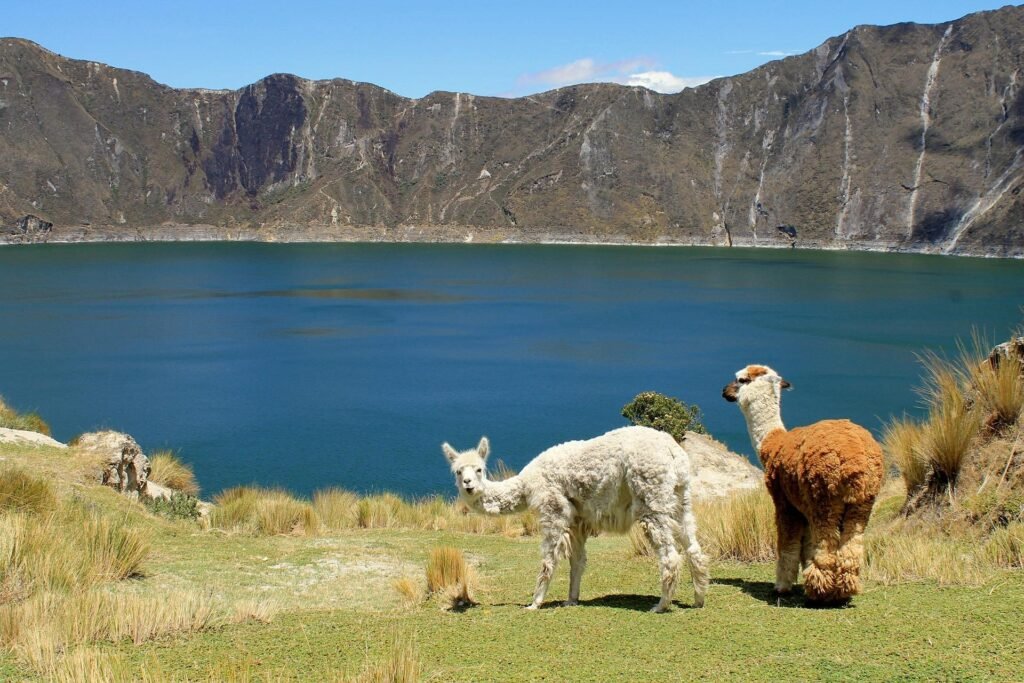
The windswept ridges of Cotopaxi province hold some of the most dramatic geological formations and deep-rooted Kichwa traditions in the Ecuadorian Andes. Exploring this high páramo independently reveals a world shaped by ancient volcanic forces and resilient local culture.
- The shifting caldera: Laguna de Quilotoa is a three-kilometre-wide volcanic crater lake whose mineral-rich, sulfurous waters dynamically change colour from turquoise to emerald depending on the alpine sunlight
- The inner crater descent: A steep, sandy trail winds down 400 vertical metres to the water’s edge, offering independent hikers an intimate look at the volcano’s floor, where kayaks can be hired
- Floating over the abyss: Mirador Shalalá features a minimalist wood and glass viewing platform designed to blend with the landscape, providing an unobstructed view directly over the precipice
- A knife-edge trek: The 11-kilometre crater rim trail offers a challenging three-to-five-hour hike with sweeping panoramas of the lake and distant snowcapped Andean peaks
- Volcanic fractures: The Toachi River Canyon is a massive, 100-metre-deep ravine carved out by historic volcanic debris flows, revealing the raw tectonic history of the region
- Sheepskin chronicles: The mountain settlement of Tigua is celebrated for its vibrant folk art, where local Kichwa artisans paint scenes of rural life onto stretched sheepskin hides
- Authentic highland trading: Held every Saturday, the Zumbahua Market remains a vital, uncommercialised economic hub where locals trade livestock and high-altitude produce in traditional attire
The Ecuadorian Sierra.
Get lost in the hills
The majestic crater lake of Laguna de Quilotoa
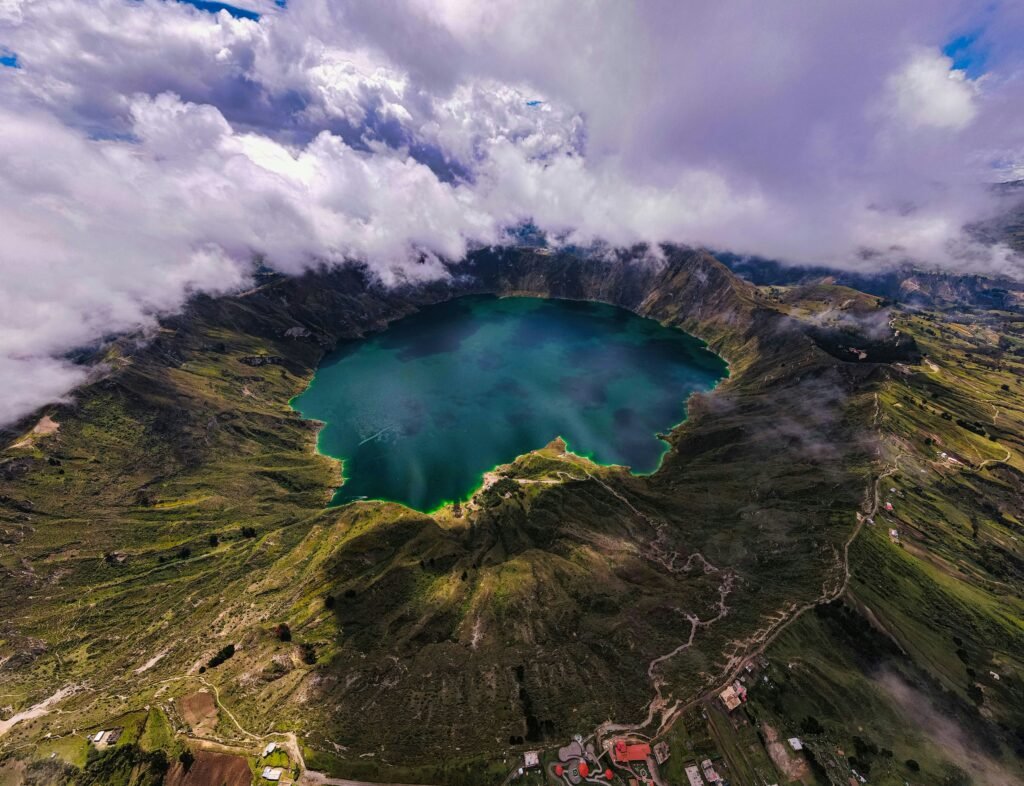
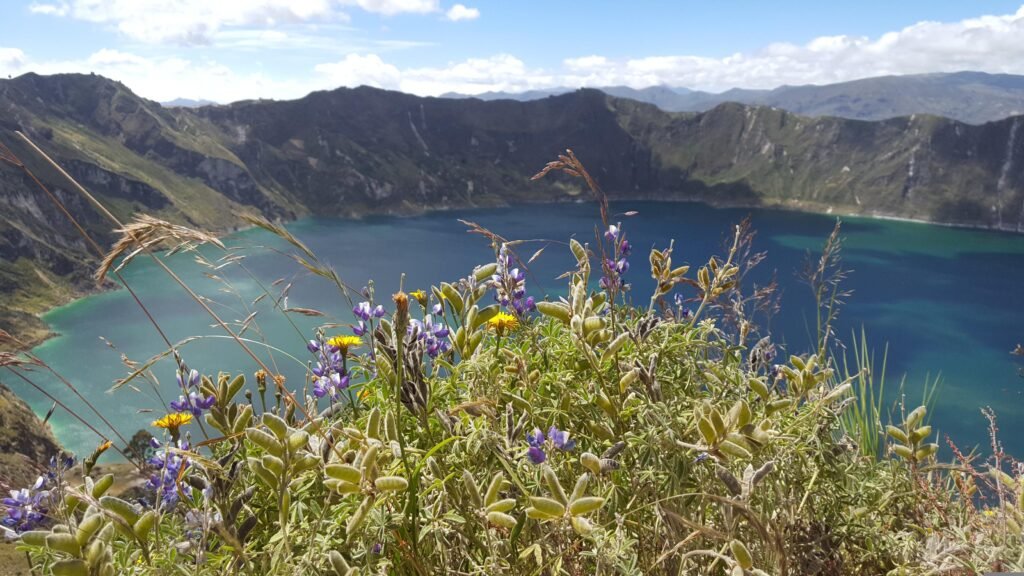
The undisputed centre of attention in the region is the crater lake itself. The water owes its remarkable colour—ranging from deep turquoise and sparkling emerald to a moody yellow-green—to a heavy concentration of dissolved minerals, particularly sulfur. As the high-altitude sun shifts behind the clouds, the entire hue of the caldera transforms, providing a hypnotic visual spectacle.
Unlike conventional landmarks that are viewed from a safe distance, Laguna de Quilotoa invites physical engagement. The descent from the main village down to the water’s edge is a popular and rewarding challenge. A steep, sandy path winds down the inner wall of the crater, dropping roughly 400 vertical metres over a series of sharp switchbacks. The walk down takes a mere 30 minutes, surrounded by hardy alpine vegetation, purple Andean lupins, and orange thistles. At the bottom, the sheer scale of the caldera becomes humbling. Active travellers can rent kayaks to paddle across the glassy, mineral-rich surface, gaining a unique perspective from the very floor of the dormant volcano.
The return journey provides a true test of stamina. Due to the thin air at this altitude, climbing back out of the crater can take anywhere from one to two hours. For those who find the steep incline daunting, local Kichwa community members offer mules for a small fee, ensuring that the experience remains accessible while directly supporting the local economy.
Mirador Shalalá and the crater rim trail
For those who wish to absorb the grandeur of the lake from above, the architectural marvel of Mirador Shalalá offers an exceptional vantage point. Located about five kilometres around the southern rim from the main village, this viewpoint features a clean, sustainable structure crafted from wood and glass. Engineered to blend harmoniously with the rugged landscape, the transparent platform juts out over the precipice, creating the sensation of floating directly above the emerald waters. It is an ideal spot for photography, as the minimalist design ensures that the focus remains entirely on the raw beauty of the volcanic basin.
Serious hikers and independent travellers often choose to tackle the full crater rim trail. This demanding circuit stretches for roughly 11 kilometres along the knife-edge crest of the volcano. It is a path that requires a steady foot and a keen eye on the weather, as the winds sweeping across the high páramo can be ferocious.
The terrain rolls continuously, offering a shifting panorama that includes not only the lake below but also the snowcapped peaks of Cotopaxi and Iliniza Sur shimmering on the distant horizon. Completing the entire loop takes between three and five hours, providing an immersive wilderness experience far removed from the standard observation decks.
The Galápagos.
Ecuador’s Enchanted Isles
The dramatic vistas of Cañón del Río Toachi
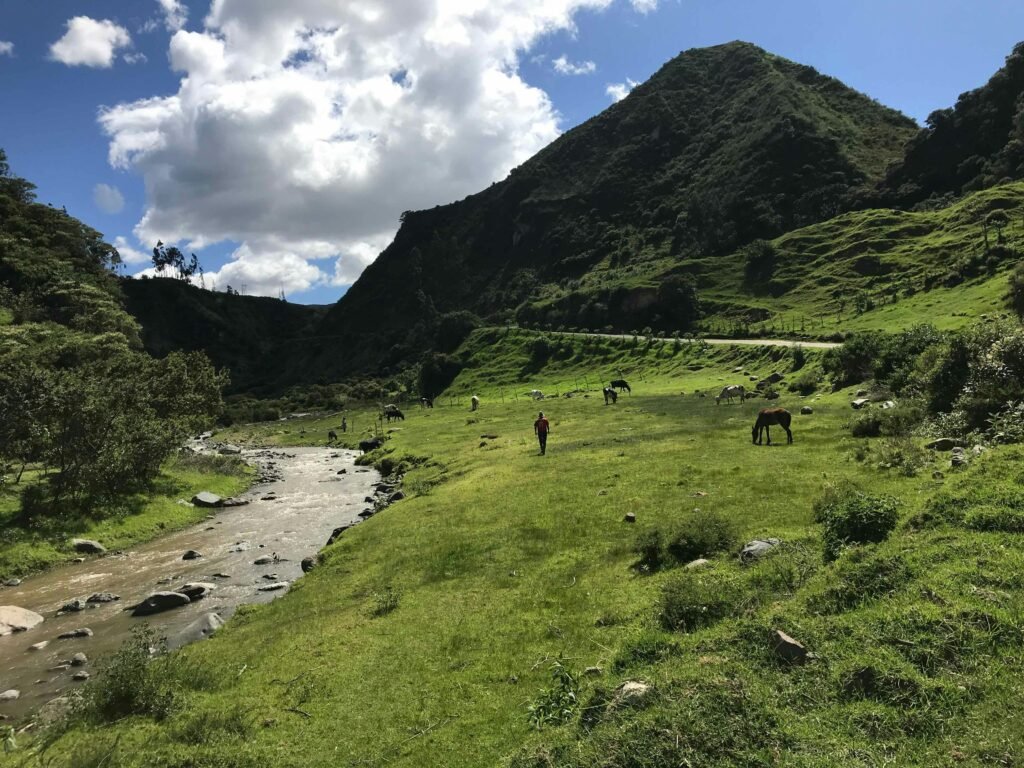
Approximately seven kilometres before reaching the crater village along the main road from Zumbahua lies another geological wonder that deserves a dedicated stop. The Toachi River Canyon is a massive, jagged ravine carved into the landscape over thousands of years. The canyon is a direct result of the historic, violent eruptions of the Quilotoa volcano, which sent flows of volcanic debris carving through the tuff and pumice rock of the highlands.
The lookout point over the Cañón del Río Toachi reveals a sheer drop of over 100 metres to the riverbed below. The contrast between the arid, ash-coloured stone walls of the canyon and the lush green vegetation thriving along the riverbanks creates a striking visual layout.
It is a stark reminder of the immense tectonic forces that shaped the Ecuadorian highlands, offering an excellent opportunity to stop, step out into the crisp mountain air, and appreciate the vastness of the Andean geography under your own steam.
The artistic heritage of the Tigua Community
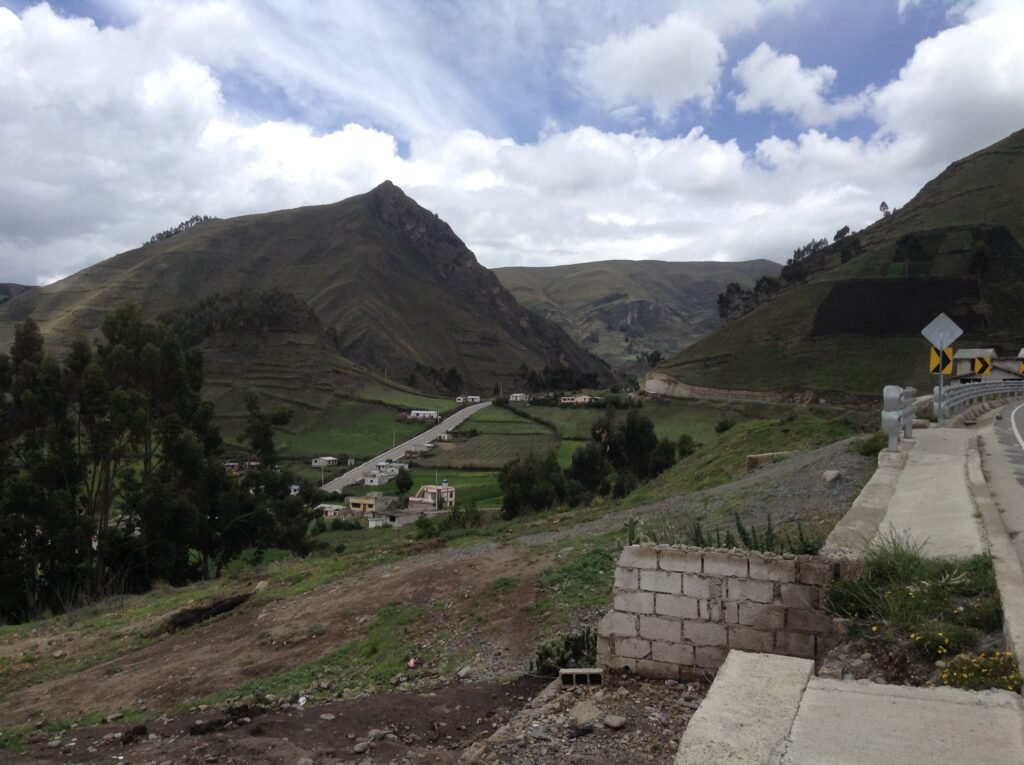
Cultural exploration is just as vital as scenic sightseeing in the highlands, and the tiny mountain settlement of Tigua is the artistic heart of the region. Situated between Pujilí and Zumbahua, this indigenous community has gained international recognition for its highly distinctive style of folk art.
Local artisans here specialise in vibrant paintings created directly on stretched sheepskin hides, using bright enamel paints. These artworks serve as visual chronicles of rural Andean life, depicting daily agricultural routines, local festivals, sheep herding, and indigenous mythologies, all set against the backdrop of sacred mountains like Cotopaxi and the Quilotoa caldera. In addition to the paintings, Tigua craftsmen are celebrated for carving striking, colourful ceremonial masks out of local pine wood, representing animals such as pumas, condors, and wolves.
Visiting the small, independent galleries and workshops scattered along the roadside allows travellers to interact directly with the painters, watch them work, and appreciate a living tradition that beautifully preserves Kichwa heritage.
The Ecuadorian Amazon.
The most biodiverse place in the world
The authentic rhythm of Zumbahua Market
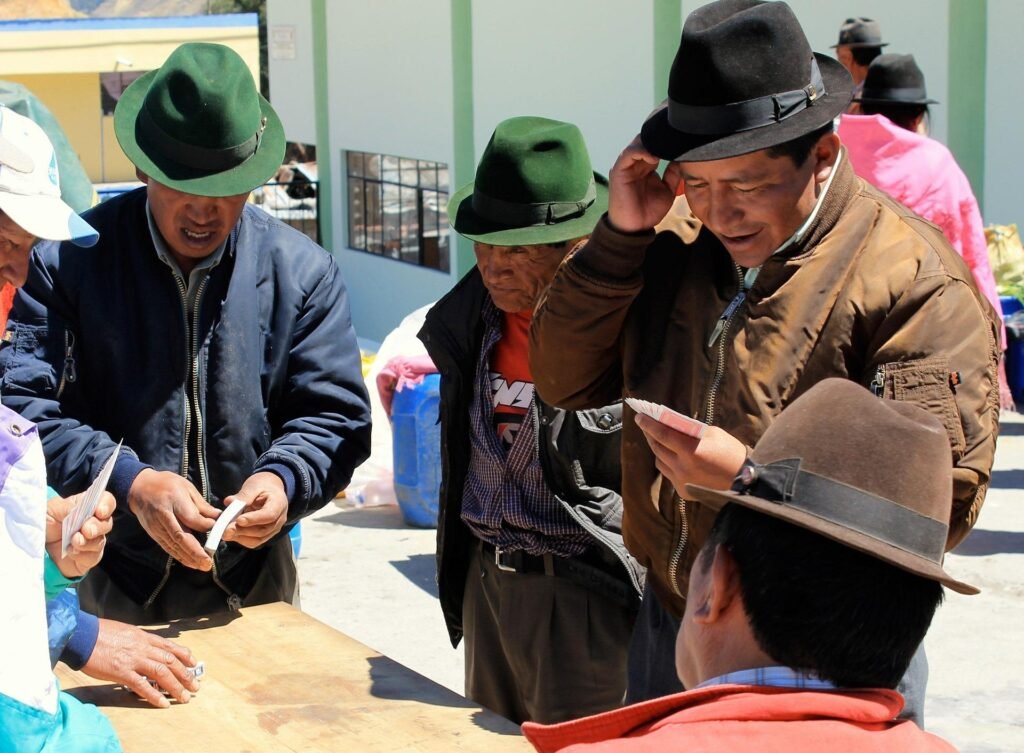
To truly understand the heartbeat of the rural Andes, one must experience a traditional indigenous market, and the weekly gathering in the nearby town of Zumbahua is one of the most authentic in Ecuador. Held every Saturday morning, this market is not a commercial show for tourists; it is an essential economic engine for the Kichwa-speaking communities who live in the surrounding valleys.
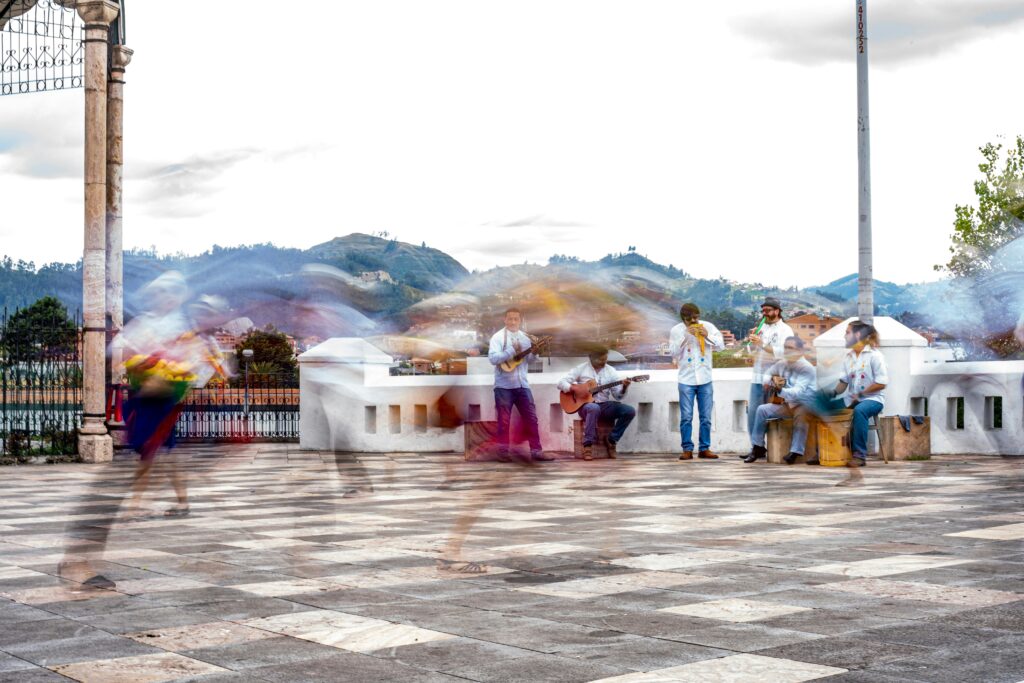
The market square fills with a sea of vibrant colours, as locals arrive dressed in traditional felt hats and hand-woven woollen ponchos of deep red, pink, and violet. Farmers bring their livestock, including llamas and sheep, while stalls overflow with local high-altitude produce such as native potatoes, quinoa, barley, and fresh mountain cheese.
The atmosphere is thick with the sounds of animated trading, traditional music, and the smell of roasting mountain delicacies. It offers an unfiltered look at a way of life that has persisted for centuries, allowing independent travellers to slow down, observe, and absorb the authentic culture of the highlands without a tour guide rushing them along.
Independent exploration and the spirit of the highlands
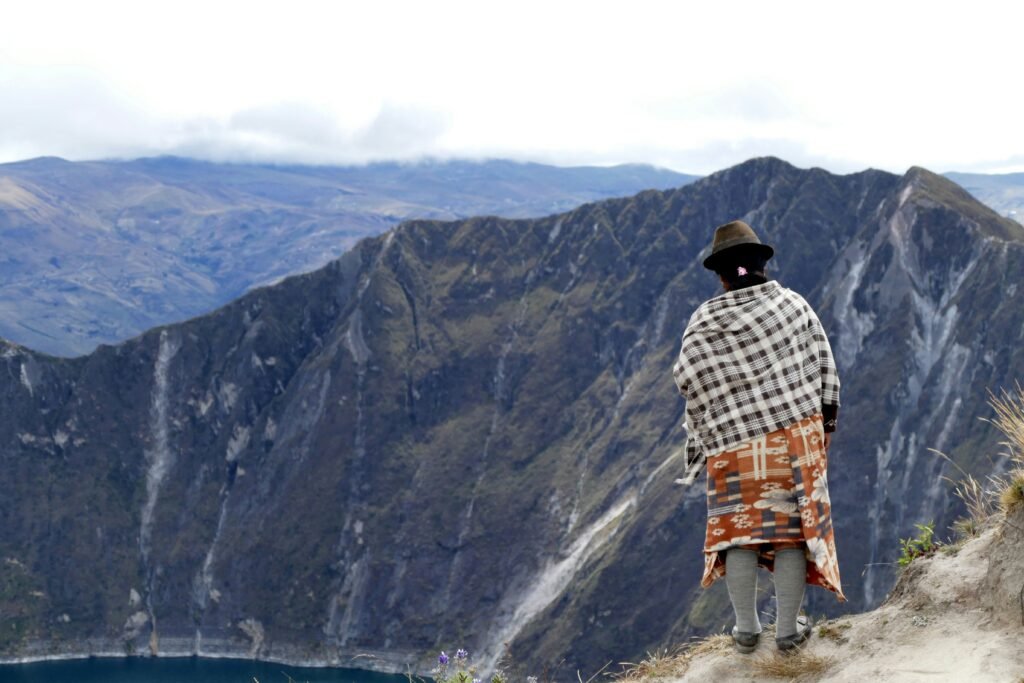
Travellers who choose to visit the Quilotoa region independently understand that the journey itself is the reward. Navigating this high-altitude terrain requires preparation—the weather can shift from brilliant sunshine to freezing fog and biting winds within minutes, making layers and sturdy footwear essential.
Yet, the autonomy to spend an extra hour sitting on the edge of a volcanic crater, or to linger in a workshop chatting with a Tigua artist, is what transforms a simple holiday into a profound travel experience. By exploring under your own steam, you gain a deep, genuine knowledge of the landscape and its people, ensuring that your memories of the spectacular Andes are entirely your own.
For those looking to extend their journey beyond the immediate crater rim, the high-altitude roads and ancient trails of the Cotopaxi province provide an incredible network for active discovery. Within an easy 20-kilometre radius of the Quilotoa crater, several captivating mountain destinations can be accessed. Rolling south along the paved highland roads brings you to the vibrant mountain hub of Zumbahua, while heading north leads to the dramatic ridges of Chugchilán and the pastoral valleys of Isinliví, both famous for their eco-lodges, local cheese production, and wood-carving workshops.
For longer day trips, the historic gateway city of Latacunga offers a bustling base filled with colonial architecture, while the iconic, snow-draped cone of Cotopaxi National Park stands as the ultimate playground for high-altitude trekking and exploring the vast alpine plains of Ecuador.
The Ecuadorian Coast.
Where you’ll find the very best food
Frequently asked questions about the top sights at Quilotoa
The return journey is a demanding physical challenge due to the thin air at high altitude, taking between one and two hours to climb the steep, 400-metre incline. Local Kichwa community members offer mules for a small fee if the ascent proves too strenuous.
The lake’s shifting shades of emerald, turquoise, and yellow-green are caused by heavy concentrations of dissolved minerals, particularly sulfur, which react dynamically to the angle and intensity of the mountain sunlight.
Saturday morning is ideal, as the nearby town of Zumbahua hosts its weekly indigenous market. It provides an authentic glimpse into local life, with Kichwa-speaking communities gathering from across the valleys to trade produce and livestock.
The 11-kilometre loop takes three to five hours and requires sturdy footwear, plenty of water, and versatile clothing layers. The weather across the high páramo is notorious for shifting rapidly from bright sunshine to freezing fog and fierce winds.
Tigua art is distinct because local craftsmen paint vivid, detailed depictions of Andean life and mythology directly onto stretched sheepskin hides using bright enamel paints, alongside carving ceremonial wooden masks.
Within a 20-kilometre radius, travellers can venture to the traditional hub of Zumbahua, the dramatic ridges of Chugchilán, or the pastoral valleys of Isinliví. The historic city of Latacunga and Cotopaxi National Park also serve as excellent bases for extended day trips.
Ecuador.
Pure wonder on the equator.