Best San Cristóbal multi-day tours / Galápagos small-group expeditions
San Cristóbal, Galápagos, multi-day tours, island hopping & overland expeditions
Sustainable multi-day adventures and small-group journeys
BEN FINCH
Rising dramatically from the equatorial waters of the Pacific Ocean, 1,000 kilometres off the coast of mainland Ecuador, the Galápagos archipelago represents one of the planet’s most pristine and fragile natural sanctuaries.
Among these volcanic outcrops, San Cristóbal Island serves as the official administrative capital and historical heart of the province. It was here, at Puerto Baquerizo Moreno, that Charles Darwin first set foot in September 1835 aboard HMS Beagle, initiating the observations that would transform our understanding of biological evolution.
Navigating the Galápagos archipelago independently presents complex logistical hurdles. Marine transit schedules between inhabited islands like San Cristóbal, Santa Cruz, and Isabela are tightly regulated by the Galápagos National Park Directorate. Furthermore, visiting restricted conservation zones requires certified Naturalist Guides, licensed maritime vessels, and pre-allocated permits. Fragmented day trips often result in rushed transit, missed connection windows, and superficial interactions with the region’s delicate ecosystems.
At Wheely Tyred, our travel philosophy centres on slow, immersive overland and island-hopping multi-day journeys. Booking a curated multi-day tour resolves inter-island transit logistics, guarantees access to remote wildlife sites, and ensures your travel footprint directly supports local family-run guesthouses, local boat captains, and resident guides.
Below, we examine the absolute best bookable multi-day itineraries that start on or incorporate San Cristóbal, offering an authentic, well-paced exploration of the Enchanted Isles.
Key takeaways from the Enchanted Isles
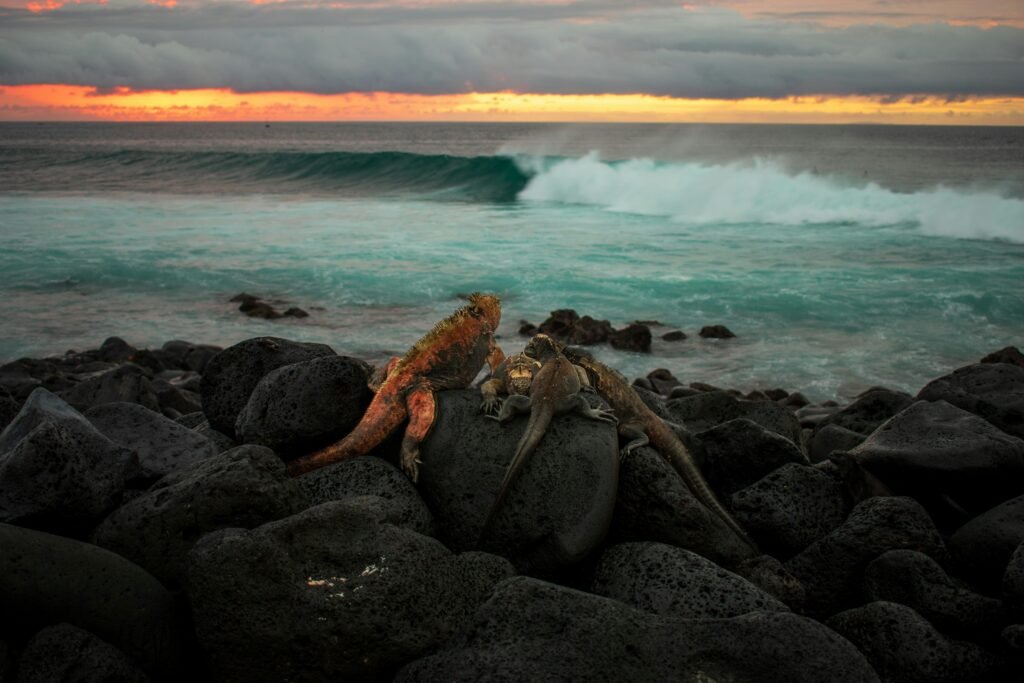
Navigating the isolated Galápagos archipelago requires balancing strict environmental conservation with seamless island transit. Here are the core takeaways, essential wildlife spots, and logistical insights for planning an authentic multi-day journey across San Cristóbal and its neighbouring islands.
- San Cristóbal Heritage: As Darwin’s first landing point in 1835, San Cristóbal offers an unhurried blend of volcanic history, giant tortoise conservation at La Galapaguera, and clear-water snorkelling in sheltered bays
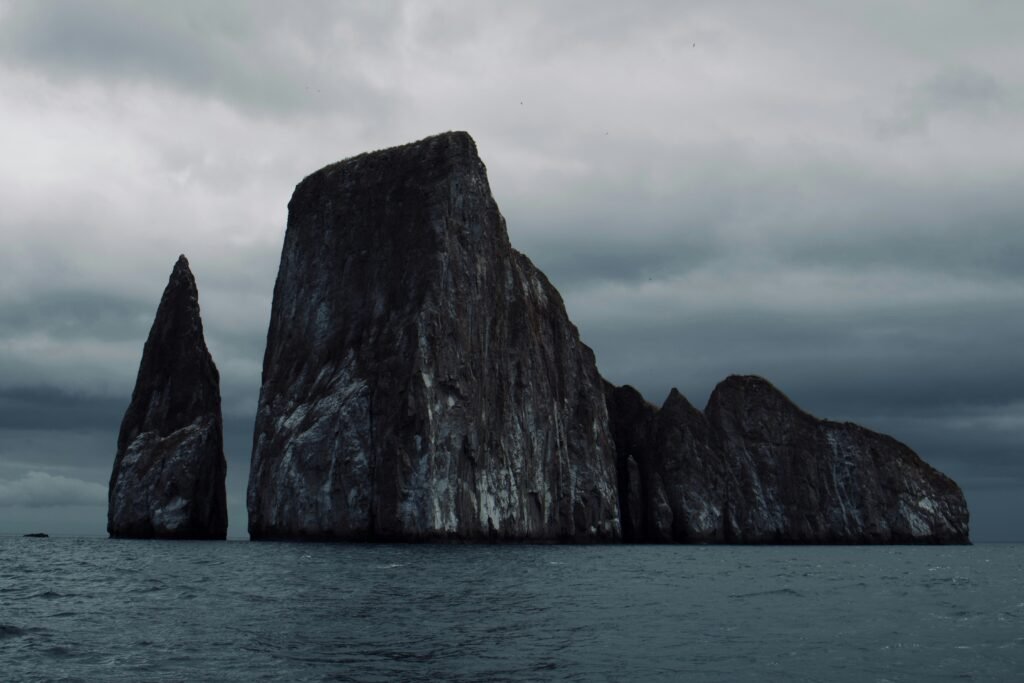
- Kicker Rock Deep-Water Marine Encounters: The iconic eroded tuff cone of León Dormido serves as a primary site for swimming alongside hammerhead sharks, Pacific green sea turtles, and spotted eagle rays
- Overland Sustainability: Choosing land-based, small-group expeditions keeps financial benefits within island communities, supporting family-run eco-lodges, local maritime captains, and resident guides
- Highland Microclimates: Weather shifts rapidly from warm coastal beaches to humid highland cloud zones; visiting places like Laguna El Junco requires sturdy footwear and light waterproof layers for the persistent garúa mist
- Cash Readiness: With island ATMs in Puerto Baquerizo Moreno frequently running out of banknotes, carrying sufficient US dollar cash in small denominations is vital for park fees, dining, and tipping
San Cristóbal.
Laid-back in the Galápagos
Traverse volcanic marine habitats across San Cristóbal
Rating & reviews
(14+ verified reviews on TourRadar)
Why this tour stands out
This 6-day active expedition strikes a balance between active land-based exploration and rich marine wildlife encounters. Operating with small group sizes (typically capped at 12–16 travellers), the itinerary focuses on active immersion without the excessive luxury markup of mega-cruises.
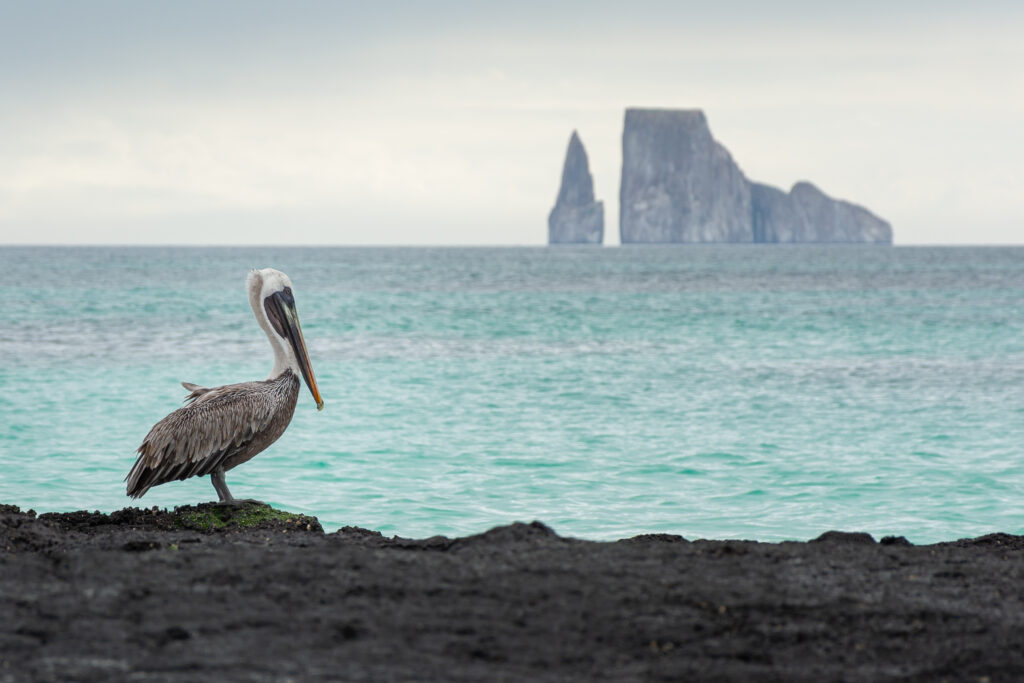
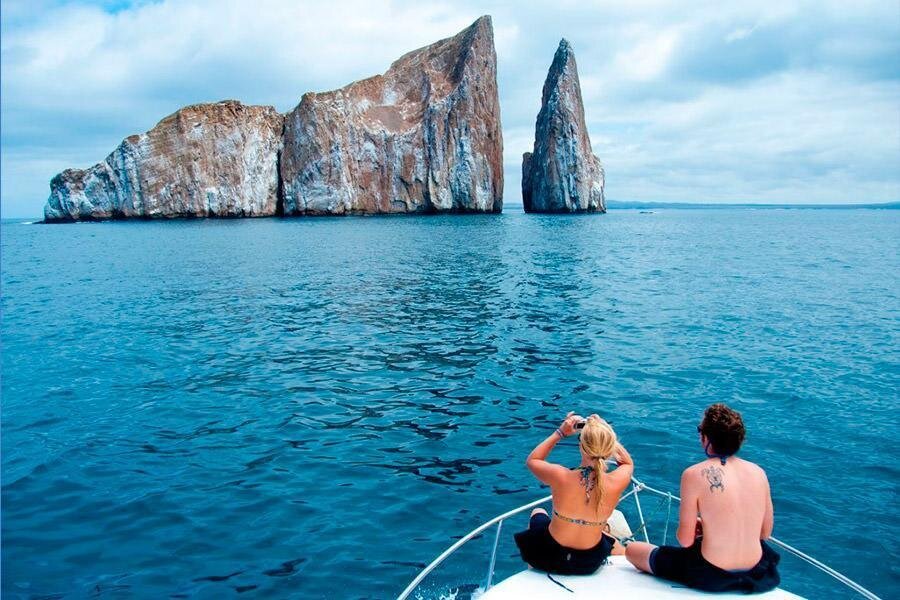
Starting in San Cristóbal, the journey takes advantage of the island’s unique geographical positioning to explore iconic sites such as Kicker Rock (León Dormido), an eroded tuff cone rising 140 metres out of the ocean.
The tour prioritises land-based accommodation, utilising comfortable, family-operated eco-lodges and boutique hotels on San Cristóbal and Santa Cruz. This approach keeps your financial contribution within island communities while offering evening autonomy to dine in local seafood picanterías.
The travel pace allows for slow exploration, incorporating sea kayaking, mountain biking along highland volcanic trails, and snorkelling alongside Pacific green sea turtles, marine iguanas, and Galápagos sea lions.
Key highlights
- Kicker Rock Snorkelling: Deep-water marine navigation alongside hammerhead sharks, Eagle rays, and endemic reef fish
- Interpretation Centre & Cerro Tijeretas: Guided walk tracing Darwin’s historic landing on San Cristóbal, followed by snorkelling at Tijeretas Bay among frigatebirds
- Highland Giant Tortoise Reserves: Trekking through humid cloud zones on Santa Cruz to observe Galápagos giant tortoises free-roaming in native forest habitats
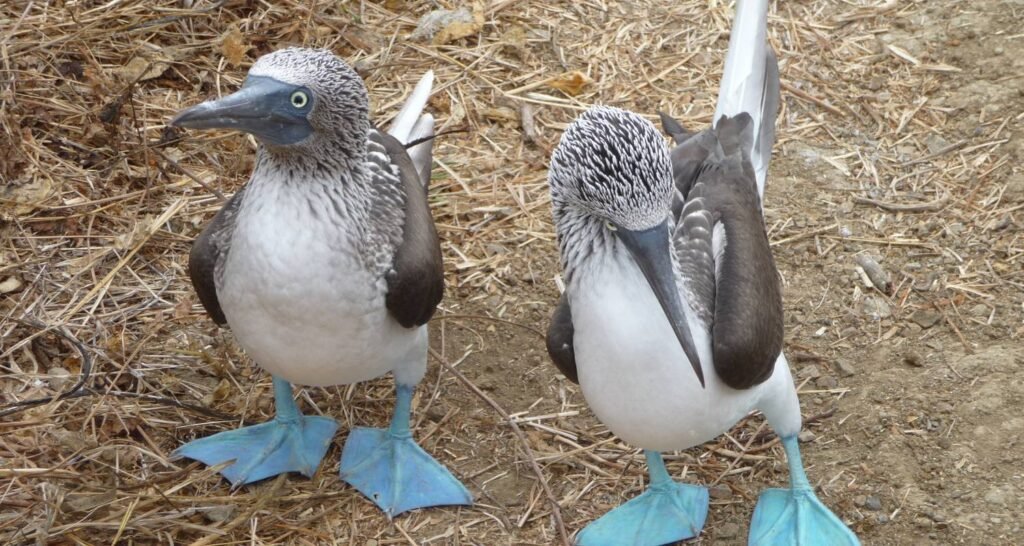
- Active Sea Kayaking: Navigating the calm turquoise bays of San Cristóbal to spot blue-footed boobies nesting on lava cliffs
- Inclusions: 5 nights boutique hotel accommodation, daily breakfasts, select lunches, all inter-island speedboats, equipment (snorkels, fins, kayaks), and certified bilingual Galápagos National Park Naturalist Guides
Ideal for
Active, autonomous travellers, sea kayaking enthusiasts, and marine wildlife lovers seeking a dynamic, small-group land-based expedition across San Cristóbal and neighbouring islands.
Local insight
The open-water speedboat transit between San Cristóbal and Santa Cruz takes approximately two hours across open ocean swell. We recommend securing a seat towards the stern (rear) of the vessel for a smoother ride, and keeping a light windbreaker accessible, as ocean spray is common during morning crossings.
The comprehensive multi-island archipelago circuit
Rating & reviews
(45+ verified reviews on TourRadar)
Why this tour stands out
For travellers seeking a thorough regional immersion that links the easternmost island of San Cristóbal with the central and western islands, this 10-day overland circuit represents the pinnacle of multi-day expedition design.
By allocating 10 full days to the archipelago, the itinerary avoids the hectic daily rush typical of shorter trips, allowing you to settle into the rhythmic pace of island life.
The routing covers San Cristóbal, Santa Cruz, and Isabela, highlighting the distinct geological ages and ecological adaptations across the archipelago. Guided by resident Naturalist Guides, group sizes remain small, ensuring intimate wildlife viewing without disturbing natural animal behaviours.
Accommodation is entirely land-based in locally owned guesthouses, fostering genuine cultural exchange with the Galapagueño communities.
Key highlights
- San Cristóbal Highland Trekking: Exploring La Galapaguera, a dedicated breeding and conservation facility for endemic San Cristóbal tortoises (Chelonoidis chathamensis)
- Isabela Volcanic Exploration: Multi-hour hike along the rim of Sierra Negra volcano, home to the second-largest volcanic caldera in the world
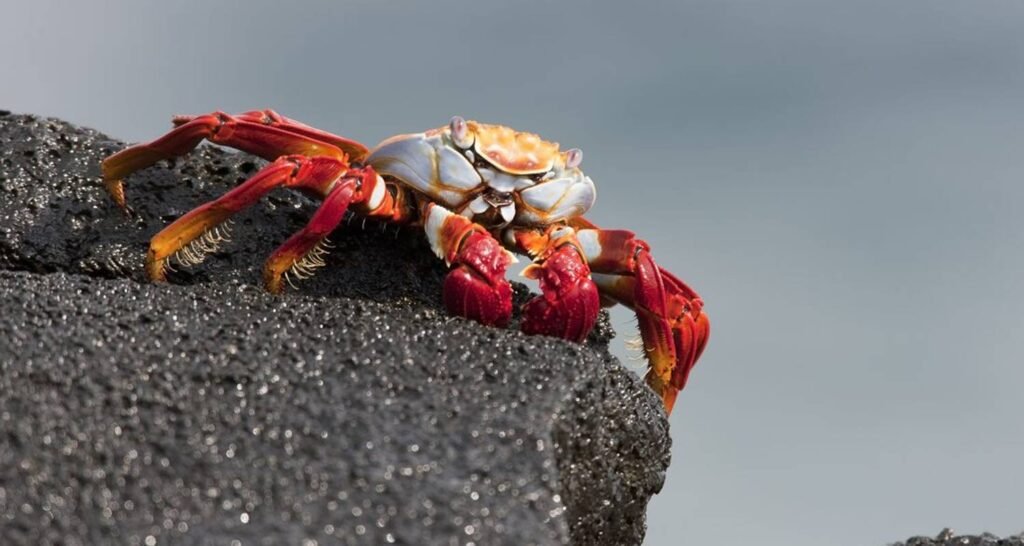
- Tintoreras Islet Exploration: Navigating lava tunnels and calm inlets on Isabela to spot resting whitetip reef sharks and Galápagos penguins
- Charles Darwin Research Station: In-depth tour on Santa Cruz examining active giant tortoise restoration and island rewilding projects
- Inclusions: 9 nights local accommodation, internal inter-island ferry connections, daily breakfast, guided excursions, and private overland transport on the islands
Ideal for
Slow travellers, eco-conscious adventurers, and first-time visitors who want an all-encompassing, stress-free exploration of the main inhabited islands without living aboard a vessel.
Local insight
San Cristóbal features La Lobería, a coral sand beach where a large colony of sea lions resides. Maintain a respectful distance of at least two metres from adult bulls, which are territorial, particularly during breeding seasons.
The Galápagos.
Ecuador’s Enchanted Isles
Immersive island-hopping expedition across San Cristóbal and Santa Cruz
Rating & reviews
(25+ verified reviews on GetYourGuide)
Why this tour stands out
This 7-day, 6-night island-hopping expedition focuses intensely on the marine ecosystems and coastal biology surrounding San Cristóbal and Santa Cruz. Structured around small groups, it eliminates the rigid schedules of big-bus group tours while providing seamless land transfers, private maritime shuttles, and reserved entrance slots for restricted National Park marine reserves.
The itinerary allocates generous time to San Cristóbal’s eastern coastline, including visits to Punta Pitt—the only site in the Galápagos where all three booby species (blue-footed, red-footed, and Nazca) nest together. The shift from coastlines to humid highland scales offers a rich overview of the island’s microclimates.
Key highlights
- Punta Pitt Excursion: Guided coastal hike across yellow tuff formations to observe nesting sea birds and endemic lava lizards
- Tortuga Bay Coastal Trail: Walking through giant opuntia cactus forests on Santa Cruz leading to white-sand beaches frequented by marine iguanas
- Highland Lava Tunnels: Walking through subterranean basalt tubes created by prehistoric molten lava flows
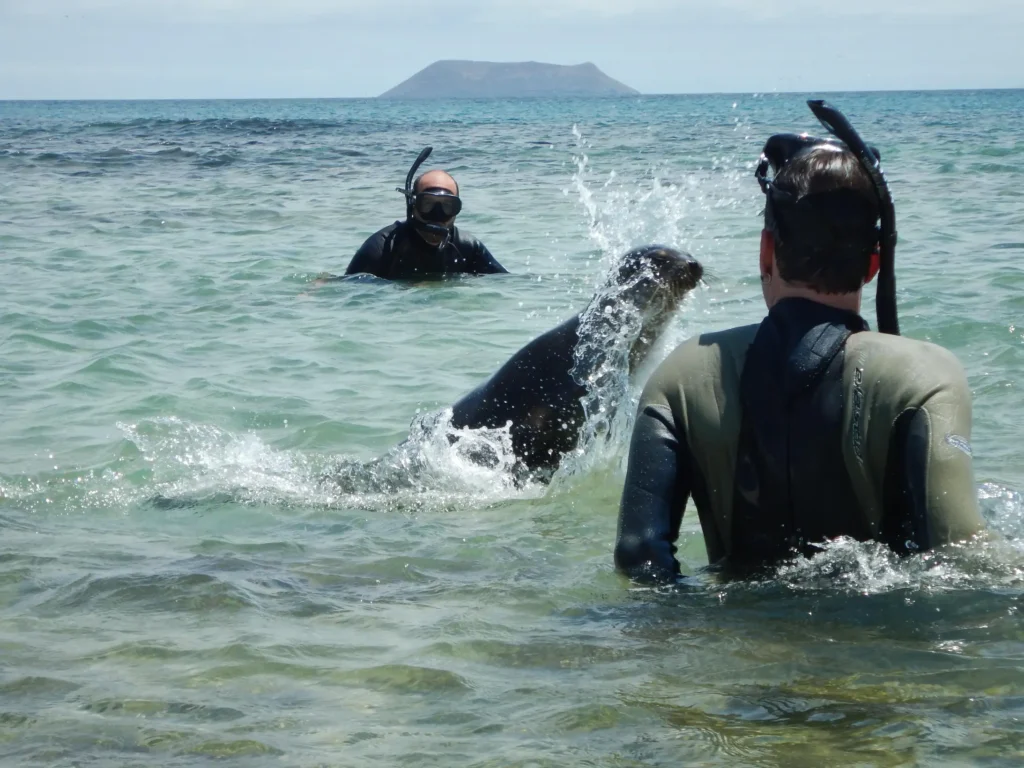
- Snorkelling at Cerro Tijeretas: Clear-water marine exploration at San Cristóbal’s sheltered bay, ideal for spotting juvenile sea lions and stingrays
- Inclusions: 6 nights handpicked hotel stay, all breakfasts, guided marine and terrestrial excursions, gear hire, and all internal island ferry tickets
Ideal for
Wildlife photography enthusiasts and independent travellers who appreciate structured day logistics paired with unstructured evenings to explore local harbour towns independently.
Local insight
Cash is essential on San Cristóbal and outer island stops. While ATMs exist in Puerto Baquerizo Moreno, they frequently run out of banknotes during peak travel weeks. Carry sufficient US dollar cash in small denominations ($5, $10, and $20 bills) for small purchases, tips, and local dining.
Focused heritage and wildlife odyssey on San Cristóbal Island
Rating & reviews
(1+ verified reviews on Viator)
Why this tour stands out
For travellers operating on a tighter timeframe or those wishing to deeply explore a single island rather than bouncing between hotel stops, this 4-day San Cristóbal-focused itinerary provides a concentrated look into the island’s human history, geological formations, and endemic wildlife.
San Cristóbal contains the oldest geological formations in the archipelago, as well as the island group’s only permanent freshwater lake, Laguna El Junco. This itinerary avoids long open-water boat rides, anchoring its daily activities around the island’s road networks, hiking trails, and immediate coastal waters.
Key highlights
- Laguna El Junco Expedition: Highland trek to a volcanic crater lake situated 700 metres above sea level, where frigatebirds gather to wash salt from their feathers
- Comprehensive Kicker Rock Snorkel: Full-day boat excursion around León Dormido with guided marine biological commentary
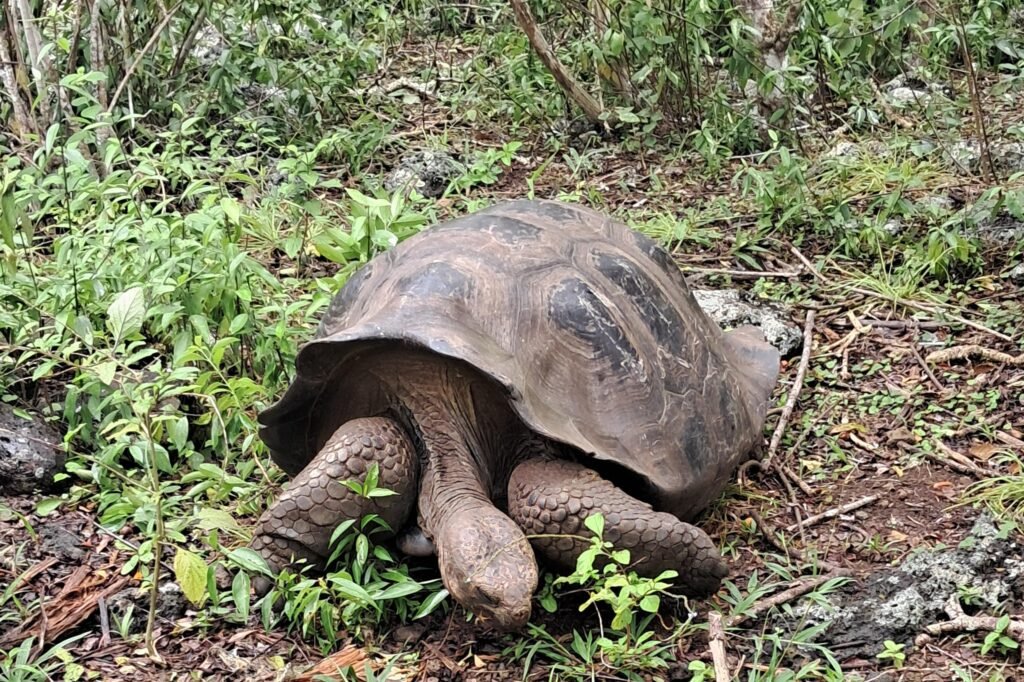
- La Galapaguera de Cerro Colorado: Educational visit to the semi-natural tortoise reserve aimed at preserving the island’s distinct tortoise subspecies
- Playa Puerto Chino: Relaxation and wildlife spotting at an isolated cove framed by volcanic rock formations
- Inclusions: 3 nights of comfortable island accommodation, daily breakfasts, expert local guide service, equipment rental, and island land transport
Ideal for
Solo travellers, short-stay visitors, or travellers seeking an authentic, single-base expedition that minimises open-ocean transit while maximising time on land.
Local insight
When hiking up to Laguna El Junco in the highlands, temperatures can drop significantly compared to the tropical coast, accompanied by dense garúa (coastal mist). Pack a lightweight waterproof jacket and wear sturdy footwear with good tread for slippery volcanic soil.
The Ecuadorian Sierra.
Get lost in the hills
Sustainable overland and inter-island budget expedition
Rating & reviews
(22+ verified reviews on TourRadar)
Why this tour stands out
This 8-day expedition demonstrates that exploring the Galápagos Islands on an overland, land-based route can be economically accessible without sacrificing environmental responsibility or expert guiding.
By utilising public ferry links, local driver networks, and community-run guesthouses, this itinerary maintains a small environmental footprint and delivers an authentic view of daily island life.
Spanning Santa Cruz, Isabela, and concluding or commencing on San Cristóbal, the trip provides a full cross-section of the archipelago’s varied geology.
You will experience everything from the active volcanic landscapes of Isabela to the historical coastal settlements of San Cristóbal, accompanied throughout by certified Galápagos National Park guides.
Key highlights
- Three-Island Coverage: Comprehensive land-based routing across Santa Cruz, Isabela, and San Cristóbal
- Sierra Negra Volcano Trek: Hike across raw basalt fields and active fumaroles in the Isabela highlands
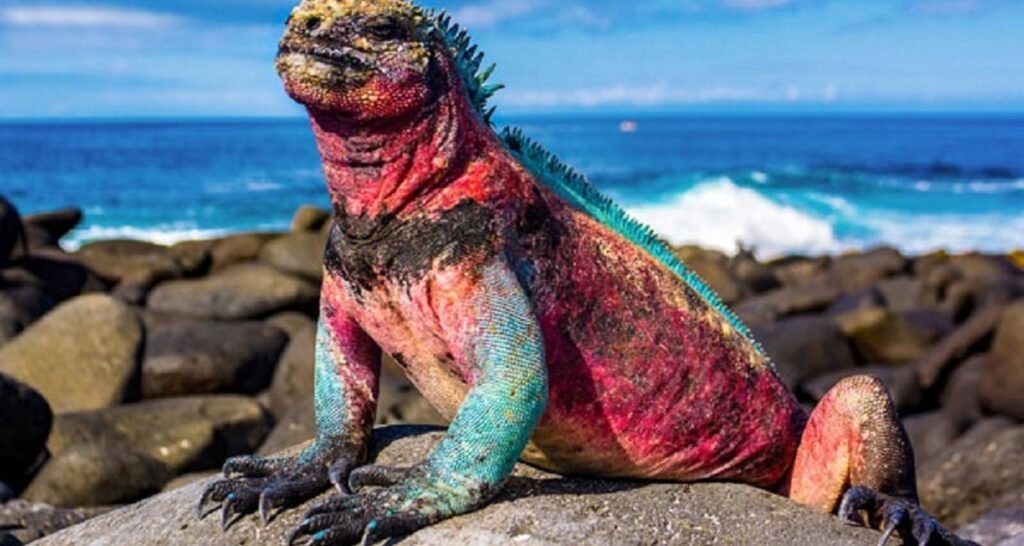
- Los Tunales / Tintoreras Exploration: Snorkelling through calm, crystal-clear lava arches inhabited by sea turtles and Galápagos penguins
- Interpretation Centre San Cristóbal: Detailed exposition covering the natural history, human settlement, and conservation challenges of the islands
- Inclusions: 7 nights guesthouse accommodation, daily breakfasts, inter-island ferry transport, guided excursions, and airport transfers
Ideal for
Budget-conscious travellers, student researchers, and autonomous backpackers who prioritise slow travel, local community interaction, and value over high-end commercial luxury.
Local insight
The Galápagos National Park entrance fee (currently $200 USD for most international adult visitors, subject to park regulation updates) and the Transit Control Card ($20 USD) must be paid in cash at Quito or Guayaquil airport prior to boarding your flight to San Cristóbal or Baltra. Keep this cash separate from your main travel funds.
Santa Cruz Island & Academia Bay overland circuit
Rating & reviews
(25+ verified reviews on GetYourGuide)
Why this tour stands out
This 4-day, 3-night land-based itinerary focuses intensely on the terrestrial ecology and coastal marine sites surrounding Santa Cruz Island and Academia Bay (Bahía Academia). Operating as a small-group expedition based out of Puerto Ayora, it removes the friction of coordinating piecemeal transfers while providing full-board dining and seamless logistics from Baltra Island Airport (GPS).
The itinerary balances wildlife education with coastal adventure. On land, you explore the giant tortoise sanctuaries in the lush Santa Cruz highlands and visit the Charles Darwin Research Station to learn about ongoing conservation efforts.
On the water, a dedicated three-hour boat circuit navigates Academia Bay to visit Los Perros Beach—a haven for marine iguana colonies—before continuing past nesting ledges of blue-footed boobies and down into the crystal-clear brackish canyon of Las Grietas for snorkelling.
With full-board meals included throughout your stay, it offers a structured, value-focused base for exploring the central Galápagos.
Key highlights
- Academia Bay Marine Exploration: Navigating coastal coves around Puerto Ayora by boat to observe blue-footed boobies, resting reef sharks, and marine iguana colonies along Los Perros Beach
- Las Grietas Snorkelling: Swimming through a dramatic, volcanic canyon filled with brackish, crystal-clear water and endemic marine species
- Santa Cruz Highland Giant Tortoises: Trekking through humid highland pastures on a private ranch where Galápagos giant tortoises roam freely in their natural habitat
- Volcanic Lava Tunnels: Guided walk through subterranean basalt tubes formed by prehistoric molten lava flows beneath Santa Cruz
- Charles Darwin Research Station: Educational tour covering giant tortoise breeding programs, land iguana rehabilitation, and archipelago conservation history
- Tortuga Bay Trails: Walking through giant Opuntia cactus forests leading to pristine white-sand beaches frequented by marine iguanas
- Inclusions: 3 nights private hotel accommodation in Puerto Ayora, full-board meals (3 breakfasts, 2 lunches, 3 dinners), Baltra Airport pickup and drop-off, guided excursions, and boat transport
Ideal for
Independent travellers, wildlife enthusiasts, and first-time visitors seeking a structured, full-board land-based expedition on Santa Cruz Island without the higher costs or confinement of a liveaboard cruise vessel.
Local insight
Although airport transfers to Puerto Ayora are coordinated by the operator, carry small US dollar notes ($5 to $10 cash per person) for the short public barge across the Itabaca Channel and the local Lobito airport bus, which are paid directly on site. Furthermore, note that soft drinks and alcoholic beverages outside scheduled full-board meals are excluded, so keeping cash handy for local fruit juices and bottled water in Puerto Ayora is essential.
The Ecuadorian Amazon.
The most biodiverse place in the world
Our practical San Cristóbal multi-day expedition planning guide
Planning a multi-day overland and island-hopping expedition across San Cristóbal and the wider Galápagos archipelago requires deliberate preparation. To ensure your journey runs smoothly while respecting regional communities and conservation guidelines, keep the following practical advice in mind:
Pack light with soft-sided luggage
Inter-island speedboats and small inter-island aircraft have strict luggage weight limits (typically 10–15 kg per checked bag). Rigid hard-shell suitcases are difficult to stow in boat holds or light transport vans. Opt for a durable, weather-resistant duffel bag or medium adventure backpack, paired with a lightweight 20-litre daypack.
Secure active travel insurance
Multi-day itineraries in remote archipelago settings involve marine transit, open-water snorkelling, and highland hiking. Ensure your travel insurance policy explicitly covers adventure activities, marine transport, and emergency medical evacuation from island provinces back to mainland hospital facilities in Quito or Guayaquil.
Navigate single supplements wisely
If travelling solo, many land-based multi-day tour operators offer room-share pairings with fellow travellers of the same gender to help you avoid single supplement fees. If you prefer a private room, book early, as small boutique eco-lodges on San Cristóbal have limited room inventories.
Understand local tipping practices
Tipping is an integral part of supporting local livelihoods in the Galápagos tourism ecosystem. As a general guideline, budget approximately $10–$15 USD per day for your lead Naturalist Guide, and $5–$8 USD per day for ship/bus drivers and support crews, handed directly to them in cash at the conclusion of your multi-day itinerary.
Strict ecological compliance
The Galápagos ecosystem is extremely vulnerable to invasive species. Never bring fresh food, seeds, or organic matter onto the islands. Always clean your hiking boots and daypacks before departing mainland Ecuador. While on the islands, maintain a minimum distance of two metres from all wild animals, never use flash photography, and strictly follow the Leave No Trace ethos.
The Ecuadorian Coast.
Where you’ll find the very best food
Chart a mindful expedition across the archipelago
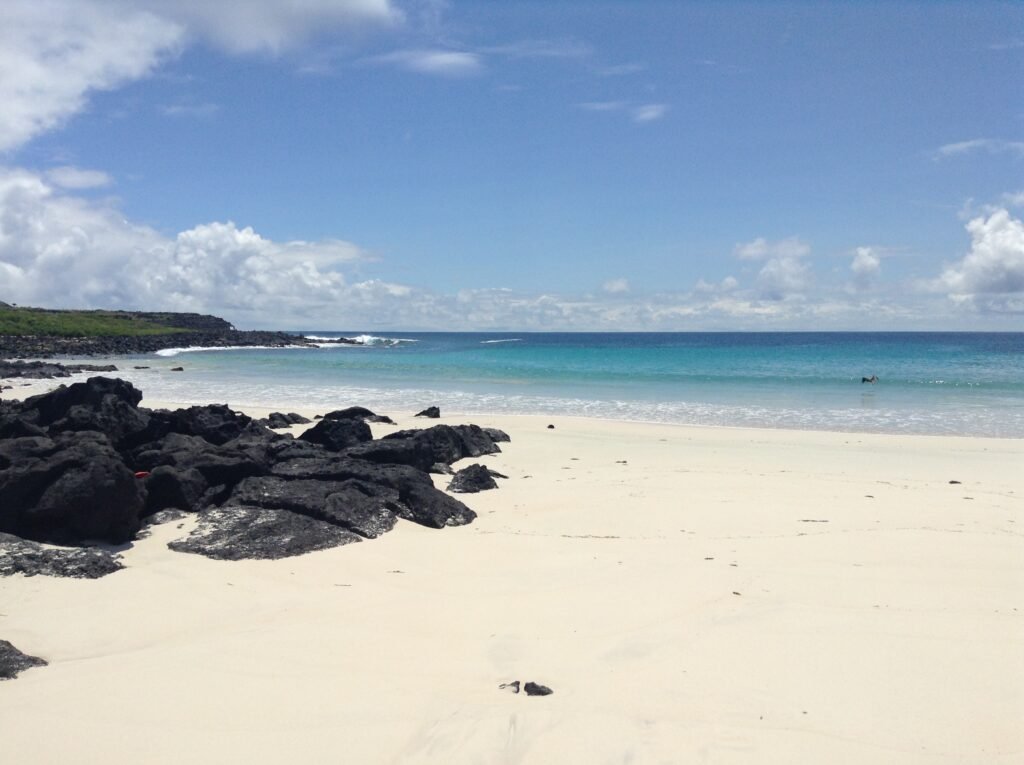
Exploring the Galápagos Islands should never feel like a high-speed, tick-box exercise. The true magic of San Cristóbal and its surrounding oceanic reaches lies in slowing down — watching sea lions snooze along the harbour front of Puerto Baquerizo Moreno, listening to the trade winds rustle through highland scalesia forests, or paddling a kayak past blue-footed boobies perching on sun-baked lava shelves. By opting for a land-based multi-day expedition, you grant yourself the time required to understand how these delicate ecosystems function.
Crucially, structured land-based travel bridges the gap between logistical ease and local responsibility. Navigating strict National Park regulations, securing boat permits, and booking inter-island maritime transits can overwhelm independent planning. Joining a small-group circuit guarantees access to certified local Naturalist Guides while ensuring your travel expenditure flows directly into island communities rather than staying on offshore cruise liners.
Whether you choose a focused four-day deep dive into San Cristóbal’s volcanic trails or an expansive ten-day circuit linking Santa Cruz and Isabela, the secret to a rewarding trip lies in thorough preparation. Pack light with soft duffel bags, prepare for open-water sea crossings, respect the strict two-metre wildlife distance rule, and embrace the rhythms of island life.
The Enchanted Isles remain one of the world’s last true ecological sanctuaries. Approaching them with curiosity, patience, and a commitment to low-impact travel ensures that this extraordinary volcanic landscape remains vibrant and protected for generations of adventurous travellers to come.
Affiliate Disclaimer: Some of the links on Wheely Tyred are affiliate links. If you click through and make a booking or purchase, we may earn a small commission at no extra cost to you. We only recommend gear, tours, stays, and services we genuinely use, trust, and stand behind — our editorial independence always comes first. These commissions help keep our independent cycling guides and travel stories free to read. Thanks for supporting the ride!
Frequently asked questions about the best San Cristóbal multi-day tours
All international adult visitors must pay the Galápagos National Park entry fee of $200 USD in cash upon arrival at the airport (San Cristóbal or Baltra), alongside the $20 USD Transit Control Card (INGALA) payable at Quito or Guayaquil airport prior to departure. Because ATMs on San Cristóbal can run out of cash unexpectedly, bring adequate US dollar cash in small denominations ($5, $10, and $20 notes) to cover park fees, tipping, and daily expenses.
Inter-island speedboats (public ferries) run daily between San Cristóbal and Santa Cruz, as well as between Santa Cruz and Isabela, taking roughly two hours per leg across open ocean swell. To minimise seasickness, sit towards the stern (rear) of the vessel where movement is gentlest, wear a light windbreaker to shield against ocean spray, and take motion sickness medication prior to boarding if you are susceptible.
Land-based multi-day tours offer greater autonomy, more spacious accommodation, and closer integration with island communities. Staying in family-run guesthouses on San Cristóbal, Santa Cruz, or Isabela ensures your travel spending directly supports local businesses, while still granting full access to iconic marine and terrestrial sites through daily guided excursions.
Soft-sided duffel bags or medium backpacks are strongly recommended over hard-shell suitcases. Inter-island speedboat holds and small transfer vehicles have tight space limitations, and soft bags are much easier to stow. Aim to keep your main bag under 15 kg, and bring a comfortable 20-litre daypack for daily hiking and snorkelling outings.
Quito sits at an altitude of 2,850 metres above sea level, whereas the Galápagos Islands are at sea level. If you spend time in Quito or travel to the Mindo cloud forest before flying to San Cristóbal, stay well-hydrated and allow your body a day or two to acclimatise to avoid altitude-induced fatigue or headaches before descending to tropical coastal climates.
The Galápagos National Park Directorate enforces strict conservation rules. Visitors must stay on designated marked trails, maintain a minimum distance of two metres (six feet) from all wildlife, avoid flash photography, and never bring food or organic matter into natural zones. All guided excursions must be accompanied by a licensed Galápagos National Park Naturalist Guide.
Ecuador.
Pure wonder on the equator.