
Alexander von Humboldt in Ecuador / The Prussian polymath who mapped the Andes
Discover the history of Alexander von Humboldt in Ecuador, his record-setting Chimborazo climb, and the birth of modern ecology
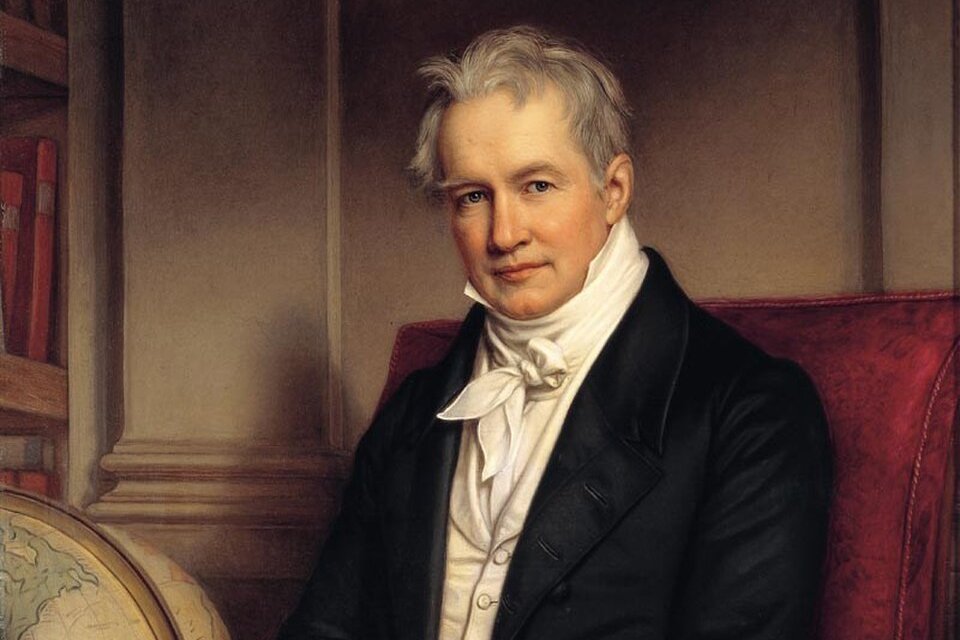
How an 1802 expedition reshaped global views of the natural world

BEN FINCH
In June 1802, a small group of travellers trudged across the icy, exposed slopes of Mount Chimborazo in high-altitude Ecuador. Shivering in thin woollen coats, their boots falling apart and blood oozing from their gums in the thin mountain air, they pushed upward through thick fog. Leading the party was a 32-year-old Prussian naturalist named Alexander von Humboldt.
At the time, Chimborazo was widely believed to be the highest mountain on Earth. Although Humboldt and his companions were forced to turn back just short of the summit due to an impassable crevasse, the altitude they reached—approximately 5,878 metres above sea level—stood as a mountain-climbing record for Europeans for decades.
Yet, the physical feat was only a footnote compared to the intellectual revolution that took place on those slopes. Humboldt did not merely climb mountains; he measured them, sketched them, and connected their weather patterns, soil types, and plant life into a single unified vision of the natural world.
Humboldt’s journey through Ecuador altered human understanding of geography, plant ecology, and climate, establishing principles that continue to guide modern environmental science and adventure travel across the Andes.
Key takeaways from Humboldt’s Andean journey
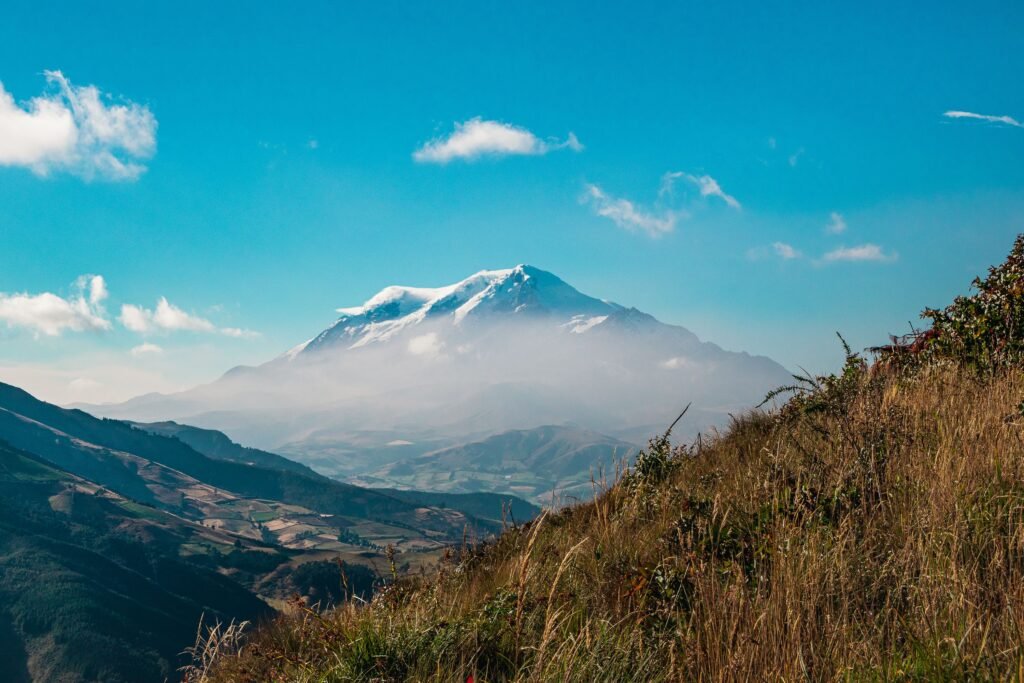
Alexander von Humboldt’s 1802 expedition through Ecuador laid the groundwork for modern ecological science and mapped the dramatic topography of the high Andes. From record-setting mountain ascents to pioneering botanical discoveries, here are the essential elements of his legacy.
- Chimborazo ascent: Reached a historic altitude of nearly 5,900 metres on Ecuador’s highest peak, setting a European altitude record that stood for decades
- The Naturgemälde: Created the world’s first visual map of microclimates and plant zones, demonstrating how elevation dictates vegetation patterns
- Avenue of the Volcanoes: Coined the enduring name for Ecuador’s central inter-Andean corridor, flanked by twin rows of formidable snow-capped peaks
- Early climate science: Documented how human activity, including deforestation and intensive agriculture, directly damages fragile local ecosystems
- The Humboldt Current: Gave his name to the cold Pacific Ocean current that sweeps along the South American coast, shaping the climate of mainland Ecuador and the Galápagos Islands
- Páramo ecosystems: Detailed the unique botanical richness of Ecuador’s high-altitude grasslands, highlighting their crucial role in regional hydrology
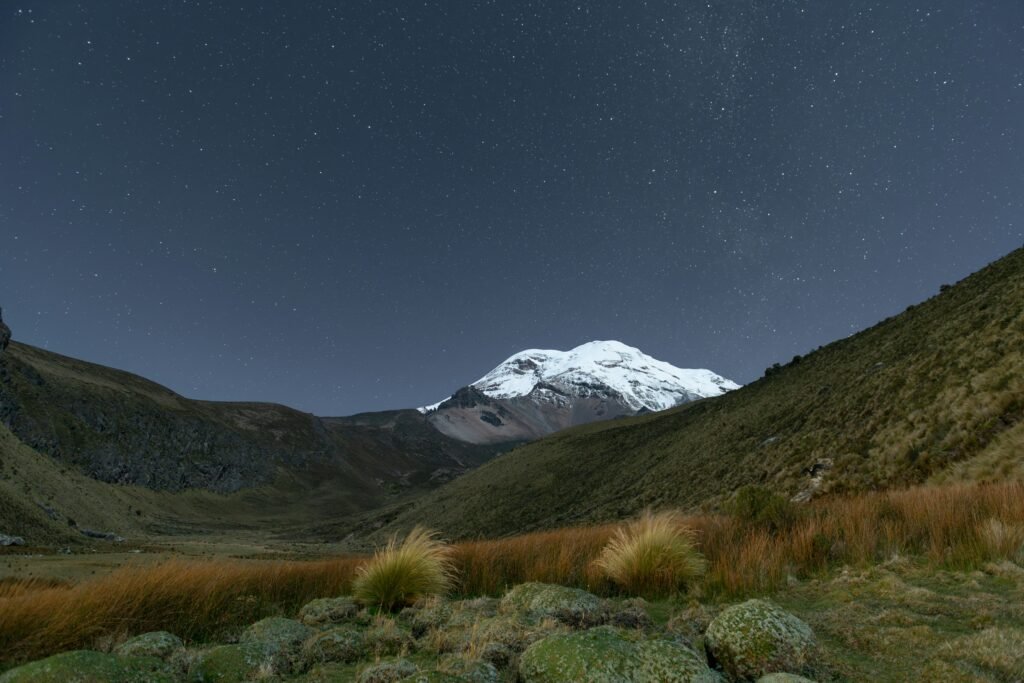
Volcán Chimborazo.
Stand at the furthest point from the centre of the Earth
Early life and the great American expedition
Born in Berlin in 1769 into a wealthy Pomeranian family, Alexander von Humboldt was educated in finance, mining engineering, and foreign languages. From an early age, he possessed an insatiable curiosity about the world outside Europe. After inheriting a substantial fortune following his mother’s death, Humboldt financed a self-funded scientific journey to the Americas.
Accompanied by the French botanist Aimé Bonpland, Humboldt secured unprecedented permission from King Charles IV of Spain to explore the Spanish colonies in South and Central America.
The duo embarked from Corunna, Spain, in June 1799, carrying a vast array of cutting-edge scientific instruments: barometers, thermometers, sextants, cyanometers to measure the blueness of the sky, and magnetism detectors.
After conducting extensive research in Venezuela and along the Orinoco River, Humboldt and Bonpland arrived in the territory of present-day Ecuador in early 1802. Travelling down the central corridor of the Andes, they entered a landscape defined by towering snow-capped peaks, deep river gorges, and lush inter-Andean valleys.
The corridor of fire and the Avenue of the Volcanoes
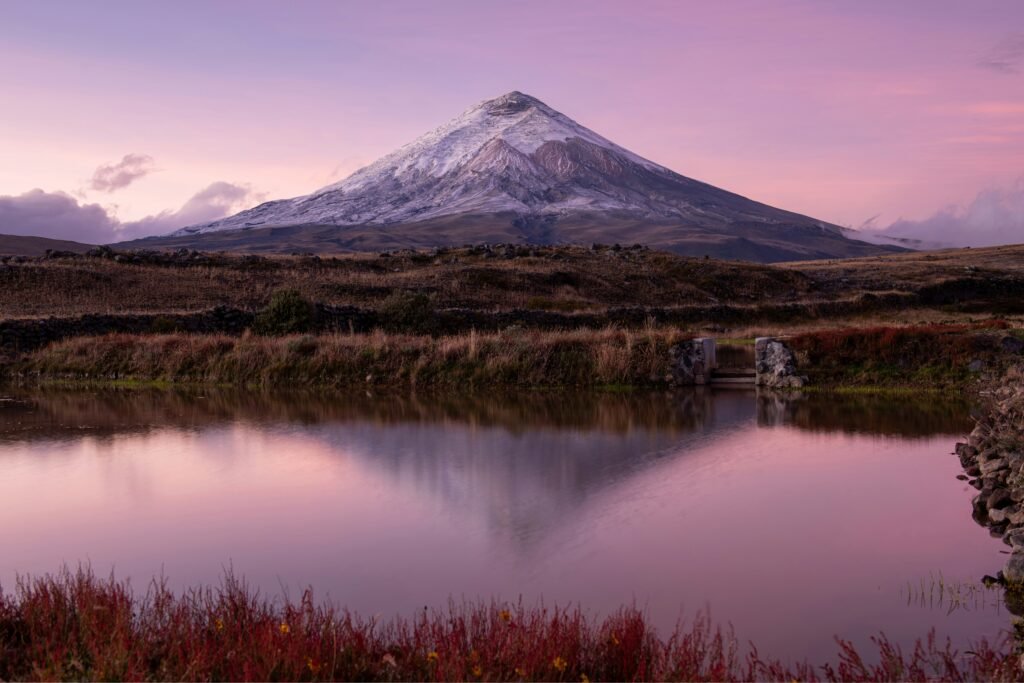
As Humboldt and Bonpland journeyed through the central Andean valley towards Quito, they encountered a striking geographical feature: two parallel mountain chains bristling with active and dormant volcanoes. Mesmerised by the dramatic topography, Humboldt famously coined the phrase La Avenida de los Volcanes—the Avenue of the Volcanoes.
During their months in the region, the pair explored several major peaks, including Pichincha, Cotopaxi, and Tungurahua. Humboldt was fascinated by volcanology, risking his life to peer into active craters and collect rock samples. He recognised that volcanoes were not isolated geological oddities but were connected along subterranean fault lines stretching across continents.
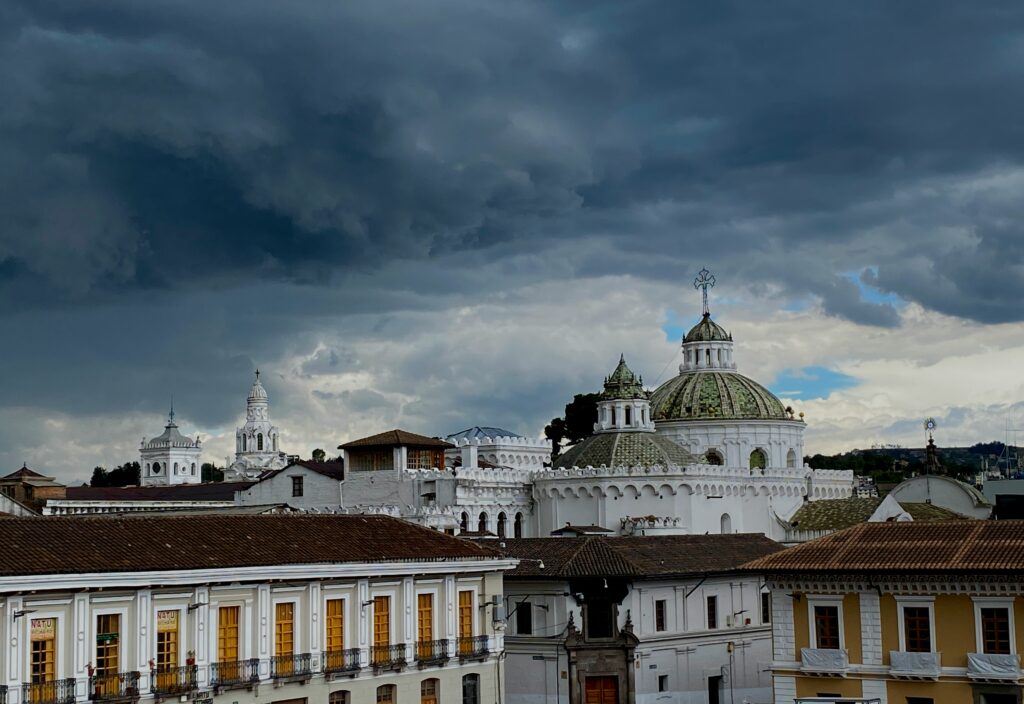
In Quito, the capital of the Audiencia de Quito within the Spanish Empire, Humboldt spent time collaborating with local intellectuals, including the Ecuadorian nobleman and geographer Carlos de Montúfar. Montúfar was so inspired by Humboldt’s work that he joined the expedition, accompanying Humboldt and Bonpland across Ecuador, Peru, Mexico, and the United States.
The Ecuadorian Sierra.
Get lost in the hills
Scaling Chimborazo and the birth of the Naturgemälde
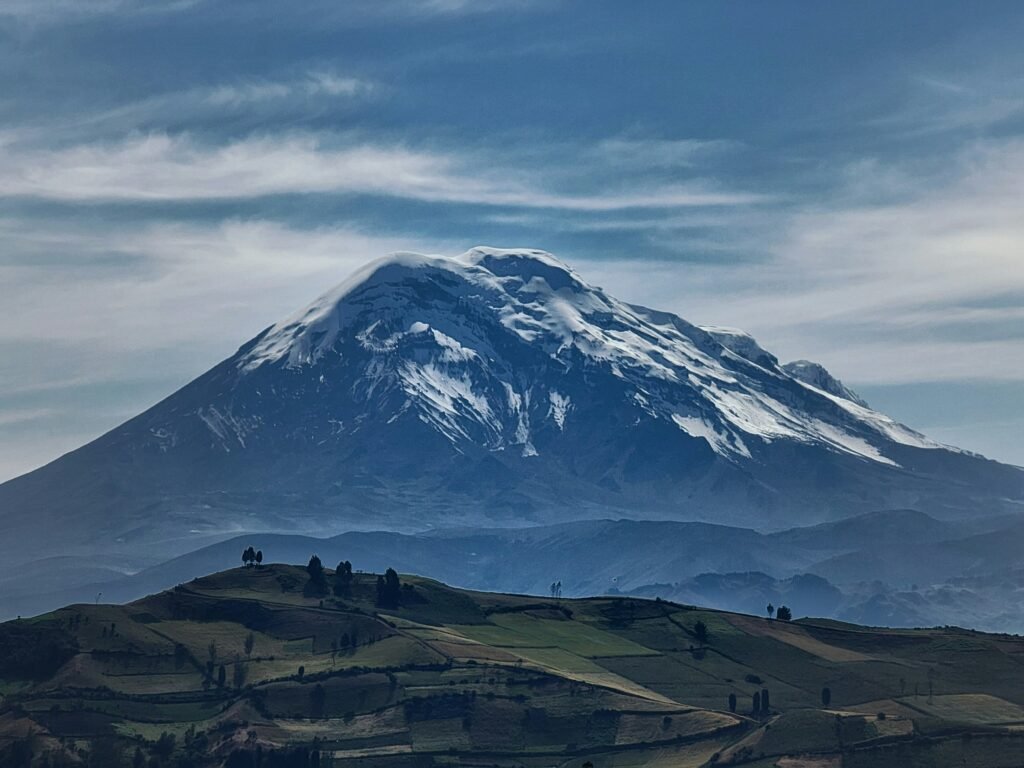
The defining moment of Humboldt’s time in Ecuador occurred on 23 June 1802 on the flanks of Chimborazo. Standing at 6,263 metres, the inactive stratovolcano towers above the high-altitude grasslands known as the páramo.
Equipped with basic leather boots and mercury barometers, Humboldt, Bonpland, and Montúfar ascended the volcano without modern climbing gear or oxygen. Despite suffering from acute altitude sickness, dizziness, and extreme cold, Humboldt took precise scientific measurements at regular intervals, recording air temperature, barometric pressure, humidity, and the specific plant species growing at each altitude.
This gruelling ascent inspired Humboldt’s most famous scientific diagram: the Naturgemälde (literally, a picture of nature). The illustration depicts a cross-section of Chimborazo, mapping plant species relative to elevation and climate zones. It showed for the first time that vegetation changes systematically as altitude increases, mirroring the changes observed when travelling from the equator toward the poles.
Through this single mountain in Ecuador, Humboldt demonstrated that nature is an interconnected global web, where climate, elevation, geology, and biology interact seamlessly. This insight formed the foundation of modern biogeography and environmental science.
Humboldt’s lasting legacy in Ecuador and global history
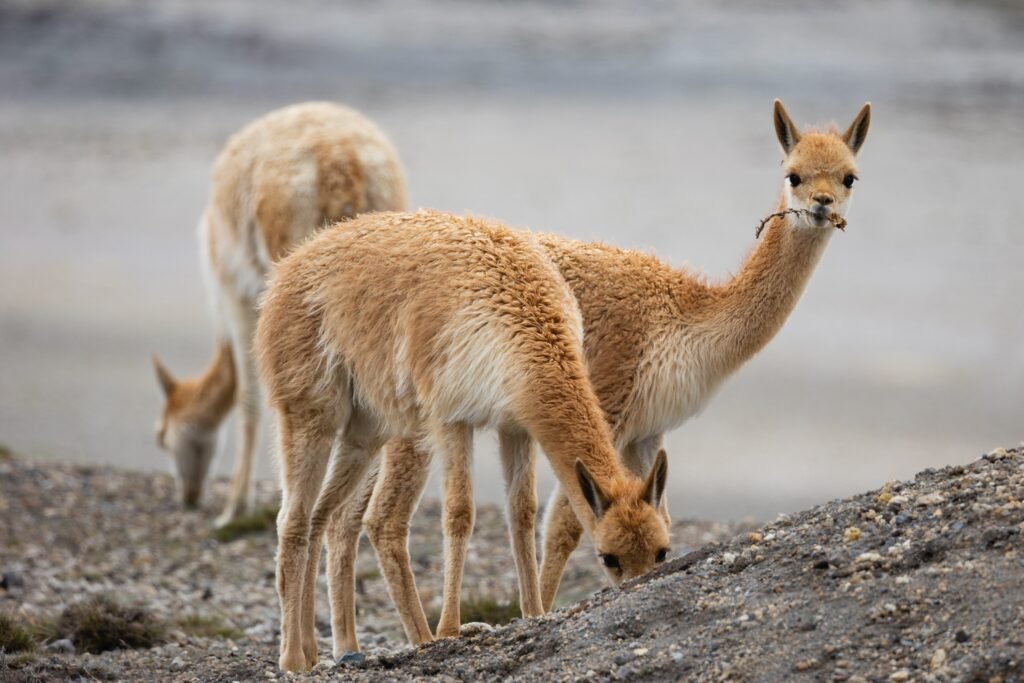
Humboldt’s impact on Ecuador extends far beyond botanical drawings and mountain measurements. His observations on the environment were remarkably ahead of their time. He was one of the first thinkers to warn of human-induced climate change, noting how deforestation and industrial farming damaged local microclimates and eroded topsoil.
Politically, Humboldt’s writings played an indirect role in shaping the future of South America. After returning to Europe, he met a young Simón Bolívar in Paris. Bolívar, who would later lead the independence movement across northern South America, credited Humboldt with opening Europe’s eyes to the immense wealth, beauty, and potential of the South American continent. Bolívar famously remarked that Humboldt was the true discoverer of the New World, as his work uncovered its natural soul.
In recognition of his contributions, Humboldt’s name is woven into the geography and culture of the region:
- The Humboldt Current: The cold ocean current sweeping northwards along the west coast of South America, which regulates Ecuador’s coastal climate and Galápagos marine life, was named in his honour
- Ecosystem conservation: His detailed descriptions of the fragile páramo grasslands helped establish their recognition as vital water catchments and biodiversity hotspots in the high Andes
- Geographical names: Mountains, towns, parks, and schools across South America bear his name
The Ecuadorian Amazon.
The most biodiverse place in the world
Explore Humboldt’s route through Ecuador today
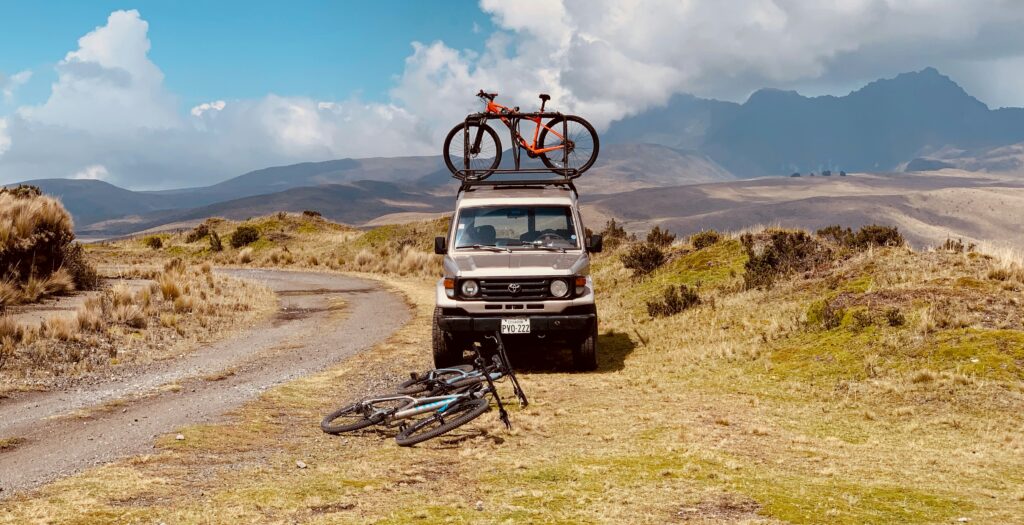
For modern travellers, cyclists, and history enthusiasts, following in Humboldt’s footsteps provides an unforgettable way to experience Ecuador’s rich landscapes and heritage. The central Andean corridor remains one of the world’s great overland journeys.
Cycling or driving along the Avenue of the Volcanoes offers sweeping views of Cotopaxi’s perfect cone and the massive bulk of Chimborazo. Passing through high-altitude páramo reserves, visitors can observe the very plant species—such as the giant Espeletia and low-lying alpine herbs—that Humboldt painstakingly catalogued in 1802.
The city of Quito and surrounding highland haciendas still preserve historical markers and colonial architecture from the era of Humboldt’s visit, bridging the gap between 19th-century scientific exploration and contemporary outdoor travel.
A legacy written into the valleys
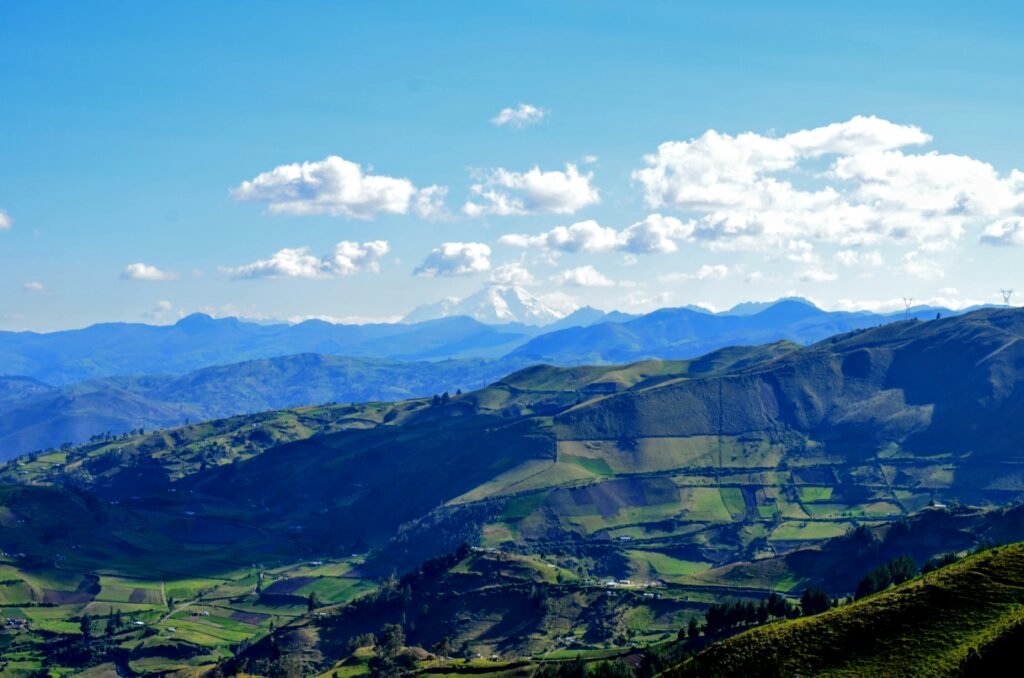
Alexander von Humboldt arrived in Ecuador as a curious investigator and left as a visionary whose ideas transformed human understanding of the natural world. By studying the heights of Chimborazo and the volcanic valleys of the Andes, he revealed that nature is not a collection of separate parts, but a dynamic, living organism.
For anyone exploring Ecuador today, Humboldt’s spirit lives on in every mountain pass, every windswept páramo, and every view across the Avenue of the Volcanoes.
The Galápagos.
Ecuador’s Enchanted Isles
Stand where science met the mountain sky
Read this far?
Tracing Alexander von Humboldt’s route across Ecuador is far more than an exercise in historical nostalgia. Whether cycling the undulating dirt roads along the base of Cotopaxi or hiking into the crisp wind of the high páramo around Chimborazo, you are moving through the very landscape that birthed modern ecological thought.
The inter-Andean corridor remains a masterclass in geographical grandeur, offering independent travellers an intimate look at terrain that changed how humanity understands the living Earth.
The brilliance of Humboldt lay in his ability to look past isolated mountain peaks and see the invisible threads connecting soil, air, water, and life. That holistic perspective feels remarkably current today. As you navigate the high passes, watching cloud forests give way to bleak, beautiful alpine grasslands, the spatial patterns he mapped over two centuries ago unfold before your eyes in real time.
Ecuador makes it easy to step straight into this living history. With modest planning, reliable local bus networks, and a willingness to tackle high elevations under your own power, you can experience the wild heart of the Andes much as Humboldt did—with muddy boots, an open mind, and a deep appreciation for the natural world.
Affiliate Disclaimer: Some of the links on Wheely Tyred are affiliate links. If you click through and make a booking or purchase, we may earn a small commission at no extra cost to you. We only recommend gear, tours, stays, and services we genuinely use, trust, and stand behind — our editorial independence always comes first. These commissions help keep our independent cycling guides and travel stories free to read. You can also buy me a coffee here — thanks for supporting the ride!
The Ecuadorian Coast.
Where you’ll find the very best food
Frequently asked questions about Alexander von Humboldt in Ecuador
Chimborazo sits within the Reserva de Producción de Fauna Chimborazo, easily accessible by road from Riobamba or Ambato. Independent travellers can take a local bus to the park entrance and hike up to the Carrel Hut at 4,800 metres, or push further to the Whymper Hut at 5,000 metres. Proper acclimatisation in Quito or Cuenca is essential before attempting high-altitude trekking.
The term describes the central inter-Andean valley running north to south between Quito and Cuenca, framed by mountain peaks including Cotopaxi, Illiniza, and Chimborazo. The region can be explored via the Pan-American Highway by bus, bike, or car, stopping off at mountain towns such as Latacunga, Baños, and Machachi.
No, Humboldt and his team were stopped at approximately 5,878 metres by a deep, impassable crevasse and severe altitude sickness. However, the elevation they reached stood as a European climbing record for several decades, and the observations made during the attempt led directly to his groundbreaking Naturgemälde diagram.
The páramo is a high-altitude neotropical grassland located between the treeline and the snowline, acting like a giant sponge that retains water and releases it slowly into regional river basins. Humboldt was among the first scientists to document its endemic plant life, and today it remains vital for freshwater security across the Ecuadorian Andes.
During his expedition, Humboldt struck up a lasting connection with local figures, including Ecuadorian geographer Carlos de Montúfar, who joined his journey. Humboldt’s later meetings with Simón Bolívar in Europe helped ignite international interest in South American independence, as his writings revealed the vast cultural and environmental wealth of the continent.
Ecuador.
Pure wonder on the equator.


