Best SIM cards & eSIMs for Ecuador (2027 edition) / Local networks, coverage & airport survival guide
Practical Mobile Connectivity in Ecuador / 2027 Landscape

Stay online wherever you are in Ecuador
BEN FINCH
Navigating mobile connectivity across Ecuador in 2027 requires understanding a landscape that balances rapid digital modernisation with distinct geographical hurdles.
Whether you are cycling through the volcanic mountain passes of the Andean Sierra, navigating the urban corridors of Quito and Guayaquil, exploring the Amazonian rainforest, or sailing between the volcanic islands of the Galápagos Archipelago, reliable mobile data is no longer a luxury—it is an essential tool for navigation, safety, and logistical coordination.
Ecuador’s fully dollarised economy simplifies budgeting for international travellers. Unlike navigating fluctuating exchange rates elsewhere in South America, mobile plans in Ecuador are priced cleanly in US dollars.
In 2027, the market presents two distinct entry points for foreign visitors: digital eSIM profiles installed on your smartphone prior to departure, and traditional physical prepaid SIM cards purchased after clearing customs.
For travellers prioritising immediate connectivity upon landing, digital travel eSIMs have become the standard solution. Installed in minutes from home, an eSIM allows your smartphone to register onto local networks the moment your flight touches down at Mariscal Sucre International Airport (UIO) in Quito or José Joaquín de Olmedo International Airport (GYE) in Guayaquil. This eliminates the need to queue at airport kiosks, search for physical SIM removal tools, or handle local cash immediately upon arrival.
However, physical prepaid SIM cards bought directly from local network operators retain a significant cost advantage for heavy data users and long-term travellers. While travel eSIMs charge a premium for global convenience, local physical SIM cards deliver far higher data allowances for every dollar spent.
Essential takeaways for the Ecuadorian road

Navigating Ecuador’s varied topography demands a clear strategy for staying connected on the move. Here is everything you need to know before powering up your device across the Sierra, La Costa, El Oriente, and the Galápagos.
- The Airport Trap: Avoid buying physical SIM cards at Quito (UIO) or Guayaquil (GYE) arrival halls where third-party vendor markups reach 400 per cent; head into the city centre for $4.00–$5.00 USD official starter prices
- Network Supremacy: Claro (CONECEL) holds 60 per cent market share and offers the only consistent cellular signal through high-altitude páramo mountain passes, Andean cycling routes, and Amazonian gateways
- Urban & Coastal Speed: Tigo delivers rapid 4G LTE and emerging 5G trial speeds across Quito, Guayaquil, Cuenca, and along the surf breaks of the Ruta del Spondylus
- Pre-Departure Simplicity: Travel eSIMs like Yesim and Airalo eliminate physical SIM swaps and passport queues, providing immediate data the moment your plane touches down
- ARCOTEL Passport Rules: Physical SIM cards must be registered against your physical passport at an official operator store or via email to avoid automatic line deactivation within 48 hours
- Maritime Connectivity: Standard SIMs lose signal 3 to 5 nautical miles off the Galápagos coast; specialised GigSky eSIMs bridge the gap for open-water expedition cruises
- Dual-SIM Balance: Keep your home physical SIM active for zero-cost 2FA banking SMS while routing cellular data through a low-cost local package or travel eSIM
The Galápagos.
Ecuador’s Enchanted Isles
The airport trap / Avoid international arrival kiosks
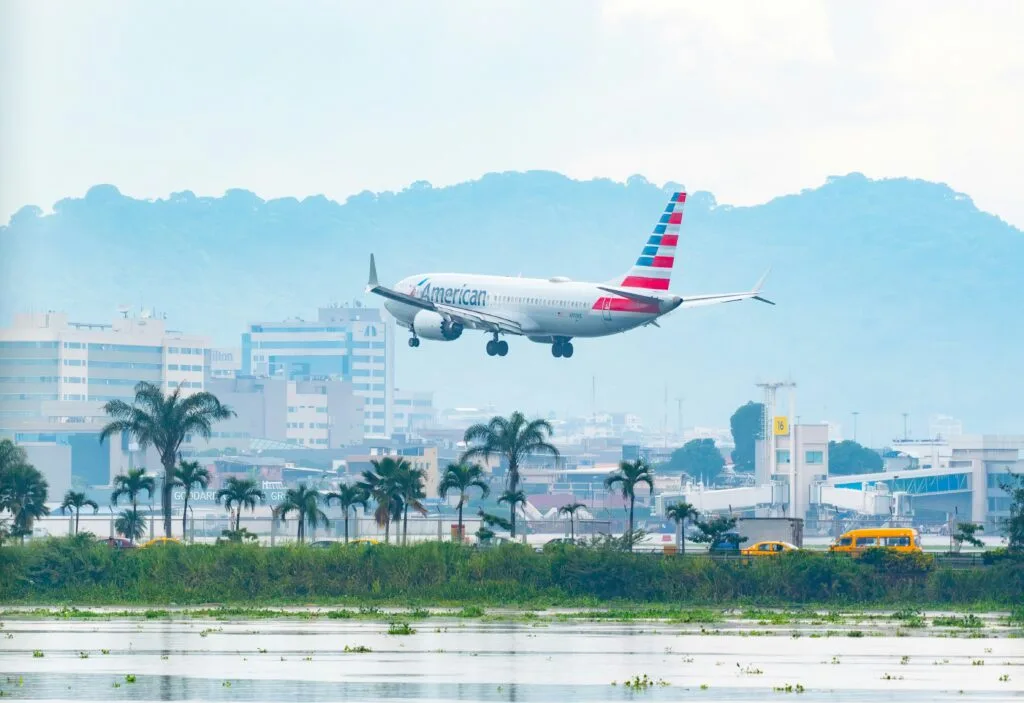
A critical logistical mistake made by first-time visitors arriving in Quito or Guayaquil is purchasing a physical SIM card inside the airport arrival halls.
Third-party electronics vendors and tourist information counters in international arrival areas target arriving passengers who are anxious to get connected, marking up basic prepaid starter packages by 400 to 500 per cent.
Third-party airport vendors will quote between $25.00 USD and $40.00 USD for basic tourist SIM packages containing no more than 4 GB to 8 GB of data.
By contrast, walking or taking an official taxi into downtown Quito (such as the La Mariscal or Carolina districts) or central Guayaquil allows you to enter an official Centro de Atención a Clientes (CAC) operated by Claro or Tigo.
There, an official starter SIM card (chip) costs exactly $4.00 to $5.00 USD, with generous 10 GB to 15 GB high-speed data bundles adding only $8.00 to $10.25 USD.
Regulatory overview / ARCOTEL passport registration rules
All physical SIM cards activated within national territory are strictly regulated by Ecuador’s telecommunications authority, the Agencia de Regulación y Control de las Telecomunicaciones (ARCOTEL). Under ARCOTEL regulations, every active SIM card must be bound to a verified identity document. For foreign visitors, this means your physical SIM card must be registered directly against your original physical passport.
While domestic citizens can register SIM cards instantly at street corner kiosks (tiendas) using their national identity card (cédula), non-resident foreign nationals attempting to register a passport at informal street stalls frequently experience total activation failures or automated line disconnections after 24 to 48 hours.
To ensure compliance with ARCOTEL policies and prevent service disruption, international travellers must complete passport registration either inside an official operator store or through verified remote digital channels provided directly by the network operator.
Compared to our 2026 baseline observations, network infrastructure across Ecuador in 2027 has seen substantial modernisation. The government’s continued spectrum allocation policies have allowed both primary private networks—Claro and Tigo—to expand 4G LTE carrier aggregation along major national transit routes, while accelerating localised 5G trial deployments across commercial hubs in Quito, Guayaquil, and Cuenca.
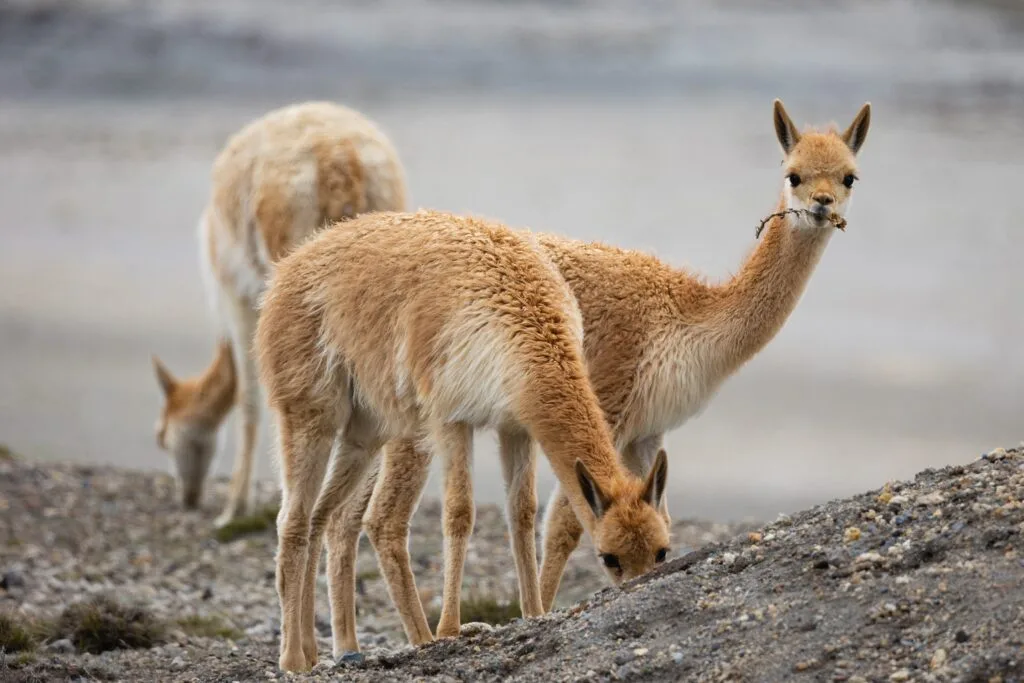
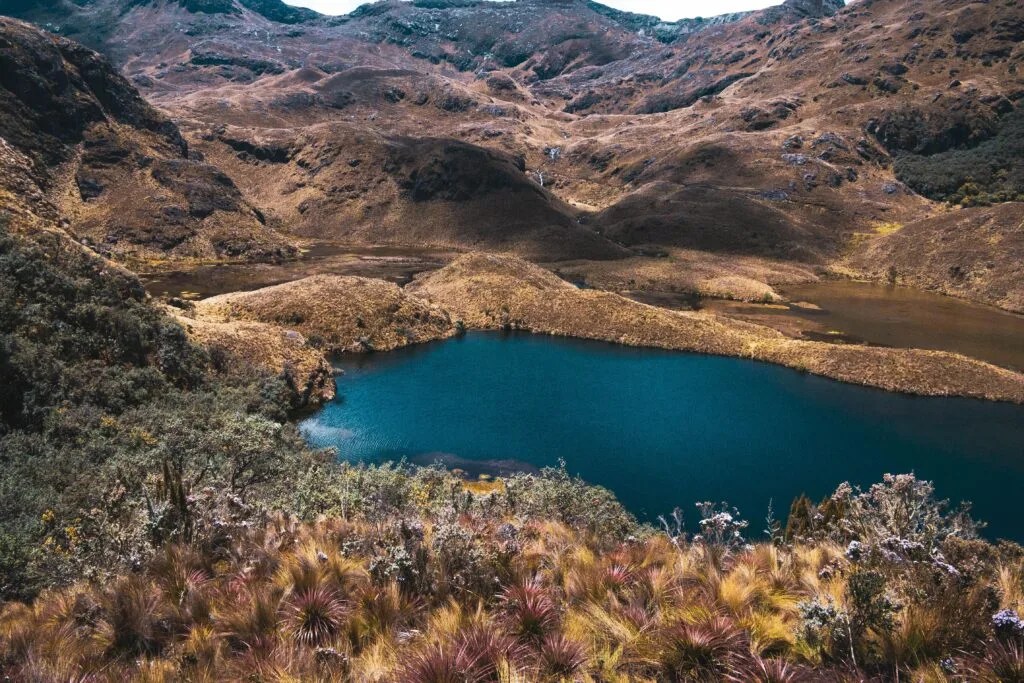
The Ecuadorian Sierra.
Get lost in the hills
The local network landscape / Physical prepaid SIMs
Physical prepaid SIM cards from local operators Claro (CONECEL) and Tigo (OTECEL) offer the most data per dollar in Ecuador. Claro provides unmatched coverage across the Andes, Amazon, and Galápagos, whereas Tigo offers exceptional 4G LTE and early 5G speeds across major urban centres and coastal highways.
Claro Ecuador / CONECEL

Claro, operated by América Móvil subsidiary CONECEL, remains the undisputed market leader in Ecuador, holding approximately 60 per cent of all cellular subscriptions nationwide. For travellers venturing beyond major metropolitan areas, Claro’s infrastructure investment makes it the most versatile local physical network.
2027 network analysis & coverage footprint
In our 2026 field testing, Claro maintained the only reliable cellular connection in the high páramo mountain passes and remote Amazonian transit routes; for 2027, network expansion along the Pan-American Highway (Route E35) has noticeably improved speed stability and reduced tower handoff drops.
Claro operates a comprehensive 4G LTE footprint using Band 4 (AWS 1700/2100 MHz) and Band 2 (1900 MHz). In major urban centres such as Quito, Guayaquil, and Cuenca, Claro has deployed 4G LTE-Advanced (LTE-A), delivering typical download speeds between 35 Mbps and 85 Mbps.
Claro prepaid packages / 2027
| Package Name | Price (USD) | Data Allowance | Validity Period |
| Chip Claro Starter | $4.00–$5.00 | Base Allowance | Initial Activation |
| Paquete Combo 5 | $5.00 | 5 GB–7 GB | 15 Days |
| Paquete Combo 10 | $10.00–$10.25 | 12 GB–15 GB | 30 Days |
For outdoor enthusiasts, bikepackers, and overland travellers, Claro is the choice for rural transit. It provides clear coverage through challenging terrain, including:
- The volcanic corridor surrounding Cotopaxi National Park and the Quilotoa Loop
- Amazonian gateway hubs including Tena, Puerto Misahuallí, and El Coca
- Populated island centres in the Galápagos Archipelago, specifically Puerto Ayora on Santa Cruz Island and Puerto Baquerizo Moreno on San Cristóbal Island
Claro pricing, starter kits & packages
Acquiring a physical Claro SIM card involves purchasing a Chip Claro starter kit.
- Starter Kit Cost: $4.00 USD to $5.00 USD at any official Centro de Atención a Clientes (CAC) or authorised distributor. This includes your new Ecuadorian telephone number (+593) and a small initial credit balance
- Standard Prepaid Data Bundles (Paquetes)
- $5.00 USD Package: Includes 5 GB to 7 GB of high-speed data, unlimited WhatsApp messaging (including voice/video calls), and local voice minutes, valid for 15 days
- $10.00 to $10.25 USD Package: Includes 12 GB to 15 GB of high-speed data, unlimited WhatsApp, social media data allowances (Facebook, Instagram, X), and national call minutes, valid for 30 days
Top-ups (recargas) can be purchased in cash or with a card at any pharmacy chain (Fybeca, SanaSana, Cruz Azul) or supermarket (Supermaxi, Mi Comisariato) nationwide by providing your assigned Ecuadorian phone number.
ARCOTEL passport registration workflow for Claro
To prevent your Claro SIM from being blocked by ARCOTEL regulatory filters after activation, you must complete foreign passport registration. There are two methods to accomplish this:
In-person registration (Recommended)
Visit an official Claro Centro de Atención a Clientes with your original physical passport. The customer service representative will scan your passport information page, record your entry stamp details, register the SIM card ICCID number directly against your passport profile, and verify network connectivity before you leave the counter.
Remote email registration workflow
If you purchase a Chip Claro from an authorised street retailer or supermarket where staff cannot process foreign passports, you must execute the official remote registration procedure immediately:
- Insert the Claro SIM card into your unlocked mobile device
- Dial *611# to initialise the activation menu and retrieve your assigned phone number
- Draft an email to Claro’s official foreign passport registration desk: activacionpasaporte@claro.com.ec
- Attach a clear, high-resolution colour scan or photo of your passport photo page, along with a photo of your Ecuadorian immigration entry stamp
- Include in the body of the email: Your full legal name, passport number, country of citizenship, and the 10-digit Claro telephone number assigned to your SIM card
- Activation confirmation is typically processed within 2 to 12 hours
The Ecuadorian Amazon.
The most biodiverse place in the world
Tigo Ecuador / OTECEL

Tigo, owned by Millicom subsidiary OTECEL, is Ecuador’s primary commercial competitor to Claro, holding approximately 30 per cent of national market share. Tigo has focused heavily on infrastructure quality in urban environments and primary coastal transit corridors. Movistar rebranded to Tigo at the end of September 2026, and little has changed for users so far.
Tigo prepaid packages / 2027
| Package Name | Price (USD) | Data Allowance | Validity Period |
| Chip Tigo Starter | $4.00–$5.00 | Base Allowance | Initial Activation |
| Combo Preplan $5 | $5.00 | 6 GB | 15 Days |
| Combo Preplan $10 | $10.00–$10.25 | 14 GB–15 GB | 30 Days |
2027 network analysis & urban performance
Tigo provides top-tier 4G LTE performance across metropolitan centres and along the Pacific coastline. Operating primarily on LTE Band 2 (1900 MHz) and Band 4 (AWS 1700/2100 MHz), Tigo’s network architecture in high-density areas often delivers faster, less congested download speeds than Claro during peak hours.
Key coverage strongholds include:
- Urban Hubs: Rapid 4G LTE and expanded 2027 5G trial spectrum across Quito, Guayaquil, and Cuenca
- The Pacific Coast (La Costa): Reliable coverage along the entire Ruta del Spondylus coastal highway, including Manta, Puerto López, Montañita, and Olón
However, Tigo’s signal drops off more rapidly than Claro’s when travelling into rural mountain passes in the Sierra or deep into the Amazon Basin.
On the Galápagos Islands, Tigo provides functional 3G/4G coverage in Puerto Ayora, but suffers from greater congestion than Claro during high tourist seasons.
Pricing & packages
Tigo prepaid SIM cards (Chip Tigo) mirror Claro’s base pricing structure, while frequently offering slightly higher promotional data allowances in urban regions:
- Starter Kit Cost: $4.00 USD to $5.00 USD at official Tigo service centres or authorised dealers
- Standard Prepaid Data Bundles (Preplanes)
- $5.00 USD Combo: Provides 6 GB of high-speed data, unlimited Tigo-to-Tigo calls, and zero-rated WhatsApp usage valid for 15 days
- $10.00 to $10.25 USD Combo: Provides 14 GB to 15 GB of high-speed data, unlimited social media allocations (WhatsApp, Instagram, Facebook), and national calling minutes valid for 30 days
Registration workflow
Similar to Claro, Tigo SIM cards must be registered against an official passport. Visiting an official Tigo customer service store (Centro de Experiencia Tigo) with your original passport is the safest way to guarantee long-term activation.
If registered through informal channels, Tigo’s automated system will flag non-verified passports within 48 hours, prompting a service suspension until physical passport verification is completed at an official store location.
CNT Móvil / Corporación Nacional de Telecomunicaciones
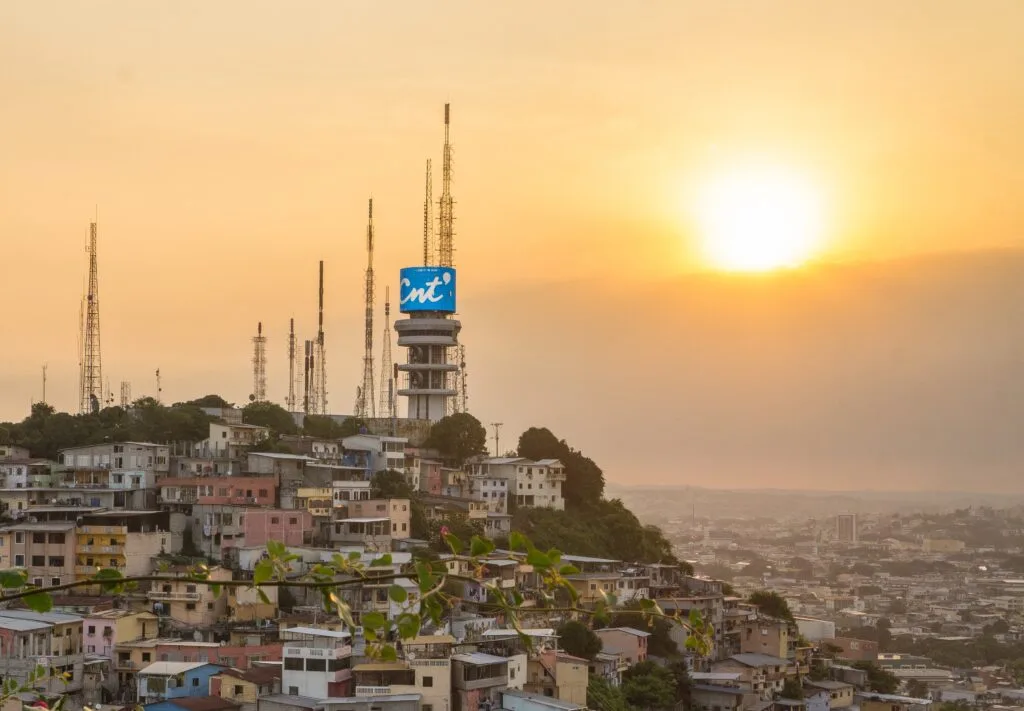
CNT Móvil is Ecuador’s state-owned telecommunications operator, occupying roughly 10 per cent of the national mobile market.
While CNT maintains extensive fixed-line fibre internet infrastructure across the country, its cellular service relies on a significantly smaller LTE tower network operating on Band 4 (AWS). In urban centres, CNT provides functional data services, but its network footprint rapidly degrades along rural highways and mountain passes.
Furthermore, purchasing and activating a CNT prepaid SIM card as a foreign visitor requires navigating administrative processes that are significantly more time-consuming than those of Claro or Tigo.
Given the restricted rural coverage, lower overall LTE data speeds, and complex registration steps, CNT Móvil is not recommended for short-term international tourists or mobile workers.
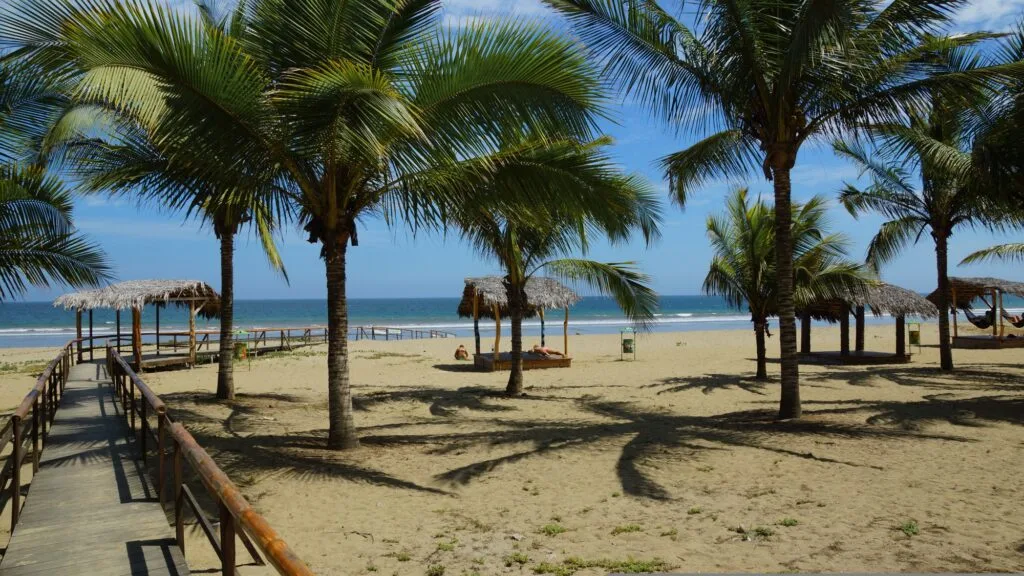
The Ecuadorian Coast.
Where you’ll find the very best food
The best travel eSIMs for Ecuador / 2027 tested
Travel eSIMs deliver seamless pre-departure setup, eliminating passport registration queues and physical SIM swaps upon landing in Ecuador. Yesim and Airalo lead in overall performance and affordability; Saily provides robust security features, GigSky offers essential Galápagos cruise satellite data, and Drimsim suits multi-country overland backpackers.
Travel eSIM selection
| Provider | Key Strength | Ideal Travel Profile |
| Yesim | Unlimited & Credit Options | Digital Nomads & Power Users |
| Airalo | Best Budget Single-Country | Casual Tourists & Short Stays |
| Saily | Built-in Connection Security | Security-Conscious Travellers |
| GigSky | Cruise Satellite Coverage | Galápagos Archipelago Voyagers |
| Drimsim | Pay-Per-MB (No Expiry) | Multi-Country Overlanders |
For travellers who prefer to land in Ecuador with an active mobile connection, international travel eSIM platforms provide an alternative to local physical SIM cards. Below is an evaluation of the five primary travel eSIM platforms operating in Ecuador for 2027.
1. Yesim
Yesim has established itself as an excellent eSIM platform for digital nomads, cycling expeditioners, and remote professionals who require high data volume and flexible payment structures.
Plan flexibility & pricing tiers
Yesim offers both fixed-volume data packages and unlimited daily passes for Ecuador:
- Fixed Data Bundles: Range from 3 GB ($13.00 USD, 7 days) to 10 GB ($28.00 USD, 30 days) and 20 GB ($45.00 USD, 30 days)
- Unlimited Data Passes: Priced at approximately $7.50 USD per day, providing high-speed data with automatic soft-cap speed adjustments after high daily thresholds
Yesim also incorporates a proprietary loyalty and pay-as-you-go credit system called Ycoins. These can be earned through app activities or purchased in advance, allowing users to pay for incremental data usage without purchasing full package renewals.
Network performance & feature integration
During 2027 field testing, Yesim demonstrated robust network performance by using intelligent dual-carrier roaming backbones, allowing your device to switch between Claro and Tigo depending on local signal strength. This dual-carrier capability gives Yesim a clear advantage in transitioning between urban environments (where Tigo excels) and mountain transit corridors (where Claro dominates).
Yesim fully permits mobile hotspotting and tethering across all plan tiers without bandwidth restrictions, making it an ideal choice for remote workers needing to connect laptops or tablet devices. Additionally, Yesim offers optional virtual phone numbers within its mobile app, allowing travellers to receive SMS verification codes (2FA) for banking apps and ride-sharing services while abroad.
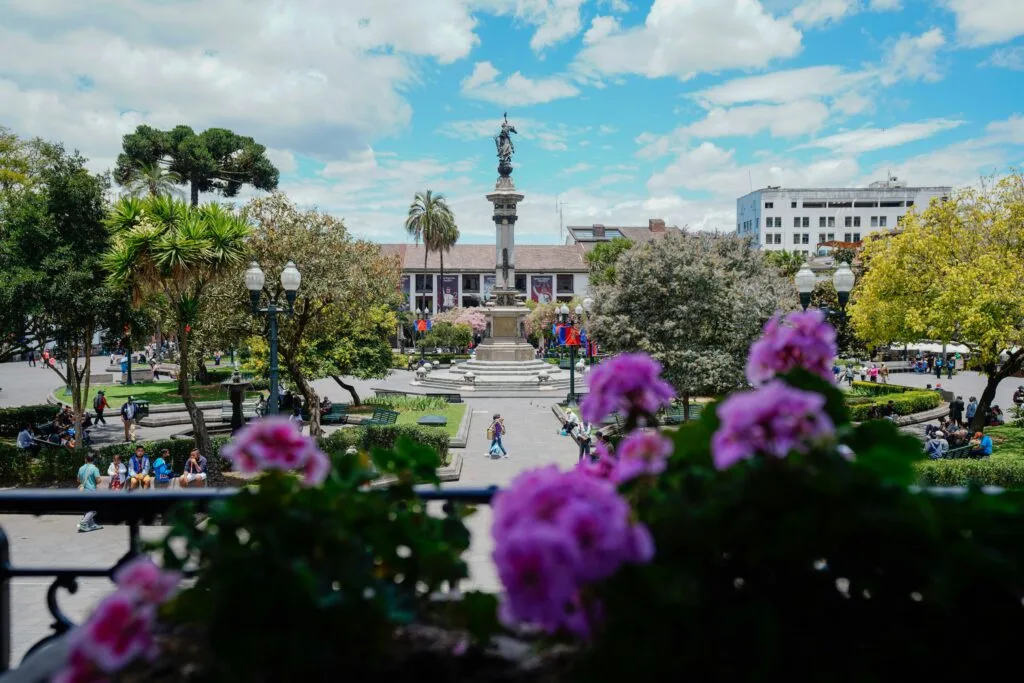
Quito.
Explore the Middle of the World
2. Airalo

Airalo remains the world’s most accessible travel eSIM marketplace, offering an intuitive smartphone app and straightforward setup procedures.
Local & regional plan breakdown
Airalo serves Ecuador through its dedicated local eSIM brand, Bacanet, as well as its multi-country regional coverage plan, LatamLink.
Bacanet / Ecuador single-country eSIM
- 1 GB / 7 Days: $5.00 USD
- 2 GB / 15 Days: $9.50 USD
- 3 GB / 30 Days: $13.00 USD
- 5 GB / 30 Days: $22.00–$24.00 USD
- 10 GB / 30 Days: $34.00–$35.00 USD
LatamLink / Regional South America eSIM
- Covers 17 Latin American countries (including Ecuador, Perú, Colombia, and Brasil)
- Pricing ranges from $15.00 USD (1 GB / 7 days) to $60.00 USD (10 GB / 30 days)
Airalo Bacanet pricing tiers / 2027
| Tier | Price (USD) | Validity | Cost per GB |
| Bacanet 1 GB | $5.00 | 7 days | $5.00 / GB |
| Bacanet 3 GB | $13.00 | 30 days | $4.33 / GB |
| Bacanet 5 GB | $24.00 | 30 days | $4.80 / GB |
| Bacanet 10 GB | $35.00 | 30 Days | $3.50 / GB |
Network backbone & app upgrades
In Ecuador, Airalo’s Bacanet eSIM routes data primarily through the Tigo (OTECEL) 4G LTE network. Users benefit from fast, low-latency data connections in Quito, Guayaquil, Cuenca, and coastal towns like Manta and Montañita.
However, because Bacanet relies on Tigo infrastructure, signal availability will be more limited in remote Amazonian regions and deep mountain valleys compared to local Claro physical SIMs.
Airalo’s updated 2027 application interface features direct profile provisioning, allowing users on iOS and Android devices to install the eSIM profile automatically with a single tap, eliminating the manual scanning of QR codes.
3. Saily

Saily is a security-focused travel eSIM platform developed by Nord Security, the cybersecurity team behind NordVPN.
Architecture & security features
Built with privacy in mind, Saily integrates connection security features directly into its management application. When connecting through untrusted public Wi-Fi access points in hostels, cafes, or airports across South America, Saily users can enable built-in connection protection that encrypts cellular data traffic and blocks malicious tracking domains.
Saily operates on a single-profile architecture. Once the Saily eSIM profile is downloaded and installed on your mobile phone, you do not need to install additional profiles when travelling to new countries. You simply select a new destination package within the app, and data routing configures automatically.
Pricing & market position
Saily offers competitive pricing for Ecuador:
- 1 GB / 7 Days: $4.49 USD
- 3 GB / 30 Days: $11.99 USD
- 5 GB / 30 Days: $19.99 USD
- 10 GB / 30 Days: $32.99 USD
With pricing that slightly undercuts Airalo across most tiers, combined with its Nord Security integration, Saily is an outstanding choice for security-conscious travellers relying on mobile data for remote work and financial transactions.
Cuenca.
The Athens of Ecuador
4. GigSky

GigSky is a specialised global mobile operator that excels in providing connectivity across non-traditional environments, including maritime cruise shipping lanes and offshore flight paths.
Galápagos maritime connectivity solution
While standard travel eSIMs and local physical SIM cards lose signal completely once a vessel sails more than 3 to 5 nautical miles off the coast of the Galápagos Islands, GigSky offers dedicated Maritime Cruise Plans.
GigSky collaborates directly with satellite communication backbones installed aboard commercial cruise ships and expedition vessels operating throughout the Galápagos Archipelago.
This allows travellers to maintain continuous mobile data coverage aboard expedition cruises navigating between remote uninhabited islands such as Genovesa, Española, and Fernandina.
Pricing & terrestrial packages
- Terrestrial Ecuador Data Packages: Standard land-based plans range from $5.99 USD (1 GB / 7 days) to $39.99 USD (10 GB / 30 days)
- Maritime & Offshore Packages: Specialised cruise packages start at approximately $30.00 USD for targeted maritime data allowances, providing connectivity while at sea where cellular towers cannot reach
- Credit Cardholder Perks: GigSky maintains partnerships with major credit card networks (including select Visa Signature and Infinite cardholders), offering complimentary 1 GB to 3 GB global data plans to eligible travellers
5. Drimsim
Drimsim offers a unique approach to international connectivity, catering specifically to long-term overland travellers, cyclists, and backpackers crossing multiple international borders.
Pay-per-megabyte structure
Unlike traditional travel eSIMs that sell fixed data bundles with strict 7-day or 30-day expiration windows, Drimsim operates on a pure pay-per-megabyte model:
- Ecuador Data Rate: Approximately $0.03 USD to $0.05 USD per Megabyte (~$30.00 USD to $50.00 USD per Gigabyte)
- Zero Package Expiration: Your balance never expires as long as your account remains active
- Real-Time Billing: The Drimsim mobile application tracks data usage down to the exact kilobyte, deducting costs directly from your prepaid credit balance in real time
Target travel profile
Because per-gigabyte costs are significantly higher than fixed bundles, Drimsim is not designed for streaming video or downloading large media files. Instead, it serves as a reliable multi-country backup solution.
Overland backpackers travelling through South America—such as crossing land borders from Colombia into Ecuador at Tulcán, or southward into Perú via Huaquillas—can maintain uninterrupted messaging and navigation access without buying new SIM cards or forfeiting unused data bundles at every border.
Physical SIMs vs travel eSIMs

Choosing between a local physical SIM and a travel eSIM in Ecuador depends on your priorities regarding convenience, cost, and route. Local SIMs offer maximum data at lower prices, whereas eSIMs provide instant activation, dual-SIM flexibility, and specialised maritime coverage without local bureaucratic registration hurdles.
| Provider | Type | Network Backbone | Setup Time | Passport Registration | Cost Range (USD) | Best For |
| Claro | Physical SIM | Claro (CONECEL) | 15–30 Mins (In-Store) | Mandatory (ARCOTEL) | $4.00–$15.00 | Best Overall |
| Tigo | Physical SIM | Tigo (OTECEL) | 15–30 Mins (In-Store) | Mandatory (ARCOTEL) | $4.00–$15.00 | Coast & High-Speed Urban Data |
| CNT Móvil | Physical SIM | CNT (State Network) | 30+ Mins | Mandatory (ARCOTEL) | $5.00–$20.00 | Long-Term Domestic Residents Only |
| Yesim | Travel eSIM | Claro / Tigo (Dual-Carrier) | Instant Digital | Not Required | $13.00–$45.00 (or $7.50/day) | Digital Nomads & Power Users |
| Airalo | Travel eSIM | Tigo (OTECEL) | Instant Digital | Not Required | $5.00–$35.00 | Casual Tourists & Short Stays |
| Saily | Travel eSIM | Tigo / Claro | Instant Digital | Not Required | $4.49–$32.99 | Security-Conscious Travellers |
| GigSky | Travel eSIM | Tigo / Ocean Satellite | Instant Digital | Not Required | $5.99–$39.99 (+ Maritime) | Galápagos Cruise Ship Passengers |
| Drimsim | eSIM / Hybrid Physical SIM | Global Roaming Partner | Instant Digital | Not Required | Pay-Per-MB (~$0.03–$0.05/MB) | Overland Border Crossers & Backup |
The Galápagos.
Ecuador’s Enchanted Isles
Regional coverage guide / Mountains, coast, jungle, and islands
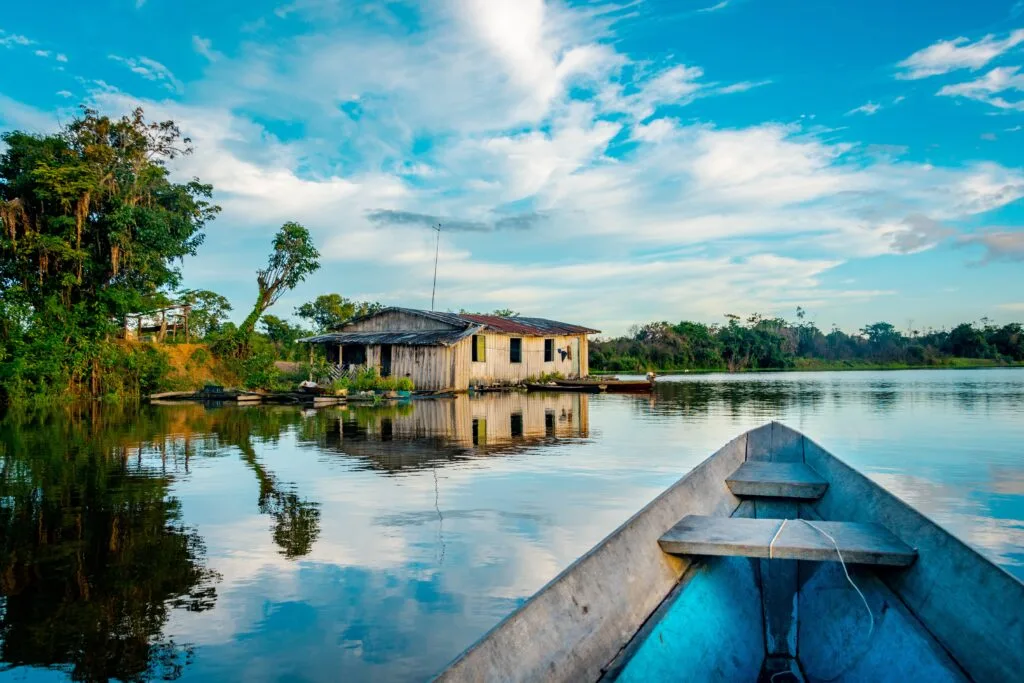
Mobile coverage across Ecuador varies dramatically across its four geographic regions. Claro dominates the high-altitude Andean Highlands and Amazonian gateways, Tigo excels along the Pacific Coast and urban centres, while the remote Galápagos Archipelago requires land-based Claro or Tigo connections supplemented by maritime eSIMs for open-water navigation.
Regional coverage spectrum
| Geographic Region | Dominant Carrier | Terrain Connectivity Notes |
| Andean Highlands | Claro (CONECEL) | Shadowing in deep river valleys |
| Pacific Coast | Tigo & Claro | Consistent along coastal highways |
| Amazon Basin | Claro (Gateway Towns) | Fades beyond eco-lodge gateways |
| Galápagos Islands | Claro (Land) / GigSky | Maritime gaps between islands |
The Andean Highlands / La Sierra

Ecuador’s Andean corridor—home to Quito, Cuenca, Otavalo, Cotopaxi, and the Quilotoa Loop—presents unique geological challenges for cellular signals. High-altitude mountain ridges and deep granite canyons create localised signal shadowing.
- Urban Centres (Quito & Cuenca): Both Claro and Tigo provide fast 4G LTE coverage. In central business districts, Tigo often delivers higher peak throughput due to less network congestion
- High-Altitude Transit & Mountain Passes: As you ascend into high-altitude páramo environments (such as the passes above 3,500 metres surrounding Cotopaxi National Park or the Chimborazo Reserve), Tigo signals drop off rapidly. Claro maintains the only reliable coverage along rural high-altitude highways, making it essential for bikepackers and trekkers
- The Quilotoa Loop: Cellular connectivity inside crater rims and deep valley villages (such as Chugchilán and Isinliví) is spotty. Expect data speeds to drop from 4G LTE down to 3G or 2G Edge. Offline maps (such as Maps.me or organic GPS tracks) should always be downloaded prior to departure
The Ecuadorian Sierra.
Get lost in the hills
The Pacific Coast / La Costa

Ecuador’s Pacific coastline features major commercial ports, agricultural plains, and surf towns linked by the Ruta del Spondylus highway.
- Guayaquil Metropolitan Area: High-density 4G LTE coverage is provided equally by Tigo and Claro, with active 5G network trials deployed across commercial districts in 2027
- The Coastal Highway / Ruta del Spondylus: Highway connectivity between Manta, Puerto López, Olón, and Montañita is solid across both major networks
- Surf Hubs / Montañita & Olón: Tigo is particularly popular among digital nomads staying in coastal surf towns due to excellent localised tower capacity and consistent LTE download speeds during off-peak hours
The Amazon Basin / El Oriente
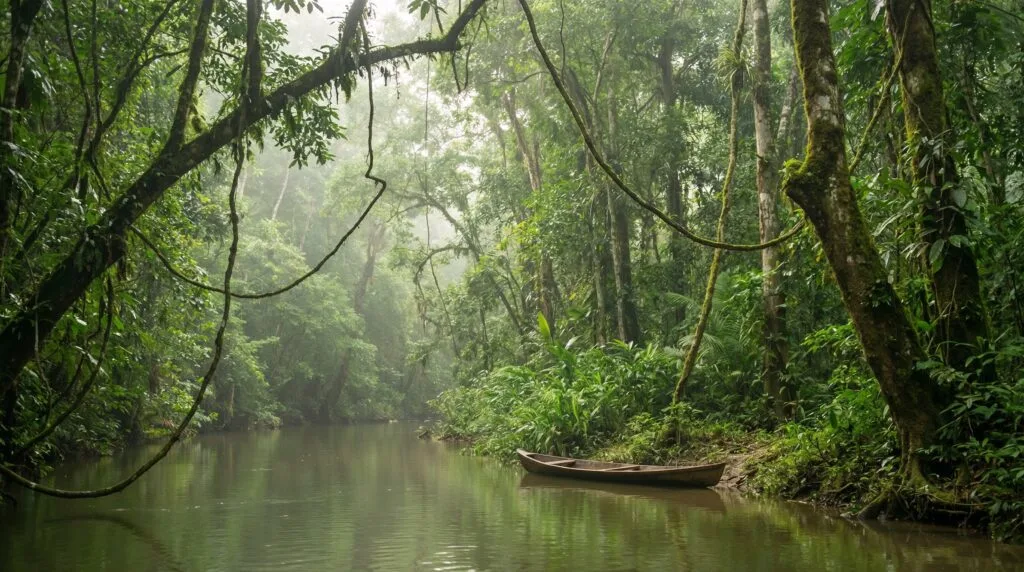
Ecuador’s eastern Amazonian provinces (including Napo, Orellana, and Pastaza) feature dense rainforest canopy that limits cellular coverage.
- Gateway Towns / Tena, Puerto Misahuallí, El Coca, Puyo: Claro provides superior coverage in Amazonian gateway communities. Tigo maintains functional signal inside major town boundaries but loses connectivity immediately upon leaving paved roads
- Deep Rainforest & Eco-Lodges: Once travelling along the Napo or Curaray rivers toward remote eco-lodges or deep primary rainforest, all terrestrial cellular networks lose signal completely. Most premier jungle lodges in 2027 supply satellite internet (such as Starlink) via Wi-Fi in central lodge areas, but travellers should expect zero cellular tower service along river transit routes
The Ecuadorian Amazon.
The most biodiverse place in the world
The Galápagos Archipelago
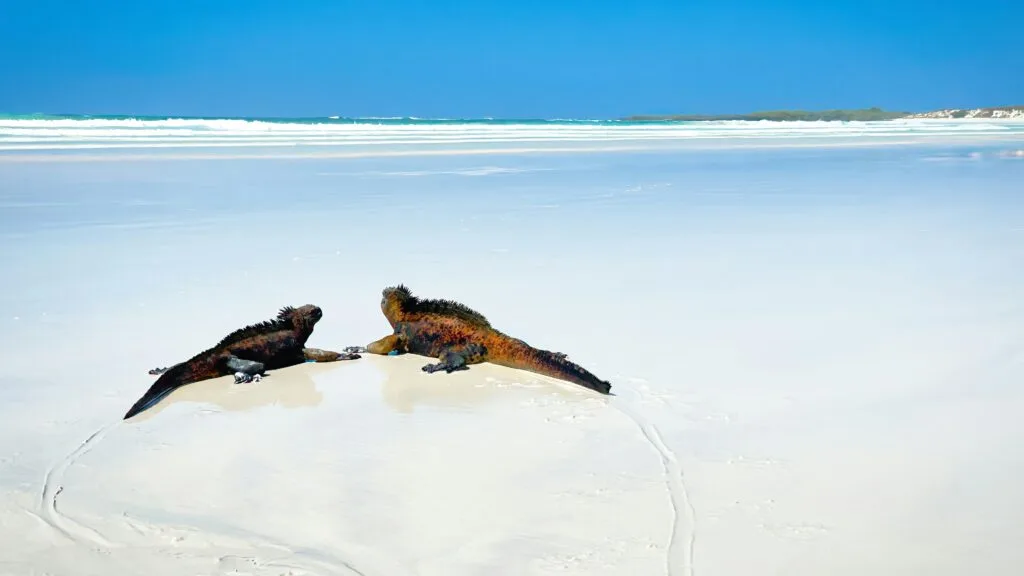
Located nearly 1,000 kilometres off the continental coast of Ecuador, the Galápagos Islands present unique telecommunications logistics.
- Inhabited Town Centres: Land-based cellular towers operate on Santa Cruz Island (Puerto Ayora), San Cristóbal Island (Puerto Baquerizo Moreno), and Isabela Island (Puerto Villamil). Claro provides the most reliable land coverage across the islands
- Open Water Inter-Island Transit: Cellular signals from land towers extend only 3 to 5 nautical miles offshore. During ferry transit between Santa Cruz and Isabela, or while on multi-day expedition cruises, terrestrial SIM cards (both physical SIMs and standard eSIMs like Airalo or Saily) lose signal completely
- Cruise Ship Solutions: Passengers booked on multi-day expedition cruises who require continuous connectivity must rely either on on-board vessel Wi-Fi or deploy a specialised GigSky Maritime eSIM, which hooks into satellite roaming backbones while navigating open water
Technical setup, frequency bands & ARCOTEL rules
Operating a mobile device in Ecuador requires an unlocked phone supporting LTE Band 4 (AWS) and Band 2. Non-resident foreign nationals must register their passport under ARCOTEL regulations when buying physical SIMs, while dual-SIM functionality allows travellers to maintain primary home SIMs for 2FA SMS alongside travel data profiles.
Technical frequency specifications
| Frequency Band | Protocol | Network Deployment |
| Band 4 (AWS 1700/2100) | Primary 4G LTE | Claro, Tigo, CNT |
| Band 2 (1900 MHz) | 3G & Secondary 4G LTE | Tigo & Claro |
| 3.5 GHz Spectrum | 2027 5G Trials | Urban Quito, Guayaquil |
The Ecuadorian Coast.
Where you’ll find the very best food
Network frequency spectrum & carrier unlocking
To use any local physical SIM card or travel eSIM in Ecuador, your smartphone must meet two mandatory hardware and software conditions:
Carrier unlocked
Your smartphone must be completely unlocked from your home network operator. Devices purchased under active contract subsidies or financial instalment plans from North American or European carriers are often network-locked and will reject foreign SIM profiles upon insertion
Frequency compatibility
Ecuador’s cellular networks operate primarily across the following radio frequency bands:
- 4G LTE Primary / Band 4 — AWS 1700/2100 MHz: Deployed nationwide by Claro, Tigo, and CNT. Your hardware must support LTE Band 4 to access high-speed data
- 4G LTE Secondary / Band 2 — 1900 MHz: Used extensively by Tigo and Claro for additional network capacity and rural penetration
- 3G Fallback / Band 2 — 1900 MHz: Used for voice calls and legacy data in deep rural valleys
Most modern multi-band smartphones manufactured after 2020 (including iPhone 11 and newer, Samsung Galaxy S20 and newer, and Google Pixel 4 and newer) contain global radio chipsets that natively support LTE Bands 2 and 4.
Dual SIM & 2FA SMS configuration

Using a dual-SIM smartphone configuration allows you to maintain secure access to your home country banking applications and messaging platforms while using low-cost local data in South America.
Optimal dual-SIM configuration
| Primary Home Physical SIM | Travel eSIM / Local Physical SIM |
| Set for Voice & SMS ONLY | Set as Primary Cellular Data Line |
| Data Roaming: DISABLED | Data Roaming: ENABLED |
| Receives 2FA Banking SMS Free | Handles Maps, Social Media & Calls |
- Primary Home SIM (Physical SIM or E-Profile): Keep your home country phone number active for incoming Voice and SMS only. Disable Data Roaming on this line within your phone settings to prevent your home network operator from charging international daily roaming fees ($10.00–$15.00 USD/day). This allows you to receive incoming two-factor authentication (2FA) verification security codes via SMS free of charge
- Secondary Data Line (Ecuador Travel eSIM or Local Physical SIM): Assign your newly installed travel eSIM or local physical SIM as the primary designated line for Cellular Data. Ensure that Data Roaming is toggled ON for this specific travel line so that it can communicate with local tower backbones
Cuenca.
The Athens of Ecuador
In-person top-up (recarga) procedures
If you exhaust your prepaid data balance on a local Claro or Tigo physical SIM card, adding additional credit (recargar) is straightforward across Ecuador. You do not need to locate an official flagship store to top up your balance.
- Locate a Commercial Retailer: Walk into any major pharmacy chain, such as Fybeca, SanaSana, Farmacias Cruz Azul, Pharmacy’s (frustratingly, this chain has a grocer’s apostrophe) or supermarket (Supermaxi, Mi Comisariato, Tía). Look for window decals displaying the Claro or Tigo logos
- Request a Top-Up at the Register: Approach the cashier counter and request a top-up by saying: “Una recarga para Claro, por favor” (or Tigo)
- Provide Your Mobile Number: Provide your 10-digit Ecuadorian telephone number (e.g., 09X-XXX-XXXX) to the clerk and state the desired dollar amount ($3.00, $5.00, or $10.00 USD). Pay the cashier in cash or by credit card
- Convert Credit to a Data Package (Combo): Simply adding dollar credit to your phone line pays for data at expensive pay-as-you-go rates. To convert your newly added credit into a high-volume data package:
- For Claro: Dial *123# or open the Mi Claro Ecuador app to select and activate a Paquete Combo
- For Tigo: Dial *100# or open the Tigo Ecuador app to select your preferred Combo Preplan
- You will receive an instant automated confirmation SMS confirming that your high-speed data package is active
Equipping your smartphone for Ecuador in 2027 comes down to balancing pre-departure convenience against sheer data volume. For short-term visits, urban exploration, and seamless transit across airports, configuring a digital travel eSIM from Yesim or Airalo before you board your flight delivers stress-free connectivity the second your tyres touch the tarmac.
If your itinerary involves deep overland routes through the Andean Sierra, long-term cycling, or Amazonian expeditions, bypassing airport vendor traps and acquiring an officially registered physical Claro SIM card in downtown Quito or Guayaquil guarantees the strongest rural signal footprint across South America.
Stay connected across Ecuador’s volcanic ridges and coastal highways

Read this far?
Independent travel across Ecuador is defined by rapid shifts in landscape and infrastructure. One hour you are pedalling across the exposed, wind-swept páramo beneath the shadow of Cotopaxi, and the next you are dropping into the sub-tropical cloud forests of Mindo or rolling into a coastal fishing village along the Pacific. Having a flexible, tested cellular connection guarantees that navigation tools, bus timetables, and weather updates remain accessible when conditions turn quickly on mountain roads.
For most travellers, the optimal approach balances pre-flight convenience with local coverage realities. Installing an eSIM before boarding your flight provides essential connectivity for ride-hailing apps and hotel check-ins upon arrival in Quito or Guayaquil. Yet, if your route takes you deep into the Andean Highlands, along remote gravel bikepacking routes, or down river waterways in El Oriente, picking up a local Claro physical SIM in a downtown customer service centre remains an unmatched option for raw signal coverage.
Ultimately, staying connected in Ecuador is less about remaining tethered to a screen and more about enabling seamless, autonomous exploration. With your passport registered under ARCOTEL guidelines and your dual-SIM settings configured properly, you can navigate local bus transfers, locate remote eco-lodges, and share updates from the high Andes without overpaying third-party airport vendors or risking line blocks mid-journey.
Affiliate Disclaimer: Some of the links on Wheely Tyred are affiliate links. If you click through and make a booking or purchase, we may earn a small commission at no extra cost to you. We only recommend gear, tours, stays, and services we genuinely use, trust, and stand behind — our editorial independence always comes first. These commissions help keep our independent cycling guides and travel stories free to read. You can also buy me a coffee here — thanks for supporting the ride!
Frequently Asked Questions About the best SIM cards for Ecuador 2027
Yes, but it is heavily discouraged. Third-party kiosks in international arrival halls charge $25.00 to $40.00 USD for basic SIMs with small data allocations. Purchasing an official SIM (chip) at an operator store in downtown Quito or Guayaquil costs just $4.00 to $5.00 USD, with generous data packages costing $8.00 to $10.25 USD.
Under ARCOTEL regulations, all active mobile lines must be linked to a verified identity document. Non-resident foreign travellers must register their physical passport details in person at an official operator store (Centro de Atención a Clientes) or via official remote email submission to prevent the line from being blocked within 48 hours.
Claro (CONECEL) is the clear leader for rural, mountainous, and remote regions. It maintains the most consistent 4G LTE footprint across high-altitude Andean mountain passes, the Quilotoa Loop, Amazonian gateway towns like Tena, and the populated islands of the Galápagos Archipelago.
Standard travel eSIMs and local SIM cards connect to land-based cell towers, which only extend 3 to 5 nautical miles offshore. Once your vessel moves into open water, terrestrial signals vanish. For continuous connectivity aboard expedition cruises, you will need to rely on shipboard Wi-Fi or a maritime eSIM like GigSky.
Yes. Your smartphone must be carrier-unlocked to accept local Ecuadorian physical SIM cards or international travel eSIM profiles. Additionally, your phone should support 4G LTE Band 4 (AWS 1700/2100 MHz) and Band 2 (1900 MHz), which are the primary frequency bands used across Ecuador.
You can top up (recargar) your line in cash or with a card at almost any pharmacy chain (such as Fybeca, Cruz Azul, or SanaSana) or supermarket (like Supermaxi) nationwide. Simply provide your 10-digit phone number, pay the cashier, and then dial the operator’s USSD code (e.g. *123# for Claro) to convert your credit into a data bundle.
Ecuador.
Pure wonder on the equator.