
Overland travel in coastal Ecuador / Driving, cycling and bus transit along the Pacific Rim
Coastal Ecuador overland logistics / Driving, cycling and bus routes along the E15
Independent travel across Manabí, Esmeraldas and Santa Elena

BEN FINCH
Ecuador’s coastal fringe offers one of South America’s most diverse road trips. Extending over 700 kilometres from the Colombian border in the far north down to the arid peninsulas of Santa Elena and the southern mangrove estuaries of Guayas, the coastal corridor connects tropical rainforests, cliff-side highways, quiet fishing coves, and bustling port cities.
For independent travellers, navigating this landscape overland provides an intimate perspective on coastal life that flying between major urban centres completely misses. Whether behind the wheel of an overland vehicle, pedalling a loaded touring bicycle, or hopping between regional buses, mastering the logistics of the coastal highway system is the key to a seamless trip.
Pacific transit / Essential coastal mechanics

Traversing coastal Ecuador overland reveals a shifting tapestry of tropical rainforests, cliff-side highways, and quiet fishing hamlets. Mastering the logistics of the E15 highway ensures a smooth, self-sufficient journey across the region.
- The Arterial Route: The 748-kilometre E15 highway (Ruta del Spondylus) forms the primary backbone of coastal transit, connecting Esmeraldas in the humid north to the Santa Elena peninsula and Guayaquil in the south
- Vehicle Logistics: Self-driving requires strict daytime scheduling, high-clearance suspension for secondary gravel tracks (vías de lastre), and constant vigilance for unmarked speed bumps (vigilantes)
- Wind and Elevation: Cyclists benefit immensely from riding south-to-north to harness prevailing Humboldt Current trade winds, though short, punchy 14% gradients through Parque Nacional Machalilla will test loaded legs
- Bus Infrastructure: Regional bus cooperatives provide frequent, cheap transit ($1.50–$2.50 USD per hour), with conductors routinely stowing bicycles and surfboards in the lower luggage hold (maletero)
- Security Protocols: Regional states of emergency (estado de excepción) bring military checkpoints (puntos de control); carry physical, original passports at all times and avoid night-time highway travel.
- Seasonal Weather: The dry garúa season (June to November) delivers cooler, overcast conditions ideal for long-distance pedalling, while the wet season (December to May) brings tropical heat and heavy afternoon downpours
- Cash Readiness: The coastal economy runs entirely on US dollars, specifically small banknotes ($1, $5, and $10 notes) and loose coins; breaking $20 or $50 notes in hamlets like Ayampe or Canoa is nearly impossible
The Ecuadorian Coast.
Where you’ll find the very best food
Route overview and highway infrastructure
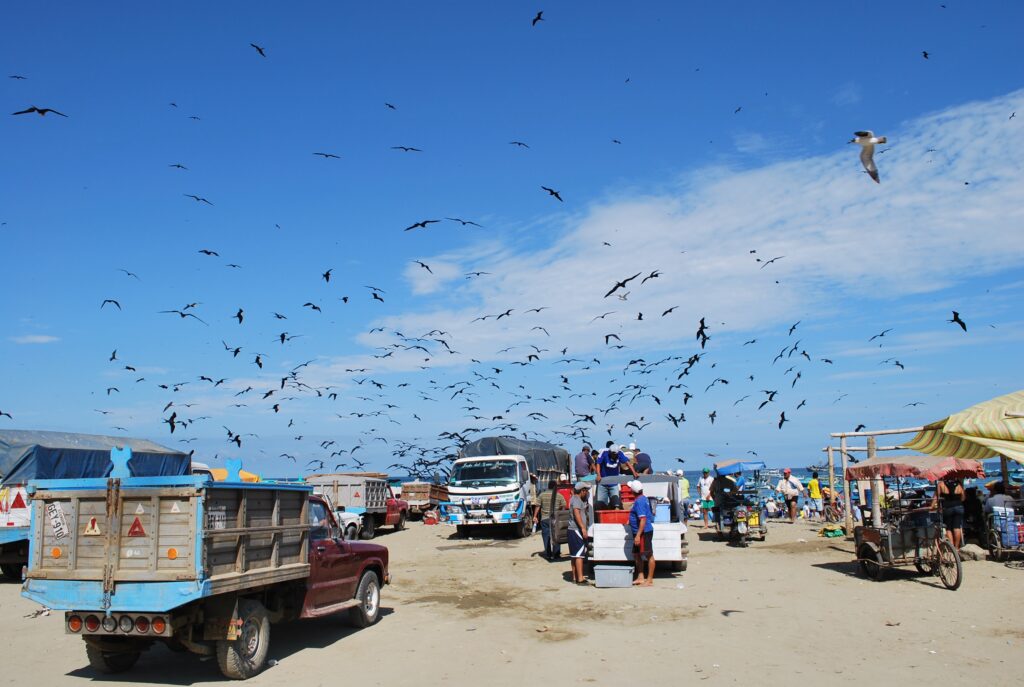
At the core of coastal transit in Ecuador is the E15 highway, formally designated as the Troncal del Pacífico and marketed widely as the Ruta del Spondylus. Named after the spiny oyster shell that served as currency and ceremonial treasure among pre-Columbian coastal civilisations, the E15 runs virtually the entire length of the Pacific coastline.
Starting near San Lorenzo in the northern province of Esmeraldas, the trunk road passes through Manabí and Santa Elena before terminating near Salinas and connecting eastward to Guayaquil via the E40 corridor.
Topography and regional climates
The geographical character of the route changes significantly as you travel from north to south:
- Northern Sector / Esmeraldas to northern Manabí: Characterised by dense tropical vegetation, humid coastal rainforest, and large river deltas. Road surfaces here face heavy annual rainfall, which frequently triggers seasonal mudslides and pavement erosion
- Central Sector / Central and Southern Manabí: Dominated by dry tropical forests, dramatic ocean cliffs, and rolling hills. The route through Parque Nacional Machalilla presents punchy elevation changes as the highway climbs over coastal headlands before dropping into sheltered bays like Puerto López and Ayampe
- Southern Sector / Santa Elena and Guayas: The terrain flattens into semi-arid coastal plains, salt flats, and wide-open beaches. High-speed, multi-lane stretches lead towards Salinas and the interior plains of Guayaquil
Microclimates and weather seasons
Travelling overland requires an understanding of Ecuador’s two primary coastal seasons:
- The Wet Tropical Season / December to May: Characterised by hot, humid days, warm ocean temperatures, and heavy afternoon downpours. High river levels can cause localised flooding and washed-out bridges on secondary routes (vías secundarias)
- The Dry Season or Garúa / June to November: Cool air brought north by the Humboldt Current creates a persistent overhead overcast and fine coastal drizzle (garúa). Ocean temperatures drop, but road conditions stabilise, making this the cooler, drier window for long-distance cycling and driving
Self-driving and vehicle overlanding
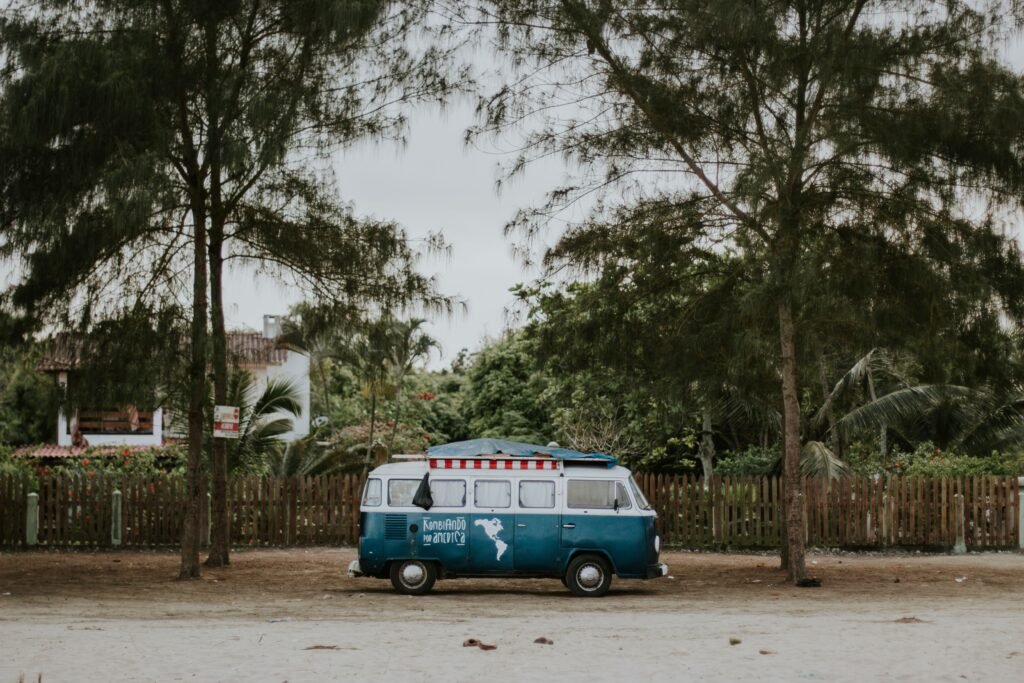
Navigating coastal Ecuador in a private car, 4×4, or campervan provides unmatched freedom to explore remote surf breaks and rural fishing hamlets that public transport skims past. However, driving here requires disciplined vehicle maintenance, constant awareness of road hazards, and strict adherence to daytime travel schedules.
Essential overland driving rules
- Drive exclusively during daylight hours
- Treat every speed bump (vigilante) as a hazard
- Keep physical cash in small denominations ($1–$5)
- Park in gated, monitored facilities (parqueaderos)
Vehicle selection and fuel logistics
While the primary E15 highway is paved asphalt, secondary access tracks leading down to beaches or inland eco-lodges are frequently unpaved gravel, dirt, or deep clay.
- 2WD Compact Cars: Sufficient for travelling strictly along the main asphalt corridor between major towns such as Manta, Portoviejo, Montañita, and Salinas
- High-Clearance 4×4 Vehicles: Highly recommended if your itinerary includes off-grid exploration in northern Esmeraldas, rural tracks in Parque Nacional Machalilla, or beach access tracks after heavy rain
Fuel stations (gasolineras) are operated by state entities like Petroecuador as well as private networks like Primax and Terpel. Three primary fuel types are available across the country:
- Extra / 85-octane unleaded: The most common and heavily subsidised petrol grade. Suitable for most standard internal combustion engines
- Súper / 95-octane unleaded: Premium unleaded petrol, priced at market rates. Available consistently in regional capitals and large towns, but less reliable in remote villages
- Diésel: Widely available at virtually every station along the main freight routes to support commercial buses and transport trucks
Fuel stations are abundant around urban hubs like Guayaquil, Manta, Portoviejo, and Salinas. However, on the 120-kilometre stretch between Pedernales and Bahía de Caráquez, or along rural coastal stretches in Manabí, fuel gaps of 40 to 60 kilometres are common. Keep your tank at least half-full whenever venturing into rural stretches.
The Ecuadorian Sierra.
Get lost in the hills
Navigational hazards and driving culture
Driving in Ecuador presents unique operational challenges that require constant vigilance:
Speed bumps (vigilantes or reductores de velocidad)
These raised asphalt mounds or heavy rubber strips are placed at the entry and exit of every village, school zone, and intersection. Many are completely unmarked, unpainted, and lack warning signs. Striking a vigilante at full highway speed can severely damage a vehicle’s suspension or steering geometry. Approach every cluster of roadside structures with caution.
Asphalt degradation
Flash floods during the wet season cause frequent subsidence, pothole clusters, and edge-collapse along coastal bluffs. Temporary repairs often consist of unpaved gravel patches.
Unlit hazards and stray livestock
Free-roaming cattle, horses, dogs, and slow-moving agricultural vehicles regularly occupy driving lanes. Combined with a lack of street lighting outside major urban centres, night driving carries severe safety risks.
Local driving style
Overtaking on blind corners, sudden lane changes without signalling, and heavy commercial vehicles crawling uphill are standard along the E15. Maintain generous following distances and avoid aggressive driving manoeuvres.
| Parameter | Specification & Advice |
| Primary Highway Quality | E15 asphalt is generally smooth, but subject to sudden landslide repair zones |
| Secondary Access Roads | High clearance or 4×4 required for unpaved beach access tracks (vías de lastre) |
| Toll Plazas (Peajes) | Fixed cash tolls (typically $1.00 USD) located around urban perimeter entry points |
| Speed Limits | Highways: 90 km/h; Urban approach: 50 km/h; School zones: 30 km/h. Radar traps are active |
| Documentation Required | Original passport, valid foreign driver’s licence, vehicle registration, and temporary import permit |
Long-distance cycling and bikepacking
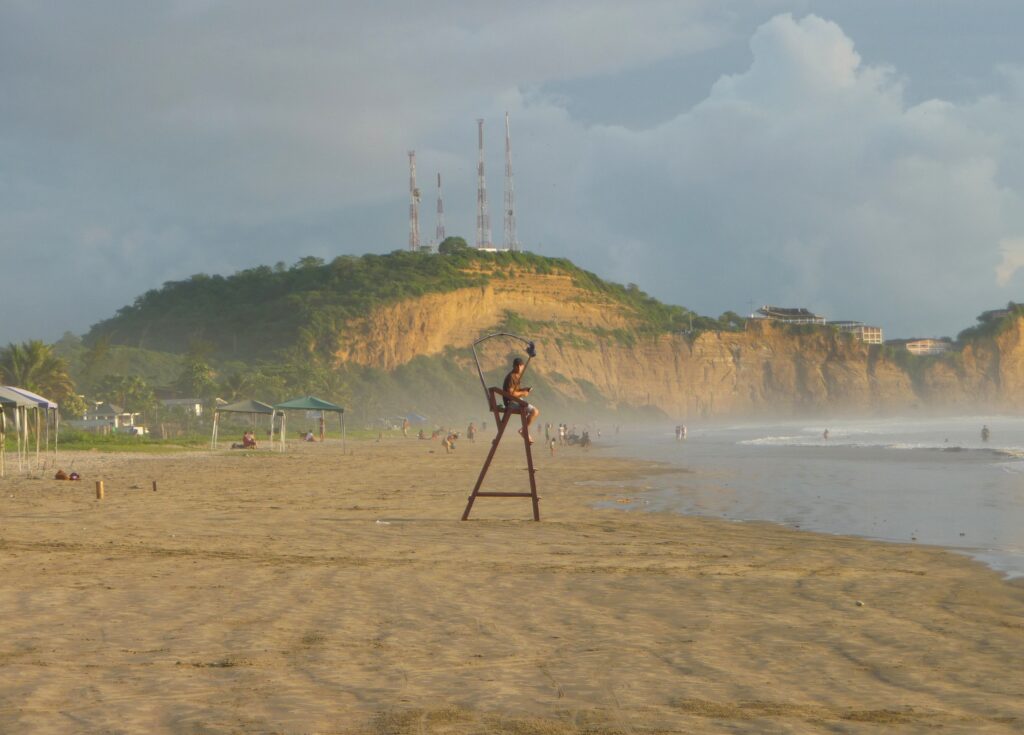
Cycling the Pacific corridor offers a raw, immersive way to experience coastal Ecuador. Pedalling through coastal fishing hamlets, smelling the ocean air, and conquering rolling coastal headlands provides an authentic connection to the landscape that motorised travel cannot replicate.
Topography profile and elevation
While coastal cycling might sound flat, the E15 highway features a varied elevation profile depending on the sector:
- Santa Elena Peninsula: Flat, straight, and wind-exposed. Elevation gains are minimal, making for rapid kilometres, though heat and exposed conditions demand high fluid intake
- Southern and Central Manabí: The road cuts through the Cordillera Chongón-Colonche coastal range. Expect short, steep ascents ranging from 8% to 14% gradients as the road climbs over headlands between coastal valleys. The section through Parque Nacional Machalilla between Agua Blanca, Puerto López, and Ayampe features continuous, punchy climbing
- Northern Manabí and Esmeraldas: Long rolling hills through humid rainforest, with frequent short climbs as the highway crosses river drainage basins
Prevailing trade winds and directional strategy
Wind direction is a critical factor when planning a long-distance coastal ride:
- South-to-North Route (Recommended): Riding from Guayaquil or Salinas northwards towards Manta, Canoa, and Esmeraldas allows cyclists to capitalise on the prevailing southerly trade winds pushed along the coast by the Humboldt Current. Tailwinds or light quartering breezes are common throughout the dry season (garúa)
- North-to-South Route: Cyclists riding southward will regularly face stiff headwinds, particularly on exposed flat stretches along the Santa Elena peninsula and open coastal valley floors
Mechanical self-sufficiency and spare parts
Proper mechanical preparation is essential. Full-service bike shops stocking modern 11-speed or 12-speed components, tubeless sealant, hydraulic brake fluid, or high-end touring tyres (such as 700c or 29-inch tubeless setups) exist almost exclusively in major cities like Guayaquil, Manta, and Portoviejo.
Rural hardware stores (ferreterías) and local repair stalls (talleres de bicicletas) in surf towns like Montañita, Olón, or Canoa carry basic 26-inch inner tubes, heavy steel chains, basic cables, and patch kits for utility bicycles.
Essential cyclist spares checklist
- 2x spare inner tubes matching your wheel size and valve type (Presta/Schrader)
- Tubeless repair plugs and mini-pump with pressure gauge
- Spare set of front and rear hydraulic brake pads
- Quick-links and a robust multi-tool with chain breaker
- Spare derailleur hanger specific to your bicycle frame
- High-vis tail-light with USB charging capability
Water, resupply and camping logistics
Heat management and hydration require constant attention along the coast, where ambient temperatures combine with high humidity:
- Hydration: Never drink untreated tap water. Purified water (agua purificada) is available in 1.2-litre bottles or 6-litre jugs (bidones) at small corner shops (tiendas) in every village. Aim to carry at least 2.5 to 3 litres of liquid on your frame at all times
- Nutrition: Small roadside eateries (comedores) serve affordable, high-calorie meal sets (almuerzos) consisting of fresh fish or chicken, rice, fried plantains (patacones), and vegetable soup for $3.00 to $4.00 USD
- Accommodation & Wild Camping: Wild camping directly on open beaches near urban settlements is strongly discouraged due to theft risks and high tide changes. Instead, opt for low-cost hostals, eco-lodges, or ask permission to pitch a tent within the secured, gated grounds of a local hotel or private property (propiedad privada). Always store your bicycle inside your room or within a locked courtyard overnight
The Ecuadorian Amazon.
The most biodiverse place in the world
Public bus network and regional transit
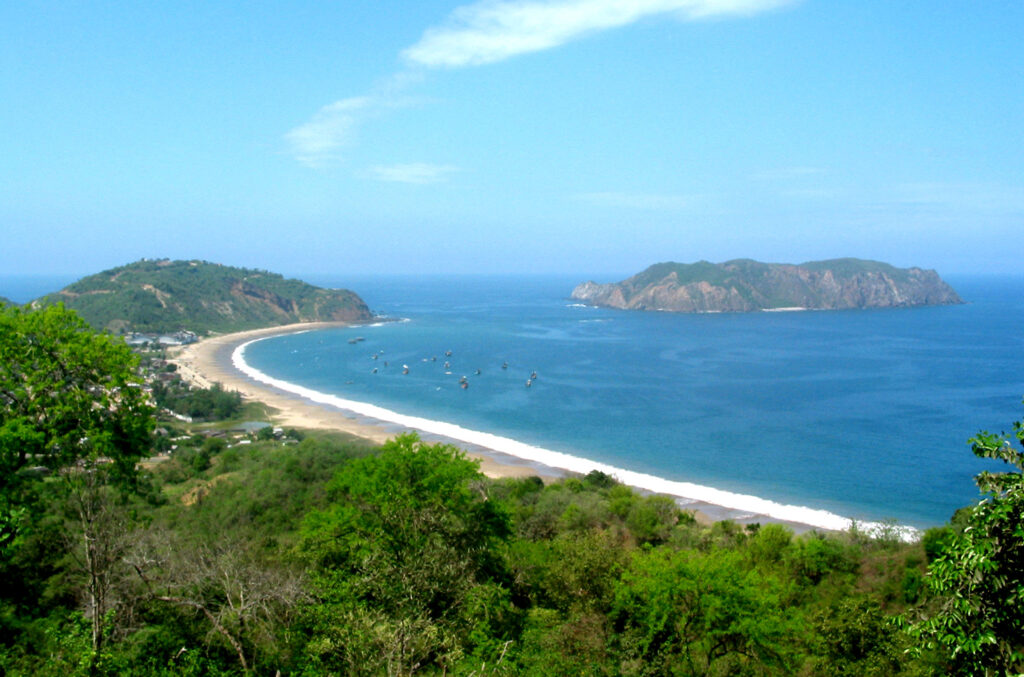
Ecuador boasts one of the most comprehensive, affordable, and frequent intercity bus networks in Latin America. For budget travellers, long-distance bus transit offers a reliable, stress-free alternative to driving or cycling, allowing you to sit back and watch the coastal landscape unfold.
How coastal bus transit works
Public transport along the coast operates on two distinct levels: long-distance interprovincial express buses and local regional cooperatives.
Terminal operations / Terminales Terrestres
In primary hubs such as Guayaquil, Manta, Portoviejo, and Santa Elena / La Libertad, buses operate out of large, centralised stations called Terminales Terrestres.
At these terminals, passengers purchase tickets (boletos) from designated company counters inside the main hall before proceeding to the boarding gates. Most large terminals charge a nominal platform access tax (tasa de embarque), usually costing $0.10 to $0.25 USD, paid via coins at turnstiles or separate service windows before entering the boarding bays.
Roadside flagging / Timbre and flag-down system
Between major cities along the E15 highway, you do not need to be at a formal terminal to catch a ride. Stand safely on the side of the highway at a visible pull-off spot or village bus shelter (parada de bus) and flag down an oncoming bus with a clear hand gesture.
To disembark at your destination, walk to the front stairwell and tell the conductor or driver: “En la esquina, por favor” (At the corner, please), or: “En la entrada a [Village Name]” (At the entrance to [Village Name]).
Primary bus cooperatives along the coast
Several well-established bus cooperatives service the coastal routes:
- Cooperativa Manglaralto: The primary operator servicing the southern Santa Elena coastline. Runs regular routes connecting Santa Elena / La Libertad with Valdivia, Manglaralto, Montañita, Olón, Ayampe, and Puerto López
- Rutas Portovejenses / Reales Tamarindos: Major regional carriers providing direct links between Guayaquil, Portoviejo, Manta, and central Manabí
- Cooperativa Reina del Camino: A large interprovincial fleet operating long-distance executive buses connecting Quito and Guayaquil with coastal hubs like Manta, Bahía de Caráquez, and Pedernales
- Trans Esmeraldas: Specialises in long-distance connections traversing the northern province of Esmeraldas, linking Atacames, Mompiche, and San Lorenzo to the central highlands
Fares, luggage, bicycles and surfboards
Public bus travel in Ecuador remains remarkably economical:
- Pricing Rule of Thumb: Expect to pay approximately $1.50 to $2.50 USD per hour of bus travel. Cash is the absolute rule—always carry small bills ($1, $5, or $10 notes) and loose coins, as conductors cannot break $20 or $50 notes on board
- Stowing Oversized Luggage: Large backpacks, suitcases, bicycles, and surfboard bags are stowed underneath the bus in the main luggage hold (maletero). Ensure the baggage handler or conductor (controlador) hands you a matching luggage claim tag (ticket de equipaje)
- Transporting Bicycles: Buses must accommodate touring bicycles in the lower hold for free. You may need to loosen your handlebars or remove the front wheel to fit the bike into tight compartments
- Personal Belongings: Keep high-value items—passports, electronics, wallets, and cameras—inside a small daypack on your lap. Never place valuable daypacks in the overhead racks inside the bus cabin or leave them unattended during meal stops
Security, health and emergency protocols
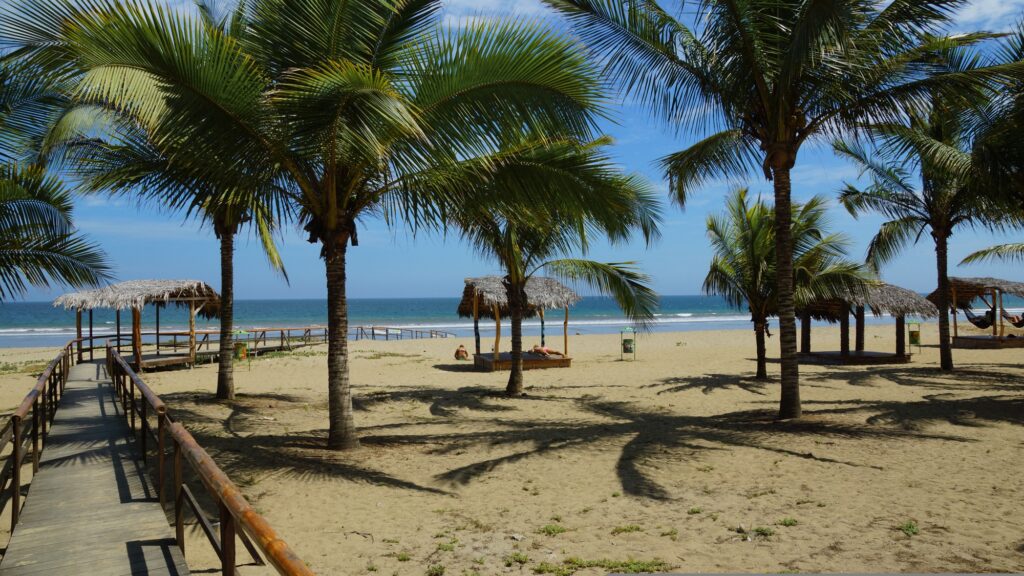
Ecuador’s coastal landscape has undergone significant security shifts in recent years. Understanding the local dynamics, state security measures, and highway protocols ensures that overlanding travellers can move through the region safely and responsibly.
Security context and regional dynamics
In early 2024, the Ecuadorian government declared an internal armed conflict (conflicto armado interno) to combat transnational narcotics smuggling networks. Coastal shipping routes and industrial port infrastructure—specifically around major shipping hubs like Guayaquil, Durán, Posorja, parts of Manta, and northern Esmeraldas—have become strategic transit bottlenecks targeted by criminal groups.
It is crucial for travellers to distinguish between industrial port logistics hubs and tourist-oriented coastal settlements along the E15:
- Higher-Risk Bottlenecks: Industrial port zones, commercial container hubs, and specific urban peripheries (Guayaquil suburbs, Durán, and northern Esmeraldas city border zones) account for the vast majority of security incidents. Overland travellers should pass through these transit hubs efficiently without stopping unnecessarily in unfamiliar urban outskirts
- Tourist Corridors: Traditional coastal villages along the E15—such as Ayampe, Olón, Las Núñez, Ayangue, Puerto López, and Canoa—maintain strong community networks, local security cooperatives, and a welcoming posture towards international visitors. While day-to-day life in these towns proceeds normally, maintaining high situational awareness remains essential throughout your journey
States of emergency and curfews
The national government periodically decrees localised states of emergency (estado de excepción) across specific coastal provinces—most frequently Esmeraldas, Manabí, Guayas, Santa Elena, Los Ríos, and El Oro.
- Night-Time Curfews (Toque de Queda): When active, curfews restrict all civilian vehicular and pedestrian movement during specific night hours (e.g., 22:00 to 05:00 or 00:00 to 05:00). Curfews force early closures of intercity bus terminals, restrict fuel station operations, and strictly prohibit highway driving.
- Verification: Always verify active curfew hours for each province you intend to enter. Check official updates from the Ministerio del Interior, local municipal governments (Gobiernos Autónomos Descentralizados or GADs), or consult your accommodation hosts prior to setting out on long overland legs.
Checkpoints and security inspections
Under ongoing states of emergency, joint roadside security checkpoints (puntos de control) operated by the Armed Forces (Fuerzas Armadas) and National Police (Policía Nacional) are positioned along the E15 highway, the E40 corridor, and regional border crossings.
- Driver Etiquette: Approach checkpoints slowly. At night, switch on your vehicle’s interior cabin light, lower your headlights to parking lights, roll down your front windows, and wait for instructions from armed officers
- Documentation: Foreign travellers must always carry physical, original passports with valid entry stamps, alongside their home country driving licence, International Driving Permit, and official vehicle registration/import papers. Digital photos on mobile phones are generally not accepted at formal military checkpoints
- Public Bus Inspections: Intercity buses are routinely stopped at roadside bays. Security personnel will board to verify passenger identification documents and may request all passengers to step off the bus while overhead storage and lower luggage compartments are inspected. Co-operate fully and keep your primary daypack with you at all times
- Cyclist Inspections: Long-distance cyclists should expect routine stops at military checkpoints. Keep your passport and documents easily accessible in a handlebar or frame bag so officers can complete inspections quickly without requiring you to unpack all panniers
The Galápagos.
Ecuador’s Enchanted Isles
Essential rules for coastal travel
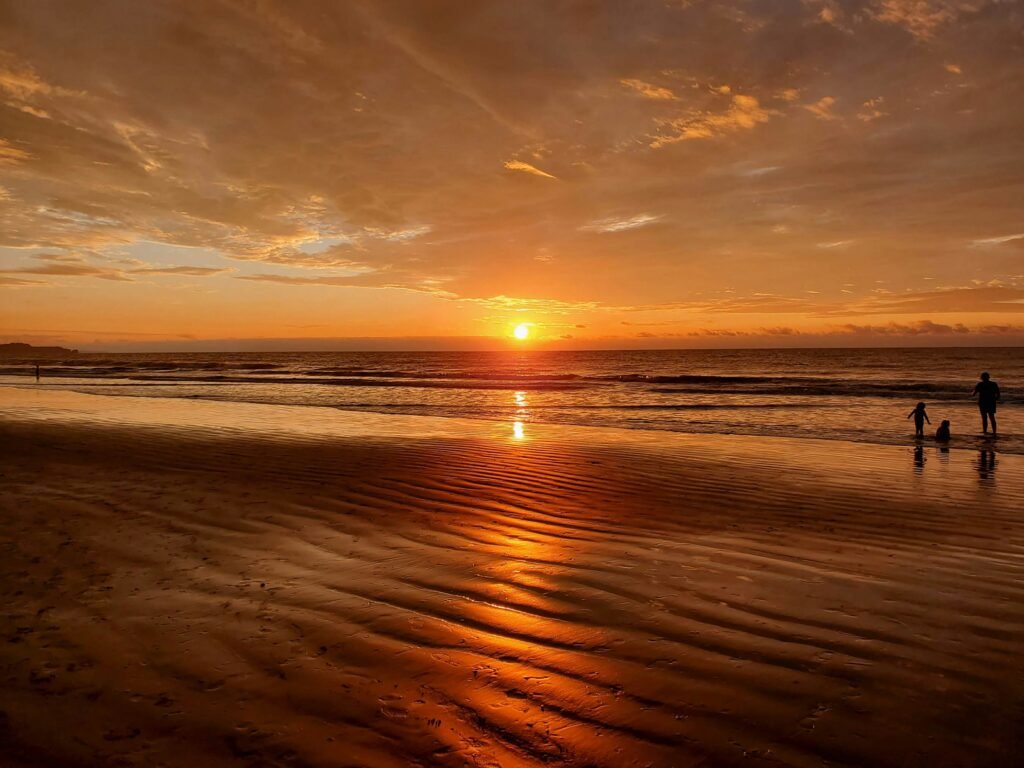
To minimise risks and ensure a smooth overland journey along Ecuador’s coast, adhere strictly to these core rules:
- Zero Night Travel: Never drive, cycle, or take local transit along coastal highways after dark. Unlit road hazards, diminished security presence, and elevated robbery risks make night travel unsafe. Structure your schedule to arrive at your destination by 17:00
- Secure Parking and Storage: Drivers must park vehicles strictly inside gated, private parking facilities (parqueaderos privados or garajes cerrados) overnight. Cyclists must bring their bicycles inside hotel rooms, secure storage lockers, or locked inner courtyards
- Currency Management: Ecuador uses the United States dollar ($ USD). Carry cash in small denominations ($1, $5, $10, and $20 notes) alongside loose change. Large bills ($50 and $100 notes) are impossible to spend in small coastal towns and driver/vendor change is limited. Keep cash hidden in multiple locations across your luggage rather than carrying large amounts in a single wallet
- Mobile Connectivity: Secure a local eSIM or physical SIM card from Claro or Movistar upon arrival in a major city. Claro offers the most reliable coverage along rural stretches of the E15 highway, though dead zones remain in deep river valleys and coastal bluff passes through Parque Nacional Machalilla
- Ocean Safety and Health: Ocean currents along the Pacific Coast can be surprisingly strong. Look out for dangerous rip currents (corrientes de resaca) at exposed surf beaches like Montañita, Canoa, and Mompiche. Use high-SPF sunscreen, carry oral rehydration salts, and apply mosquito repellent containing DEET or Icaridin to guard against mosquito-borne illnesses like dengue fever, particularly during the wet tropical season
Overland travel checklist
Before embarking on your coastal route across Ecuador, ensure you have ticked off these essential logistical items:
- Documentation: Passport, driver’s licence, IDP, vehicle papers
- Cash: $100–$200 in small bills ($1, $5, $10) and coins
- Connectivity: Local SIM card (Claro recommended for coastal coverage)
- Security: Verified curfew hours for all provinces on your route
- Timing: All travel legs scheduled strictly during daylight hours
- Health: High-SPF sunscreen, DEET repellent, water purification system
- Spares: Tyre repair kits, pump, spare tubes / vehicle fluids
By pairing thorough preparation with flexible planning and real-time local knowledge, overland travel along coastal Ecuador reveals a landscape rich in coastal culture, stunning ocean views, and unforgettable open-road exploration.
Claim the open road along the Pacific Rim

Travelling overland through coastal Ecuador is an exercise in adjusting your internal cadence to the rhythm of the Pacific tide. When you forgo domestic flights in favour of the E15 trunk road, the landscape ceases to be a distant backdrop between tourist enclaves and becomes the primary narrative.
The transition from the dense, humid rainforests of northern Esmeraldas down through the dry coastal bluffs of Manabí and into the salt-crusted flats of Santa Elena exposes the structural logic of how this coast actually functions. It is a geography dictated by small-scale artisanal fishing, mangrove ecology, and the arterial pulse of regional bus networks.
Succeeding on this route requires an embrace of mechanical and logistical self-reliance. Whether you are monitoring tyre pressures before negotiating unpaved beach access tracks, scanning the asphalt for unlit vigilantes, or waiting on a dusty roadside as a conductor straps your touring bicycle into a bus hold, patience is your most vital piece of kit.
The coastal infrastructure is functional and extensive, yet it rewards those who respect its operational boundaries—chiefly the mandate to move exclusively by daylight and to keep physical cash close at hand.
The true reward of the Ruta del Spondylus lies in the unscripted moments between formal destinations. It is found in steaming bowls of morning encebollado at a roadside comedor in Puerto López, watching frigatebirds ride the updrafts over the headlands of Parque Nacional Machalilla, or sharing thermos coffee with local commuters at a morning bus terminal in Manta. These experiences cannot be engineered through a pre-packaged tour; they are earned kilometre by kilometre through self-directed movement.
Pack your panniers, verify your route logistics each morning with local hosts, and set off with an open mind. The Pacific highway is waiting, offering a raw, unvarnished window into the heart of South America’s western edge.
Affiliate Disclaimer: Some of the links on Wheely Tyred are affiliate links. If you click through and make a booking or purchase, we may earn a small commission at no extra cost to you. We only recommend gear, tours, stays, and services we genuinely use, trust, and stand behind — our editorial independence always comes first. These commissions help keep our independent cycling guides and travel stories free to read. Thanks for supporting the ride!
Frequently asked questions about overland travel in coastal Ecuador
Most regional and interprovincial buses feature large luggage holds (maleteros) beneath the passenger cabin. Drivers and conductors (controladores) are accustomed to stowing bulky items like surfboards, touring bicycles, and oversized backpacks. Always secure your bicycle’s loose components, remove fragile accessories, and obtain a matching luggage claim tag (ticket de equipaje) before boarding.
Night travel along the coastal E15 highway is strongly discouraged for drivers, cyclists, and bus passengers alike. Roads outside major urban centres lack artificial street lighting, making unpainted speed bumps (vigilantes), deep potholes, and stray livestock major collision hazards. Furthermore, security presence decreases significantly after dark, and localised night-time curfews (toques de queda) associated with regional states of emergency strictly prohibit non-essential vehicular movement. Always plan your journey to arrive at your overnight accommodation before 17:00.
Ecuador uses the United States dollar ($ USD). While ATMs (cajeros automáticos) are available in primary regional hubs like Guayaquil, Manta, Portoviejo, and Santa Elena, they are rare or frequently out of service in smaller coastal hamlets like Ayampe, Olón, Canoa, or Mompiche. Small corner shops (tiendas), bus conductors, and local eateries (comedores) rarely have sufficient change for $20 or $50 notes. Carry at least $100 to $150 USD in small denominations ($1, $5, and $10 notes) and loose coins for daily transactions.
Riding from south to north (starting in Guayaquil or Salinas and heading towards Manta, Canoa, and Esmeraldas) is the recommended strategy. This direction allows cyclists to capitalise on the prevailing trade winds pushed northward along the Pacific rim by the Humboldt Current. Pedalling northward typically yields reliable tailwinds or gentle quartering breezes, whereas southbound cyclists face persistent, tiring headwinds on exposed coastal plains.
Joint military and police checkpoints are routinely set up along major transit corridors like the E15 and E40 highways to maintain regional security. When approaching a checkpoint, slow down completely, lower your cabin windows, switch on interior lights at night, and follow the officers’ hand gestures. Foreign travellers must present physical, original passports with valid entry stamps, along with a valid driver’s licence and vehicle import documents if driving. On public buses, officers may perform routine passenger ID checks or ask passengers to step outside briefly while baggage is inspected.
Coastal cuisine relies heavily on fresh seafood, green plantains, and roasted peanuts. The quintessential coastal dish is encebollado—a rich, spiced fish soup made with albacore tuna, cassava (yuca), pickled red onions, and fresh cilantro, traditionally eaten for breakfast or late morning alongside chifles (crispy plantain chips). Other essential regional dishes include ceviche de camarón (shrimp marinated in citrus and tomato juices) and corviche (a fried green plantain dough pocket stuffed with seasoned fish and peanut paste).
Ecuador.
Pure wonder on the equator.


