How five weeks in the Galápagos changed our understanding of life on Earth
Charles Darwin’s Galápagos history, HMS Beagle voyage details, and the science behind evolutionary discovery
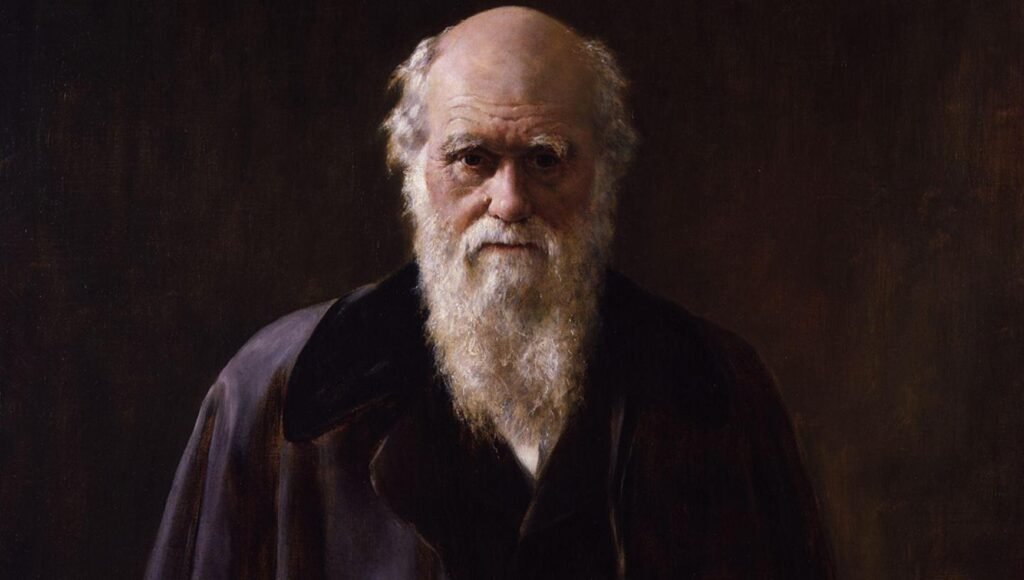
A journey that inspired the theory of evolution by natural selection
BEN FINCH
On 15 September 1835, a small British naval vessel named HMS Beagle dropped anchor off the dark, volcanic shores of San Cristóbal, the easternmost island of the Galápagos archipelago. On board was a twenty-six-year-old naturalist named Charles Darwin. He was not an established scientist seeking to overturn centuries of biological dogma; he was an enthusiastic, meticulous collector eager to study the geology, plants, and animals of isolated landmasses.
At the time, neither Darwin nor Captain Robert FitzRoy could have predicted that the five weeks spent navigating this desolate, equatorial archipelago would eventually dismantle the prevailing scientific view of creation and reframe humanity’s understanding of the natural world.
To appreciate the significance of the Galápagos Islands in scientific history, one must look beyond the popular myth of a sudden, dramatic breakthrough. Darwin did not step onto the lava rocks, look at a finch, and instantly formulate the theory of natural selection. The reality is far more compelling: it was a story of methodical observation, missteps, painstaking record-keeping, and years of intellectual reflection after returning to England.
Five weeks that reshaped natural history / Key takeaways from Darwin’s Galápagos
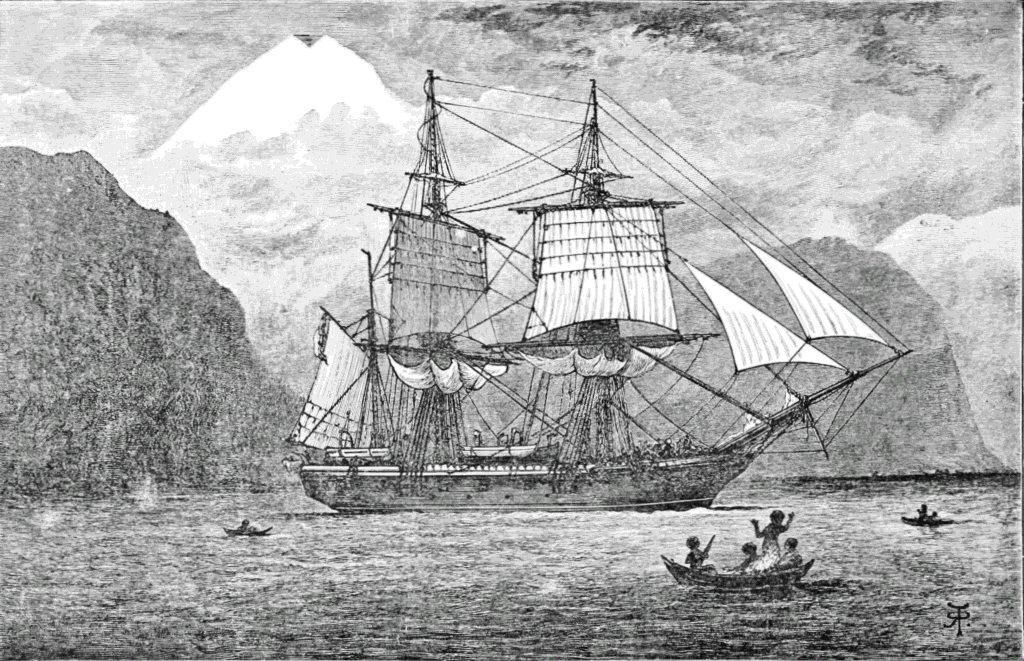
Five weeks spent navigating an isolated volcanic archipelago turned Charles Darwin from a meticulous collector into the architect of evolutionary science. Here is what independent travellers should know about the history, species, and terrain that sparked a scientific revolution.
- Volcanic isolation: Formed by underwater eruptions millions of years ago, the bleak basaltic terrain created isolated microclimates where flora and fauna adapted in complete independence from the South American mainland
- San Cristóbal shore landing: As the initial landing point for HMS Beagle in September 1835, Cerro Tijeretas and the surrounding bay provided Darwin with his first look at endemic reptiles and volcanic formations
- The tortoise shell observation: Vice-Governor Nicholas Lawson on Floreana Island pointed out that shell shapes varied predictably between islands, providing early evidence of localised adaptation
- Mockingbirds over finches: Subtle variations in mockingbird plumage across individual islands were the primary animals that raised Darwin’s early suspicions that species were not fixed entities
- John Gould’s taxonomy: British ornithologist John Gould later identified thirteen distinct ground finch species from Darwin’s collection, establishing the principle of adaptive radiation
- A two-decade delay: It required twenty-four years of painstaking research, pigeon breeding, and population analysis back in England before Darwin published On the Origin of Species in 1859
- Preserved historical sites: Modern visitors can still explore unchanged environments across Tagus Cove and Post Office Bay thanks to strict national park regulations and low-impact travel protocols
The Galápagos.
Ecuador’s Enchanted Isles
The voyage of HMS Beagle and arrival at the archipelago
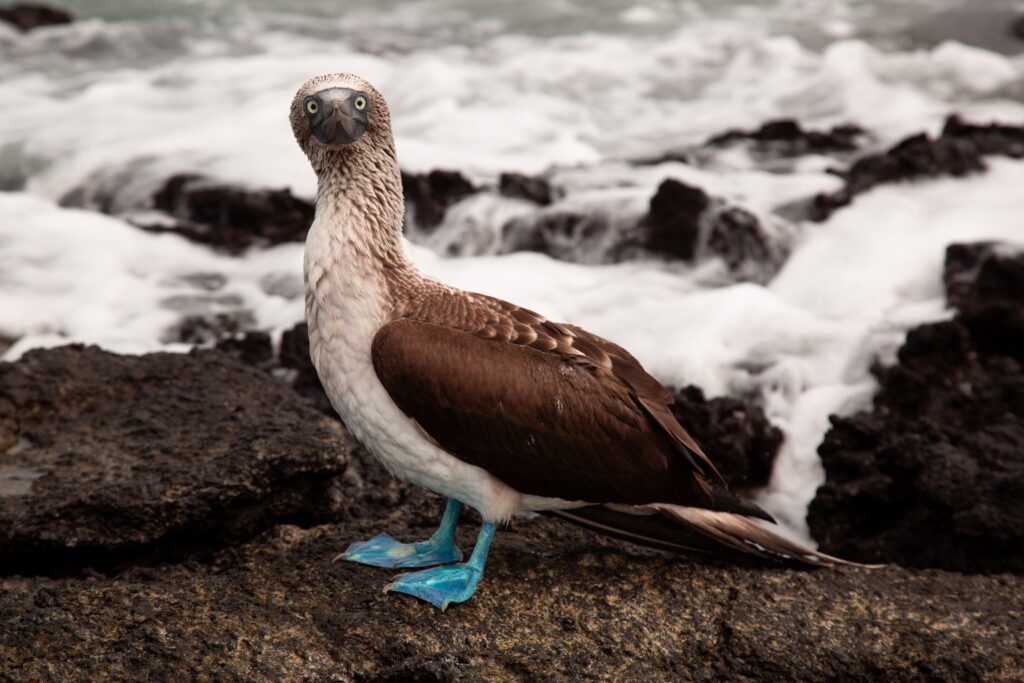
HMS Beagle had been commissioned by the Admiralty to conduct hydrographic surveys around the coastline of South America. Darwin had joined the expedition as an unsalaried companion to Captain FitzRoy and as a naturalist. By the time the ship reached the Galápagos Islands in September 1835, the voyage had already lasted nearly four years. Darwin had explored the pampas of Argentina, climbed sections of the Andes, and collected thousands of specimens of flora, fauna, and fossils.
The Galápagos Islands, located approximately 1,000 kilometres off the coast of mainland Ecuador, offered a starkly different landscape from the lush rainforests or high mountain passes Darwin had previously encountered. Formed by undersea volcanic activity millions of years ago, the islands presented a bleak, lunar quality. Black basaltic lava beds, jagged craters, and prickly pear cacti dominated the terrain near sea level.
Darwin noted his initial impressions in his diary, describing the landscape as resembling the iron furnaces of Staffordshire. Yet, despite the harsh environment, the islands teemed with unusual life forms that showed astonishingly little fear of humans. Blue-footed boobies nested directly on the paths, giant land tortoises ambled through the highlands, and black marine iguanas—the only sea-foraging lizards on the planet—basked by the thousands on the shoreline.
Island by island / Darwin’s explorations across four key stops
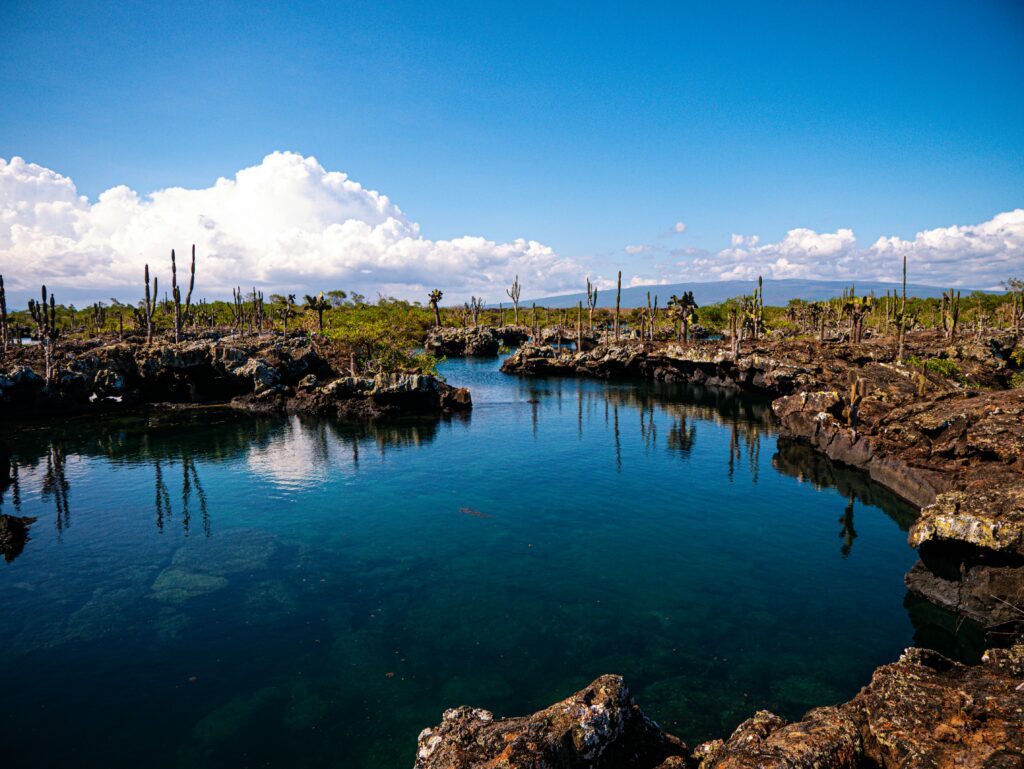
During the thirty-five days HMS Beagle spent in the waters of the archipelago, Darwin spent nineteen days on land across four main islands: San Cristóbal, Floreana, Isabela, and Santiago. Each location provided a distinct piece of a puzzle he would only begin to solve years later.
| Island | Historical Name | Key Historical Observations |
| San Cristóbal | Chatham Island | First landing site; geological study of volcanic craters |
| Floreana | Charles Island | Vice-Governor notes tortoise shell variations by island |
| Isabela | Albemarle Island | Extensive study of marine and land iguanas |
| Santiago | James Island | Major specimen collection of birds, insects, and plants |
San Cristóbal / Chatham Island
The ship first anchored near modern-day Puerto Baquerizo Moreno. Darwin spent his early days examining the geology of the island, marvelling at the hundreds of extinct volcanic cones. He collected his first specimens of Galápagos mockingbirds and plants, noting that while the species resembled those of the South American mainland, they possessed distinct local characteristics.
Floreana / Charles Island
Moving west, HMS Beagle anchored at Floreana, which was home to a small penal colony established by Ecuador. Here, Darwin had a brief but crucial conversation with the island’s Vice-Governor, Nicholas Lawson. Lawson casually mentioned that he could tell which specific island a giant tortoise came from simply by looking at the shape and pattern of its shell.
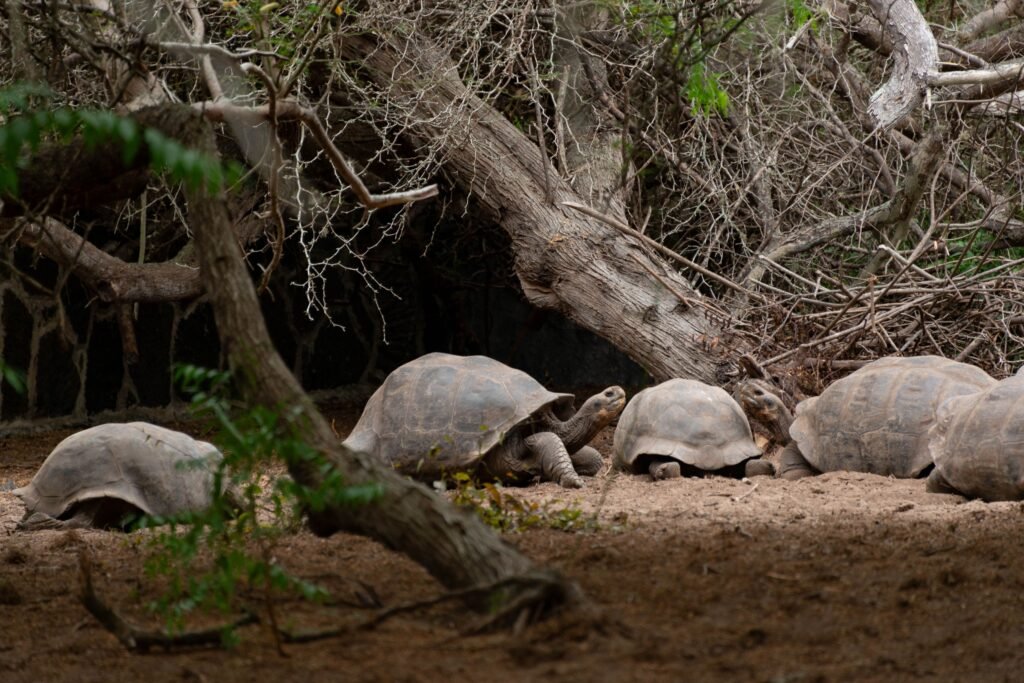
Tortoises from drier islands had saddleback shells that allowed their necks to reach high vegetation, whereas tortoises from wetter, lush islands had dome-shaped shells. Darwin made a note of this observation, though he did not fully grasp its revolutionary implications at the time.
Isabela / Albemarle Island
On Isabela, the largest island in the chain, Darwin observed the dramatic lava flows of Tagus Cove and spent hours observing marine iguanas. He was fascinated by their adaptation to ocean feeding, noting how they swam with ease through the surf to graze on underwater algae, yet possessed a physical structure otherwise identical to terrestrial lizards.
Santiago / James Island
In October, Darwin spent nine days camping on Santiago with his assistant, Syms Covington. This was his most productive period for specimen collecting. He gathered birds, reptiles, insects, and flora from both the arid coast and the humid interior highlands. It was on Santiago that Darwin collected the majority of the land bird specimens that would later become famous in evolutionary biology.
The Ecuadorian Sierra.
Get lost in the hills
The species that unlocked the secret / Mockingbirds, tortoises, and finches
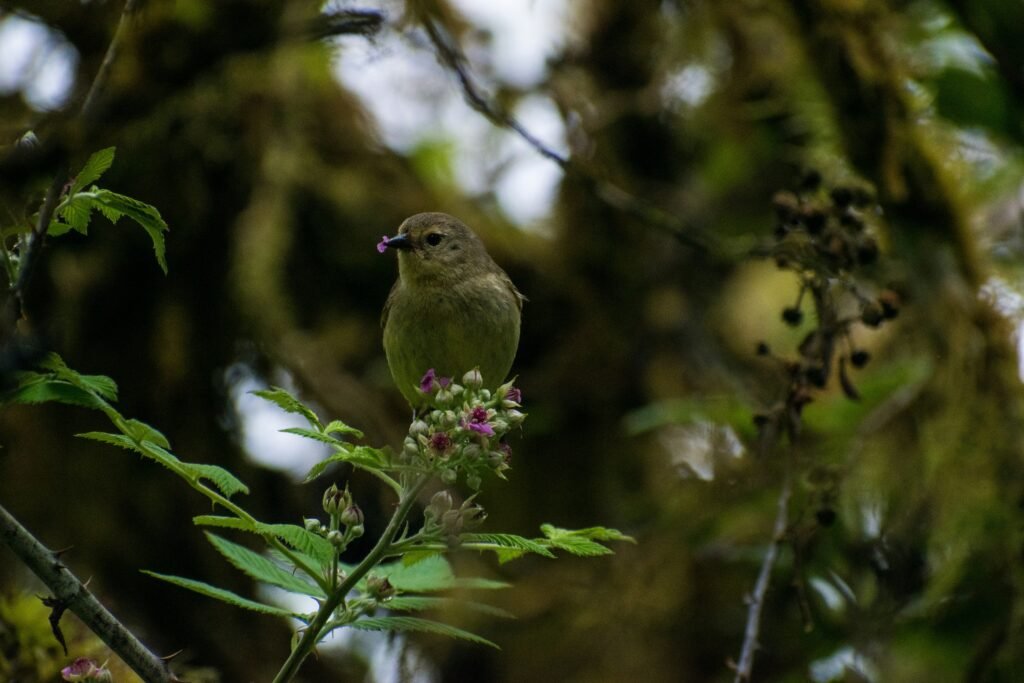
Popular culture often attributes the discovery of evolution almost entirely to Darwin’s finches. However, historical records and Darwin’s own notebooks reveal a slightly different story.
The critical role of the mockingbird
The first animals to genuinely provoke Darwin’s suspicion that species were not fixed entities were not finches, but mockingbirds. On San Cristóbal, Floreana, Isabela, and Santiago, Darwin noticed that the mockingbirds differed subtly in colour, beak size, and markings from island to island.
Unlike the finches, which were notoriously difficult to distinguish in the field, the mockingbirds were distinct enough that Darwin carefully catalogued which island each specimen came from. While sailing towards Tahiti after leaving the Galápagos, Darwin reflected on these birds in his ornithological notes, writing that if these mockingbirds were distinct varieties confined to separate islands, such facts would undermine the stability of species.
Giant tortoises and adaptive radiation
The giant tortoises (Chelonoidis) provided another vital clue regarding geographical isolation. The isolation of islands separated by deep oceanic trenches created natural laboratories where populations, restricted to their specific local environments, adapted over generations to available food sources and microclimates.
The finches and John Gould’s revelation
When Darwin collected small land birds across the islands, he initially struggled to classify them. He mistook several species of ground finches, cactus finches, and warbler finches for members of completely different bird families, including blackbirds, wrens, and grosbeaks. Crucially, he failed to label many of his finch specimens by individual island, grouping them together under the general category of the Galápagos.
It was only after returning to London in October 1836 that the true picture began to emerge. Darwin turned his collection over to the distinguished British ornithologist and artist John Gould. In early 1837, Gould delivered a startling piece of news: all those varied small birds were not a random assortment of different families, but a closely related group of ground finches comprising thirteen distinct species found nowhere else on Earth.
This revelation triggered a profound realisation in Darwin. A single ancestor species must have arrived in the archipelago from mainland South America millions of years prior. Over vast periods of time, as populations dispersed across different islands with varying food resources—seeds, insects, cactus fruit—they adapted, eventually diverging into entirely new species.
The Ecuadorian Amazon.
The most biodiverse place in the world
From field notes to On the Origin of Species
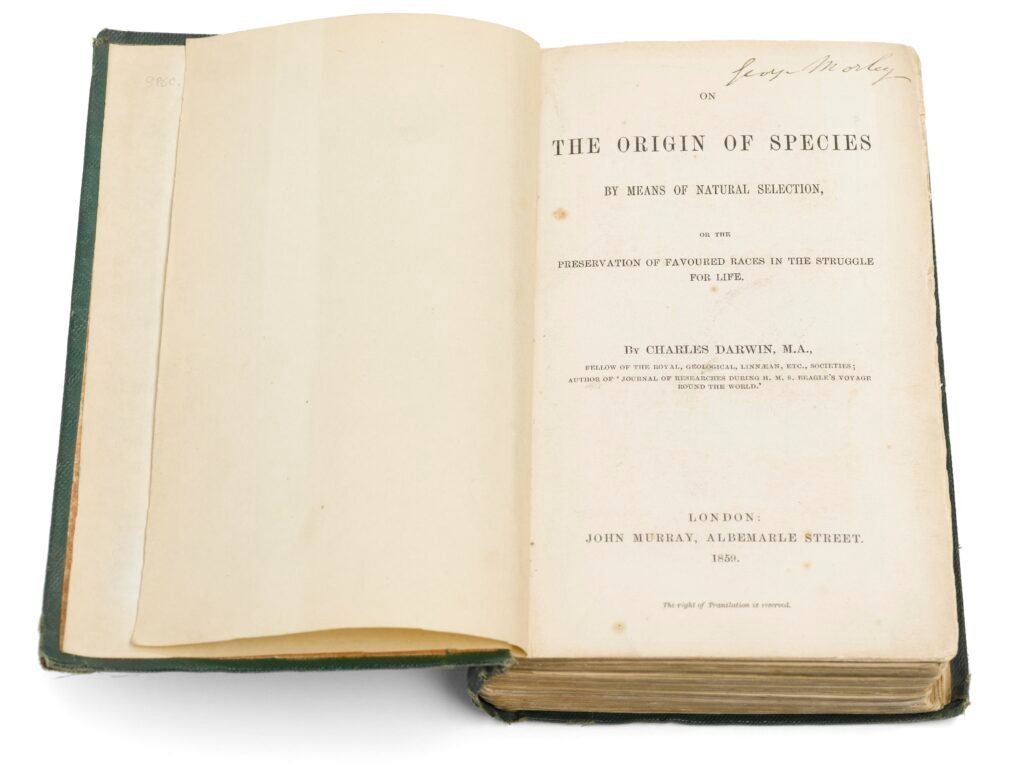
The journey from observing variations in the Galápagos in 1835 to publishing On the Origin of Species in 1859 took more than two decades. Darwin was acutely aware of the social, scientific, and religious upheaval his ideas would cause in Victorian Britain.
Upon his return, Darwin began his secret notebooks on the Transmutation of Species in 1837. He read Thomas Malthus’s essay on population dynamics in 1838, which provided the key mechanism he needed: more individuals are born than can survive, leading to a struggle for existence where favourable variations are preserved, and unfavourable ones are eliminated. This mechanism became known as natural selection.
In 1839, Darwin published his travel account, The Voyage of the Beagle, which brought him immediate literary fame. In it, he wrote prophetically about the Galápagos archipelago: “The archipelago is a little world within itself… Seeing this height of organisation on small, barren, and rocky islands, we seem to be brought somewhat near to that great fact—that mystery of mysteries—the first appearance of new beings on this earth.”
For twenty years, Darwin refined his theory, conducting breeding experiments with pigeons, studying barnacles, and corresponding with naturalists worldwide. It was only in 1858, when Alfred Russel Wallace independently arrived at a near-identical concept of natural selection, that Darwin was prompted to publish his work. On 24 November 1859, On the Origin of Species by Means of Natural Selection was released to the public, selling out its print run on the very first day.
Visiting the historical Galápagos today
For contemporary travellers, exploring the Galápagos Islands remains one of the most profound natural history experiences on the planet. Thanks to strict conservation protocols established by the Galápagos National Park and the Charles Darwin Foundation, much of the archipelago remains in a state remarkably similar to what Darwin encountered in 1835.
Key historical locations to experience
- Cerro Tijeretas (San Cristóbal Island): Located near Puerto Baquerizo Moreno, this hill offers panoramic views over the bay where Darwin first stepped ashore from HMS Beagle
- Charles Darwin Research Station (Santa Cruz Island): Established in 1959, this international non-profit research centre provides vital insight into ongoing giant tortoise breeding programs and habitat restoration efforts across the archipelago
- Post Office Bay (Floreana Island): A historic wooden barrel established by whaling ships in 1793, where sailors left unstamped mail to be picked up by ships heading home. Darwin visited this exact site during his time on Floreana
- Tagus Cove (Isabela Island): A sheltered deep-water anchorage visited by pirates, whalers, and naval crews. Visitors can still see historical graffiti carved into the volcanic rock walls dating back to the 1800s
| Conservation Metric | Status / Detail | Significance |
| National park protection | 97% of land area | Preserves pristine habitats |
| UNESCO World Heritage listing | Designated in 1978 | Recognises global value |
| Marine reserve area | 198,000 square kilometres | Protects vital marine migration |
Understanding the deep history of these islands transforms a trip from a simple wildlife viewing holiday into an immersive walk through scientific history. When you watch a marine iguana dive through cold Humboldt Current waters or observe a giant tortoise grazing in the cloud forests of the highlands, you are seeing the exact natural phenomena that reshaped human understanding of life itself.
The Ecuadorian Coast.
Where you’ll find the very best food
Reflections on a lasting scientific legacy
Read this far?
Charles Darwin’s five weeks in the Galápagos Islands demonstrate the power of patient observation, open-minded scientific inquiry, and environmental awareness. The archipelago was not just a scenic backdrop; it was the essential catalyst that allowed one of history’s greatest naturalists to unlock the mechanism connecting all living things.
As we look at modern conservation challenges, the Galápagos stands as a reminder of how fragile isolated ecosystems can be—and how essential it is to protect these living laboratories for generations to come.
Affiliate Disclaimer: Some of the links on Wheely Tyred are affiliate links. If you click through and make a booking or purchase, we may earn a small commission at no extra cost to you. We only recommend gear, tours, stays, and services we genuinely use, trust, and stand behind — our editorial independence always comes first. These commissions help keep our independent cycling guides and travel stories free to read. You can also buy me a coffee here — thanks for supporting the ride!
Frequently asked questions about Charles Darwin and the Galápagos Islands
Darwin spent thirty-five days in Galápagos waters between September and October 1835 aboard HMS Beagle. During this period, he spent nineteen days on land conducting fieldwork across four specific islands: San Cristóbal, Floreana, Isabela, and Santiago.
No. Darwin did not experience an instant breakthrough during his shore visits. His theory developed gradually after returning to London in October 1836, following conversations with ornithologist John Gould and years of reflection on his field notebooks.
Darwin failed to label many of his finch specimens by individual island during his collection trips. However, he kept precise geographic records for mockingbirds, noticing distinct physical variations from island to island that first challenged his belief in the permanence of species.
Independent travellers can visit Cerro Tijeretas on San Cristóbal, where Darwin first stepped ashore; Post Office Bay on Floreana, featuring a historical barrel mailbox used by 18th-century mariners; Tagus Cove on Isabela; and the Charles Darwin Research Station on Santa Cruz.
Tortoises inhabiting dry, arid islands evolved saddleback shells and elongated necks to reach high cacti. Conversely, tortoises living in humid, lush highlands developed dome-shaped shells suited for grazing on ground-level vegetation.
Ninety-seven per cent of the land mass forms the Galápagos National Park, complemented by a marine reserve covering 198,000 square kilometres. Strict visitor quotas, mandatory local guide requirements, and marked trails protect the delicate ecosystems Darwin observed nearly two centuries ago.
Ecuador.
Pure wonder on the equator.