A resilient history of Guayaquil, the Pearl of the Pacific
Discover the fascinating historical landmarks and cultural evolution of Guayaquil, Ecuador
Rising from the ashes of fire and the echoes of revolution
BEN FINCH
It is important to address the reality on the ground: at this time, Wheely Tyred does not recommend travelling to Guayaquil unless it is absolutely essential.
While the city’s culture and history are compelling, the current safety climate presents risks that shouldn’t be overlooked by the independent traveller.
For those whose travel is necessary, we have compiled a detailed Guayaquil Safety Guide: Everything You Need to Know Before You Go to ensure you are as informed and secure as possible during your stay.
Guayaquil is a city that refused to stay down. Known affectionately as the Pearl of the Pacific, Ecuador’s largest city and primary port is a sprawling, humid metropolis with a spirit forged by fire, piracy, and a fierce desire for independence. To walk through the modern Malecón 2000 or climb the 444 steps of Santa Ana Hill is to move through layers of history that span from ancient maritime traders to the architects of South American liberation.
At Wheely Tyred, we believe that understanding the why behind a destination transforms a simple visit into a profound experience. Guayaquil is not just a gateway; it is a survivor. Its story is one of constant reinvention, a trait that remains evident in its bustling streets and the vibrant, independent spirit of its people.
The iron heart of the Pacific
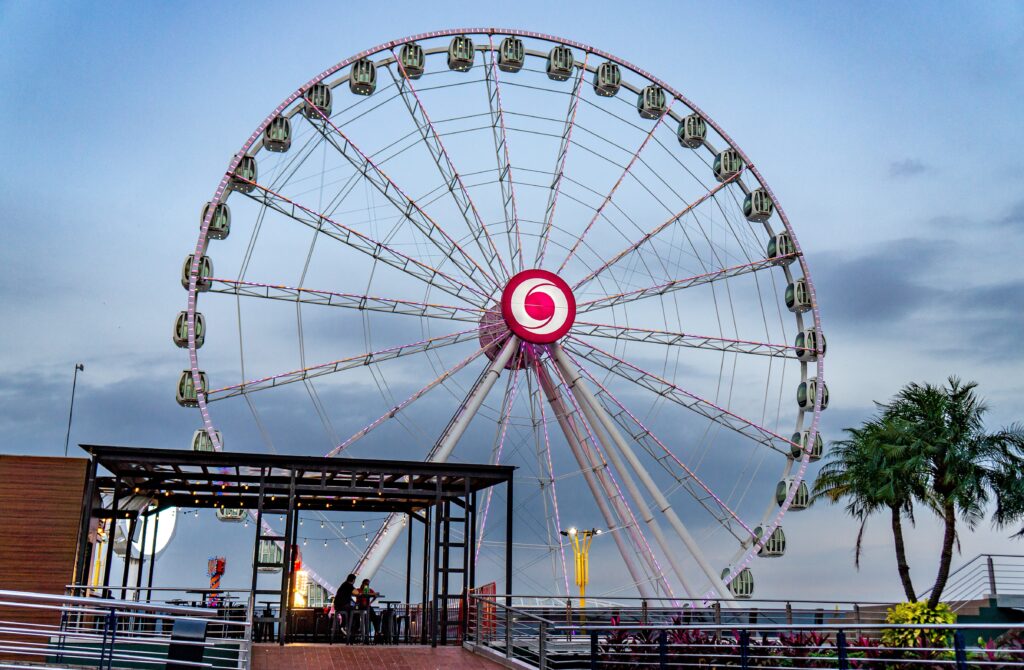
Guayaquil is a city defined by its ability to rise from the ashes, moving from ancient maritime mastery to revolutionary fervour. It is a place where the humid river air carries stories of pirates, liberators, and a remarkable architectural rebirth.
- Ancient navigation. Long before colonial arrival, the Huancavilca people mastered the Gulf of Guayaquil using advanced balsa rafts to dominate trade routes stretching as far as Mexico
- Pirate resistance. During the 17th and 18th centuries, the city’s status as a premier Spanish shipyard made it a frequent target for English and Dutch buccaneers, forging a culture of constant resilience
- The dawn of liberty. On 9 October 1820, Guayaquil achieved a near-bloodless revolution, briefly becoming a sovereign state and providing the strategic spark for the liberation of the wider continent
- A meeting of giants. The 1822 Guayaquil Conference saw the historic and mysterious summit between Simón Bolívar and José de San Martín, a pivotal moment that decided the fate of South American independence
- Architectural reinvention. Following the devastating Great Fire of 1896, the city moved away from colonial wooden structures to a unique Republican style, blending reinforced concrete with tropical adaptations like wide balconies
- Riverfront revival. The Malecón 2000 project transformed a neglected riverfront into a vibrant public space, seamlessly weaving together historical monuments with modern botanical gardens and urban life
Guayaquil.
The Pearl of the Pacific
The maritime masters / The Huancavilca legacy
Long before the Spanish galleons appeared on the horizon, the Gulf of Guayaquil was the territory of the Huancavilca culture. Thriving roughly between 800 AD and 1530 AD, these were not just coastal dwellers; they were the pre-eminent sailors and merchants of the ancient Ecuadorian coast.
The Huancavilcas were famous for their mastery of balsa wood rafts. These vessels, equipped with sophisticated sails and centreboards, allowed them to navigate vast distances. They established a far-reaching maritime trade network—often referred to as the League of Merchants—that stretched as far north as Mexico and as far south as Peru. They traded spondylus shells (the red gold of the Andes), copper, and fine textiles.
When you stand by the Guayas River today, you are standing at the heart of an ancient transport hub. The Huancavilcas’ ability to move goods and people across water was a precursor to the city’s eventual role as South America’s most important shipyard. Their resistance to both Inca expansion and early Spanish incursions set a historical precedent for Guayaquil’s enduring independence.
The colonial struggle / Pirates and pestilence
The official founding of Guayaquil was a nomadic affair. The city was moved and re-established several times between 1534 and 1547 due to indigenous resistance and unsuitable terrain. Eventually, it settled at the foot of Santa Ana Hill (Cerro Santa Ana), where the Guayas River provided a natural defensive and commercial advantage.
During the colonial era, Guayaquil became the most vital shipyard for the Spanish Empire in the South Pacific. The abundant local timber, particularly the durable Guayacán, made it the ideal spot for building and repairing the great vessels of the Spanish fleet. However, this wealth made the city a magnet for pirates and buccaneers.
Throughout the 17th and 18th centuries, Guayaquil was repeatedly sacked by English and Dutch pirates. Names like Thomas Cavendish and Edward Davis struck fear into the local population. These attacks, combined with frequent outbreaks of yellow fever and the ever-present threat of fire in a city built almost entirely of wood, meant that colonial Guayaquil was in a near-constant state of rebuilding. This cycle of destruction and rebirth became a core part of the city’s identity.
The Ecuadorian Coast.
Where you’ll find the very best food
1820 / The dawn of the Free Province of Guayaquil
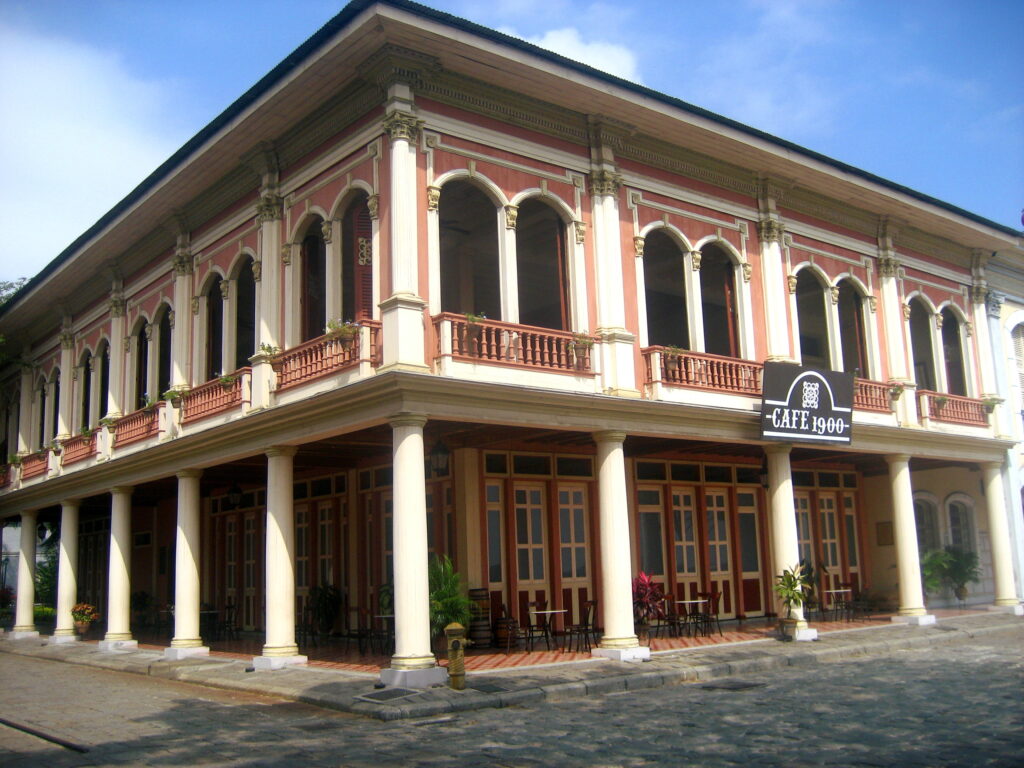
While the city of Quito claims the first cry of independence in 1809, it was Guayaquil that delivered the most decisive blow against Spanish rule in what is now Ecuador. On 9 October 1820, a group of local civilians and military officers—led by figures such as José Joaquín de Olmedo, José de Antepara, and José de Villamil—staged a near-bloodless revolution.
They declared the independence of the Free Province of Guayaquil. For a brief, shining moment, Guayaquil was a sovereign state with its own constitution and government. This was a pivotal moment for the entire continent. The city’s independence provided a strategic base for the liberating armies of the north, led by Simón Bolívar, and the south, led by José de San Martín.
The Guayaquil Conference / A meeting of titans
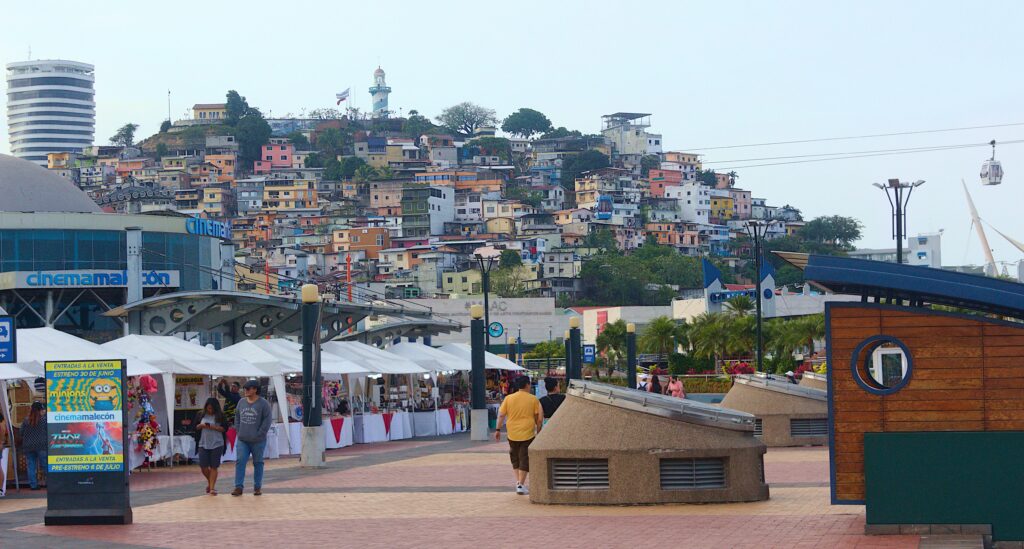
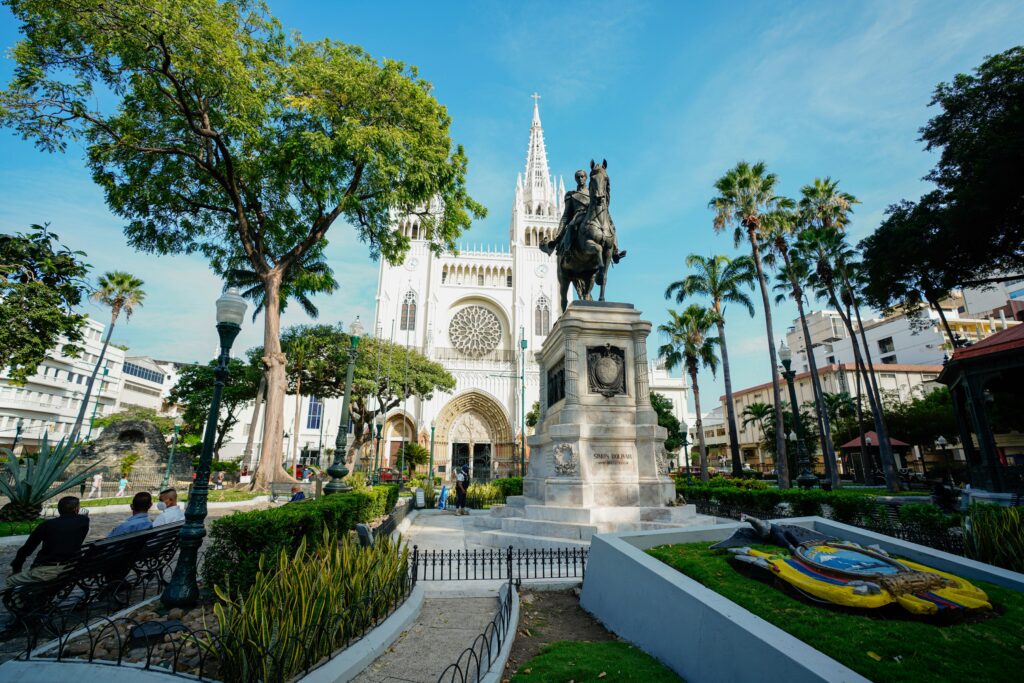
One of the most significant diplomatic events in South American history took place in Guayaquil in July 1822. The two Liberators of the continent, Simón Bolívar and José de San Martín, met in secret to discuss the future of the newly independent territories and the final push against Spanish forces in Peru.
The exact details of their conversation remain one of history’s great mysteries, as no minutes were taken. However, the outcome was clear: San Martín withdrew from the campaign and left the final liberation of South America to Bolívar. Shortly after, Guayaquil was incorporated into Bolívar’s Gran Colombia, a decision that remains a point of historical debate among Guayaquileños who still cherish the memory of their brief period of total autonomy. You can see this meeting immortalised in the grand La Rotonda monument on the Malecón.
The Galápagos.
Ecuador’s Enchanted Isles
The Great Fire of 1896 and the Republican rebirth
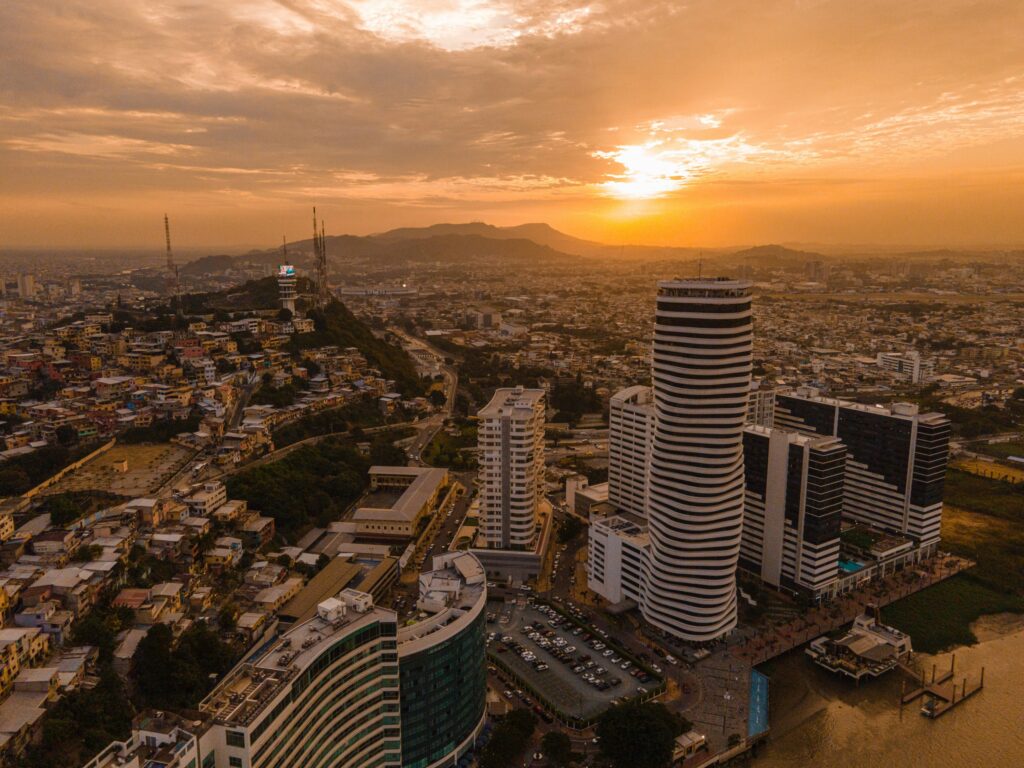
If you notice that Guayaquil’s historic centre looks different from the colonial hearts of Quito or Cuenca, it is because of the Gran Incendio (The Great Fire) of 1896. On the night of 5 October, a fire started that eventually consumed nearly half of the city. More than 20,000 people were left homeless, and the majority of the city’s colonial wooden architecture was turned to ash.
The city that rose from these ashes was a different Guayaquil. The reconstruction ushered in the Republican style of architecture. Influenced by European trends, architects used new materials like reinforced concrete and iron, but they adapted them to the tropical climate. High ceilings, wide balconies, and intricate wooden shutters (to catch the river breeze) became the new standard.
The neighbourhood of Las Peñas, though it has suffered its own fires, remains the best place to see the evolution of this style. Its colourful houses and cobblestone streets represent a bridge between the colonial past and the modern city.
The Ecuadorian Sierra.
Get lost in the hills
Modern Guayaquil / Urban regeneration and the Malecón 2000
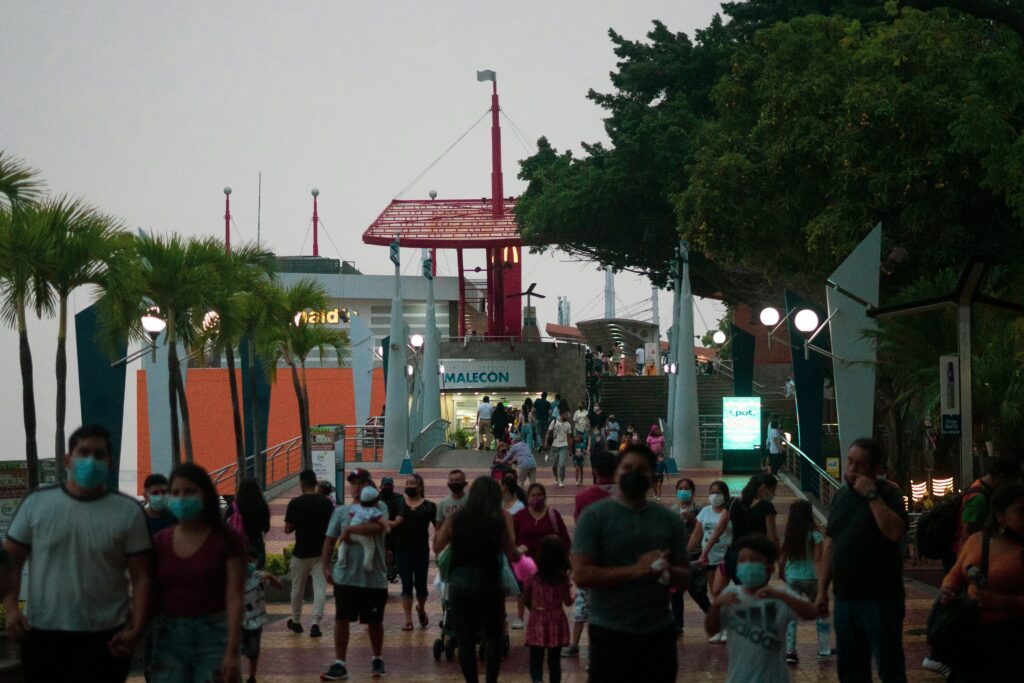
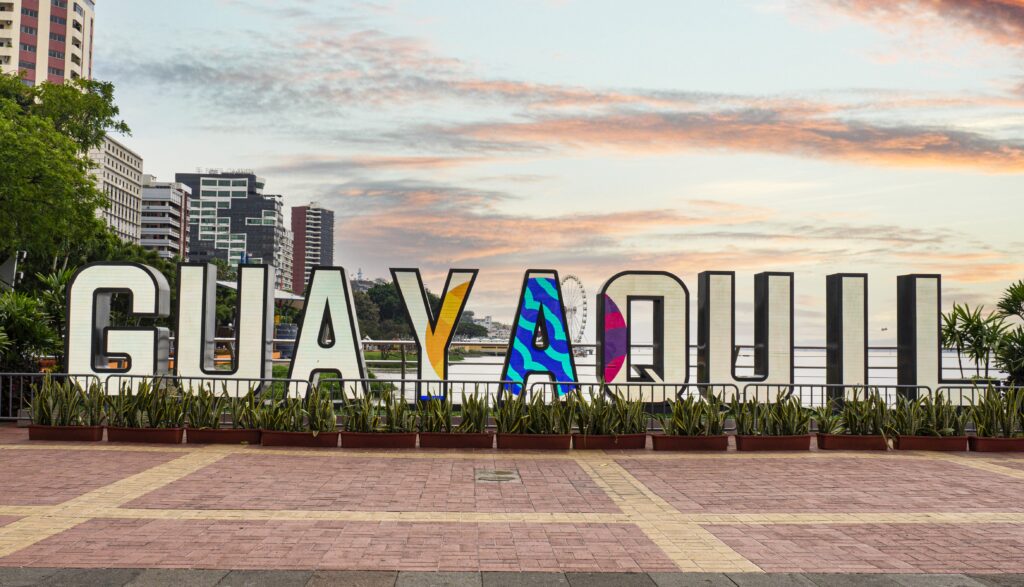
By the late 20th century, Guayaquil faced significant challenges with urban decay and safety. In the late 1990s, the city embarked on one of the most ambitious urban regeneration projects in Latin America: the Malecón 2000.
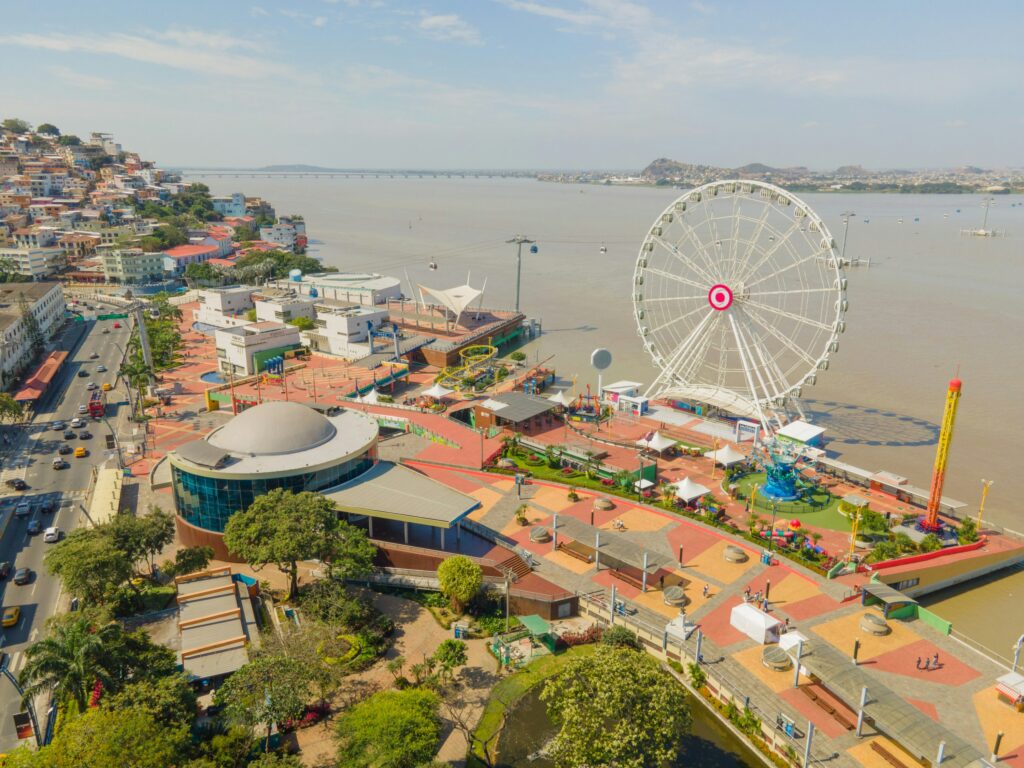
This 2.5-kilometre boardwalk transformed the riverfront from a neglected area into a world-class public space. It successfully integrated historical monuments, like the Moorish Clock Tower and La Rotonda, with modern botanical gardens, museums, and shopping areas. This project served as a catalyst for further regeneration, including the colourful restoration of the stairs leading up Santa Ana Hill.
For the modern traveller, this area is the perfect starting point to understand the city’s flow. It is where the ancient river trade, the revolutionary spirit, and the modern commercial drive of the city all converge.
The Ecuadorian Amazon.
The most biodiverse place in the world
Moving through Guayaquil’s history
Movement has always defined Guayaquil. From the balsa rafts of the Huancavilca to the steamships that exported the world’s finest cacao in the 1900s, the city’s history is a history of transport. Today, as the city embraces more sustainable urban mobility, there is a growing appreciation for the independence that cycling and walking provide in a bustling port.
Understanding the history of Guayaquil is about recognising that change is the only constant. Whether it’s surviving a pirate raid or rebuilding after a Great Fire, the people of this city—the Guayaquileños—have always moved forward with an unshakeable sense of pride.
Affiliate Disclaimer: Some of the links on Wheely Tyred are affiliate links. If you click through and make a booking or purchase, we may earn a small commission at no extra cost to you. We only recommend gear, tours, stays, and services we genuinely use, trust, and stand behind — our editorial independence always comes first. These commissions help keep our independent cycling guides and travel stories free to read. Thanks for supporting the ride!
Frequently asked questions about the history of Guayaquil
The most rewarding way to experience the city’s roots is to start at the Malecón 2000 and walk towards the northern end to reach the neighbourhood of Las Peñas. From there, you can climb the 444 numbered steps of Santa Ana Hill. The path is lined with small shops and cafes, and the summit offers a panoramic view of the Guayas River and the sprawling city below.
Unlike Quito, which preserved much of its Spanish colonial architecture, Guayaquil was almost entirely rebuilt following the Great Fire of 1896. This led to the adoption of the Republican style, which prioritised ventilation and fire-resistant materials while maintaining a grand, European-influenced aesthetic suited for the tropics.
Located on the Malecón, the Torre Morisca is one of the city’s most iconic landmarks. It reflects the eclectic architectural influences that arrived in the port during the late 19th century. The clock itself was brought from England in the mid-1800s and remains a symbol of the city’s historical role as a centre of international trade and precision.
While the massive balsa rafts of the Huancavilca are a thing of the past, the Guayas River remains the lifeblood of the city. Travellers can take small ferries or tour boats from the Malecón to Santay Island, an ecological wetland connected to the city by a pedestrian and cycling bridge, offering a quiet escape from the urban heat.
Las Peñas is the oldest residential district in the city and survived several of the fires that claimed other areas. Look for the brightly painted wooden houses that represent the early Republican era. Many of these buildings now house art galleries and cultural centres, reflecting the area’s transformation from a humble shipyard worker district into an artistic hub.
Ecuador.
Pure wonder on the equator.