The best multi-day expeditions into Yasuní National Park / Amazon jungle journeys
Yasuní National Park multi-day tours, guided Amazon expeditions & Ecuador jungle itineraries
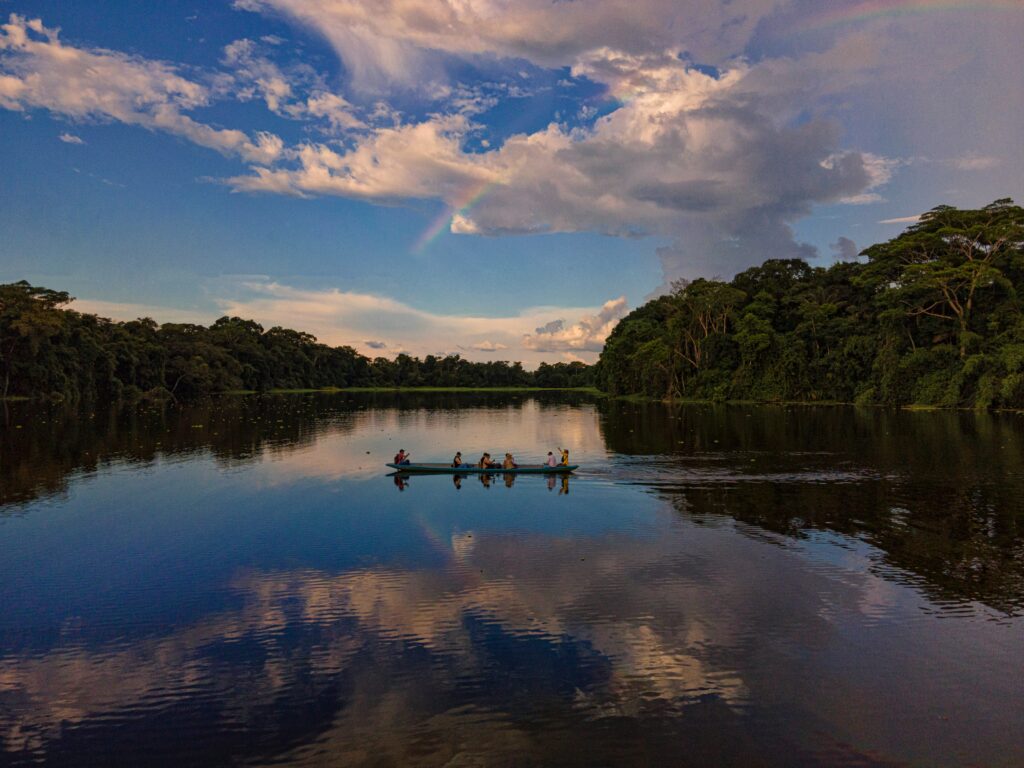
Slow overland and river adventures in Ecuador’s Amazon
BEN FINCH
Deep within the upper Amazon Basin lies Yasuní National Park, a land where the green canopy stretches to the horizon and the rivers flow like quiet veins through primary rainforest. Recognised globally as a UNESCO Biosphere Reserve, Yasuní is widely considered one of the most biodiverse places on Earth. A single hectare here contains more native tree species than the whole of North America combined, while the branches above echo with the calls of over 600 bird species and ten distinct primates.
For the independent traveller, reaching this remote wilderness presents a formidable logistical puzzle. Navigating the journey requires domestic air connections from Quito to the frontier town of Puerto Francisco de Orellana (commonly known as El Coca), followed by hours of travel down the powerful Napo River by motorised canoe. Add to this the necessity of securing park permits, arranging community access rights, and finding expert native trackers who can read the subtle signs of the jungle, and it becomes clear why independent day trips simply cannot do this region justice.
At Wheely Tyred, our philosophy centres on slow, immersive, and responsible multi-day travel. Whistle-stop commercial tours and rushed day trips only scratch the surface, often leaving travellers stranded in disturbed buffer zones. To truly experience Yasuní, you must journey deep into its core, spend quiet nights listening to the night chorus of the jungle, and wake at dawn to watch the mist rise off black-water lagoons.
Booking a structured, small-group multi-day expedition resolves the complex transport logistics of river chartering and lodge permissions. Crucially, it provides direct access to indigenous-led conservation projects—such as those run by the Kichwa Añangu community—where your travel support directly protects pristine primary forest from extractive industries. Below, we have vetted five exceptional multi-day tour itineraries that deliver deep local immersion, seamless expedition planning, and unforgettable encounters with the natural world.
Yasuní uncovered / Essential rainforest takeaways
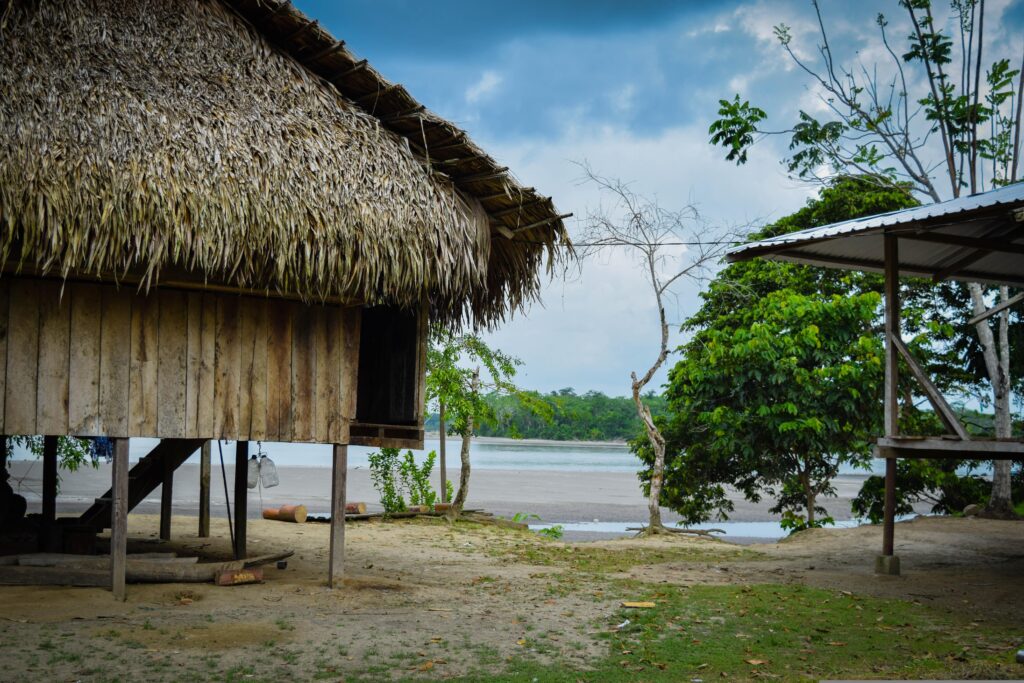
From high Andean ridges down into the deep, black-water rivers of the Amazon, exploring Yasuní requires careful planning and deep respect for local heritage. Here are the core insights and essential logistics to keep in mind before venturing into Ecuador’s primary canopy.
- The Andean-Amazonian Corridor: Linking high-altitude Quito and Cotopaxi with the lowland Napo River basin reveals Ecuador’s staggering geographical contrast on a single, well-paced itinerary
- Kichwa Community Eco-Lodges: Opting for community-owned sanctuaries ensures direct financial support for indigenous-led rainforest preservation rather than extractive industries
- High-Canopy Wildlife Tracking: Ascending 35-to-45-metre canopy observation towers built around ancient kapok trees delivers unrivalled views of macaws, howler monkeys, and toucans above the forest line
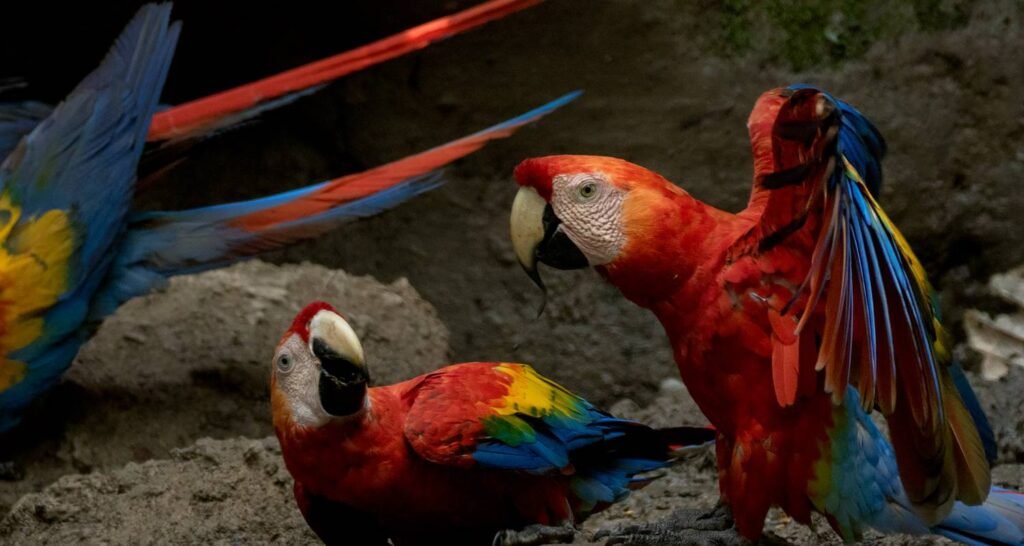
- Ancestral Clay Licks: Visiting saladeros at dawn provides front-row seats to thousands of colourful parrots and parakeets absorbing essential soil minerals along the riverbanks
- Strict Luggage Limits: Internal flights from Quito to El Coca enforce a 20 kg checked luggage cap, requiring flexible duffel bags that can easily be stowed in long-tail river canoes
- Galápagos Biosecurity: Travellers combining the Amazon with the Galápagos Islands must meticulously scrub boots and outdoor gear to prevent the cross-contamination of tropical seeds and soil
Yasuní National Park.
Home to the black water
Highlands to lowlands / The great Andean-Amazonian corridor
Rating & reviews
(1+ verified review on TourRadar)
Why this tour stands out
This week-long expedition offers an extraordinary cross-section of Ecuador’s dramatic physical geography. Rather than dropping you straight into the humid lowlands, the journey begins in the high-altitude capital of Quito (2,850 metres above sea level), taking time to explore the volcanic vistas of Cotopaxi National Park and the historic Andean corridor.
From the high mountain páramo, the tour descends rapidly to the frontier river port of El Coca, where you board a motorised long-tail canoe to navigate down the Napo River into the deep rainforest reserves of Yasuní.
Operated by Authentic Ecuador, this small-group journey balances cultural heritage with deep wilderness exploration. Accommodations transition smoothly from historic, mountain-view boutique inns in the highlands to traditional, sustainably constructed eco-lodges surrounded by primary jungle. The pace is deliberate and well-considered, allowing your body to adapt as you shift from the cool mountain air to the warm, humid embrace of the Amazonian canopy.
Key highlights
- Comprehensive guided exploration of historic Quito and the high-altitude landscapes of Cotopaxi
- Scenic overland descent from the high Andes down to the Amazonian gateway of El Coca
- Motorised canoe expedition down the Napo River, the principal tributary feeding the Amazon River basin
- Excursions up 35-metre canopy observation towers for views of toucans, macaws, and howler monkeys
- Nocturnal jungle safaris led by expert native guides to observe glowing fungi, tree frogs, and nocturnal mammals
- All regional ground and river transfers, eco-lodge accommodation, and full-board regional meals included
Ideal for
Active travellers and slow-adventure enthusiasts who want to experience the complete geographical contrast of Ecuador—linking high-altitude Andean mountains with primary Amazonian jungle in a single, perfectly coordinated multi-day journey.
Local insight
The rapid transition from Quito’s high altitude (2,850 metres) down to the Amazonian lowlands (250 metres) can bring swift changes in temperature and humidity. Pack breathable thermal layers for chilly mountain evenings in the Andes, alongside lightweight, synthetic long-sleeved shirts and trousers for the jungle to protect against biting insects and bright equatorial sun.
The Ecuadorian Amazon.
The most biodiverse place in the world
Immersion in the ancestral core / Indigenous community lodge expedition
Rating & reviews
(1+ verified reviews on TourRadar)
Why this tour stands out
Operated by Responsible Travel South America in direct partnership with the Kichwa Añangu community, this 5-day expedition represents the gold standard of community-owned eco-tourism. The tour removes all domestic travel stress by including round-trip flights between Quito and El Coca.
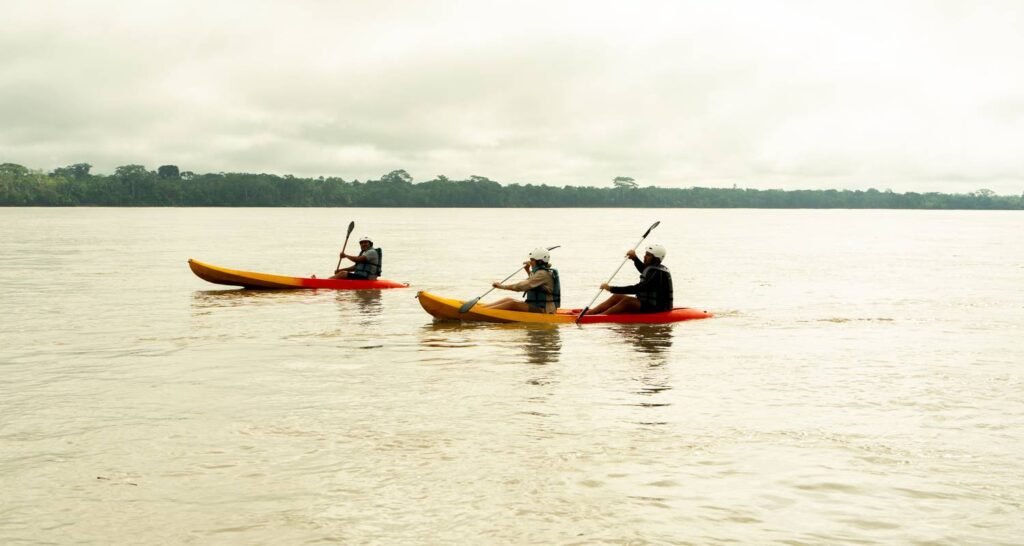
Upon arrival at the riverbank, guests board covered motorised canoes for a two-hour journey down the Napo River, followed by a serene paddle in hand-carved canoes along the black-water Añangu Creek to reach the lodge.
Because the lodge is situated entirely within the Kichwa ancestral territory, hunting and commercial logging have been strictly banned for decades. As a result, wildlife viewing here is extraordinary. Guests stay in handcrafted wooden cabañas featuring private facilities and solar hot water.
Every activity is guided jointly by a bilingual naturalist and a Kichwa community guide, offering an authentic balance of scientific insight and ancient indigenous knowledge.
Key highlights
- Round-trip domestic flights between Quito and El Coca included for seamless arrival and departure
- Direct access to two world-famous parrot clay licks (saladeros) where thousands of parrots and parakeets gather daily
- Climb a 45-metre canopy tower built around an ancient kapok tree for birdwatching above the canopy
- Cultural sharing at the Kuri Muyu Intercultural Centre, managed entirely by Kichwa community women
- Traditional Wayusada dawn ritual, sharing guayusa tea, ancestral chants, and dream interpretations with community elders
- Silent paddle canoe journeys through flooded black-water forests to spot giant river otters and caimans.
Ideal for
Eco-conscious travellers, wildlife photography enthusiasts, and cultural seekers who want absolute logistical simplicity combined with meaningful support for indigenous-led conservation.
Local insight
Regional flights from Quito to El Coca strictly enforce a 20 kg limit for checked baggage and 5 kg for hand luggage due to small aircraft capacities. Pack gear in a durable, flexible duffel bag rather than a rigid hard-shell suitcase, as luggage must be loaded by hand into narrow river canoes.
The Galápagos.
Ecuador’s Enchanted Isles
Deep rainforest ecology & sustainable community living
Rating & reviews
(165+ verified reviews on TourRadar)
Why this tour stands out
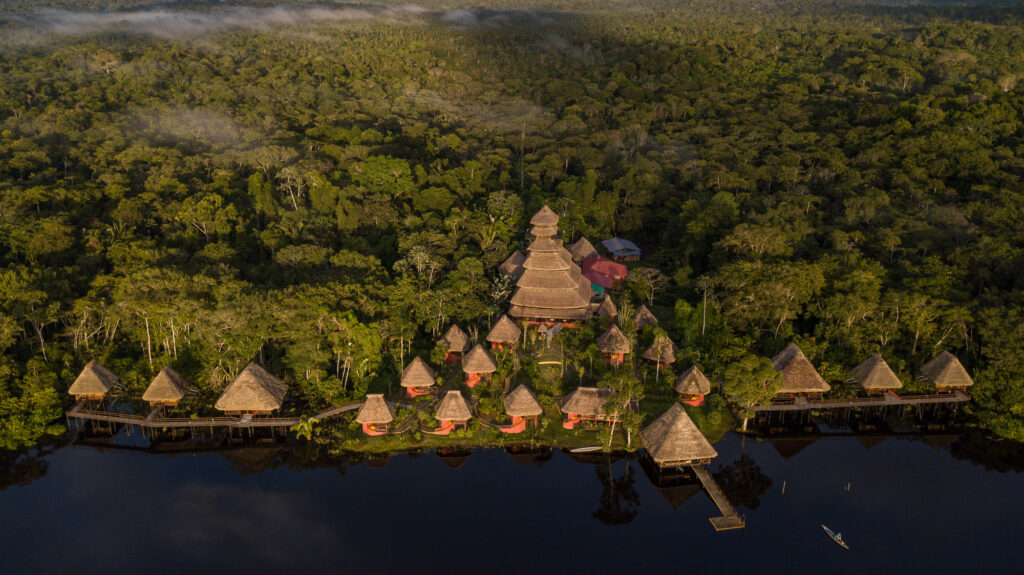
Focusing on the rich ecological intersection between Loreto Canton and the northern boundaries of Yasuní National Park, this 5-day journey delivers a deep dive into ethnobotany and wildlife tracking. Hosted at sustainable community lodges—including Yachana Lodge—the tour emphasises authentic living, regional gastronomy, and low-impact exploration across more than 2,500 acres of protected private reserve.
Accommodations feature airy, screen-enclosed wooden bungalows designed to capture forest breezes, complete with private tiled bathrooms and hot showers. Meals are a highlight of the experience, curated around locally harvested jungle ingredients: fresh river fish cooked in maito leaves, wild forest herbs, native cacao, and sweet honey from stingless bees. The pace is relaxed yet engaging, designed to foster deep appreciation for the delicate balances of the rainforest ecosystem.
Key highlights
- Daily morning wildlife walks across 2,500 acres of primary and secondary protected rainforest
- Guided ethnobotanical excursions detailing traditional Kichwa plant medicine and survival skills
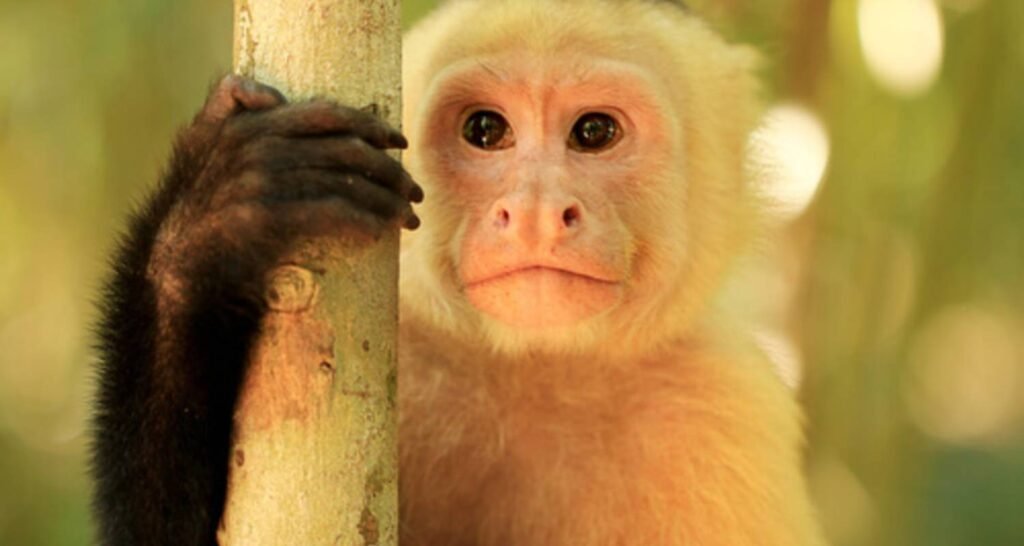
- Specialised primate tracking outings, with high chances of spotting up to eight distinct monkey species
- Interactive workshops on traditional Amazonian agriculture, sustainable cacao processing, and local cooking
- Night expeditions searching for tree frogs, sleeping toucans, tarantulas, and glowing bioluminescent fungi
- Full-board dining featuring regional ingredients, fresh tropical fruits, and traditional herbal infusions
Ideal for
Naturalists, slow-travel advocates, and curious travellers who wish to learn about rainforest medicine, native food culture, and sustainable agriculture alongside dedicated local guides.
Local insight
Humidity levels inside primary tropical rainforest routinely exceed 90 per cent. Cotton clothing retains moisture and will struggle to dry overnight. Pack quick-drying synthetic or merino-blend garments, and keep camera equipment in dry bags with silica gel packets to prevent lens condensation.
River & canopy encounters / Compact Yasuní expedition
Rating & reviews
(14+ verified reviews on Viator)
Why this tour stands out
For travellers working within tight travel schedules or overland backpackers exploring the Ecuadorian Amazon on a budget, this concentrated 3-day, 2-night expedition operated by Amazon Wildlife Tour Ecuador delivers an incredible amount of adventure. Starting directly from Hotel El Auca in El Coca, the tour moves down the Napo River to Pompeya and El Pilche, placing you inside Yasuní National Park without delay.
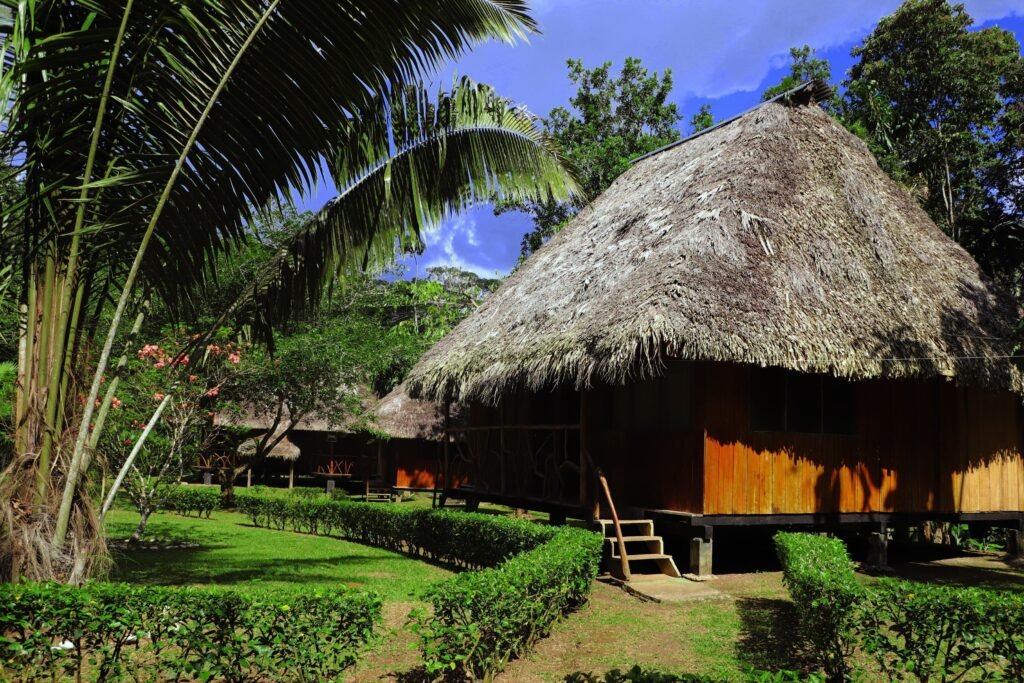
Despite its shorter duration, the itinerary does not compromise on authentic comfort. Guests are housed in cosy jungle cabañas crafted from natural, locally sourced timber and thatch. The route includes key ecological sites—such as high canopy observation towers and mineral clay licks—while actively supporting a local freshwater turtle conservation initiative that protects wild turtle eggs from poachers.
Key highlights
- Direct departure from El Coca, maximising time spent deep within the national park boundaries
- High-canopy observation tower excursions for birdwatching and spotting canopy mammals
- Visits to active mineral clay licks to witness flocks of colourful parrots feeding on nutrient-rich soil
- Hands-on educational visit to a community-led freshwater river turtle conservation facility
- Night walks along forest trails to observe nocturnal wildlife, insects, and amphibians
- All river transportation, full meal inclusions, rubber boots, and rain ponchos provided
Ideal for
Independent travellers, budget-conscious adventurers, and overland explorers who want a genuine, high-density jungle experience in a compact timeframe.
Local insight
The operator supplies rubber boots up to European size 44. If you wear a size 45 or larger, we recommend bringing your own fitted waterproof hiking boots paired with tall gaiters. Be sure to carry $30 USD in small cash bills per person to cover local community entry fees for the parrot clay licks.
The Ecuadorian Sierra.
Get lost in the hills
Equatorial epic / Bridge rainforest canopy and volcanic archipelago
Rating & reviews
(16+ verified reviews on TourRadar)
Why this tour stands out
Connecting South America’s two ultimate ecological destinations, this 8-day expedition bridges the primary Amazonian rainforest of the Napo-Yasuní corridor with the volcanic marine sanctuaries of the Galápagos archipelago.
Managing the inter-provincial flight arrangements, maritime permits, and lodge transfers across both regions can be daunting; this tour integrates every detail into a seamless, multi-day journey.
The adventure begins along the riverways of the Amazon, exploring canopy towers, wildlife creeks, and native communities, before taking a regional flight west to the Pacific Ocean. In the Galápagos, accommodation shifts to comfortable island eco-lodges on Santa Cruz and Isabela Islands.
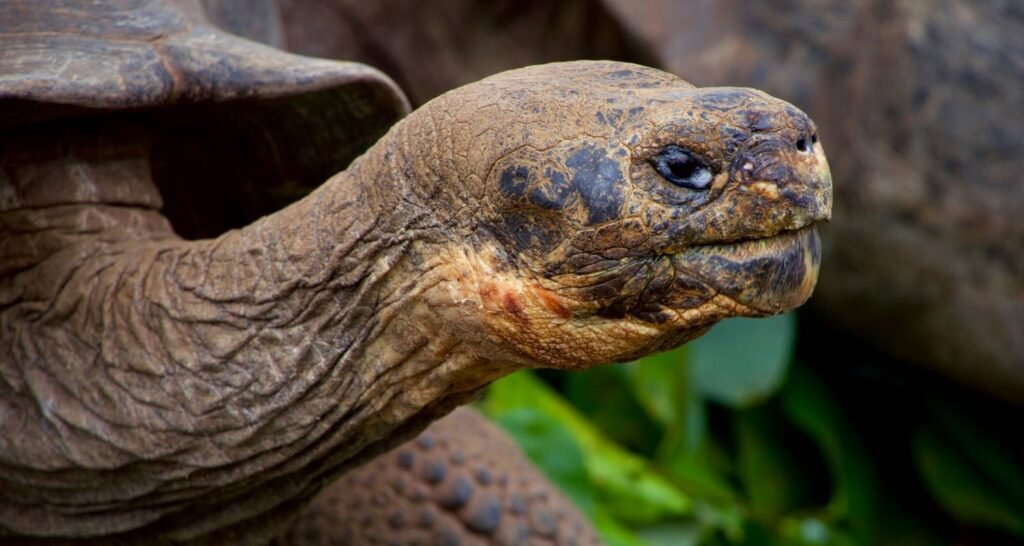
Guided days are spent snorkelling alongside sea lions, giant marine iguanas, and white-tip reef sharks, paired with highland treks to observe giant tortoises roaming freely in their natural habitat.
Key highlights
- Dual-region expedition seamlessly combining the Amazonian jungle with the Galápagos Islands
- Guided canoe river safaris and canopy tower wildlife spotting along the Napo River
- Island-hopping logistics across Santa Cruz and Isabela Islands in the Galápagos
- Guided snorkelling excursions at iconic marine sites to swim with sea turtles, sea lions, and reef fish
- Highland excursions on Santa Cruz Island to observe giant tortoises in the wild
- Small-group pacing designed to suit active families, multi-generational groups, and solo travellers alike
Ideal for
Families, nature lovers, and ambitious travellers looking to combine Ecuador’s dense rainforest biodiversity with its world-famous marine wilderness on a single, well-managed itinerary.
Local insight
Pay close attention to biosecurity protocols when transitioning between the Amazon Basin and the Galápagos Islands. All muddy trail boots, daypacks, and outdoor gear must be thoroughly scrubbed and washed free of Amazonian soil seeds before boarding flights to the Galápagos to prevent cross-contamination.
Additionally, ensure you carry $200 USD in cash per person to cover the Galápagos National Park entrance fee ($200 USD for adults as of August 2024) and the $20 USD Transit Control Card fee at Quito Airport.
Our practical Yasuní expedition planning guide for multi-day journeys
To ensure your journey into the primary rainforest of Yasuní National Park is comfortable, safe, and respectful of local ecosystems, keep these practical travel tips in mind:
1. Luggage strategy & moisture control
Space on motorised river canoes is limited, and soft-sided duffel bags are much easier to stow than hard suitcases. Pack all your clothing inside lightweight waterproof dry bags or heavy-duty dry sacks within your main bag. The tropical humidity inside primary rainforest means cotton clothes absorb sweat and humidity without drying out; pack quick-drying synthetics, lightweight wool blends, and long-sleeved garments for trail walks.
2. Microclimates & layering
Ecuador’s geography changes dramatically over short distances. If your tour begins or ends in Quito, you will experience crisp mountain evenings where temperatures drop to 8–10°C, contrasting sharply with the 30°C heat and high humidity of the Amazon basin. Keep a lightweight fleece and a high-quality windproof, waterproof jacket easily accessible in your daypack for transit days.
3. Community ethics & tipping guidelines
Many of the finest eco-lodges inside Yasuní National Park are owned and operated by indigenous Kichwa communities. Respect local customs: always ask for permission before taking photographs of community members, especially children. Tipping is customary for lodge staff, native trackers, and bilingual naturalist guides. A recommended benchmark is $10–$15 USD per day for your lead naturalist guide, $8–$10 USD per day for your native local tracker, and $5–$8 USD per day per guest for the lodge general staff pool, tipped in cash at the end of your stay.
4. Health, vaccinations & footwear security
A Yellow Fever vaccination is strongly recommended by health authorities for travel into the Ecuadorian Amazon, and should be administered at least ten days prior to arrival. Tetanus and Hepatitis A immunisations should also be up to date. While lodges supply heavy-duty rubber boots (botas de caucho) for muddy trail walks, always bring several pairs of long, breathable socks (such as knee-high soccer or trekking socks) to prevent chafing along your calves.
5. Managing single supplements & group dynamics
Multi-day rainforest expeditions inherently involve shared water transport and small-group guiding ratios (typically 6 to 12 guests per guide) to minimise environmental impact. If you are travelling solo, check whether your chosen tour operator offers a willing-to-share policy to waive single supplements, or opt for a private cabaña room if you prefer absolute solitude after long days on the trails.
The Ecuadorian Coast.
Where you’ll find the very best food
Leave footprints in the living forest
Read this far?
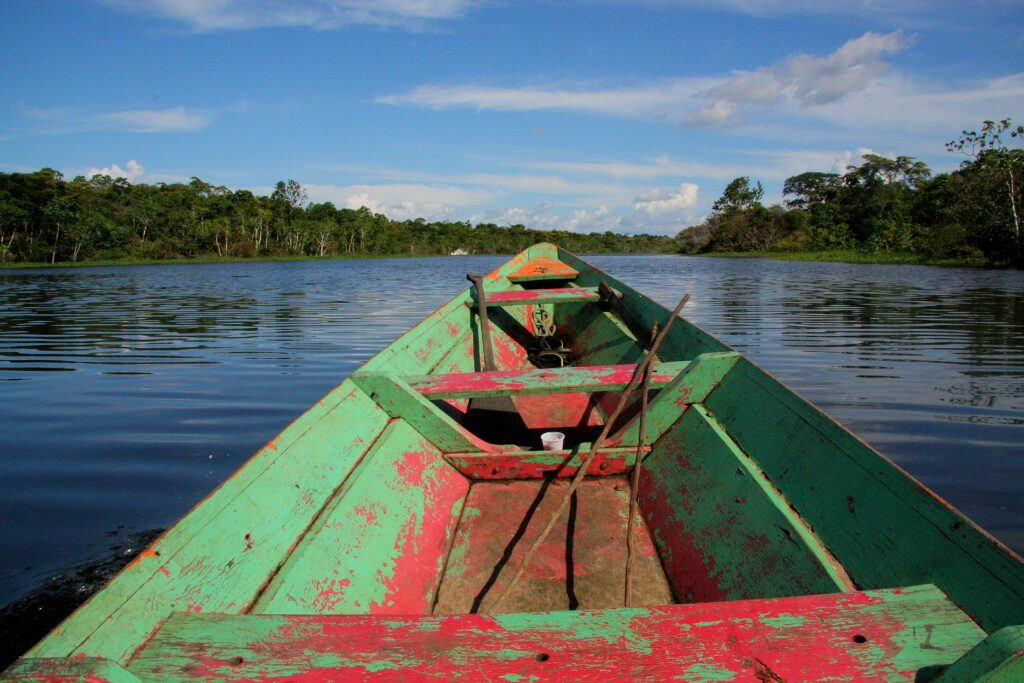
Stepping into Yasuní National Park is a grounding reminder of the wild world’s resilience when paired with genuine local stewardship. Navigating quiet, dark-water tributaries by paddle canoe or listening to nocturnal rainfall on a palm-thatched roof strips away the noisy friction of modern overland travel. For independent-minded travellers, choosing small-group, indigenous-led multi-day expeditions isn’t merely about logistical convenience; it is a conscious decision to travel with purpose and footprint awareness.
When you journey deep into territories stewarded by the Kichwa Añangu and neighbouring communities, your presence directly reinforces a living alternative to extractive industries like oil drilling and commercial timber logging. Every night spent in a community eco-lodge and every morning spent silently observing a clay lick contributes to a self-sustaining economy that values standing trees over cleared land. It is living proof that thoughtful, slow-paced exploration can be a powerful force for regional preservation.
Whether you have three days to escape into the canopy from the frontier port of El Coca or an entire week to trace the full geographical descent from Andean peaks down to the Pacific coastline, Yasuní will permanently alter how you perceive wilderness. Pack light in flexible duffel bags, embrace the mud, respect the silence of the black-water creeks, and let the river take you deep into one of the most biodiverse sanctuaries on Earth.
Affiliate Disclaimer: Some of the links on Wheely Tyred are affiliate links. If you click through and make a booking or purchase, we may earn a small commission at no extra cost to you. We only recommend gear, tours, stays, and services we genuinely use, trust, and stand behind — our editorial independence always comes first. These commissions help keep our independent cycling guides and travel stories free to read. You can also buy me a coffee here — thanks for supporting the ride!
Frequently asked questions about the best Yasuní multi-day expeditions
Most multi-day expeditions organise seamless transport from Quito. You will either take a short domestic flight (approximately 40 minutes) or travel overland down the eastern Andean slopes to the river port of Puerto Francisco de Orellana (El Coca). From El Coca, all entry into the national park is conducted via motorised long-tail canoes navigating down the Napo River.
Yasuní is an equatorial rainforest, meaning it remains warm and humid year-round with temperatures averaging 25–30°C. Rain falls in every season, though the slightly drier months generally run from December to February. Higher water levels between April and July allow deeper paddle canoe access into flooded forests, making wildlife tracking exceptional throughout the entire year.
Most eco-lodges provide standard rubber boots (botas de caucho) for muddy forest walks, usually stocked up to European size 44. If you wear a size 45 or larger, or require specialised arch support, we recommend bringing your own fitted waterproof trekking boots paired with tall gaiters. Always pack several pairs of long, breathable socks to prevent chafing along your calves.
While major tour inclusions, accommodations, and meals are prepaid, you should carry around $100–$150 USD per person in small-denomination cash ($1, $5, and $10 notes). Cash is necessary for tipping native local trackers, bilingual naturalist guides, and lodge staff, as well as buying handcrafted artisan goods at community centres or paying local entry fees for parrot clay licks.
A Yellow Fever vaccination is strongly recommended by health authorities for all travellers entering the Amazon Basin in Ecuador, and should be administered at least 10 days prior to your arrival. Routine immunisations—including Tetanus and Hepatitis A—should also be fully up to date before travelling into remote jungle regions.
Yes, multi-region itineraries frequently bridge the Amazon Basin and the Galápagos Islands via regional transit through Quito. However, strict biosecurity protocols apply: all muddy hiking boots, dry bags, and outdoor gear used in Yasuní must be thoroughly scrubbed and cleaned of Amazonian soil and seeds prior to boarding flights to the Galápagos archipelago.
Ecuador.
Pure wonder on the equator.