The best Christmas markets in Bohemia
A guide to festive regional towns across western Czechia in 2026
Timber stalls, thermal steam, and spiced mead under gothic spires

BEN FINCH
When winter settles over western Czechia, the historic region of Bohemia transforms into one of Europe’s most atmospheric holiday destinations. While the grand spectacle of Prague draws millions of global visitors every December, the true heart of Bohemian holiday traditions lies in the regional capitals, spa towns, and medieval river loops outside the capital city limits.
Exploring these regional markets offers an authentic window into Central European culture. From the thermal colonnades of Karlovy Vary to the Renaissance alleyways of Český Krumlov, each town provides a distinct regional take on Advent celebrations—defined by handcrafted wooden goods, centuries-old brewing heritage, and steaming mugs of spiced mead on central town squares.
To appreciate the festive spirit of western Czechia, it helps to understand the distinct identity of Bohemia. Bordered by Bavaria to the west and Saxony to the north, Bohemia makes up the western two-thirds of the Czech Republic.
Bohemia is geographically and culturally distinct from Moravia, the eastern region centred around Brno and Olomouc. While Moravian markets lean heavily into local winemaking and spiced punch variations, Bohemian markets reflect centuries of glassmaking prowess, brewing traditions, and classic South Bohemian river architecture.
Bohemian festive essentials
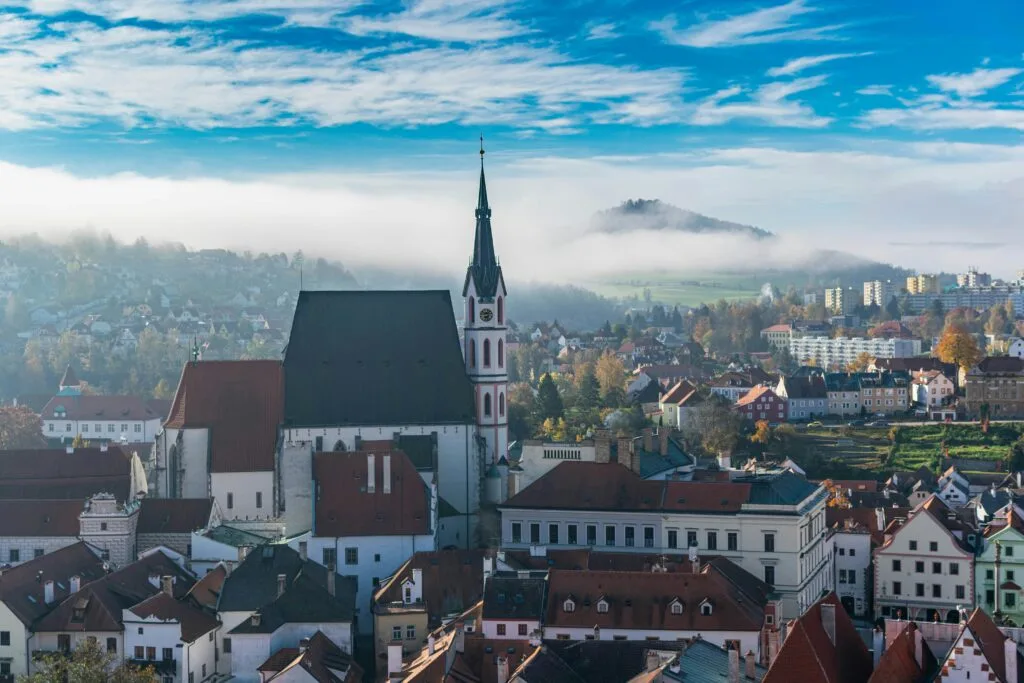
Navigating western Czechia’s historic squares in winter offers an authentic alternative to overcrowded capital routes. From steam-filled spa colonnades to Gothic cathedral shadows, here is what you need to know before boarding the train.
- Prague: Balance the iconic scale of Staroměstské náměstí with the quiet, neighbourhood atmosphere of Náměstí Míru in Vinohrady
- Český Krumlov: Wander pedestrianised cobblestone loops beneath an illuminated 13th-century castle while sipping hot forest-honey mead (svařená medovina)
- Plzeň: Experience working craft blacksmiths beneath the St Bartholomew Cathedral tower, paired with unpasteurized winter lagers
- České Budějovice: Skate directly around the historic Samson Fountain on an open-air ice ring set in a grand South Bohemian plaza
- Karlovy Vary: Sip hot herbal Becherovka drinks along mineral spring colonnades as thermal steam rises into the winter night
- Practical Customs: Carry Czech koruna (CZK) cash for regional market stalls and expect a 50 CZK refundable deposit on reusable drink cups
- Rail Logistics: České dráhy express trains connect all major market towns within one to two hours, serving as a convenient secondary option for town-to-town transit
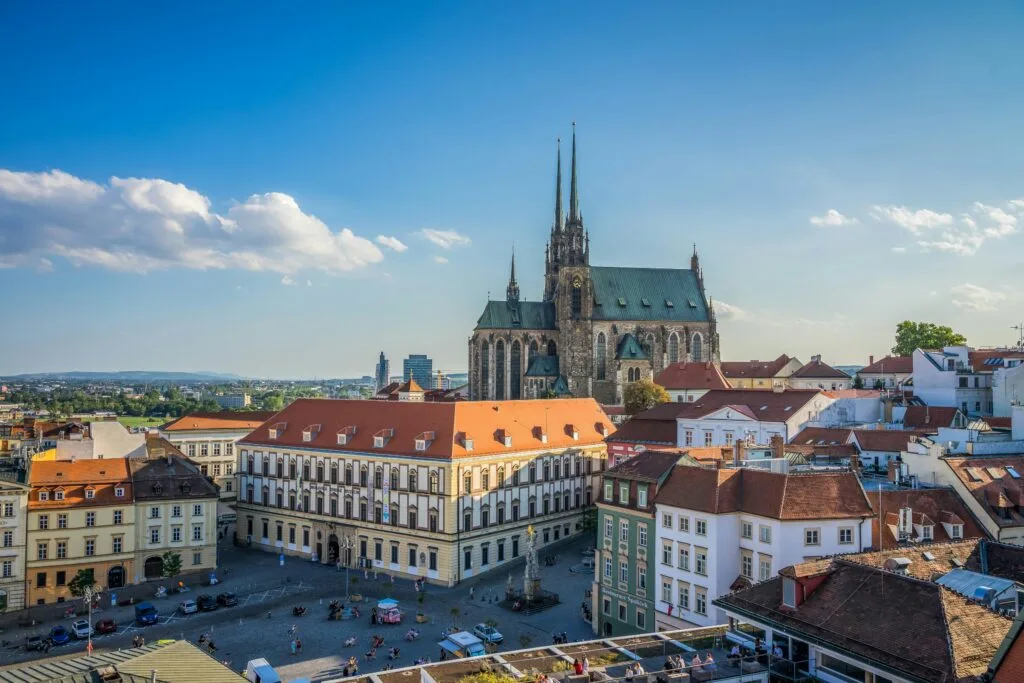
Bohemia.
Explore the heart of the Czech Republic
Regional comparison of Bohemian festive markets
| City / Town | Primary Location | 2026 Signature Feature | Regional Culinary Speciality |
| Prague | Staroměstské náměstí & Náměstí Míru | Historic backdrop & local artisan stalls | Pražská šunka (roasted ham), Trdelník |
| Český Krumlov | Náměstí Svornosti | Renaissance castle skyline & river loop | Svařená medovina (hot spiced mead) |
| Plzeň | Náměstí Republiky | Cathedral tower & live artisan metalwork | Winter craft lagers, grilled klobása |
| České Budějovice | Náměstí Přemysla Otakara II. | Open-air ice rink around Samson’s Fountain | South Bohemian spiced punch, gingerbread |
| Karlovy Vary | Mlýnská kolonáda & Stará Louka | Thermal spring colonnades & festive lights | Hot Becherovka drinks, warm oplatky |
Standout regional markets in western Czechia
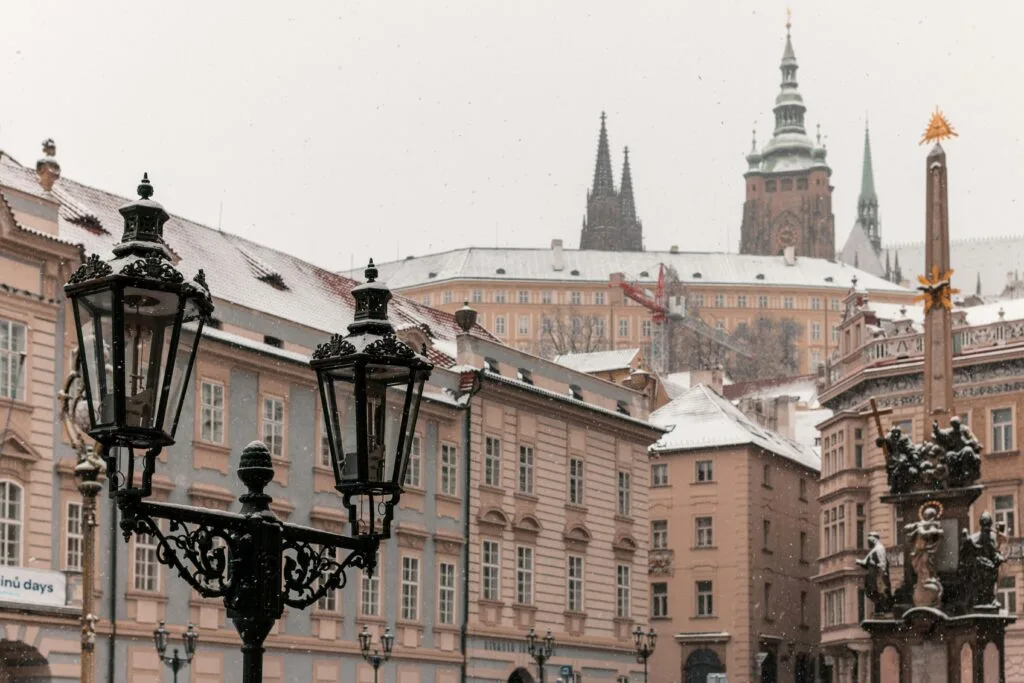
Prague / The capital spectacle and neighbourhood gems
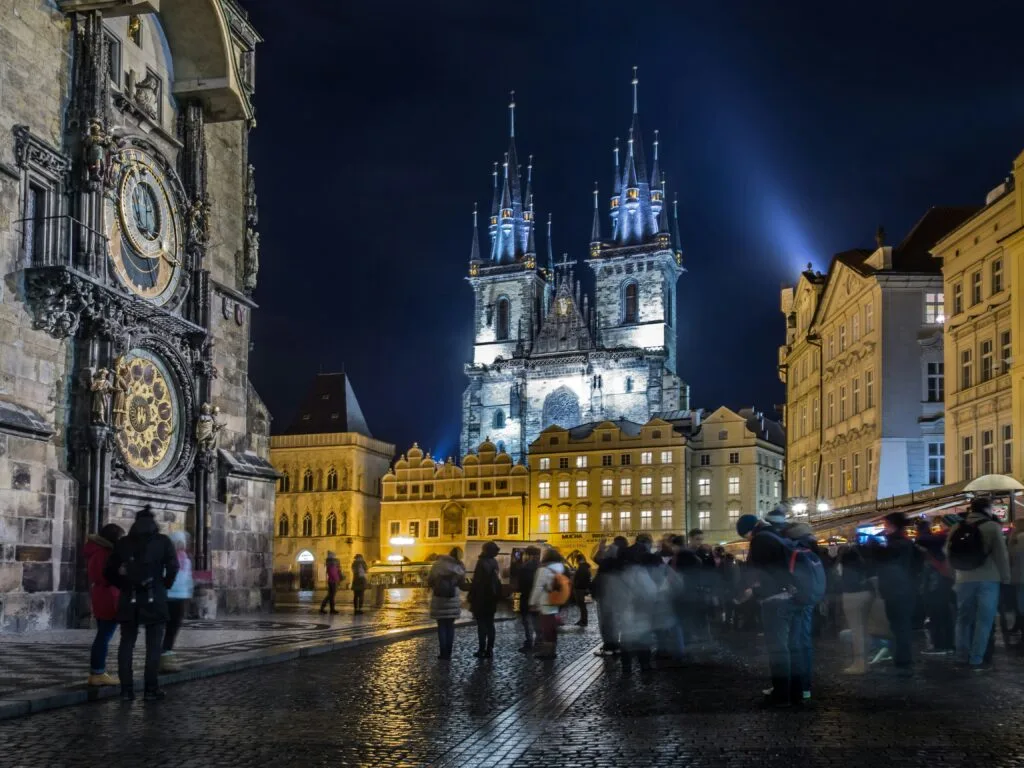
No journey through Bohemia is complete without experiencing the sheer scale of winter in Prague. The city’s flagship market at Staroměstské náměstí (Old Town Square) remains an iconic European sight, anchored by a massive living Christmas tree selected annually from Czech forests and set against the twin spires of the Church of Our Lady before Týn.
However, for travellers seeking a local atmosphere, the best experiences in Prague are found outside the primary tourist corridor. A short ride on Metro Line A brings visitors to Náměstí Míru in the Vinohrady district. Set before the Neo-Gothic Church of St Ludmila, this neighbourhood market is widely regarded by residents as the city’s finest. The stalls here prioritise regional handicrafts, hand-poured beeswax candles, and artisanal baked goods over mass-produced souvenirs, offering a quiet, authentic slice of capital city life.
Český Krumlov / South Bohemian storybook charm
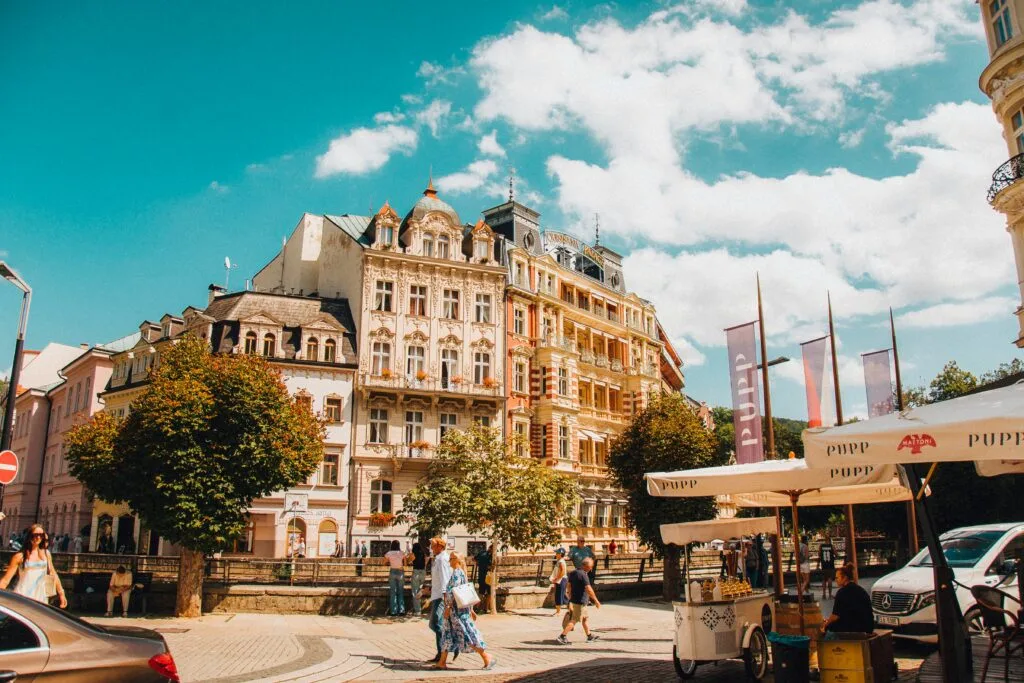
Tucked into a dramatic double loop of the Vltava River in South Bohemia, Český Krumlov provides one of the most romantic settings in central Europe. During Advent, the cobblestone alleys surrounding Náměstí Svornosti fill with the scent of pine needles, roasted chestnuts, and steaming mugs of svařená medovina (hot spiced mead).
The town’s 13th-century castle complex stands illuminated on the cliffs above, providing a dramatic backdrop to the wooden market huts below.
The market here focuses heavily on living traditions: local children’s choirs perform traditional Czech carols (koledy), sculptors carve wooden nativity figures on site, and on select December weekends, traditional bell-ringers process through the narrow lanes.
Because the town centre is entirely pedestrianised, visitors can wander freely through the illuminated streets without vehicle traffic.
Plzeň / West Bohemian craft and cathedral shadows
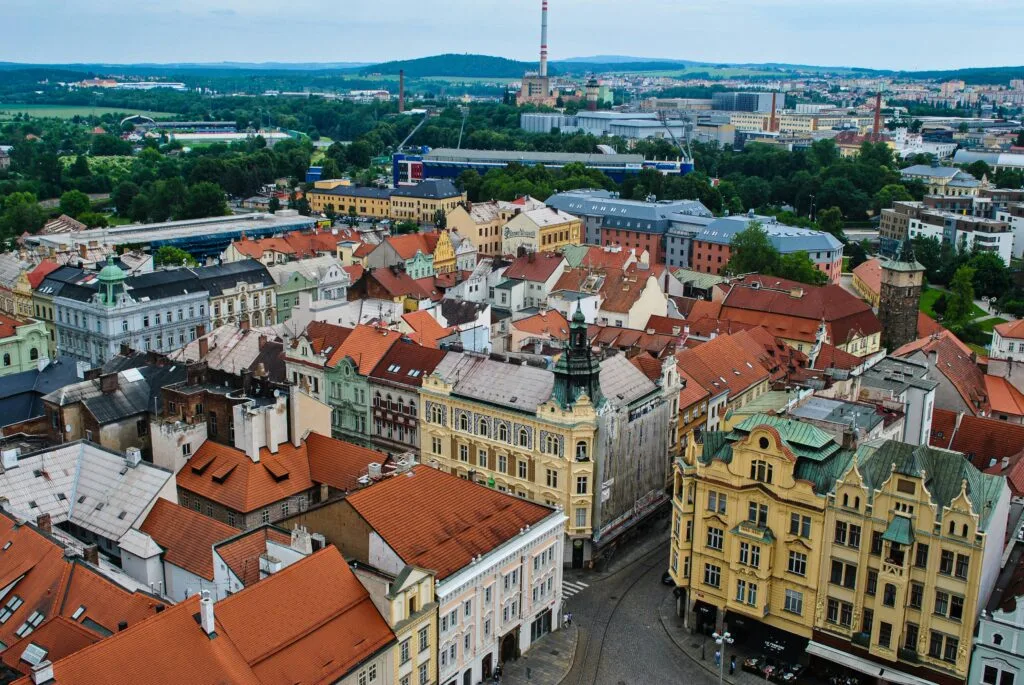
Located an hour west of Prague, Plzeň offers an energetic, craft-focused holiday atmosphere centred around Náměstí Republiky—one of the largest urban squares in central Europe. Dominated by the soaring Gothic tower of the Cathedral of St Bartholomew, Plzeň’s Christmas market reflects the city’s proud industrial and brewing heritage.
In 2026, Plzeň continues its tradition of showcasing working artisans. Master blacksmiths, woodturners, and potters set up active workshops right on the square, hammering iron and shaping clay before crowds of onlookers.
Food stalls serve hearty West Bohemian fare, including garlic-rubbed langoš and locally made klobása sausages. Naturally, beer plays a central role: local microbreweries feature seasonal winter unpasteurized lagers designed specifically to pair with spiced holiday foods.
České Budějovice / South Bohemia’s ice rink
Further south lies České Budějovice, the historic capital of South Bohemia. The city’s main square, Náměstí Přemysla Otakara II., forms a near-perfect square flanked by Baroque and Renaissance arcade houses.
The centrepiece of the České Budějovice Christmas market is a custom-designed, open-air ice-skating rink constructed directly around the 18th-century Samson Fountain (Samsonova kašna). Visitors can rent skates on site and glide around the historic monument under a canopy of warm overhead lighting.
Surrounding the rink, dozens of wooden stalls sell regional South Bohemian specialities, including carved wooden kitchenware, beeswax ornaments, and an exceptional variety of hot fruit punches spiked with local spirits.
Karlovy Vary / Mineral springs and winter colonnades
Nestled in a narrow river valley surrounded by forested hills in northwest Bohemia, the grand spa town of Karlovy Vary offers a festive experience unlike any other in the region. Rather than concentrating all stalls into a single square, the market stretches along the town’s famous riverfront promenades, spanning from Smetanovy sady past the grand Mlýnská kolonáda (Mill Colonnade) to Stará Louka.
Here, rising thermal steam from the mineral hot springs mingles with crisp winter air and strings of festive lights draped across 19th-century Neo-Renaissance architecture. Marketgoers sip warm, herb-infused cocktails made with Becherovka—the iconic herbal liqueur distilled in Karlovy Vary since 1807—paired with freshly pressed, piping-hot spa wafers (oplatky) dusted with cinnamon and sugar.
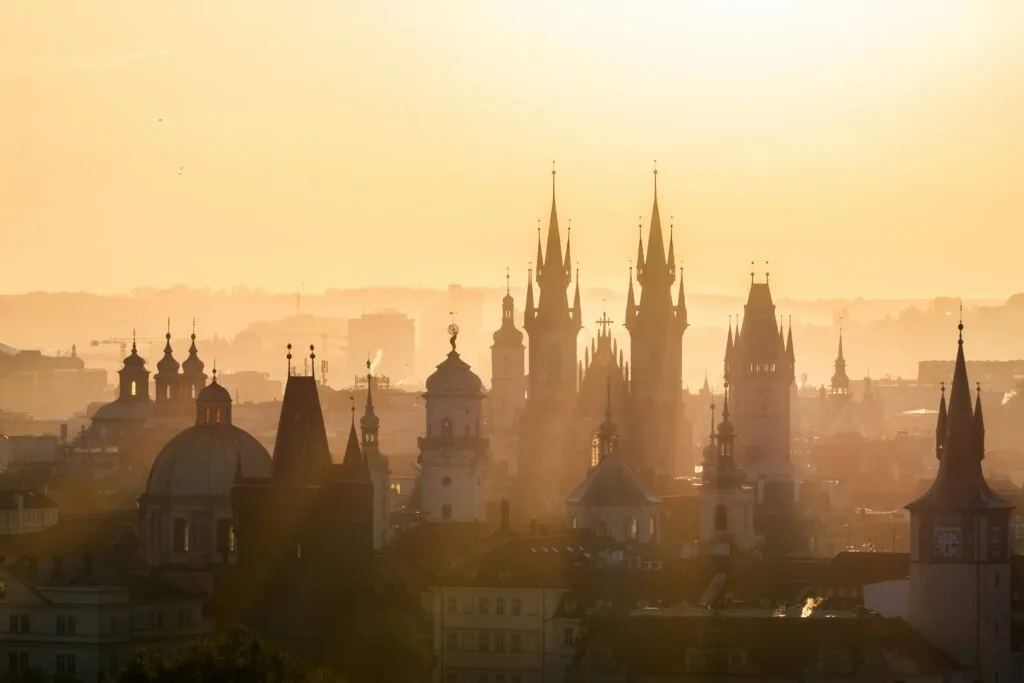
Prague.
There’s no other city like it
Food, drink, and artisan crafts on Bohemian squares
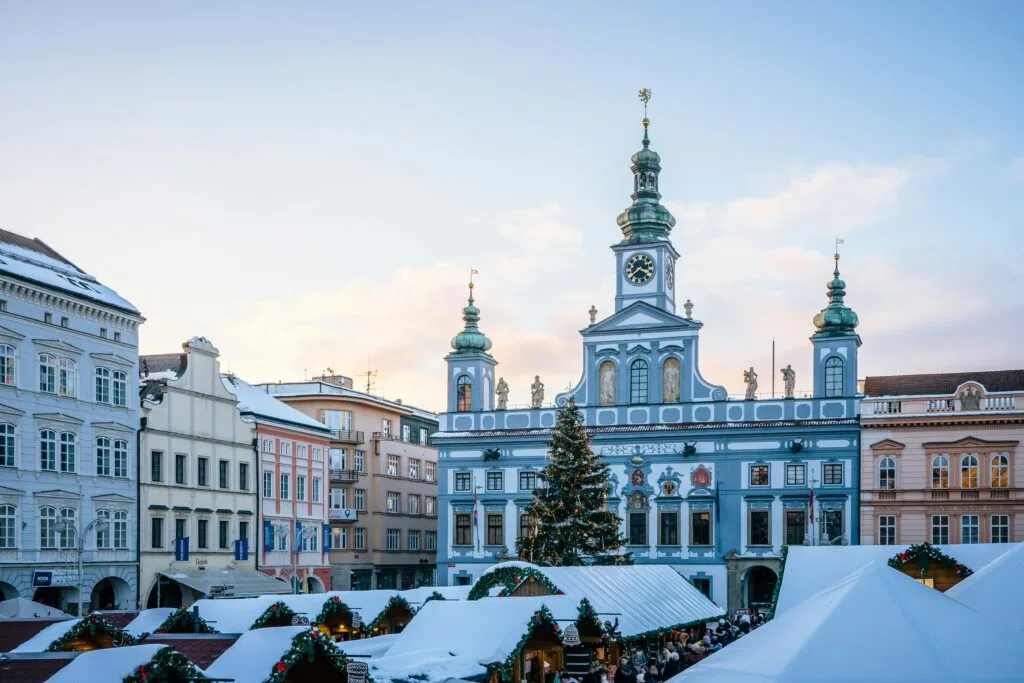
Visiting a market in Bohemia is as much a culinary journey as a cultural one. Unlike standardised commercial holiday markets, Bohemian stalls remain fiercely tied to regional agricultural and craft traditions.
Traditional Czech hot beverages
- Svařené víno: Red wine simmered with cinnamon, cloves, star anise, and citrus peel. It is the universal fuel of Czech winter markets
- Svařená medovina: Hot spiced mead made from fermented forest honey. South Bohemian stalls in Český Krumlov are particularly famous for the quality of their local honey meads
- Horká Becherovka: Served predominantly in Karlovy Vary and Prague, this drink combines warm water or apple juice with the famous herbal liqueur, lemon juice, and honey
Savoury and sweet fare
- Klobása: Thick, coarse-ground Czech sausages grilled over open oak fires, served on paper trays with sharp brown mustard and a slice of dense rye bread
- Langoš: Deep-fried yeast dough rubbed with raw garlic, brushed with tomato sauce, and topped generously with grated Edam cheese
- Trdelník: Rolled sweet pastry dough wrapped around a wooden spit, grilled over hot coals, and coated in crushed walnuts, sugar, and cinnamon
- Oplatky: Thin, circular spa wafers pressed in hot iron plates, filled with hazelnut, chocolate, or cinnamon sugar
Authentic local handicrafts
When shopping for gifts, look for the Regionální produkt (Regional Product) seal on market stalls. Key local items include hand-blown glass Christmas ornaments from North Bohemia, hand-carved wooden toys, dried straw stars, and hand-poured beeswax candles sold directly by local apiculturists.
2026 travel logistics and winter rail circuit
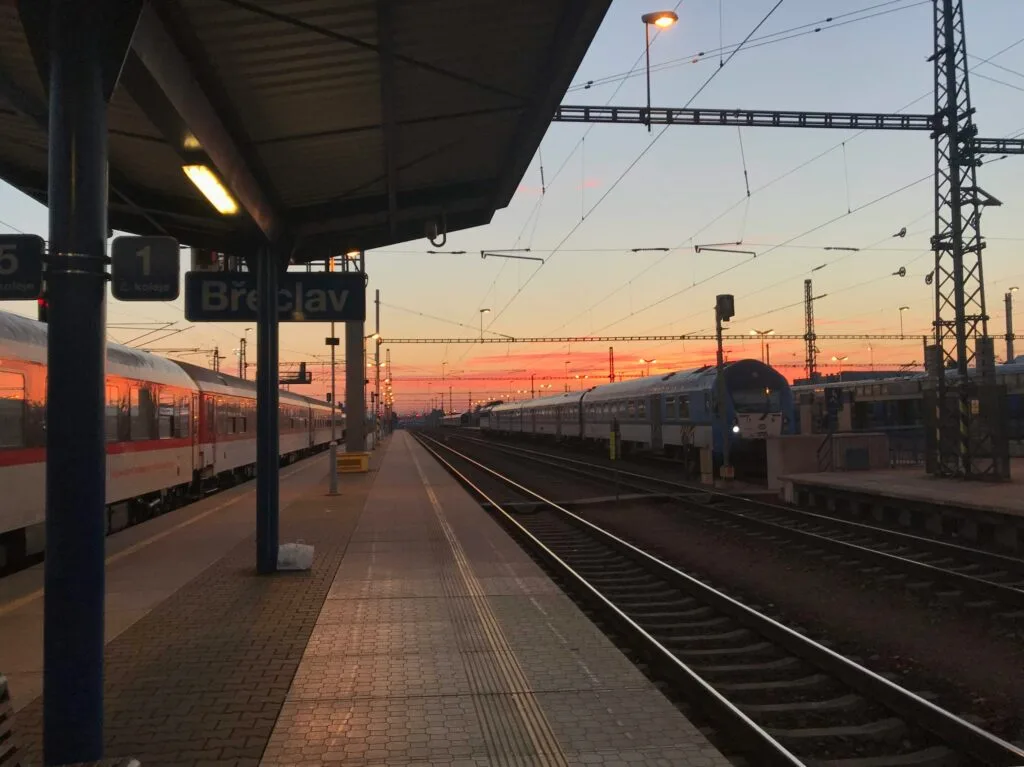
While the festive atmosphere and regional foods take centre stage, getting between Bohemia’s town squares in 2026 is simple and stress-free. Dense, punctual passenger rail networks operated by České dráhy (national rail) link all major regional markets, allowing travellers to leave highway traffic behind and ride directly from one old town square to the next.
2026 season opening dates
For the 2026 season, regional Bohemian markets generally open on the weekend leading into Advent.
- Regional Markets (Plzeň, Český Krumlov, České Budějovice, Karlovy Vary): Saturday, 28 November 2026 through Wednesday, 23 December 2026
- Prague Central Markets: Saturday, 28 November 2026 through Wednesday, 6 January 2027
Recommended 5-day rail itinerary
- Day 1 / Arrival in Prague: Explore the quiet neighbourhood market at Náměstí Míru before taking in the evening lights at Staroměstské náměstí
- Day 2 / Prague to Plzeň: Take the 1-hour train west to Plzeň. Spend the afternoon exploring the metalworking stalls at Náměstí Republiky and climbing the cathedral tower for winter views
- Day 3 / Plzeň to Karlovy Vary: Journey north by train through the West Bohemian hills to Karlovy Vary. Stroll the illuminated mineral spring colonnades with a hot herbal drink
- Day 4 / Karlovy Vary to České Budějovice: Head south across Bohemia to České Budějovice. Spend the evening ice-skating around Samson’s Fountain
- Day 5 / České Budějovice to Český Krumlov: Take the 45-minute regional train to Český Krumlov for a day immersed in Renaissance architecture, river views, and hot mead before returning to Prague
Practical travel tips
- Station Accessibility: Most central stations in towns like Plzeň, České Budějovice, and Karlovy Vary are located within a concise 10 to 15-minute walk of the main market square
- Currency and Payments: While merchants in central Prague widely accept contactless credit cards, smaller stallholders in regional towns like Český Krumlov or České Budějovice often operate on cash only. Keep small denominations of Czech koruna (CZK) on hand for food and small craft purchases
- Cup Deposit System: Most Bohemian markets use a reusable cup deposit system (vratný kelímek). You will pay a cash deposit of 50 CZK when purchasing a warm drink; you can keep the cup as a souvenir or return it to any drink vendor on the square to reclaim your deposit
- Warm Clothing: Winter temperatures across Bohemia frequently drop below freezing in December. Pack thermal base layers, waterproof footwear suitable for cobblestones, and windproof outerwear—especially if visiting elevated river valley towns like Karlovy Vary or Český Krumlov
Moravia.
Welcome to wine country
Step off the beaten track in winter Czechia
Read this far?
Travelling across Bohemia during Advent reveals a landscape shaped by deep regional traditions, where market squares remain living community hubs rather than staging grounds for mass tourism. Boarding a morning train from Prague into the river valleys of South Bohemia or the forested hills of the west restores a sense of quiet discovery to winter travel.
The true charm of these regional markets lies in the unhurried details—the weight of a hand-carved wooden ornament, the warmth of a mug of svařené víno shared beside an open oak fire, and the rhythm of train journeys that link medieval market squares across country borders. By stepping outside the capital, you experience winter as locals have lived it for generations.
Whether you spend your days gliding around the ice in České Budějovice or watching master blacksmiths at work beneath Plzeň’s Gothic spires, Bohemia rewards slow, deliberate exploration. Pack sturdy boots, keep a handful of koruna in your pocket, and let the festive spirit guide your winter journey through western Czechia.
Affiliate Disclaimer: Some of the links on Wheely Tyred are affiliate links. If you click through and make a booking or purchase, we may earn a small commission at no extra cost to you. We only recommend gear, tours, stays, and services we genuinely use, trust, and stand behind — our editorial independence always comes first. These commissions help keep our independent cycling guides and travel stories free to read. You can also buy me a coffee here — thanks for supporting the ride!
Frequently asked questions about the best Christmas markets in Bohemia
Bohemia encompasses western Czechia (including Prague, Plzeň, and South Bohemia) where markets highlight local glasswork, woodcarvings, and regional brewing heritage. Moravia occupies the eastern region around Brno and Olomouc, where festive traditions focus heavily on local winemaking, spiced fruit punch, and regional pastries like frgály.
While major vendors in central Prague accept contactless card payments, vendors in smaller towns like Český Krumlov or České Budějovice often operate on a cash-only basis. It is advisable to carry Czech koruna (CZK) in small denominations for food, warm drinks, and small craft purchases.
Markets across Bohemia operate a standardised deposit scheme (vratný kelímek) for warm beverages. You pay a 50 CZK deposit with your initial drink purchase; you can return the cup to any drink vendor on the square to reclaim your deposit or keep the printed cup as a souvenir.
Key local specialities include svařená medovina (hot spiced mead made from forest honey), grilled klobása sausages served with sharp brown mustard, garlic-rubbed langoš, and hot, freshly pressed spa wafers (oplatky) in Karlovy Vary.
The most efficient and scenic way to travel between Bohemian markets is by train using České dráhy (Czech Railways). Direct, frequent train services connect Prague with Plzeň, České Budějovice, Karlovy Vary, and Český Krumlov. Most central stations are located within a 10- to 15-minute walk of the historic market squares.
December in Bohemia is cold, with temperatures frequently dropping near or below freezing, particularly along river corridors. Layering with thermal base garments, a windproof winter coat, a hat, gloves, and sturdy, insulated walking shoes suitable for wet cobblestones is essential.
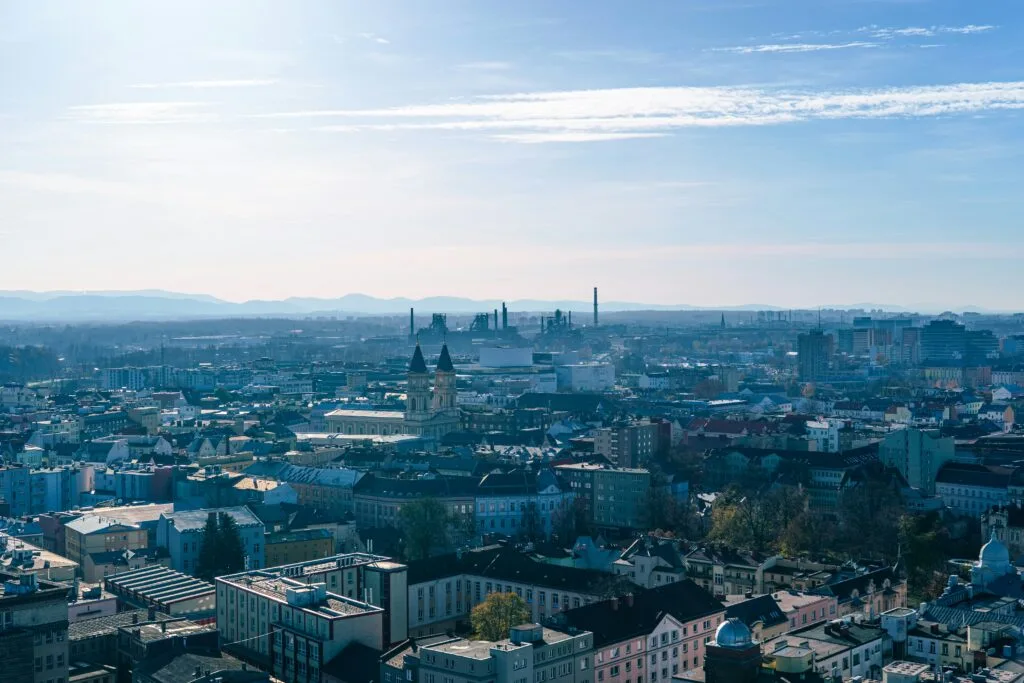
Czechia.
Discover Czechia / History reimagined