Cycling laws in Czechia 2027 / Stay safe and stay legal
The definitive 2027 guide to Czech Republic cycling regulations, mandatory bike equipment, alcohol limits, and official fine schedules
The legal reality of cycling in Czechia
BEN FINCH
Planning a multi-day tour along the Elbe Cycle Route, tracing the historic trails of Moravia, or commuting through the cobblestone streets of Prague? Czechia offers some of the most spectacular cycling infrastructure in Central Europe. However, it also enforces some of the most rigorous traffic codes on the continent.
In the eyes of the Czech legal system—governed by Act No. 361/2000 Coll., officially known as Zákon o provozu na pozemních komunikacích (the Act on Road Traffic)—a cyclist is not categorised merely as a vulnerable pedestrian on two wheels.
You are formally classified as the driver of a non-motorised vehicle. This status grants you equal rights on the carriageway, but it also binds you to the exact same legal responsibilities as a motor driver.
Building upon our 2026 guide to Czech road rules, this fully updated 2027 edition covers the latest fine structures, judicial precedents, and enforcement shifts across the country.
Whether you are riding a high-end carbon road bike or a heavy-duty touring rig, knowing the law is essential before you clip in. You may disagree with some of these laws (I certainly do, although the drink-driving one is very good), but Czech police are active in stopping people.
Essential Czechia cycling laws at a glance
Navigating Czech road traffic regulations is straightforward once you grasp the essentials. Here is a quick breakdown of the core rules every touring cyclist and bikepacker needs to keep in mind before hitting the tarmac or trail.
- Absolute Zero Alcohol: Czechia enforces a strict 0.0% BAC limit with no exceptions, backed by routine roadside breathalyser checks on popular vineyard routes and river paths
- Mandatory Cycle Infrastructure: You are legally required to use dedicated bike paths (Cyklostezka) or marked lanes whenever they run parallel to your route
- Pavements Are Off-Limits: Riding on pedestrian footpaths is strictly forbidden for anyone aged 10 or older, with urban police issuing immediate on-the-spot fines
- Single File Protocol: Group rides must remain in a single line at all times to allow motor vehicles to pass safely with the legal 1.5-metre clearance
- Helmet Mandate for Minors: Protective helmets are compulsory for cyclists under 18 years of age, while adult riders face potential civil compensation reductions if injured without one
- Compulsory Safety Gear: Every bicycle must feature two independent braking systems, active front and rear lights for low visibility, and full pedal, spoke, and frame reflectors
- Dismount at Zebra Crossings: Pedestrian crossings (Přechod pro chodce) require cyclists to dismount and walk across; riding across on your saddle is an explicit traffic infraction
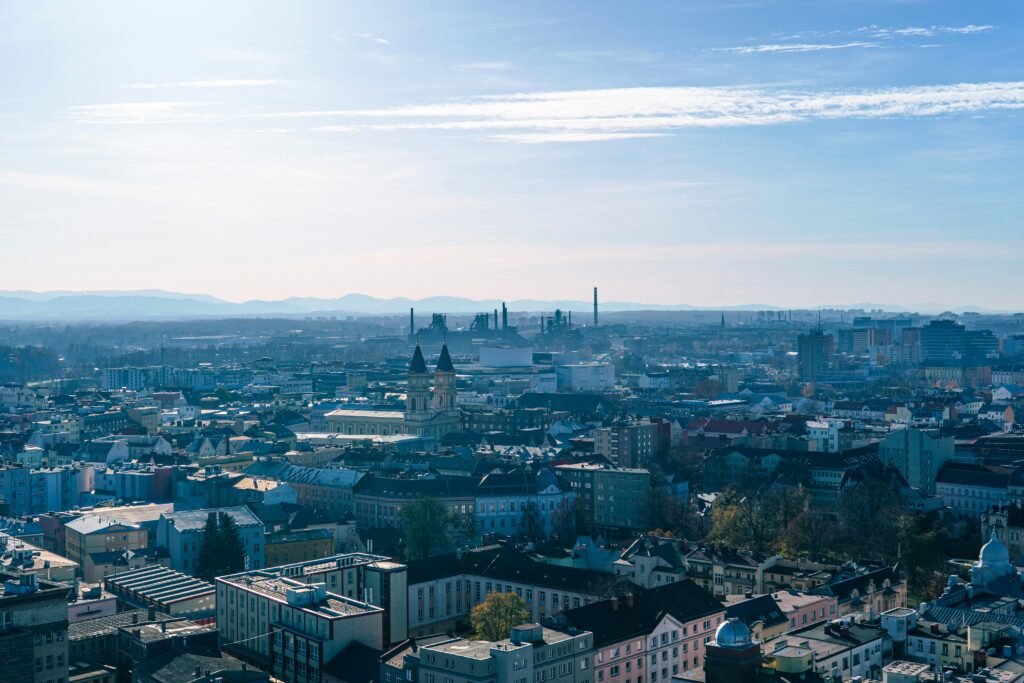
Prague.
There’s no other city like it
Zero tolerance / Alcohol laws for cyclists

The most critical legal boundary for cyclists in Czechia concerns alcohol. While the nation is celebrated globally for its brewing heritage and scenic vineyard paths (Pivní stezky and Vinařské stezky), the law regarding alcohol and cycling is uncompromising: the legal blood alcohol concentration (BAC) limit is 0.0%.
Unlike neighbouring countries such as Germany or Austria, where minor limits exist for recreational cyclists, Czech law maintains absolute zero tolerance. There is no allowable margin for error or statistical leeway.
Drinking a single light beer during a mid-ride lunch break renders you legally unfit to operate a bicycle on any public road, designated cycle path, or shared traffic space.
Legal penalties and fine schedule
Officers of Policie ČR (the National Police) and Městská policie (Municipal Police) regularly conduct targeted breathalyser checkpoints along popular recreational cycling corridors, particularly in South Moravia and along river trails during summer months. Refusing to submit to a breath test carries an automatic administrative fine of up to 75,000 CZK.
If a breathalyser or subsequent blood test indicates alcohol consumption, penalties are levied strictly according to concentration:
- Under 0.3‰ BAC: Administrative fine ranging from 7,000 CZK to 25,000 CZK
- 0.3‰ to 1.0‰ BAC: Serious administrative infraction resulting in fines between 10,000 CZK and 40,000 CZK
- Above 1.0‰ BAC: Classified as a criminal offence (trestný čin), punishable by fines up to 75,000 CZK and potential judicial proceedings
Judicial and insurance interpretations
From a judicial perspective, Czech courts treat alcohol impairment with extreme severity. If you are involved in a collision—even if a motorist was blatantly at fault—having any trace of alcohol in your system automatically shifts legal liability onto you.
Civil courts routinely rule that alcohol consumption constitutes primary negligence, which can completely invalidate your personal travel insurance or third-party liability coverage.
Cycle lanes, pavements, and road positioning
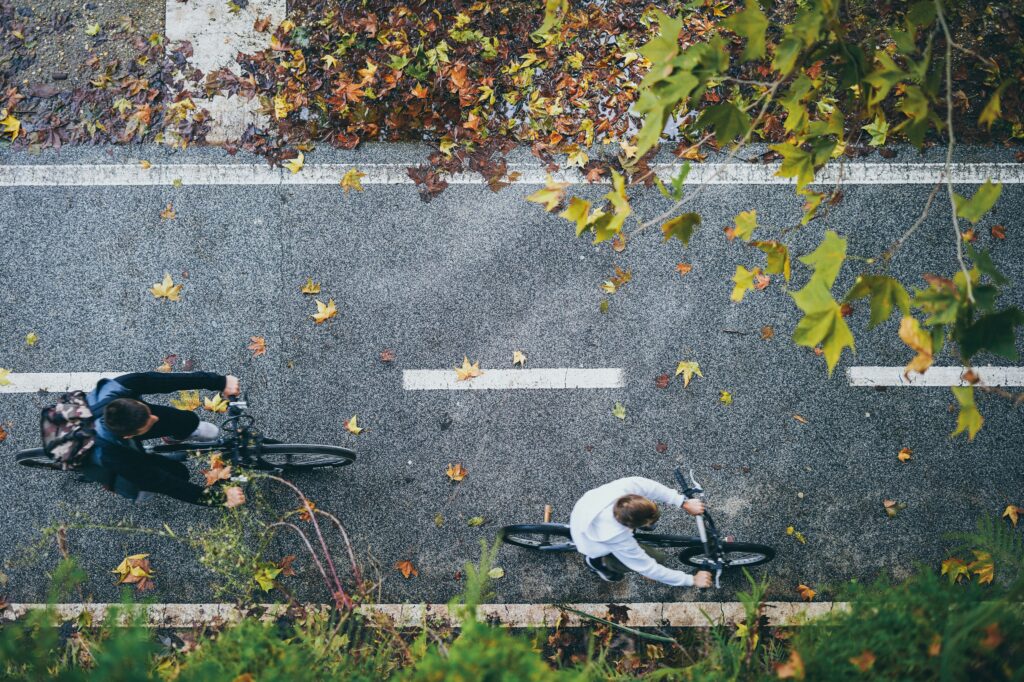
Czechia has invested heavily in dedicated cycling networks, but the presence of infrastructure brings strict legal obligations regarding where you may and may not ride.
The mandatory infrastructure rule
According to Section 57 of the Czech Highway Code: “Where a cycle path, bicycle lane, or marked shared path is provided, the cyclist is obliged to use it.”
You are legally required to leave the main roadway and enter the designated cycle path (Cyklostezka) whenever one runs parallel to your route. Staying on the main road alongside a usable cycle path can attract an on-the-spot police fine of up to 2,000 CZK.
The only legal exceptions to this rule are:
- The cycle path is physically blocked, damaged, or covered in impassable debris
- Using the path would cause immediate danger to yourself or others (for example, training at high speed on a narrow, congested multi-use path filled with young pedestrians)
Riding on pavements
Riding on the pavement is strictly illegal throughout Czechia for anyone aged 10 years or older. Pavements are reserved exclusively for pedestrians and young children. City police in major urban centres like Prague, Brno, and Plzeň enforce this law vigorously to protect pedestrians.
Riding on the pavement carries an on-the-spot fine of up to 2,000 CZK (increasing up to 5,000 CZK in administrative proceedings).
Single-file riding and overtaking distances
Cyclists must ride in single file at all times on public roads. Riding side-by-side—even on quiet rural lanes or within large group rides—is prohibited.
To protect cyclists riding single file, Czech law enforces a mandatory 1.5-metre minimum passing distance for all motor vehicles overtaking a bicycle. On roads with a speed limit of 30 km/h or less, drivers must maintain a minimum distance of at least 1 metre.
Bohemia.
Explore the heart of the Czech Republic
Navigate crossings and junctions legally

Misunderstanding road markings at intersections is one of the most common causes of fines and accidents for visiting cyclists.
Zebra crossings / Pedestrian crossings
Standard zebra crossings (Přechod pro chodce) marked with white stripes are exclusively for pedestrians. Cyclists do not have the right of way on zebra crossings. If you wish to cross the street using a zebra crossing, you must dismount and push your bicycle across on foot. Riding across a zebra crossing can result in a fine of up to 2,000 CZK.
Dedicated bicycle crossings
Where a dedicated bicycle crossing (Přejezd pro cyklisty) is painted alongside a pedestrian crossing, you are permitted to stay mounted on your saddle while crossing.
However, unless the crossing is controlled by active traffic signals, a bicycle crossing does not give you priority over oncoming motor traffic. You must yield to vehicles on the main road before proceeding across.
Mandatory equipment / Make your bike road-legal

Czech police carry out routine inspections of bicycles to ensure compliance with basic safety criteria. Under Czech law, every bicycle ridden on public infrastructure must be equipped with specific, functioning components.
Missing compulsory safety items can incur an on-the-spot fine of up to 2,000 CZK per inspection.
Compulsory equipment checklist
- Two Independent Brakes: Front and rear wheels must feature separate, fully operational braking systems
- Front Reflector: White reflector fitted to the front of the bicycle
- Rear Reflector: Red reflector fitted to the rear (must not be triangular)
- Pedal Reflectors: Orange reflectors attached to both sides of both pedals
- Spoke Reflectors: Orange reflectors attached to the spokes of both front and rear wheels (reflective strips on tyre sidewalls are accepted as legal equivalents)
- Active Lighting: During reduced visibility (dusk, dawn, night, heavy rain, or fog), you must operate a forward-facing white light and a rear-facing red light. Continuous or flashing light modes are both legally compliant
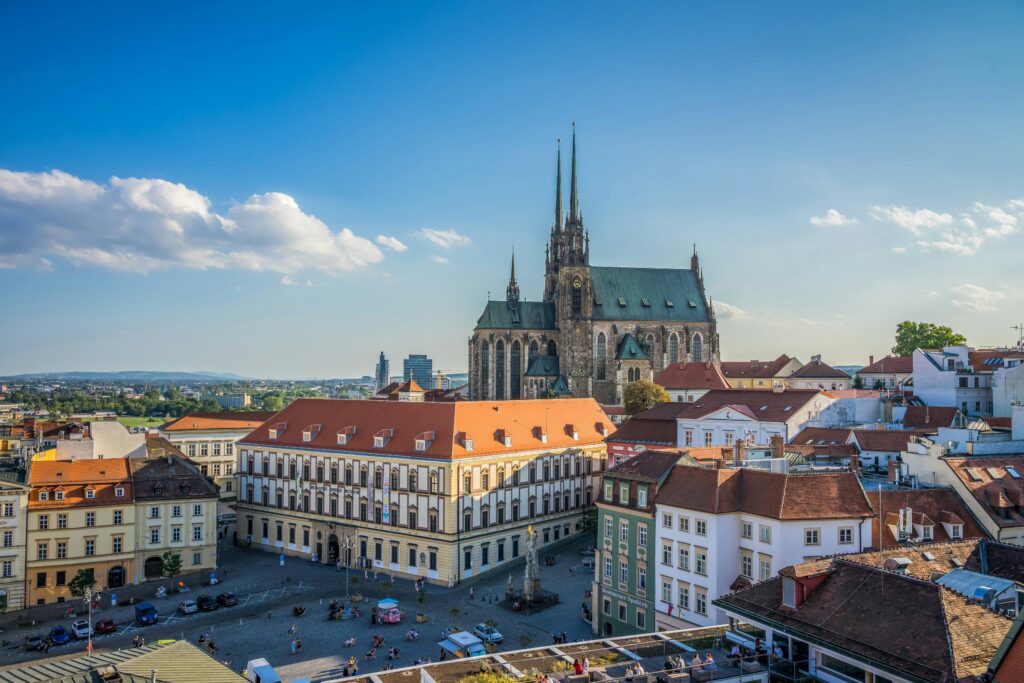
Brno.
Explore Czechia’s second — and best — city
Helmet laws and judicial interpretations
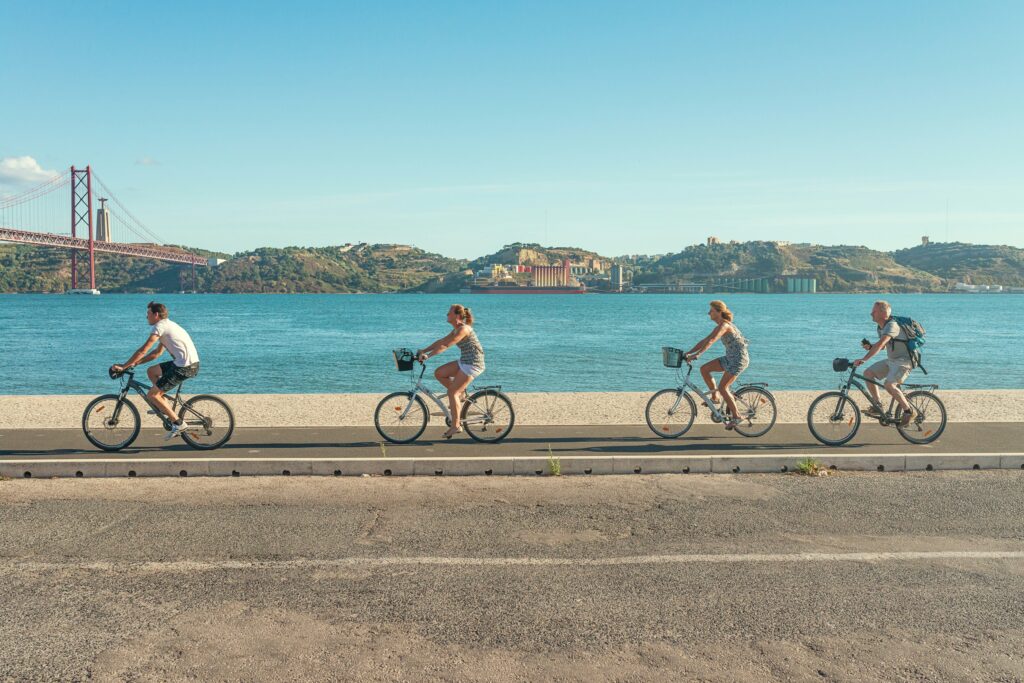
Under current Czech legislation, wearing a protective bicycle helmet is mandatory for all cyclists under 18 years of age. Parents or legal guardians are held legally accountable if a minor is caught riding without a properly fitted helmet, facing fines up to 2,000 CZK.
For cyclists aged 18 and over, wearing a helmet is not legally mandatory on public roads or cycle paths. However, public campaigns by Policie ČR and regional tourism bodies strongly advocate helmet use for all riders.
Civil liability and compensation claims
Crucially, adult cyclists should be aware of civil court precedents regarding helmet use. In personal injury lawsuits arising from traffic accidents, Czech courts have previously ruled that an adult rider who suffers head trauma while not wearing a helmet may be found partially responsible for the severity of their own injuries.
This doctrine of contributory negligence can lead to substantial reductions in insurance payouts and medical compensation.
The 2027 Czech cycling fines schedule
The summary table below outlines current fine brackets for common cycling infractions across Czechia:
| Offence | On-the-Spot Fine (CZK) | Administrative Fine (CZK) |
| Drunk Cycling (< 0.3‰ BAC) | Administrative Proceeding Only | 7,000–25,000 |
| Drunk Cycling (0.3‰–1.0‰ BAC) | Administrative Proceeding Only | 10,000–40,000 |
| Refusing Breathalyser Test | Administrative Proceeding Only | Up to 75,000 |
| Riding on Pavement (Ages 10+) | Up to 2,000 | Up to 5,000 |
| Ignoring Mandatory Cycle Path | Up to 2,000 | Up to 5,000 |
| Riding Across Zebra Crossing | Up to 2,000 | Up to 5,000 |
| Missing Compulsory Equipment | Up to 2,000 | Up to 5,000 |
| Running a Red Light | 4,500–5,500 | 7,000–25,000 |
| Under-18 Riding Without Helmet | Up to 2,000 | Up to 5,000 |
Moravia.
Welcome to wine country
Police enforcement and public attitudes in 2027
Enforcement approaches vary significantly depending on where you ride in Czechia:
- Urban Areas / Prague, Brno, Ostrava: Municipal officers prioritise pavement riding, red-light running, and missing lights during evening hours
- Rural and Recreational Routes: State police focus heavily on sobriety checks along vineyard tracks, river paths, and popular weekend touring corridors
While these regulations may seem strict on paper, everyday cycling culture in Czechia is welcoming and highly developed. Police officers are generally helpful towards touring cyclists who demonstrate respect for the rules.
By keeping your bike properly equipped, staying off pedestrian pavements, and reserving alcoholic drinks for after your ride, you will enjoy a seamless journey across this stunning country.
The best way to experience Czechia remains simple: ride a bike, respect the local laws, and explore at your own pace.
Clear rules, open roads / Experiencing Czechia by bike
Read this far?
While the formal list of regulations and fine categories can appear strict on paper, the everyday reality of cycling through Czechia is overwhelmingly positive.
The national road network, combined with thousands of kilometres of scenic, well-marked regional cycle paths, makes this country one of Europe’s finest destinations for independent travel on two wheels.
Police officers and municipal patrols are not looking to hamper your journey; their focus remains firmly on dangerous riding behaviour, pedestrian safety in historic town centres, and alcohol enforcement.
Respecting local traffic conventions is simply part of being a thoughtful guest on Czech roads. By keeping your bicycle properly equipped with compulsory safety gear, using designated cycle tracks whenever available, and strictly saving local brews or Moravian vintages for after your ride, you eliminate virtually all risk of friction with local authorities.
Whether you are tracing the quiet bends of the Elbe, rolling past Gothic castles in Bohemia, or tackling gravel tracks across the Šumava region, independent cycling offers total freedom. Keep your route flexible, stay aware of surrounding traffic, and keep it legal. The open road is waiting — ride a bike and enjoy every kilometre.
Affiliate Disclaimer: Some of the links on Wheely Tyred are affiliate links. If you click through and make a booking or purchase, we may earn a small commission at no extra cost to you. We only recommend gear, tours, stays, and services we genuinely use, trust, and stand behind — our editorial independence always comes first. These commissions help keep our independent cycling guides and travel stories free to read. You can also buy me a coffee here — thanks for supporting the ride!
Frequently asked questions about cycling laws in Czechia 2027
No. Czech law maintains a strict zero-tolerance policy (0.0% BAC) for all vehicle drivers, including cyclists. Consuming any alcohol before or during a ride can result in severe administrative fines starting from 7,000 CZK and reaching up to 75,000 CZK for higher levels or test refusals.
Yes. Standard zebra crossings (Přechod pro chodce) are designed exclusively for pedestrians. If you wish to cross using a zebra crossing, you must dismount and push your bicycle across on foot. You may only remain mounted at dedicated bicycle crossings (Přejezd pro cyklisty), though you must still yield to oncoming motor traffic unless controlled by traffic signals.
Helmets are legally mandatory only for cyclists under 18 years of age. While adults aged 18 and over are not legally required to wear a helmet on public roads, wearing one is strongly advised. In civil injury disputes, courts may consider riding without a helmet as contributory negligence, which can significantly reduce personal insurance payouts.
Riding on pavements or footpaths is strictly prohibited for anyone aged 10 or older throughout Czechia. City police frequently issue on-the-spot fines of up to 2,000 CZK for riding on footpaths to protect pedestrian safety.
Yes. Under Section 57 of the Czech Highway Code, cyclists are legally obligated to use marked cycle paths (Cyklostezka) or dedicated lanes whenever they run parallel to the main road, unless the path is physically obstructed or poses an immediate safety hazard.
Czechia.
Discover Czechia / History reimagined