The independent guide to Prague’s Christmas markets 2026
Prague Christmas markets 2026 / Dates, hours, and key locations
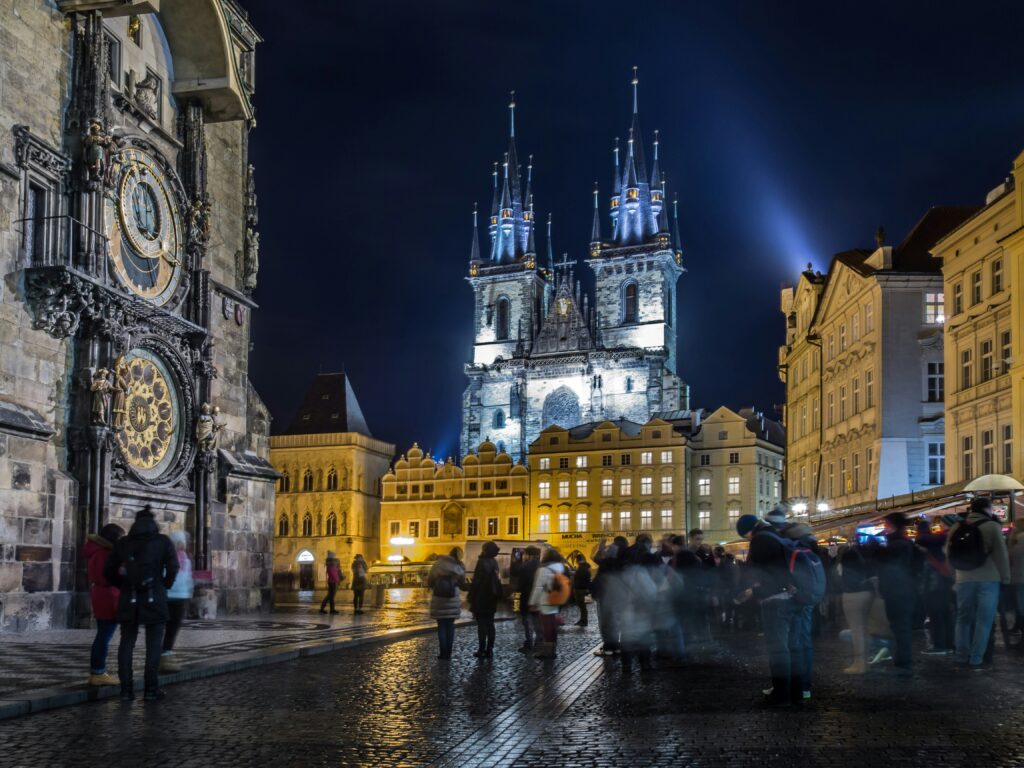
Winter light, cobblestones, and svařené víno

BEN FINCH
Prague in winter transforms into one of Central Europe’s most compelling cold-weather destinations. Centred on historic squares framed by Gothic and Baroque spires, the city’s festive markets (Vánoční trhy) combine seasonal food, regional craft traditions, and an architectural backdrop.
Running from late November 2026 through early January 2027, the markets offer an accessible pedestrian circuit across the historic centre and outlying residential neighbourhoods.
Navigating Prague’s markets / The core essentials
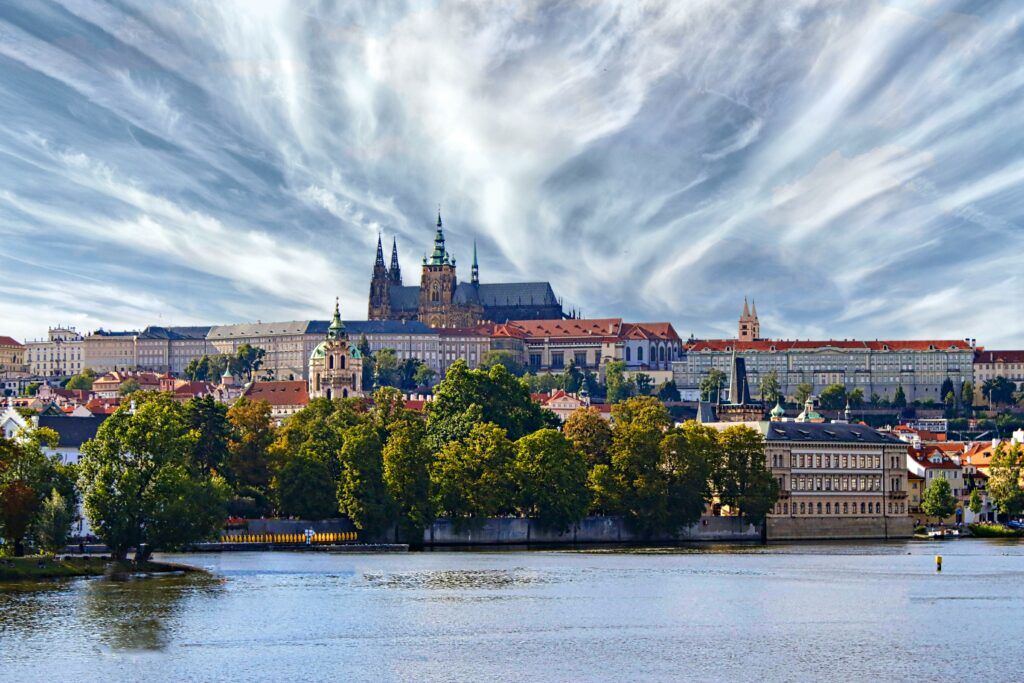
Whether arriving by train at Hlavní nádraží or exploring the city’s cobbled core on foot, Prague in winter yields its finest moments to those who pace themselves. Here is what you need to know before stepping into the cold.
- Flagship Spectacles: Staroměstské náměstí holds the festive centre, featuring a 26-metre regional spruce, Gothic backdrops, and hourly light shows best enjoyed during quiet weekday mornings
- Neighbourhood Charm: Venture out to Náměstí Míru in Vinohrady for hand-painted glass, beeswax candles, and lower prices under the spires of the Church of St Ludmila
- Skillet & Ember Eats: Avoid tourist-trap pricing by specifying exact weights when ordering Pražská šunka (smoked ham) cooked over open wood fires
- Warming Drinks: Trade commercial hot wine for medovina (sweet honey wine) or svařené víno infused with cinnamon and cloves, served across every corner stall
- On Foot & Transit: Skip taxis entirely; Metro Line A and Tram 22 link every major market within minutes, though the entire historic central route is easily walkable
- Cash Strategy: Keep local currency (CZK) in small notes for neighbourhood stalls and cup deposits, avoiding standalone Euronet ATMs throughout tourist zones
Prague.
There’s no other city like it
2026–2027 operating schedule and logistics
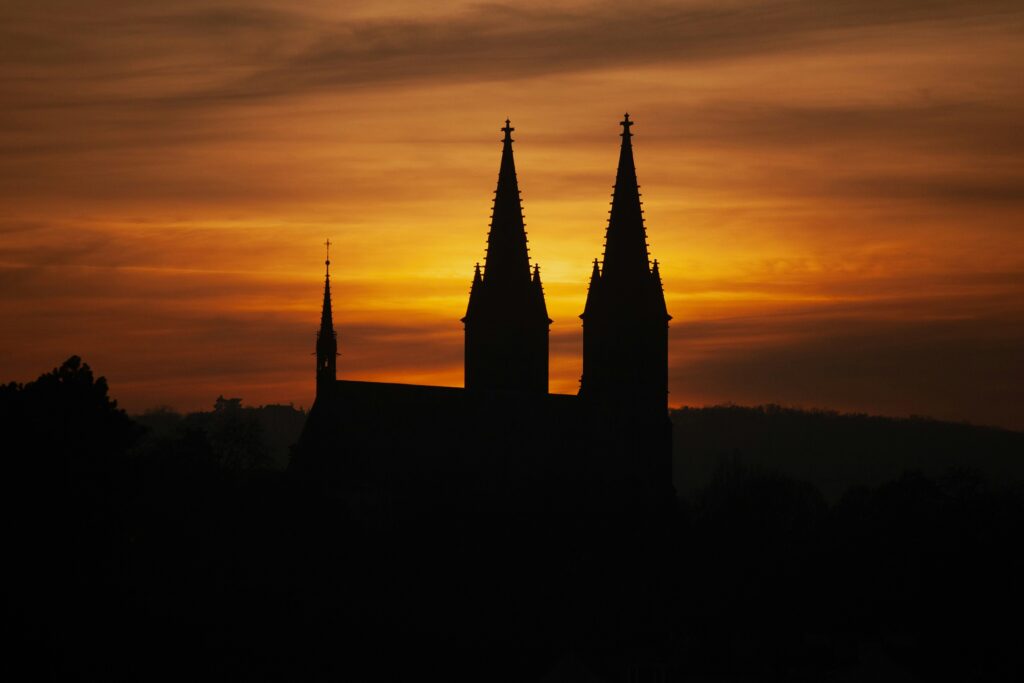
The primary markets at Staroměstské náměstí and Václavské náměstí open on Saturday 28 November 2026 and run daily through Epiphany on 6 January 2027, including Christmas Eve, Christmas Day, and New Year’s Day. Smaller neighbourhood markets close on Christmas Eve.
| Market Location | 2026–2027 Operating Dates | Opening Hours | Nearest Transit Stop |
| Staroměstské náměstí / Old Town Square | 28 November 2026–6 January 2027 | 10am–10pm | Metro Staroměstská / Line A |
| Václavské náměstí / Wenceslas Square | 28 November 2026–6 January 2027 | 10am–10pm | Metro Můstek / Lines A & B |
| Náměstí Míru / Peace Square | 20 November 2026–24 December 2026 | 10am–8pm | Metro Náměstí Míru / Line A |
| Náměstí Republiky / Republic Square | 25 November 2026–24 December 2026 | 10am–8pm | Metro Náměstí Republiky / Line B |
| Na Kampě / Kampa Island | 3 December 2026–4 January 2027 | 10am–8pm | Tram Hellichova / Trams 12, 15, 20, 22 |
| Jiřího z Poděbrad / Vinohrady | 29 November 2026–23 December 2026 | 8am–6pm | Metro Jiřího z Poděbrad / Line A |
Central markets vs residential squares
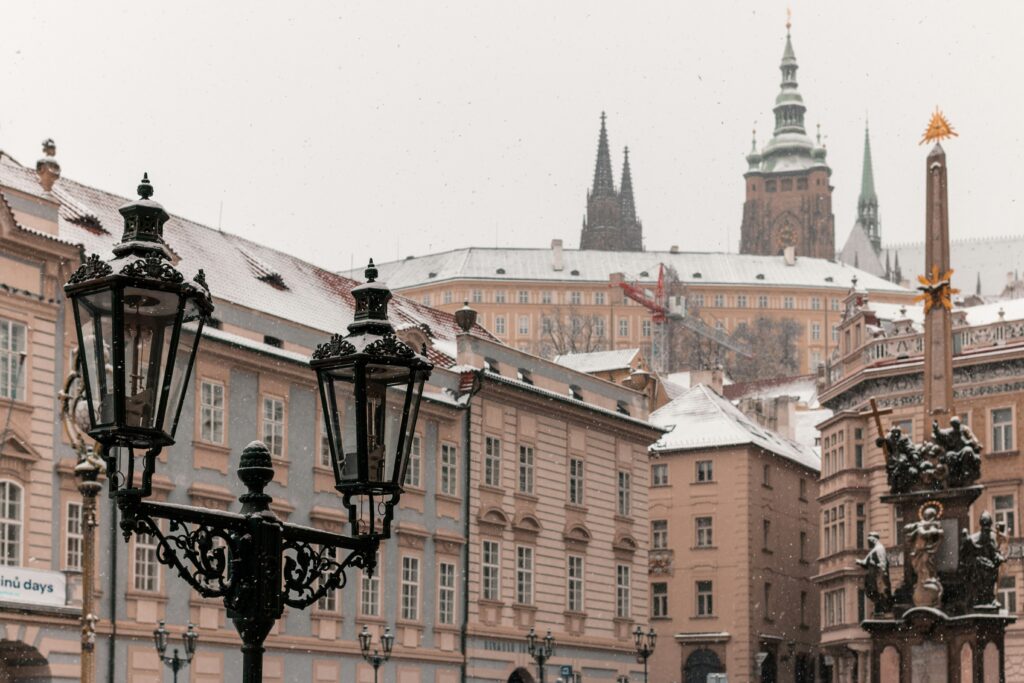
Staroměstské náměstí / Old Town Square
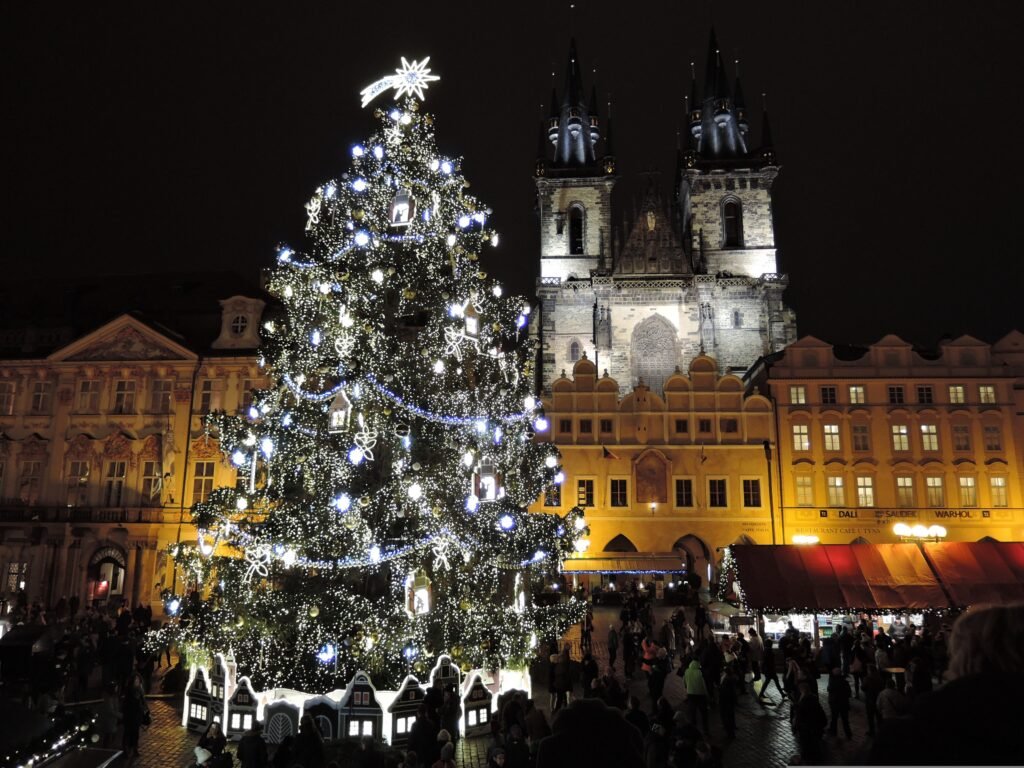
The largest and most heavily visited market in the Czech Republic. A 26-metre spruce, sourced annually from regional Czech forestry and decorated with thousands of lights, serves as the visual focus.
- The Backdrop: The market sits flanked by the Gothic Church of Our Lady before Týn and the Old Town Hall with its Astronomical Clock
- Light Performance: Starting on 28 November 2026 at 4.30pm, a musical light display plays across the tree every hour on the half-hour between 5.30pm and 8.30pm
- Crowd Timing: Pedestrian density peaks between 4pm and 7.30pm on weekends. Plan visits for weekday mornings between 10am and 12pm for unhindered movement across the square
- Panoramic View: Climb or take the elevator up the Old Town Hall Tower for a vertical vantage point over the wooden market stalls below
Václavské náměstí / Wenceslas Square
Positioned a five-minute walk south of Old Town Square, this market extends along the lower section of the boulevard beneath the National Museum. It features wider walking aisles, making it significantly easier to navigate during peak hours. Artisans perform live woodcarving and ironwork demonstrations at open forge stalls near the base of the square.
Náměstí Míru / Peace Square
Located in the residential Vinohrady district, Náměstí Míru opens earlier than the city-centre spots (20 November 2026). Framed by the Neo-Gothic Church of St Ludmila, this is where local residents buy hand-blown glass ornaments, beeswax candles, wooden toys, and advent wreaths. Prices here are noticeably lower than at Staroměstské náměstí, and the atmosphere remains calm throughout the day.
Náměstí Republiky and Na Kampě
- Náměstí Republiky: Situated near the Municipal House and Powder Tower. Ideal for a quick food stop, offering high-quality sausage stalls, grilled cheese, and hot mead (medovina) without the density of Old Town Square
- Na Kampě: Positioned in Malá Strana, directly beneath the archway of Charles Bridge along the Vltava riverbank. A small, picturesque gathering of wooden huts specialising in hot drinks, puppet crafts, and glass trinkets
Bohemia.
Explore the heart of the Czech Republic
Authentic Czech festive food and drink
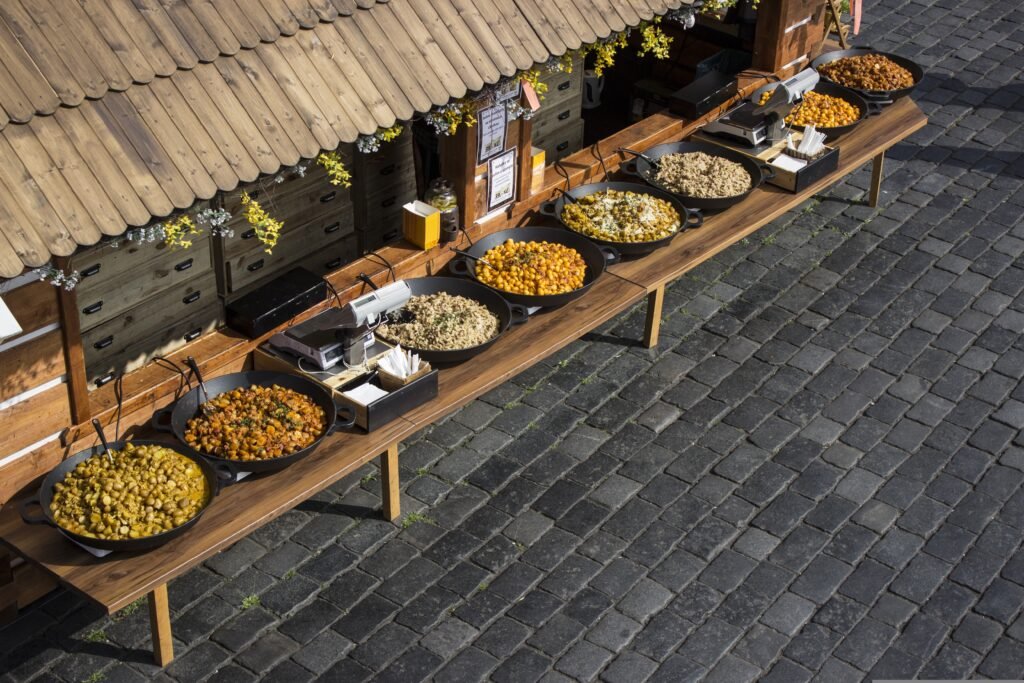
Czech Christmas markets are culinary destinations built around warm, hearty winter specialities. While international options exist, authentic regional items form the core of the market culture.
Savoury specialties
- Pražská šunka / Prague Ham: Salt-cured, beechwood-smoked ham cooked on open rotisseries over wood fires. Ordering Note: Ham is sold by weight (typically per 100 grams). Specify your exact desired weight or cost limit before the vendor cuts your slice to avoid receiving an unexpectedly large portion
- Klobása: Coarsely ground grilled sausages served straight from hot iron skillets with dark sourdough rye bread, tangy Czech mustard, and horseradish
- Bramboráky: Deep-fried shallow potato pancakes flavoured heavily with garlic, marjoram, and caraway seeds. Best consumed fresh from the fryer while hot and crispy
- Smažený sýr: Thick slabs of fried cheese (typically Hermelín or Edam) served inside a crusty bread roll with tartar sauce
Seasonal drinks
- Svařené víno / Svařák: Czech mulled red wine infused with cinnamon, cloves, star anise, and citrus peel. Served piping hot in paper or reusable commemorative cups
- Medovina: Warm honey wine served in small glasses. Rich, sweet, and distinctly aromatic, with alcohol content typically ranging between 11% and 15%
- Grog: A classic winter staple made by combining dark Czech rum (Tuzemák), hot water, sugar, and a lemon wedge
Sweets and traditions
- Vánočka: A traditional braided brioche bread packed with raisins, rum-soaked citrus peel, and flaked almonds, traditionally eaten throughout December
- The Reality About Trdelník: Found at nearly every central market stall, this sweet pastry made from rolled dough grilled over coals and coated in sugar and walnuts is visually iconic. However, it is an early 20th-century introduction to Czech markets rather than a historic Czech Christmas tradition
Practical navigation for independent travellers
Transport and walking routes
Prague’s compact layout allows you to connect every major central market on foot.
- The Central Loop: Start at Náměstí Republiky, walk three minutes through Celetná street to Staroměstské náměstí, continue down Melantrichova to Havel’s Market (Havelské tržiště), and finish at Václavské náměstí. Total walking time is under 20 minutes, excluding stops at stalls
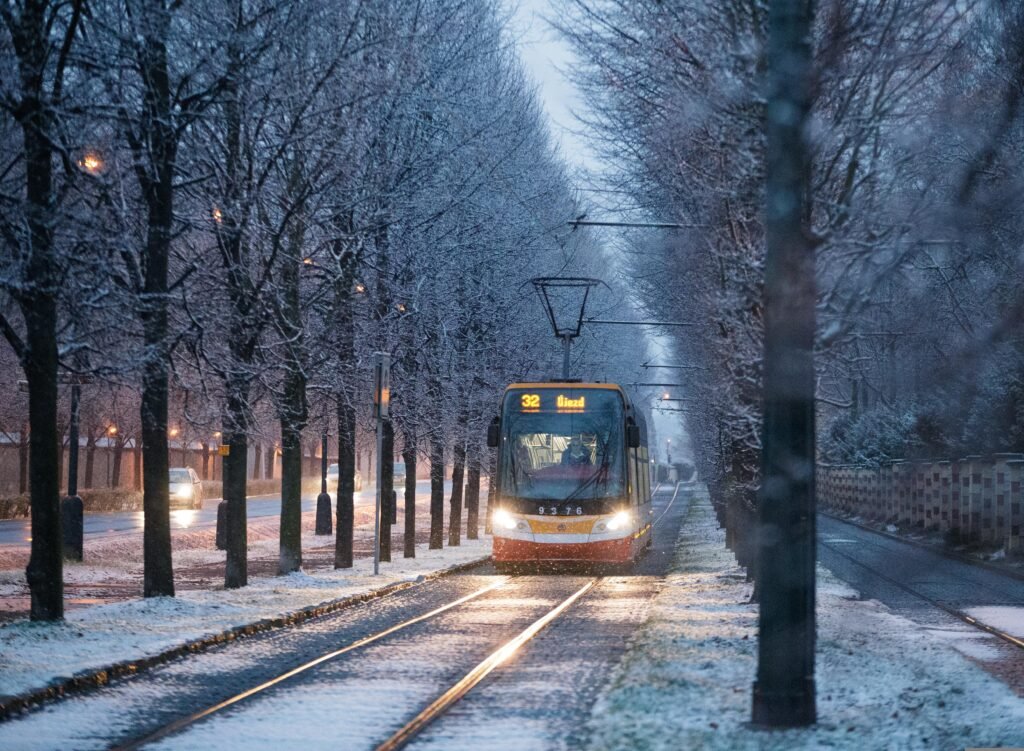
- Reaching Vinohrady: Take Metro Line A (Green) from Můstek or Staroměstská directly to Náměstí Míru or Jiřího z Poděbrad in under six minutes. Alternatively, Tram 22 provides a scenic surface route connecting Malá Strana, the National Theatre, and Vinohrady
Payment methods and currency
- Card Acceptance: Most major stalls at Old Town Square and Wenceslas Square accept contactless card payments (Visa, Mastercard, Apple Pay)
- Cash Requirement: Smaller neighbourhood markets (such as Náměstí Míru and Jiřího z Poděbrad) and smaller craft stalls require Czech koruna (CZK) cash notes. Keep small denominations (100, 200, and 500 CZK) available for low-value purchases and cup deposits
- ATM Warning: Avoid Euronet ATMs (yellow and blue standalone machines) throughout the tourist zones, as they charge exorbitant transaction fees and apply poor conversion rates. Use official bank ATMs attached to established Czech banks (KB, Česká spořitelna, ČSOB, UniCredit)
Weather and attire
Prague temperatures in December typically hover between -2°C and 4°C. Cobblestone streets dominate the Old Town, making flat, insulated, waterproof footwear essential for comfort. Layers, wool hats, and gloves are necessary for extended outdoor strolls along the Vltava riverfront.
Moravia.
Welcome to wine country
Step out into the winter markets
Read this far?
Prague in December is ultimately defined by its spatial rhythm. Outside the visual theatre of Staroměstské náměstí, the real magic of the city’s winter atmosphere exists in the transitions: crossing the Vltava River as evening mist gathers around the piers of Charles Bridge, or turning off tourist-choked thoroughfares into quiet residential side streets where steam rises from small neighbourhood stalls.
Taking the time to explore places like Vinohrady or Malá Strana reveals a slower, more authentic city. Here, festive preparations are less about commercial spectacle and more about community routines—residents meeting for hot svařené víno after work, children gathering near parish churches, and artisans selling traditional woodcrafts passed down through generations.
For the independent traveller, navigating the festive season successfully comes down to timing and perspective. Arrive early at the major landmarks, embrace the public transport network, and do not hesitate to step off the mapped routes. In doing so, you will discover that Prague’s winter appeal extends far past the wooden huts, residing in the enduring character of its streets, architecture, and seasonal hospitality.
Affiliate Disclaimer: Some of the links on Wheely Tyred are affiliate links. If you click through and make a booking or purchase, we may earn a small commission at no extra cost to you. We only recommend gear, tours, stays, and services we genuinely use, trust, and stand behind — our editorial independence always comes first. These commissions help keep our independent cycling guides and travel stories free to read. You can also buy me a coffee here — thanks for supporting the ride!
Frequently asked questions about Prague’s Christmas markets
Yes, the main markets at Staroměstské náměstí and Václavské náměstí remain open daily throughout the entire festive period from 28 November 2026 to 6 January 2027, including Christmas Eve, Christmas Day, and New Year’s Day. However, smaller residential markets like Náměstí Míru close on Christmas Eve.
Prague ham is priced by weight, usually quoted per 100g. To avoid receiving an unexpectedly large and expensive portion, clearly specify the exact weight or koruna amount you wish to spend before the vendor carves the meat.
Most stalls at the central markets (Staroměstské náměstí and Václavské náměstí) accept contactless card and mobile payments. However, smaller craft vendors and stalls at neighbourhood markets like Náměstí Míru often accept cash only in Czech koruna (CZK).
While ubiquitous in central tourist zones, trdelník (chimney cake) is not historically Czech; it originated in Transylvania and Slovakia. For traditional Czech festive fare, look for vánočka (braided brioche), bramboráky (garlic potato pancakes), or klobása (grilled sausage).
Walking is best for the central core, as Staroměstské náměstí and Václavské náměstí are only a five-minute walk apart. For residential markets like Náměstí Míru or Jiřího z Poděbrad, use Prague’s efficient metro (Line A) or take Tram 22 for a scenic surface route.
Use official bank-affiliated ATMs connected to major Czech financial institutions (such as KB, Česká spořitelna, ČSOB, or UniCredit). Avoid independent standalone ATMs (such as Euronet), which charge high fees and use unfavourable conversion rates.
Czechia.
Discover Czechia / History reimagined