Top 6 sights and attractions on Isla Floreana, Galápagos
Essential visitor guide to iconic landmarks, wildlife spots, and historic locations on Isla Floreana
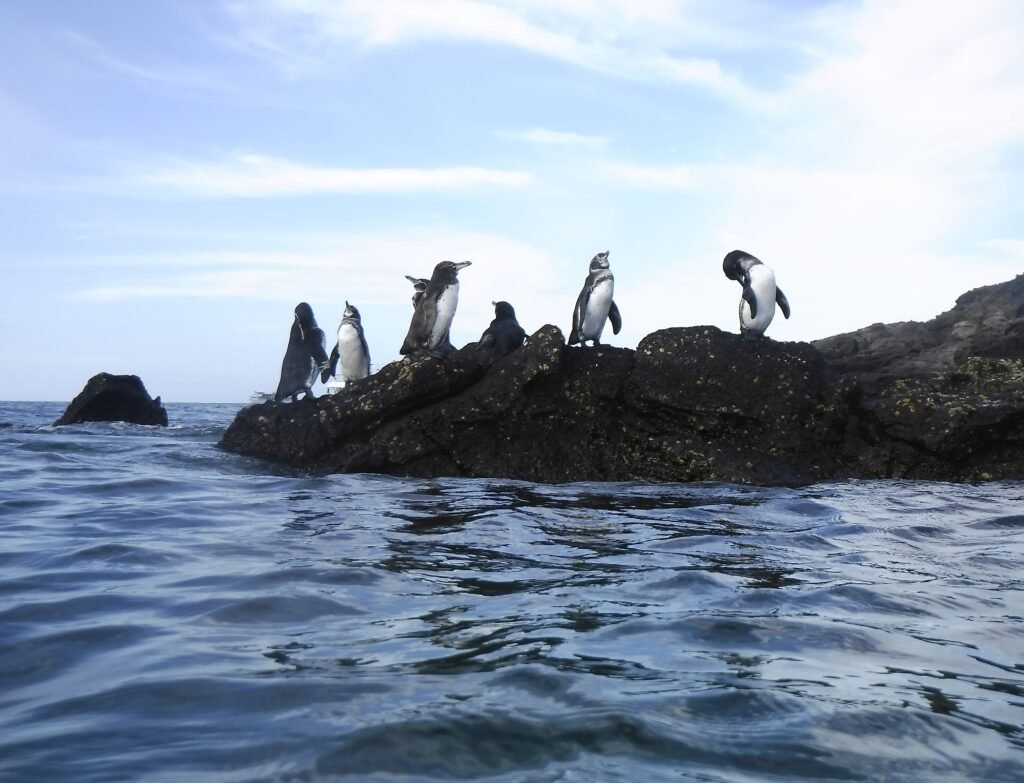
Unravel pirate secrets, volcanic waters, and pristine coastal havens
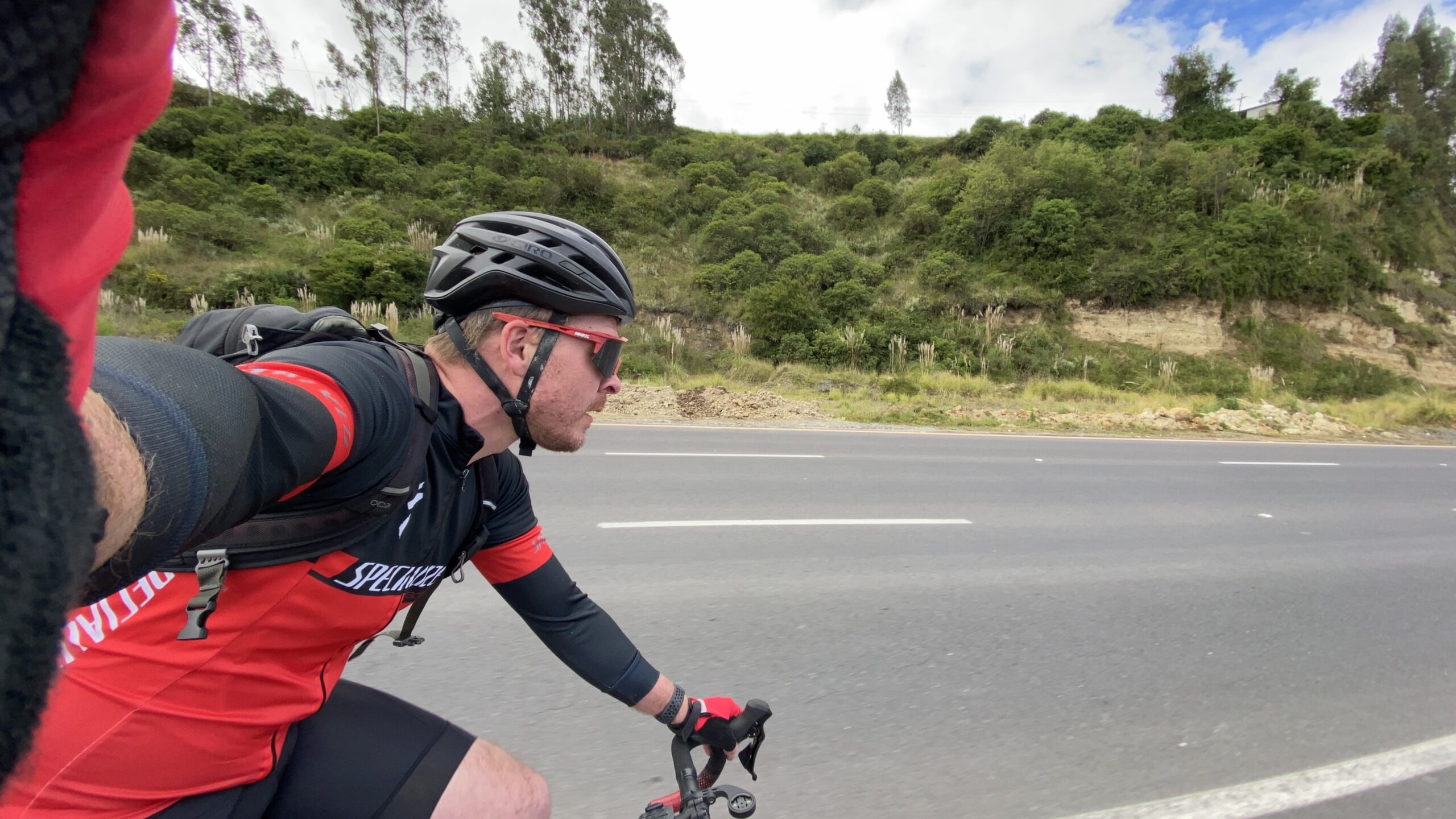
BEN FINCH
Tucked away in the southern reaches of the Galápagos archipelago, Isla Floreana offers one of the most enigmatic chapters in South American travel. Officially named Santa María, this volcanic island is home to fewer than 150 permanent residents clustered around the tiny settlement of Puerto Velasco Ibarra.
While larger neighbouring islands host bustling ports and expanded infrastructure, Isla Floreana retains an untamed, slow-paced atmosphere that appeals directly to travellers who prefer to forge their own path.
The island holds a legendary reputation shaped by 18th-century whalers, pirate hideouts, and the mysterious disappearances of eccentric European settlers in the 1930s.
Beneath this dramatic human history lies a landscape of raw ecological splendour, featuring olive-green sand beaches, submerged volcanic craters, and freshwater springs hidden within highland forests. For visitors exploring the archipelago at their own tempo, Isla Floreana provides an unforgettable blend of historical mystery and raw natural beauty.
Here are the six most iconic, widely recommended attractions to visit on Isla Floreana.
Key highlights of Isla Floreana
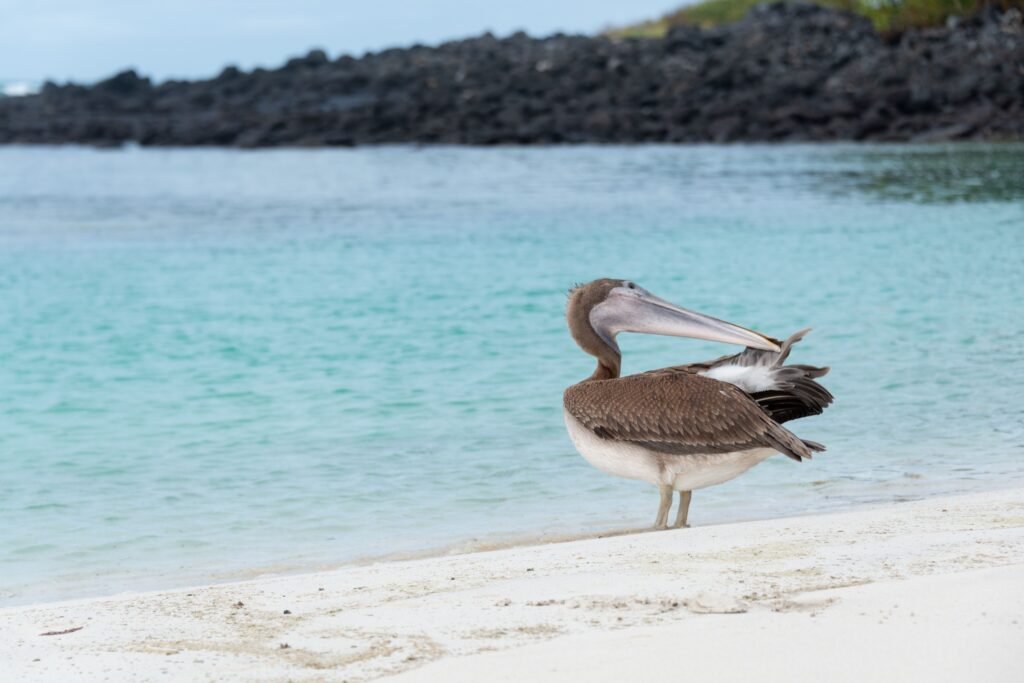
Isla Floreana balances deep human mystery with incredible natural biodiversity, making it one of the most rewarding stops in the Galápagos archipelago. Here is a snapshot of the essential sights and experiences to guide your independent journey across Santa María.
- Post Office Bay: Drop an unsealed postcard into the historic 18th-century wooden barrel and participate in a global hand-delivery tradition established by British whaling fleets
- Punta Cormorant: Walk across green olivine sands to observe American flamingos in brackish lagoons, finishing at soft coral shores where sea turtles nest
- Corona del Diablo: Snorkel inside a submerged volcanic crater packed with vibrant marine life, including eagle rays, sea lions, and reef sharks
- Asilo de la Paz: Trek into the lush highlands to inspect natural freshwater springs, pirate caves, and giant Galápagos tortoises roaming beneath native trees
- La Lobería: Follow a scenic coastal trail to a rocky cove bustling with playful sea lion pups, marine iguanas, and boobies
- Mirador de la Baronesa: Take in panoramic coastal views from a high basalt ridge tied to the mysterious 1930s disappearances of European settlers
- Self-guided exploration: Hire a bike in Puerto Velasco Ibarra to pedal unpaved tracks reaching highland sanctuaries and quiet coastal inlets on your own schedule
Isla Floreana.
Murder mysteries and wild biodiversity
Post Office Bay / An enduring 18th-century maritime tradition
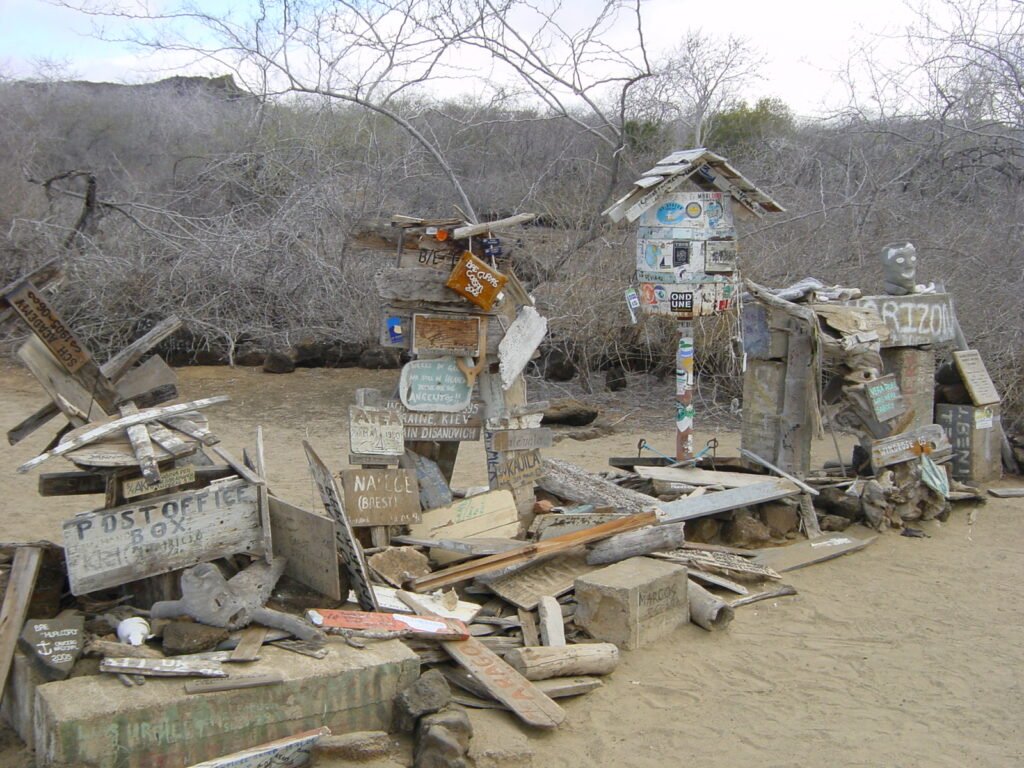
Situated on the northern coast of Isla Floreana, Post Office Bay (Bahía del Correo) is one of the most famous historical sites in the Galápagos Islands. In 1793, Captain James Colnett erected a wooden whiskey barrel on the beach to serve as an informal post office for British whaling ships operating in the Pacific.
Sailors departing for multi-year voyages would deposit unsealed letters in the barrel, hoping that homeward-bound crews passing through would review the mail and hand-deliver any items addressed to locations near their destination port.
Remarkably, this postal system remains active today without the involvement of stamps, government postmasters, or electronic tracking. Visitors arriving by boat walk up the sandy shore to sift through a stack of postcards left by fellow global travellers.
If you discover a letter addressed to someone living near your hometown, tradition dictates that you take it with you and deliver it by hand upon your return. The surrounding bay also offers a sheltered beach where sea lions rest on sun-warmed rocks and marine iguanas amble across the sand.
Punta Cormorant / Olivine beaches and flamingo lagoons
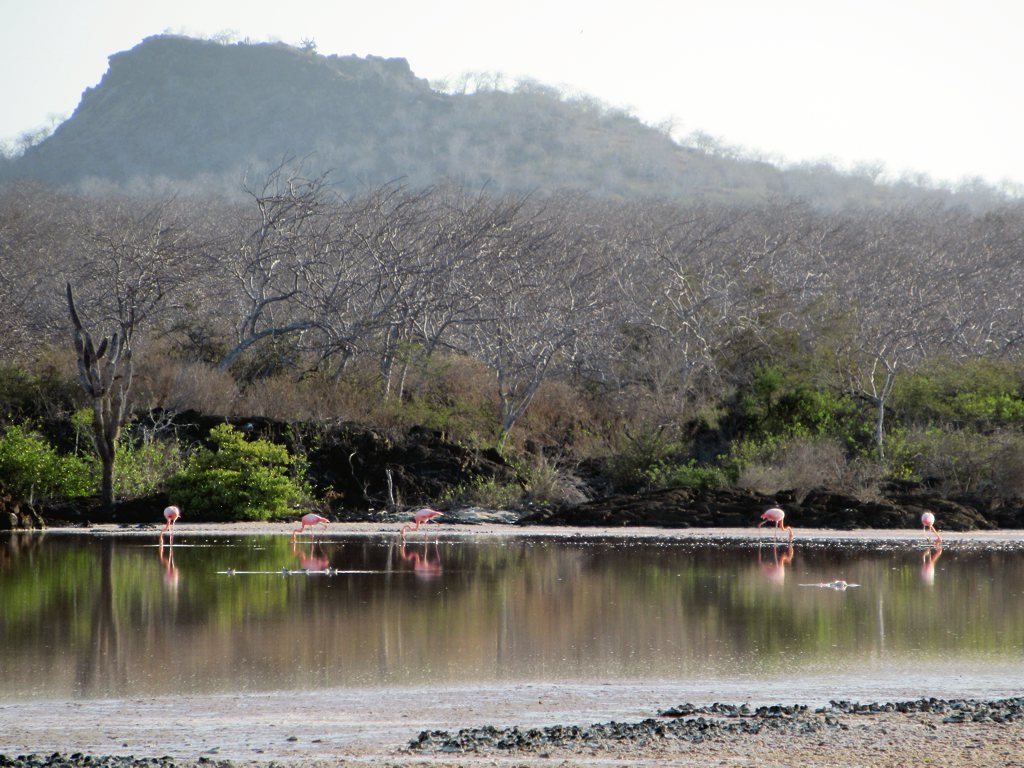
Located along a narrow peninsula on the northern tip of Isla Floreana, Punta Cormorant showcases the geological diversity of the archipelago. Landing on the shore reveals a beach with a distinct greenish tint, caused by a high concentration of olivine crystals erupted from nearby volcanic cones.
A short trail leads inland across a mangrove-lined spit to a large brackish lagoon that serves as a key feeding ground for American flamingos, white-cheeked pintails, and stilts. Watching these bright pink birds waddle through shallow salty water against dark basalt hills is a classic Galápagos vista.
Continuing along the trail leads to the opposite side of the peninsula, where the scenery changes completely at Four Sand Beach. Composed of fine, crushed coral white sand, this soft shore serves as a primary nesting ground for Pacific green sea turtles between December and May.
While swimming is restricted off Four Sand Beach to protect turtle nests, visitors sitting along the high tide line can frequently spot stingrays and small reef sharks gliding through the gentle shore break.
The Galápagos.
Ecuador’s Enchanted Isles
Corona del Diablo / Submerged volcanic crater teeming with marine life
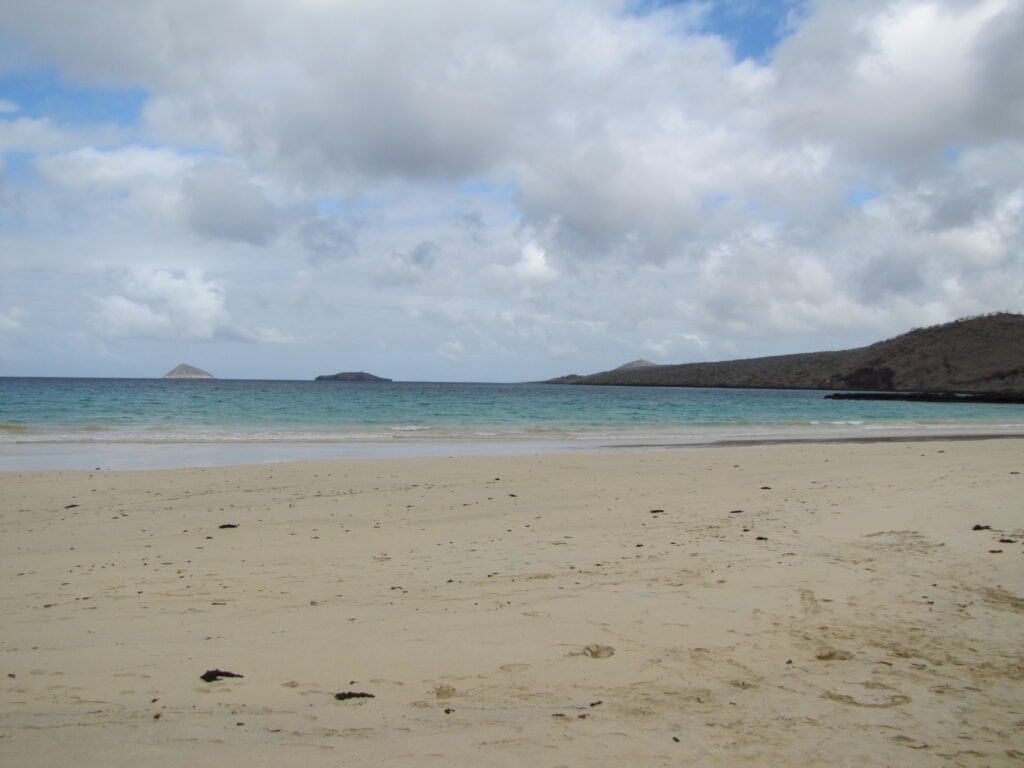
Rising sharply out of the open sea just off the northern coast of Punta Cormorant, Corona del Diablo (Devil’s Crown) is widely recognised as one of the finest snorkelling locations in the entire Galápagos archipelago.
This eroded volcanic cone has been hollowed out by centuries of wave action, leaving a ring of jagged basaltic spires breaking the surface like a jagged crown. Inside the sheltered interior of the crater lies a thriving coral reef system fed by nutrient-rich ocean currents.
Slinking into the clear, deep water reveals an extraordinary underwater amphitheatre populated by sea turtles, eagle rays, playful sea lion pups, and vibrant schools of king angelfish. More experienced swimmers navigating the outer edges of the crater may also glimpse white-tip reef sharks, hammerhead sharks, and pelagic fish cruising along the drop-off.
Due to strong ocean currents pushing through the underwater rock passages, visiting Corona del Diablo requires confident swimming abilities and a deep respect for marine conditions.
Asilo de la Paz / Highland caves and freshwater springs
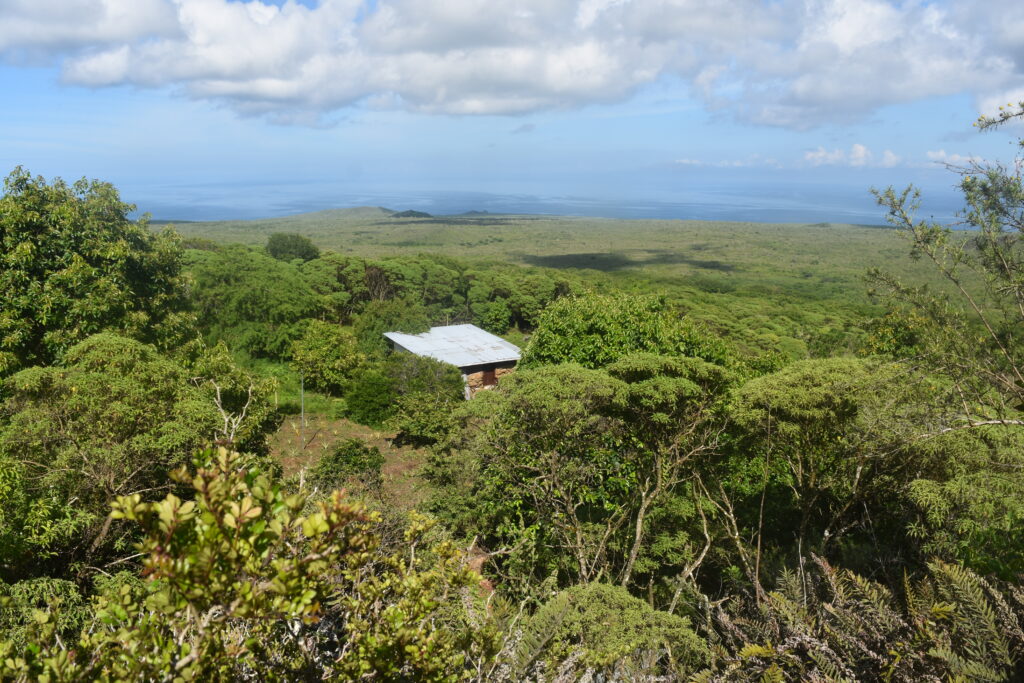
Heading inland from the coast into the lush, moist highlands of Isla Floreana brings you to Asilo de la Paz, a dramatic hill standing 450 metres above sea level. This site holds tremendous historical significance as the location where the island’s earliest human settlers attempted to build a life.
Visitors walking the trail pass through native Scalesia tree forests to reach a natural freshwater spring—a rare hydrological feature in the dry Galápagos climate that made human survival possible here.
Adjacent to the spring are large basalt caves that served as a home for the Wittmer family, who arrived from Germany in 1932, as well as earlier pirate crews seeking refuge in the Pacific.
Today, the area surrounding Asilo de la Paz also houses a management centre and tortoise sanctuary where giant Galápagos tortoises reintroduced to the area graze freely under the forest canopy. The cool mountain air and rich historical background make this highland sanctuary a compelling contrast to the coastal visitor sites.
The Ecuadorian Sierra.
Get lost in the hills
La Lobería / Coastal sanctuaries and sea lion rookeries
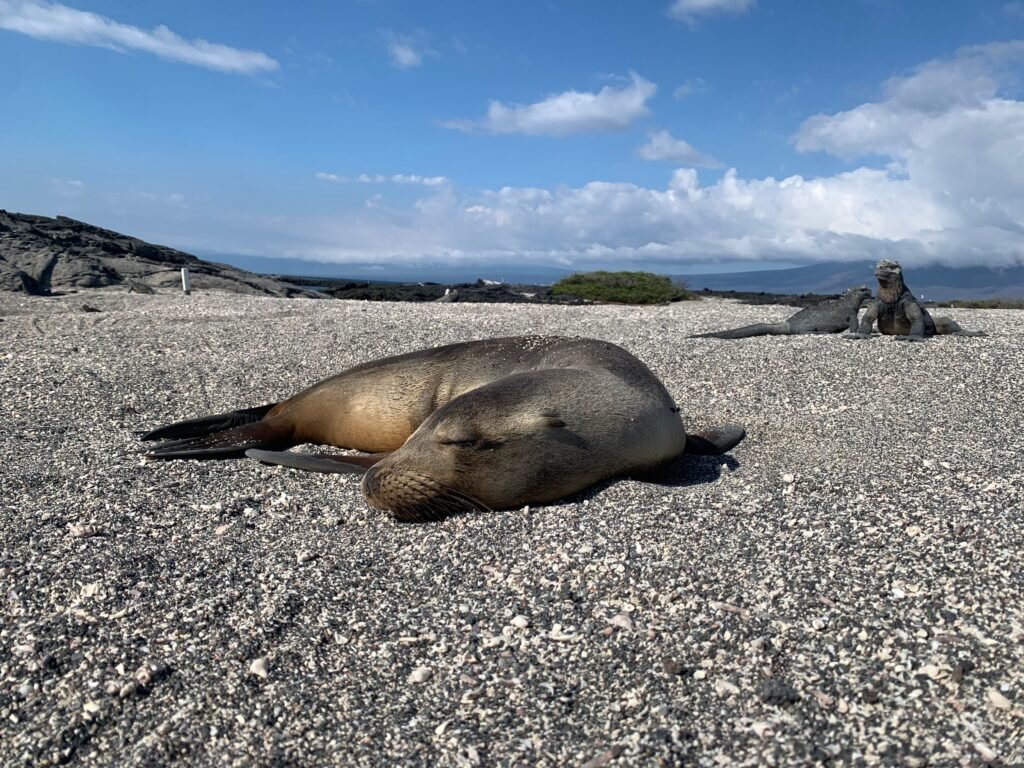
Stretching along the coastline just south of the main village of Puerto Velasco Ibarra, La Lobería is an accessible site for watching native marine life in an undisturbed habitat. A 900-metre foot trail leads across rocky lava fields and sandy coves to a vibrant sea lion rookery. Dozens of sea lions gather along the shoreline, with adult females basking on smooth rocks while energetic pups practice swimming in shallow, sheltered tide pools.
Along the footpath, marine iguanas sunbathe on black basalt rocks to regulate their body temperature, while blue-footed boobies and Sally Lightfoot crabs add flashes of bright colour to the dark volcanic coastline.
The calm waters of the inlet offer a peaceful spot for snorkelling alongside young sea lions and green sea turtles, providing an intimate look at the island’s marine ecosystem right on the doorstep of the local community.
Mirador de la Baronesa / Panoramic views and historical intrigue
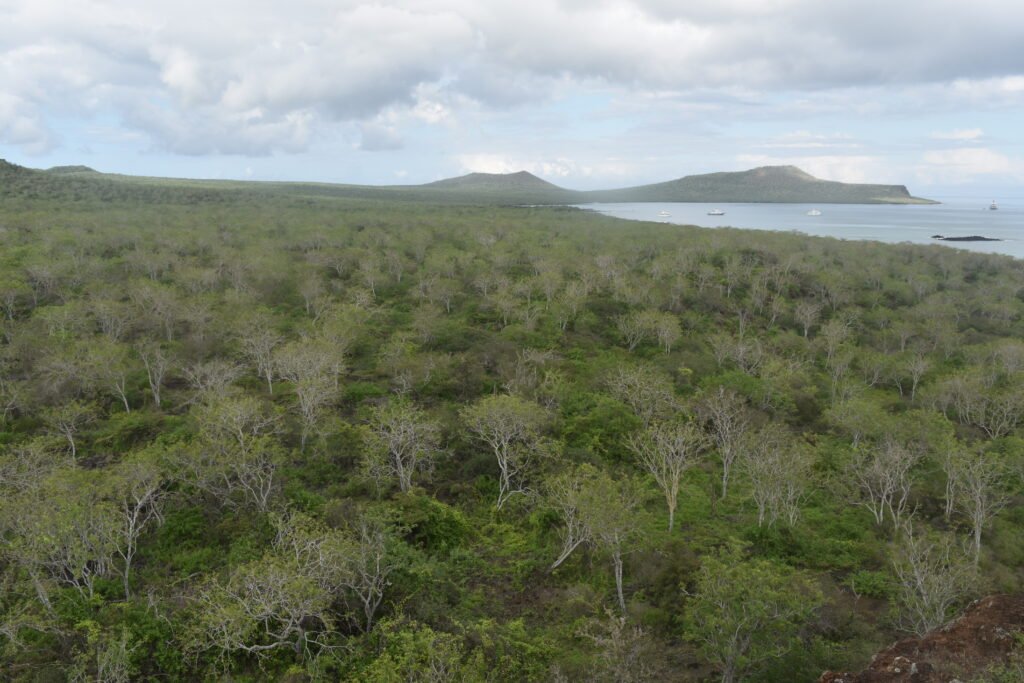
Perched on a high basaltic ridge on the northern coast near Post Office Bay, Mirador de la Baronesa offers sweeping panoramic views across the turquoise bays and volcanic landscape of Isla Floreana.
The viewpoint is forever linked to the mystery of Baroness Eloise von Wagner-Bousquet, an eccentric Austrian aristocrat who arrived on the island in 1932 accompanied by three lovers, intending to build a luxury resort for wealthy travellers. Her domineering presence and erratic behaviour created intense friction with other island residents, leading to her sudden and unexplained disappearance in 1934 along with one of her companions.
A short walk up a gentle stone trail brings visitors to the rocky lookout point where the Baroness allegedly spent hours scanning the horizon for arriving ships. Below the ridge lie stone ruins and complex rock labyrinths that local legend claims were used as lookout posts by 17th-century buccaneers.
Standing at the viewpoint provides excellent opportunities for photography, birdwatching, and absorbing the silent solitude that defines this isolated corner of the Pacific.
The Ecuadorian Amazon.
The most biodiverse place in the world
Navigate Isla Floreana on two wheels and local day trips
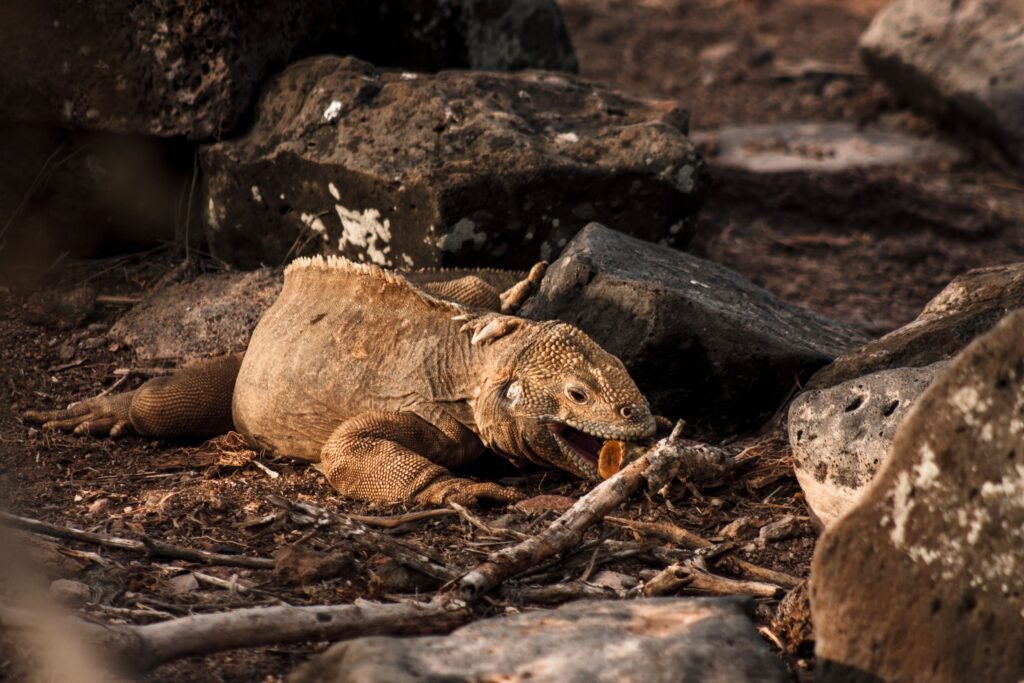
While many travellers experience Isla Floreana on short boat stops, staying overnight in Puerto Velasco Ibarra opens up a wonderful world of independent exploration. For cyclists bringing a gravel or mountain bike ashore, the unpaved dirt tracks radiating from the village present an ideal way to travel at your own pace without relying on scheduled group transport.
From the harbour at Puerto Velasco Ibarra, a scenic six-kilometre ride climbs steadily into the island’s interior, tackling rolling hills flanked by wild vegetation to reach Asilo de la Paz and the surrounding highland trails near Cerro Allieri.
Riding south along the coastal dirt track offers an easy three-kilometre spin down to La Lobería, allowing you to stop whenever sea lions or marine iguanas cross your path.
Beyond the immediate main island routes within a 20-kilometre radius, local day trips by water taxi or small boat open up extra coastal adventures to nearby islets such as Champion Islet and Enderby Islet, where pristine waters host incredible bird colonies and deep-water snorkelling opportunities.
Exploring these quiet roads and coastal waters on your own terms provides the ultimate sense of freedom across one of the most historically rich islands in the Galápagos.
Embrace the unhurried spirit of Santa María
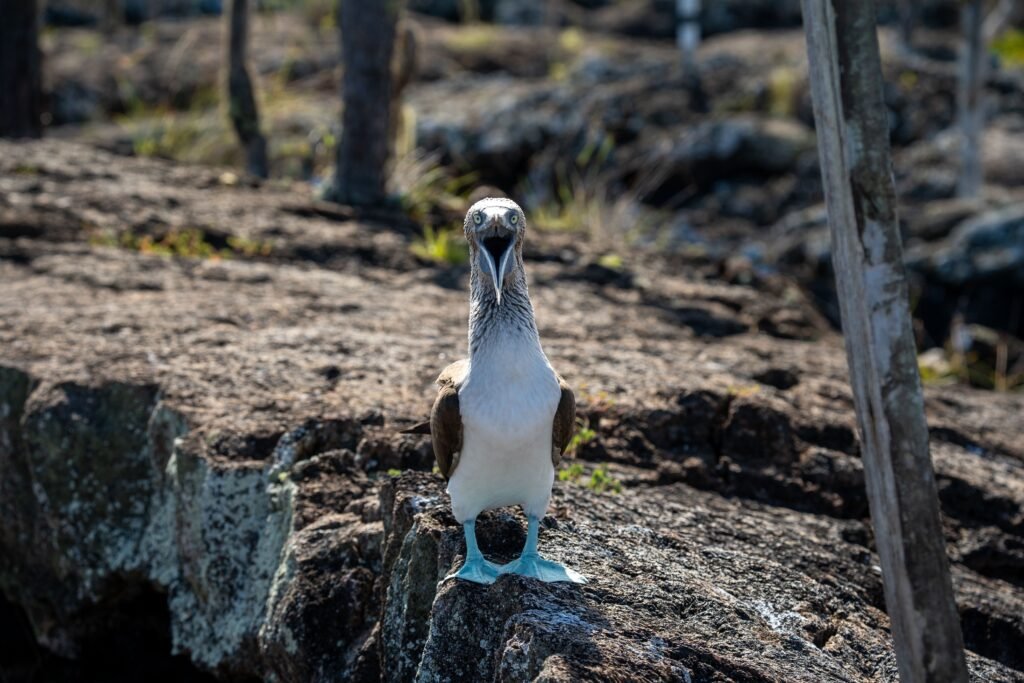
Isla Floreana stands apart in the Galápagos archipelago not for luxury resorts or commercial hubbub, but for its quiet, unhurried isolation. Stepping ashore at Puerto Velasco Ibarra feels like entering a calm era of Pacific travel, where the day is shaped by ocean tides, sunlit basalt trails, and genuine encounters with local residents.
Whether you are sifting through vintage letters at Post Office Bay, riding an unpaved highland track towards Asilo de la Paz, or floating through the clear waters of Corona del Diablo, the island rewards those who slow down. For independent travellers and cyclists who value autonomy over rigid group itineraries, Floreana provides ample room to breathe and explore at your own speed.
As you plan your journey through Ecuador and the Galápagos, make space for a stay on Santa María. Bring a curiosity for quirky maritime history, respect for sensitive ecosystems, and an eagerness to discover hidden corners on two feet or two wheels.
Out here on the southern edge of the archipelago, the true luxury is simple: time to appreciate the wildlife, freedom to ride quiet tracks, and stories that linger long after your boat leaves the harbour.
Affiliate Disclaimer: Some of the links on Wheely Tyred are affiliate links. If you click through and make a booking or purchase, we may earn a small commission at no extra cost to you. We only recommend gear, tours, stays, and services we genuinely use, trust, and stand behind — our editorial independence always comes first. These commissions help keep our independent cycling guides and travel stories free to read. Thanks for supporting the ride!
The Ecuadorian Coast.
Where you’ll find the very best food
Frequently asked questions about the top attractions on Isla Floreana, Galápagos
Most independent travellers reach Isla Floreana via a two-hour public ferry or speedboat ride from Puerto Ayora on Isla Santa Cruz. Alternatively, the island is included as a port of call on select small-vessel island-hopping itineraries across the archipelago.
Yes. While guided tours are required for specific protected national park sites, staying overnight in Puerto Velasco Ibarra allows you to hire a gravel or mountain bike to navigate the unpaved dirt roads connecting the main village to highland areas like Asilo de la Paz and coastal spots like La Lobería.
You place an unsealed postcard into the historic wooden barrel without affixing any postage stamps. Visiting travellers sort through the pile and select postcards addressed to locations near their home towns, carrying them back to deliver them by hand.
Floreana offers excellent wildlife viewing year-round. The warmer, wetter season from December to May features calm seas and Pacific green sea turtle nesting at Four Sand Beach. The cooler, dry season from June to November brings nutrient-rich ocean currents, attracting dense marine life to sites like Corona del Diablo.
Sites within the Galápagos National Park boundary—such as Punta Cormorant, Corona del Diablo, and Post Office Bay—require a certified national park guide. However, areas adjacent to Puerto Velasco Ibarra, including the road to La Lobería and main island cycling routes, can be enjoyed independently.
Puerto Velasco Ibarra is a small, quiet community with a handful of family-run guesthouses (hostales) and small local eateries serving fresh seafood, ceviche, and traditional Ecuadorian highland dishes. Cash is essential, as electronic payment options and ATMs are limited.
Ecuador.
Pure wonder on the equator.