The best day tours in Puyo, Ecuador / 6 authentic Amazonian excursions
Puyo day tours & Amazon jungle activities in Pastaza Province
Experience Pastaza through community-led excursions
BEN FINCH
Perched on the threshold where the dramatic Andean foothills collapse into the vast tropical expanse of the Amazon basin, Puyo is often overlooked by travellers rushing towards the party-centric streets of Baños de Agua Santa. Yet for independent travellers who value genuine ecological immersion over commercialised adventure parks, Puyo is the true, beating heart of Ecuador’s central rainforest.
As the capital of Pastaza province—Ecuador’s largest and most pristine Amazonian territory—Puyo serves as an incredible base for exploring primary cloud forest, navigating wild river systems, and engaging directly with indigenous Kichwa and Shuar communities.
At Wheely Tyred, our philosophy centres on slow, intentional, and autonomous travel. We hold a strong distaste for crowded motorcoaches, generic mass-market itineraries, and performative cultural shows designed solely for rapid photo-ops. True adventure in the Amazon requires local knowledge, quiet patience, and deep respect for the surrounding ecosystems and ancestral lands.
While self-guided exploration has its place, entering the dense Amazonian jungle without an experienced local guide is neither safe nor ecologically responsible. A well-curated day excursion bridges that gap perfectly.
Partnering with native naturalists and community elders ensures that your footprint directly supports local rainforest stewardship, provides fair wages to indigenous hosts, and unlocks hidden sanctuaries—from sacred subterranean caverns to untouched flora reserves—that remain completely inaccessible to the casual tourist.
Here is our handpicked selection of six bookable day tours from Puyo that deliver authentic, high-impact Amazonian experiences.
The Pastaza Basin uncovered
A quick-reference guide to navigating the central Ecuadorian Amazon on your own terms, from subterranean caverns to community-led forest reserves.
- Reserva De Bosque Tropical Hola Vida: A sprawling private ecological sanctuary where primary cloud forest trails lead directly to a secluded waterfall and natural plunge pool
- Cueva de los Tayos: Ancient, sacred limestone caverns managed in partnership with the Shuar nation, home to the rare, nocturnal oilbird
- Indichuris Cliff Lookout: A dramatic high-altitude vantage point providing 360-degree views over the swirling confluence of the Pastaza and Bobonaza rivers
- Pastaza River Canyon: One of South America’s premier whitewater destinations, featuring continuous Class III and IV rapids set against sheer jungle walls
- Ancestral Gastronomy: Local culinary staples such as maito—fresh river fish wrapped in bijao leaves and grilled over embers—and energising infusions of hot guayusa tea
- Jungle Footwear: High-knee rubber boots (botas de caucho) paired with long synthetic socks are non-negotiable for navigating ankle-deep Amazonian clay trails
- Indigenous Stewardship: Choosing small, community-backed excursions guarantees that your travel spend funds fair local wages and territorial protection projects directly
Puyo.
The gateway to the Amazon
Cultural immersion & river navigation in Hola Vida
Rating & reviews
(New activity on Viator)
Why this tour stands out
This expansive full-day journey offers an ideal balance of botanical education, river transport, and indigenous heritage without feeling rushed or commercialised. Starting from Puyo, the excursion moves south into the lush corridor of the Reserva De Bosque Tropical Hola Vida.
Rather than standard sightseeing, this itinerary prioritises meaningful contact with local producers and native stewards. You begin with a guided walk through an artisanal cacao farm, tracing the transformation of raw Amazonian cacao pods into rich, single-origin chocolate using traditional clay roasting techniques.
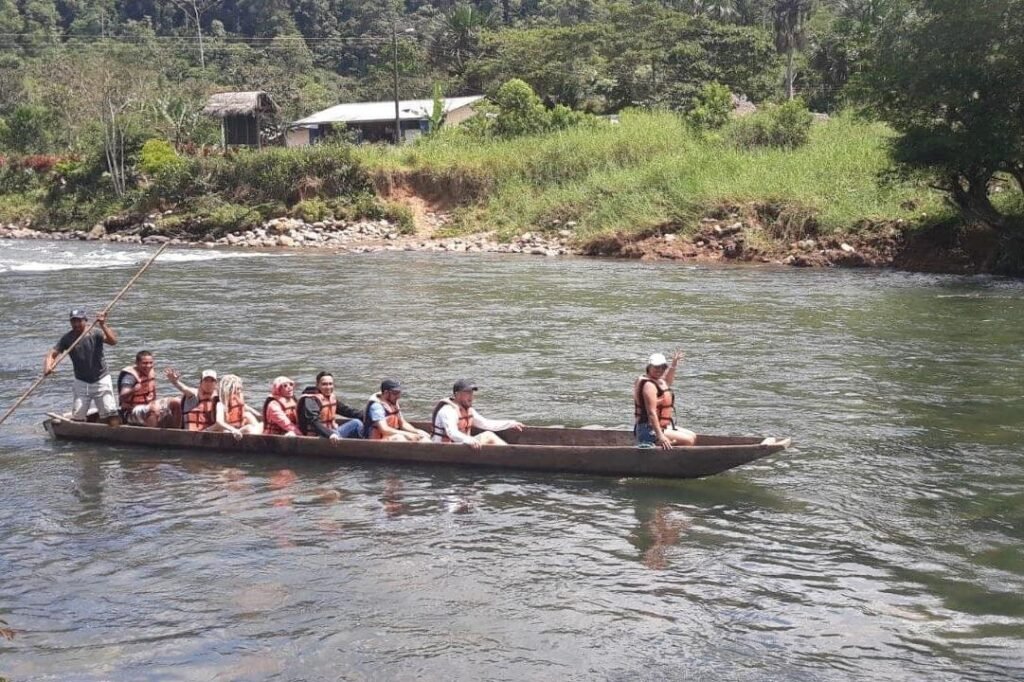
Following the cacao demonstration, the tour transitions to the water, boarding wooden dugout canoes to navigate the winding tributaries of the Puyo and Pastaza rivers. You visit a local Kichwa family settlement to learn about ancestral hunting techniques, including the use of natural blowguns (cerbatanas) and native plant dyes.
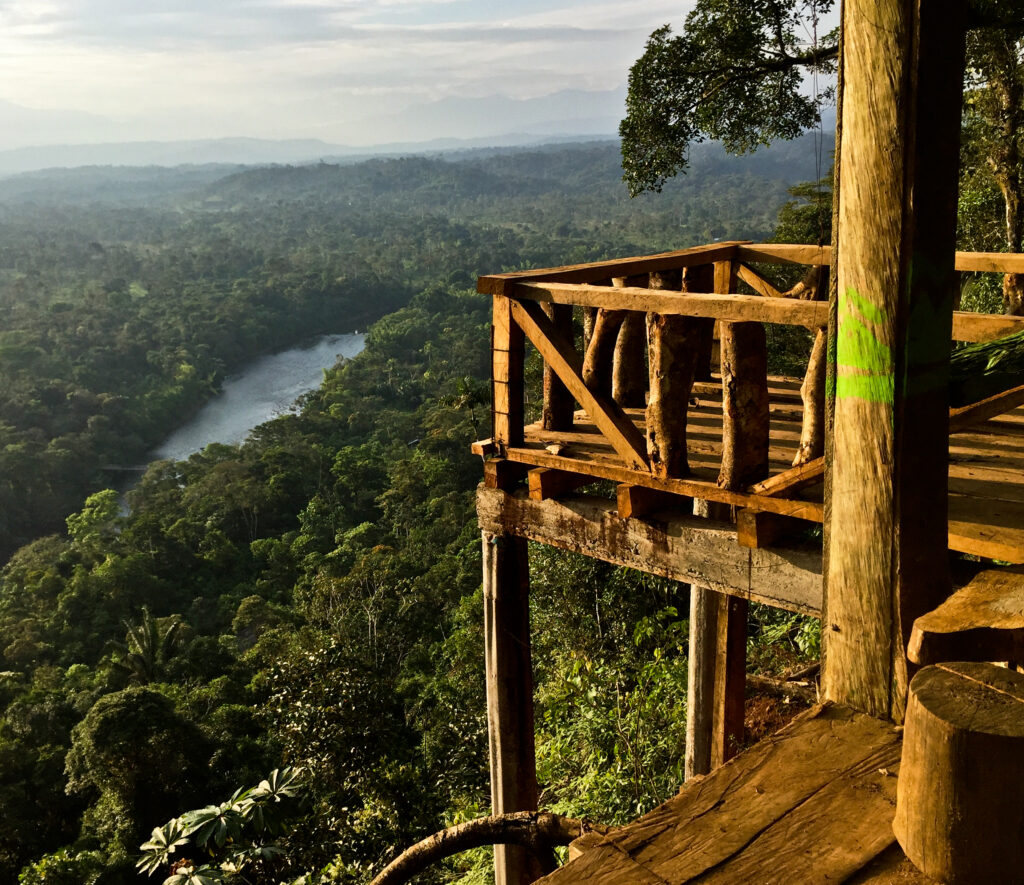
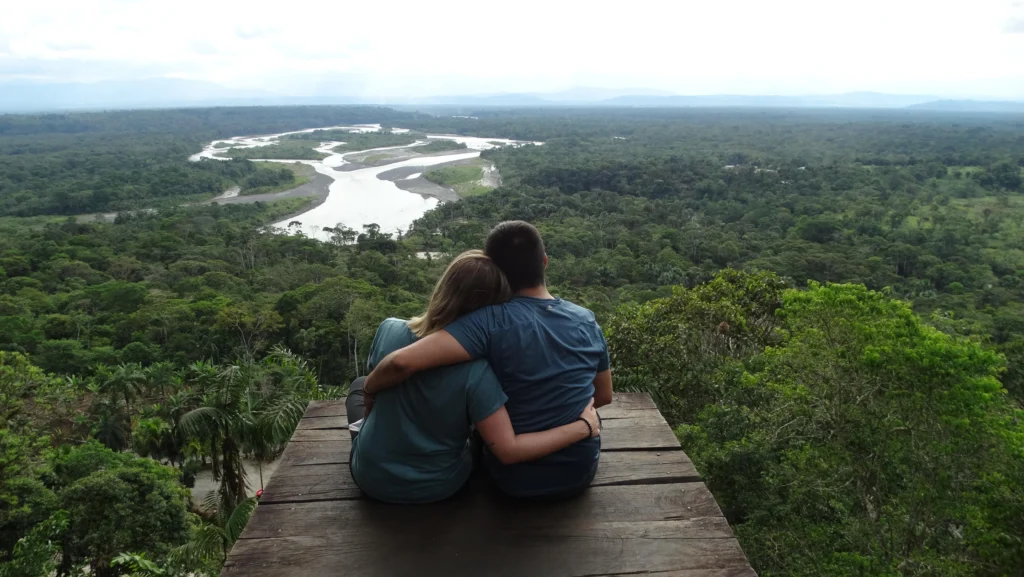
The journey concludes with a trek to the dramatic Mirador Indichuris, a high cliffside vantage point overlooking the convergence of the Pastaza and Bobonaza rivers, where the endless green canopy stretches to the horizon.
Key highlights
- Hands-on workshop at an organic Amazonian cacao plantation and chocolate workshop
- Wooden dugout canoe navigation along scenic rainforest riverways
- Interactive cultural exchange with a Kichwa host family demonstrating traditional crafts and survival skills
- Trek through the Reserva De Bosque Tropical Hola Vida to a hidden jungle waterfall
- Panoramic 360-degree views over the Amazon basin from the Indichuris cliff viewpoint
Ideal for
Travellers seeking a well-rounded single-day overview of Amazonian culture, traditional agriculture, and river landscapes.
Local insight
Pack a lightweight dry bag for your electronics during the canoe stretch. Amazonian river currents often throw light spray, and quick tropical downpours can occur without warning, even during dry spells.
The Ecuadorian Amazon.
The most biodiverse place in the world
Private exploration of Pastaza’s ecological reserves
Rating & reviews
(2+ verified reviews on GetYourGuide)
Why this tour stands out
For independent travellers who prefer to set their own pace, avoid group dynamics, and spend extra time photographing rare plants or birdlife, this private full-day excursion provides unmatched flexibility. Operating with a dedicated local bilingual naturalist, the tour begins at the elevated Mira Mera lookout point, granting sweeping views across the Pastaza River valley before descending into the dense rainforest canopy.
The core of the day is spent inside the Reserva De Bosque Tropical Hola Vida, a private ecological refuge spanning over 800 hectares of primary and secondary forest. Your private guide leads you along secluded forest trails, interpreting medicinal flora—such as anti-inflammatory tree barks and natural insect repellents used by indigenous inhabitants for generations—before reaching the majestic Hola Vida Waterfall.
Here, you have ample time to swim in the cool, clear plunge pool beneath the cascade. The afternoon features a visit to the Wayuri Kichwa community for an intimate look at sustainable pottery and palm-fibre weaving.
Key highlights
- Completely private itinerary with personalised attention from an expert local naturalist
- Guided hike through the protected primary forest of the Hola Vida Ecological Reserve
- Refreshing swim at the foot of the secluded Hola Vida Waterfall
- Cultural workshop in the Wayuri Kichwa community focusing on ancestral pottery techniques
- Flexible scheduling that allows extra time for photography, birdwatching, or resting
Ideal for
Couples, small families, or solo travellers who value privacy, custom pacing, and in-depth botanical interpretation.
Local insight
Support the Wayuri community directly by purchasing handmade clay pottery or woven pita fibre crafts. The proceeds go directly to the artisans without intermediary agent markups.
The Galápagos.
Ecuador’s Enchanted Isles
Deep subterranean speleology in sacred Shuar territory
Rating & reviews
(New activity on Viator)
Why this tour stands out
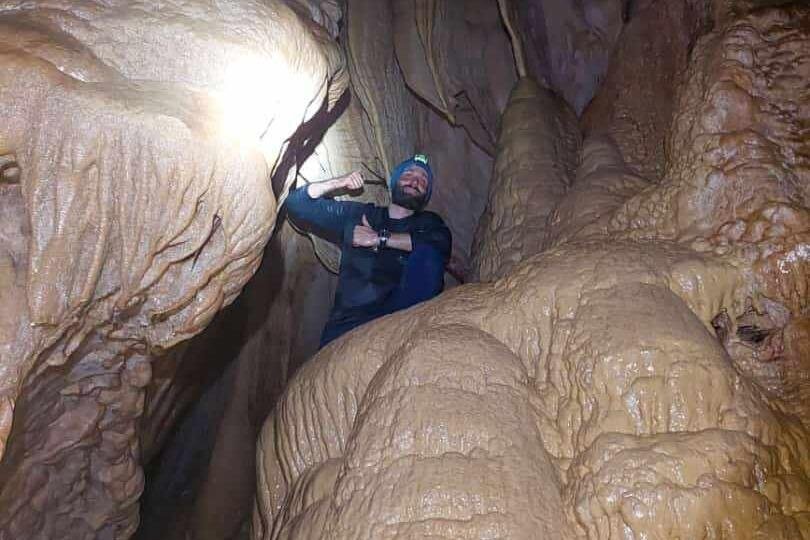
The legendary Cueva de los Tayos (Cave of the Oilbirds) is one of the South American continent’s most mystical geological formations, deeply sacred to the indigenous Shuar nation. While multi-day expeditions into the deeper system require technical gear, this full-day speleological tour from Puyo opens up the accessible outer chambers under the strict guidance of local Shuar community members and professional safety guides.
After driving through the dense jungle corridors of Pastaza, a 90-minute trek through primary rainforest brings you to the ancestral lands of the Shuar. Upon arrival and receiving a traditional welcome, you descend into the cave system using safety lines and headlamps.
Inside, you traverse vast limestone chambers adorned with ancient stalactites and stalagmites, cross subterranean streams, and observe the nesting roosts of the rare, nocturnal Tayo bird (Steatornis caripensis or Oilbird). The experience concludes with a traditional lunch (maito—fish wrapped in bijao leaves and grilled over open embers) prepared by the local Shuar community.
Key highlights
- Guided speleological exploration of the sacred Cueva de los Tayos limestone system
- Observation of nocturnal Tayo birds (Oilbirds) in their natural underground habitat
- Primary forest trekking guided by native Shuar woodsmen
- Authentic Shuar culinary lunch featuring fresh, locally sourced maito
- Direct economic support to autonomous Shuar territorial protection projects
Ideal for
Active adventure seekers, geology enthusiasts, and travellers looking for an off-the-beaten-track subterranean challenge.
Local insight
You will encounter wet, slippery rock surfaces and knee-deep water inside the cavern. Wear sturdy synthetic hiking socks underneath the rubber boots (botas de caucho) provided by the operator to prevent chafing.
Expert-led wildlife photography in primary rainforest
Rating & reviews
(New activity on GetYourGuide)
Why this tour stands out
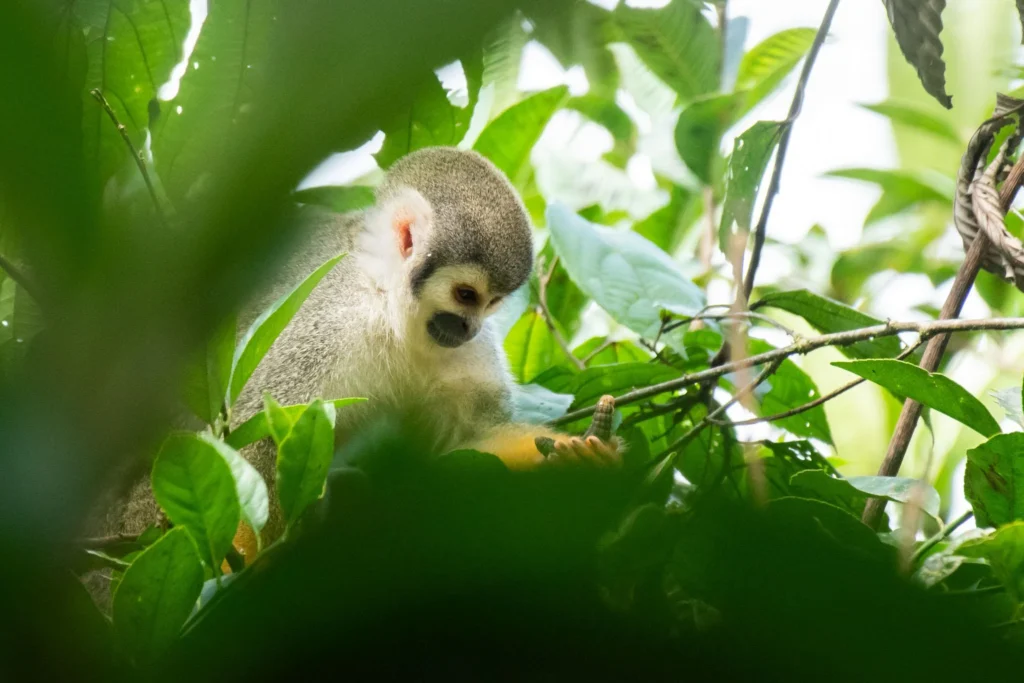
Standard jungle tours move at a rapid walking pace that frequently frightens wildlife and frustrates photographers. This specialised day tour is built entirely around macro wildlife tracking, birdwatching, and deliberate environmental photography.
Led by a local naturalist photographer raised in the Pastaza basin, the itinerary focuses on macro biodiversity—hunting for endemic poison dart frogs, camouflaged praying mantises, vibrant tree boas, and rare orchids—as well as tracking toucans and tanagers through the forest canopy.
The tour operates in small groups with early-morning start times to maximise animal activity during peak feeding hours. Your guide brings specialised macro lighting equipment and spotter scopes, sharing expert field techniques on camera settings for high-humidity, low-light jungle environments.
Rather than rushing between distant sights, hours are dedicated to quiet observation along micro-habitats, giving you the rare opportunity to capture high-resolution imagery of the Amazon’s most intricate creatures in their undisturbed habitats.
Key highlights
- Specialised focus on wildlife tracking, macro photography, and birding
- Expert instruction on capturing sharp images in challenging low-light canopy conditions
- Guided access to private micro-reserves with high concentrations of endemic amphibians and reptiles
- Ultra-small group sizing ensuring quiet movement through the forest without disturbing fauna
- Includes specialised field equipment support and macro lighting assistance
Ideal for
Photographers, macro nature enthusiasts, birdwatchers, and naturalists seeking a slow, highly focused wildlife encounter.
Local insight
Bring a dedicated dry pack with silica gel packets to protect your camera lenses. The micro-climates in the Pastaza forest can reach over 90 per cent humidity, causing internal lens condensation if equipment transitions too quickly between cool vehicles and warm air.
The Ecuadorian Sierra.
Get lost in the hills
Holistic rainforest living & cavern exploration
Rating & reviews
(New activity on Viator)
Why this tour stands out
This tour focuses on the holistic relationship between the Amazonian ecosystem and the spiritual well-being of its human inhabitants. Designed as a serene, private immersion, the day begins with a warm welcome at the Puyo terminal or hotel, where you are greeted with warm Guayusa tea—a naturally caffeinated, antioxidant-rich Amazonian leaf brewed traditionally to grant energy and clarity before entering the forest.
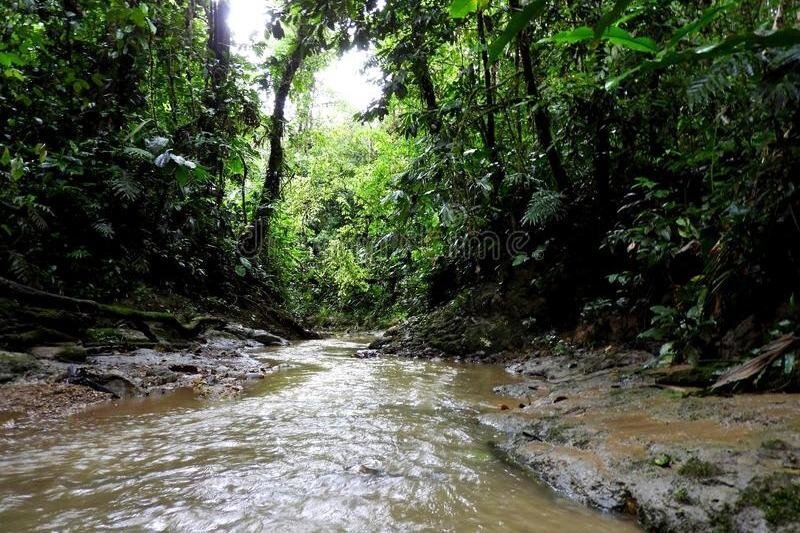
The journey combines a gentle hike through old-growth jungle with an exploration of secondary cavern formations created by ancient underground rivers. Along the trail, your local guide highlights the spiritual and medicinal uses of various native plants, explaining how Amazonian shamans use natural vines, resins, and leaves for physical healing and energetic cleansing.
Following the cavern walk, you enjoy a freshly cooked traditional meal surrounded by natural soundscapes, offering a peaceful space to reflect away from urban distractions.
Key highlights
- Traditional welcoming ceremony featuring fresh, hot Amazonian Guayusa tea
- Guided walk through secondary limestone caverns and natural rock arches
- In-depth interpretation of Amazonian ethnobotany, medicinal plants, and holistic traditions
- Private, unhurried pace suitable for all physical fitness levels
- Wholesome, locally sourced Amazonian lunch prepared over an open wood fire
Ideal for
Mindful travellers, wellness seekers, and anyone looking for a low-intensity, deeply educational cultural and natural immersion.
Local insight
Guayusa contains natural caffeine paired with L-theanine, providing smooth, sustained energy without jitteriness. Drink a mug at the start of your tour—it is the traditional fuel for rainforest hikes!
Whitewater rafting on the mighty Pastaza River
Rating & reviews
(New activity on Viator)
Why this tour stands out
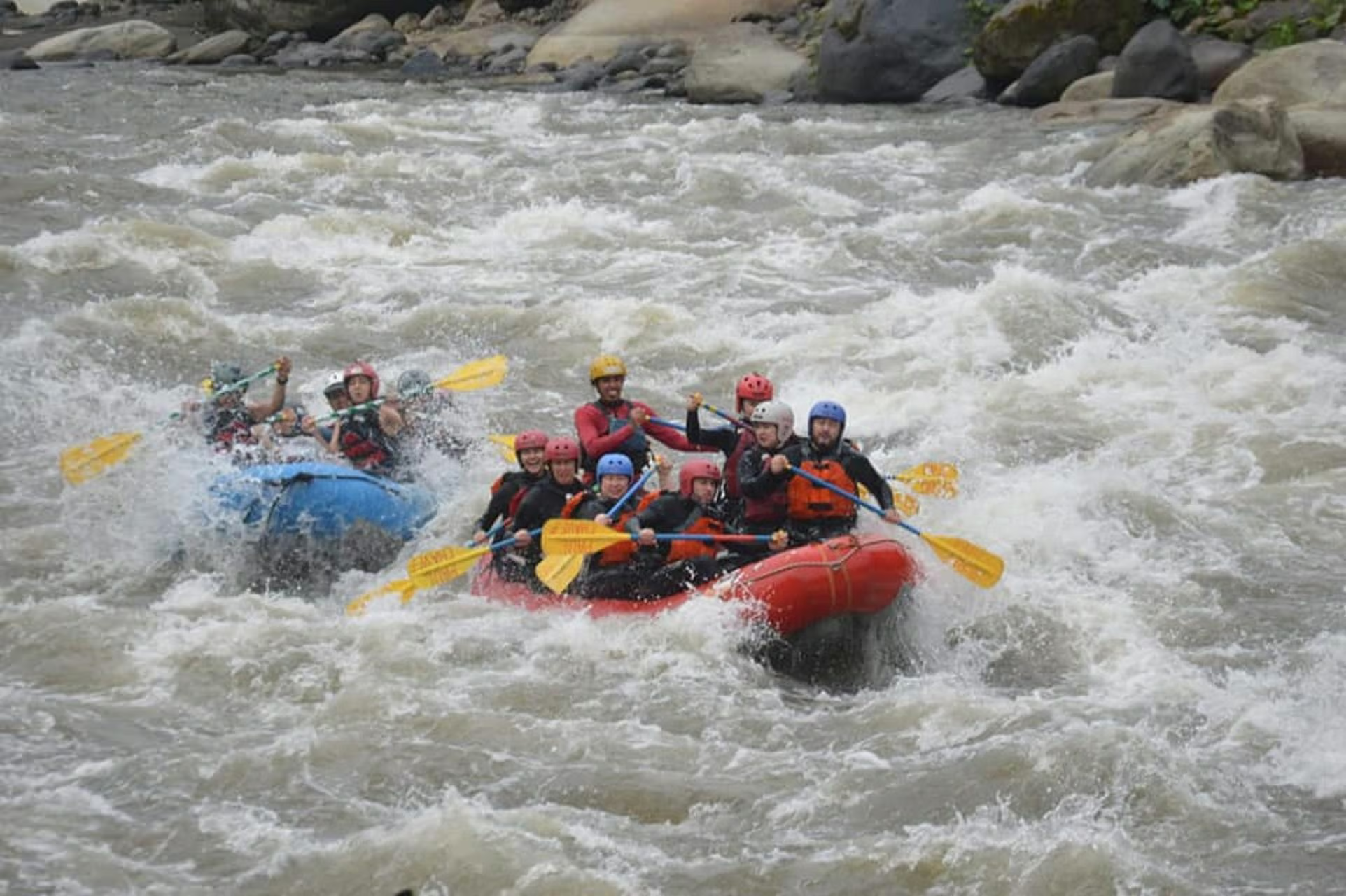
For thrill-seekers who want to experience the sheer power of Amazonian river systems, the Pastaza River is widely recognised as one of the finest whitewater destinations in South America. Originating in the high Andes near Cotopaxi and Chimborazo, the Pastaza carving through dramatic rainforest gorges yields continuous Class III and IV rapids set against breathtaking jungle backdrops.
This professionally operated rafting tour departs directly from Puyo, taking you to a prime 18-kilometre river section. Led by certified river guides equipped with top-tier safety gear, state-of-the-art rafts, and safety kayak support, you navigate thrilling technical drops, wave trains, and deep canyon pools.
Between rapid stretches, you drift past untouched primary forest walls cascading with tropical waterfalls. The package includes a hearty riverside lunch, full safety instruction, and complimentary digital video and photo coverage captured by a dedicated kayaker photographer.
Key highlights
- 18 kilometres of exhilarating Class III-IV whitewater rafting on the renowned Pastaza River
- Complete safety package with certified river guides, safety kayaks, helmets, and life jackets
- Unmatched perspectives of dramatic jungle canyons and riverside waterfalls
- Riverside lunch prepared fresh during a mid-river canyon rest stop
- Includes full high-definition video and photo package to document your run
Ideal for
Active adventure enthusiasts, group travellers, and experienced paddlers seeking a high-adrenaline aquatic experience.
Local insight
Leave all jewellery, non-waterproof watches, and loose items at the base office. The Pastaza River rapids are powerful, and anything not securely fastened to your body will likely end up at the bottom of the river canyon!
The Ecuadorian Coast.
Where you’ll find the very best food
Our practical Puyo excursion planning guide
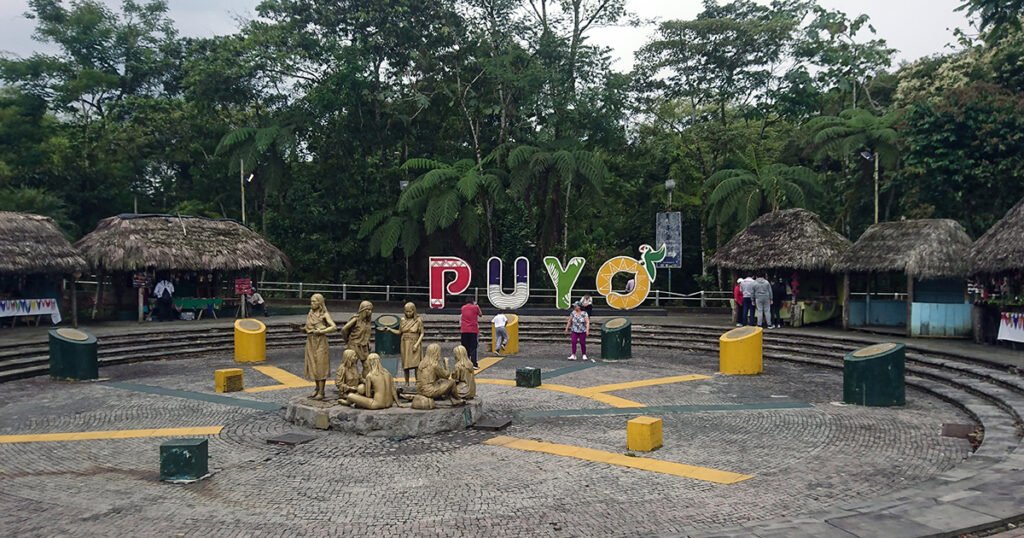
To ensure your day trips from Puyo run smoothly, comfortably, and respectfully, keep these essential practical tips in mind:
Climate & attire
Puyo is warmer and considerably wetter than neighbouring Baños de Agua Santa. Expect high humidity and sudden heavy rainfall at any time of year. Wear quick-drying synthetic clothing (avoid heavy cotton or denim, which stays damp indefinitely). High-quality knee-high rubber boots (botas de caucho) are essential for jungle walking; almost all reputable tour operators rent or provide them. Bring long synthetic socks to wear inside the boots to prevent friction blisters.
Health & altitude
Puyo sits at approximately 950 metres above sea level, making altitude sickness a non-issue compared to the high Andean plateau. However, the tropical heat and high humidity increase fluid loss rapidly. Carry a reusable one-litre water bottle and consider adding hydration salt packets. Insect repellent (preferably natural or eco-friendly DEET-free formulations to protect delicate aquatic life) and sunscreen are absolute necessities.
Currency & tipping
Small US dollar bills ($1, $5, and $10 notes) are vital. Larger notes ($20 or $50) are virtually impossible to change in small indigenous communities like Wayuri or Hola Vida. Tipping your local guide and driver is customary in Ecuador if the service is exceptional; aiming for $5 to $10 per person for a full-day guide is a generous and appreciated gesture.
Transportation & logistics
Most tour operators include round-trip transport from central Puyo hotels or the primary terminal (Terminal Terrestre de Puyo). If you are arriving from Baños de Agua Santa, local buses run every 30 minutes down the scenic Ruta de las Cascadas to Puyo, taking roughly 90 minutes.
Respecting indigenous sovereignty
When visiting Kichwa or Shuar communities, always wait for your guide to introduce you to the community leader before taking close-up photographs of individuals, children, or sacred home structures. Always ask for permission first (¿Puedo tomar una foto?).
Leave the beaten track in Ecuador’s Amazon capital
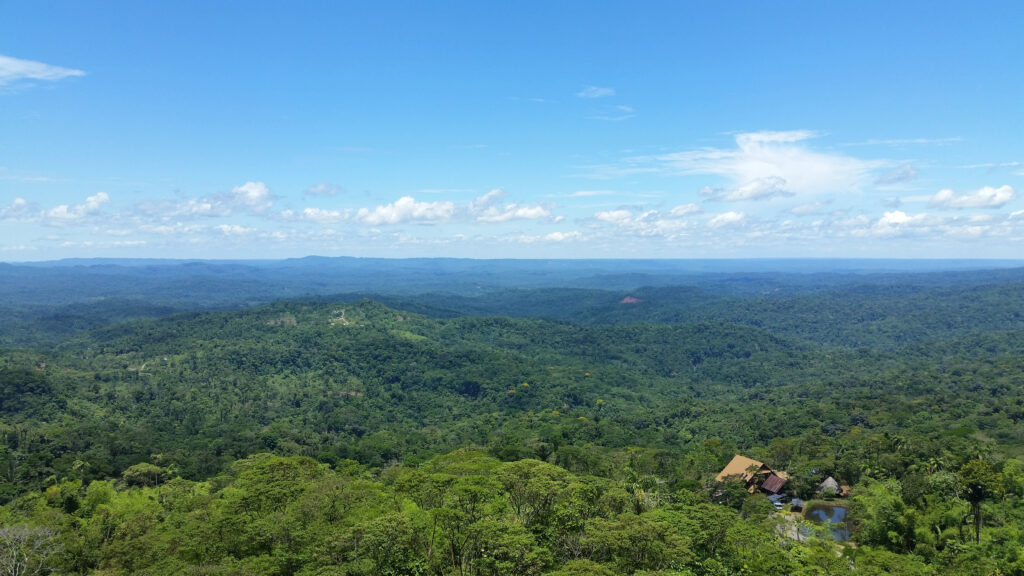
Read this far?
Puyo offers independent travellers a rare commodity in modern South American travel: a genuine, working gateway to the rainforest that has refused to transform itself into a theme park. While the tour buses stack up along the paved streets of Baños de Agua Santa, taking the local bus down through the cloud forest brings you to a town where life moves to the rhythm of tropical downpours, river levels, and morning market trading.
Stepping into the rainforest here is not about collecting passive tourist photos; it is about engaging with living ecosystems and ancient human traditions. By prioritising small-group excursions led by native Kichwa and Shuar naturalists, you bypass generic sightseeing scripts in favour of real botanical knowledge, quiet river transport, and authentic cultural exchange. Whether you are swimming in the spray of the Hola Vida waterfall or listening to the subterranean echoes of the Cueva de los Tayos, the forest reveals itself best to those who move slowly and quietly.
As autonomous travellers, our choices leave a footprint. Supporting community-led reserves and independent guides across Pastaza province ensures that tourism acts as a shield for primary rainforest habitats rather than an engine of exploitation. It keeps ancestral land rights strong and preserves single-origin agricultural practices like small-scale cacao farming for generations to come.
Lace up your rubber boots, leave the rigid schedules behind, and let the rivers of Puyo guide your journey into the central Amazon.
Affiliate Disclaimer: Some of the links on Wheely Tyred are affiliate links. If you click through and make a booking or purchase, we may earn a small commission at no extra cost to you. We only recommend gear, tours, stays, and services we genuinely use, trust, and stand behind — our editorial independence always comes first. These commissions help keep our independent cycling guides and travel stories free to read. You can also buy me a coffee here — thanks for supporting the ride!
Frequently asked questions about the best Puyo day tours
Frequent local buses run from the main bus terminal in Baños de Agua Santa down the scenic Ruta de las Cascadas, taking roughly 90 minutes to reach Puyo’s Terminal Terrestre. From Quito’s Terminal Terrestre Quitumbe, direct long-distance buses depart throughout the day, taking around five to six hours.
Guayusa is an Amazonian holly leaf native to the Ecuadorian rainforest, traditionally brewed into a hot herbal tea by Kichwa families before dawn. Packed with natural caffeine, antioxidants, and L-theanine, it provides smooth, sustained energy and mental clarity without the jitters associated with coffee—making it the ideal natural fuel for a long day in the forest.
High humidity and frequent tropical downpours mean lightweight, quick-drying synthetic clothing is essential; heavy cotton jeans or thick jumpers will absorb moisture and stay wet indefinitely. Knee-high rubber boots (botas de caucho) are mandatory for walking forest trails and are provided or rented by most reputable local operators. Bring thin, long synthetic socks to wear inside them to prevent chafing.
Ecuador uses the US dollar, but small indigenous communities and local reserve entry gates cannot break $20, $50, or $100 notes. Always carry a generous pouch of loose $1, $5, and $10 notes for buying handmade crafts, tipping guides, or purchasing cold drinks. Credit cards are rarely accepted outside major hotels in central Puyo.
Maito is a classic Amazonian culinary dish where fresh river fish (usually tilapia or catfish) is seasoned with local herbs, wrapped securely in wild bijao leaves, and slow-grilled over open wood embers. It is naturally gluten-free and healthy. Vegetarian alternatives substituting fish for fresh heart of palm (palmito) or wild mushrooms can almost always be arranged if requested when booking.
Yes. Entering ancestral territories belonging to Kichwa or Shuar communities—such as the Cueva de los Tayos system—without a recognised local guide is unsafe and culturally inappropriate. Native guides understand river safety, know how to navigate unmarked primary forest trails, and ensure that entrance fees directly benefit autonomous community development.
Ecuador.
Pure wonder on the equator.