Above the clouds / The best independent day tours from Quito
Best day trips from Quito / Handpicked guided tours & excursions in Ecuador
Claim the Ecuadorian highlands on your own terms
BEN FINCH
Perched high in the northern Andes at 2,850 metres, Quito is far more than a high-altitude stopover. Ecuador’s historic capital—sandwiched between the twin flanks of the active Pichincha volcano and a green valley of eucalyptus and native polylepis trees—is one of South America’s most compelling springboards for independent travel.
While many visitors treat Quito purely as a launchpad for the Galápagos Islands or deep Amazonian expeditions, the surrounding high-altitude páramo, cloud forests, and indigenous highlands offer some of the continent’s finest day trips. The key to experiencing them lies in stepping away from the rigid forty-seater tourist buses, commercial souvenir traps, and cookie-cutter itineraries.
At Wheely Tyred, we advocate for slow, autonomous travel that directly supports local host communities and respects fragile Andean ecosystems. While navigating public transit across Ecuador’s mountain passes is rewarding, certain remote trailheads, private nature reserves, and high-altitude reserves require complex transport logistics.
In these cases, joining a vetted, small-group excursion led by an expert local naturalist or cultural guide is the smartest way to preserve your independence while unlocking deep local insight.
Whether you wish to hike through misty cloud forests, negotiate hand-woven textiles directly with Kichwa artisans, or soak in volcanic thermal springs surrounded by high alpine flora, here is our curated selection of the absolute best day tours operating out of Quito.
High-altitude horizons / Essential takeaways for exploring Quito
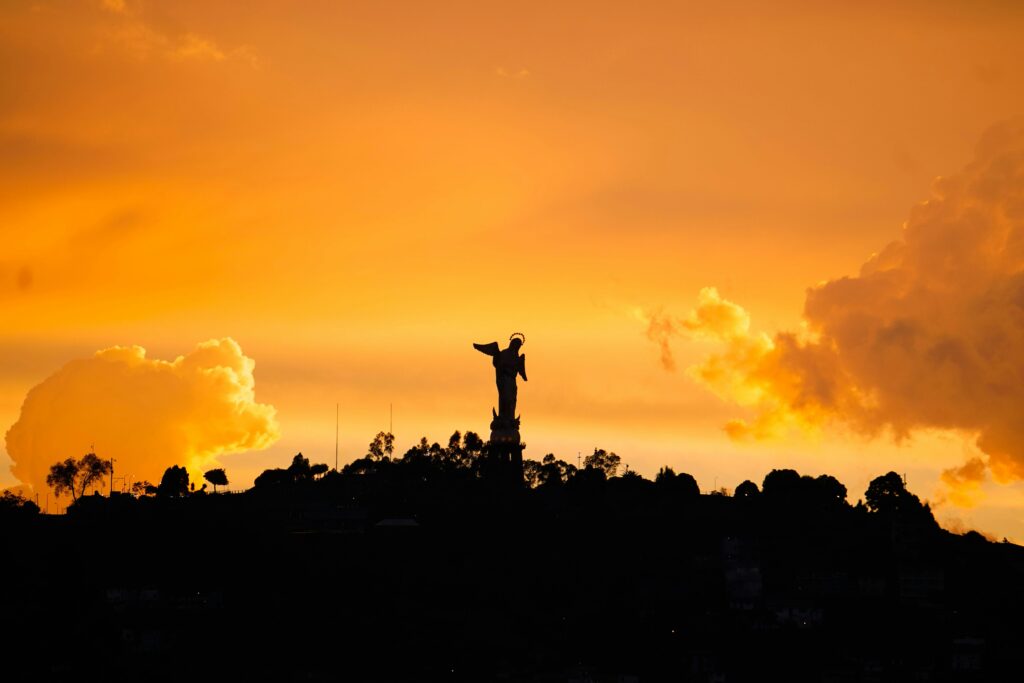
Whether you are scaling ice-capped volcanic peaks, trekking emerald calderas, or sampling artisan cacao in subtropical cloud forests, day trips from Ecuador’s capital offer an astonishing cross-section of Andean landscapes. Here is our curated summary of the key locations, cultural themes, and practical tips for navigating the region independently.
- High-altitude wilderness: Ascending Cotopaxi’s windswept páramo leads to the José Rivas Refuge at 4,860 metres, opening up sweeping glacial views, wild horses, and sightings of the elusive Andean condor
- Volcanic caldera treks: Dropping down into the emerald, mineral-rich waters of Quilotoa Crater reveals dramatic geology, steep trail switchbacks, and vibrant indigenous Tigua canvas art
- Highland craft traditions: Exploring Otavalo’s world-renowned Plaza de Ponchos connects travellers directly with Kichwa artisans weaving fine alpaca textiles, preceded by a traditional stop for warm bizcochos in Cayambe
- Subtropical biodiversity: Descending into Mindo’s lush canopy uncovers over 500 bird species, roaring forest waterfalls, open-air cable cars (tarabitas), and small-batch Nacional chocolate makers
- Geothermal restoration: Soothing mountain-weary muscles in the volcanic thermal springs of Papallacta offers a tranquil, restorative escape high in the Cayambe-Coca Ecological Reserve
- Equatorial & urban heritage: Wandering Quito’s UNESCO-listed colonial historic centre and riding the TelefériQo cable car pairs seamlessly with testing physics across both hemispheres at Mitad del Mundo and the Intiñán Solar Museum
- Altitude strategy: Dedicating 24 to 48 hours to acclimatise in Quito (2,850m) before attempting higher-elevation treks ensures your body adapts smoothly to thin mountain air
The Ecuadorian Sierra.
Get lost in the hills
1. High-altitude volcanic wilderness / Scale Cotopaxi’s páramo
Rating & reviews
(369+ verified reviews on GetYourGuide)
Why this tour stands out
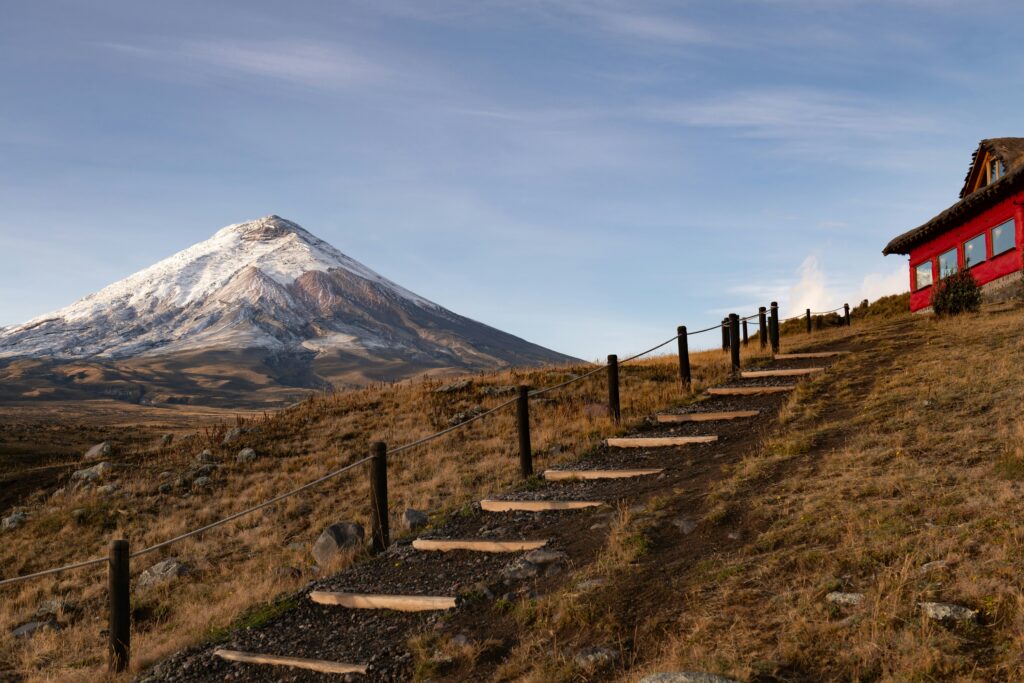
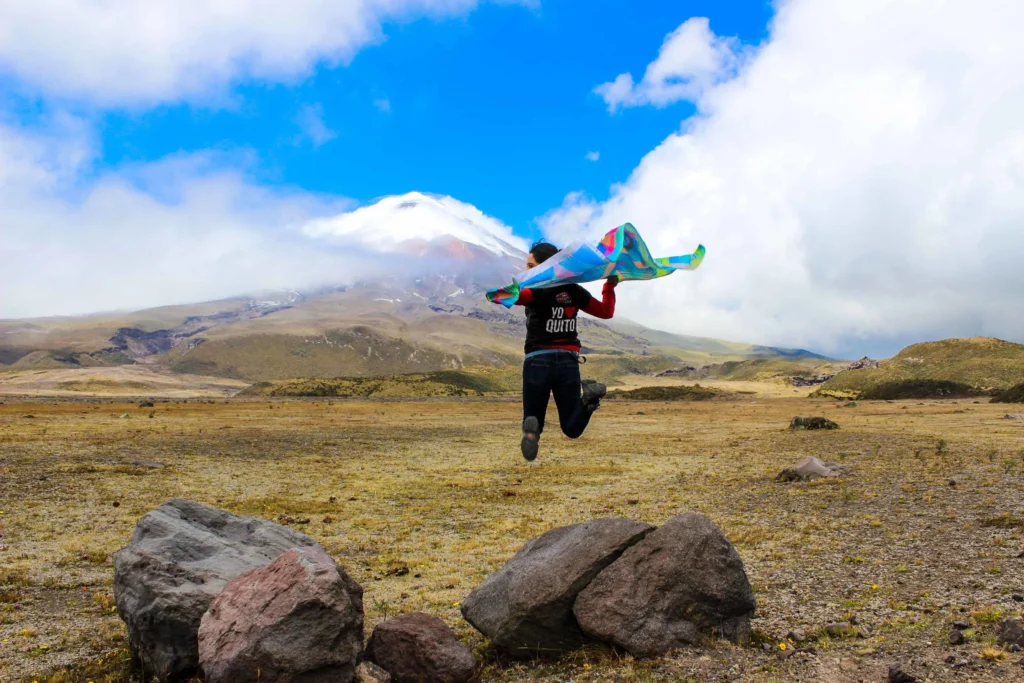
The perfectly symmetrical, snow-capped cone of Cotopaxi (5,897m) dominates the southern horizon of the Ecuadorian Andes. Located roughly two hours south of Quito along the famed Avenida de los Volcanes (Avenue of the Volcanoes), Cotopaxi National Park is a vast, windswept protected area of high-altitude páramo grasslands.
Unlike standard group tours that merely pull up to the lower car park for a quick photograph, this excursion gives travellers sufficient time on foot to truly feel the scale and thin air of the northern Andes. Departing early to beat the afternoon cloud cover that frequently rolls off the Amazon basin, you ascend via vehicle through pine plantations and alpine moorland to the park’s high carpark at 4,500 metres.
From here, you undertake a challenging foot ascent up a steep, gravelly switchback path to the José Rivas Refuge at 4,860 metres. After catching your breath over a hot cup of coca or muña tea inside the refuge, the guide leads a trek down toward Limpiopungo Lagoon—a glacial lake sitting at the base of Rumiñahui volcano. The small group format ensures your naturalist guide can tailor the pacing to the group’s acclimatisation level, pointing out native flora like the frailejón and indigenous wildlife along the shore.
Key highlights
- Trek up to the José Rivas Refuge at 4,860 metres above sea level
- Panoramic vistas of Cotopaxi’s glacier line and surrounding volcanic peaks
- Guided nature walk around the high-altitude Limpiopungo Lagoon
- Opportunities to spot wild horses, Andean gulls, and the majestic Andean condor
- Round-trip transport from Quito in small-group vehicles
Ideal for
Fit hikers, high-altitude enthusiasts, and active travellers keen to experience real mountain conditions.
Local insight
The scree path up to the refuge is loose and steep; bring sturdy hiking boots with aggressive tread rather than standard trainers. The temperature drops dramatically above 4,500 metres, so pack a windproof, waterproof shell and thermal gloves regardless of how sunny Quito feels when you depart in the morning.
2. Emerald volcanic caldera / Trek the Quilotoa crater
Rating & reviews
(102+ verified reviews on GetYourGuide)
Why this tour stands out
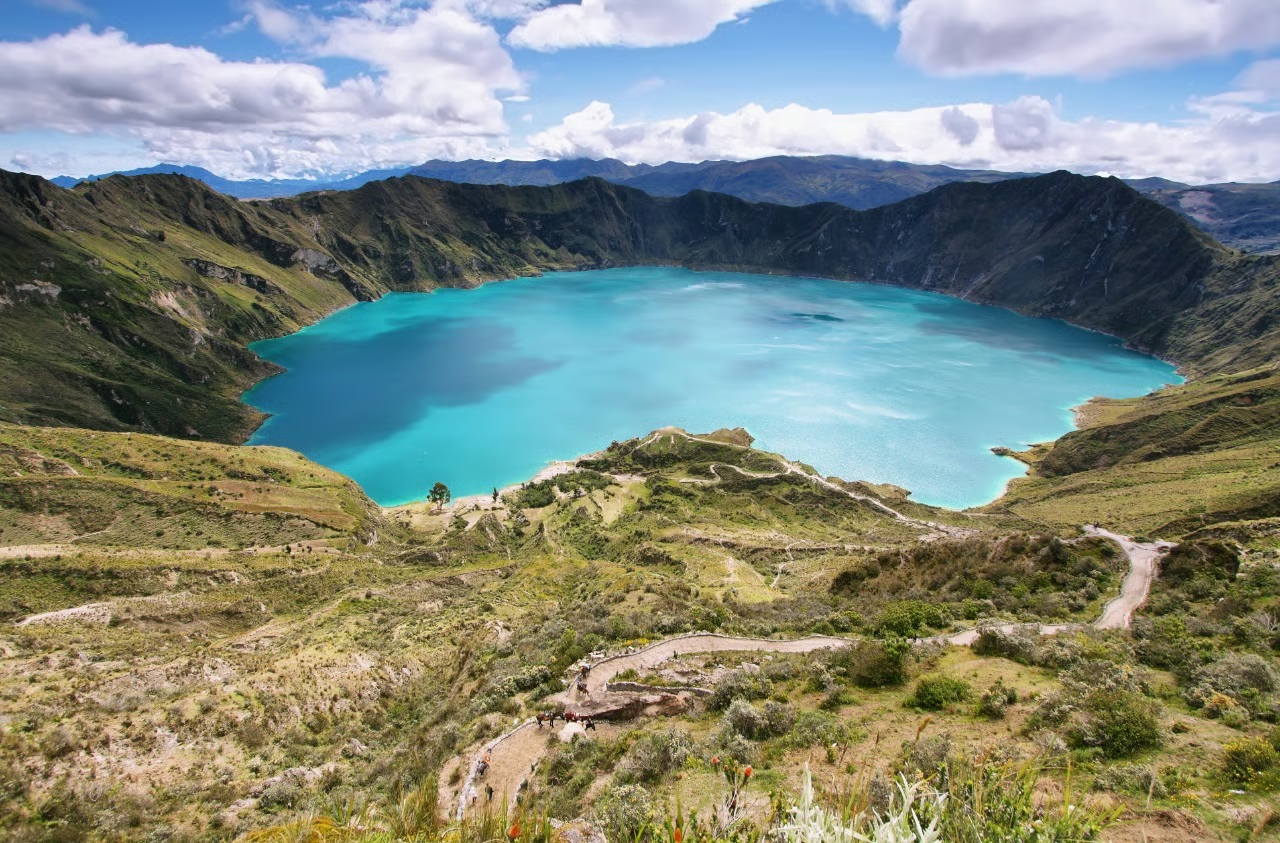
Tucked deep within the Western Cordillera, the Quilotoa Crater is a breathtaking three-kilometre-wide volcanic caldera filled with mineral-rich, emerald-green water. Created by a massive eruption over 800 years ago, the crater rim sits at nearly 3,900 metres, offering one of the most dramatic geological vistas in South America.
The journey to Quilotoa takes you through the rugged backcountry of Cotopaxi province, passing through traditional indigenous farming villages where fields of quinoa, potatoes, and barley carpet impossibly steep mountainsides. En route, this itinerary stops at the dramatic Toachi River Canyon, a deep fissure carved into volcanic ash deposits, as well as a local workshop in Tigua, famous for its vibrant folk paintings on sheepskin canvas.
Upon arrival at the crater, you take in the breathtaking panorama from the Shalalá lookout before descending a steep, sandy path down to the water’s edge. The walk down takes roughly 45 minutes, while the climb back up to the rim is a serious cardiovascular workout. By incorporating visits to local workshops and native family homesteads in Pujilí or Zumbahua, this operator avoids the sterile bus-to-viewpoint format and provides genuine cultural context while supporting rural community economies.
Key highlights
- Full descent into the 300-metre-deep volcanic crater to the edge of the turquoise lagoon
- Dramatic views from the Shalalá wooden cantilevered glass lookout
- Cultural stop at a traditional Tigua folk art community workshop
- Scenic drive through the Toachi River Canyon and rural Andean farming valleys
Ideal for
Landscape photographers, day trekkers, and cultural travellers who want to combine natural wonders with local indigenous art.
Local insight
The walk back up the crater wall involves climbing 280 vertical metres in thin air at 3,900 metres elevation. Take slow, deliberate steps and pace your breathing. If altitude affects you on the ascent, local community members offer mules to ride back up for roughly $10 to $15, which directly supports the local indigenous cooperative.
The Galápagos.
Ecuador’s Enchanted Isles
3. Living indigenous craft & culture / Explore Otavalo & Imbabura
Rating & reviews
(16+ verified reviews on GetYourGuide)
Why this tour stands out
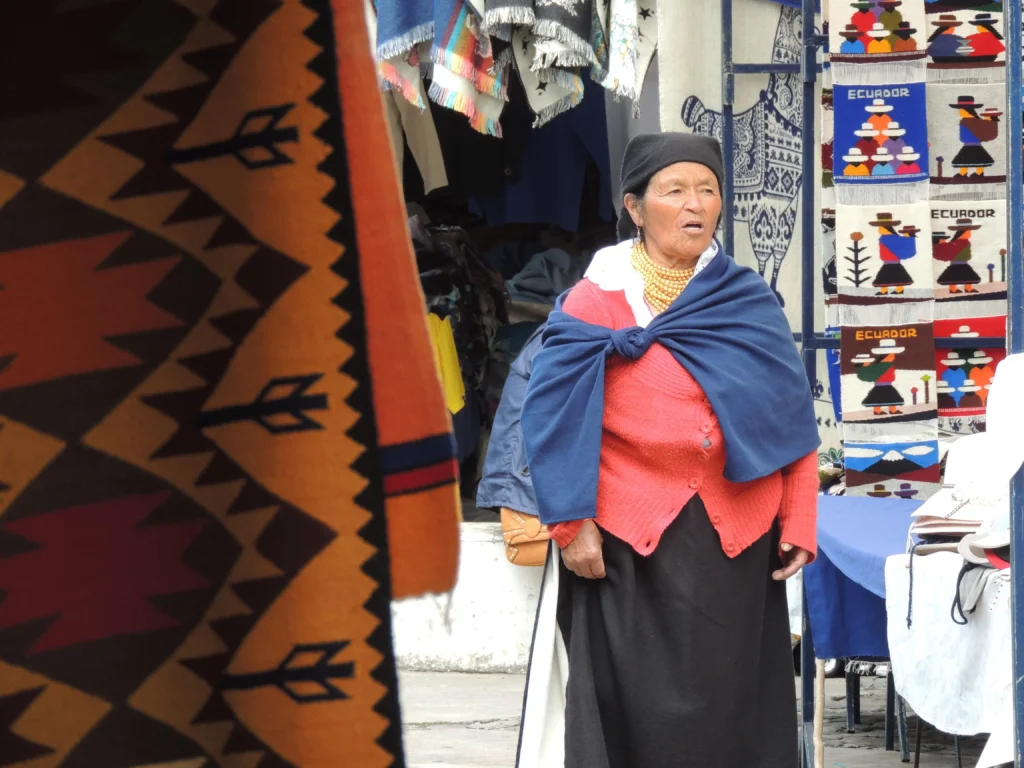
Heading north along the Pan-American Highway takes you into Imbabura—known as Ecuador’s Blue Province due to its abundance of glacial lakes and dramatic volcanic peaks like Taita Imbabura. The crown jewel of this region is Otavalo, home to South America’s largest and most famous indigenous market.
Rather than rushing travellers through the market stalls in thirty minutes, this tour provides a balanced, slow-paced exploration of Imbabura’s living culture. The tour kicks off with a traditional morning stop in Cayambe, where you sample fresh, warm bizcochos (flaky, buttery Andean biscuits) served alongside rich queso de hoja (leaf-wrapped fresh cheese) and manjar blanco.
Continuing north past San Pablo Lake, you enter Otavalo’s famous Plaza de Ponchos, where Kichwa Otavalo artisans trade hand-woven alpaca blankets, embroidery, fine silver, and carved tagua nuts. Following time at the market, the trip moves to the sacred Peguche Waterfall, a spiritual site used for ritual cleansing during the Inti Raymi solstice festival, followed by a visit to an indigenous weaver’s workshop to see traditional backstrap looms in action.
Key highlights
- Immersive exploration of South America’s largest indigenous market at Plaza de Ponchos
- Traditional food tasting of warm bizcochos and queso de hoja in Cayambe
- Guided walk to the sacred Peguche Waterfall in a native eucalyptus forest
- Direct interaction with Kichwa master weavers demonstrating pre-Hispanic textile techniques
Ideal for
Cultural explorers, textile enthusiasts, photographers, and culinary travellers looking for authentic local interaction.
Local insight
When purchasing handicrafts at Plaza de Ponchos, respectful bargaining (regateo) is customary, but keep it friendly and fair. Remember that these hand-woven items represent days of skilled labour. Bring small US dollar bills ($1, $5, and $10), as vendors rarely have change for large notes.
4. Subtropical canopy & biodiversity / Descend into Mindo
Rating & reviews
(157+ verified reviews on GetYourGuide)
Why this tour stands out
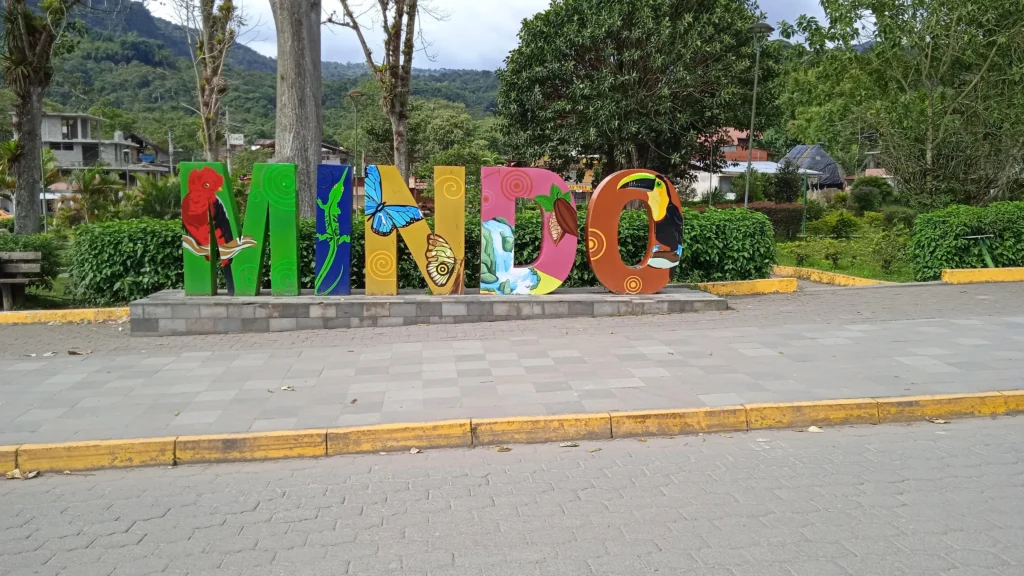
Just two hours northwest of Quito, the dramatic western slopes of the Andes plummet down into the Mindo-Nambillo Cloud Forest Reserve. Dropping from alpine altitudes down to roughly 1,500 metres, Mindo is an ecosystem transformed: misty subtropical rainforests, rushing rivers, and an astonishing concentration of orchids, butterflies, and over 500 species of birds.
Mindo is a world-renowned biodiversity hotspot that demands an expert eye. The local naturalist guides on this tour excel at spotting hidden canopy wildlife—from toucanets and quetzals to morpho butterflies—making the forest come alive far better than self-guided exploration ever could.
The morning begins at a private sanctuary where dozens of iridescent hummingbird species—including the sword-billed hummingbird and violet-tailed sylph—hover inches from your face. Next, you ride an open-air cable car (the tarabita) across a deep green valley gorge to reach a network of forest hiking trails leading to the refreshing Nambillo Waterfall. The day finishes in Mindo village with a bean-to-bar artisan chocolate tasting at a local small-batch producer, uncovering how Ecuador’s fine-flavour Nacional cocoa bean is transformed into world-class chocolate.
Key highlights
- Close-up hummingbird viewing at a private forest bird reserve
- Exhilarating ride across the canopy gorge on the tarabita cable car
- Guided trek through primary cloud forest to the Nambillo Waterfalls
- Bean-to-bar artisan chocolate tasting focusing on native Nacional cacao
Ideal for
Birdwatchers, nature lovers, eco-adventurers, and chocolate connoisseurs.
Local insight
Because Mindo sits at a much lower elevation (1,500m) than Quito, it is considerably warmer and more humid. Wear light, breathable long trousers and long sleeves to protect against midges and mosquitoes, and carry eco-friendly, biodegradable insect repellent and a light waterproof rain jacket.
The Ecuadorian Amazon.
The most biodiverse place in the world
5. Geothermal oasis in the high páramo / Soak in Papallacta
Rating & reviews
(49+ verified reviews on GetYourGuide)
Why this tour stands out
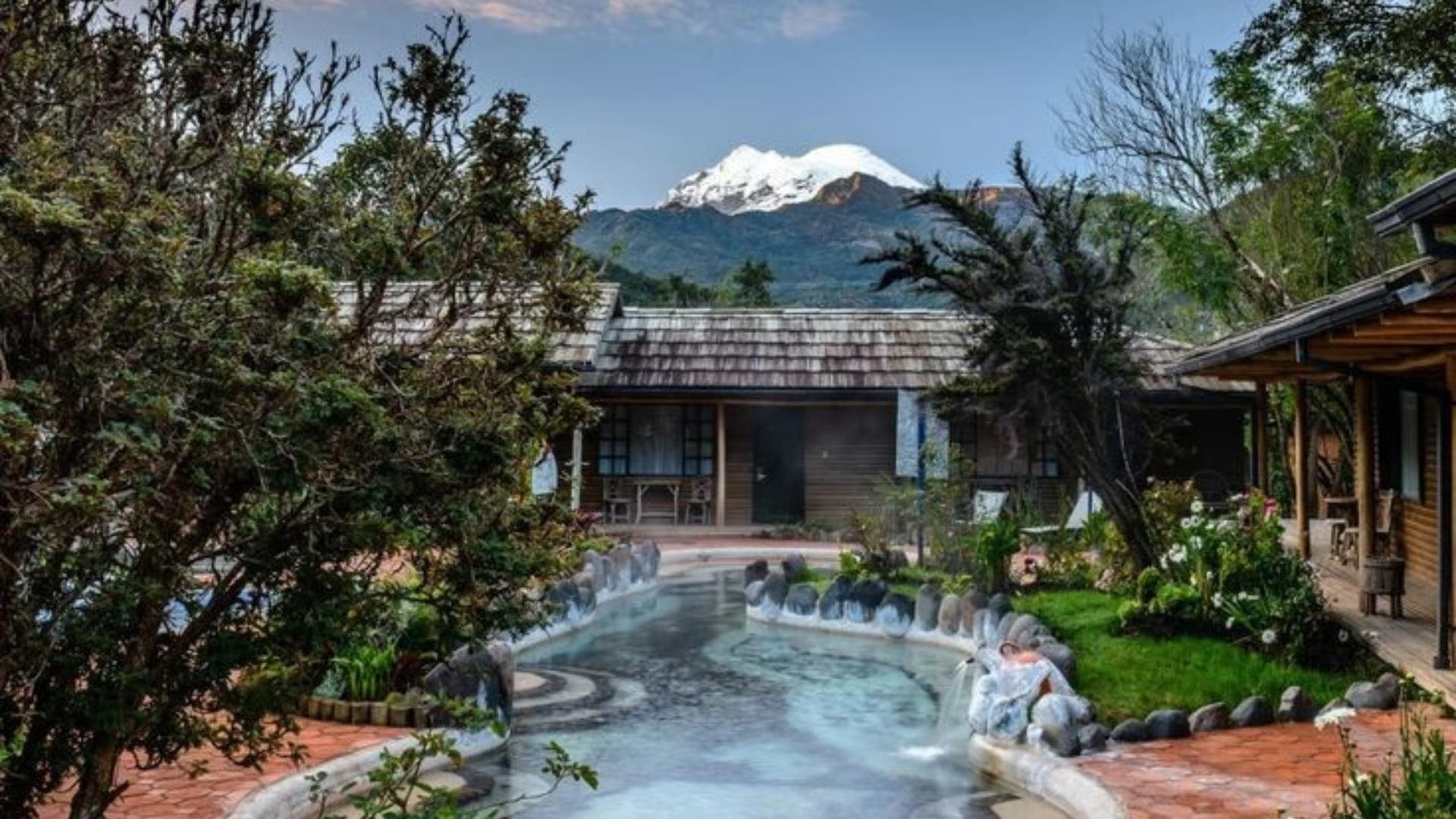
Perched at 3,300 metres on the high mountain pass between Quito and the Amazon basin, Papallacta is renowned across South America for its natural, crystal-clear thermal waters heated by the volcanic activity of Antisana and Cayambe.
This operator prioritises small group sizes and grants ample, unhurried time within the peaceful spa area rather than rushing guests through overcrowded public pools. The drive up to Papallacta climbs through the windswept páramo of the Cayambe-Coca Ecological Reserve, reaching heights where alpine lakes glisten among towering frailejones plants.
Upon arrival, you enter a sanctuary of stone thermal pools tucked into lush mountain gardens. The mineral-rich waters range in temperature from refreshing mountain cool to a soothing 40°C, filled with sulfates, sodium, and calcium that soothe tired muscles—making this the ultimate recovery trip after trekking Cotopaxi or Quilotoa. In between thermal dips, you can walk along a gentle riverside trail following the pristine Quijos River to spot highland flora and mountain birds.
Key highlights
- Extended relaxation time in the hot mineral pools of Termas de Papallacta
- Scenic high-mountain drive through the Cayambe-Coca Ecological Reserve
- Optional self-guided nature walk along the Quijos River trail
- Rejuvenating hydrotherapy surrounded by high-altitude cloud forest vegetation
Ideal for
Wellness seekers, relaxed travellers, and those needing a recovery day after high-altitude mountain treks.
Local insight
The air temperature at 3,300 metres can feel crisp and cool when you step out of the hot pools. Bring a warm fleece jacket, slip-on sandals, and a dry change of clothes to wrap up in immediately after swimming. Stay well-hydrated with fresh water during thermal baths to prevent altitude-induced headaches.
6. Urban colonial heritage & equator physics / Historic Quito & Mitad del Mundo
Rating & reviews
(159+ verified reviews on GetYourGuide)
Why this tour stands out
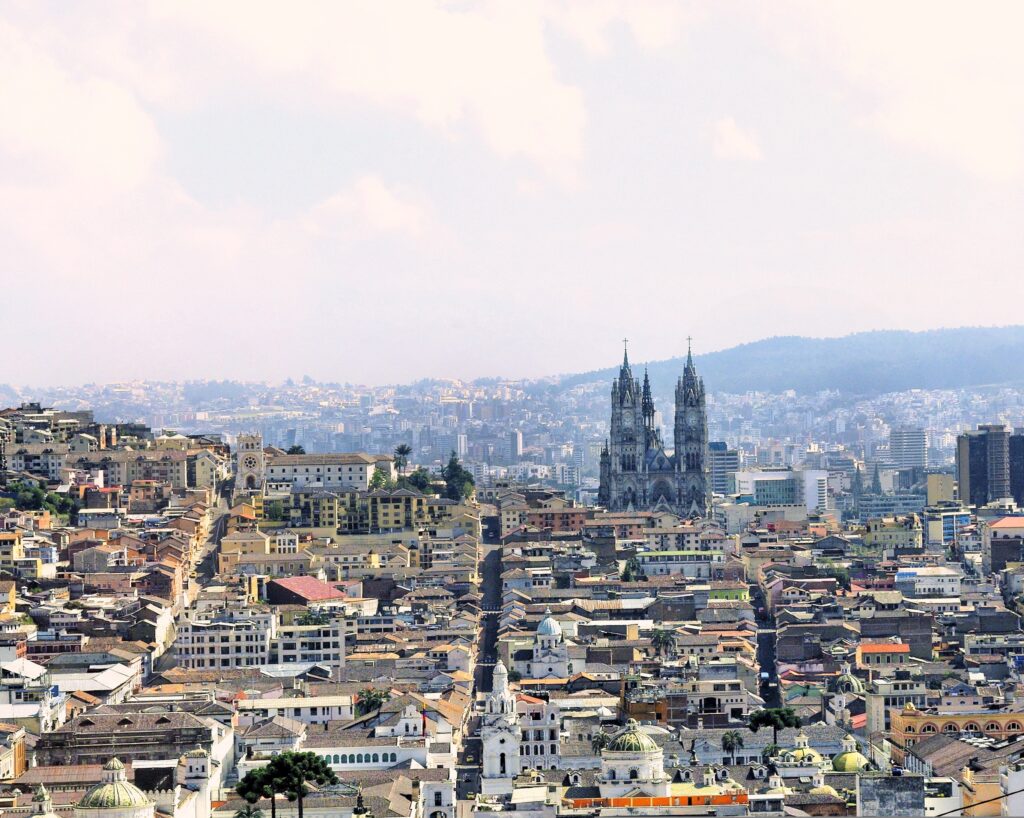
Founded in the 16th century on the ruins of an Inca city, Quito boasts the largest and best-preserved UNESCO-listed historic centre in the Americas. Combining colonial art architecture with the geographic anomaly of sitting directly on the Equator line, a comprehensive city tour is essential for understanding Ecuador’s complex heritage.
Navigating Quito’s urban sprawl, high-altitude cable cars, and outer-city equatorial monuments independently via local transit can involve tedious logistics and multiple connections. This private or small-group tour seamlessly connects the capital’s three main anchors—mountain peak, historic core, and equatorial line—with local historical commentary that brings the city’s indigenous and colonial past to life.
The tour begins with an excursion up the TelefériQo, a cable car that sweeps passengers up the eastern slopes of Pichincha volcano to Cruz Loma (4,100m) for sweeping views across Quito’s narrow valley. Returning to ground level, you wander through the cobblestone plazas of Old Town, visiting the towering neo-Gothic Basílica del Voto Nacional, the gilded interior of La Compañía de Jesús, and historic Plaza Grande.
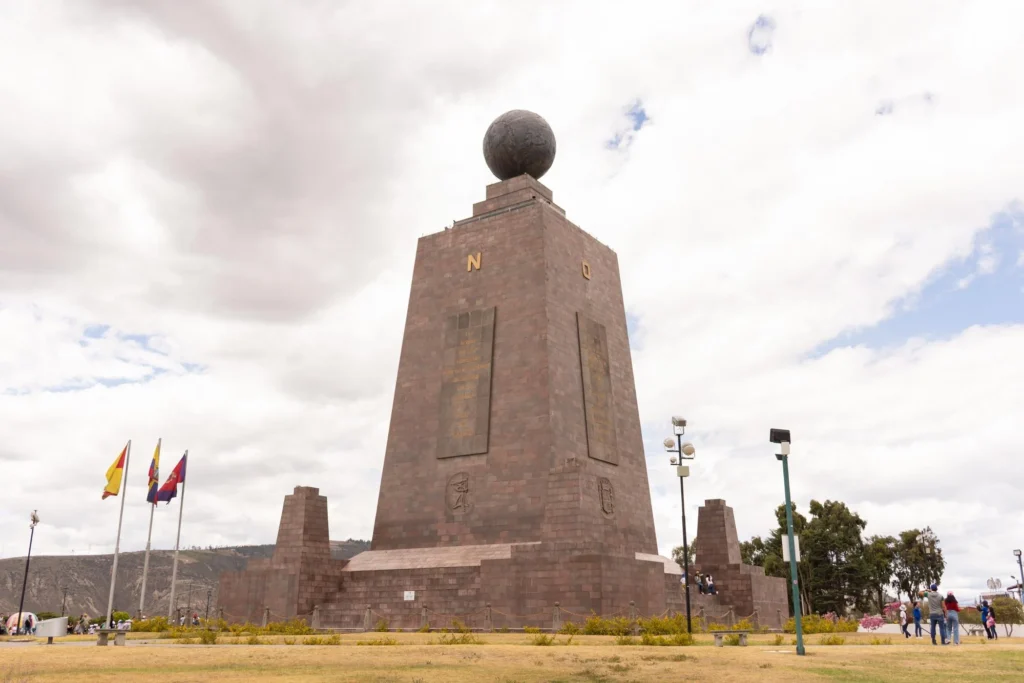
In the afternoon, the journey continues north to the Mitad del Mundo (Middle of the World) complex and the neighbouring interactive Intiñán Solar Museum to perform physics experiments directly on the GPS-calculated Equator line.
Key highlights
- Aerial cable car ride on the TelefériQo up to 4,100 metres at Cruz Loma
- Guided walking tour of UNESCO World Heritage sites in Quito Old Town
- Inside visit to the gilded Baroque interior of La Compañía de Jesús church
- Interactive equatorial experiments at the Intiñán Solar Museum on Latitude 0°0’0”
Ideal for
First-time visitors, history buffs, urban photographers, and families seeking a complete overview of Quito’s highlights.
Local insight
When visiting churches in Quito’s historic centre, like La Compañía or San Francisco, shoulder covers and modest attire are expected. Keep your camera strap wrapped around your wrist in busy plazas like Plaza de la Independencia, and save your climb up the Basílica’s steep spire ladders for clear morning hours when visibility over the city is best.
The Ecuadorian Coast.
Where you’ll find the very best food
Our practical Quito excursion planning guide
To ensure your day trips out of Quito run smoothly, keep these practical, field-tested guidelines in mind:
Prioritise acclimatisation first
Quito sits at 2,850 metres above sea level. Give your body 24 to 48 hours of low-intensity urban exploration before attempting high-altitude treks like Cotopaxi (4,860m) or Quilotoa (3,900m). Hydrate constantly, eat light meals, and consider sipping traditional coca or muña herbal tea.
Master the layering system
Andean weather fluctuates rapidly. A bright, warm morning in Quito can swiftly give way to wind-driven rain at Cotopaxi or humid heat in Mindo. Always carry a moisture-wicking base layer, a fleece jacket, a waterproof windbreaker, and sturdy closed-toe footwear.
Carry small dollar denominations
Ecuador uses the United States dollar ($ USD). While major tour operators accept credit cards, rural artisans in Otavalo, roadside bizcocho shops in Cayambe, and mountain mule handlers operate strictly in cash. Keep $1, $5, and $10 notes handy; vendors rarely have change for $20 or $50 notes.
Ethical community engagement
When visiting indigenous markets or mountain communities in Cotopaxi and Imbabura, buy directly from local craft producers rather than commercial gift shops. Always ask for permission before taking close-up portraits of local elders or children in traditional attire.
Smart altitude logistics
High altitude intensifies UV radiation significantly, even on overcast days. Apply broad-spectrum, high-factor sun cream liberally, wear a wide-brimmed hat, and carry UV-blocking sunglasses on all outdoor excursions.
Unlock the highlands / Experience Quito’s surroundings on your own terms
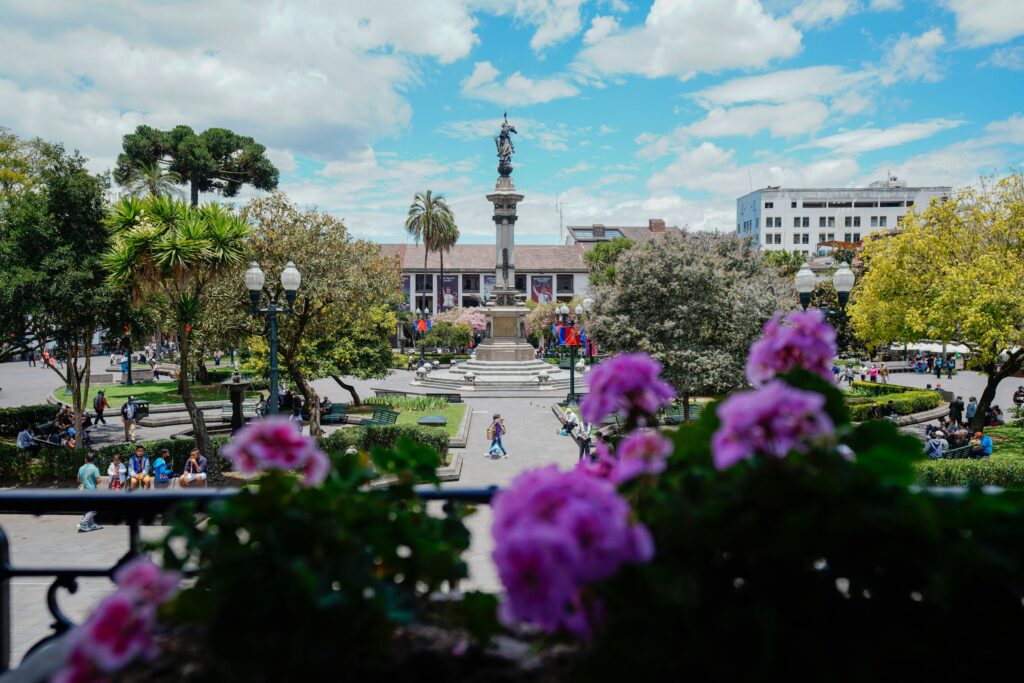
Quito is far more than a convenient transit stop or a brief urban prelude to a Galápagos cruise. Positioned along the magnificent spine of the Northern Andes, the capital sits at the crossroads of world-class ecosystems—where high-altitude moorland gives way to subtropical cloud forests and living indigenous heritage within a couple of hours’ drive.
For the independent traveller, the magic of exploring this region lies in choosing small-group, slow-paced excursions that step off the beaten track. By prioritising authentic local guides, small-scale artisan workshops, and active foot trails over rigid forty-seater tourist coaches, you ensure your travel footprint directly supports highland communities while rewarding you with a far deeper, unhurried connection to the land.
There is a distinct, quiet thrill in watching early morning cloud-mist clear over a 5,000-metre volcanic peak, or sitting down to a steaming cup of canelazo after a wet trek through dense forest ferns. Packing sensible layers, respecting the altitude, and embracing the slow rhythm of the mountains will unlock a side of Ecuador that most quick-turnaround tourists completely miss.
Affiliate Disclaimer: Some of the links on Wheely Tyred are affiliate links. If you click through and make a booking or purchase, we may earn a small commission at no extra cost to you. We only recommend gear, tours, stays, and services we genuinely use, trust, and stand behind — our editorial independence always comes first. These commissions help keep our independent cycling guides and travel stories free to read. Thanks for supporting the ride!
Frequently asked questions about the best Quito day tours
Because Quito sits at 2,850 metres above sea level, it is best to allow at least 24 to 48 hours of light urban exploration—such as strolling through the historic centre or visiting local coffee shops—before embarking on high-altitude excursions like Cotopaxi (where you will trek above 4,800 metres) or Quilotoa (3,900 metres). To assist acclimatisation, drink plenty of water, avoid heavy alcohol during your first few nights, and sip traditional muña or coca tea offered by local establishments.
Ecuador has an extensive and affordable public bus network. For southern routes toward Cotopaxi and Quilotoa, buses depart regularly from Terminal Terrestre Quitumbe in southern Quito. For northern routes to Cayambe and Otavalo, buses leave from Terminal Carcelén in the north. While public buses are exceptionally cheap (usually around $1 to $2 per hour of travel), they often drop passengers on the main highway rather than at park entrances or trailheads, requiring you to negotiate local pickup trucks or private taxis for the final leg. Joining a small-group day tour is often far more time-efficient for tight itineraries involving multiple rural stops.
Andean weather is notoriously variable, often cycling through four seasons in a single afternoon. A strict layering system is essential: a moisture-wicking base layer, an insulating fleece or down jacket for cold mountain winds, and a sturdy, breathable waterproof shell. You will also need worn-in hiking boots or trail shoes with good grip, high-factor sun cream, sunglasses, a wide-brimmed hat (the equatorial sun is intense at high elevation), a reusable water bottle, and small US dollar bills for rural vendors.
Bizcochos are traditional, buttery, slightly salty baked biscuits native to the town of Cayambe, baked fresh in wood-fired clay ovens. By local custom, they are eaten warm alongside queso de hoja—a fresh, soft, stringy cheese wrapped in the leaf of the achira plant—and dipped in manjar blanco (a rich, sweet milk caramel similar to dulce de leche). It is an essential mid-morning culinary stop on any journey heading north along the Pan-American Highway.
The hike down from the crater rim to the edge of the emerald lake drops roughly 280 vertical metres along a sandy, winding footpath. The descent takes about 30 to 45 minutes and is manageable for most fitness levels, though walking poles help on the slippery gravel. However, the climb back up to the rim at nearly 3,900 metres elevation is a strenuous cardiovascular workout that typically takes 1 to 1.5 hours. For those who struggle with the steep gradient or thin air, local community members offer mules to ride back up to the top for around $10 to $15, providing direct income to the local indigenous cooperative.
Ecuador uses the United States dollar ($ USD) as its official currency. While major hotels, upscale restaurants, and tour operators in central Quito accept credit cards, rural craft markets like Otavalo, roadside fruit stalls, entry fees for local reserves, and small village eateries operate almost exclusively in cash. Always carry small denominations—specifically $1, $5, and $10 notes alongside $1 coins—as rural vendors rarely have change for $20 or $50 notes.
Ecuador.
Pure wonder on the equator.