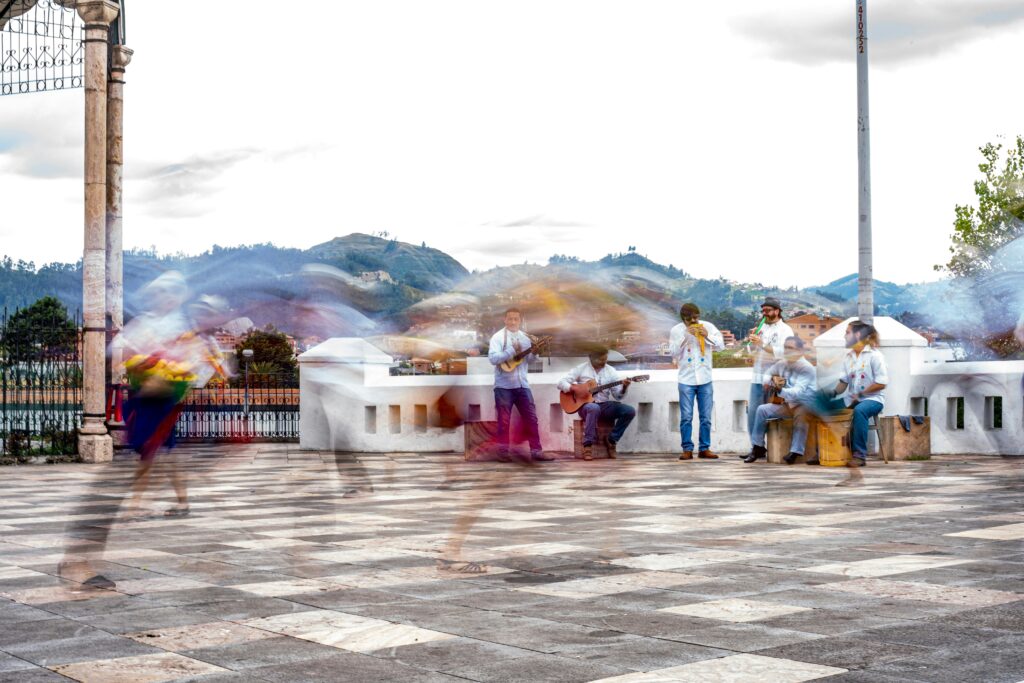
24 hours in Cuenca / A traveller’s guide to Ecuador’s cultural capital
The ultimate 24-hour itinerary for exploring Cuenca
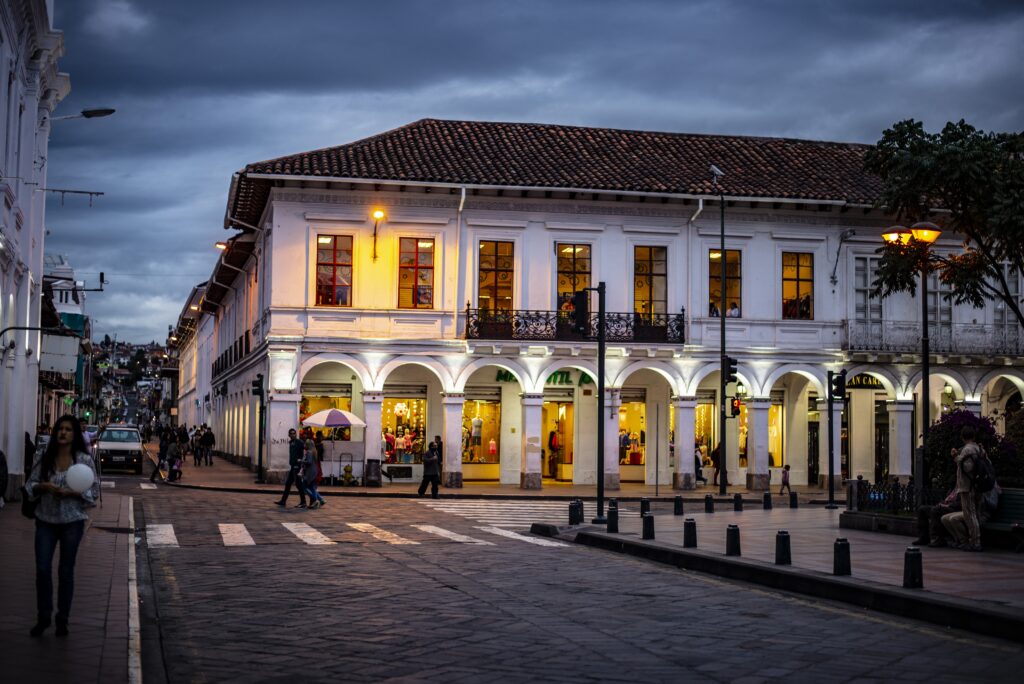
Rushing through the colonial streets is a disservice to Cuenca’s quiet brilliance
BEN FINCH
Cuenca’s pacing sets it apart from the frenetic energy of Quito or the bustling coastal drive of Guayaquil. Nestled in a fertile Andean valley some 2,500 metres above sea level, Ecuador’s third-largest city requires its visitors to slow down—partly to adjust to the thin mountain air, but mostly because its architecture, rivers, and cultural layers demand proper observation.
For those who prefer to travel on their own terms, navigating by the position of the sun rather than a tour guide’s raised umbrella, Cuenca is an exceptional playground. The historic centre is a masterclass in Spanish colonial grid planning, wrapped tightly around rich Cañari and Inca foundations.
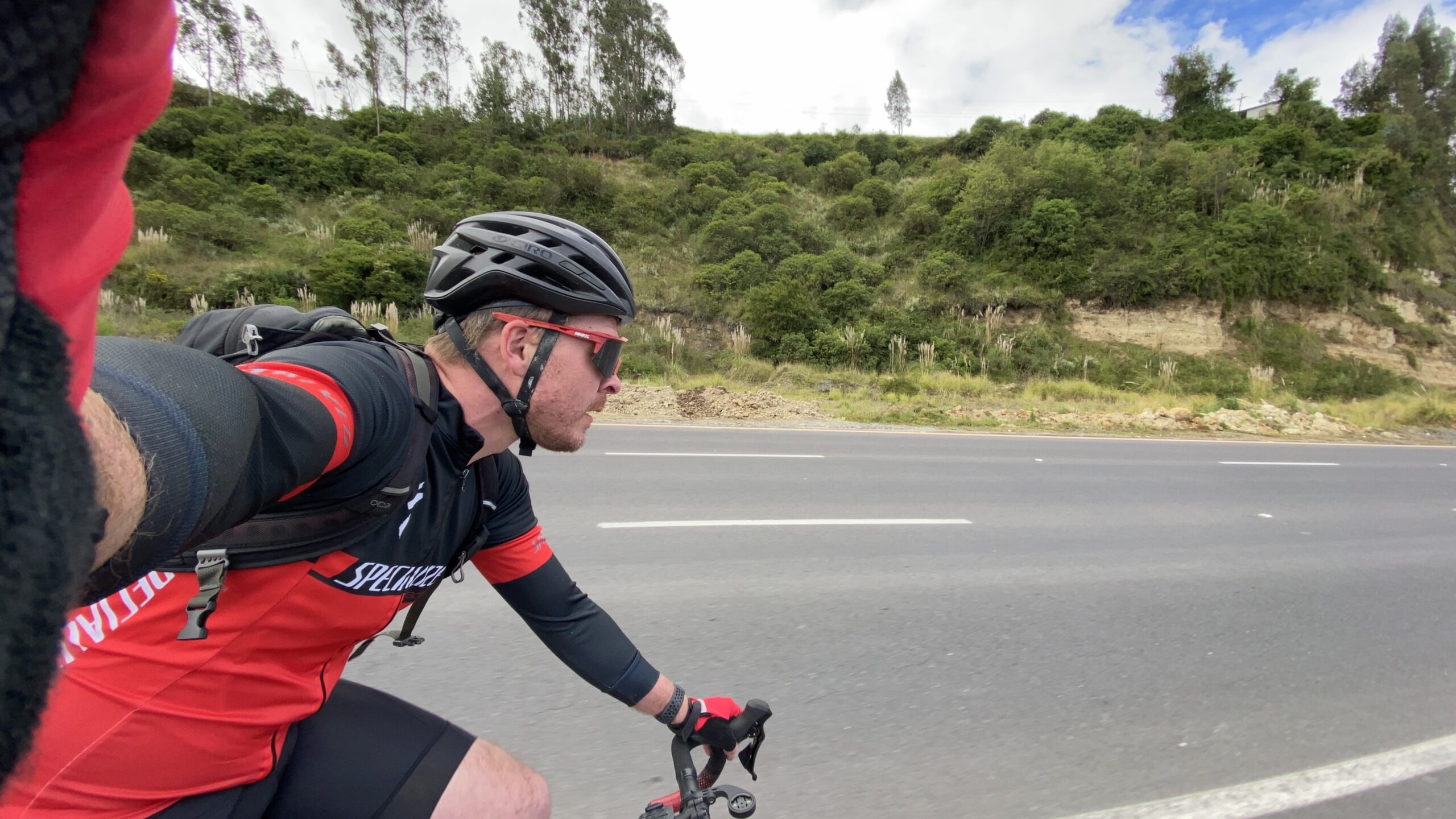
Yet, what makes the city truly remarkable for the independent traveller is its relationship with its waterways. Four rivers dissect the urban landscape, accompanied by miles of linear green parks and pedestrian-friendly paths that allow you to traverse the city entirely away from the noise of internal combustion engines.
If you have only 24 hours to spend within its boundaries, the goal should not be to tick off every single museum or monument. Instead, this itinerary focuses on experiencing the balance between the city’s built heritage and its natural spaces, moving seamlessly from grand colonial squares to quiet riverside glades.
The architectural symmetry and moving waters of Cuenca
This highland valley balances a perfectly preserved Spanish colonial grid with miles of restorative, riverside greenways. For the independent traveller, it offers an unhurried look into deep Andean history and living craftsmanship.
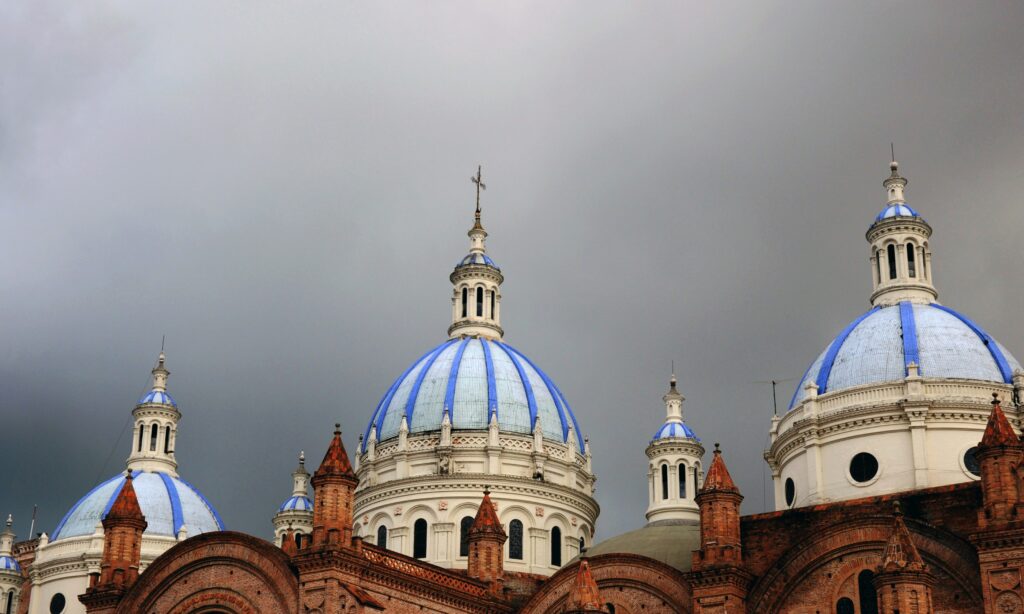
- Parque Calderón: The civic and spiritual heart where the 16th-century Old Cathedral, built from Inca stone, faces the immense, blue-domed New Cathedral
- Río Tomebamba: A brilliant stretch of active transport infrastructure, ideal for walking or cycling entirely away from motorised traffic
- Mote pillo: A classic, slow-burning Andean lunchtime staple made from boiled corn kernels, eggs, and local mountain cheese
- Pumapungo: A living archaeological park containing original Cañari and Inca foundations alongside a native botanical garden
- Paja toquilla: The intricate craft behind the authentic, Ecuadorian-woven hats that were historically misnamed after Panama
- San Sebastián: A quiet, historic square on the western edge of the old town that serves as a peaceful communal gathering space at twilight
- Highland nightcaps: Winding down with an independent local craft ale or a warm, spiced canelazo to cut the crisp mountain air
The Ecuadorian Sierra.
Get lost in the hills
Morning / Stones, spires, and morning rituals
08:00 — The awakening of Parque Calderón
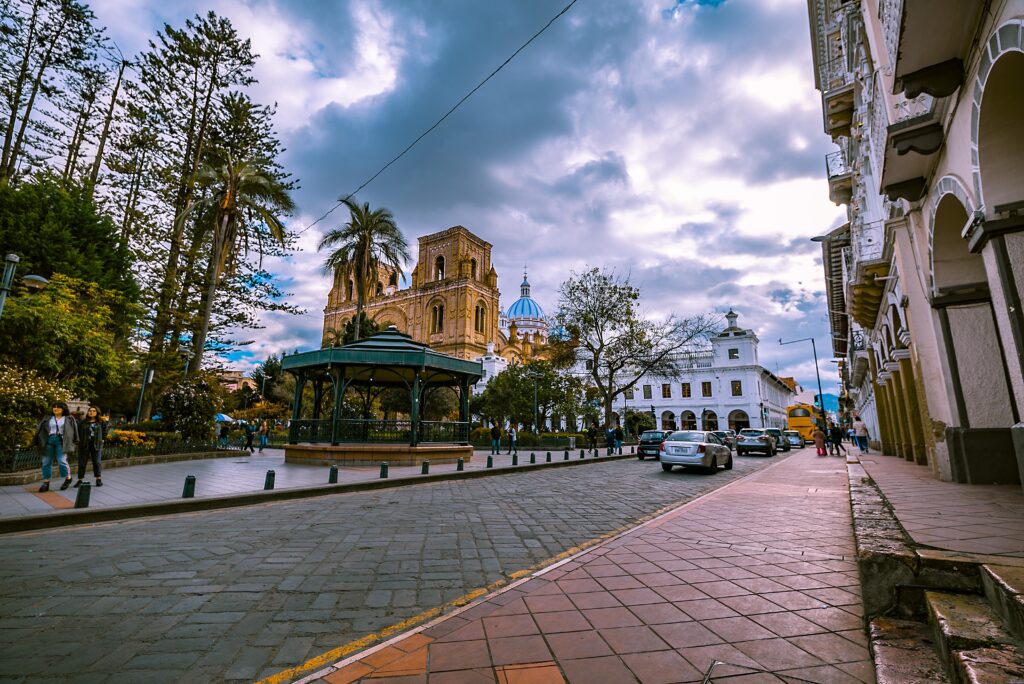
Start your day at the literal and metaphorical centre of the city, Parque Calderón. At this hour, the heavy morning mist is usually lifting off the red-tiled roofs, and the square belongs entirely to the locals. Polishers set up their brass-ended footrests under the shadow of towering Chilean pines, while vendors arrange neat bundles of fresh newspapers.
Take a seat on one of the iron benches to understand the spatial layout of power in colonial South America. On opposite sides of the plaza stand two entirely different eras of devotion. To the east lies the Iglesia de El Sagrario, simply known as the Old Cathedral. Begun in 1557, the year of the city’s Spanish founding, its whitewashed walls contain stones lifted directly from the nearby Inca ruins of Tomebamba.
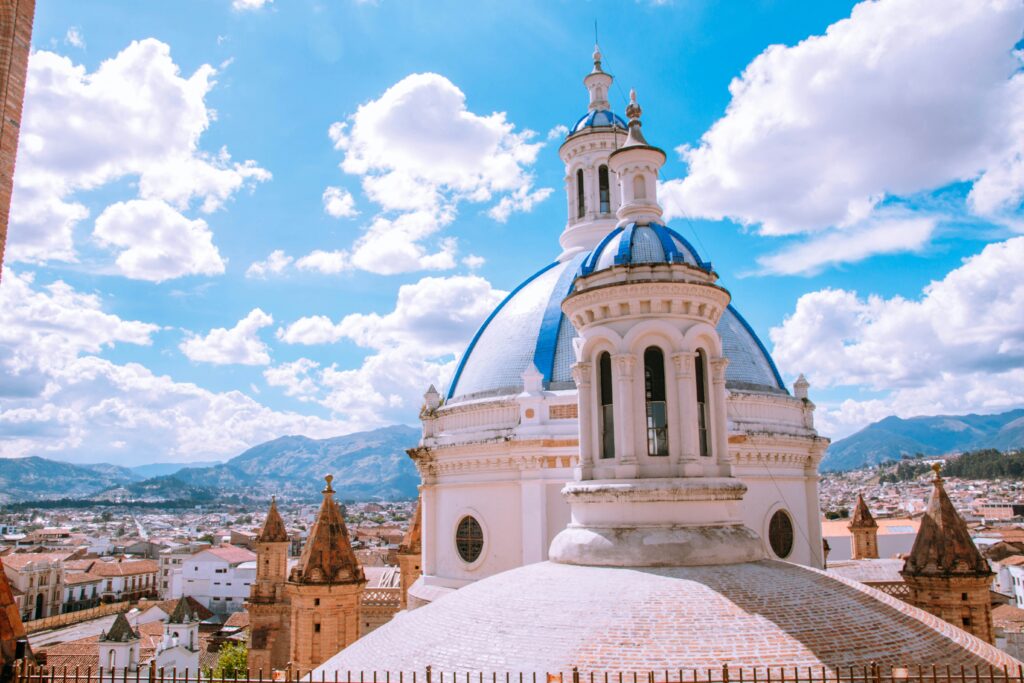
Directly across the gardens looms the texturally dominant Catedral de la Inmaculada Concepción, or the New Cathedral. Its iconic sky-blue, Czechoslovakian-tiled domes are visible from almost any vantage point in the valley. Walk inside to appreciate the sheer scale of the brickwork, which took nearly a century to complete. The interior is vast, cool, and smells faintly of beeswax and old wood. Notice how the light filters through the stained glass, casting deep amber and blue pools across the locally quarried pink marble floors.
10:00 — Descent to the Tomebamba waterfront
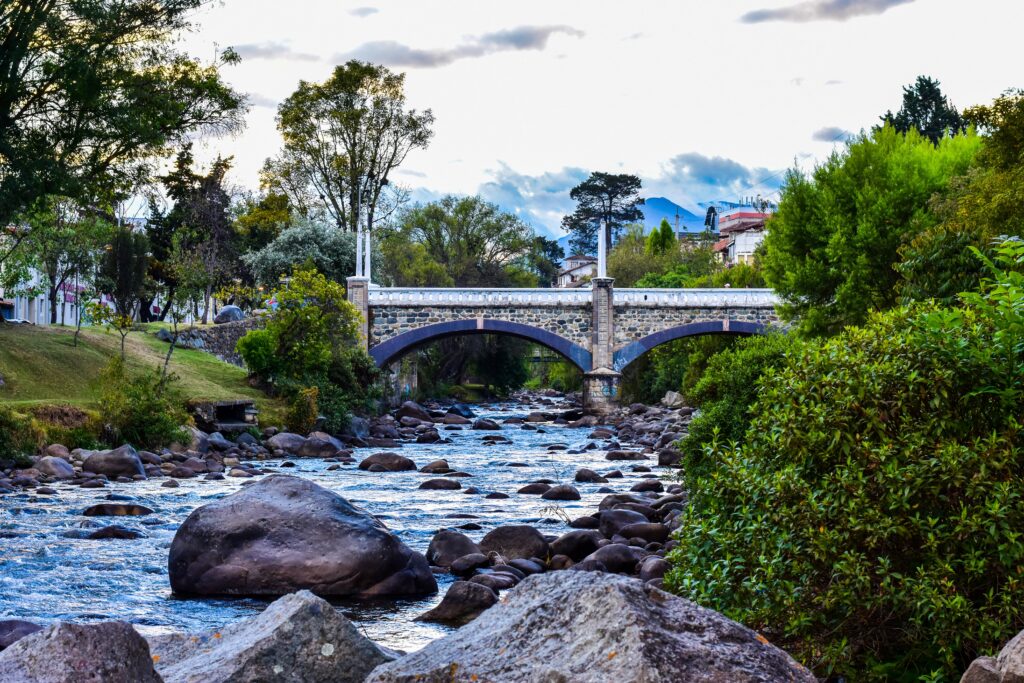
Leaving the main square, walk south along Calle Benigno Malo. The street slopes gently downwards, guiding you toward the natural boundary that separates the colonial old town from the mid-century developments of the lower city. This boundary is El Barranco, a steep cliffside where historic houses cling precariously to the rock face, their wooden balconies overflowing with geraniums.
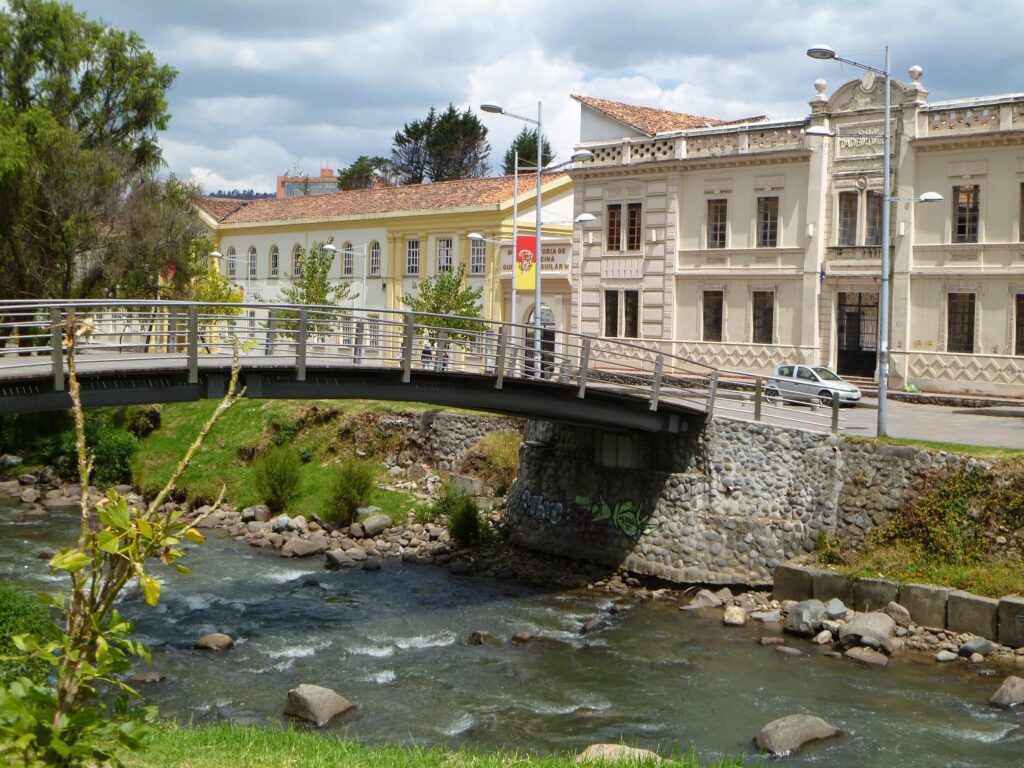
Instead of taking a taxi, follow the stone staircases—such as the Escalinata Juana de Oro—down to the banks of the Río Tomebamba. The transformation is immediate. The stone and brick of the urban grid give way to weeping willows, open meadows, and the constant, therapeutic rush of clear mountain water tumbling over volcanic boulders.
This linear park system is one of the finest examples of active travel infrastructure in the region. Spend the remainder of your morning walking eastwards along the riverside path. You will share the trail with local cyclists commuting to work, runners, and indigenous Cañari women drying vibrant textiles on the sun-warmed grass beside the river. It is a space where nature and community life overlap effortlessly.
The Galápagos.
Ecuador’s Enchanted Isles
Lunch / An education in Andean grains
12:30 — Authentic flavours without the tourist veneer

By midday, the high-altitude sun can be intense. Retreat from the riverbank back into the lower town or the edges of the historic centre to seek out a traditional lunchtime meal. For an independent traveller looking to understand local culture, look for independent eateries serving an authentic almuerzo (fixed-price lunch) or specialising in traditional Cuencano identity.
Avoid the international cafes lining the immediate vicinity of the main plaza and seek out a table where the focus is entirely on indigenous ingredients. Your benchmark for Cuencano gastronomy should revolve around mote—peeled kernel corn that has been boiled until it blooms into soft, starchy pillows.
Order a plate of mote pillo, a beautifully simple highland dish where the warm corn is tossed with eggs, milk, achiote, and fresh green onions. It is often served alongside a piece of grilled pork or fresh mountain cheese. The texture is comforting, and the flavours are deeply rooted in the agricultural history of the surrounding Azuay province. Pair it with a glass of jugo de tomata de árbol (tree tomato juice) for a highly authentic, unpretentious meal that provides clean, slow-burning fuel for an afternoon of exploration.
The Ecuadorian Amazon.
The most biodiverse place in the world
Afternoon / Ancient ruins and raw craft
14:00 — The historical deep-time at Pumapungo
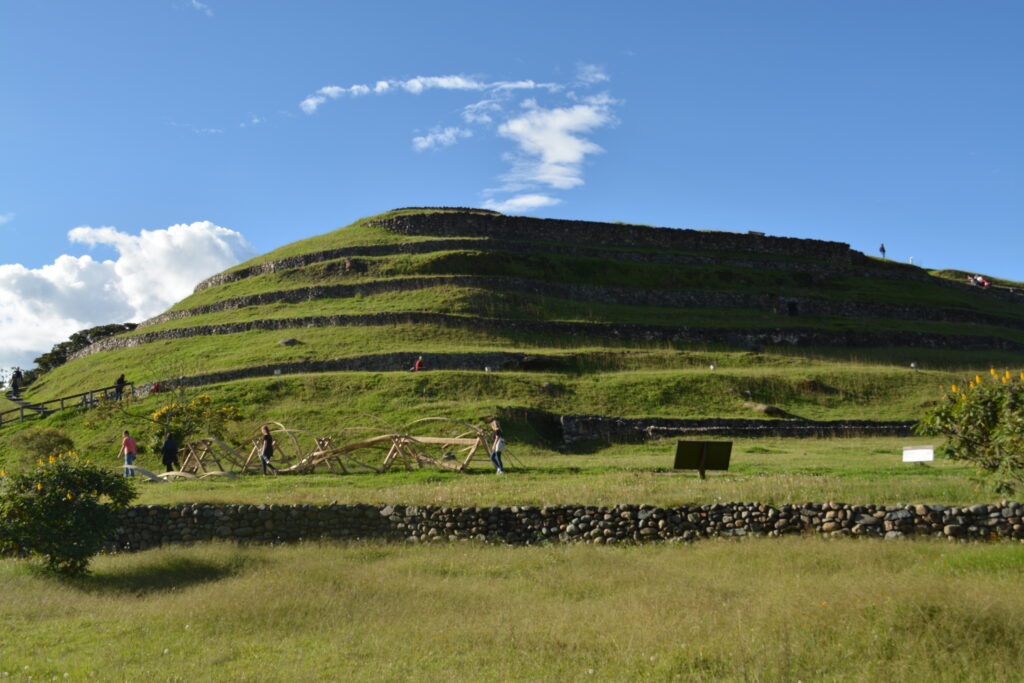
Continue your journey eastward along the Tomebamba path until you reach the archaeological complex of Museo Pumapungo. While many travellers skip the indoor galleries, the true magic of this site lies outdoors in the rear gardens.
Pumapungo represents the physical layers of Cuenca’s complex history. Before the Spanish arrived, this was the Inca city of Tomebamba, rumoured to rival Cusco in its splendour. Before the Incas, the Cañari people held this valley as sacred. Today, you can walk freely among the surviving stone foundations of barracks, terraces, and a central ritual bath system.
The site operates as a living museum. The terraced slopes are planted with over eighty species of native Andean crops, including ancient varieties of corn, quinoa, and medicinal herbs. Walk down into the lower valley of the park to visit the aviary rescue centre, or simply sit on the stone walls and contemplate how the modern city has grown around these ancient, resilient foundations.
16:00 — The truth behind the sombrero de paja toquilla

As the afternoon begins to cool, walk back up into the historic centre toward the artisan sector of El Barranco or the workshops along Calle Larga. Cuenca is the spiritual and manufacturing heart of the finest woven hats in the world. Despite their ubiquitous global name, Panama hats have always been entirely Ecuadorian, woven from the split fibres of the Carludovica palmata plant that grows along the coast.
Skip the glossy souvenir shops and look for the traditional workshops where the raw hats are shaped. Here, master artisans use heavy brass irons and wooden blocks to mould, press, and trim the rough, hand-woven hoods brought in by weavers from rural communities like Sígsig and Chordeleg.
The process is rhythmic, tactile, and highly specialised. Watch as the blocks are chosen based on shapes that have remained unchanged for two centuries. There is no hard sell here; it is an industry built on quiet pride and immense technical skill. If you choose to invest in one, you are not buying a trinket, but a piece of portable engineering that can take months of human labour to weave.
The Ecuadorian Coast.
Where you’ll find the very best food
Evening / Plaza culture and sophisticated dining
18:00 — The blue hour at Plaza de San Sebastián
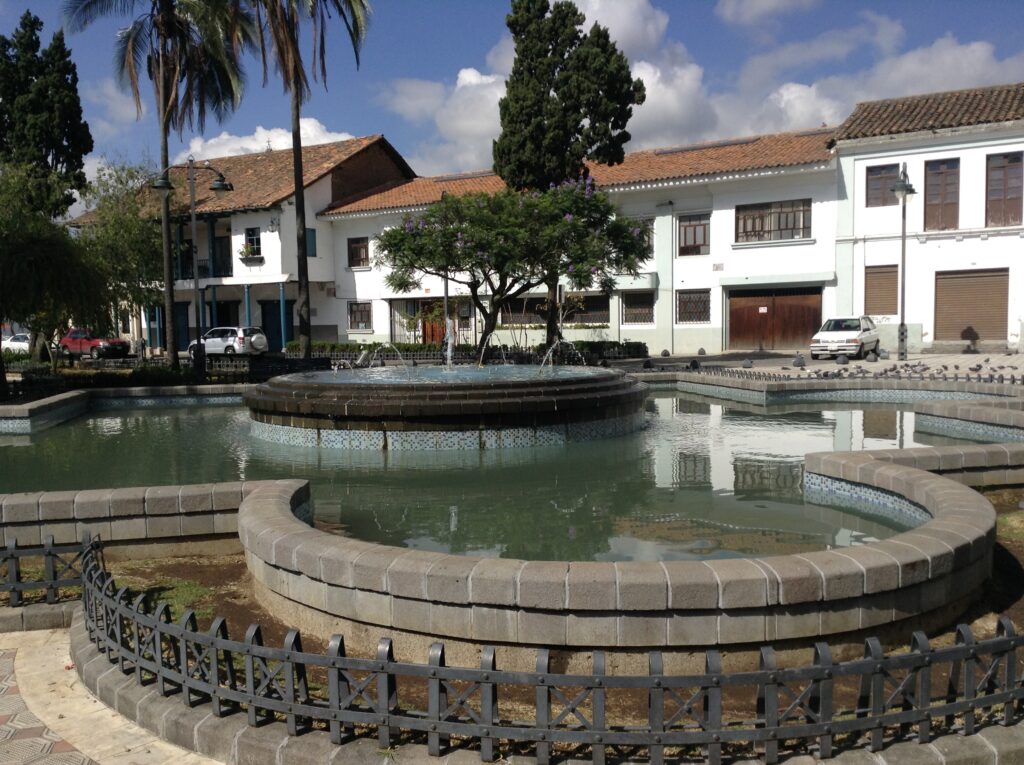
As twilight approaches—a period that passes quickly this close to the equator—make your way to the western edge of the historic old town to find the Plaza de San Sebastián. This neighbourhood was historically one of the earliest boundaries of the city, serving as a distinct parish for the indigenous population during the colonial era.
Today, it is one of the most peaceful pockets of the city. The square is dominated by wide stone paths, manicured gardens, and the charming, asymmetrical facade of the San Sebastián church. As the streetlamps flicker to life, casting a warm glow across the cobblestones, the plaza becomes a communal living room. Children play football against the stone benches while older residents gather to talk about the day’s news. It is the perfect place to watch the city transition from afternoon commerce to evening relaxation.
19:30 — Dinner with a view of the valley
For dinner, seek out one of the progressive independent restaurants that have emerged along the historic streets surrounding the plaza or overlooking the river. The contemporary culinary scene in Cuenca is undergoing a quiet revolution, driven by young chefs who are rejecting imported luxury ingredients in favour of showcasing hyper-local biodiversity.
Find a table that offers a view over the tiled rooftops or down toward the darkened corridor of the river. Look for menus that interpret traditional highland cooking through a modern lens. A stellar evening meal might include slow-roasted pork belly paired with a rich reduction of native wild berries, or a contemporary soup based on locro de papas—a velvety potato broth enriched with avocado and local cheese.
The culinary philosophy here mirrors the independent travel ethos: it is respectful of the past, deeply connected to local geography, and entirely unhurried.
21:30 — A quiet nightcap on the stone ways
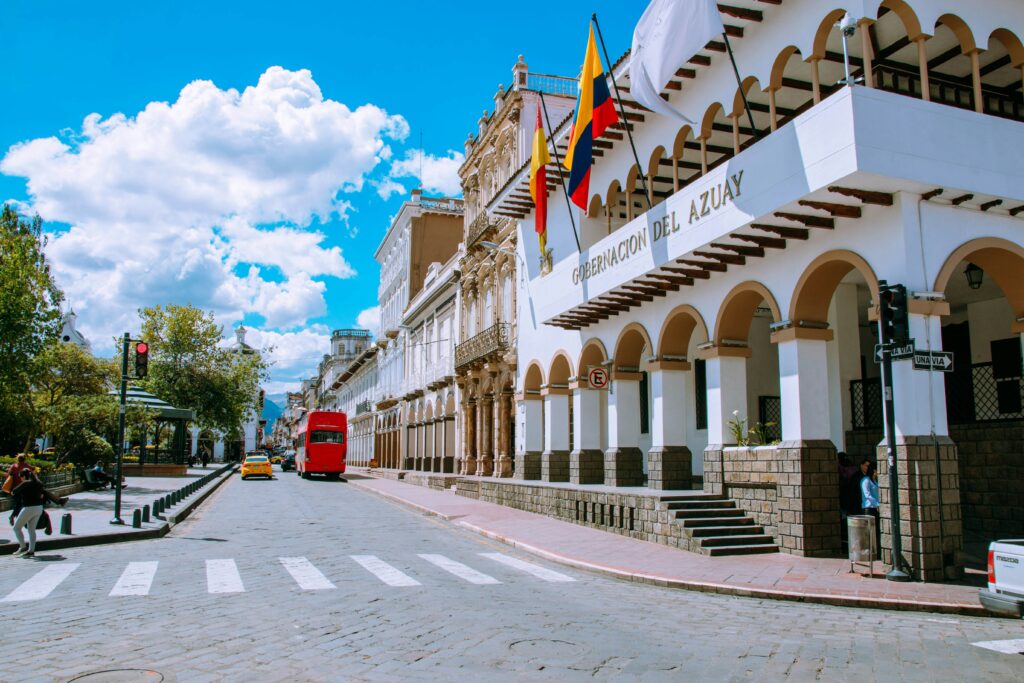
Before retiring, finish your 24 hours with a wander through the illuminated streets of the historic centre. The grand stone facades and interior courtyards take on a dramatic, theatrical quality under preservation lighting.
Step into a quiet tavern or a local craft beverage house along Calle Larga. Cuenca has developed a vibrant independent brewing culture over the last decade. Sample a pint of ale infused with local Andean ingredients like lemongrass or wild cacao, or opt for a traditional, steaming mug of canelazo—a spiced hot drink made from boiling water, cinnamon, ela fruit juice, and a touch of local sugarcane alcohol. It is the perfect antidote to the crisp, cutting mountain air that settles over the valley once the sun disappears behind the peaks of El Cajas.
Reflections on a day well spent
Twenty-four hours in Cuenca is never enough to fully parse its layers, but by avoiding the temptation to rush, you allow the city to reveal its authentic character. It is a place that rewards those who move on foot, who value the design of an active waterfront path, and who appreciate that the finest experiences are often found in the quiet intervals between historic monuments.
Cuenca.
The Athens of Ecuador
Frequently asked questions about visiting Cuenca
Cuenca is highly walkable, particularly within the historic grid of the old town. For longer distances or a faster pace, the city features an excellent network of riverside paths perfect for cycling. The local tram system, known as the Tranvía, also offers a clean, efficient way to traverse the city from the airport area through the historic centre.
Sitting at roughly 2,500 metres above sea level, the air is noticeably thinner than on the coast. It is best to take a slow approach during your first few hours, stay well-hydrated, and use the flat, linear parks along the Río Tomebamba to acclimatise before tackling the steeper cobblestone climbs into the historic centre.
Mote is a large-kernel hominy corn that has been boiled until it swells and softens into a starchy pillow. It is the absolute cornerstone of southern Ecuadorian highland cuisine, acting as a nutritious, slow-digesting source of energy that replaces bread or rice in traditional everyday meals.
Yes, the hats globally known as Panama hats are entirely native to Ecuador. While the raw straw grows on the coast, the weaving and blocking traditions are deeply rooted in the Azuay province surrounding Cuenca. Visiting independent workshops in the city allows travellers to see the genuine shaping and finishing process firsthand.
Because of its equatorial highland geography, Cuenca experiences a sharp drop in temperature as soon as the sun sets. While the high-altitude afternoons can be intensely sunny, the evenings require a good windbreaker or a heavy jumper to stay comfortable while walking through the illuminated plazas.
Ecuador.
Discover this incredible country.