Twenty-four hours in the Andean sky / A slow travel guide to Quito
The best way to experience the high-altitude capital of Ecuador
Journey through the architectural layers, artisan quarters, and culinary heritage
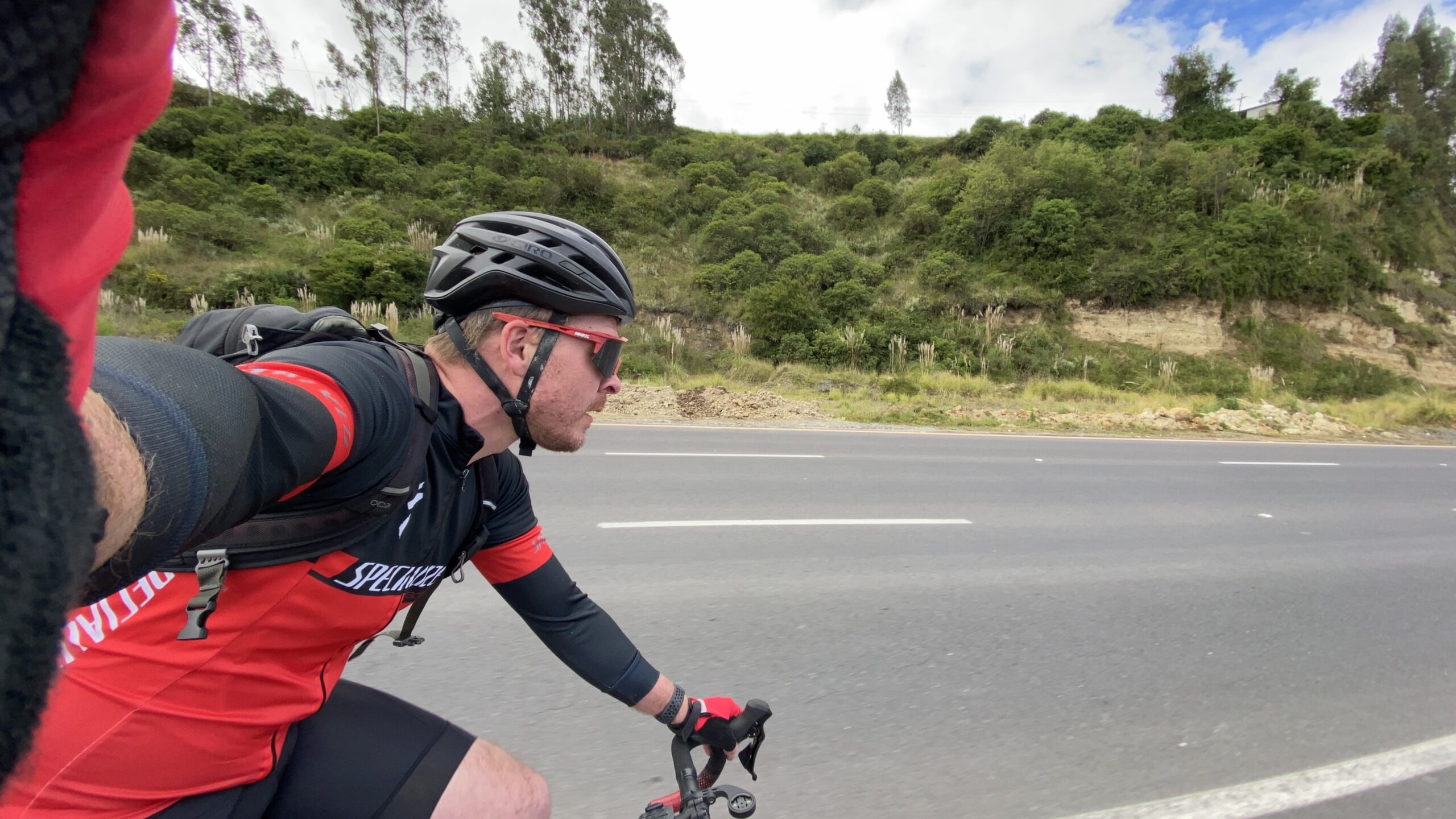
BEN FINCH
High in the northern Andes, sitting at 2,850 metres above sea level, Quito occupies a dramatic volcanic trench. It is a city defined by its verticality, where cobblestone streets pitch sharply upwards toward the sky and the peak of Volcán Pichincha stands as a permanent western border. For the independent traveller, arriving here requires a shift in pace. At this altitude, the air is thin, the light is brilliant, and the geography demands that you slow down.
Many visitors treat the capital as little more than a transient gateway to the Galápagos Islands or the deep Amazon basin. To do so is to miss one of the most culturally complex urban landscapes in the Americas. Founded on the ruins of an ancient Incan settlement and designated as the first-ever UNESCO World Heritage site in 1978, the historic centre of Quito is an architectural tapestry of European, Moorish, and indigenous design.
This itinerary is designed for those who prefer the independence of their own two feet, the reliability of local transport, and the freedom to linger in a cloister long after a tour group has been hustled back onto a bus. This is how to spend a meaningful 24 hours observing the shifting rhythms of the Ecuadorian capital.
The Andean capital’s vertical rhythm
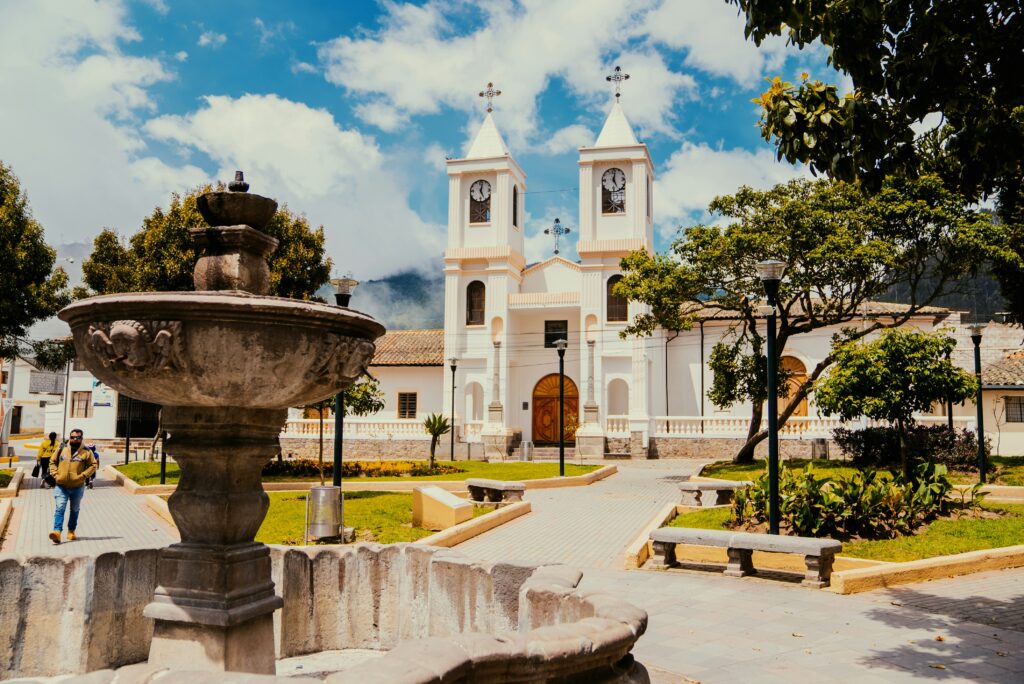
Quito defies the transient pace of modern travel, offering a dense, high-altitude landscape where history is etched into every volcanic stone. This is a city to be explored deliberately, on foot, and with a keen eye for the nuance of its colonial and indigenous identity.
- The Basílica’s Indigenous Fauna: Unlike its European Gothic counterparts, this monumental structure features gargoyles shaped as native Ecuadorian animals—iguanas, armadillos, tortoises, and condors—representing the country’s unique biodiversity
- Mercado Central’s Harvest: The unpolished heart of the old town is the perfect stop to sample freshly squeezed juices made from native fruits such as lulo, maracuyá, and tomate de árbol
- Baroque Subversion: Inside the Iglesia de la Compañía de Jesús, the opulent gold-leaf interior conceals subtle indigenous sun motifs and floral patterns, reflecting the quiet resilience of the local craftsmen who built it
- Historical Sustenance: Heladería San Agustín, an institution established in 1858, offers a taste of the past with their authentic locro de papa—a velvety, cheese-rich potato soup designed for high-altitude endurance
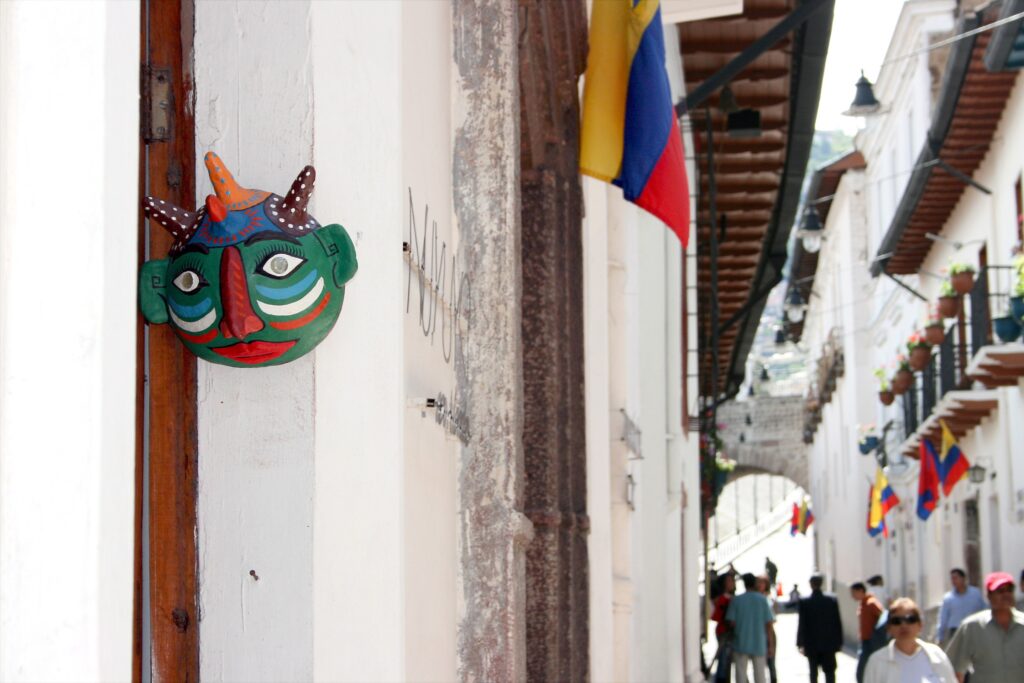
- Calle La Ronda’s Heritage: Following the line of an ancient Incan trail, this street offers an intimate look at traditional workshops, from hand-crafted wooden toys to the shaping of toquilla straw hats
- San Marcos’s Quietude: A reprieve from the more frequented corridors, this artistic, pastel-coloured residential enclave exemplifies the city’s charm and the success of community-led preservation efforts
- The Andean Nightcap: As temperatures plummet, local establishments serve canelazo—a hot, cinnamon-spiced drink brewed with sugar cane alcohol and lulo—providing a perfect, warming end to a day of walking
The Ecuadorian Sierra.
Get lost in the hills
The morning incline / Fauna, stone, and morning light
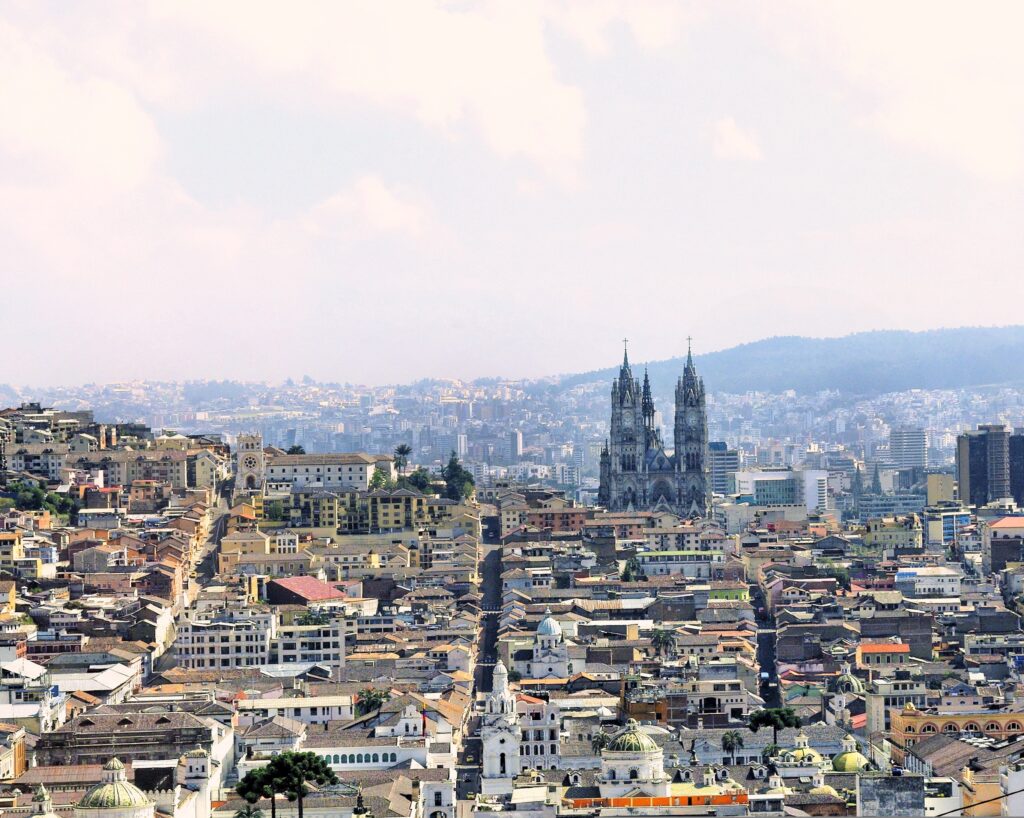
Start your morning early, just as the first equatorial sun hits the volcanic stone of the old town. The early morning hours offer the clearest views before the afternoon clouds inevitably roll across the peaks. Begin your walk at the northern edge of the historic centre, climbing towards the Basílica del Voto Nacional.
Unlike the historic colonial core further south, this monumental neo-Gothic structure was built over the course of the 20th century. What makes it essential for the slow traveller is not merely its scale, but its specific, localised details. As you approach the massive stone facade, look closely at the gargoyles jutting from the high walls. Instead of traditional European mythical beasts, the stone carvers adorned the basilica with native Ecuadorian fauna. Prowling across the stone ledges are iguanas, armadillos, tortoises, and condors—a distinct nod to the extraordinary biodiversity of the country, rendered in concrete and granite.
For those with a steady footing, it is possible to ascend the steep wooden ladders inside the towers to reach the highest viewing platforms. From this vantage point, the linear geography of Quito becomes clear: a long, narrow ribbon of human habitation squeezed tightly between green Andean ridges.
After descending, walk down the steep slope of Calle Venezuela for roughly fifteen minutes until you reach the bustling market stalls of Mercado Central. This is the unpolished culinary heart of the neighbourhood. Independent travellers can pull up a wooden stool at one of the fruit stalls to sample a freshly squeezed juice made from native fruits like lulo, maracuyá, or tomate de árbol. It is a sensory introduction to the agricultural abundance of the surrounding valleys.
Mid-morning / The synthesis of the plazas
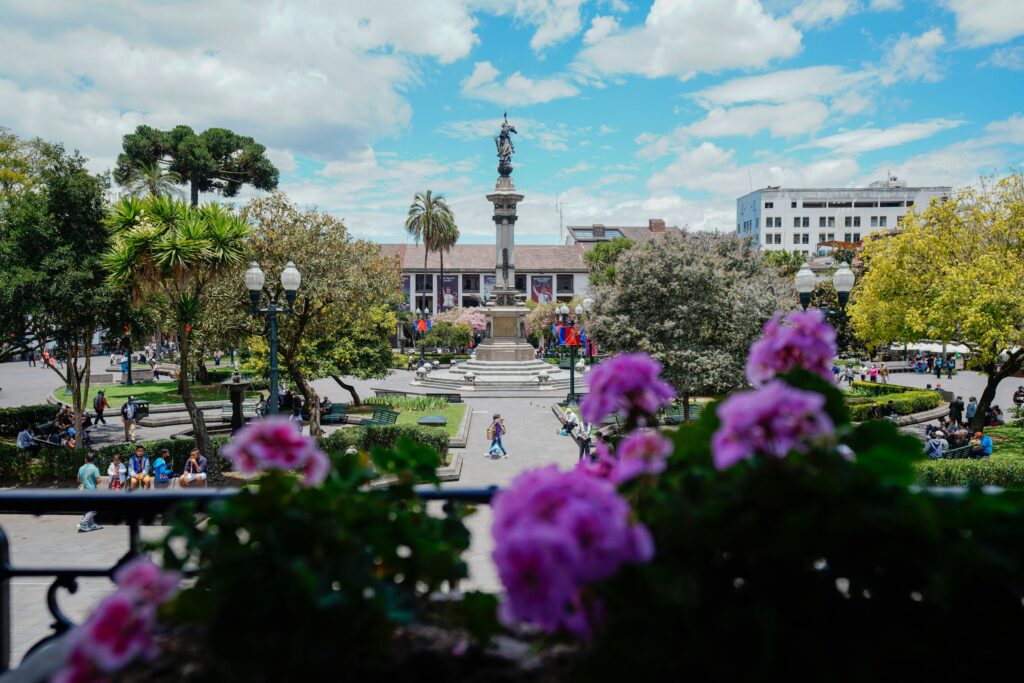
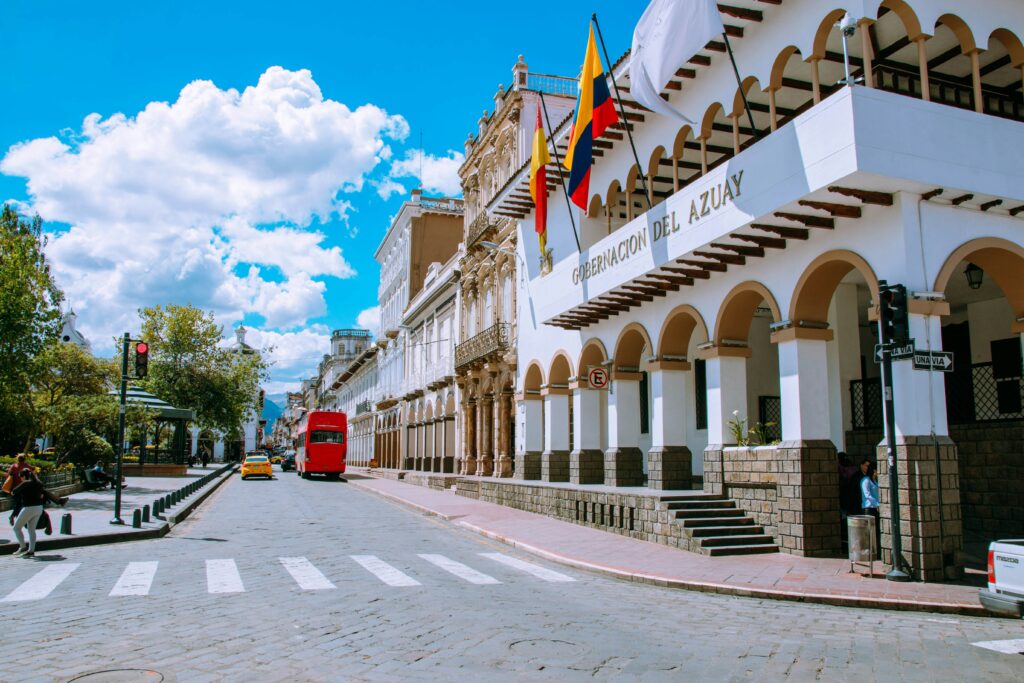
From the market, head west along the narrow pavements to the Plaza de la Independencia, locally referred to as the Plaza Grande. This square serves as the political and social anchor of the city. Bordered by the Carondelet Palace, the Cathedral, and the Archbishop’s Palace, the plaza is a place where history feels active rather than static. Retired Quiteños sit on low stone benches discussing the news of the day, shoe-shiners work beneath the shade of palm trees, and street vendors quietly move through the crowds.
Take time to explore the architectural transitions. A short walk down the pedestrianised Calle García Moreno brings you to the Iglesia de la Compañía de Jesús. The facade, carved entirely from grey volcanic stone, gives little hint of what lies within. Step inside the dim interior, and you are met with one of the most significant examples of Spanish Baroque architecture in the world. Virtually every surface of the expansive nave, altars, and pillars is covered in delicate gold leaf, estimated at several tonnes.
A closer inspection reveals the genius of the indigenous Kitu and Incan craftsmen who built it. Look for the subtle inclusion of sun motifs and local floral patterns hidden within the classical European geometric designs—a silent, permanent subversion of colonial architecture by the hands that carved it.
Refuel with a short stop at Café Guayasamín on the corner of García Moreno and Mejía. This small, independent establishment serves as a showcase for high-altitude, single-origin Ecuadorian coffee. The baristas understand the nuances of micro-lots grown in the Pichincha and Loja regions. Settle into a quiet corner and enjoy an espresso that carries the bright, crisp acidity characteristic of beans grown in volcanic soil.
The Galápagos.
Ecuador’s Enchanted Isles
Lunch / A century and a half of culinary memory
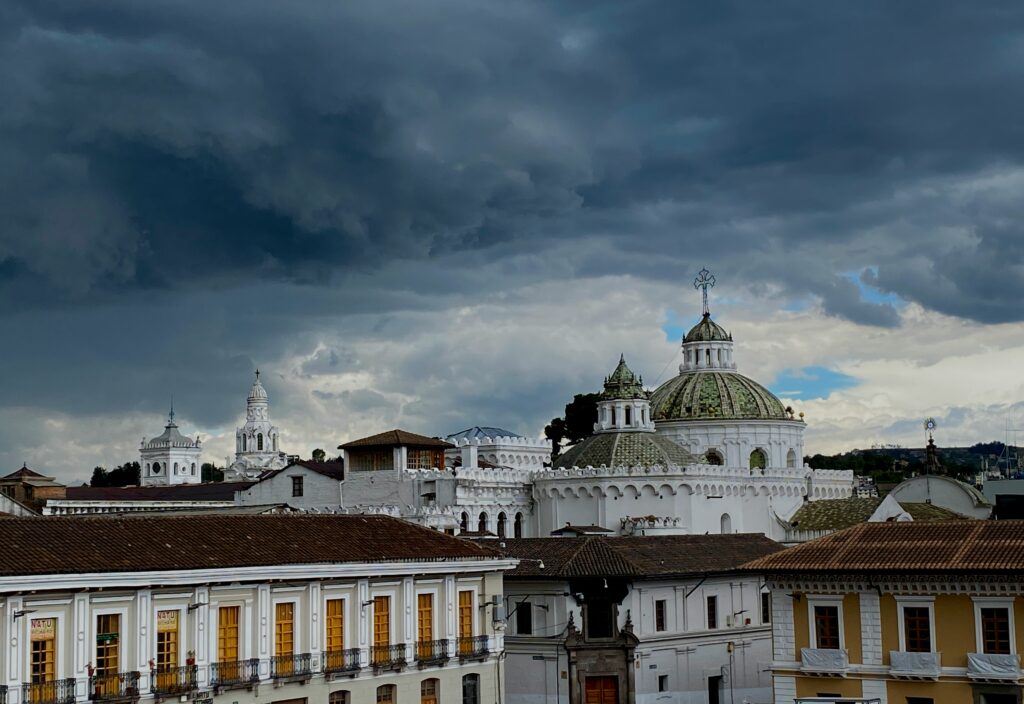
For lunch, avoid the modern international restaurants of the northern districts and seek out Heladería San Agustín, located just off the main plaza on Calle Guayaquil. Founded in 1858, this family-run institution has spent generations preserving traditional Quiteño recipes that are increasingly difficult to find elsewhere.
The interior is a study in nostalgia, with high ceilings, old photographs, and a quiet courtyard that feels removed from the traffic outside. Order a bowl of locro de papa, a classic Ecuadorian potato soup that is the ultimate comfort food for high altitudes. It is a thick, velvety broth enriched with local cheese and fresh avocado, seasoned with achiote. Follow it with a traditional dry meat dish, or sample one of their famous hand-churned sorbets, made using brass pails resting on beds of ice and salt, a technique that has remained unchanged for over 150 years.
The afternoon / Artisans of the ancient highway
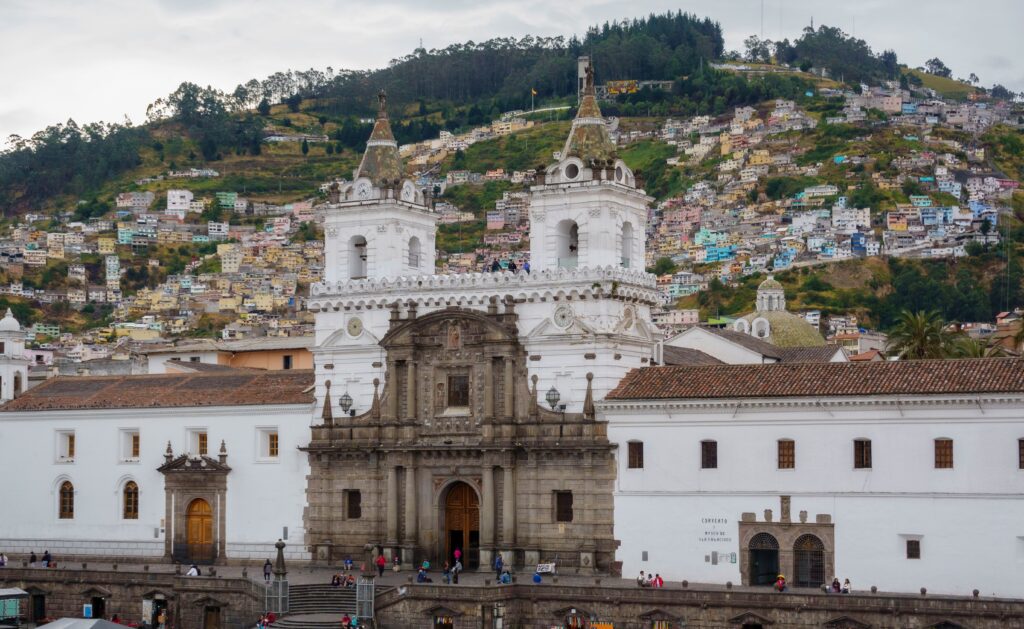
After lunch, walk southwards towards the massive Plaza de San Francisco. The vast stone expanse of the square is dominated by the whitewashed walls and twin towers of the San Francisco Church and Monastery, a complex so large it covers several city blocks. The stone ramp leading up to the main doors is built on a slight curve, designed by architects to compel visitors to look down at their steps, effectively bowing as they enter the sacred space.
Continue your journey south to the Museo de la Ciudad, the City Museum. Housed in the limestone and stone pavilions of the old San Juan de Dios Hospital, which operated continuously from 1565 until the mid-20th century, the museum offers a grounded look at the social history of the city. Instead of focusing exclusively on grand political narratives, the exhibitions detail the domestic realities, medical practices, and daily struggles of the ordinary people who inhabited these high valleys across four centuries.
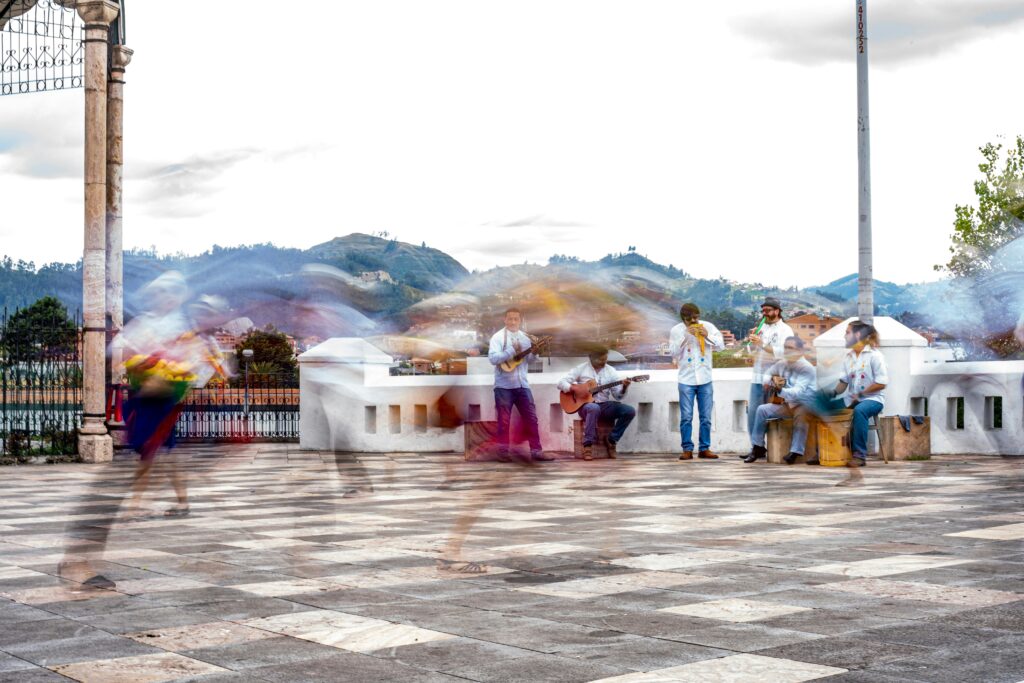
Leaving the museum, you will find yourself at the entrance of Calle La Ronda, a narrow, cobblestone alleyway that follows the line of an ancient Incan trail. Historically home to bohemian poets, musicians, and political dissidents, the street has been carefully restored to preserve its residential character.
By visiting in the mid-afternoon, you avoid the noisy crowds that arrive after dark. Step into the small inner courtyards to discover independent workshops where traditional artisans still practice their crafts. Here, you can watch woodcarvers’ restoration work, toy makers crafting wooden spinning tops, and traditional milliners shaping toquilla straw hats. It is a living connection to the pre-industrial identity of the city.
The Ecuadorian Amazon.
The most biodiverse place in the world
Late afternoon / The quiet of San Marcos
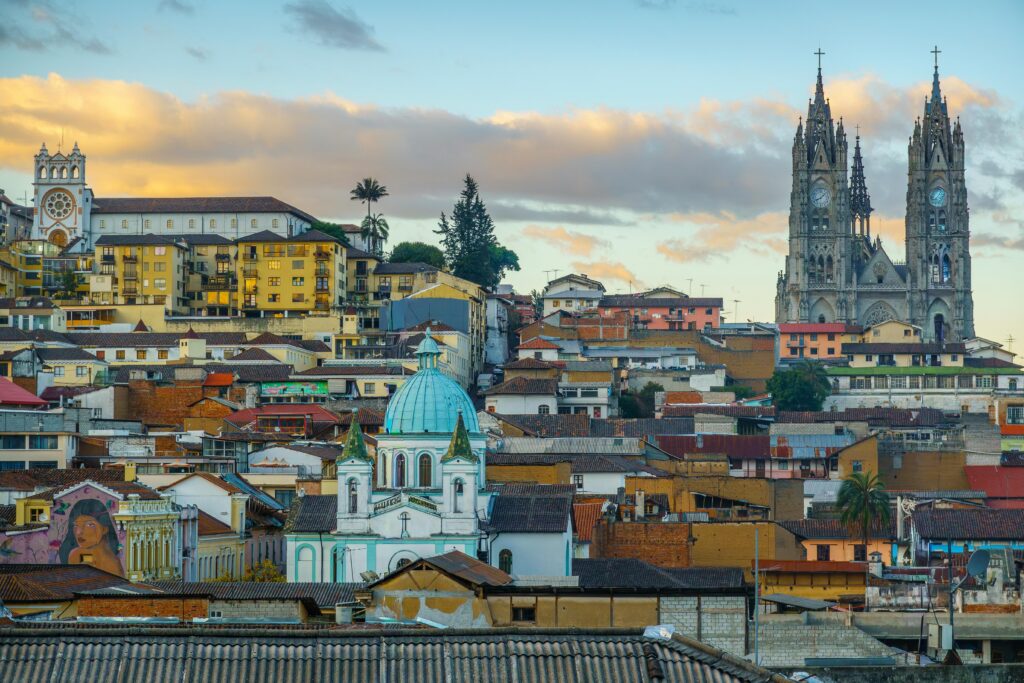
As the afternoon light begins to soften into a deep blue, leave the busier tourist corridors behind and walk east towards the San Marcos neighbourhood. This is an artistic, low-key residential enclave that remains one of the best-kept secrets of the historic centre.
San Marcos is characterised by its pastel-coloured colonial houses, small wrought-iron balconies overflowing with geraniums, and an absence of heavy vehicle traffic. It is an ideal example of how community-led preservation and active transport infrastructure can maintain the integrity of an old neighbourhood. Wander slowly down Calle Junín, observing the small neighbourhood grocery shops and independent art studios that form the fabric of daily life here.
Evening / Cinnamon spice and high-altitude dining
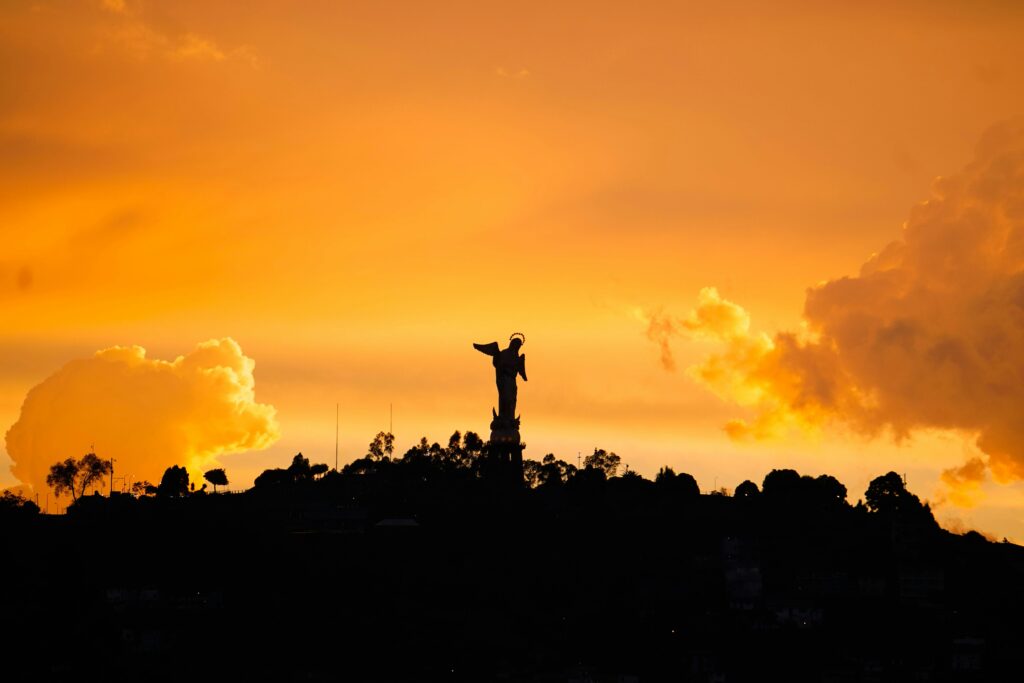
As night falls, the temperature in Quito drops rapidly. The warm equatorial sun gives way to a sharp, biting mountain chill, and you will understand why the locals always carry a structured wool coat or jacket.
For dinner, seek out Dios No Muere, an independent restaurant tucked away inside a remarkably preserved 16th-century building in San Marcos. Housed across multiple levels connected by steep wooden steps and exposed brick arches, the space has a deeply atmospheric feel. The kitchen focuses on slow-cooked dishes that highlight regional ingredients from the cloud forests and the Andean highlands.
Pair your meal with a hot glass of canelazo, the traditional beverage of the northern Andes. Brewed from hot water, cinnamon, cloves, sugar cane alcohol, and the juice of the tart lulo fruit, it is a restorative drink designed specifically to cut through the evening cold and settle the spirit after a long day of walking.
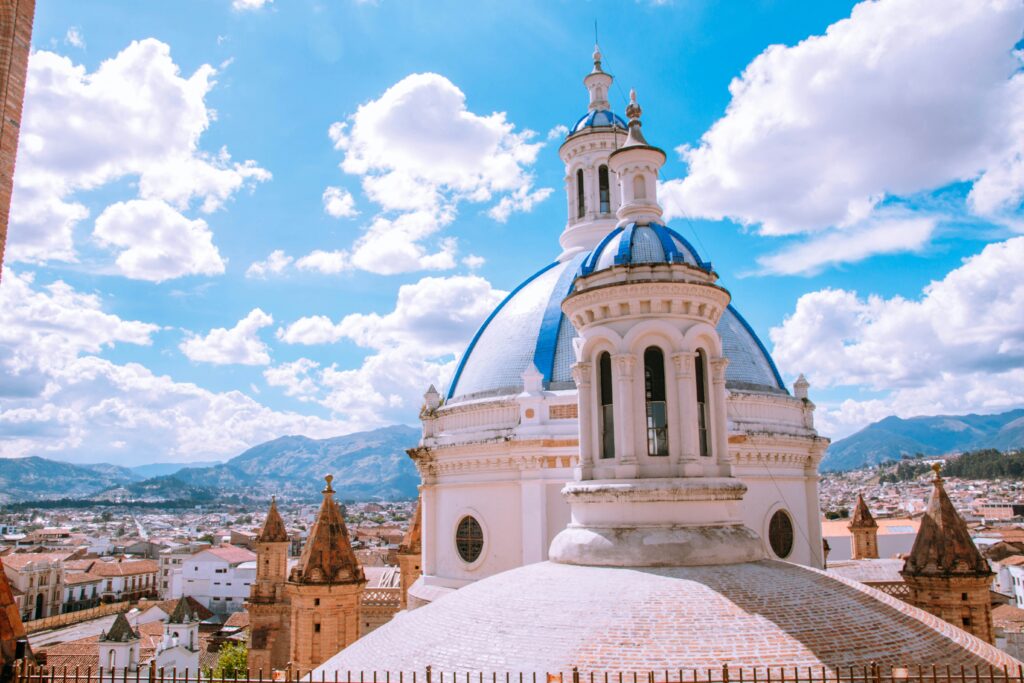
End your twenty-four hours with a quiet walk back through the illuminated streets of the historic centre. When the grand stone domes of the churches are lit against the dark Andean sky, the city takes on a completely different character—timeless, silent, and deeply grounded in its unique geography.
The Ecuadorian Coast.
Where you’ll find the very best food
Frequently Asked Questions about Quito
The historic centre is remarkably compact and best experienced on foot, though be prepared for steep, cobblestone inclines. For travelling between the centre and the northern hubs, the newer Quito Metro system is an efficient and clean option, replacing the need for chaotic tour buses.
Quito sits at 2,850 metres. The most important rule is to pace yourself; do not rush your first few hours. Stay hydrated, eat lighter, and ensure your itinerary allows for slow travel—giving yourself time to sit, observe, and acclimatise rather than rushing between monuments.
The Equatorial sun is deceptively strong, but as soon as it dips behind the Andean ridges, the temperature drops rapidly. Pack for extremes: light, breathable layers for the midday heat, and a structured, warm wool jacket or fleece for the evenings.
Quiteño cuisine is grounded and traditional. Many of the best experiences are found in family-run establishments that have operated for generations. Don’t be afraid to dine in smaller, older buildings; these are often where you will find the most authentic locro de papa and the warmest hospitality.
Generally, yes, provided you exercise the same awareness you would in any capital city. Stick to well-trafficked, pedestrian-friendly areas like the restored Calle La Ronda or the plazas during daylight hours. In the evening, stick to the main thoroughfares or areas like San Marcos, which are well-lit and community-focused.
Ecuadorian coffee is increasingly focused on high-altitude, single-origin micro-lots from regions like Pichincha and Loja. Seek out independent, artisan cafes in the historic centre that prioritise the bright, acidic profile typical of beans grown in volcanic soil, rather than the heavily roasted international chains.
Ecuador.
Pure wonder on the equator.