The best day tours in Baños, Ecuador / Escape the tourist traps
Bañosm Ecuador, day tours & excursions guide
Authentic small-group adventures beneath the shadow of Tungurahua
BEN FINCH
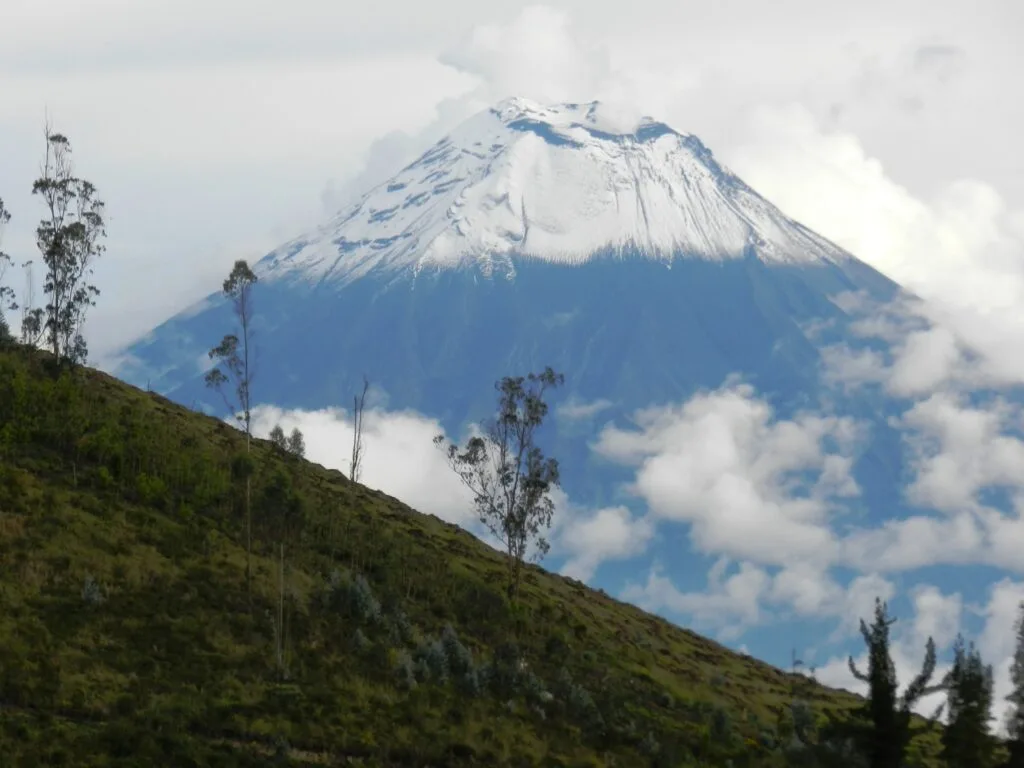
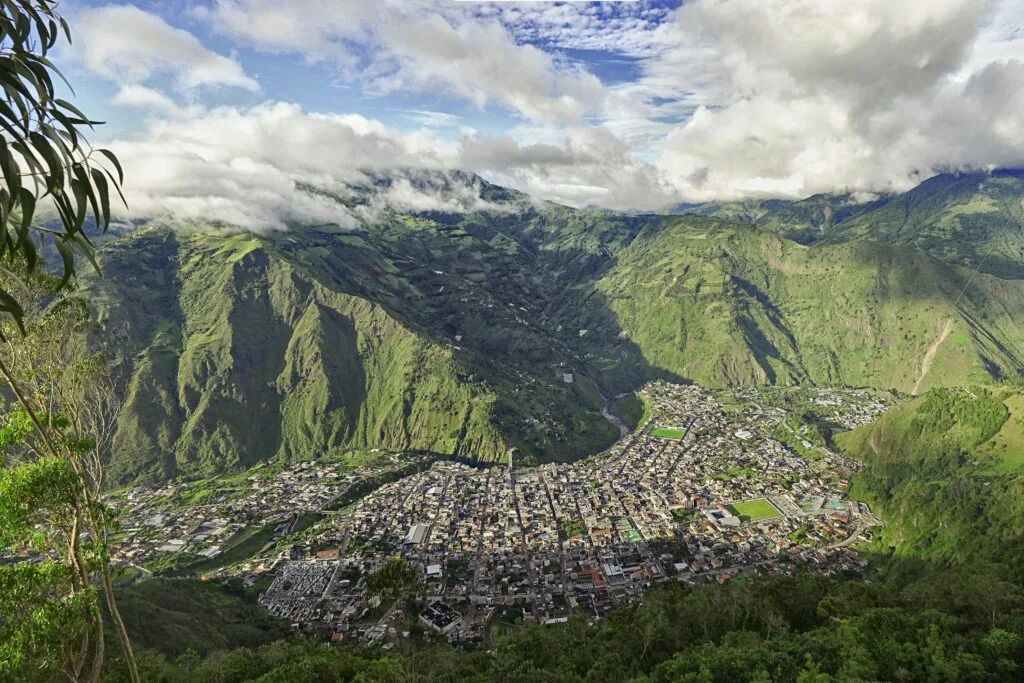
Set in a narrow Andean valley where high-altitude páramo drops precipitously into the humid Amazonian basin, Baños de Agua Santa—known simply as Baños—is Ecuador’s undisputed adventure capital. Nestled directly beneath the towering, active cone of the Tungurahua volcano, this energetic mountain town is framed by roaring granite gorges, sheer waterfalls, and dense cloud forest.
While Baños attracts swarms of weekenders looking for cheap adrenaline fixes, independent travellers often struggle to separate generic, overcrowded commercial tours from meaningful local experiences. At Wheely Tyred, our philosophy favours slow, intentional travel that respects local communities while giving autonomous explorers true access to Ecuador’s staggering natural biodiversity.
Joining a carefully vetted small-group day excursion allows you to tackle technical terrain—such as Class IV river rapids, high-altitude caldera hikes, or hidden Amazonian slot canyons—safely alongside expert local guides who live and breathe this landscape. Here are six exceptional, bookable day tours in and around Baños that deliver genuine depth, top-tier safety, and unforgettable natural beauty.
Baños at a glance / Waterfalls, gorges, and high-Andean slopes
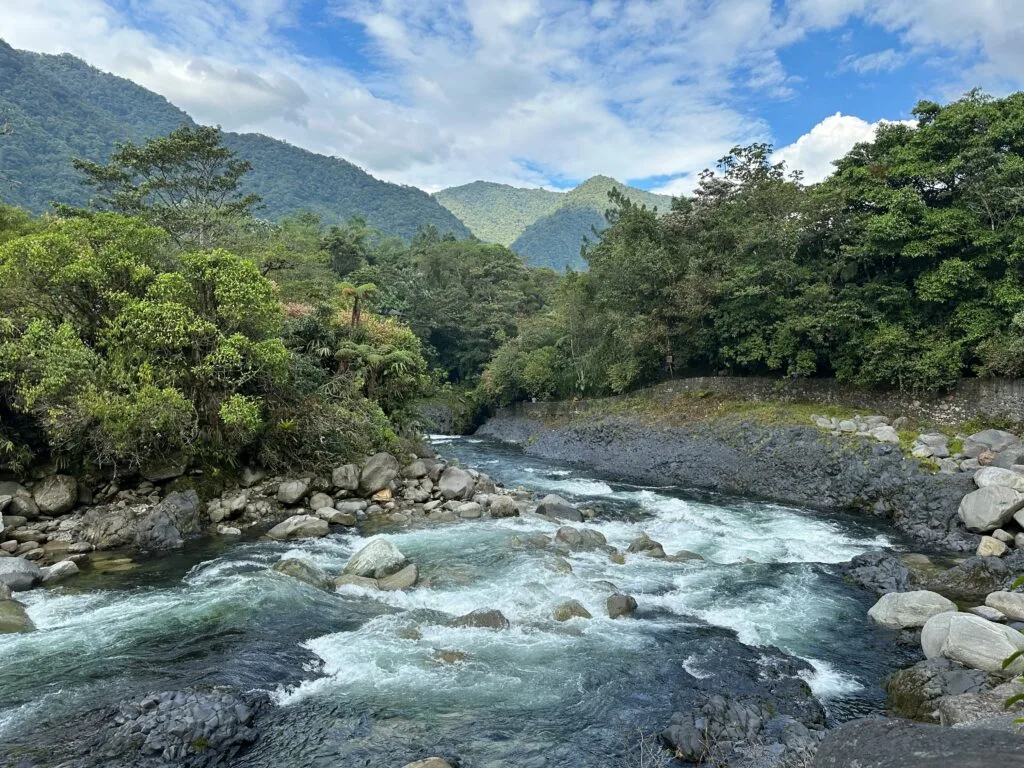
Whether you are descending from the high páramo into the cloud forest or tracking river basins down toward the Amazon, Baños offers an extraordinary concentration of microclimates and landscapes. Here is a quick breakdown of the core sights, technical excursions, and practical considerations for independent travellers exploring this dramatic corner of Ecuador.
- The Volcanic Divide: Situated at 1,820 metres directly beneath the active cone of Tungurahua, Baños marks the dramatic ecological gateway where high Andean peaks plunge into the humid Amazon basin
- Cloud Forest Canyoning: Technical abseiling down basalt cascades in Chamana Canyon provides a hands-on way to explore pristine slot canyons with certified rope-access guides
- Pastaza River Whitewater: The Río Pastaza offers world-class Class III and IV whitewater rafting through sheer granite gorges, supported by line-of-sight safety kayakers
- The Waterfall Highway: The historic Ruta de las Cascadas traces dozens of mountain falls along the Pastaza gorge, culminating in the thunderous 80-metre drop of Pailón del Diablo
- Upper Amazon Proximity: Day expeditions to Puyopungo drop over 1,000 vertical metres into primary rainforest for ethnobotanical jungle walks and authentic Kichwa community visits
- High-Altitude Crater Hiking: Excursions to Laguna de Quilotoa climb to nearly 3,800 metres to reveal a 3-kilometre-wide emerald volcanic caldera framed by traditional indigenous hamlets
- Layering & Logistics: Unpredictable microclimates demand quick-drying synthetic layers and waterproofs, while local markets and tipping require small-denomination US dollar banknotes
Baños.
Explore the Road of the Waterfalls
Cascade into the jungle / Cloud forest canyoning
Rating & reviews
(24+ verified reviews on GetYourGuide)
Why this tour stands out
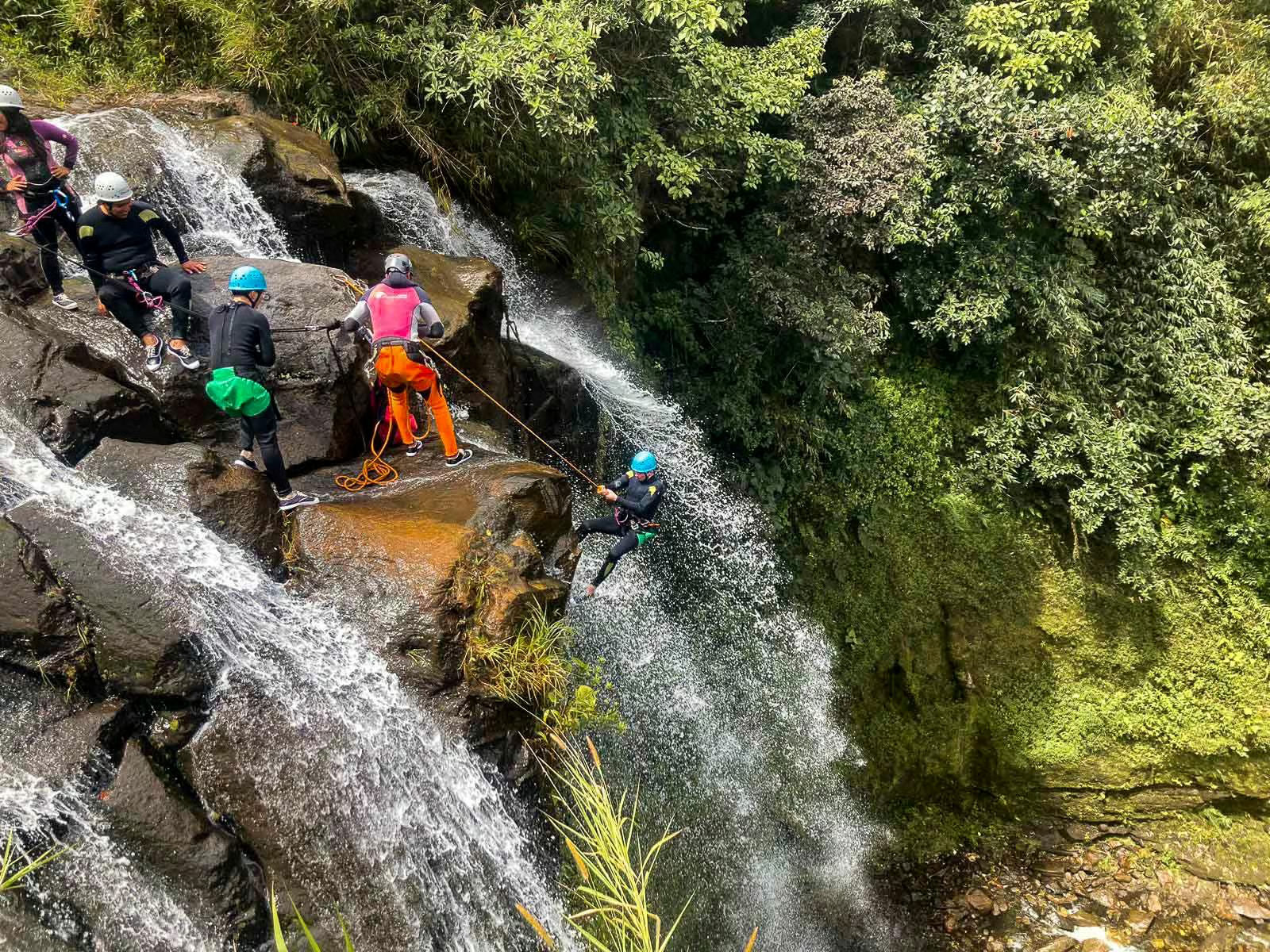
Canyoning in the steep basalt gorges surrounding Baños is one of the most immersive ways to experience the region’s extreme topography. While several operators run rushed trips through overworked canyons, this dedicated small-group outing to Chamana Waterfalls stands apart for its technical rigour and safety-first focus.
Located just ten minutes outside town within dense cloud forest, Chamana Canyon offers a natural obstacle course of roaring waterfalls, polished rock slides, and deep mountain pools. Led by certified wilderness and rope-access guides, this excursion focuses on teaching proper abseiling (rappelling) techniques rather than simply lowering passive tourists down a rope. You actively negotiate five distinct waterfalls, culminating in a thrilling descent down a 15-metre vertical cascade.
Key highlights
- Abseiling down five cascading cloud forest waterfalls ranging from 6 to 15 metres
- Natural rock slides carved out by centuries of volcanic runoff
- Controlled cliff jumps into deep, crystal-clear plunge pools
- High-spec technical equipment including thick 5mm neoprene wetsuits, helmets, and certified harnesses
Ideal for
Active travellers and thrill-seekers looking for a hands-on, technical nature challenge in a pristine environment.
Local insight
Wear quick-drying synthetic base layers under your wetsuit. Cotton retains moisture and will leave you feeling chilled in the shadowy, damp slot canyons despite the tropical latitude.
The Ecuadorian Sierra.
Get lost in the hills
Navigate the Pastaza basin / Class III–IV white water rafting
Rating & reviews
(47+ verified reviews on Viator)
Why this tour stands out
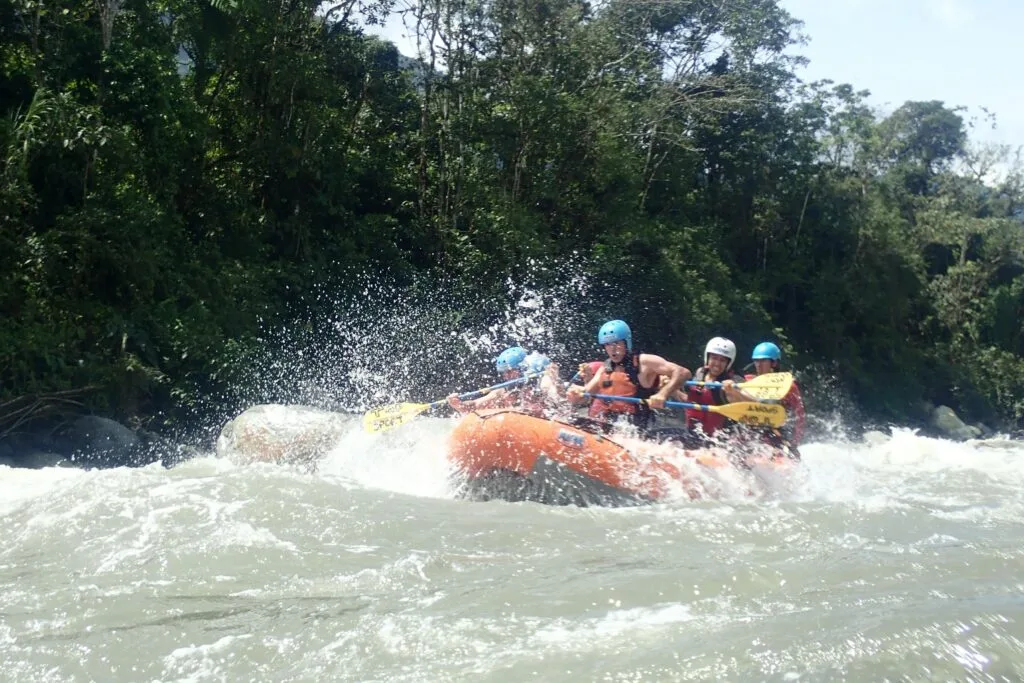
The Río Pastaza serves as a primary hydrological artery draining the central Ecuadorian Andes into the Amazon basin. Carving a deep trench between Llanganates National Park and Sangay National Park, its turbulent waters offer world-class white-water rafting. This half-day extreme river run bypasses the tamer upper sections in favour of the roaring Class III and IV rapids in the Pastaza Canyon.
What elevates this operator is their unwavering focus on safety protocol: every trip includes a dedicated safety kayaker who runs line-of-sight ahead of the rafts to monitor hydraulics and assist swimmers. The sheer granite walls of the canyon, draped in hanging vines and bromeliads, provide a dramatic backdrop as your team paddles through technical drop-pools and heavy wave trains.
Key highlights
- Navigating roughly 18 kilometres of continuous Class III and IV rapids along the Río Pastaza
- Dramatic views of undisturbed rainforest canyon walls bordering national park reserves
- Full safety briefing, paddle practice, and continuous support from a professional safety kayaker
- A hearty, freshly cooked traditional Ecuadorian lunch served post-run
Ideal for
Water sports enthusiasts and physical adventurers wanting a genuine adrenaline rush paired with spectacular river scenery.
Local insight
Do not bring action cameras mounted to loose chest straps or wrist wraps; the powerful hydraulics on the Pastaza’s larger wave trains can effortlessly strip unsecured gear. Use double-tethered helmet mounts instead.
The Ecuadorian Amazon.
The most biodiverse place in the world
Follow the waterfall highway / Ruta de las Cascadas & Pailón del Diablo
Rating & reviews
(12+ verified reviews on GetYourGuide)
Why this tour stands out
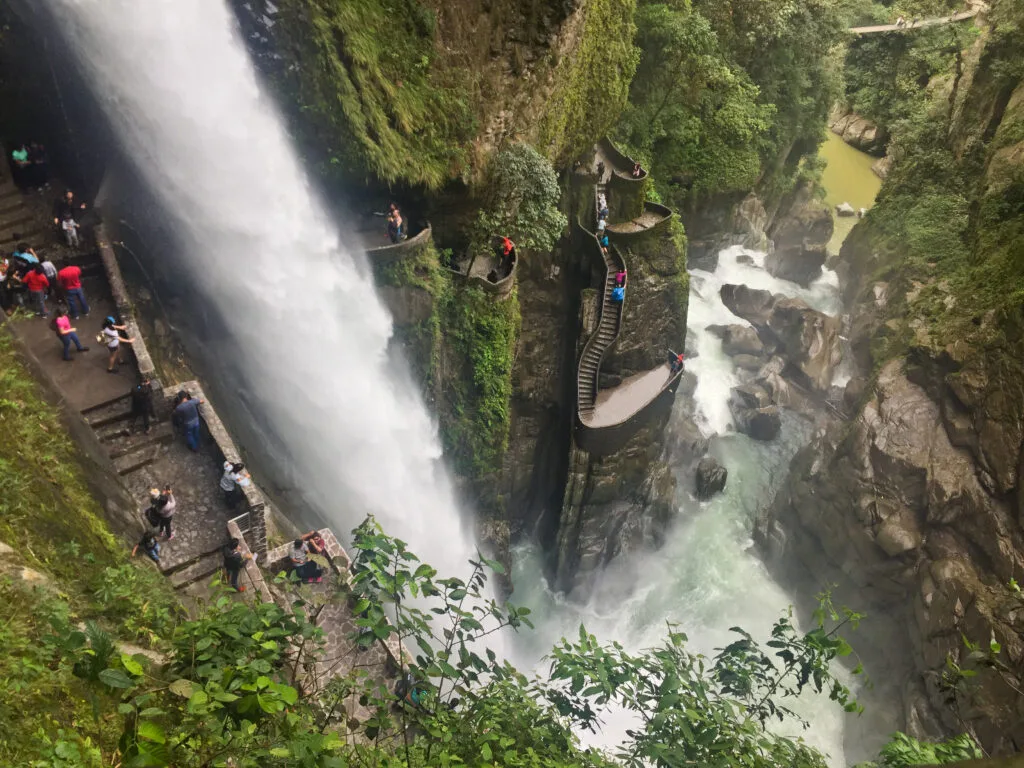
The road stretching east from Baños towards Puyo is famously known as the Ruta de las Cascadas (Route of the Waterfalls), where dozens of dramatic cascades spill over vertical cliff faces into the Pastaza gorge. While many tourists pile onto loud, diesel-fuming chiva party buses, this refined, small-group vehicle tour travels at an unhurried pace, providing deep ecological context.
The highlight of the journey is an extended, guided walk down through the cloud forest trail to Pailón del Diablo (The Devil’s Cauldron). Here, the Río Verde thunders down an 80-metre drop into a narrow rock amphitheatre. This tour also includes stops at the scenic Manta de la Novia cable car transit and the impressive Mano de Dios viewpoint, ensuring you experience the raw power of the landscape from multiple panoramic perspectives.
Key highlights
- Gliding across the Pastaza gorge on a traditional open-air tarabita (cable car) at Manta de la Novia waterfall
- Guided walk down to the base and upper suspension bridges of Pailón del Diablo
- Panoramic photo opportunities at the iconic Mano de Dios lookout point
- Insight into local hydroelectric projects and regional mountain conservation from an expert guide
Ideal for
Photographers, families, and curious travellers who prefer a comfortable pace with rich historical narrative over noisy party transport.
Local insight
Pack a reliable, breathable, waterproof jacket. The micro-spray generated by the massive plunge at Pailón del Diablo creates a localised torrential downpour along the observation balconies.
Into the Upper Amazon / Puyo rainforest day expedition
Rating & reviews
(44+ verified reviews on Viator)
Why this tour stands out
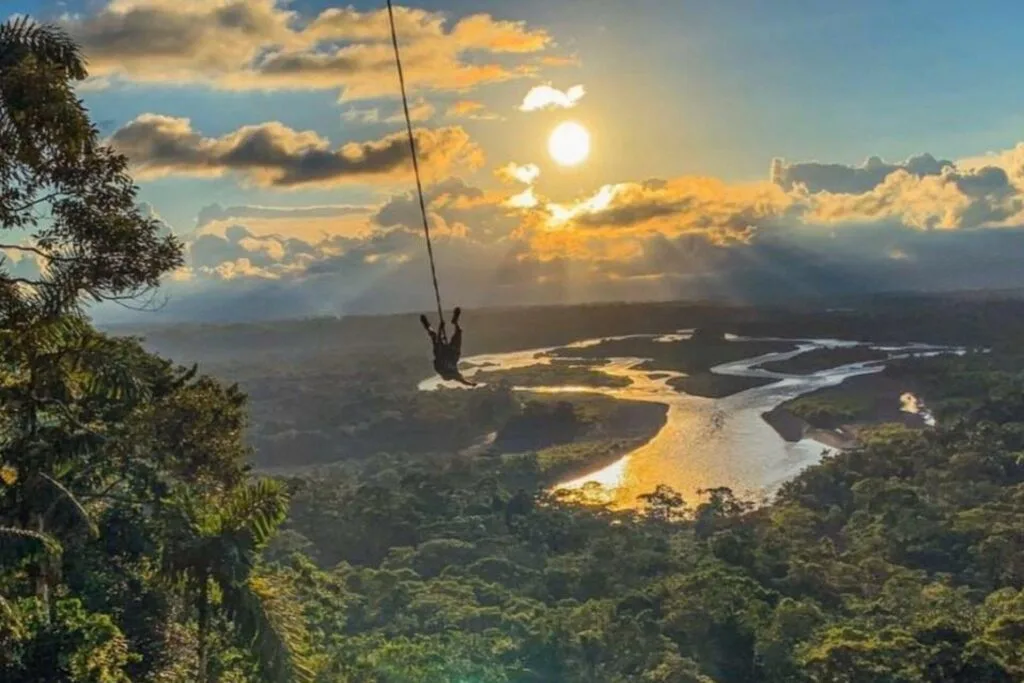
One of Baños’ most remarkable geographical advantages is its proximity to the Amazon basin. In less than two hours, you descend over 1,000 vertical metres from cold mountain valleys into the lush primary rainforest surrounding Puyo and Puyopungo.
This full-day expedition avoids staged, artificial cultural tourist performances. Led by native Kichwa-speaking guides, this trip focuses on ethnobotany, rainforest ecology, and community-led conservation. You travel by wooden motorised canoe deep into the river basin, walk through primary jungle trails to learn about natural medicinal plants, and visit an authentic indigenous family compound to understand contemporary rainforest life and traditional crafts.
Key highlights
- Motorised wooden canoe journey along the meandering, jungle-fringed waters of the Amazon basin
- Guided ethnobotanical walk highlighting ancient medicinal trees, wild orchids, and native fauna
- Trek to a secluded jungle waterfall with an opportunity for a refreshing dip in natural waters
- Panoramic views across the vast, unbroken Amazonian canopy from the lookout tower at Mirador Hola Vida
- Authentic cultural interaction and workshop visit at a local Kichwa community project
Ideal for
Culturally conscious travellers eager to experience the fringe of the Amazon basin without committing to a multi-day lodge stay.
Local insight
Rubber boots (wellingtons) are provided by the operator and are absolute essentials for navigating the deep clay mud of the forest floor. Bring a pair of long, thick woollen or synthetic hiking socks to prevent rubbing and blisters.
The Galápagos.
Ecuador’s Enchanted Isles
High-altitude crater wonders / Quilotoa Lagoon excursion
Rating & reviews
(New activity on GetYourGuide)
Why this tour stands out
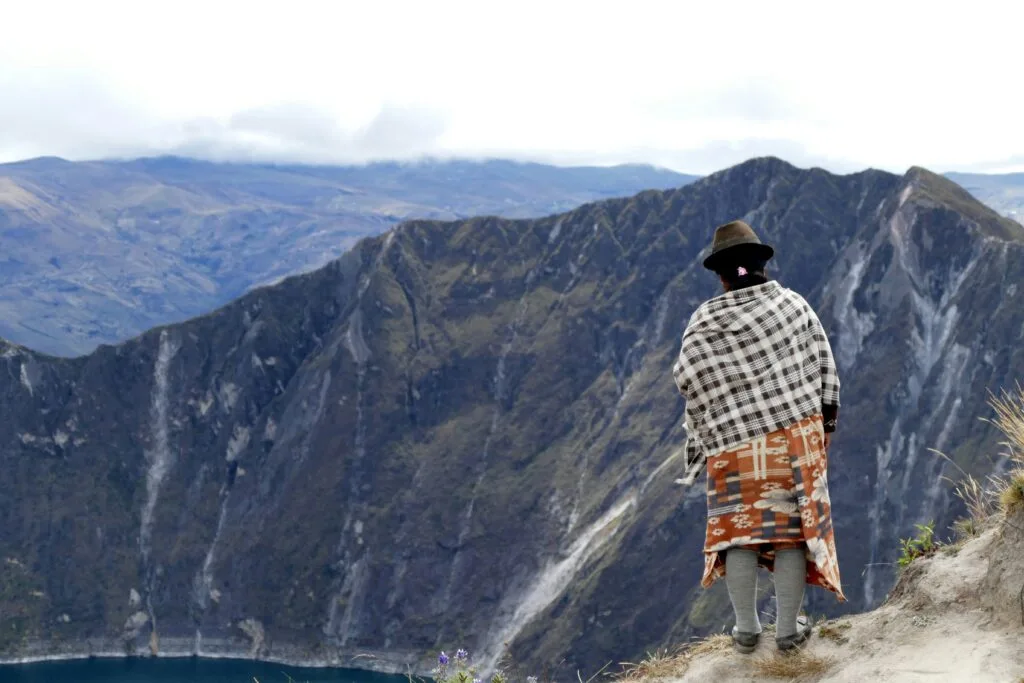
For a complete contrast to the humid river valleys, this day excursion climbs high into the wind-swept western cordillera of the Andes to visit Laguna de Quilotoa. A magnificent 3-kilometre-wide volcanic caldera filled with turquoise, mineral-rich water, Quilotoa rests at an altitude of nearly 3,800 metres above sea level.
This organised small-group transfer and guided trek showcases the changing ecosystems of the high Andes. En route, the tour stops in traditional indigenous hamlets such as Pujilí or Shalalá, known for their distinctive Tigua naïve folk paintings and vibrant highland markets. Your guide leads you along the crater rim, offering deep geological context regarding the volcano’s massive collapse 800 years ago.
Key highlights
- Breathtaking panoramic vistas from the Shalalá glass observation balcony overlooking the emerald caldera
- Guided hike along scenic sections of the volcanic crater rim trail
- Visits to indigenous Tigua artisan workshops to watch traditional sheepskin canvas painting
- Exploration of rural highland farming communities nestled along the deep Toachi Canyon
Ideal for
Landscape photographers, culture enthusiasts, and hikers keen to witness high-Andean geology and vibrant indigenous traditions.
Local insight
The crater rim sits at high altitude where wind chill can drop temperatures rapidly. Carry plenty of water, dress in windproof layers, and sip mate de coca to assist with the thin mountain air.
Cloud forest vistas & iconic swings / Casa del Árbol & cultural highlights
Rating & reviews
(1+ verified review on GetYourGuide)
Why this tour stands out
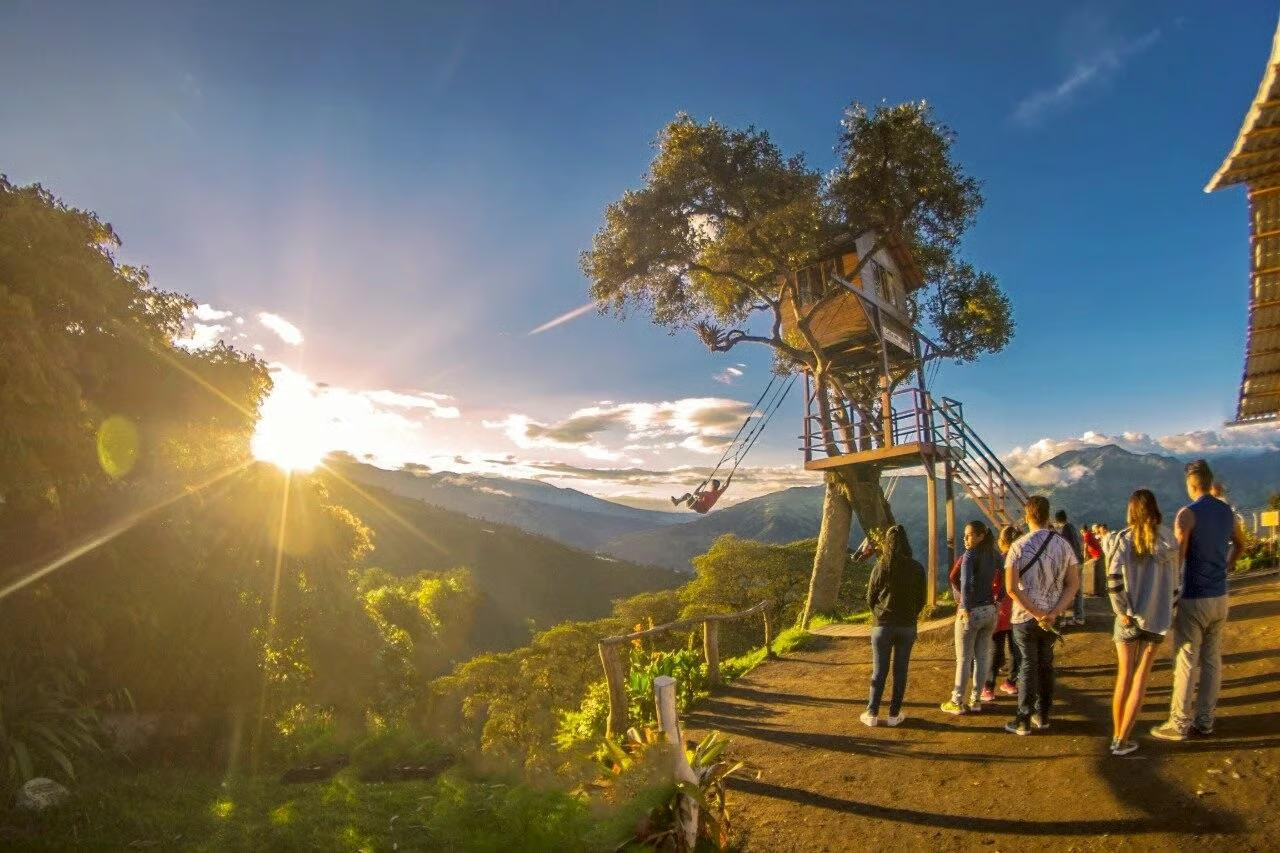
The treehouse at Casa del Árbol and its famous Swing at the End of the World have become famous social media imagery, but visiting without context strips away the fascinating history of the location. Built as a seismic monitoring station to watch the active, smoking peak of Tungurahua, this high mountain ridge at 2,660 metres offers unprecedented views of the volcano and the Pastaza Valley below.
This full-day excursion pairs a visit to the ridge with a comprehensive orientation of Baños’ unique geography and culture. Rather than a quick photo stop, your local guide details the history of Tungurahua’s recent major eruptions, local evacuation plans, and the agricultural techniques used by mountain farmers tilling steep volcanic soils, before exploring key cultural spots in town.
Key highlights
- Riding the iconic swing over the mountain edge with Tungurahua’s volcanic peak towering in the background
- Access to the historic seismic treehouse and weather observation point
- Sampling freshly squeezed caldo de caña (sugarcane juice) and watching traditional melcocha candy pulling
- Guided visits to high mountain lookouts overlooking the entire Baños valley
Ideal for
First-time visitors looking to orientate themselves around Baños while enjoying dramatic mountain panoramas and cultural highlights.
Local insight
Morning departures offer significantly better visibility. Thermal mountain winds typically build up by early afternoon, drawing cloud cover over Tungurahua’s cone.
The Ecuadorian Coast.
Where you’ll find the very best food
Our practical Baños excursion planning guide
To ensure your independent trips run as smoothly as possible, keep these operational planning rules in mind when booking and executing day tours in Baños:
Respect microclimates and layering
Baños sits precisely on the weather divide between the high Andes and the Amazon. Conditions can shift within minutes from blazing tropical sun to cool, damp cloud forest mist. Always pack a lightweight waterproof jacket, a warm thermal mid-layer, and quick-drying synthetic trousers regardless of morning weather forecasts.
Manage altitude differences responsibly
While Baños town sits at a comfortable 1,820 metres, excursions like Quilotoa push near 3,800 metres. Allow at least 24 to 48 hours to acclimatise in town or in Quito before undertaking high-altitude hikes, and keep consumption of heavy meals and alcohol light during your first couple of days.
Carry small denomination US dollars
Ecuador uses the US dollar as its official currency. Rural tour stops, small fruit stalls, indigenous craft markets, and local guides frequently struggle to break bills larger than $5 or $10. Keep a pouch of clean $1, $5, and $10 banknotes, alongside loose change for public conveniences.
Tipping protocols for local guides
Tipping is deeply appreciated across Ecuador’s outdoor sector. For exceptional service on technical day tours (canyoning, rafting, Amazon treks), tipping roughly $5 to $10 USD per person to your main guide and $3 to $5 to support staff (drivers, safety kayakers) directly supports local families and incentive structures.
Ethical travel and artisan support
When purchasing handicrafts in highland markets near Quilotoa or indigenous communities near Puyo, pay a fair price without aggressive haggling. Purchasing directly from female weaving collectives and family painting workshops ensures your tourist spending remains within the resident community.
Embrace the wild edge of the Ecuadorian Andes

Read this far?
Baños de Agua Santa occupies a rare geographic sweet spot. It is a place where you can stand on a high mountain ridge in the morning mist, feeling the chill of the high Andes, and by afternoon find yourself navigating tropical river currents wrapped in the warm, humid air of the upper Amazon basin. For independent travellers, the town’s true magic lies not in its neon-lit tourist strips, but in the immediate, raw access it affords to some of South America’s most dynamic ecosystems.
Choosing small-group, locally led day tours transforms what could be a surface-level visit into a deep exploration of regional ecology and mountain culture. Whether you are holding a line through the heavy hydraulics of the Río Pastaza, learning ethnobotanical lore from a Kichwa guide in the rainforest, or standing above the roaring amphitheatre of Pailón del Diablo, committing to authentic local operators ensures your journey directly supports the communities who safeguard these landscapes.
Travel slowly, respect the immense power of these volcanic river valleys, and give yourself time to adapt to the rhythm of the terrain. Baños rewards those who look past the commercial noise and step intentionally into its cloud forests, gorges, and highland trails.
Affiliate Disclaimer: Some of the links on Wheely Tyred are affiliate links. If you click through and make a booking or purchase, we may earn a small commission at no extra cost to you. We only recommend gear, tours, stays, and services we genuinely use, trust, and stand behind — our editorial independence always comes first. These commissions help keep our independent cycling guides and travel stories free to read. You can also buy me a coffee here — thanks for supporting the ride!
Frequently asked questions about the best day tours in Baños, Ecuador
To experience the full diversity of the region without rushing, plan to stay at least three to four full days. This allows sufficient time to tackle a technical river or canyon excursion, take a full-day trip down to the upper Amazon basin or up to Quilotoa crater, and spend a dedicated day exploring the waterfalls along the Pastaza gorge at a relaxed pace.
Small-group guided vehicle tours provide an unhurried, context-rich alternative to the noisy chiva buses. Autonomous travellers can also hire mountain bikes or e-bikes in town to ride the downhill route along the main road toward Puyo, stopping at cable car transit points (tarabitas) and waterfall trails before taking a local flatbed truck (camioneta) back to Baños.
While Baños town rests at a comfortable 1,820 metres above sea level, certain day trips—most notably the excursion to Laguna de Quilotoa—reach altitudes near 3,800 metres. It is wise to spend a day or two adapting at mid-altitude before undertaking strenuous uphill hikes on the Quilotoa caldera rim, and to stay well-hydrated throughout your trek.
Ecuador uses the US dollar ($). While major hotels and established tour agency offices in central Baños accept credit cards, cash is essential for day excursions. Small fruit stalls, rural transport, craft markets near Quilotoa, and tipping for local guides require small-denomination banknotes ($1, $5, and $10 bills). Large $20 or $50 notes are notoriously difficult to break outside main banks.
Always wear quick-drying, synthetic base layers rather than cotton, which retains dampness and causes rapid cooling in shadowy river gorges. A breathable, high-quality waterproof jacket is essential for mountain mist and waterfall spray. For Amazon day trips, tour operators provide heavy-duty rubber boots, so pack long, synthetic or woollen socks to prevent friction blisters inside the boots.
Yes, provided you book through reputable, certified operators who prioritise safety over high-volume turnover. Professional whitewater rafting companies on the Río Pastaza always deploy line-of-sight safety kayakers to assist swimmers, while licensed canyoning guides provide full safety briefings, certified helmets, harnesses, and thick neoprene wetsuits before entering any waterfall descent.
Ecuador.
Pure wonder on the equator.