The layers of time in Alausí / A deep descent into Ecuador’s railway history
A comprehensive guide to the heritage and cultural history of Alausí, Ecuador
Echoes of steam, stone, and iron high in the Andean valleys
BEN FINCH
Perched dramatically at an altitude of over two thousand three hundred metres within the rugged creases of the Chimborazo province, Alausí occupies a singular space in the collective imagination of Ecuador. To the passing traveller, it initially presents as a striking vision of red-tiled roofs, whitewashed walls, and steep cobblestone streets cascading into a deep mountain valley.
Yet beneath this tranquil surface lies a complex historical narrative woven from ancient footprints, revolutionary ambitions, and unparalleled engineering defiance. Known officially as the City of the Five Heritages, Alausí serves as a monumental crossroads where the natural grandeur of the Andes meets the indelible scars and triumphs of human ingenuity.
At Wheely Tyred, the fascination with landscapes is always rooted in the stories that shaped them, and few destinations offer a historical tapestry as dense and moving as this enchanted highland enclave.
The iron heart of the Andes
Beyond its postcard-perfect colonial facade, Alausí holds the scars and triumphs of Ecuador’s most daring architectural leaps. This highland enclave invites the independent traveller to slow down and trace the literal tracks of history.
- The Devil’s Nose (La Nariz del Diablo): A staggering near-vertical mountain wall overcome by a legendary system of switchbacks, carved into the cliffside at immense human cost
- City of the Five Heritages: A title reflecting Alausí’s deep layers of history, spanning indigenous roots, colonial architecture, and the industrial revolution of the rail line
- The Qhapaq Ñan: Ancient segments of the Inca Trail that cut through the canton, serving as a reminder of the pre-colonial networks that mapped these highlands long before the train
- Puente Negro (The Black Bridge): An imposing 200-metre iron lattice structure built in 1903 that remains the longest railway bridge in Ecuador, framing the Chanchán River valley
- San Pedro Monument: A colossal 21-metre statue standing on Lluglli Hill, watching over the city’s traditional red-tiled roofs and narrow, steep streets
- Colonial hybrid architecture: Historic buildings featuring unique wooden balconies that blend robust Andean durability with coastal and Arab-Baroque woodwork styles
The Ecuadorian Sierra.
Get lost in the hills
The ancient foundations / From the Inca trail to Spanish conquest
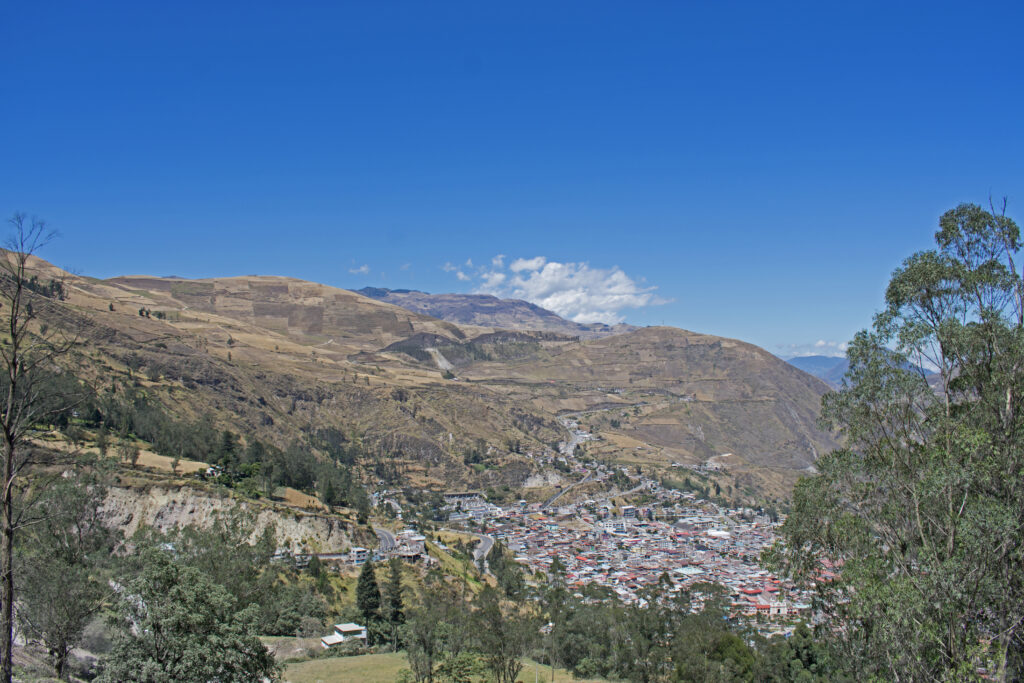
Long before the ring of iron tools and the hiss of steam engines echoed through the Chanchán River basin, the territory surrounding Alausí was animated by indigenous cultures. The Puruhá people originally populated these fertile slopes, cultivating a deep connection to the high-altitude moors and subtropical valleys that define the regional geography.
This strategic location did not escape the attention of expanding empires. The Incas integrated the area into their vast network, constructing a segment of the Qhapaq Ñan, the legendary Inca Trail, directly through the modern-day canton. This ancient thoroughfare served as a vital artery for administration, military movement, and trade, linking remote mountain communities to the grand capitals of the empire.
The arrival of Spanish conquistadors in the sixteenth century marked a profound rupture and a new structural chapter. Sebastián de Belalcázar officially founded the settlement of San Pedro de Alausí on 29 June 1534, making it one of the oldest European foundations in the Royal Audience of Quito. The Spanish laid out the town using a traditional colonial grid system, though they were forced to adapt their geometric ideals to the undulating, unpredictable Andean topography.
Over the colonial centuries, Alausí transformed into a vital agricultural and administrative hub, eventually gaining the status of a distinct province during the brief existence of the independent Quito State in the early nineteenth century. This deep antiquity is palpable today; the historic centre retains an authentic, unhurried rhythm that reflects centuries of continuous habitation and cultural blending.
The master plan of Eloy Alfaro / Forging the trans-Andean railway
The true catalyst for Alausí’s modern identity emerged at the turn of the twentieth century, driven by a grand national vision to conquer the physical barriers separating Ecuador’s coast from its highland interior. For decades, the journey between the economic powerhouse of Guayaquil and the political capital of Quito was a gruelling, multi-week expedition fraught with mudslides, dense cloud forests, and treacherous mountain passes.
In the late nineteenth century, General Eloy Alfaro, a visionary president and leader of the Liberal Revolution, committed the nation to an audacious project: the construction of the Ferrocarril Transandino, a trans-Andean railway system that would unite the fragmented country.
This massive infrastructure initiative was not merely a matter of transportation; it was an act of nation-building designed to spark economic modernisation, break local isolation, and foster a shared national identity. Alausí was identified as a critical tactical node on the southern division of the route.
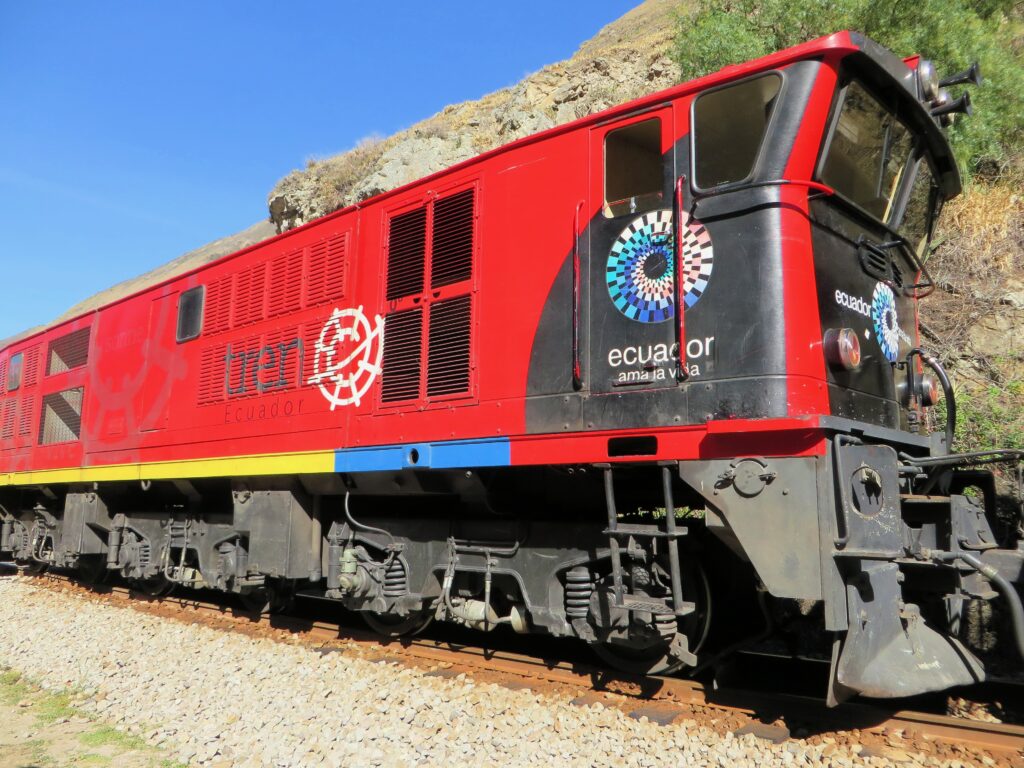
The arrival of the first locomotive on 8 September 1902 transformed the quiet mountain town almost overnight. It became a bustling commercial melting pot where coastal merchants met highland producers. This influx of wealth, diverse ideas, and international labourers reshaped the social fabric and architectural expression of the community, setting the stage for a period of unprecedented urban growth.
The Galápagos.
Ecuador’s Enchanted Isles
Defying the cliffs / The heavy toll of the Nariz del Diablo engineering feat
While the railway brought prosperity, it also required confronting one of the most imposing geographical obstacles in the history of global transit. Just a few kilometres outside Alausí, the landscape drops precipitously down a near-vertical mountain known to the indigenous inhabitants as Cóndor Puñuna, or the Condor’s Aerie.
To continue the tracks toward the coast, engineers had to devise a method to lower the trains across a five-hundred-metre rock face. The sheer impossibility of the task led locals to whisper that the mountain was cursed by the devil, earning the promontory its enduring name: La Nariz del Diablo, or the Devil’s Nose.
The solution was an extraordinary engineering triumph that relied on a complex system of zigzagging switchbacks carved directly into the mountain cliffside. The locomotive would advance past a junction, reverse down the subsequent section, and then move forward again, gradually negotiating the terrifying grade by shunting back and forth. This triumph, however, came at a devastating human cost.
Approximately four thousand labourers, including a large contingent of Jamaican and Puerto Rican workers brought in for their resilience and skill, faced extreme weather, tropical diseases, and frequent dynamite accidents. Historical estimates suggest that over two thousand men lost their lives constructing this twelve-kilometre stretch of track. The legacy of these workers endures not only in the stone and iron left behind but also in the cultural lineage of the region, embedding a profound sense of grit and international history into the local identity.
The Ecuadorian Coast.
Where you’ll find the very best food
The town of five heritages / Balconies, iron bridges, and sacred peaks
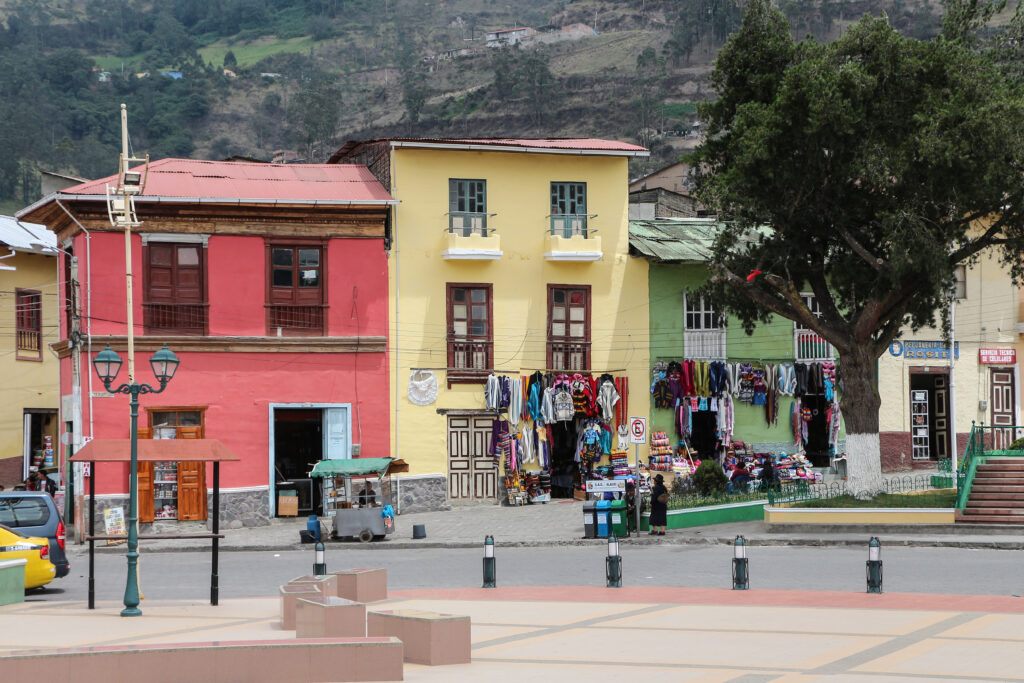
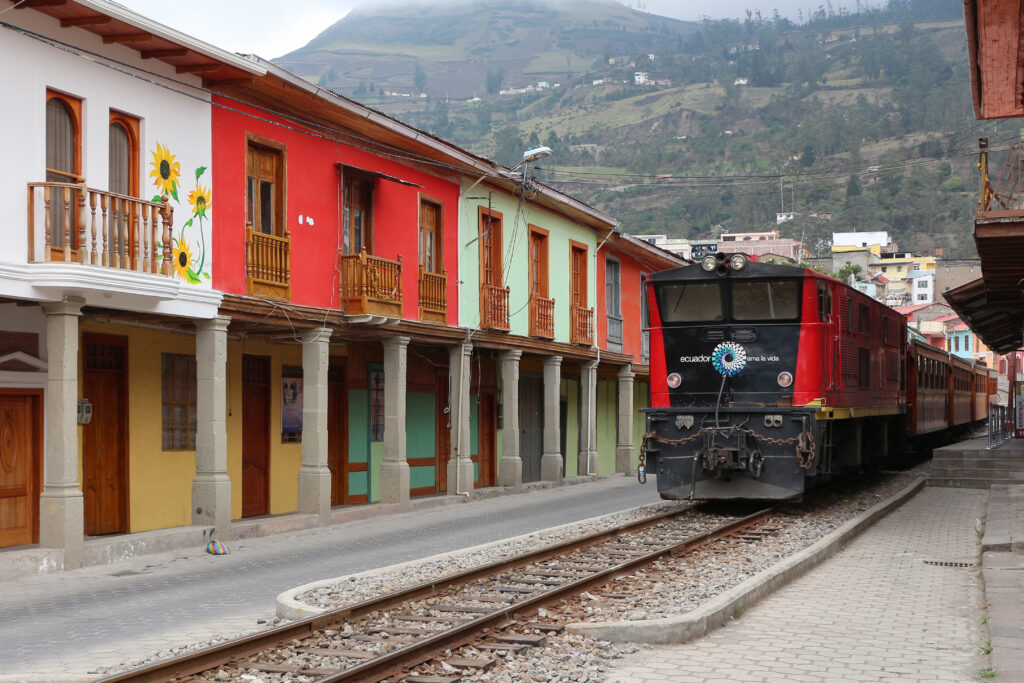
The profound historical shifts experienced by Alausí are beautifully preserved within its physical layout, earning it official recognition as a National Cultural Heritage site. The urban landscape tells a vivid story of coastal, highland, and international integration. Walking through the narrow streets, one observes buildings that are over two centuries old, characterised by whitewashed adobe walls, vibrant facades, and exquisite wooden balconies overflowing with bright geraniums.
These traditional balconies illustrate a fascinating stylistic fusion, combining the heavy durability required for Andean winters with elegant, open woodwork inspired by coastal and Arab-Baroque aesthetics introduced during the railway boom.
Letting your gaze wander beyond the domestic architecture, Alausí is punctuated by grand structural monuments that celebrate its diverse heritages. The historic Puente Negro, or Black Bridge, constructed in 1903, stands as a spectacular relic of the golden age of rail. Stretching across two hundred metres and suspended sixty-five metres above the Chanchán River valley floor, this massive iron lattice structure remains the longest bridge on the entire national railway line, symbolising the mechanical ambition of the era.
In contrast, the neo-Gothic spires of the Matriz Church, also known as the San Pedro Church, anchor the central Parque 13 de Noviembre, reflecting the deep spiritual traditions of the population. Rising above the entire valley on Lluglli Hill is the colossal twenty-one-metre statue of Saint Peter, crafted by Eddie Crespo in 2001, which gazes down upon the red-tiled roofs like an eternal guardian of this historically isolated sanctuary.
The Ecuadorian Amazon.
The most biodiverse place in the world
Exploring Alausí / A living historical landscape for the modern traveller
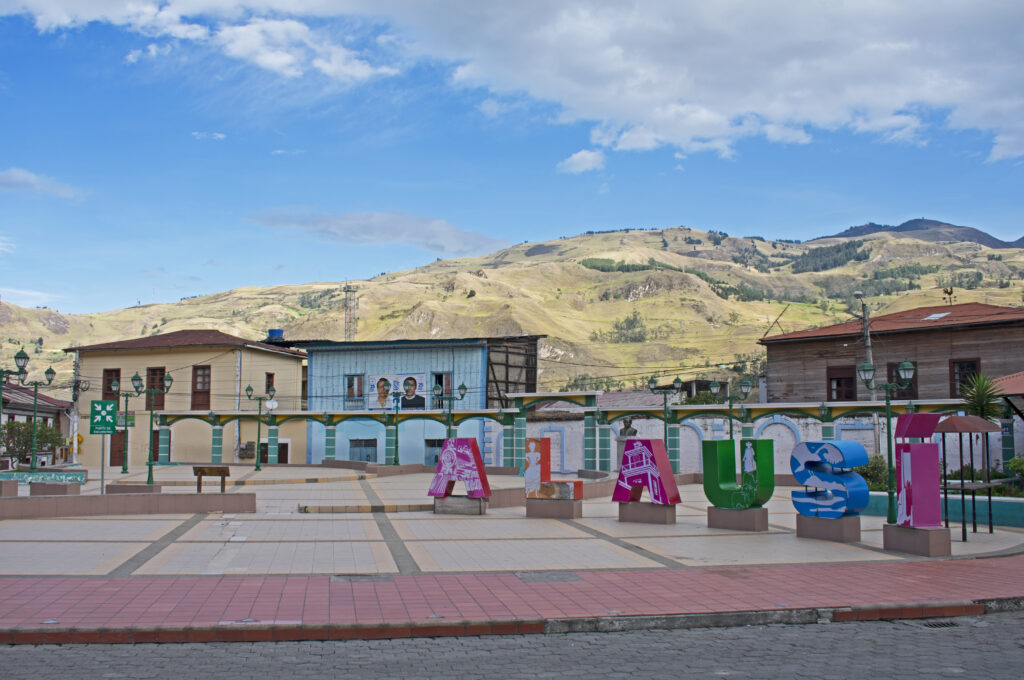
For the contemporary explorer, Alausí is far more than a museum piece; it is a living, breathing landscape where history continues to dictate the terms of engagement. The dramatic geography that once challenged the finest engineering minds of the twentieth century now offers an unparalleled arena for slow travel and deep exploration. The steep grades, challenging switchbacks, and old cobblestone routes provide a physical connection to the past, allowing visitors to appreciate the scale of human effort required to civilise these vertical spaces.
Whether one is tracking the remnants of the old railway lines, tracing the footsteps of ancient messengers along the Inca Trail, or simply admiring the craftsmanship of a hundred-year-old wooden balcony, Alausí demands that we slow our pace. It rewards those who take the time to look any deeper beneath the surface, offering a profound lesson in how history, geography, and human determination can collide to create a place of enduring magic.
At Wheely Tyred, the belief remains that the best way to understand a territory is to feel its contours and know its stories, and Alausí stands ready to reveal its deep historical heart to anyone willing to look.
Frequently asked questions about the history of Alausí
Alausí is well-connected by road and can be reached via long-distance buses travelling along the Pan-American Highway from major hubs like Quito, Riobamba, or Cuenca. For those exploring the region by bike or on foot, the steep terrain demands respect and excellent physical conditioning, but it rewards you with spectacular, uninterrupted highland vistas.
The name stems from both the physical appearance of the precipitous promontory—which looks like an immense, angular nose jutting into the valley—and the perilous difficulty of the construction work. Local legends whispered that the mountain was cursed, a sentiment reinforced by the tragic loss of thousands of workers’ lives due to dynamite accidents and tropical diseases during its creation.
The town sits at just over 2,300 metres above sea level. While this is lower than nearby high-altitude cities like Quito or Riobamba, independent travellers arriving directly from the coast should take a day or two to adapt before attempting strenuous hikes or cycling routes in the surrounding mountain valleys.
Yes, but rail operations across Ecuador have faced significant structural changes, pauses, and closures over recent years. It is essential to check current local operational statuses directly upon arrival in town, as sections of the track are frequently maintained as stationary heritage monuments rather than continuous commercial lines.
The town is a designated National Cultural Heritage site because its streets preserve a rare aesthetic fusion. The wealth and migration brought by the railway boom at the start of the twentieth century introduced coastal and Arab-Baroque design elements, which local craftsmen beautifully integrated into traditional highland adobe structures.
Ecuador.
Pure wonder on the equator.