The flooded mirror of the Amazon / An independent traveller’s guide to Cuyabeno, Ecuador
Cuyabeno Wildlife Reserve, Ecuador / A travel guide to the Amazon’s rainforest eco-lodges
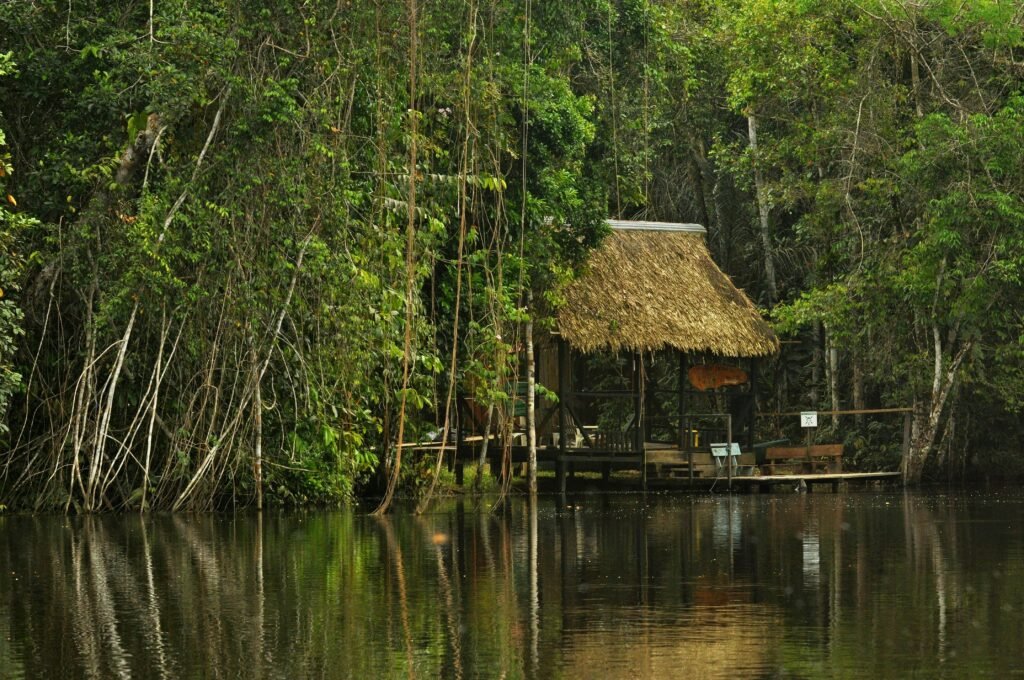
Leave the road behind to navigate ancient blackwater channels
BEN FINCH
The hallmark of a great journey is the willingness to change your mode of transport when the terrain demands it. For those who value independent exploration, the joy of travel lies in setting your own pace, choosing your own path, and taking the time to truly understand a landscape. Usually, that means exploring on two wheels or on foot. However, deep in the northeastern corner of Ecuador, there is a wilderness where the roads run out entirely, and the only way forward is by water.
Cuyabeno Wildlife Reserve is an extraordinary 603,000-hectare protected area that stands apart from any other region in the Amazon Basin. While standard rainforest destinations feature wide, fast-flowing brown rivers where wildlife remains hidden hundreds of metres away in the dense canopy, Cuyabeno is a labyrinth of narrow blackwater creeks, flooded forests, and pristine lagoons.
Here, the canopy closes overhead, bringing you face-to-face with one of the most biodiverse ecosystems on the planet. For the self-reliant traveller, it represents the ultimate immersion in pristine nature.
The liquid labyrinth of the Amazon
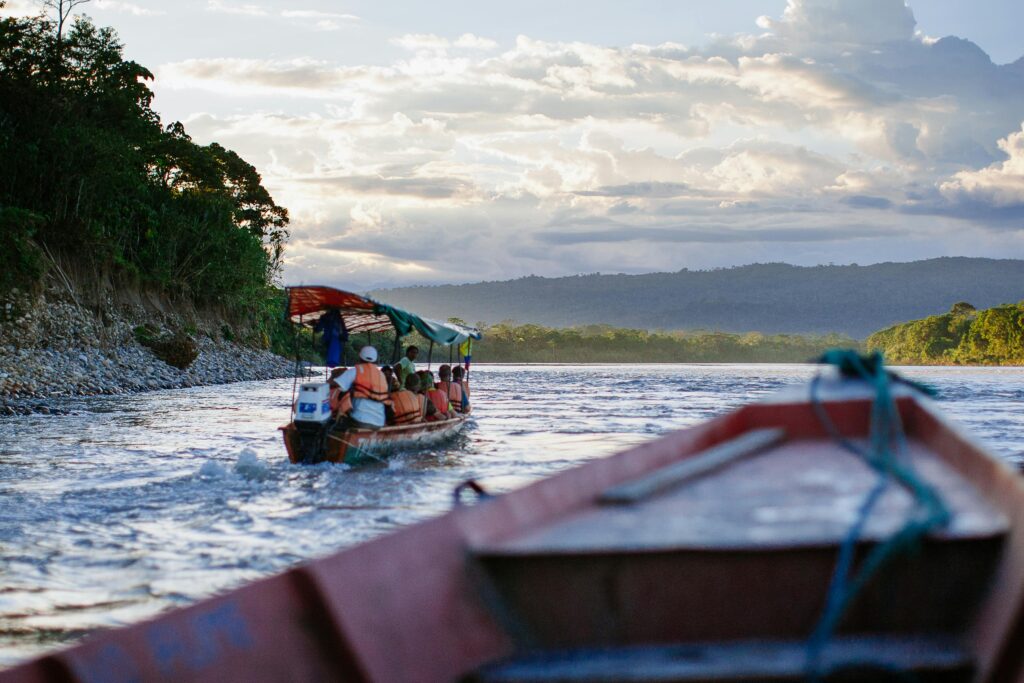
Cuyabeno Wildlife Reserve strips away the tarmac and invites the independent traveller to navigate a world dictated entirely by water. It is a pristine, flooded ecosystem where deep observation rewards those willing to match the slow, deliberate pulse of the rainforest.
- The Igapó Network: An intricate system of 14 blackwater lagoons and interconnected creeks where submerged macrolobium trees create flawless, sky-reflecting mirrors
- Pink River Dolphins: Unique freshwater mammals navigating the flooded roots with specialised, unfused neck vertebrae that allow flexible, tight-radius manoeuvring through the trees
- Canopy Vantage Points: Observation towers rising 30 metres into the upper layer, offering eye-level encounters with awakening troops of monkeys, macaws, and toucans at dawn
- Laguna Grande Sunsets: A sprawling central lagoon where evening dissolves into deep purples, providing a serene setting for twilight swimming and listening to the shifting wildlife choir
- Nocturnal Safaris: Guided night treks and torchlit canoe expeditions tracking reflecting caiman eyes, camouflaged tree frogs, and bioluminescent fungi on the dark jungle floor
- Siona Culinary Traditions: Immersive cultural exchanges centred on the ancestral preparation of casabe flatbread from cassava root using traditional woven strainers
- Seasonal Shifts: A dynamic environment alternating between high-water canoe exploration from March to August and low-water primary forest trekking from September to February
Cuyabeno Wildlife Reserve.
Explore the Amazon’s flooded forest
The geography of a flooded wilderness
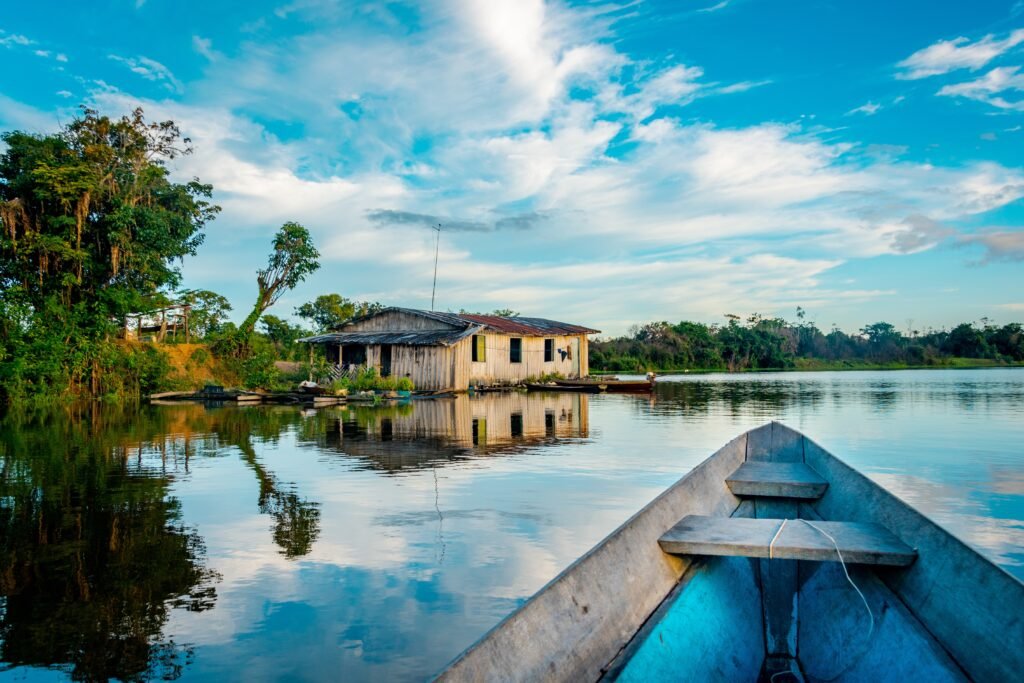
To understand why Cuyabeno is so unique, one must understand its specific position on the map. Unlike the vast, flat expanses of the Brazilian Amazon, the Cuyabeno watershed sits in the rolling foothills of the Andes Mountains. This geographical position alters the local climate, keeping temperatures slightly milder than the scorching lowlands further east.
The reserve is defined by its complex hydrographic system, consisting of 14 primary lagoons connected by an intricate network of rivers and creeks. The landscape transitions dramatically between two distinct aquatic systems:
- Whitewater Rivers: Rivers like the Aguarico carry heavy loads of pale sediment washed down from the Andean slopes, appearing cloudy and rich in nutrients
- Blackwater Rivers: The Cuyabeno River itself is a classic blackwater system. The water is clear but stained a deep, tea-like colour by tannins leaching from decaying organic matter on the forest floor
When the heavy rains arrive, these blackwater rivers overflow their banks, completely submerging the low-lying forest to create an ecosystem known as igapó. Huge macrolobium trees stand trunk-deep in water, their gnarled branches draped in orchids and bromeliads, creating a hauntingly beautiful flooded mirror that reflects the sky with absolute clarity.
The practical route / Reaching the edge of the wild
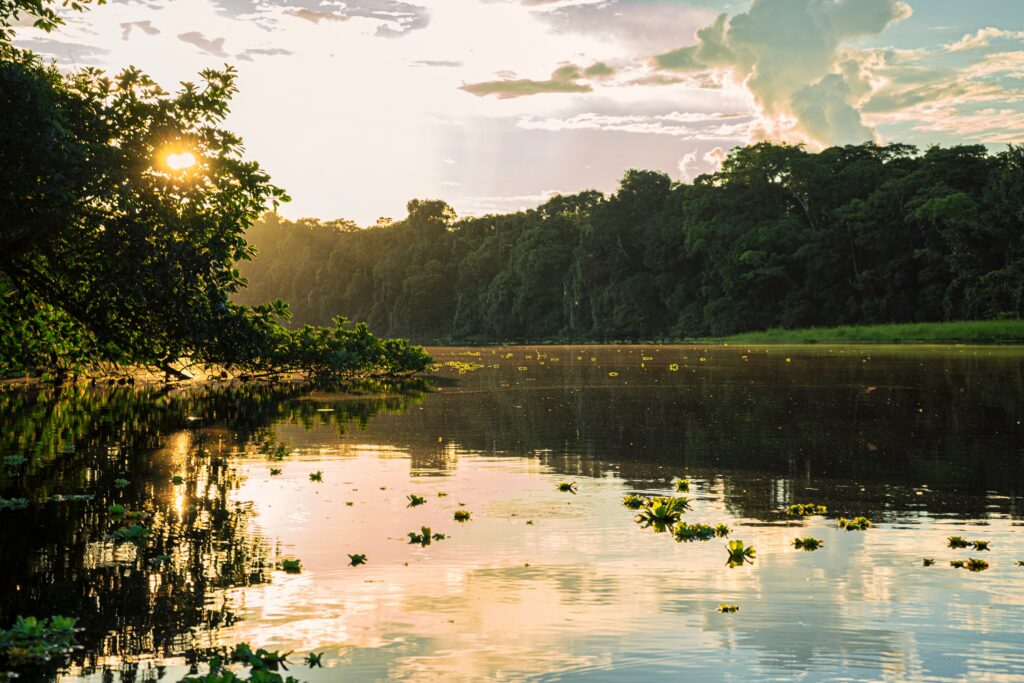
Reaching a destination this remote requires a bit of logistical planning, but for the independent traveller, the journey is half the experience. The springboard for all expeditions into Cuyabeno is the city of Nueva Loja, universally known by locals as Lago Agrio.
Independent travellers starting their journey in Quito have two primary choices for reaching Lago Agrio:
| Transport Option | Duration | Characteristics |
| Domestic Flight | 25 minutes | Quick and convenient, lifting you over the snow-capped Andes and dropping you straight into the humid lowlands |
| Public or Shuttle Bus | 8 hours | A spectacular, winding journey that snakes down the eastern cordillera, offering views of dramatic waterfalls and changing cloud forests |
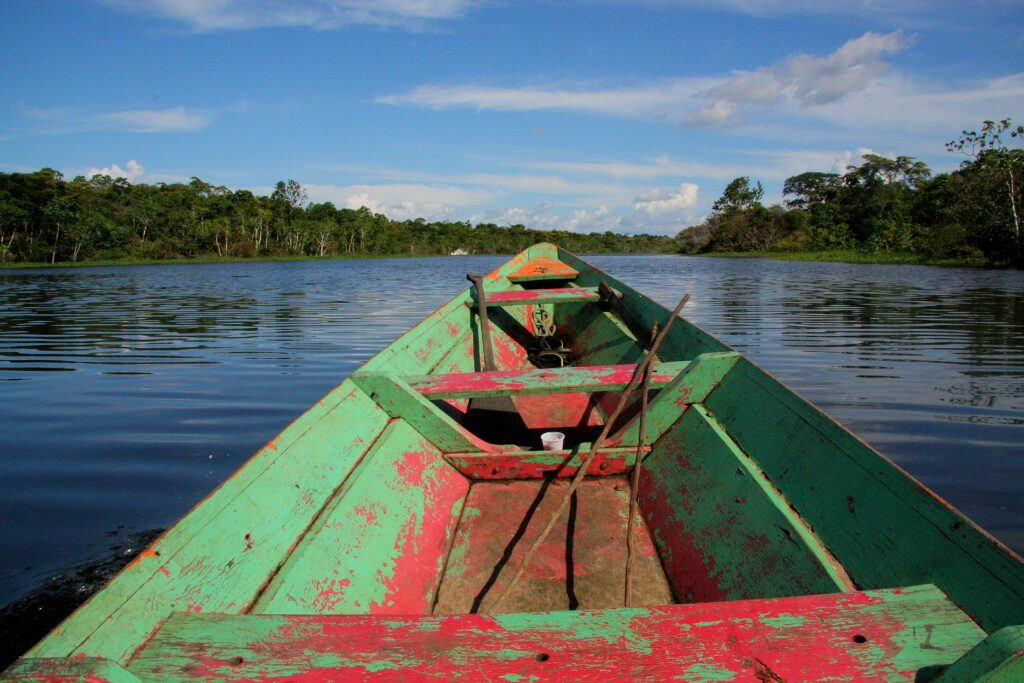
From Lago Agrio, an overland journey of roughly two hours brings you to El Puente de Cuyabeno, the physical bridge that marks the formal boundary of the reserve. This is the point where wheels are left behind. At El Puente, you register with the national park authorities and board a motorised dugout canoe for the final leg of the journey: a two-hour trip down the winding Cuyabeno River to reach the eco-lodges situated deep within the primary forest.
The Ecuadorian Amazon.
The most biodiverse place in the world
Unmissable experiences in the flooded forest
Because Cuyabeno restricts independent wandering for safety and conservation reasons, choosing an eco-lodge that aligns with a philosophy of deep, unhurried observation is vital. Once inside the reserve, the daily routine shifts away from schedules and tourist crowds, focusing instead on the natural rhythm of the forest.
Sunset at Laguna Grande
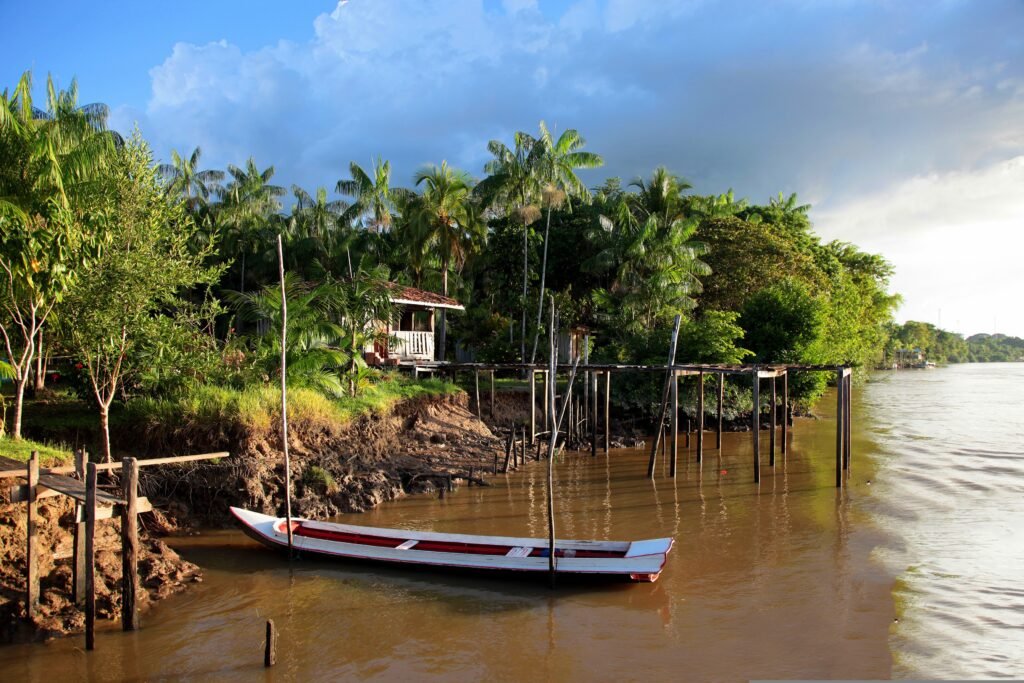
The absolute heart of the reserve is the Laguna Grande, the largest permanent body of water in the system. Navigating into this open lagoon after hours spent in narrow, shaded channels is a sensory shift. During the wet season, the water forms a flawless mirror, reflecting the sky. As evening approaches, the horizon dissolves into a palette of deep purples and fiery oranges. Independent travellers can spend this time drifting quietly in a paddle canoe, swimming in the warm, tannin-rich waters, and listening to the distinct transition as diurnal birds quiet down and the nocturnal chorus of the jungle begins.
Canopy observation towers
To truly appreciate the vertical density of the Amazon, you need to change your perspective. Several eco-lodges feature observation towers that rise 30 metres above the forest floor, extending right into the upper canopy. Climbing these structures at dawn offers a front-row seat to the awakening rainforest. As the morning mist rises off the rivers, you can observe toucans, macaws, and active troops of monkeys moving through the treetops at eye level. It is an exercise in patience that rewards the quiet observer with a view few human eyes ever see.
Nocturnal rainforest expeditions
The Amazon never truly sleeps; it merely changes shifts. Taking a guided night walk through the primary forest or navigating the riverbanks by torchlight reveals a completely different world. The jungle floor comes alive with masterfully camouflaged tree frogs, glittering tarantulas, and unique fungi that glow in the dark. On the water, a night safari allows you to search for caimans, whose eyes reflect the torchlight like glowing amber coals along the water’s edge.
The Ecuadorian Sierra.
Get lost in the hills
The river masters / Wildlife of Cuyabeno
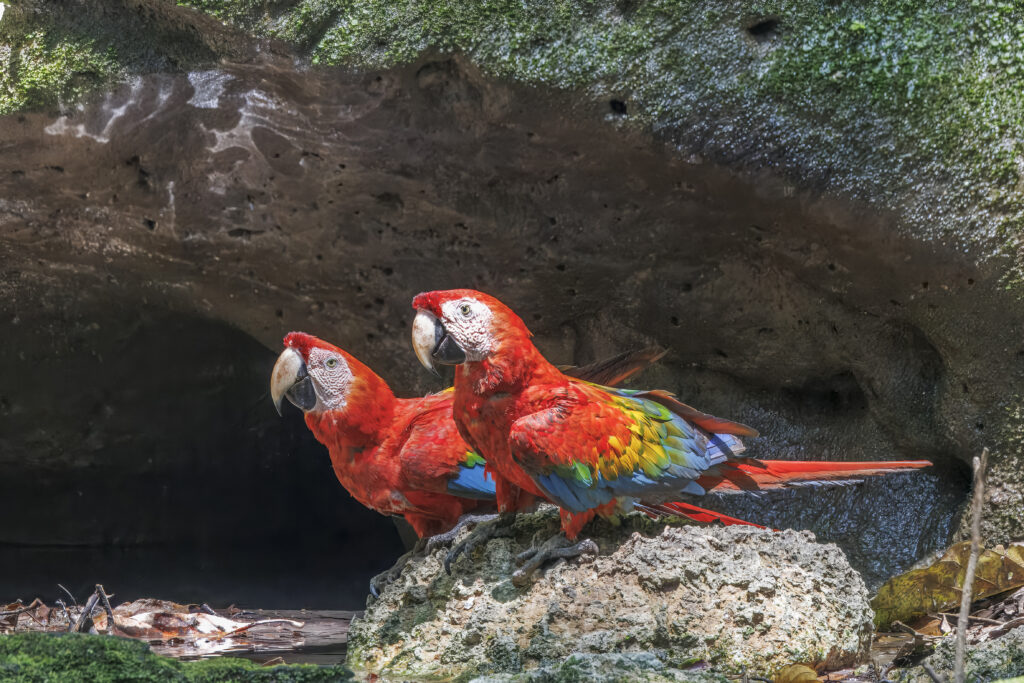
The narrow waterways of Cuyabeno provide a distinct advantage for wildlife viewing over almost any other region in South America. Because the shores are close together, you do not need heavy spotting scopes to see animals clearly; they are often visible on both banks simultaneously.
Wildlife Spotting Tip: Keep your binoculars focused on the overhanging macrolobium branches along the river margins, where ancient hoatzin birds and camouflaged boas frequently rest during the heat of the day.
The reserve is home to several iconic species that define the Amazonian imagination:
- Pink River Dolphins: Known scientifically as Inia geoffrensis, these extraordinary freshwater mammals are a true highlight of Cuyabeno. Unlike their marine relatives, they possess unfused neck vertebrae, allowing them to turn their heads at right angles to navigate expertly through the submerged roots of the flooded forest
- The Primate Kingdom: Cuyabeno boasts incredible primate density, with nine out of ten local monkey species frequently spotted along the river corridors, including active squirrel monkeys, booming howler monkeys, and tiny, curious pygmy marmosets
- Reptilian Giants: The quiet lagoons and sun-warmed logs provide ideal habitats for black caimans and impressive anacondas, which can occasionally be seen draped over low-slung branches near the water’s edge
Cultural connection / Deep knowledge with the Siona
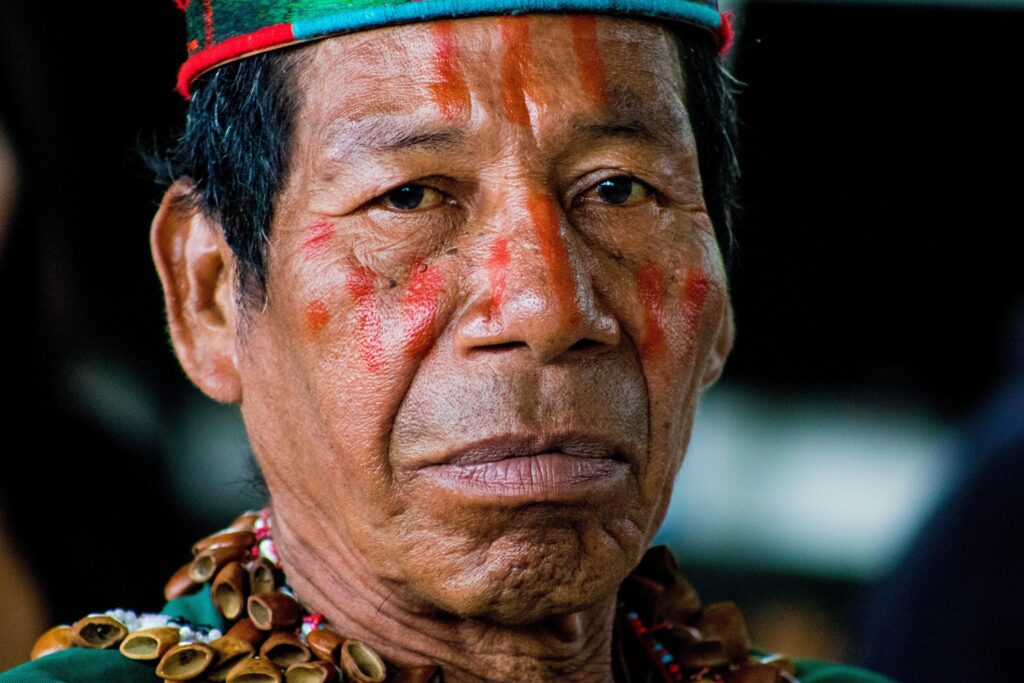
A true understanding of Cuyabeno is incomplete without acknowledging the human history woven into the land. The reserve is home to several indigenous groups, including the Siona, Secoya, and Cofan peoples, who have managed these forests for generations.
Visiting a Siona community provides a respectful, eye-opening window into traditional Amazonian life. Rather than a staged performance, a proper cultural exchange focuses on daily skills and ancestral knowledge. Visitors join Siona women to learn the elaborate process of preparing casabe, a traditional flatbread crafted from cassava root.
The process involves harvesting the heavy yucca roots, peeling and grating them into a fine paste, squeezing out the toxic cyanide-bearing juices using a traditional woven sebucán strainer, and baking the dry flour on a massive clay budare plate over an open fire. It is a lesson in sustainability and deep botanical knowledge that has sustained life in the jungle for millennia.
The Galápagos.
Ecuador’s Enchanted Isles
Seasonal dynamics and preparation
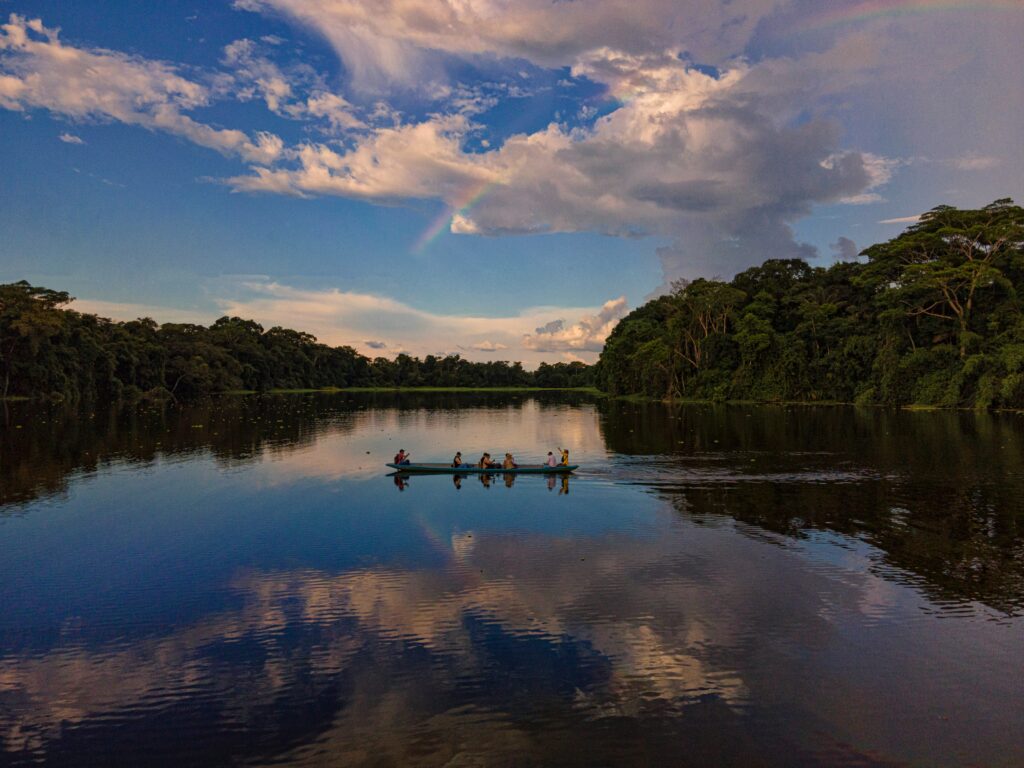
Planning an independent trip to Cuyabeno requires choosing the right season for your travel style, as the changing water levels radically transform how you explore the landscape.
- The Rainy Season (March to August): This is the classic flooded forest experience. The rivers and lagoons are at their highest, allowing motorised and paddle canoes to glide deep into the igapó forest between the trunks of giant trees. Wildlife is highly concentrated along the water margins
- The Dry Season (September to February): The water levels drop significantly, turning some channels into narrow mud flats. While boat navigation becomes more complex, this season opens up extensive opportunities for deep jungle trekking on foot, allowing you to explore primary forest trails that are entirely underwater during the rest of the year
Essential packing checklist
When preparing for a trek into the reserve, leave your heavy luggage at a secure storage facility in Quito or Lago Agrio and travel light. Essential items include lightweight, quick-drying clothing to handle the intense humidity, a high-quality rain poncho, and potent insect repellent. Always carry small cash denominations in US dollars for purchasing handicrafts directly from local indigenous artisans, and pack a reliable pair of earplugs to ensure a peaceful night’s rest amidst the intense nocturnal symphony of the jungle.
The Ecuadorian Coast.
Where you’ll find the very best food
The independent spirit / From two wheels to a dugout canoe
Read this far?
At Wheely Tyred, we believe that the best travel experiences happen when you break away from the crowds, slow down, and immerse yourself fully in the local environment. While the flooded forests of Cuyabeno mean trading your bicycle for a dugout canoe, the core philosophy of independent travel remains exactly the same. It is about embracing the freedom of slow exploration, respecting local cultures, and taking the time to let a destination reveal its secrets to you on its own terms.
Cuyabeno is a place that challenges your senses and rewards your curiosity. It is a corner of the world where you can truly disconnect from the digital noise of modern life and reconnect with the raw, untamed power of the natural world.
Affiliate Disclaimer: Some of the links on Wheely Tyred are affiliate links. If you click through and make a booking or purchase, we may earn a small commission at no extra cost to you. We only recommend gear, tours, stays, and services we genuinely use, trust, and stand behind — our editorial independence always comes first. These commissions help keep our independent cycling guides and travel stories free to read. You can also buy me a coffee here — thanks for supporting the ride!
Frequently asked questions about Cuyabeno Wildlife Reserve
Travellers can take a 25-minute domestic flight to Lago Agrio or choose a scenic, winding eight-hour bus ride down the Andean slopes. From Lago Agrio, a two-hour overland journey leads to El Puente de Cuyabeno, the park entrance checkpoint where motorised dugout canoes handle the final two-hour river leg to the lodges.
Whitewater rivers, such as the Aguarico, carry pale Andean sediments and appear cloudy and rich in nutrients. Blackwater rivers, like the Cuyabeno River itself, are clear but stained a deep, tea-like colour by tannins leaching from decaying organic material on the forest floor.
Because Cuyabeno is a highly protected and hazardous environment, national park regulations restrict independent wandering for conservation and safety reasons. Independent travellers access the wilderness by booking through small-scale, eco-conscious lodges that provide licensed local guides for daily water and land tracking.
Visitors participate in making casabe, a traditional flatbread crafted from cassava root. The community experience involves harvesting yucca, peeling and grating it into a paste, squeezing out the toxic juices using a traditional woven sebucán strainer, and baking the dry flour on a massive clay plate over an open fire.
The dry season, running from September to February, is best for trekking. As water levels drop significantly, areas that are completely flooded during the rest of the year dry out, opening up extensive primary forest trails that are otherwise inaccessible.
Pack lightweight, quick-drying clothing to handle the intense humidity, a high-quality rain poncho, and potent insect repellent. It is also wise to bring small cash denominations in US dollars for purchasing handicrafts directly from local artisans, and a reliable pair of earplugs to ensure a peaceful rest amidst the loud nocturnal symphony of the jungle.
Ecuador.
Pure wonder on the equator.